

Why Firefighter and Rescuer Training Fails with Boring Tests
Training firefighters and rescuers is not a formality—it's about reaction speed in a critical situation. However, classic tests and briefings are perceived as routine: employees complete them just to check a box, and the knowledge quickly fades. As a result, personnel are formally certified but act uncertainly in real conditions.
The problem is that old formats don't account for how adults absorb information. They need context, competition, and immediate feedback.
Without this, employee engagement drops, and training effectiveness cannot be objectively assessed—you only see the percentage of passed tests, not real readiness to act.
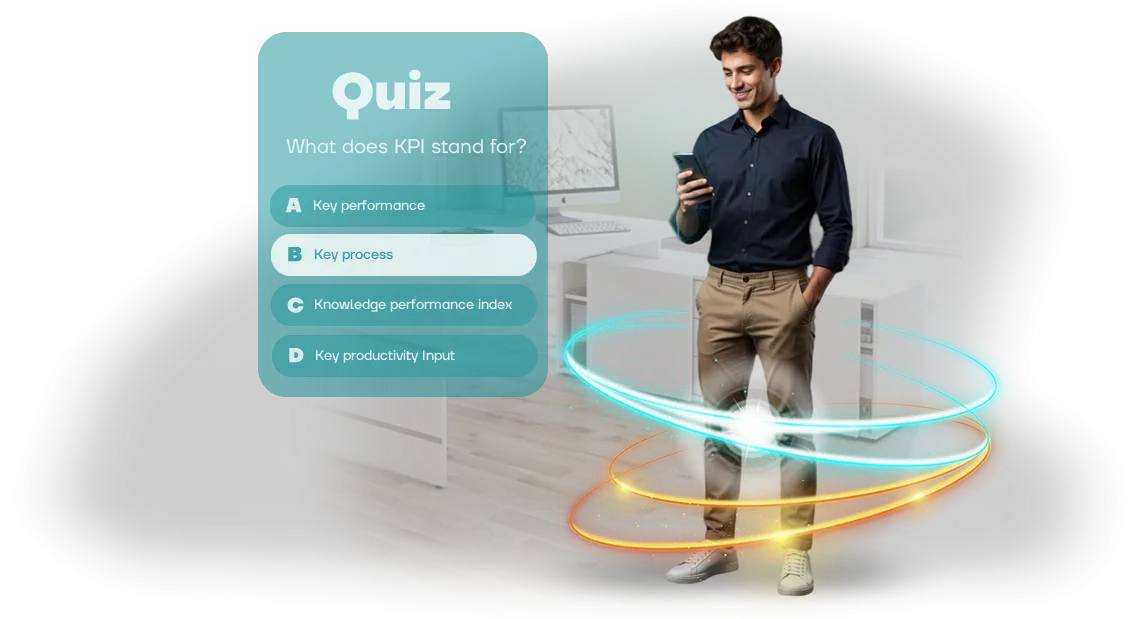
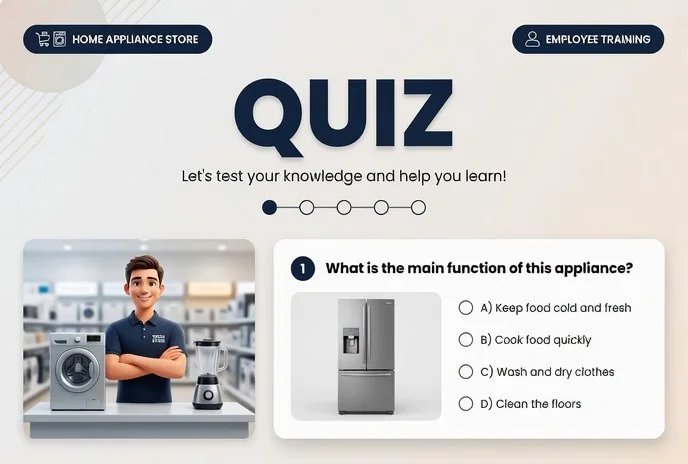
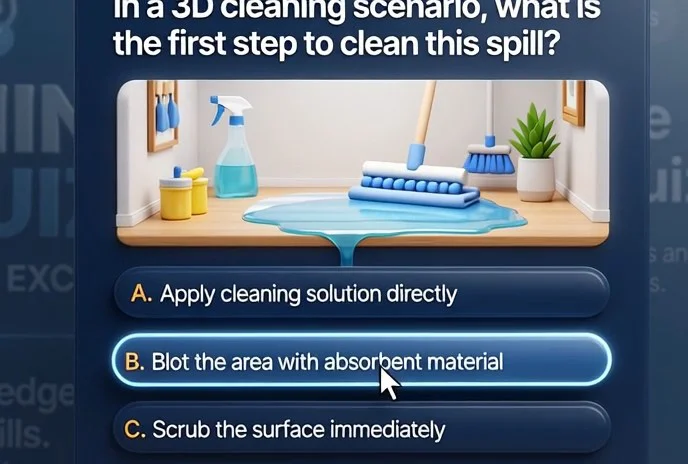
An educational quiz solves this problem. It turns knowledge checks into a dynamic scenario: firefighters and rescuers analyze situations, make decisions, and immediately see the consequences.
This format holds attention, improves retention, and provides clear statistics for each participant—where they make mistakes, which topics need reinforcement, and who is ready for the job.
We design quizzes around your units' actual regulations.
This is not entertainment but a control and development tool: you get a measurable result—more correct decisions, less time spent on initial briefings, and confidence that employees have mastered the material.
What a Quiz Gives Employees Beyond a Standard Course
Regular courses and briefings usually turn into lectures: employees listen, take a test just to check the box, and forget the material within a week. A quiz works differently—through learning gamification, it triggers healthy excitement and competitive interest.
It's emotions and engagement that make the brain retain information longer than reading slides—both practical experience and memory research confirm this.
The second major benefit is transparent knowledge assessment. A corporate quiz shows each employee's results in real time: who has mastered the material and who needs additional work.
A manager gets an objective picture of the whole team without manually checking questionnaires or guessing. This turns training effectiveness from an abstract concept into a measurable metric of unit performance.
For firefighters and rescuers, fast onboarding of new recruits into work processes is especially valuable. The game format helps a new employee memorize action algorithms, safety procedures, and regulations without stress.
At the same time, the quiz refreshes the knowledge of experienced specialists and raises the team's overall readiness level. This reduces the risk of errors in conditions where hesitation is costly.
Essentially, an educational quiz is not entertainment but a personnel knowledge management tool. It gives managers clear control, employees engaging training, and the entire organization a predictable result and improved safety on site.
That's why this format increasingly replaces outdated briefings in companies where training quality directly affects people's lives and health.
Educational Quiz Formats for Company Goals
The same quiz rarely covers all training objectives. Mass familiarization with regulations, shift readiness checks, and team skill drills require different formats—in speed, depth, and mechanics.
We have developed several types of educational quizzes that adapt easily to company goals. Below is a comparison of formats so you can choose the right one or combine them.
| Format | Target Audience | What It Gives the Client |
|---|---|---|
| Mass Training | All employees, including new hires | Quick immersion in standards, a uniform knowledge level in a short time |
| Certification | Managers, HR department | Objective knowledge check, anti-cheating protection, clear report for each person |
| Team Training | Shift, squad, department | Practicing coordination and interaction in emergency situations |
| Individual Simulator | New employees, those lagging behind | Personal pace, repeated practice of difficult topics until confident results |
Mass training is convenient to launch after instruction updates—the quiz covers all employees within a couple of days. Certification with a timer and shuffled questions shows real knowledge rather than the ability to cheat.
The team format teaches joint decision-making—this is especially important for firefighters and rescuers, where lives depend on coordination.
Companies usually combine two or three formats: first a mass quiz for the baseline level, then an individual simulator for difficult topics, and finally a team game for reinforcement. We help choose a scheme that fits your shift schedule and access requirements.
We build quizzes on Unity—this ensures stable operation on tablets, laptops, and virtual reality without loss of picture quality or controllability. All results are collected in a personal dashboard: you see each employee's progress and shift readiness in real time.
What's Included in the Corporate Quiz Delivery
You receive a ready-to-launch training kit: a well-thought-out scenario, a question bank with answers, quiz customization to match your corporate style, and documents for your team.
You don't need to hire developers or dive into technical details—training can start immediately after delivery.
The kit includes:
- Quiz scenario: from greeting to error review, with timing and facilitator recommendations.
- A question bank on your topic with answer options and explanations—enough for multiple sessions.
- Game customization: corporate identity, logo, quiz name, rules—everything aligned with your brand.
- Administrator and facilitator instructions: how to launch the quiz, manage the flow, and summarize results.
- Admin panel: access to manage the game and view results in real time.
- Result statistics: data on each employee, team, and specific questions, exportable for reports.
- Question updates: the ability to add and edit questions yourself with your own team.
This saves you preparation time, gives you a transparent picture of employee knowledge, and provides a reusable tool. Your staff learns in a game format, and you see which topics need review and where progress is happening.
Case Study: How a Game Improved Employee Certification Results
Certification for firefighters and rescuers is not a formality—it's a skills check in conditions where the cost of a mistake is life.
But familiar tests and notes only provide temporary memorization: regulations are forgotten under pressure, and retaking the exam doesn't always improve real skills. This was exactly the request that brought a regional EMERCOM department to us.
We proposed not another exam but an educational 3D quiz that models real scenarios. The employee enters a situation—a building fire, an accident, a search for a victim—and must make the right decision.
Mistakes are explained immediately, based on current regulations, so knowledge is reinforced through practice rather than rote memorization.
Certification Results
Two months after launching the quiz, the passing score rose from 72% to 91%. The number of employees who passed certification on the first attempt increased by nearly a third.
At the same time, preparation time decreased: learners returned to difficult scenarios on their own instead of waiting for repeated briefings.
It was also noted that rescuers began to follow algorithms faster—on average, 20% less time is spent on decision-making in simulation. These aren't just numbers: in real work, such seconds determine the outcome.
The module was easily updated to meet new regulations, so training didn't become outdated. After the final certification, the client came back again—now the quiz is being implemented to train instructors and practice team actions. For us, that's the key indicator: results speak for themselves.
How to Choose a Quiz Format for Firefighters and Rescuers
There is no universal quiz for firefighters and rescuers: something that works perfectly for a team of 15 during a monthly drill falls apart when dealing with a stream of hundreds of employees.
So we first look at three parameters—group size, training frequency, and current skill level. They determine whether it will be a quick warm-up at the start of a shift or a full-fledged tournament with rankings.
For a small group of 10–20 people, a solo format with instant feedback is enough: each person answers at their own pace, and the instructor immediately sees who understood the material and who didn't.
But if you need to train hundreds of employees and keep their knowledge sharp, a team quiz with stages works better—it unifies shifts and adds a competitive element.
| Format | When to Choose | What It Gives the Client |
|---|---|---|
| Solo Quiz | Groups up to 20 people, post-course testing | Personal statistics and quick certification for each participant |
| Team Quiz | Large departments, regular training sessions | Engagement of shifts and practice of interaction |
| Tournament with Rankings | Frequent training, seasonal checks | Visible progress dynamics and employee motivation |
Other parameters—duration, difficulty, presentation scenario—are defined in the technical specification. We help you draft it: we interview managers, analyze training materials, and propose mechanics that fit your schedule without disrupting lessons.
The key is to order a turnkey training solution, not just individual questions. That way you get not simply a game but a ready-made tool: customization to your regulations, instructor briefing, and support during initial launches.
This eliminates endless coordination with contractors and guarantees that the quiz actually works in your training program.
FAQ: Implementing Educational Games
Before launching an educational game, managers often ask the same questions: what if the game doesn't work on our office computers, how do we update the question bank, and who is responsible for smooth operation.
We answer the main ones here—so you understand how we work and what happens after the contract is signed.
What if the game won't run on our computers?
We adapt the game to the devices you already have: office PCs, laptops, tablets. Before deployment, we run a test launch together with your specialists and resolve any issues before training even starts.
If something goes wrong during use, you contact our support team—and we solve the problem remotely or on site, depending on the situation. Our main priority is to keep training running without pauses.
How often can we update questions and materials?
You decide when to change content. Updates are done through a simple admin panel: add new questions, change answer options, edit scenarios—no developer involvement and no lengthy approval processes.
This is convenient when regulations change, new instructions appear, or you want to add questions based on internal audit results. We keep the full change history so you can see what was updated and when.
Who is responsible for technical support after launch?
We are. The support level is specified in the contract: we provide consultations on using the admin panel, monitor system stability, and promptly fix any issues. If an employee runs into a problem during a quiz, your team sends us a request and we take care of it.
This means you don't have to hire a dedicated specialist or worry that the game will be left unsupported. Support is part of our service, not an add-on option.
How long does implementation take and what do you need from us?
The standard timeline is two to four weeks from the moment the scenario is approved. We need access to the systems where training will be held and your manager's participation during the acceptance stage.
We prepare the game for launch, instruct your team, and provide short cheat sheets for employees. Everything else is on us—so you can focus on the training content rather than technical details.
Submit a Request for a Staff Quiz Development
Every minute spent on boring lectures is time your employees could have used to practice real skills. Submit a request for a quiz for firefighters and rescuers—and we'll turn training into a clear, engaging process with measurable results.
After you get in touch, you'll receive a free consultation: we'll review your scenarios, recommend which question formats best hold attention, and calculate accurate timelines.
We'll also show sample quizzes from our practice—you'll see firsthand how employees complete tasks and how quickly they absorb material.
What You Get After Submitting a Request
- A personalized consultation focused specifically on your unit's needs—no template proposals.
- A preliminary timeline and work stages before the project starts.
- Sample quiz scenarios adapted for firefighters and rescuers.
- A clear development plan: you always know what's happening and what comes next.
- Transparent cost estimates with no hidden charges or surprises along the way.
- A guarantee of fixed deadlines and post-launch support—we'll provide additional training and help with implementation.
We work with proven, streamlined tools, so your project won't get stuck in the approval stage. You get not just a quiz but a complete training tool that employees will complete with interest and managers can track everyone's progress.
Don't put off staff development for later. Submit a request right now—we'll discuss your quiz as early as the next day, calculate timelines, and show how it will work in practice.