

Customers Are Leaving: How to Drive Growth in Car Sales?
Every lost customer in car sales is not just a missed deal. It's a chain of lost value: unearned profit, wasted manager time, and a weakened position against competitors.
Most often, the cause isn't even a lack of traffic, but the fact that an employee failed to handle an objection in time, didn't uncover the real need, or didn't bring negotiations to a logical close.
A manager who learned "on the job" and picked up habits from random colleagues operates on guesswork. They don't know how to respond to customer skepticism, which arguments work in a specific segment, or why exactly a deal falls through here.
The result — recurring customer losses to better-prepared competitors. Management sees the problem in the funnel and plan vs. actual metrics, but traditional training and corporate lectures produce no lasting effect: employees listen but don't apply.
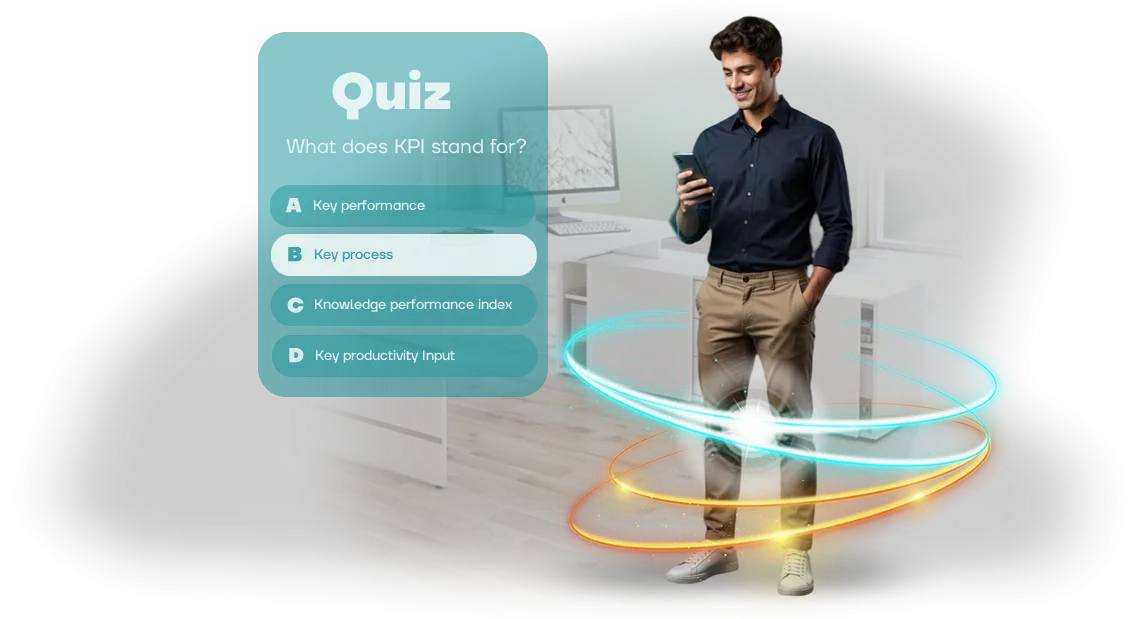
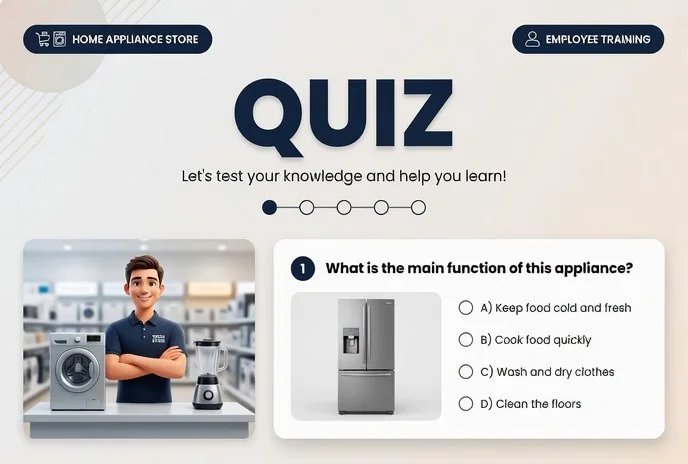
We propose closing this gap with educational quizzes built on real sales scenarios. Instead of boring theory — interactive dialogues that train negotiation skills and reinforce correct behavioral patterns. Staff training becomes systematic, and conversion growth becomes a measurable outcome.
What Benefits Does the Business Get from Educational Quizzes
In car sales, profit directly depends on how well managers know the product and handle objections. Ordinary briefings and tests rarely hold attention: employees complete them formally, and knowledge quickly fades.
Educational quizzes turn the process into a game format — competition, points, instant feedback. This triggers natural motivation: people want to outperform colleagues and close their knowledge gaps.
Instead of a dull course, the manager steps into a dialogue with a buyer: the customer doubts the price, asks for trim-level comparisons, refuses a test drive. In a training simulator, a mistake costs nothing — no lost customer, no damaged impression of the dealership.
This allows trying different strategies, seeing the consequences, and remembering the right responses.
Practice in a safe environment accelerates a newcomer's path to hitting plan and raises the skill level of the entire department. Managers internalize correct behavioral patterns using real cases from your dealership.
The result — fewer typical sales mistakes: poor presentations, weak objection handling, losses at the test-drive stage.
Management sees statistics for each topic and can quickly adjust training. This format is not entertainment but a conversion-growth tool: higher engagement, stronger knowledge, stable department results.
3D Simulator Formats for Practicing Car Sales
Different stages of sales training require different formats: sometimes a full dialogue with a simulated customer, sometimes a quick knowledge check, and sometimes a light team game.
Choosing the right approach directly affects how fast a manager reaches plan and how well scripts and procedures are absorbed.
Here are the typical formats we use in projects for car dealerships, and the tasks they cover.
| Format | For Whom | What It Delivers to the Client |
|---|---|---|
| Dialogue 3D simulator | Newcomers and experienced managers | Practicing the full sales cycle: from the first meeting to closing the deal. Training on objection handling, winning the customer back, working with trade-in and financing |
| Interactive quiz | The entire sales department | Quick verification of knowledge on model specs, promotions, and financing terms. Shows who actually knows the material and who just memorized the test |
| Quiz game with a leaderboard | A team, multiple dealerships | A competitive element: managers review standards in game form, and management gets an objective picture of each employee |
| "Exam with a client" scenario | Employees before being cleared for sales | Simulation of a real meeting where the full script must be applied flawlessly. Helps filter out those not yet ready to work with skeptical buyers |
It's important that the simulator feels realistic: dialogues, objections, the pace of the speaker's speech — all of this shapes the manager's conversational habits.
We build such simulators on Unity, so the graphics and behavior of the 3D conversational partner look natural, not like static images with buttons.
If your goal is to quickly raise the average check and test-drive conversion, choose the dialogue format. If you need to package procedures into short, regular training — a quiz works well.
In any case, we will tailor the format to your current sales model and create scenarios based on real dialogues from your best managers.
Stages of Turnkey Educational Quiz Development
We've structured the process so you can always see what's happening with the project and where the time goes. An educational quiz is developed through transparent stages — from the first call to training launch and technical support.
- Brief and immersion into the task. You fill out a short questionnaire or hop on a call with us. We clarify which departments we're training, what knowledge needs to be checked, and what quiz format will be convenient for employees.
- Scenario approval. We prepare the quiz scenario: questions, answer options, hints, error breakdowns. You see the text before development starts and can make edits — no "surprises" later.
- Quiz development. We implement the dialogue mechanics: the employee talks to a virtual character rather than just answering tests. This is a familiar format for practicing client communication skills.
- Pilot launch and testing. You receive a demo version for internal review. We check the logic, the accuracy of score calculation, and how the quiz looks on different devices (laptop, tablet, phone).
- Training launch. We upload the quiz to your platform or provide a link — employees complete the training at their convenience. You see completion statistics and results in a simple table.
- Support and refinement. After launch, we don't disappear: we help with questions, update questions to match changes in the catalog or procedures, and add new modules when needed.
This order eliminates chaos and unnecessary iterations: at every stage you know what you're getting and can adjust the course without losing time or money.
What's Included in the Complete Solution Package
When you order quiz development for car sales, you get not just a program but a complete package for launching training from day one. Everything is already set up — all that's left is to assign your managers and start the drills.
The package includes:
- Quiz scenarios — ready-made questions and answers on the product, car sales standards, and objection handling. Scenarios are adapted to your dealership model, with dialogue branching options and hints for the trainer.
- Simulator interface — a clear screen for the employee: progress, mistakes made, and the final result are all visible. A manager starts training without lengthy preparation, and you see completion statistics.
- Staff instructions — short guides on how to take the quiz and what to do if they get stuck. Suitable for both new hires and experienced managers.
- Administrator training — we configure the system together with you and show you how to change questions, add employees to groups, and view results. From then on, you manage the tool without developers.
- Technical support — after launch, we stay in touch: answering questions, helping with updates and refinements. When needed, we expand scenarios and add new modules.
This package covers the task end to end: from the first launch to regular training sessions. You get a working tool your team can use immediately, plus support that handles all questions as training unfolds.
Case Study: How We Strengthened Manager Skills in 2 Weeks
A large dealership came to us with a familiar pain point: managers knew vehicle specs cold but lost customers at the objection stage. Training was formal — theory, tests, presentations — and in real conversations employees kept making the same mistakes.
For AutoPrime, we developed a dialogue-based 3D quiz simulator. In two weeks, we built an interactive scenario where the manager negotiates with a virtual buyer: answers questions, works through discounts, and handles doubts.
This isn't a test for the sake of evaluation — it's practice in a safe environment. The virtual customer behaves believably: hesitates, asks tricky questions, reacts to the manager's actions.
Each session ends with a debrief — which phrases worked, where the manager missed an opportunity, how to structure the argument.
Two weeks after launch, the results were evident. Manager conversion in the test group grew by 28%, and the number of negotiation errors dropped by 40%. Employees stopped fearing difficult customers and led dialogues to the close with more confidence.
Management got a transparent picture: it's clear who has completed the scenario, where the team is struggling, and which topics need reinforcement. This made it possible to restructure training and make it ongoing — without pulling people away from sales.
The simulator stayed with the client, and later the company ordered scenarios for new models — training became a working tool, not a one-off initiative.
How to Choose the Right Quiz Format?
When choosing an educational quiz format, it's important to look not at the technical "under the hood" details but at the business's tasks and conditions.
In car sales, it always comes down to three questions: what's the budget, how many employees need training, and how fast the result is needed.
That determines whether to go with a ready-made test, a compact text quiz, or a full dialogue simulator where the manager practices a conversation with a buyer.
The budget sets the framework but shouldn't dictate quality. If investment is limited, you can take a light format for checking knowledge of the model lineup and communication standards.
When you need to change manager behavior in live dialogue rather than just test memory, it's worth considering a simulation with branched scenarios.
The cost is higher, but it's precisely these scenarios that teach people to handle objections and move the customer toward a test drive. That pays off through conversion growth in real meetings, not in the training room.
The number of employees is the second criterion. For a small team of up to 15 people, a simple questionnaire that covers the need in a couple of days is enough.
For a sales department with dozens of staff, a dialogue simulator with individual progress tracking for each manager is appropriate. That way, management can see who confidently works with customers and who needs extra preparation before facing buyers.
Speed of launch is directly tied to the format. If the quiz is needed for the start of a season or a new model release, choose a solution that can be deployed in days.
If you have a full quarter ahead, it's better to invest in a deeper scenario: it takes longer to prepare but delivers better skill practice. The desired metrics are the final guide.
Simple statistics on correct answers work for knowledge assessment; for sales skill evaluation, analyze the chosen dialogue responses and how deep employees go through each branch.
We recommend a format for your specific task and honestly tell you where a light test is enough and where a simulator will pay off. In the end, the client gets not a "checkbox toy" but a working tool that measures employees' real readiness for customer dialogue.
Common Concerns and Our Guarantees
Deadlines, technical glitches, and integrating training into current processes — these are the main concerns when ordering development. We hear them on every first call, so we immediately put our commitments in writing in the contract and follow through without exception.
Below are answers to the questions we get most often before a project starts. If your scenario isn't listed here, ask us directly — we'll give you a concrete answer within one business day.
What happens if you miss the deadline?
Deadlines are our responsibility. The approved plan with dates and stages is fixed in the contract, not just in words. In 10+ years, we have never missed launching a simulator by a date that mattered to a client.
Every week you receive a short report: what's done, what's in progress, what's coming next week. You always know the project status instead of finding out about problems on the last day.
If we see a stage shifting, we warn you two weeks in advance and propose a solution rather than waiting for the deadline.
How do you guarantee the simulator won't glitch?
Glitches come from rushing and poor architecture — we allow neither. The simulator is built on a modular principle: each block (dialogue scenario, score calculation, integration with your system) is tested separately.
The launch check runs on your real scenarios, not on "ideal" examples. We write scenarios in advance for different employee responses: correct, debatable, and wrong ones. At launch, you get two months of support: if anything goes wrong in real use, we fix it.
Can the simulator work with our internal sales procedures?
That's exactly why we exist. You send us your scripts, procedures, and objections — we turn them into interactive scenarios rather than "tidying them up" into a generic template.
If a procedure changes during operation — that's not a disaster. We plan scenario updates as a separate stage: you send new data, we update the dialogues, and employees train on the current standards.
What if we need refinements after launch?
We don't disappear after delivery. For the first two months of the adaptation period, you're always in touch with the team; all edits and feedback are recorded and handled by priority.
After that, you work under our support plans: scenario updates, adding new questions, expanding the simulator for new vehicle lines or departments. In short: you get a tool that grows with the business instead of freezing in place.
Accountability for results is locked into the contract: deadlines, scope of work, and support obligations are all defined before the start. You pay in stages — and always see exactly what you're paying for. That's how we work with dealer group partners, and for us it's the only acceptable format.Discuss Your Task and Get an Implementation Plan
Leave a request — and within one business day we'll prepare an implementation plan for your task.
We won't send a "checkbox case study"; we'll analyze your specific situation: what car sales managers need to learn, how to keep their attention, and how to measure results after training.
What you get after reaching out:
- Request. You describe the task: number of employees, the product they sell, and the problem the quiz should solve. Nothing more is required from you.
- Consultation. We discuss the specifics of car sales: model lineup knowledge, technical specs, customer communication standards, objection handling, and test drives.
- Demo. We show examples of our quizzes and interactive scenarios — so you can immediately see the style, mechanics, and how employees will perceive it.
- Cost calculation. We quote a price based on your task: number of scenarios, complexity, timeline. Transparent, with no hidden fees or fine print.
- Implementation plan. We provide a step-by-step schedule: content development, technical assembly, testing with a pilot group, full rollout to all employees, completion measurement, and error analysis.
- Post-launch support. We stay in touch: making edits, adding questions as the model lineup updates, and helping turn the quiz into a permanent training tool.
Thanks to this approach, you understand the budget, timeline, and expected impact before the work even starts.
The quiz won't become a "file for the checkbox" — it will become a working tool that improves product knowledge and manager confidence in customer conversations. Fill out the request, and we'll prepare a plan for your sales department.