

Why Employee Training Doesn't Save Phone Sales
Typical employee training formats—lectures, presentations, tests—rarely change managers' real behavior. They memorize rules and techniques, but in the stress of a call they fall back on old habits: they get lost, interrupt the client, fail to handle objections. As a result, sales failures repeat over and over, and the training budget doesn't pay off.
Just look at the department's metrics: call conversion doesn't grow, the number of successful deals drops, even though employee training is conducted regularly. The reason isn't a lack of knowledge—it's that old habits are stronger than new information.
Training effectiveness should be measured not by test results, but by how a manager behaves in a real conversation with a client.
Phone sales are always live communication, where a client can ask an unexpected question, doubt, or abruptly refuse. Classic training provides only theory, and the manager has no chance to practice the skill in a safe environment without the risk of losing a deal.
That's why the same mistakes repeat on calls: pauses, losing the thread of the conversation, weak argumentation.
We see this picture in many companies: employees complete training, pass checks successfully, but a week later they work as before.
To improve training effectiveness, you need to change the preparation format itself—give managers the opportunity to practice in realistic phone sales scenarios and receive feedback immediately after each attempt.
This is exactly how we build training so that it leads to revenue growth rather than simply filling the corporate calendar.
What a 3D Quiz for Manager Training Offers
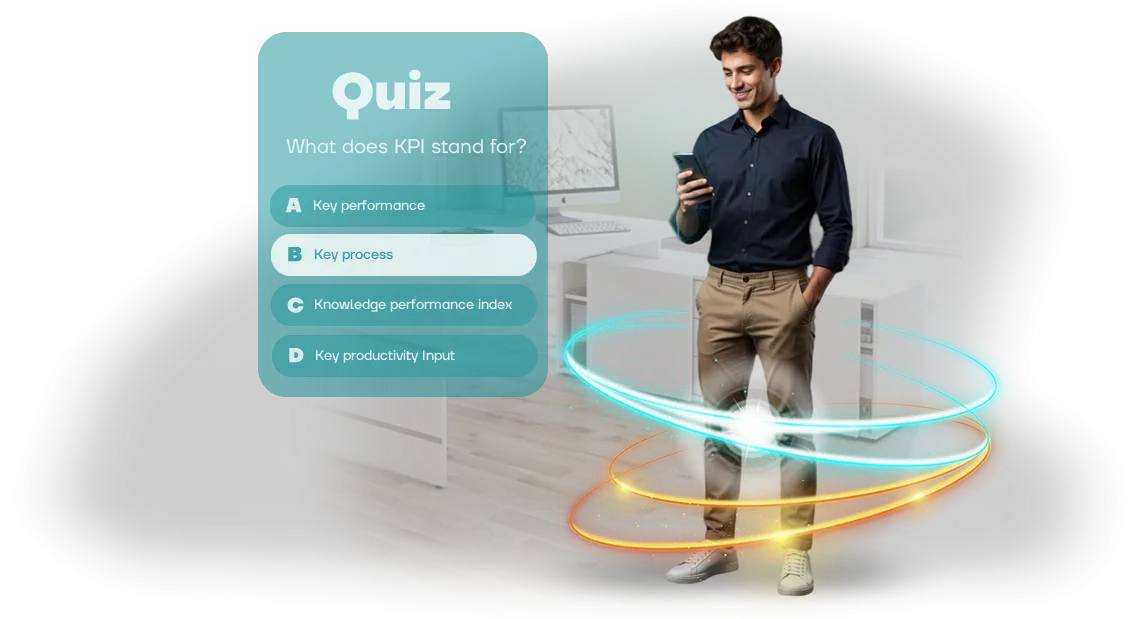
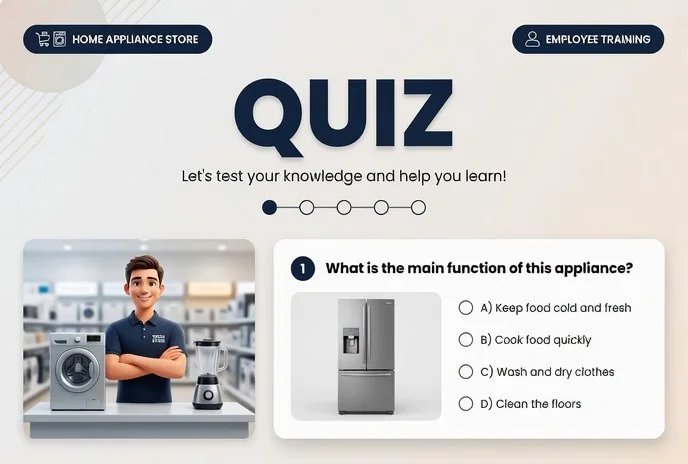
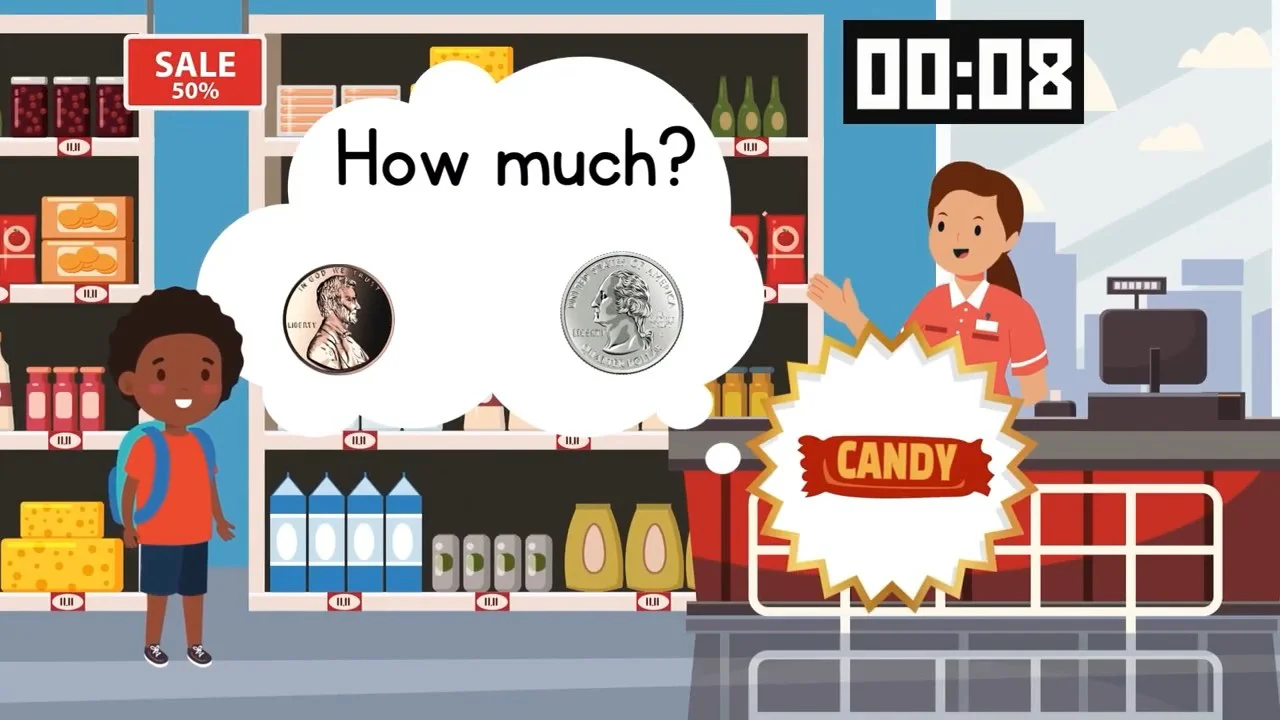
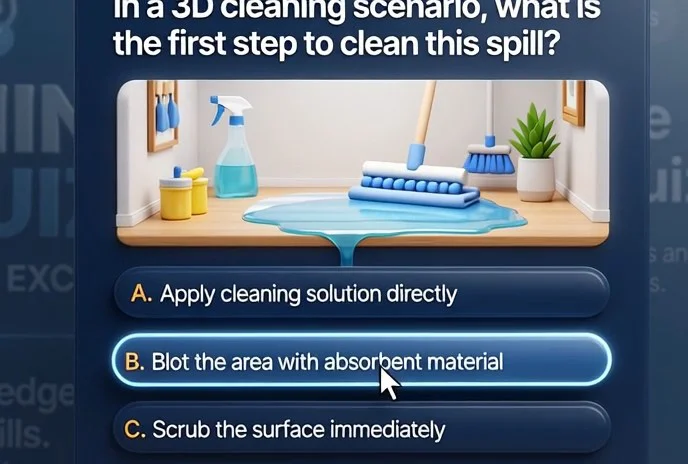
A 3D quiz for manager training is not a multiple-choice test, but a simulation of a real phone conversation. The employee sees the scenario from the seller's perspective, hears the client's responses, and chooses an answer within a limited time—just like in a live dialogue.
The training takes place in a safe environment: a mistake doesn't cost the deal, but it provides instant feedback.
The main value for the team leader is engagement. Ordinary courses are watched "for show," while a 3D quiz captures attention through gamification: storylines, levels, scoring, and reaction to every decision.
Employees return to the simulator on their own, repeat difficult topics, and make their reactions automatic.
At the same time, manager training stops being abstract.
Inside the quiz, real client objections are practiced—"too expensive," "I'll think about it," "we already work with others." The salesperson doesn't read scripts; they learn to respond on the fly while keeping the conversation on track. This directly affects sales conversion.
The team leader receives clear statistics for each manager: how many times they completed it, where they make mistakes, and which objections cause difficulty. There's no need to guess who mastered the material—the data shows the team's readiness for real calls. These numbers make it easy to decide who needs further training and which scenarios to strengthen.
In the end, the 3D quiz solves three tasks at once: it engages employees in training, gives them practical skills for handling objections, and provides the team leader transparent performance metrics. It's a tool that turns training from a formality into a sales engine.
Quiz Formats for Phone Sales for Different Tasks
There is no single ideal format for phone sales training: a newcomer needs to master the script faster, an experienced manager needs to practice complex objections, and the whole team needs to regularly refresh product knowledge.
That's why we offer several quiz and simulator options, each solving a specific task and easily fitting into the current workflow.
| Format | Who it's for | What the client gets |
|---|---|---|
| Short 5–7 minute warm-up | The whole team before a planning meeting | Quickly switches into work mode, reinforces product knowledge without disrupting the plan |
| Product and script quiz | New employees | Shortens the onboarding period, replaces boring lectures with practice |
| Client dialogue simulator | Working managers | Practice objections and sales technique without the risk of losing real clients |
| Team tournament | The entire sales department | Increases engagement and creates healthy competition for results |
After a short audit, we help you choose a format for your task or combine them: for example, weekly warm-ups for everyone and a dialogue simulator monthly for key managers.
This way you get a training system that boosts employee confidence and sales conversion without stopping the department's work.
How the Development of a Quiz for Your Team Works
For a business owner, it's important to understand exactly what you'll get by launch and what checkpoints will be along the way.
We have built the educational quiz development as a transparent process: at each stage you see the result, can make edits, and understand how much time is left before launch.
-
Brief and task immersion. First, we discuss where managers most often stumble: which objections are difficult for them to handle, which calls don't turn into sales, and what communication style is standard in the company. We set deadlines, format, and target outcomes.
-
Scenario approval. We turn your phone sales scripts into questions, answer options, and explanations for each decision. You read the scenario in business language, without technical details, and make edits before development begins.
-
Plan and checkpoints. Before work starts, we agree on a timeline: what is ready by which date, who is responsible for approvals, and how force majeure is handled.
This eliminates surprises in deadlines—you always know when you'll receive a test version and when training will launch.
-
Quiz creation and test version. We build the interactive format: questions, scoring system, response feedback, and objection handling. Inside, we pause for a demonstration—you see how the task looks from the employee's perspective and adjust details.
-
Testing on real dialogues. We run the quiz against examples of your managers' calls to make sure the scenario really helps practice typical objections and that questions don't lead the user astray. This reduces post-launch revisions.
-
Launch and team engagement. We prepare instructions for the team leader: how to announce the start, motivate participation, and what to do if results are lower than expected. We onboard employees and track initial activity.
-
Support and development. After launch, we accompany the quiz: answer questions, add tasks for changes in product or scripts. This keeps training relevant, and repeated improvements don't turn into a separate project.
In the end, you get a tool embedded in the sales department's workflow: clear timelines, an approved scenario, and a launch without hitches. Then we stay in touch and help so the quiz remains useful for many months.
What's Included in the Delivered Training Quiz
We specify the scope of the delivery: you get a ready-to-launch training quiz—no hidden work, no "pay more later." Inside, everything is included for a quick start and independent work: from the scenario to instructions that can be distributed to employees on launch day.
Here's what's in the package:
- A quiz scenario for phone sales. Developed dialogues with typical client questions and objections: from the first greeting to closing the deal. The employee trains on real situations, and the trainer sees which stages cause difficulty.
- A 3D environment for skill practice. A virtual office where a dialogue simulator immerses the employee in a realistic sales environment. It's safe training: you can make mistakes without the risk of losing a client until the skill is solidified.
- An admin panel for the quiz. A simple, clear interface where a trainer or team leader can independently change questions, edit scenarios, add new dialogue branches, and update materials—without involving developers.
- A statistics and reports module. Shows how each employee handles tasks, where they make mistakes, and which topics need review. Based on this data, it's easy to build a plan for further training.
- Trainer training. We conduct a short walkthrough: how to use the admin panel, adjust difficulty, and integrate the quiz into onboarding or continuing education. The trainer becomes self-sufficient in working with the platform.
- Instructions for employees and the trainer. Short, clear guides: where to start, how to complete a scenario, where to see results, and how to fix mistakes. Minimum questions—straight to work.
- Technical support and updates. During the agreed period, you're not left alone with the system: we help solve problems and suggest how to expand the simulator for new sales department tasks.
The result is not just a "program" but a complete training tool.
You get a package that can be built into current training from day one: employees train in the 3D environment, the trainer manages content through the admin panel, and the team leader sees results in reports. Nothing needs to be finished on your own—just apply it.
Case Study: How a 3D Quiz Improved Employee Performance
Training Results
Regular trainings provide theory, but on a real call the employee gets lost. We developed a training 3D quiz for Optima Telecom, where managers sharpen their objection responses in virtual dialogues.
The simulation is as close as possible to a real work situation: the client reacts to tone, arguments, and speech speed—you immediately see what needs to be fixed.
In the first month, the sales department's metrics changed noticeably. Conversion to successful sales grew by 23%, and the percentage of closed deals on cold calls rose by 31%.
At the same time, the average call duration decreased by 15%: managers move through dialogue stages faster and fall into improvisation less often. For the company, this means revenue growth without additional investment in advertising or headcount.
What the Client Says — and Our Expert Assessment
"Newcomers reach the target result two weeks earlier than usual, and experienced employees see their own weaknesses. For the first time, training produced a measurable effect rather than just going through the motions," comments the head of the training department.
We also conducted internal analytics: 80% of participants apply new scripts within the first week after the simulator. The technical platform, based on a professional game engine, ensures stable startup on any computers—without failures during the peak sales season.
That's why such a quiz pays for itself in one quarter and works as a permanent development tool, not a one-off event. After these results, the client is already scaling the practice to the customer service department.
How to Choose the Right Format for Team Training?
There is no universal quiz format: what works perfectly for a sales department may be unnecessary for frontline staff, and vice versa.
That's why we don't offer "the only right solution"—we first analyze what exactly the team needs to learn, which skills to develop, and what result counts as success.
The answer to "which format suits us" starts with a free consultation. We discuss your task: the current skill level of your employees, typical mistakes in phone sales, and the time the team can dedicate to training.
Training always adapts to the task, not the other way around—this is a key principle that saves budget and nerves.
Based on the input, we suggest 2–3 suitable formats—from short script knowledge quizzes to dialogue simulators with objection debriefing.
If you're unsure, we recommend starting with a pilot project: we take one scenario, launch it on a small group of employees, and watch the dynamics. This way you get a measurable result before a full-scale launch, not a "pig in a poke."
The main thing is you're not left alone with the choice. We help determine the format that will actually change managers' behavior on calls and support the project at every stage. In the end, you get not "just a quiz," but a tool that solves exactly your task.
Frequently Asked Questions About Quiz Implementation
Before launching a training quiz, clients have the same questions: how quickly will it work, who will support the system, and what to do if something goes wrong. We answer the main ones—so you understand how implementation goes and what help you can expect.
How long does quiz implementation take?
On average, 7–14 days. It depends on the amount of content: if you already have a ready-made question bank, we launch faster. If a scenario needs to be developed from scratch, we add a few more days for approval. At each stage, you see intermediate results and can make edits.
What happens if the system fails?
We take full responsibility for support after launch. We monitor the quiz's operation, create backups, and quickly fix any issues. Over years of work, we have refined a procedure: critical errors are resolved within a business day, so downtime in employee training is minimal.
Who will update questions and change content?
You can do it yourself—we train an administrator and provide a simple editing interface. Or you can leave it to us: add content support to the contract, and we'll update the quiz to match changes in sales scripts, new products, or seasonal promotions.
Will it be difficult for employees to use the quiz?
No. The quiz launches via a browser link, requires no software installation or training. An employee completes the scenario in 5–10 minutes, immediately sees their mistake and the correct answer. For your IT team, this quiz also creates no extra load—all work happens on our side.
We understand that implementing a new tool always involves risks, so we eliminate them in advance. You get a working quiz turnkey, support at all stages, and a clear content update system.Start with a Pilot Quiz in 14 Days
A pilot quiz is a way to test in 14 days how interactive training improves the results of your phone sales managers. You get a working tool integrated into the current training process—without lengthy approvals, procurement, or large budgets.
We take your real sales script and turn it into a dialogue simulator: an employee practices calls, responds to objections, and the system immediately shows where they lose the client.
Based on the pilot results, you'll see how managers' confidence changes and what exactly affects call conversion.
What you get right after your inquiry:
- A pilot quiz tailored to your sales department—ready to launch in 14 days.
- Employee training—they complete the scenario at a comfortable pace, with hints and error debriefing.
- Instructions for the team leader—how to integrate the quiz into current training without stopping work.
- A results report—who completed it, which mistakes repeat, and where managers lose sales.
- Scaling recommendations—how to extend the pilot to new scenarios or other teams.
- Launch support—we stay in touch until the quiz is fully operational.
Leave a request—and in two weeks your employees will start training on dialogues as close as possible to real calls. It's a fast way to raise the level of phone sales and make training systematic, not a one-off event.