

Employee Safety Training: Why Quizzes Are More Effective Than Briefings
Traditional safety briefings most often turn into a formality: the instructor talks, employees nod, and a week later the rules are forgotten. On railway transport, where the cost of a mistake is measured in lives and health, such an approach is unacceptable.
Staff attention starts to drift after just a few minutes of a monotonous monologue, which means key requirements remain unlearned.
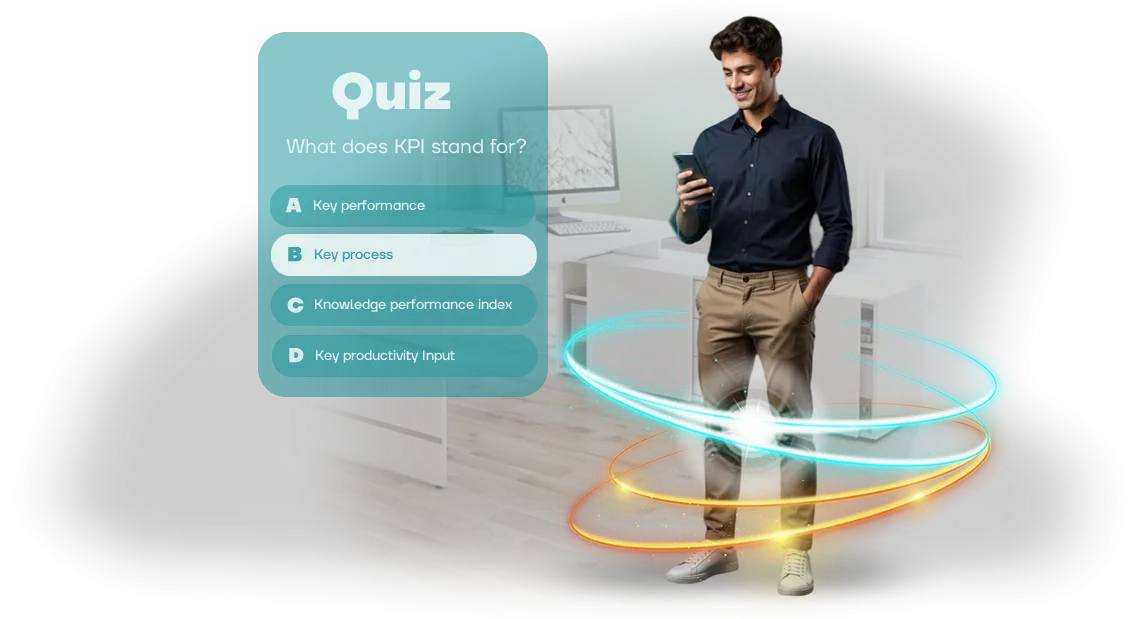
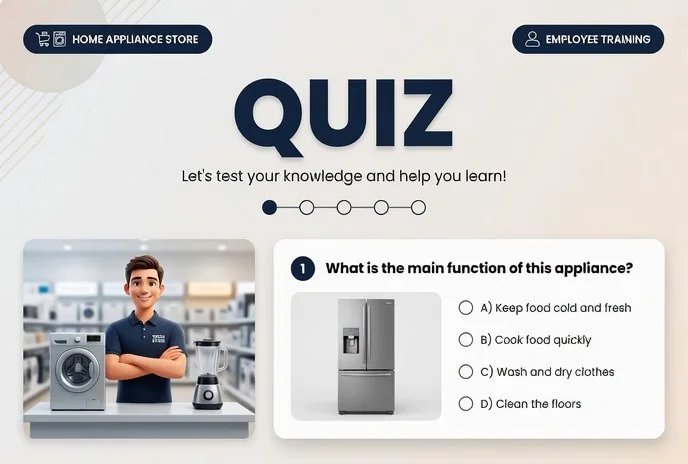
Quizzes for employees solve this problem through active engagement. Instead of passively listening, a person answers questions, recalls the rules, and competes with colleagues. The brain remembers information better when it is tied to emotions and practical action. That is why safety training in a game format delivers lasting results.
This approach pays off for business directly: employees violate regulations less often, and the risk of injuries and incidents at facilities decreases. This reduces downtime, fines, and reputational losses.
Plus, quizzes allow you to check knowledge objectively — you immediately see who has absorbed the material and who needs additional training.
We develop safety training quizzes for railway transport to fit your company's objectives. We take into account the specifics of professions, real work scenarios, and occupational safety requirements.
As a result, personnel don't just "sit through" a briefing — they actually remember the rules, and you get a tool for control and risk reduction. Contact us to discuss a training program for your employees.
What You Get from a Corporate Training Quiz
Traditional safety training often turns into a formality: employees listen to a lecture, sign the log, and immediately forget the key rules.
An interactive quiz solves this problem — it engages, makes people think, and helps them remember through scenarios close to real situations at the facility. As a result, you don't get a "completion checkmark" but real knowledge that your employee will apply on the job.
The main business effect is reduced risks and fewer injuries. When personnel works through dangerous situations in a game format, they start to see threats in advance and act correctly. This reduces the number of incidents, downtime, and related costs. For you, this means fewer accidents, fewer investigations, and peace of mind about your people.
At the same time, a safety culture is formed. The quiz makes the rules part of everyday thinking rather than a set of prohibitions from a manual. Employees discuss questions with each other and share results — safety becomes a shared value of the team, not an imposed requirement. Managers get a team that polices compliance on its own.
You will also notice better inspection results. Regular quiz training improves scores on certifications and internal audits. Employees answer inspectors' questions more confidently and get through control events more easily. For you, this means being ready for supervisory inspections without last-minute panic and cramming.
Finally, you save time on training. The quiz takes 20–30 minutes and can be launched right in the workflow or remotely — you don't need to gather groups and pull people away from tasks for half a day.
A scenario developed once works for all new employees and is updated as regulations change. Faster training means higher productivity and lower organization costs.
Quiz Formats: Choose the Right One for Your Team
The choice of quiz format determines how well your employees absorb railway safety rules.
There is no one-size-fits-all solution: a quick test for employees suits scheduled briefings, an interactive safety quest suits engagement, and a safety competition between departments suits culture-building. The wrong format weakens the effect: employees answer formally and forget the rules.
We develop quizzes for a specific task and audience: from a simple knowledge check to a large-scale game with game elements. We help you choose the best option and adapt it to your specifics. The table below shows the three main quiz formats that cover most scenarios.
| Format | Target Audience | What It Gives the Client |
|---|---|---|
| Post-briefing test | New employees, scheduled checks | Quick assessment of rule comprehension, automatic reports by department, identification of topics for further explanation |
| Interactive safety quest | All employees, especially younger staff | Immersion in real situations, engagement, remembering rules through scenarios |
| Inter-department competition | Teams that need to bond | Healthy competitive spirit, teamwork, repetition of material in a game, and growth of safety culture |
How a Custom Quiz Is Developed
You get a quiz that actually changes employee behavior, not just a "checkmark" in your reports. We have structured the process so that you understand what is happening at every step and can influence the outcome.
No unexpected surprises: from the first brief to launch, you work with one team that is responsible for deadlines and quality.
- Brief and immersion in the task. We record the quiz objectives, audience, and desired result. You share your regulations and instructions — we analyze them so the questions are not generic but based on your real rules.
- Analysis and scenario. We study the specifics of your operations and break down typical employee mistakes. Based on that, we create a quiz scenario: plot, question types, engagement mechanics. You receive a document you can review with your safety experts.
- Content approval. We discuss questions, answers, explanations, and presentation style. You make edits at this stage — this is the most convenient point to adjust details. We iteratively refine the scenario until it fully matches your requirements.
- Development and assembly. Once the scenario is approved, we assemble the quiz on a professional platform and customize the design to your corporate style. Here we also set up the scoring system and report generation for managers.
- Testing and internal verification. We run the quiz on a control group of employees and check the accuracy of scoring and performance on different devices. You receive test access and can see the quiz from an employee's perspective.
- Launch and training. We hand over a link or QR code for placement in your internal channels. If necessary, we give administrators a short briefing — how to track progress, export results, and interpret data.
- Support and refinement. After launch, we stay in touch. You can adjust questions, add a new block, or extend the campaign. Updates are made quickly, without rebuilding the entire project.
This process eliminates situations where you wait for a result without understanding what stage the project is at. You always know what has been done, what comes next, and when everything will be ready. And if you need to shift the focus urgently — we have time margin and a flexible revision system.
What's Included in the Delivery: The Client Kit
When you order a railway safety training quiz, you get more than a program — you get a turnkey package.
It includes a ready-made scenario, clear instructions, completion reports, and the ability to update content yourself — everything you need to launch training without developers.
- Ready-made quiz — a scenario adapted to your rules and regulations. The questions cover key railway safety topics and are ready to use immediately.
- Launch instructions — a memo for the administrator and facilitator: how to run a session, upload employee groups, set the time, and get the final results.
- Reports for each completion — you see who completed the training, which questions caused difficulties, and which topics deserve additional review.
- Results dashboard — a convenient table with scores, times, and participant statuses. Enough to monitor training across several departments or branches.
- Content update guide — you can add questions, change wording, and make edits on your own. This removes your dependence on the contractor in day-to-day work.
- Startup support — we help you install the quiz, test it on your equipment, and run the first launch. After that, you work independently.
This package addresses the client's biggest fear — being left without support and without the ability to change something. You don't get a "black box"; you get a transparent system where real training results are visible.
After handover, all you need to do is use the materials, monitor the dynamics, and update questions when necessary — without extra approvals and downtime.
Case Study: How a Quiz Reduced Workplace Violations
Safety briefings often turn into a formality: employees listen to a lecture, nod, and a week later act the same as before. The result is recurring violations, fines, and risk to life on the railway.
We took on this task for РЖД and built not "one more presentation" but a training quiz that actually changes behavior.
Instead of boring rules — game scenarios that are as close to real work situations as possible. The employee doesn't memorize instruction items but makes decisions: what to do when inspecting tracks, where to cross, what signal to give.
Each wrong answer is explained right away — the person understands their mistake instead of just seeing a red cross. We built this format in Unity, but something else matters more to the client: the quiz works on any device and easily integrates into the existing training system.
What Changed After Implementation
Three months later, the company pulled statistics from the department where the quiz had been launched. The number of workplace safety violations dropped by 40%. At the same time, retesting showed that employees remember rules 2–3 times better than after a traditional briefing.
But the main change was in people's attitudes.
They stopped viewing safety as "one more checkmark." In surveys, they wrote that the quiz "makes you think," and section managers noticed that employees answer occupational safety questions more confidently and argue less when discussing violations.
That is why the client expanded the project to other departments and came back to us for new scenarios.
How It Works
The quiz scenarios are built on real incidents: analysis shows where employees most often make mistakes, and we turn those points into training situations. After each block, the system produces a group report — which topics are difficult and who needs additional preparation. For a manager, this is a ready-made risk picture without manual data collection.
Our experience confirms: the quiz pays for itself in the first month if you count the costs of dealing with the consequences of violations — downtime, injuries, fines. For employees, it's also a way to make mistakes safely in a game instead of at a real facility. This approach also reduces turnover: people feel that the company cares.
What If Employees Don't Want to Take the Quiz?
The concern is fair: formal tests are perceived as a mandatory chore, and employees take them just to check a box. But our quest quiz is built on different principles — it's a short game with a competitive storyline, not an exam.
The participant gets into a familiar work situation, needs to make a decision, and immediately sees the consequences.
Engagement comes from gamification: points, levels, a leaderboard among colleagues, and realistic railway scenarios. It's interesting for employees to test themselves, not just answer questions.
A user-friendly interface lets them complete the quiz from any device at a convenient time; a session takes 5–7 minutes — there's no need to carve out an hour in the work schedule.
Clear motivation also matters. We include an explanation in the quiz: how each question relates to safety and why it is important for the employee personally. Plus, there's instant feedback with a breakdown of mistakes.
People aren't afraid to be wrong because the format encourages trying rather than punishing wrong answers. And the leaderboard and badges create healthy excitement that even skeptics pick up.
In addition, the quiz is easy to adapt to your specifics: we use real situations, regulations, and terms from your enterprise.
Employees recognize their everyday work environment, which removes the feeling of an "imposed test." And results are visible to the manager — without reports and manual polling.
As a result, the quiz becomes something people talk about within the team, not just another set of instructions. You get a knowledge check without resistance and fines, and employees get an understanding of the rules through engaging practice. Training stops being coercive and starts working for safety.
Frequently Asked Questions About Ordering a Safety Quiz
The concerns before ordering a quiz are usually the same: will I overpay, will deadlines be missed, and will the project be left without support after launch. Let's go through the main questions and answer them directly — no fine print.
How much does it cost to develop a corporate quiz?
The cost depends on the scope of the scenario, the number of questions, and the launch format. After the brief, we lock in an exact estimate, and you pay for the work in stages. The final price includes all development, setup, and launch support — no hidden fees.
What are the timelines, and will the project drag on?
A standard quiz with 20–30 questions is ready in 5–7 business days. If you need a branching scenario with multiple difficulty levels, we plan up to 3 weeks. We record all stages in a calendar plan and show intermediate results. You always see where we are in the process.
Will the project be left without support after delivery?
No. After launch, we support the quiz, make edits based on test results, and help with employees' technical questions. You can also order a scheduled update: add new questions, change the design, or expand the scenario.
Can the quiz be integrated into our corporate learning system?
Yes. We adapt the quiz to your corporate portal or learning management system. Employee results automatically flow into the overall reporting and are counted in the safety training program. If needed, we configure access with a login and password or through a corporate account.
If you're not sure whether the format fits your task, ask us directly. A manager will respond within one business day, prepare a cost estimate for your scenario, and suggest the optimal launch schedule.Order Your Quiz Development Now
Training employees on railway safety rules is a task that cannot be postponed. A Unity quiz is a lively format that sticks better than standard briefings and lets you check knowledge without boring tests. We are ready to start the project as soon as we agree on the task.
Order your quiz development now — and get a ready-made training tool adapted to your specifics. Start with a free consultation: tell us about your audience and goals, and we'll propose a scenario and calculate the cost.
What you get when you order:
- A free consultation — we'll discuss the format, topics, and quiz mechanics for your task.
- A cost estimate before work starts — we'll lock in the budget so there are no surprises.
- Content adapted to railway safety regulations.
- A ready-made quiz on a professional game engine — with an intuitive interface for employees at any level.
- Technical support after launch and help with completion analytics.
- Deadline compliance — we follow the agreed schedule from brief to launch.
Contact us via the form on the website or by phone — we'll respond within one business day. We'll help you choose the best format and prepare a preliminary content plan.
Submit a request for a free consultation and a cost estimate — this doesn't obligate you to anything, but it will give you a clear picture of the budget and timelines.