

Safety in the Chemical Industry: Briefings Don't Reduce Risks
For chemical manufacturing, safety is not a policy item but a condition for business survival.
However, the classic occupational safety briefing has long become a formality: the employee listens, signs off, and a week later no longer remembers how to act in the event of a leak or fire.
The reason is that lectures and presentations don't engage. People passively absorb information, and under a real threat the brain works differently — what's needed is not an abstract "clause 4.2" but a practiced response.
This is exactly what outdated employee training formats fail to deliver: they don't test understanding and don't create an emotional imprint.
Production risks don't disappear because of this. The result is accidents, injuries, line shutdowns, regulatory fines, and reputational damage. A single incident can cost more than a decade of reliable safety system operation.
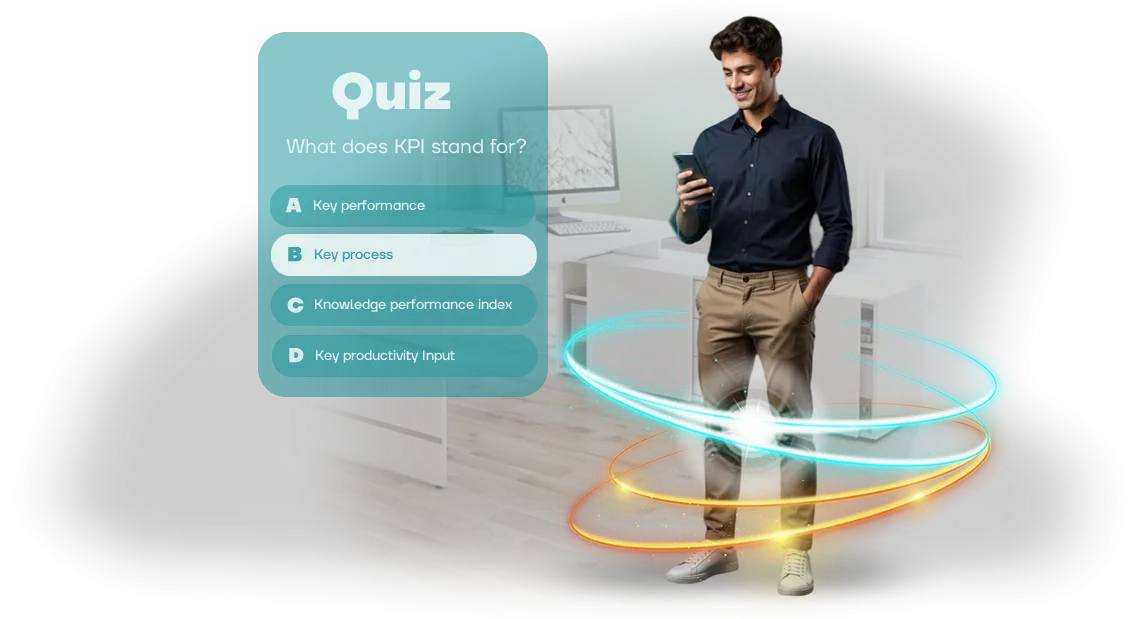
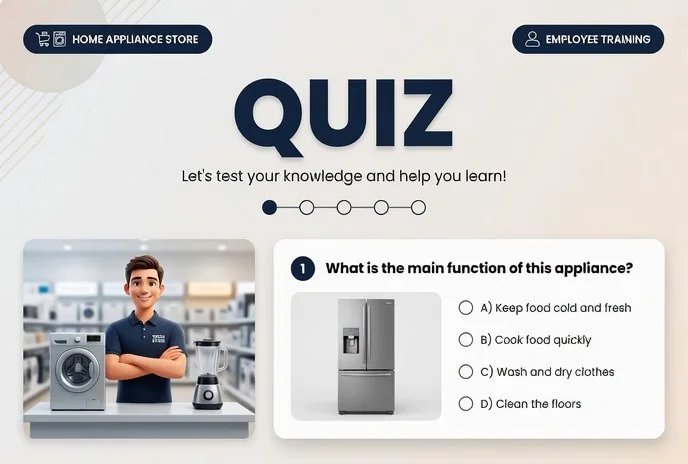
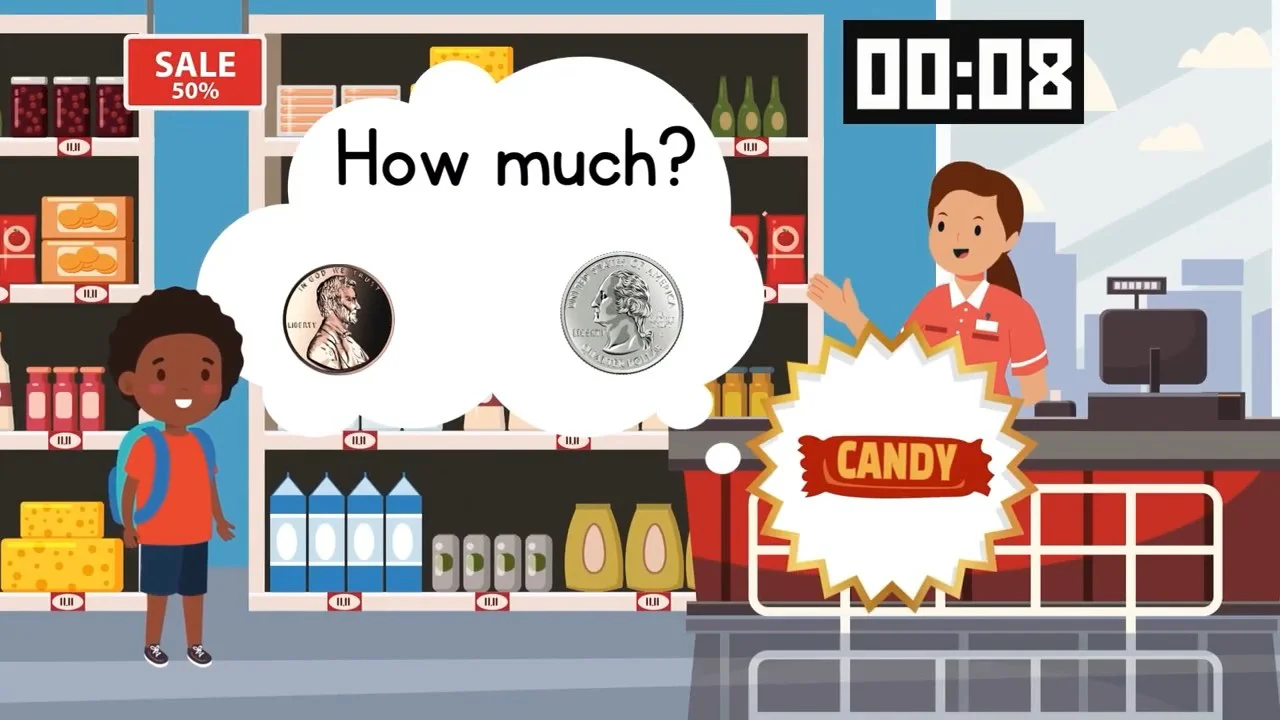
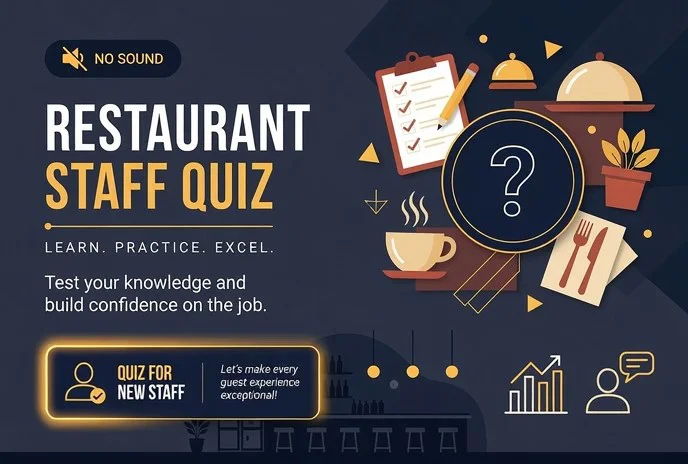
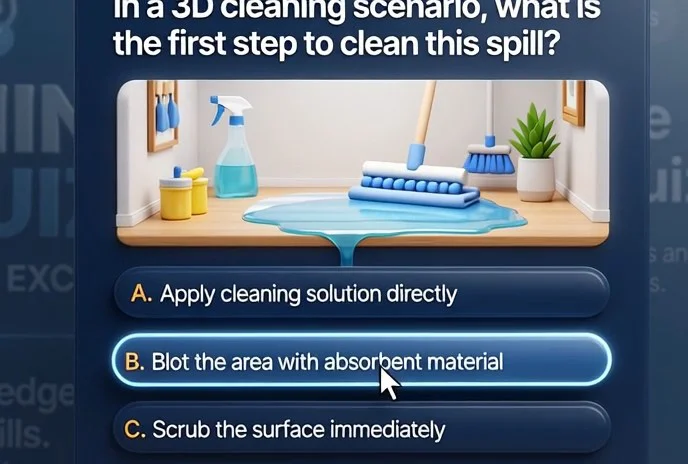
We close this gap. Instead of reading instructions — an interactive quest-quiz on Unity: scenarios as close as possible to real conditions, instant feedback, and decision checks in game form.
The employee goes through scenarios himself, makes choices, sees the consequences — and remembers the correct algorithm at the skill level.
This turns employee training from an obligation into a risk-reduction tool. The client gets not a "sign-off in the logbook" but confidence that every person on site knows what to do.
Five Measurable Results Delivered by a Training Quest-Quiz
A training quest-quiz on industrial safety is not entertainment but a tool that delivers measurable business results. Introducing game mechanics changes staff attitudes toward briefings and directly affects safety metrics at chemical plants.
The first result is engagement. When rules are presented in quest format, employees complete training with enthusiasm rather than under compulsion. Instead of passively watching slides, they solve tasks, compete, and retain material at the level of action. This is critical for the chemical industry, where the cost of a mistake is especially high.
The second is fewer accidents and violations. Repeating key algorithms through gameplay reinforces correct behavior. The employee begins to see a dangerous scenario before it emerges and acts calmly and correctly. The result: fewer incidents, micro-injuries, and equipment stoppages.
The third is transparent knowledge assessment. You see who has truly absorbed the material and who merely went through the motions.
Department-level statistics reveal gaps, and the occupational safety department provides additional follow-up in a timely manner — without arguments or "paper" checks.
The fourth is time savings. A quest-quiz takes 20–30 minutes instead of a multi-hour lecture, and the material is absorbed more deeply thanks to active work with the information. For shift schedules, this is an ideal format: flexible, fast, without detracting from real tasks.
The fifth is a sustainable safety culture. Regular short quizzes keep attention on the rules year-round, not once a year. Safety becomes a daily habit, and employees themselves begin to spot and prevent risks — the best indicator of a mature production culture.
All five results are easy to measure: completion statistics, incident dynamics, and feedback from line managers. That makes a quest-quiz a pragmatic solution for a company that wants not a formal "tick mark" but real risk reduction.
Training Quiz Formats for Different Business Tasks
The same safety material can be delivered in different ways — and the learning outcome varies significantly.
In chemical production, the cost of a mistake is high, so it's important not to "pass a test for show" but to drill the action algorithm to the point of automatic response.
We match the quiz format to a specific business task, from mass knowledge checks to practicing behavior in an emergency.
Below are typical scenarios most often ordered by plant managers. Each format solves its own task and delivers a measurable result.
| Format | For whom and when | What it delivers to the client |
|---|---|---|
| Interactive test | Mass knowledge checks, permits, onboarding briefing | Transparent view of each employee, automated reports, time savings |
| Factory quest | Operators and maintenance personnel — practicing actions for leaks, fire, and equipment failures | Algorithm rehearsal without risk to production or people, staff confidence |
| Shift-to-shift competition quiz | Boosting engagement, reducing violations | Healthy competition, interest in regulations, improved discipline |
We combine formats to fit the company's needs: a factory quest for production shifts, an interactive test for the office, and competitive quizzes to keep everyone alert.
Content is adapted to internal regulations and tests exactly the scenarios that are critical for your production.
How We Build a Safety Quest-Quiz for Your Employees
Creating a safety quest-quiz for the chemical industry starts not with code but with understanding your objectives. We don't offer a template — each scenario is built around the real risks, regulations, and behavioral patterns of your employees. That's why the first step is always a careful review of your specific situation.
Here is our process, from requirements gathering to launch:
- Requirements gathering and audit. We review your safety rules, typical violations, and target audience. We document which mistakes need to stop recurring.
- Scenario development. We create a storyline with chemical processes, emergency situations, and the correct actions. The scenario is sent to you for approval before production begins.
- Approval and edits. You make corrections and refine the wording of examples. We refine the scenario until it exactly matches your regulations.
- Creating questions and debriefs. We design answer options, error explanations, and training commentary. Every question teaches, not just tests.
- Test verification. We assemble a working version and test it together with your safety experts. We fix inaccuracies before launch.
- Launch and support. We onboard employees, provide instructions, and assist at the start. After launch, we analyze results and expand the quiz if needed.
At every stage, you see intermediate materials and know exactly when the result will be ready. In the end, you get a quest that's embedded in safety training and delivers a measurable effect — fewer violations and faster response in an emergency.
What's Included: A Complete Kit for Launching the Quiz
You don't get just a quiz — you get a ready-made system for verifying safety knowledge in the chemical industry. There's nothing to buy, finish, or adapt: we deliver a complete kit that can be launched right after approval.
The delivery package includes:
- Scenario with questions and answers — developed for your specific operations and safety rules at a chemical plant. The questions have already been tested with real employee groups: they are clear, free of ambiguity, and immediately show the level of preparedness.
- Organizer's manual — a step-by-step guide covering everything from session scheduling to facilitator instructions. All you need to do is assign a person in charge and follow the plan — no need to figure out how to run the quiz.
- Admin panel — you manage the process yourself: change questions, set deadlines, grant access to specific departments or branches. No unnecessary steps: everything in one window.
- Results report — after completion, you receive clear statistics: who passed, who didn't, and which topics cause difficulty. This data makes it easy to plan follow-up training.
- Employee instructions — simple, clear memos on how to open the quiz, what login and password are needed, and what to do if questions come up. Support requests will be kept to a minimum.
- Support at all stages — we help with setup, answer questions, and stay with you after launch. If anything goes wrong, we resolve it promptly.
This kit delivers the essentials: a fast launch without running around and full control over results. You get a working training tool, not a "semi-finished product" that has to be polished for a long time.
Case Study: How a Training Quiz Reduced Violations at a Plant
Mistakes in chemical production cost dearly: line downtime, fines, and risk to people's health. At the same time, classic briefings stopped working — employees formally listen to regulations and don't retain the action algorithms.
A plant with recurring violations in reagent handling approached us, and we proposed not another lecture but interactive training.
We developed a training quiz built on Unity — a platform that makes it possible to build live scenarios with action choices and instant feedback. Employees didn't read theory; they found themselves in situations: a leak, incorrect labeling, a colleague's abnormal behavior.
After each answer, the employee immediately saw an explanation — why this was correct and what would happen if done differently.
What changed at the plant
After three months, the plant recorded a 37% reduction in violations. The average time to complete a briefing decreased by half — employees spend 15 minutes instead of an hour, while control test results improved by 28%.
The shop manager noted that staff answer safety questions with more confidence and spot risks faster in daily work.
After the successful pilot, the company ordered additional modules for neighboring areas — the quiz proved itself as a tool for reducing accident rates, not as entertainment.
This confirms that the right presentation of material changes behavior, not just "gets a tick mark."
How to Choose the Right Training Quiz Format for Your Production?
The choice of training format depends not on trends but on the problem you're solving. If you need to quickly check knowledge of instructions, a classic test is enough.
But when it comes to safety in the chemical industry, what matters isn't "formally know" but "act correctly in a non-routine situation." This is exactly where a quiz and quest deliver what a test cannot.
A quest-quiz models work scenarios: the employee sees the consequences of his choice, makes a decision under time pressure, and learns from a mistake without risk to production. This kind of training is remembered at the level of experience, not dry theory.
A test, by contrast, is good for reinforcing standards and quick certification, but it doesn't change behavior — an employee can answer a question correctly on paper and still freeze up on the site.
When choosing a format, ask yourself three questions. First: what's the goal — certification or changing habits? Second: how many employees need to be trained and how engaged are they? Third: do you have real risk scenarios worth practicing in a safe environment?
If even one answer is "yes, that matters" — it's worth considering a quest over a standard test.
In practice, a combination works best: a short test to check the basics plus a quest-quiz to practice safety scenarios. This gives you both an objective knowledge assessment and the emotional engagement that stays with employees after training.
This is exactly the approach we implement in projects for chemical plants — from local workshops to large facilities.
The key takeaway: a quiz and a test solve different problems. A test answers "does the employee know?"; a quest answers "can he apply it?" Both are critical for your safety.
That's why we always start with an analysis of your specific situation and propose a format for your task — rather than selling one solution for all cases.
Frequently Asked Questions About Creating a Business Quest-Quiz
Clients rarely care about the mechanics of the quiz — what matters is the process, timelines, and guarantees. Here are answers to the main pre-purchase questions, so you know how we work even before the first conversation.
How do I order a quest-quiz?
Leave a request on the website or write to us via messenger. We'll have a call, clarify your tasks and audience, and propose a format. We sign the contract only after the concept is approved, so you always know what you're paying for.
How long does creating a quiz take?
A standard project takes 5 to 10 business days. The timeline depends on the number of questions and the scenario. Exact deadlines are fixed in the contract, so you can plan the launch without surprises.
What guarantees do you provide?
We fix the stages, scope of work, and timeline in the contract. You see the result at every stage and can make changes. After launch, we refine the content during the warranty period.
How is data security ensured?
Employee responses are transmitted over a secure connection and are never disclosed to third parties. For the chemical industry, we offer deployment on your own server or in secure infrastructure, so the data remains inside your company's perimeter.
Didn't find your question? Write to us — we'll respond within one business day.Let's Discuss Your Task: We'll Match the Quiz Format and Estimate Timelines
Let's discuss your task in practical terms: you'll tell us about your production specifics, and we'll suggest a quiz format that genuinely raises your employees' skill level.
We work on the professional Unity platform — this guarantees stable operation of the quiz on any device and easy integration into your training system.
You don't need to dive into technical details: we'll select the optimal solution and calculate realistic implementation timelines ourselves.
After reaching out, you'll receive:
- a consultation with a specialist in employee training and safe practices;
- quiz format selection — from a simple test to a narrative quest with immersive emergency scenarios;
- project estimate: timeline, stages, number of questions, and the level of involvement needed from your side;
- a proposal for question and scenario structure that meets industrial safety requirements;
- a plan for integrating the quiz into your current training and knowledge control system;
- example questions and a sample scenario, so you can see right away how it will work in practice;
- recommendations for launch and employee motivation, so training never turns into a formality.
To get this set of solutions, simply leave a request on the page. We'll get in touch promptly, clarify the details, and prepare an individual proposal. The discussion is non-binding — you'll get a concrete plan and can make an informed decision.