

Safety in Educational Institutions: Why It Is Critical
Safety issues in educational institutions have long ceased to be a formality that can be closed with a signature in the briefing log. The lives of children and the reputation of the organization depend on how ready each employee is to act in an emergency.
Fire, a threat, a sudden deterioration of a child's health — at such moments there is no time for deliberation or searching for instructions; a quick and correct reaction is essential.
Insufficient staff training results in more than just panic and chaos at the critical moment. It brings direct risks: delayed evacuation, incorrect first aid actions, and unclear division of responsibilities among staff.
Each such gap in training becomes grounds for complaints from supervisory authorities and, in the case of a real incident, for serious legal consequences and a blow to parents' trust.
Most often, training is reduced to a formal lecture, after which knowledge remains on paper and quickly fades away. Employees do not remember action algorithms, confuse emergency service numbers, and do not know who is responsible for evacuation in their classroom.
Occupational safety requires not just information but lasting skills that switch on automatically in stressful situations — something that cannot be achieved without regular interactive practice.
We close this gap with educational quizzes built around real-life school scenarios. Employees do not memorize abstract rules; they work through situations, learn to make decisions, and see the consequences.
Thus training stops being a checkbox and becomes real protection — both for children and for the organization itself.
What an Educational Quiz Can Bring to Your Institution
Improving Knowledge Without Taking Time Away From Work
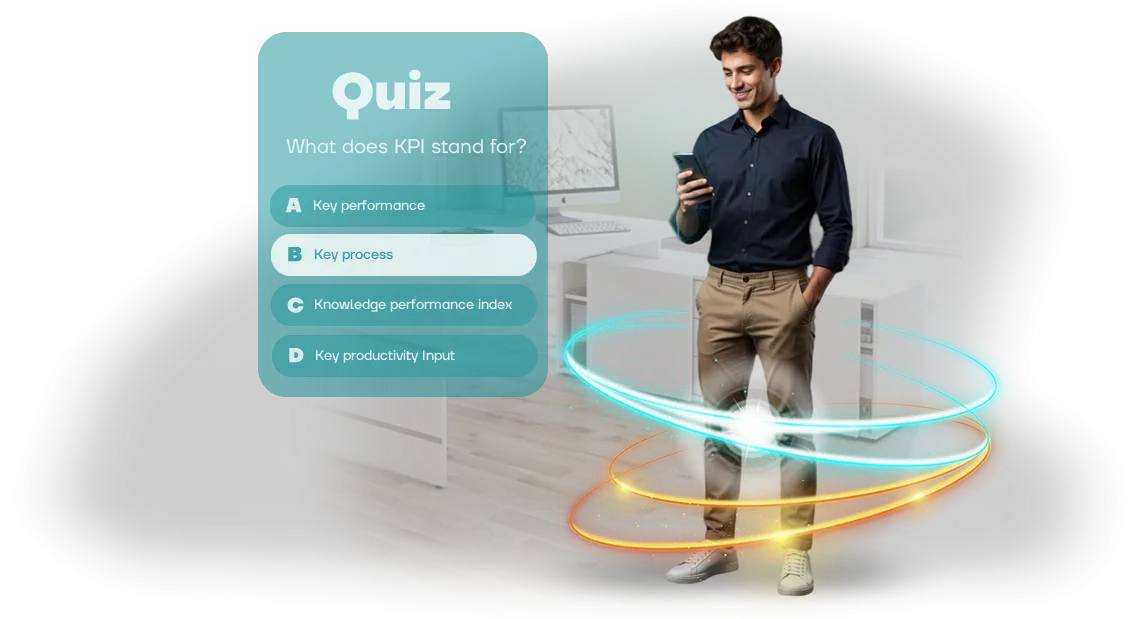
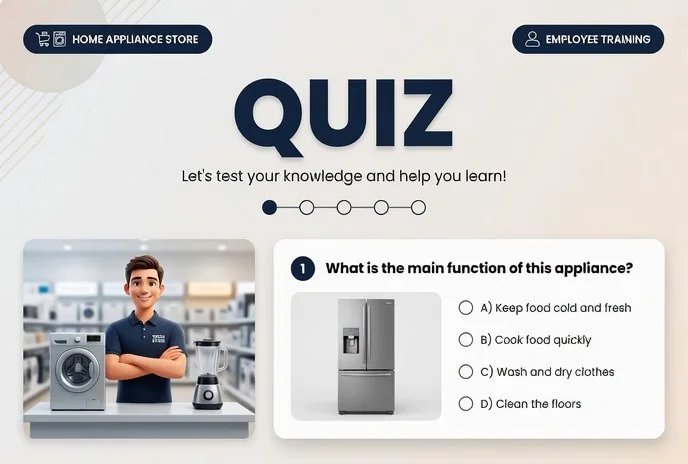
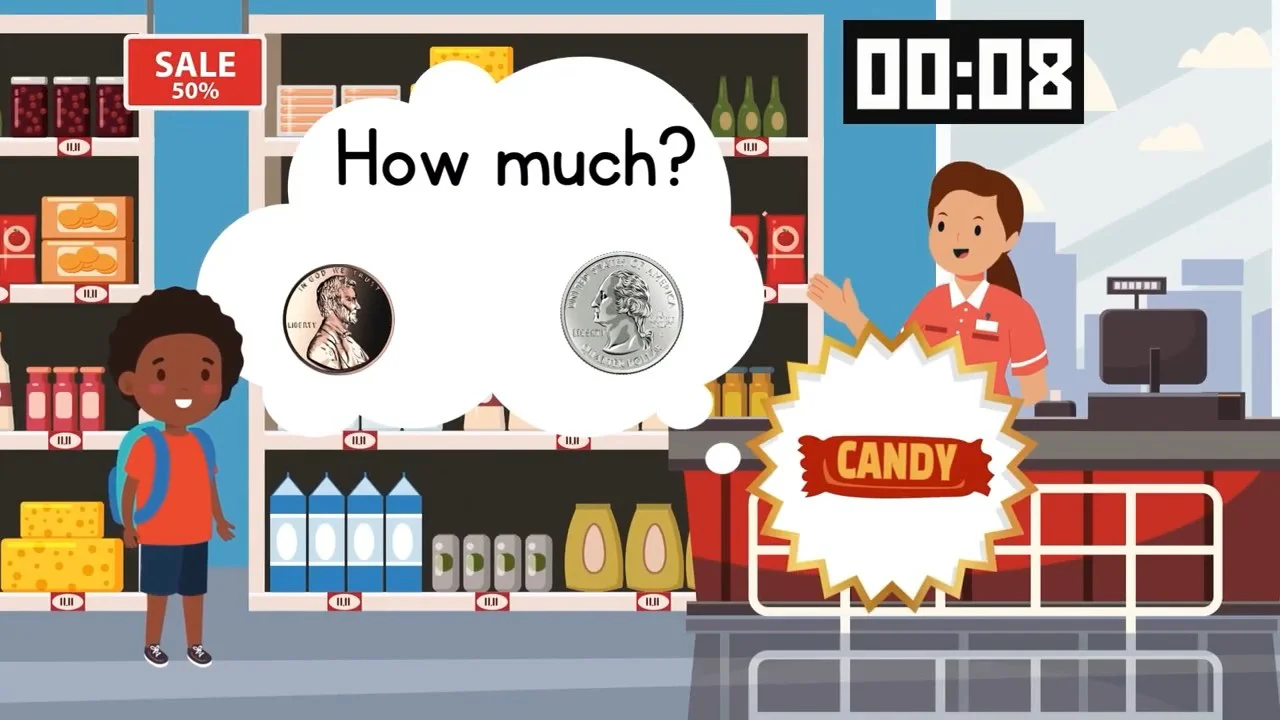
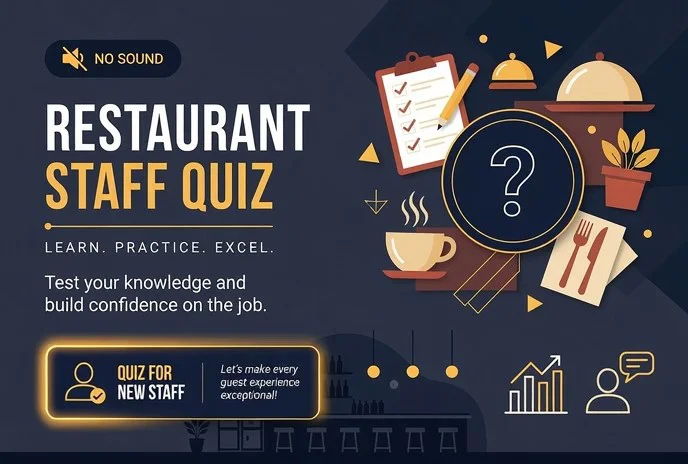
A routine safety briefing in an educational institution often turns into a formality: employees listen, nod, and forget. An educational quiz solves this problem — it presents rules through scenarios close to real situations.
Participants do not memorize dry bullet points; they experience them, which is why the information stays in memory for a long time.
The test can be taken right at the workplace, at a comfortable pace, without disrupting the educational process. This means the institution does not need to pull staff into multi-hour trainings — 10–15 minutes per round is enough.
Employee Engagement
The competitive element and visual feedback make the training exciting. Teachers and technical staff see their progress, compare results with colleagues, and discuss difficult questions. Instead of a mandatory procedure, the quiz becomes an event to which they want to return.
And when employees are engaged, they themselves look for correct answers, debate, and analyze mistakes. This is how training stops being an obligation and becomes a pleasant part of the work routine.
Reducing Risks
The quiz identifies knowledge gaps before they lead to an incident. The manager sees exactly which topics cause difficulties: fire safety, emergency response, sanitary standards. With this data, training can be strengthened precisely, rather than repeating everything.
This approach reduces the likelihood of violations, fines, and accidents. Most importantly, it protects children and staff, which is always a priority for an educational institution.
Strengthening a Safety Culture
Systematic training through quizzes builds the habit of thinking about safety every day, not just during inspections. Employees begin to act confidently and consciously because rules are reinforced through their own experience of solving situations.
A safety culture is built from small correct actions. When everyone on the team understands their role, the institution works more calmly and steadily — and this is visible to employees, parents, and supervisory authorities alike.
Safety Quiz Formats for Different Tasks
The same set of rules is absorbed differently during introductory briefings, day-to-day work, and preparation for inspections. That is why we develop safety quizzes in different formats, from quick tests to team quest quizzes.
Each format solves its own task and fits into the existing training process. This lets us avoid multiplying standalone activities and instead strengthen what is already in your training calendar.
To make it easier for you to navigate, we have compiled the main options in a table. Choose the one that matches your task or combine several — we will build a program for a specific goal together with you.
| Format | Target audience | Value to the client |
|---|---|---|
| Introductory briefing | New employees | Rapid assimilation of basic rules, fewer mistakes in the first month of work |
| Regular knowledge check | All staff | Maintaining attention to safety, monitoring progress, and identifying topics that need review |
| Training quiz | Participants in face-to-face trainings | Engagement and emotional involvement — material is remembered better than through passive listening |
| Scenario quest quiz | Employees practicing actions in emergency situations | Practicing algorithms in realistic conditions, readiness for emergencies |
| Final safety assessment | Department heads | Objective knowledge assessment, documented trail for internal checks and external audit |
Any format can be adapted to your corporate style and combined with other training stages. We don't just hand over a «box» of tests — we craft questions around your industry, positions, and internal regulations.
After implementation, you get clear analytics: which topics cause difficulty, who needs additional training, and how much the overall level of knowledge has grown. The key is that the quiz becomes a practical tool, not just a test for the sake of a checkbox.
How a Quiz Is Developed: 6 Steps
When it comes to safety in educational institutions, staff need more than dull instructions — they need a lively format that sticks. A quiz lets you quickly test knowledge and reinforce rules without tedious theory.
So that you understand how we work and what timelines to plan for, here is the full journey — from the first conversation to launch and support.
-
Brief and immersion in the task. We get on a call and discuss your specifics: number of employees, material complexity, and which scenarios need to be covered. The output is a clear technical specification and an understanding of the result you want.
-
Creating the quiz structure. Our methodologists propose a scenario: questions, answer options, hints, and explanations for mistakes. You receive a document for approval — you can edit the wording and add your own cases.
-
Design and interface. The quiz is styled after your brand: your colors, logo, and fonts are used. Employees enjoy working in a familiar visual style, and that increases engagement.
-
Interactive build. At this stage, we turn the approved scenario into a working program. We test everything on different devices so the quiz runs equally reliably on computers and tablets. You receive an intermediate version for review.
-
Approval and revisions. We hand over the pilot version. You try it with your colleagues and send feedback. We make revisions and finalize the version — this usually takes a few days.
-
Launch and support. The quiz is hosted on your platform or accessible via a link. After launch, we stay in touch: we help with access, collect completion statistics, and update questions if needed.
This process lets you control every stage and see intermediate results. Timelines depend on the volume of material, but on average a project takes 2–4 weeks.
Most importantly, you get a ready-made tool that employees complete without resistance and that helps them truly remember safety rules.
What Is Included in the Delivery: A Complete Launch Kit
After development is complete, you receive not just a quiz but a ready-made tool for checking staff knowledge. The delivery package includes all materials: from the game itself to instructions and methodological recommendations.
We configure the system, train your administrators, and provide a guarantee on the result — after that, you can run training without our help.
- A launch-ready safety quiz for educational institutions. The questions cover key threats: fire, terrorist danger, emergency response, and first aid. After each answer, the employee sees an explanation — this reinforces knowledge.
- Methodological materials: a running scenario, facilitator recommendations, employee handouts, and a preparation checklist. All of these can be printed or emailed.
- Administrator instructions: a step-by-step guide to launching, configuring, and running the quiz. You can conduct training even without a technical specialist on staff.
- Administrator training: an online session where your employees learn to manage the quiz, add participants, and view results.
- A personal dashboard with statistics: you see who has completed the training, how many points they scored, and which topics caused difficulty. This helps adjust future training sessions.
- Project source files: they remain with you, so you can make changes or hand the project to another team without restrictions.
- Guarantee on the result: we commit to deadlines, provide post-launch support, and fix bugs free of charge during the agreed period.
Real Result: Case Study of a Quiz Implementation in a School
One illustrative case is the implementation of an educational quiz at Secondary School No. 14. Previously, the safety briefing was purely formal: teachers «reported» that they had reviewed the materials, but the knowledge was not retained.
This is critical for a school — children's lives depend on staff actions during a fire or evacuation.
We suggested replacing the boring lecture with an interactive Unity-based quiz. It is a game format with realistic scenarios: the employee decides how to act in smoke, where to lead the class, and how to provide first aid.
It can be completed from any device at any time, and the system immediately shows mistakes and explains the correct answer.
Numbers That Speak for Themselves
- The share of employees who passed the briefing successfully on the first attempt increased by 30%.
- Completion time was almost halved — from an hour to 25–30 minutes.
- After a month, the knowledge level was retained by 95% of employees — the material was clearly memorable.
- Management gained a transparent report: who completed the training and which topics cause difficulty.
Six months later, the school ordered a quiz update and an additional module for high school students. A repeat request is the best proof that the game format works: safety becomes a habit rather than a formality.
How to Choose a Suitable Quiz Format?
Choosing a quiz format starts not with game mechanics but with answering two questions: what task should the game solve and who will play it.
For employees of educational institutions, the same safety topic can be presented differently: teachers need a professional analysis of situations, technical staff need quick briefings, and administration needs compliance checks. So first we define the goal: increase engagement, test knowledge, or practice emergency response.
Next, we look at the audience and conditions of use. If the team is large and works across different buildings, a short quiz run on a phone is more convenient — it fits into 15–20 minutes and does not require gathering everyone in an assembly hall.
If live group training is planned, a team quest game with case solving is better: it creates discussion, and therefore, the material is remembered more deeply.
For repeat briefings, a test with explanations of correct answers works well — it reinforces knowledge without extra pressure.
It is also important to assess the available time and the staff's level of digital literacy. Some employees may struggle with complex interfaces, so the simpler the quiz controls, the faster it will be embraced.
We choose a format so that technology does not hinder training but enhances it: large buttons, clear hints, automatic prompts when mistakes are made — all of this cuts down time spent figuring things out.
Another criterion is how you will evaluate the result. If you need statistics for each employee, we choose an individual format with results saved in a personal dashboard.
If the main goal is to unite the team and relieve tension around a serious topic, metrics matter less and emotional engagement takes the lead. In that case, the quiz can award points to teams and end with a group discussion.
If you are unsure which quiz to choose, start with a short task brief: who participates, how much time is available, and what should change after the game. Based on these three parameters, we offer 2–3 formats with a forecast of reach and retention.
In most cases, the optimal combination for training employees of educational institutions is a short self-check test plus a group game to reinforce skills.
This approach has been tested on hundreds of projects and delivers steady growth in material retention without overloading staff.
Common Client Concerns: Honest Answers
When ordering a safety quiz for educational institutions, you will inevitably ask yourself: what will the development cost, how quickly will everything be ready, and will the technology fail you at the critical moment. We answer honestly, drawing on ten years of experience with such projects.
Below, we address the most common client concerns. If your question is not here — just write to us and we will discuss it personally.
How much does quiz development cost?
Each project is individual: the cost depends on the number of questions, the scenario, and the formats required. That is why we first conduct a short brief and then fix the cost estimate — with no hidden fees or unexpected add-ons.
What are the development timelines?
A standard project takes 2–4 weeks. We state the exact launch date at the briefing stage and include it in the contract. If the task needs to be completed sooner, we will discuss ways to speed it up.
How difficult is it to implement the quiz?
Implementation usually takes one day. The quiz runs on standard computers or tablets and requires no special equipment. We help with setup and provide a short instruction for your employees.
What technical risks are there, and how do you address them?
We use proven tools and professional equipment, so failures are unlikely. Before delivery, we test the quiz on various devices, provide a warranty on the work, and remain available after launch to promptly resolve any issues.
Ready to Raise the Level of Safety? Order a Quiz
Training employees on safety rules often becomes a formality: lectures and briefings are remembered worse than we would like, and risks remain. A quiz solves this problem — it engages staff, turns boring information into clear scenarios, and tests knowledge in a game format.
Employees remember rules through real situations, and you get a measurable result: fewer violations and greater readiness to act.
We develop educational quizzes for the specific needs of your institution: we take into account your regulations, typical hazards, and the specifics of working with children.
You get a ready-made tool that can be launched for all employees, with tracking of who has completed the training and who has not. All you need to get started is to talk with us: we will discuss the task and prepare a proposal tailored to your budget and timelines.
What you get after contacting us:
- A free consultation on the quiz format and its integration into the training system.
- A cost estimate within 1–2 business days — no hidden charges or forced options.
- A brief: we structure your requirements so you can see what the final result will look like.
- Examples of similar projects for educational institutions — evaluate our approach before starting.
- Support at every stage: from scenario to launch and staff briefing.
Don't postpone safety. Contact us to discuss your quiz, get an estimate, and find out how quickly training can be launched. One request — and we will prepare a plan that protects your employees and your institution.