


Do employees violate security rules in telecommunications?
Even one careless employee action — the wrong link, the wrong file, an unverified call — can lead to data leakage or network failure.
In telecommunications, security risks are especially high: operators store vast amounts of personal data, and rule violations threaten not only reputation but also direct fines from the regulator.
At the same time, most incidents occur not out of malicious intent, but due to carelessness or lack of awareness of current requirements.
Regular briefings and lectures don't work: employees listen with half an ear and forget half of it within a week. Information is presented dryly, without connection to real work situations, so security rules in telecommunications remain a formality. Staff training turns into a checkbox exercise rather than a tool for protecting the company.
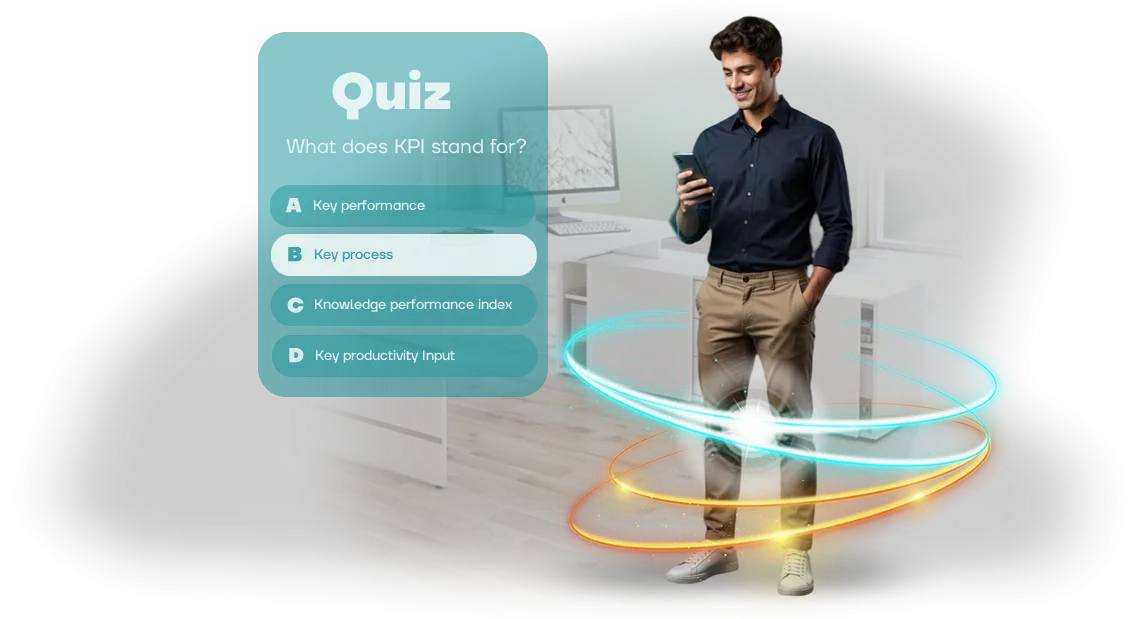
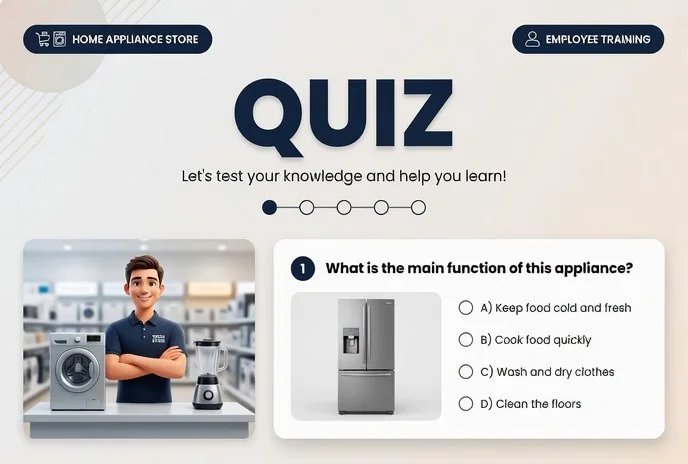
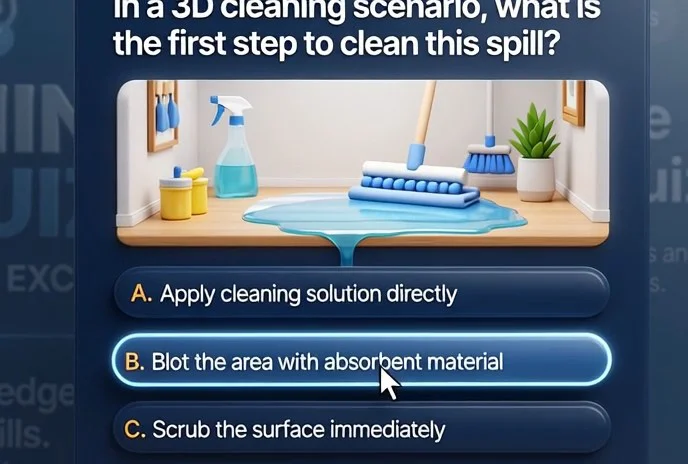
Quizzes solve this problem. Short interactive scenarios immerse the employee in familiar situations: a suspicious email, a request from a "colleague" to share a password, a dubious USB drive.
The person makes a choice and immediately sees the consequences — this builds real skill, not abstract knowledge. Thanks to the game format, engagement grows, and rules are remembered on their own.
For business, this means fewer incidents, protection of client data, and confidence that everyone on the team acts consciously. Managers gain control: it's visible who completed the training, who makes mistakes, and where a topic needs additional review. Quizzes are easy to update for new threats, so staff training always stays relevant.
We develop such quizzes for telecom companies: taking into account your regulations, typical security risks, and corporate style.
This is not just a test, but a ready-made tool that integrates into the onboarding process and scheduled knowledge checks — and genuinely reduces the risks of leaks and fines.
Benefits of implementing a quiz for the company
Regular security briefings are a formality: employees sit through the lecture, but after a week remember only a small part. Violations repeat, the company pays fines and loses reputation.
The training quiz by our team, built on the professional Unity engine, turns mandatory material into a game where every decision has consequences. This way knowledge sticks at the level of habits, not paper checkmarks.
Employee engagement
Gamification multiplies interest in learning: employees compete, earn points, and advance to new levels. Instead of a boring "must-do", there's excitement, and 90–100% of the team completes the course — even those who used to skip briefings. This directly affects security: the more people who have absorbed the rules, the fewer violations.
Reducing risks and violations
The quiz models real threats: suspicious calls, phishing emails, dangerous actions with equipment. An employee trains to recognize danger before it leads to an incident. Companies using this format report a 30–40% reduction in violations already in the first quarter after launch.
Savings on training
Develop once — use for years. The quiz is easy to update: change scenarios, add new threats, adapt for different departments. No lecturers, venue rentals, or handout materials are needed — training budget savings reach 50% compared to in-person briefings.
Transparent results
Each employee's results are saved in a personal account. The manager sees who completed the course, where mistakes were made, and which topics need review. Training stops being a "black box" — you manage the team's level of preparedness and can close gaps in time.
Quiz formats for security in telecommunications
Security in telecommunications is an area where the cost of an employee's mistake is measured not by a test score, but by real risks to the network, data, and company reputation.
But regular knowledge checks quickly become a formality: employees answer "as expected" and immediately forget the rules. A well-chosen quiz format solves this problem — it holds attention, makes people think, and reinforces the right behavioral patterns.
We work with three basic formats — from light tests to a full-fledged quest quiz on Unity. The difference is not in "looks" but in results: what do you want — a quick snapshot of knowledge, practice of actions, or long-term team engagement with the security topic.
How to choose a quiz format
| Format | Suitable for | What it gives the client |
|---|---|---|
| Short test | Regular checks after briefings, quick knowledge control | Time savings, automatic reports for each employee |
| Situational test | Practicing actions in emergency situations and under threats | Employees don't cram but apply rules in practice |
| Quest quiz on Unity | Game-based learning, increasing interest in security | Emotional engagement, high retention rate, team discussion |
The quest quiz is especially effective when briefings no longer work and you need to reset the team's attitude toward the topic.
It's not just multiple-choice questions, but a complete scenario in which the employee makes decisions and sees consequences — security in telecommunications becomes clear and "their own".
We'll help you choose a format for your task, and if needed, combine several: a quick test for everyone and a quest quiz for key departments. The main thing is that employees don't just sit through it, but actually absorb the material and change their behavior.
How quiz development works: a step-by-step process
We structure the process so that you don't just receive a "finished quiz", but see what happens at each step and how it affects the result. Below are the six stages that every project in our employee training practice has gone through.
Through them, you understand when you get involved, when you see the first results, and what you receive after launch.
- Brief and getting into the task. We analyze who your employees are, which security scenarios are critical for them, and in what format they most easily absorb material. You provide regulations and cases, we turn them into clear game situations.
- Quiz plan and scenario. We create the plot, question structure, and completion mechanics. You receive a document showing which topics are covered and how this connects to your training goals.
- Reviewing mechanics and design. We show how the quiz looks on screen, how an employee answers questions, and what happens after a mistake. At this stage, you can make edits without redoing the whole project.
- Development and content creation. We assemble the quiz on a professional platform, finalize question wording, and add hints and explanations for answers. We make sure the material is remembered, not just "clicked through".
- Testing and debugging. We run the quiz in real scenarios: several employees, different devices, different completion speeds. We make sure nothing freezes and results are saved correctly.
- Launch and support. We hand over access, train your team, and help with the first launch. After launch, we stay in touch: fix inaccuracies, add questions for new regulations, and update the quiz when security rules change.
This approach removes the main risk — "we'll make it, but it won't be what we wanted". You see the scenario and mechanics before the main effort is invested, and at any moment you understand what's happening with the project.
We call this transparent development: you pay for a clear result, not for a process hidden from you.
What's included in the training quiz delivery
Each training quiz is not scattered files, but a ready-made package that can be launched on the day of delivery. We think through the full cycle: from scenario to analytics, so you don't have to assemble the system piece by piece and configure it with your own specialists.
The delivery includes all the elements needed by the HR department and managers to monitor training. You get not a "semi-finished product", but a working tool that's easy to adapt to new regulations and tasks.
- Quiz content — questions, scenarios, and explanations on security in telecommunications. The material is prepared based on your regulations and typical violations, so employees work through real situations instead of abstract examples.
- Design and styling — a branded interface that looks equally good on computers and tablets. Instead of a "boring test", employees see neat cards, animations, and hints — this holds attention until the last question.
- Game mechanics — a points system, difficulty levels, and instant feedback. After each answer, the employee gets an explanation of why they were right or wrong, which improves retention without an instructor.
- Admin panel — reports for each participant: progress, results, completion time, and typical mistakes. The manager immediately sees who has absorbed the material and who needs additional training.
- Launch guide — a step-by-step manual for the HR department: how to grant access, set completion deadlines, and integrate the quiz into an existing distance learning system.
- Content updates — you can independently change questions, add new scenarios, and modify game rules without contacting developers. Included: a user-friendly admin area and brief training for your team.
Case study: how a quiz reduced violations by 40%
The Volna Telecom case began with a typical pain point: lectures and regular tests didn't reduce the number of incidents. Employees passed the check, but a month later violated again — the risk of leaks and fines remained high.
We proposed a quest quiz on Unity instead of slides, where the employee experiences real situations: a suspicious email, a foreign device, a call from "tech support".
We implemented the game in a pilot group — a thousand office and technical department employees. Each scenario took 5–7 minutes: you had to make decisions, and the system explained the consequences of each mistake and offered to repeat the stage.
The game mechanics held attention better than standard training and made employees understand the logic rather than memorize answers.
Quarterly result: the number of violations dropped by 40%, and phishing incidents were cut in half. A follow-up check three months later showed that employees apply the rules without reminders — knowledge was cemented through practice.
Managers received a report for each participant: who completed it, where they made mistakes, and which topics should be reviewed.
After the pilot, the operator ordered an expanded version: we added scenarios for related departments and included the quiz in new-hire onboarding.
Now it's completed before employees get equipment access — this way the company reduces the impact of the human factor before a mistake leads to an incident. The repeat order confirmed: the format works exactly where simple instructions didn't help.
How to choose the right quiz format?
Choosing a quiz format always starts not with mechanics, but with the learning goal. If you need to quickly check knowledge of instructions and regulations — a classic multiple-choice test is enough.
If the goal is for employees to remember security rules and apply them in stressful situations, scenarios with action choices and time limits work better.
The second criterion is audience and reach. For mass training of all employees, a format that everyone completes at their own pace is convenient. For team building and practicing collaboration, a team game where questions are discussed together works well.
It's also important whether you need statistics for each employee — this determines which format will allow you to collect objective data.
| Format | Suitable for | What it gives the client |
|---|---|---|
| Classic test | Quick knowledge check after a briefing | Clear statistics, automatic grading, low entry threshold |
| Timed quiz | Practicing reactions under time pressure | Brings closer to real situations, shows confidence level |
| Story-driven quest quiz | Deep immersion in security rules | Emotional engagement, learning through narrative |
| Team game | Team building and experience exchange between departments | Review of complex cases, lively discussion, reduced resistance to the topic |
If you're unsure — choose a hybrid format. For example, a short test for initial assessment and a story-driven quest for reinforcement.
Wehelp you choose the mechanics for your task and budget, and then implement it on a professional platform — so you get a working tool, not just "another toy". Just describe what employee behavior you want to change — we'll take care of the rest.
Frequently asked questions about corporate quizzes
Implementing a training quiz often hits the same questions: will the launch go smoothly, how will employees react to the new format, what to do about glitches, and — most importantly — will the result pay off. We answer the objections we hear most often.
How long does implementation take?
A typical project takes two to four weeks — depending on the volume of material and the format. We collect the brief, prepare the questions, set up the platform, and run a test launch together with you. You don't need to assign a dedicated employee: we handle all stages ourselves.
Won't employees see it as just another test?
The quiz is built like a game: competition, points, a live leaderboard. People complete it voluntarily because it's not a boring check, but an exciting quiz with team spirit. As a rule, the pilot launch already shows high activity and engagement.
What if a technical failure occurs during the event?
We work on the professional Unity platform, which reliably handles hundreds of simultaneous participants. For offline events, there's a backup launch option without internet, and tech support stays in touch throughout the quiz. Risks are minimized.
How can we tell the quiz is effective and pays off?
You get analytics: who completed it, which topics caused difficulty, how long it took. This data shows the real level of knowledge and helps adjust the training program.
And since the quiz can be launched repeatedly without new costs — it pays off after the first two sessions when training an entire department or branch.
If you still have a question — ask us. We'll recommend a format for your task and show how the quiz fits into your current training process.Order a quiz developed for your needs
Security training in telecommunications often becomes a formality: employees skim through instructions but don't remember the key rules. This leads to incidents, missed deadlines, and extra costs for repeated explanations.
A quiz changes the approach — material is absorbed playfully, and you get clear statistics for each employee. Launching training is simple: leave a request, and we'll go through the six-step path without bureaucracy or unnecessary technical details.
- Request — you describe your task, we get in touch within one business day and clarify the details.
- Consultation — we analyze which security topics matter for your team and suggest a suitable format.
- Demo — we show a live example of a quiz so you can evaluate the learning mechanics before making a decision.
- Commercial proposal — we set out the scope of work, timelines, and terms without hidden surcharges.
- Development — we prepare the scenario, questions, and design in your corporate style.
- Launch and support — we run the quiz, collect results, and help with employee questions.
Leave a request right now — during the consultation, we'll show what a security quiz for telecommunications looks like and what it brings to your business.
We'll prepare the demo and commercial proposal within two business days, and the first launch is possible within a few weeks.