


Why Cybersecurity Lectures Don't Work
Every company trains employees in cybersecurity, but incidents still happen. Employees nod along at lectures, and a week later can't remember how to tell a fake email from a real one.
As a result, the human factor remains the main cause of data leaks — it's people's actions, not technical failures, that lead to data loss.
Why does this happen? A lecture is built on passive perception: the speaker talks, the employee listens and gets distracted by work tasks. Without engagement and practice, information doesn't stick and doesn't turn into a skill. Security rules are perceived as abstract instructions, not as a tool to protect one's own work.
Plus, critical scenarios — phishing, insecure passwords, data transfer — are reviewed without context immersion. The employee has never encountered the situation in a safe learning environment, so in reality they act impulsively. That's why handouts and regulations alone aren't enough — they don't change behavior.
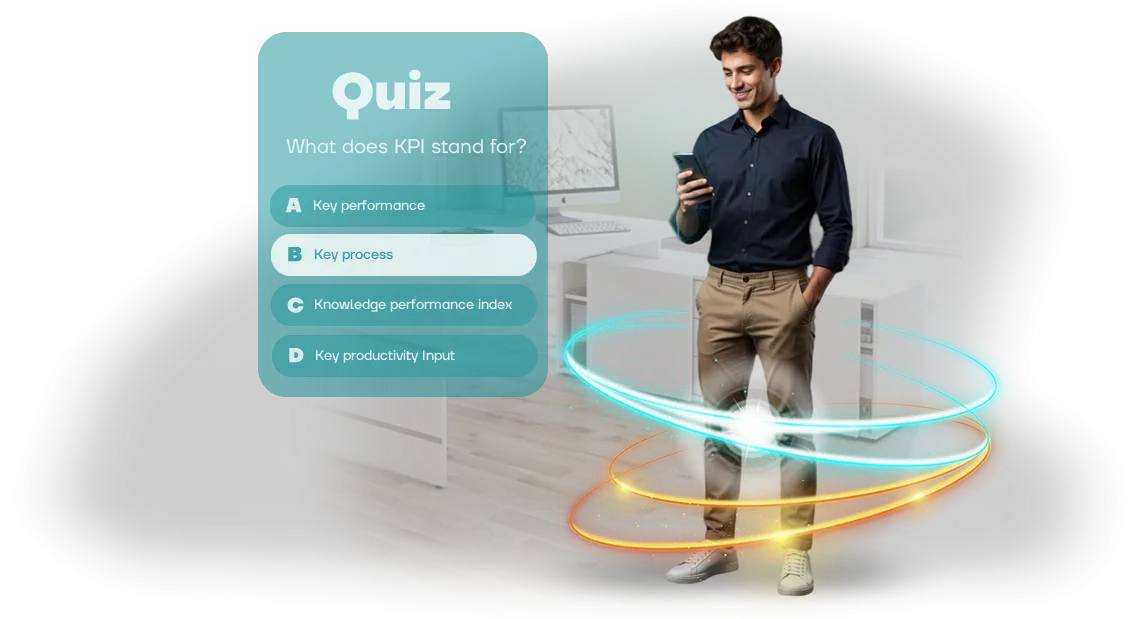
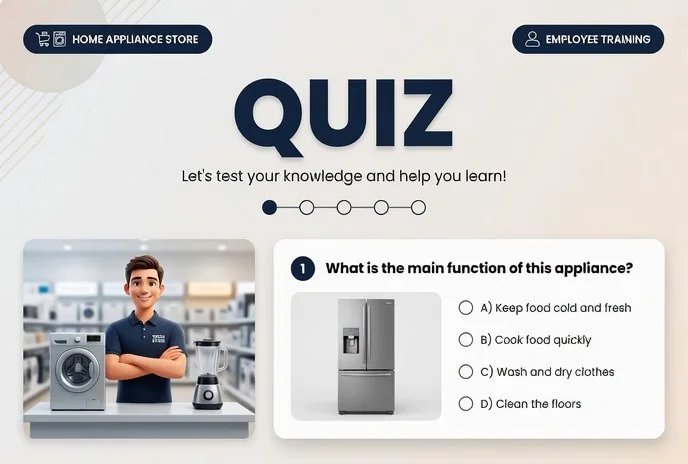
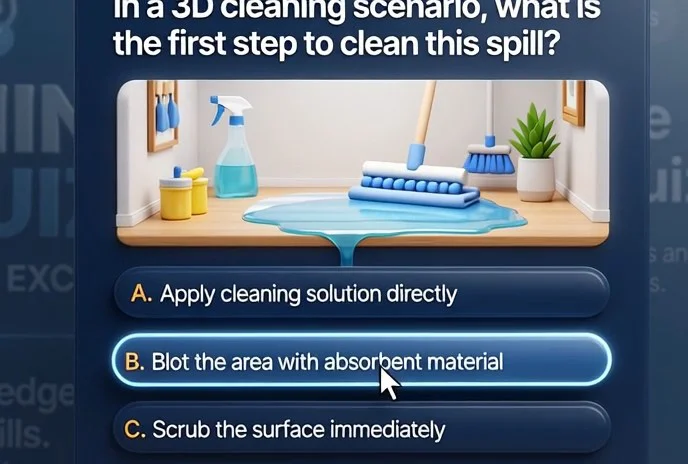
The solution is to turn employee training into an interactive cybersecurity quiz. We create a scenario where the employee makes choices in typical situations, gets instant feedback, and remembers the consequences.
This way we close the human factor problem: training becomes part of the experience, not a boring obligation, and the employer gets a real reduction in incident risk.
What Changes After Launching the Quiz: 4 Business Benefits
Corporate cybersecurity training often becomes a formality: employees listen to lectures and immediately forget the material. A quest-quiz on Unity solves this problem — it engages, teaches, and delivers measurable results.
Engagement. Employees compete, earn points, and see progress. Training becomes interesting, so knowledge is absorbed more deeply.
Risk reduction. Game scenarios practice real threats: phishing, suspicious links, weak passwords. Mistakes are made in a virtual environment, while in reality employees act correctly.
Measurable results. The administrator gets statistics for each participant: success rate, speed, problem topics. This helps fine-tune training precisely.
Corporate training. The quiz can be used for onboarding new hires, annual knowledge checks, or unscheduled testing. Questions are updated without stopping the game.
The team at our team develops such quest-quizzes on Unity on a turnkey basis: from script to launch. Clients report increased engagement and a reduced number of incidents after implementation.
Cybersecurity Quiz Formats: Which One Fits You
Cybersecurity training often becomes a formality: employees pass tests but keep falling for phishing emails. The reason is a mismatch between format and task. A test shows what the employee knows but doesn't demonstrate their behavior.
For real protection, what matters isn't knowledge but automatic reactions, which are formed through practice.
That's why we use different quiz formats — from classic tests to interactive quests with threat simulation. Each solves its own task, and together they give the full picture: knowledge assessment, skill practice, and topic engagement.
| Format | Best suited for | What it gives the client |
|---|---|---|
| Test | Checking basic knowledge, running mass surveys, certification | Quick snapshot of training level, automatic report for each employee |
| Quest | Boosting engagement, building team cohesion, covering complex topics | High employee reach, learning through story and team interaction |
| Simulation | Practicing responses to phishing, data leaks, and other threats | Practical skills without company risk, readiness for real incidents |
How to choose? If the goal is to quickly check all employees and identify weak spots, a test is enough. If you need to change attitudes toward security and reinforce rules through emotions — choose a quest. When readiness for real attacks matters, combine simulation with tests. We'll help you put together a program tailored to your budget and performance metrics.
How Quiz Development Works: 5 Steps from Brief to Launch
Developing an educational quiz is a transparent process that we at our team structured so you see results at every step and can influence the project. Below are five stages from brief to launch. Each step ends with a concrete result — this eliminates surprises at the final stage.
-
Brief. We discuss your goals, audience, and cybersecurity scenarios. You get a work plan and timeline and understand what will be delivered.
-
Script. We develop the story, questions, and difficulty levels. We align this with you before development starts — so you avoid rework at later stages.
-
Approval. We show a working prototype. You check the logic, design, and texts and make final edits — they are made before the final build begins.
-
Development. We assemble the quiz on a proven technical foundation and test it on different devices. You get a stable version exactly on time — we handle the technical details while you simply launch the product.
-
Launch and support. We help roll out the quiz to employees, train administrators, and hand over instructions. After launch, we stay in touch: we update questions, add new levels, and monitor stability. Support is included — your employees always work with current content.
This approach eliminates misunderstandings and missed deadlines. You always know what's happening and can adjust the project if needed.
In the end, you get a quiz that increases employees' cybersecurity literacy and reduces business risks — without extra technical burden on your team.
What's Included in the Delivery: Script, Mechanics, Analytics
You get not just a set of files, but a ready-made training tool. The package includes everything needed to launch a cybersecurity quiz without developer involvement — from story to reports.
- Script and story: a well-thought-out narrative that holds attention. Employees see familiar work situations and learn to respond correctly.
- Question bank with explanations: each answer comes with a breakdown. This turns the test into learning — employees understand why a decision is correct.
- Gamification: points, levels, leaderboards. The competitive element increases engagement, and the material is absorbed better.
- LMS integration: results automatically flow into your learning system. HR and managers see progress without manual data collection.
- Analytics and reports: data on each employee and department — dynamics, typical mistakes. You know exactly who has mastered the topic and who needs additional training.
- Methodological materials and support: administrator instructions, announcement templates, and recommendations for working with results. If needed, we expand the question bank to fit your tasks.
In the end, you get a tool that covers the entire training cycle: you engage employees, check knowledge, and make informed decisions about team development. All you have to do is set a launch date.
Case Study: How a Corporate Quiz Cut Incidents by 40%
Let's take a real case: Innoware — a technology company with 300 employees — faced internal threats stemming from carelessness. Phishing emails reached personal inboxes, and security tests showed that only a third of the team could distinguish a real email from a fake one. Classic cybersecurity presentations were skimmed in a minute.
Solution
The solution looked like a game.
We developed an interactive quiz on Unity for the client, where each situation is a real scenario from their industry: "recognize phishing," "respond to an incident," "protect data." Employees completed levels, earned points, and competed as teams — in the end, everyone finished the training, not just the most conscientious.
Result
Three months later, we measured the outcome: the number of incidents related to the human factor dropped by 40%.
The head of information security noted that "people are no longer the most vulnerable part of the system." The quiz paid for itself in the first quarter — and now the company uses it to onboard new employees.
This case shows that game mechanics aren't entertainment but a risk management tool. When training addresses real threats and provides instant feedback, employees change their behavior, and the business gets measurable savings.
How to Choose a Quiz Format So Employees Don't Get Bored?
To keep employees from getting bored with an educational quiz, the format should be chosen not by "trendy or not" but based on your team's specifics and training objectives.
There's no universal answer: what works great in sales may fail in a technical department, and a large company needs a completely different approach than a small team.
First, assess the group size and its real engagement. If you have a large workforce, team formats with live competition and a shared screen work well — this creates energy and excitement.
For small departments, individual scenarios with feedback after each question are more effective, so everyone can calmly review mistakes and reinforce the material.
Consider what employees already know. For beginners in cybersecurity, a quiz with explanations and hints that teaches during the game works well.
For experienced employees, it's better to create a format with high difficulty and time limits per answer — this tests real knowledge and maintains interest through challenge.
Also consider business goals: if you need to quickly introduce a new security policy to the team, choose a short quiz focused on typical situations.
If the task is to reinforce skills on complex scenarios, it's better to split the material into several rounds with gradually increasing difficulty. Then training doesn't become routine but feels like an engaging game with progression and results.
One last practical tip: start with a pilot launch on one group to assess how the team perceives the chosen format. Measure engagement, completion time, and repeat rates, then adjust the mechanics.
That's how you'll find a quiz that won't bore employees and will genuinely boost their cybersecurity skills.
Frequently Asked Questions About Employee Quizzes
Employees often see cybersecurity as a boring obligation, and managers worry that training will take months and turn into endless approvals. A quiz solves both problems: it's short, and with a ready script, the launch fits within a work week.
But before starting, every team has typical questions — about timelines, cost, updates, and technical risks. We answer them briefly.
How long does quiz development take?
With a ready script, we assemble the test version in 5–7 working days. That's enough to align the mechanics and launch training without disrupting work processes.
How much does such a quiz cost?
The cost is fixed after the brief — it depends on the volume of content and the complexity of scenarios. You know the budget in advance, with no hidden additional costs.
How are questions updated after launch?
Threats change, so we add new cases to the quiz. Updating doesn't require rewriting from scratch — we adjust questions and difficulty to match current risks.
What if employees have different devices?
The quiz works through a browser on computers, tablets, and smartphones. Nothing needs to be installed, so training works both in the office and remotely.
What guarantees of technical reliability are there?
Before launch, we test the quiz, and after — we monitor stability. If a failure occurs, we fix it promptly; the team stays in touch even after release.
Order Your Quiz Development Today
Leave a request through the form on the website or by phone — within a business day, we'll contact you, clarify the tasks, and suggest the best way to run the training.
If the quiz topic is cybersecurity, we'll help design questions so employees learn data and password rules in a game format.
We start work quickly: typical scenarios don't require lengthy approvals. A short brief is enough — and in a few days the quiz is already being assembled. You get a clear process without unnecessary bureaucracy.
What happens after your request:
- Request and call: you describe your employees and goals, we suggest a suitable format.
- Brief: we record the topic, question difficulty, number of players, and timeline.
- Work plan and contract: we agree on details and set the start date.
- Work begins: right after signing — we launch quiz production.
- Content creation: we write questions and scenarios, taking into account your company's specifics.
- Trial version: you see the quiz before launch, check it, and make edits.
- Launch: we deploy the quiz, brief administrators, and help with the first games.
Thanks to a streamlined process, most projects reach launch within 2–3 weeks. You get a ready-made training tool that employees complete with interest, and you see results right after the first games.