

Errors at logistics centers and warehouses destroy business processes
Employee errors at logistics centers and warehouses are not just a human factor, but direct losses in money and time. Incorrect picking of goods, mixed-up labeling, and untimely placement of cargo lead to missed shipments, fines, and lost customers.
Each such error hits the entire chain of business processes: from supplier to end recipient. The higher the load on the warehouse, the more expensive each deviation from the regulations becomes.
Traditional staff training often comes down to dry instructions and presentations, so knowledge is not retained. An employee remembers only part of the rules and, under work pressure, repeats old mistakes.
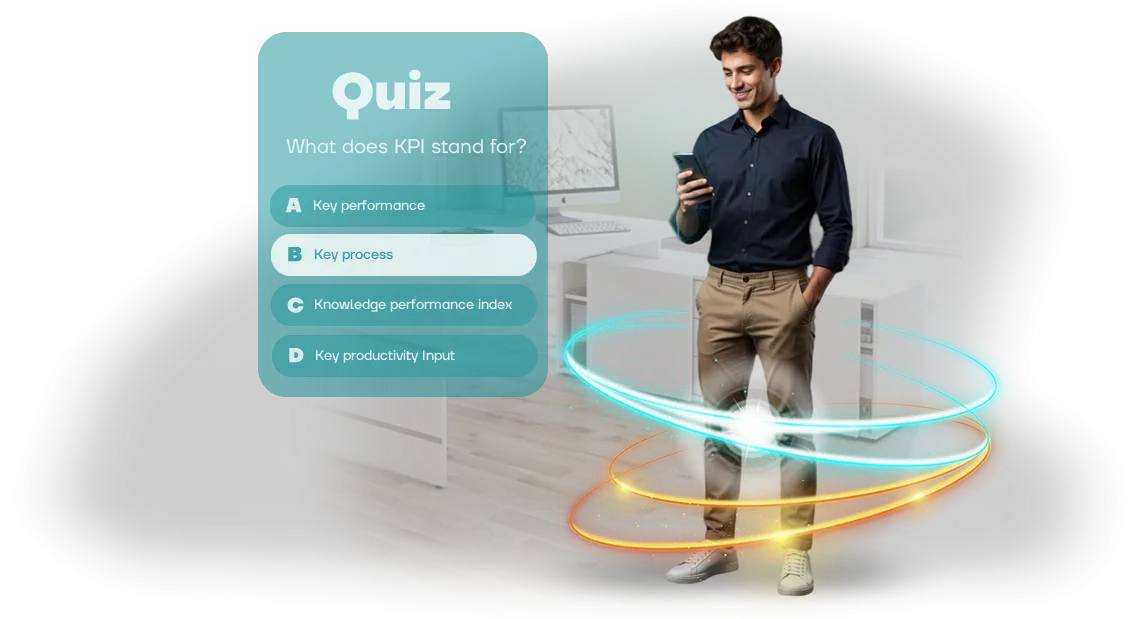
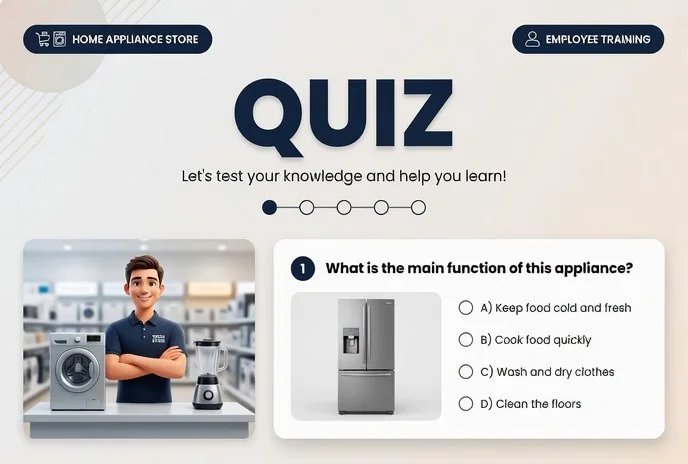
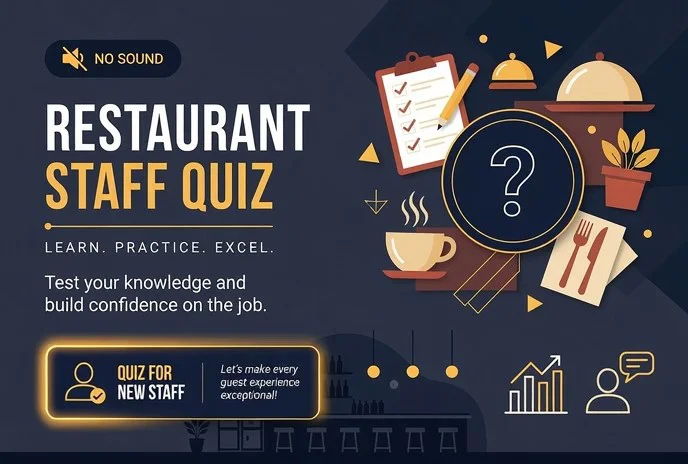
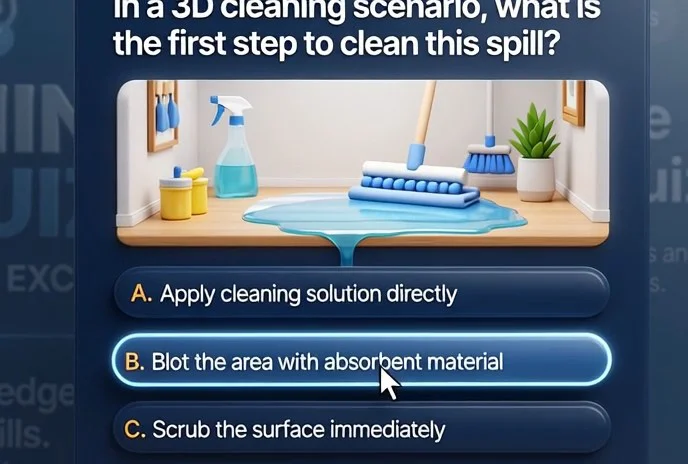
Wesolve this problem differently: we develop training quizzes for employees that turn regulations into a clear game experience.
Game scenarios reproduce real work situations — receiving, shipping, picking, inventory — and staff immediately see where exactly they went wrong and how to act correctly.
Such a quiz for employees does not require pulling the entire warehouse away for multi-hour lectures: short sessions are easy to fit into a shift, and the result is visible immediately.
Training stops being a formality and becomes an engaging process that genuinely reduces the number of errors at logistics centers and warehouses. This leads to faster order processing, fewer mispicks, and less downtime.
You choose the topics and difficulty level yourself, and the system shows each employee's progress. You can see who has already absorbed the material and who should go through it again.
Thanks to this format, staff training becomes transparent and manageable — you know the team is ready to work even before the shift begins.
What systematic staff training through quizzes delivers
One-off briefings are quickly forgotten: within a week, employees fall back into old habits, and mistakes cost you in short shipments and downtime. Systematic quiz-based training turns knowledge into a lasting skill.
We build quizzes on Unity — these are not just tests, but game scenarios that simulate real work situations in a warehouse. An employee completes short 10–15 minute sessions, and each one is an engaging game, not an exam.
The competitive element — points, ratings, rewards — motivates staff to return to training again and again. As a result, a picker navigates product lines faster, a forklift driver knows routes better, and a warehouse keeper makes fewer mistakes during receiving.
For a manager, the quiz is also a control tool: you can see who has mastered the material, who is lagging behind, and which topics cause difficulties. You can send an employee for additional training in time, without waiting for a costly mistake.
Consistency delivers measurable results: fewer errors, faster onboarding of newcomers, higher productivity. We have been developing such solutions for logistics centers and warehouses for more than 10 years — we will make training convenient for both you and your employees.
Quiz formats for different company tasks
The choice of quiz format determines how quickly employees will absorb the material and how long they will apply it on the job.
For logistics centers and warehouses, typical tasks are onboarding newcomers, knowledge checks, training on new processes, and maintaining a safety culture.
Each task requires its own mechanics: a test-exam doesn't motivate as well as a competitive game, and a long course is remembered worse than short interactive rounds.
We have systematized the scenarios that clients most often come with and compiled them into a table. It will help you quickly determine which type of training game fits your task.
| Format | For whom | What it delivers |
|---|---|---|
| Rules introduction quiz | New warehouse employees | Shorter onboarding period, quick introduction to standards |
| Post-briefing exam quiz | Shift supervisors and mentors | Objective readiness assessment, identifying knowledge gaps |
| Revision practice quiz | Pickers, forklift drivers | Maintaining skills without time off the job, fewer errors |
| Team competition quiz | Shifts, departments, crews | Engagement, healthy competition, lower turnover |
It's clear that the formats combine well: for example, after a short introductory quiz, employees take an exam and then participate in team competitions. This approach covers the full training cycle — from initial introduction to skill reinforcement.
If you're unsure about the choice, we'll suggest the optimal option and adapt the game to your processes.
How a warehouse quiz is developed: stages and timelines
We understand that for a warehouse or logistics center, what matters is not just an entertaining game, but a tool that genuinely raises employees' knowledge level and reduces the number of errors on the job.
That's why the quiz development process is structured so that you see the intermediate result at every stage and know the timelines. Below is the standard project path, which takes two to four weeks depending on the volume of content and the specifics of your tasks.
-
Brief and immersion into your specifics. We collect information about the warehouse: which departments are involved, which regulations and standards need to be reinforced, and what the current level of staff training is.
This allows us to create a quiz that solves exactly your problems: from safety to receiving and shipping rules.
-
Concept and scenario development. We define the quiz structure: number of questions, difficulty levels, game mechanics (competition, teams, points). We prepare a scenario that will hold employees' attention and motivate them to complete the training.
-
Confirming the format and timeline. We show a mockup of the future game and discuss which devices it will run on — computers, tablets, shared screens in the break area.
We lock in production timelines and control points so you know exactly when the test version and final launch will be ready.
-
Content and visual design creation. We write questions and answer options based on your internal instructions and add explanations to the correct answers — so the employee doesn't just guess but remembers the rule.
We develop the visual style: elements familiar from the warehouse, colors, icons, so the quiz feels native.
-
Assembly and testing on your equipment. We build a working version and come to your site (or conduct remote testing) to verify that everything works correctly on your computers and doesn't freeze when launched simultaneously. We also see how future participants perceive the game and make final adjustments.
-
Launch and support. We install the quiz and train your administrators (how to run a tournament, change questions, export results). After launch, we stay in touch: we promptly help with technical issues and, if needed, expand the quiz with new rounds or question blocks.
This approach ensures you get not a "boxed solution" but a full-fledged quiz project adapted to your warehouse processes. You know exactly what stage the development is at, how many days remain until launch, and what result you'll get in the end. This lets you plan staff training without missing deadlines and without extra costs for rework.
What's included in a ready-made training quiz package
You get not just a game, but a complete staff training package that can be used immediately in a warehouse or logistics center. We bring everything needed into a single system: from scenario to analytics, so you don't have to figure anything out or buy anything extra.
- A question scenario tailored to your specifics. The questions model real situations: receiving, putaway, shipping, safety, working with documents. Employees learn on familiar tasks, so knowledge is immediately applied in practice.
- Quiz design in the company's brand style. Design with your logo and colors is perceived as an official internal tool, not a third-party toy. This increases staff trust and engagement.
- A simple and clear instruction for employees. Each worker receives a quick-reference card: how to open the quiz, how much time to complete it, what happens to the results. You don't need to explain the mechanics — people will figure it out themselves in a couple of minutes.
- Instruction for mentors and managers. We separately prepare a procedure: how to launch the quiz for a group, how to interpret results, and what to do with those who lag behind. You'll easily integrate the training into existing onboarding processes or scheduled checks.
- Results analytics for each employee and the team as a whole. You see who has absorbed the material, which topics cause widespread errors, and where additional training is needed. These are not just grades, but ready-made data for decisions.
- A complete set for reuse. The quiz stays with you: when needed, you change questions, add materials, and launch a new session without paying extra for development from scratch.
Such a package covers the entire training cycle: setting the task, running it, monitoring, and improving. All that's left for you is to pick a date and send the quiz to employees — we've already packed everything else.
Case study: how a quiz reduced the number of errors by 40%
One of our regular clients — the Terminal-M warehouse complex — ran into a pain typical for the industry. Staff turnover on line positions was high, and every newcomer made errors while picking orders in the first weeks: mispicks, incorrect storage locations, missed deadlines. This led to returns, fines, and dissatisfied counterparties.
How we did it
Instead of long lectures, we developed a training quiz embedded in the onboarding process and regular checks. Employees go through interactive scenarios close to real tasks: how to check an SKU, what to do when stock levels don't match, how to pack fragile goods. Every answer comes with an explanation — learning happens even when a person gets it wrong.
The quiz gives the manager an objective picture: you can see which topics each employee struggles with. No need to guess or spend time on one-on-one conversations — the data itself shows who needs additional training.
Results after a month
After a month, the number of picking errors dropped by 40%, and new employees reached target speed two weeks earlier. The training department isn't overloaded: the manager updates questions for new product categories on their own and doesn't call in developers.
The warehouse manager noted: "Earlier, we learned about problems from customer complaints; now we see shift patterns in advance.
The quiz has become a working tool used every day." After the pilot launch, the client ordered an expansion to all shifts and related processes.
Such results are not unique: in projects for warehouses and logistics centers, quizzes consistently reduce errors by 30–40% in the first two months.
If you'd like to see the effect at your site, we suggest starting with a small pilot group and measuring the result against your own metrics.
How to choose the right training format for a specific task?
There is no single "correct" training format: it always depends on the specific task, audience, and working conditions. At logistics centers and warehouses, employees often work in shifts and do physical work, and training shouldn't tear them out of their work rhythm.
That's why choosing a training format starts not with "test or game" but with "what result does the business need" — a quick knowledge check before a shift, reviewing complex cases, or practicing actions in an emergency situation.
We match the quiz to your operational task: short tests with instant feedback, situational assignments, or a simulation of the work process.
For example, if a warehouse needs to check knowledge of the putaway layout, we create visual scenarios; for the receiving department — tasks on prioritizing and handling discrepancies.
At the brief stage, we identify the specific requirements of your warehouse and design the mechanics around them, not the other way around.
We also take into account where and how employees will take the training: a stationary computer, a tablet in the break area, or a smartphone.
The quiz runs wherever is convenient and takes exactly as much time as there is between operations — from a couple of minutes to a full 30-minute scenario. This is fundamental: training isn't inserted into the process; it becomes a natural part of it.
That's why setting up a quiz is always a custom approach, not a choice from ready-made templates. We gather the task, get familiar with your regulations and work specifics, and then propose a format that solves precisely your problem.
This approach rules out training done just to tick a box — which means you get a noticeable result in your employees' work.
Frequently asked questions about developing and implementing quizzes
Implementing quizzes into warehouse training raises questions — and that's normal. Here are answers to common objections: what if employees don't like it, who's responsible for it working, and how long launch will take. Let's address each concern individually.
What if employees don't like the quiz?
A quiz isn't a lecture; it's a game with points, levels, and ratings. This format is easier to accept, especially when it includes elements of competition between crews.
We run a pilot on one shift or department. Within a couple of days, it's clear what works and what doesn't. The content is adjusted without stopping operations: questions, scenarios, and answer options are changed to fit your team's style.
What if the quiz breaks at the worst possible moment?
We work remotely and support the project after launch. Monitoring is in place: software issues become visible to us before the warehouse even learns about them. Support responds during business hours, and critical issues are handled on a priority basis.
The technical side is built on professional tools, so a failure of one component doesn't stop the whole system. The quiz keeps working even during temporary connection issues.
How long will launch take?
A basic quiz scenario on safety or warehouse process knowledge takes a few days to put together. Then comes the content tailored to your regulations and instructions. That takes from a week onward, depending on the volume of material.
The quiz fits into your current training: it can be taken on stationary computers, tablets, or as short rounds before a shift starts. It's not a separate system; it's part of your schedule.
Will the quiz work with our equipment?
We use a cross-platform solution — it runs on most PCs already in the warehouse, as well as on tablets and touch terminals. No separate purchase of expensive equipment is required.
If you have specific limitations (for example, no internet access in the training area), we adapt the scenario for offline mode. We check compatibility at the brief stage, before development starts.
What makes up the cost?
The cost depends on three things: the number of questions, the design format, and integration with your training system. A standard warehouse package costs predictably, while custom scenarios are quoted individually after a verbal brief.
The estimate immediately includes the right to refinements and support for the first months. There are no additional payments for "secret settings" — the final cost is fixed before work begins.
If you still have questions — write to us, we'll share the details for your warehouse.Order employee training with quizzes today
Employee training at warehouses and logistics centers often becomes a formality: lectures aren't remembered, and no one wants to pull people away from work for hours.
Quizzes solve this problem — employees play, compete, and absorb safety rules, work standards, and new procedures in short sessions.
Leave a request for a quiz — we'll start with a free consultation where we'll review your situation and suggest a suitable format. You'll receive a development cost estimate and understand how to fit training into your work schedule without downtime.
The process takes minimal time on your side:
- Request — you leave your contact in the form, and we get in touch within one business day.
- Consultation — we clarify the goals, scenarios, and number of employees.
- Estimate — we prepare a plan and the development cost for a quiz tailored to your tasks.
- Development — we create the game with your questions, rules, and brand style.
- Launch — we hand over the finished quiz, instructions, and support.
When you order development, you also receive:
- methodological recommendations for engaging employees;
- administrator training for independent launches;
- the ability to update questions at any time;
- technical support at all stages of use.
Fill out the form on the website — and we'll reply within one business day, calculate the cost, and propose an implementation plan. Train your team without boring lectures and wasted time.