


Why School and Lyceum Students Lose Interest in Traditional Tests?
School and lyceum students quickly lose interest in boring tests: repetitive forms, identical wording, no feedback. Low engagement appears as early as mid-lesson — students mechanically mark options and think about anything but the subject.
The issue is not the difficulty of the material, but the format of delivery. Traditional quizzes are perceived as routine: the fear of grades suppresses curiosity, and knowledge lasts only until the end of the lesson.
A test shows an ability to guess, not mastery of the topic — and both teachers and parents notice this.
Motivation drops even faster when tests are monotonous. A sheet of questions gives students no excitement, no instant reaction to an answer, and no right to make mistakes — only a dry result at the end.
For the digital generation, this format is outdated: students are used to games where every attempt provides immediate, visual feedback.
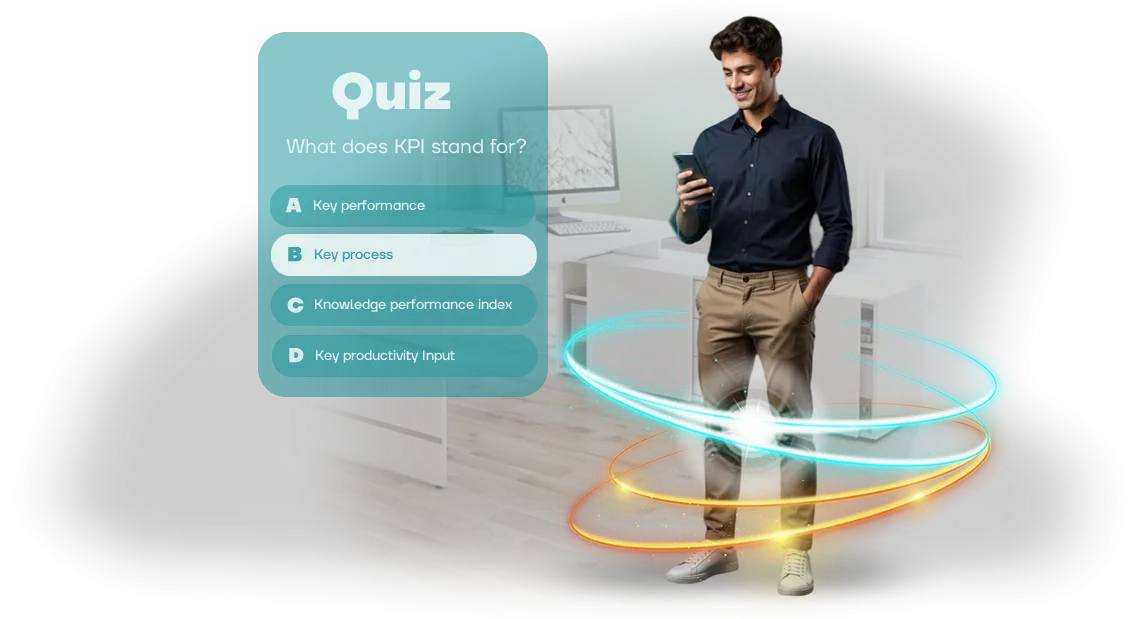
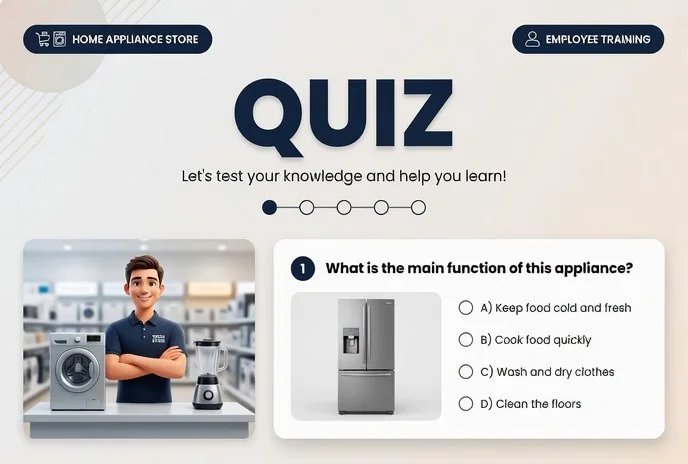
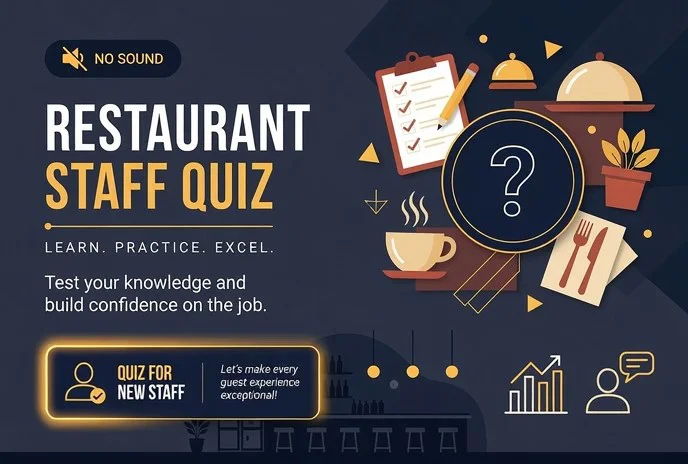
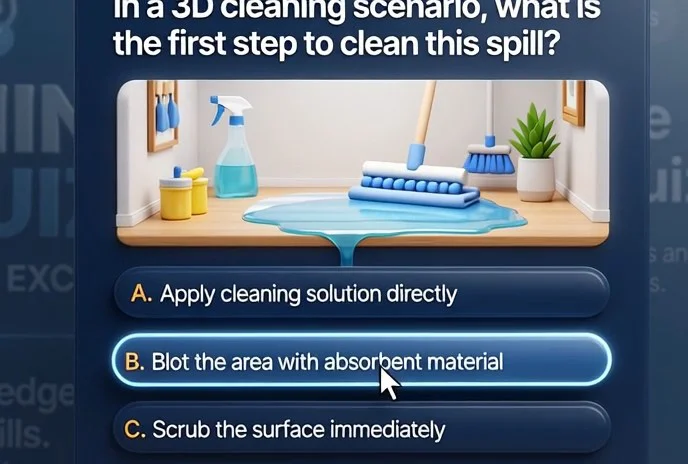
That's why we develop educational quizzes on Unity — a professional game platform proven in thousands of commercial projects.
Familiar mechanics shift attention from "this is a test" to "this is a game," which means school and lyceum students return to the material on their own to complete the level better.
We close this problem with a ready-made solution: the quiz keeps attention, gives an honest picture of knowledge, and turns assessment into an event students tell each other about.
What Does Game-Based Learning Give Your Institution?
When regular lectures no longer hold the class's attention, game-based learning comes to the rescue. It turns material into interactive lessons where, instead of boring notes, there are live questions, competition, and instant reaction to answers. This is especially important in middle school, where motivation drops and grades take a back seat.
Our team develops educational quizzes specifically for schools and lyceums, so you can see the result not in reports, but in the eyes of your students. Here's what changes after launching a quiz:
- [x] Increased interest in the subject. Students look forward to the lesson, and even those who usually stay silent participate.
- [x] Better retention. Material reviewed in a game format stays in memory longer than after simple reading.
- [x] Whole-class engagement. No one is left out — everyone answers and receives feedback.
- [x] Convenient statistics for the teacher. You see which topics are well mastered and which need to be explained again.
- [x] Improved academic performance. Regular interactive checks lift up weaker students and reinforce the success of stronger ones.
This is how game-based learning solves three tasks at once — it engages, teaches, and provides transparent analytics.
Your institution doesn't have to choose between discipline and interest: quizzes combine both approaches, and students begin to see school as a place where they are understood and supported.
Formats of Game Quizzes for Schools and Lyceums
The same educational material can be presented differently — and how easily students get involved directly depends on that. For schools and lyceums, we adapt the quiz to a specific scenario: from a short warm-up during homeroom time to a large-scale tournament between classes.
Below is a comparison of the formats our clients choose most often, so you can orient yourself by goals and number of participants.
| Format | Who it's for | What it gives the school |
|---|---|---|
| Classic quiz | Homeroom time, topic reinforcement | Quick change of activity, knowledge check in a light form, minimal preparation |
| Team game | One class or grade level, 2–6 teams | Develops communication and competitive spirit, involves even passive students |
| Screen tournament | Several classes, 3+ rounds | Festive atmosphere, large-scale reach, motivation to prepare in advance |
The classic quiz works well when you need to quickly activate the class and check knowledge without stress. A team game turns a regular lesson into an exciting competition: students discuss answers, learn to listen to each other, and take responsibility for the shared result.
A screen tournament is already a full-fledged event for an entire grade level: questions appear on a big screen, teams compete over several rounds, and victory becomes a source of pride.
All three formats combine easily. For example, start with a short warm-up, move to a team game, and finish the homeroom period with a final tournament — this way the quiz covers both educational and character-building objectives.
It uses only the school's standard equipment: a projector, an interactive whiteboard, or students' smartphones. We adjust the interface to the age, question difficulty, and round duration, so the game works equally well in a lesson and at an extracurricular event.
If you're not sure which format suits your educational institution, we'll send recommendations after a short conversation about your goals, number of students, and available equipment. We'll help you run the quiz so it becomes a bright event, not just another mandatory activity.
How Quiz Development Works: Stages for the Client
So you understand what happens at each step, we've built a transparent process of six stages. You always know the project's current stage, what's ready, and what comes next. No "black boxes" — only clear approvals and clear deadlines.
-
Brief and objectives. We define the quiz goals: who it is for — students, staff, visitors — what topics need to be covered, and what result is expected. We determine how the game fits into the educational process, corporate training, or event.
-
Script and questions. We develop the game structure and content: questions, answer options, explanations. We align the content with you so it matches your curriculum, methodology, or internal standards.
-
Design and visual style. We choose a visual style to suit the audience: bright, playful, and dynamic for school and lyceum students; more businesslike and strict for employees. You receive mockups for approval before technical assembly begins.
-
Build and configuration. We create the game using a professional tool and connect the needed features: scoring, timer, leaderboard, certificates. We check that everything works reliably on your computers and requires no special knowledge.
-
Testing and launch preparation. We run a quality check and hand over the game, instructions, and a checklist. We help organize the launch — so on the day itself you simply open the quiz and run it without technical hassle.
-
Launch and support. We're on call on the day of the event and quickly resolve any issues if needed. After the event, you receive final statistics: how many people completed the quiz, what the average result was, and which topics could use more work.
The full cycle takes from two weeks to a month, depending on scope. At each stage you see the result and can make edits — the final version will not be a surprise.
What's Included in the Delivery: Launch Kit
You get not just a file with questions, but a ready-made solution for launch.
We put together the kit so that a school coordinator or homeroom teacher can run the quiz without technical preparation: everything opens, starts, and works directly on the existing computers and interactive whiteboards.
Here's what's included in the delivery:
- Scripts and questions tailored to your program — ready-made blocks by topic, age, and student level. Use them as they are or adapt them to a specific subject and class.
- Host instructions — a step-by-step event script: who says what, when to activate questions, how to respond to answers. Even a new staff member can run the quiz confidently.
- Teacher's guide — a description of educational goals, options for use in class and extracurricular activities, and recommendations for engaging different groups of students.
- Training video — a short video overview of the quiz interface and logic. A teacher watches it once and immediately understands how the game works.
- Launch guide — a simple checklist: how to prepare the classroom, which devices are needed, how to check sound and image, and what to do if something goes off plan.
- Additional materials — scoring sheets, diplomas and certificates for participants, and templates for student feedback.
Plus our support at all stages: we help with installation, answer teachers' questions, and quickly resolve any technical issues on the day of the event. If you later want to update questions or add new topics, we'll do this as part of ongoing support.
So you get a complete kit that requires no developer involvement or additional purchases. You receive an understandable tool that works on the first launch and easily integrates into the educational process.
Implementation Results: Engagement Growth Case Study
Keeping students' attention on a subject is a task harder than any curriculum. Regular tests quickly get boring, students answer on autopilot, and the teacher can't see where understanding gets lost.
Wesolve this through educational quizzes: they turn knowledge assessment into a game students can't tear themselves away from.
Case Study: Average Score Increased by 20% in One Semester
A telling example is one of the lyceums, where teachers complained about low engagement in history lessons.
After switching to the quiz we developed, the average score in the subject rose by 20% over the semester, and the number of students actively participating in discussion nearly doubled.
The effect comes not from technology itself, but from game mechanics: questions with progress, a rating, and instant feedback. Students themselves ask to go over the material again to improve their results. And the teacher sees which topics are lagging and adjusts the program without lengthy grading.
Why These Results Are Sustainable
The competitive element works even in the most passive classes. The quiz holds attention 10–15 minutes longer than regular tasks, and knowledge is reinforced through excitement rather than rote memorization.
This gives the school a measurable effect: higher academic performance, fewer retakes, and calmer parents.
If you want a similar result in your lyceum, we'll start with a short brief — we'll assess how the quiz will fit into your educational process.
How to Choose the Right Format for the Task?
The quiz format directly affects whether the lesson achieves its goal: whether it holds the class's attention, reinforces the material, and involves all students.
There's no one-size-fits-all solution for all ages — what engages high school students might be too difficult for elementary school, and a quick "warm-up" won't work for final knowledge assessment.
The first criterion is the students' age. Elementary grades need simple rules, bright visuals, and short rounds of 5–7 questions so children don't get tired. Middle grades suit team competitions with a scoreboard — this strengthens engagement and the spirit of competition.
High school students and lyceum students appreciate deeper scenarios: questions with extended answers, time limits, and elements of strategy.
The second criterion is the lesson goal. If you need to quickly check homework or reinforce a topic, choose an express quiz with automatic grading. For reviewing a large block of material, a quiz with difficulty levels and a detailed error breakdown after the game works better.
For team bonding — a competitive format where each participant has a role and affects the overall result.
The third criterion is the technical side: where and on what devices the game will take place. One thing is a classroom with a single projector, another is a computer lab where each student works individually.
We adapt the quiz to your equipment: from simple browser launch to a full interactive scenario on a professional platform.
If you're unsure which format to choose, describe your task to us: age, number of students, topic, and lesson goal. We'll recommend the optimal option and prepare a demo version so you can evaluate it before full development.
This way you get a solution that truly matches your needs, not an abstract "game for game's sake."
Frequently Asked Questions About Quiz Development and Launch
We understand that before launching an educational quiz, schools and lyceums have questions: how long development will take, whether the game will be difficult to integrate into the educational process, and most importantly — whether students will like it.
So we've gathered answers to the most common concerns, so you can make a decision based on facts, not assumptions.
We've already created quizzes for schools and lyceums with different curricula, so we know what difficulties come up in practice. Below is the key information.
How long will quiz development take?
The timeline depends on the number of topics and questions. Typically, a basic quiz for one subject is ready in 2–3 weeks from content approval. If deadlines are tight — we'll discuss ways to speed things up without losing quality.
How do we integrate the quiz into lessons? Is it difficult?
No, we make the quiz as convenient as possible for the teacher: a clear interface, launch from any computer or interactive whiteboard, and settings tailored to the lesson duration. Any teacher can run the game without technical preparation.
What if students don't like it?
We design the scenario with the age and interests of students in mind, and before the launch we run a trial game with a focus group. You'll see the reaction, and we'll adjust the mechanics: add competitive elements, bonuses, and levels to maintain engagement.
What guarantees do you provide?
We fix deadlines in the contract and provide an official guarantee on the result. Within a month after delivery, we'll fix any inaccuracies and refine questions for free, if needed.
If you still have doubts — ask your question directly: we'll share the details, show examples, and help adapt the quiz to your curriculum.Order a Quiz for Your Educational Institution
For schools and lyceums, an educational quiz is a modern alternative to boring lectures and tests. Students get into the game, compete in teams, and the material is remembered through emotion rather than cramming.
Teachers receive a ready-made scenario with questions on the required subjects, and the format easily adapts to any age group and technical setup.
Leave a request on this page — we'll provide a free consultation and calculate the cost for your specific task. Tell us how many classes will participate, which topics need to be covered, and what timeframe the game should happen in.
A manager will suggest the optimal quiz format, and a developer will prepare an accurate estimate — the cost will not change after the work begins.
What's included in the order:
- Free consultation: we'll discuss the school's goals and the quiz format.
- Cost calculation within one day: you'll know the cost before the start, with no hidden fees.
- Adaptation to the curriculum: questions, difficulty level, and lesson duration.
- A version for projector or tablets — matching your classroom's technical capabilities.
- Support during the lesson: we'll help launch the game and figure out the controls.
- Methodological materials for the teacher: how to run the lesson and review the results.
Based on our project experience, game formats noticeably increase student engagement: even passive participants get involved in the process and remember more material.
You'll receive not a "15-minute entertainment," but a full-fledged educational tool that can be reused in other lessons.
If it becomes clear during preparation that a block doesn't fit — we'll adjust it. You can leave a request right now, the consultation costs nothing, and the estimate takes one working day.