


Why veterinary clinic employees lose their qualifications
The qualification of staff in a veterinary clinic is the foundation of trust from pet owners. When a doctor acts according to outdated patterns, the client feels it: a prolonged appointment, an uncertain diagnosis.
Regular training of employees affects whether the owner will return with their pet again or go to competitors.
But in most veterinary clinics, training comes down to rare lectures and viewing instructions. Mistakes by medical staff due to knowledge gaps repeat, and engagement in training remains low: doctors and nurses perceive trainings as a formality. As a result, staff qualification gradually falls even in an experienced team.
The problem does not appear immediately: first a single incorrect medication, then a delayed diagnosis, then lost visits. Each case hits the clinic's reputation and leaves a negative mark in reviews.
The manager understands that a systematic training in the veterinary clinic is needed, but classic formats do not give results.
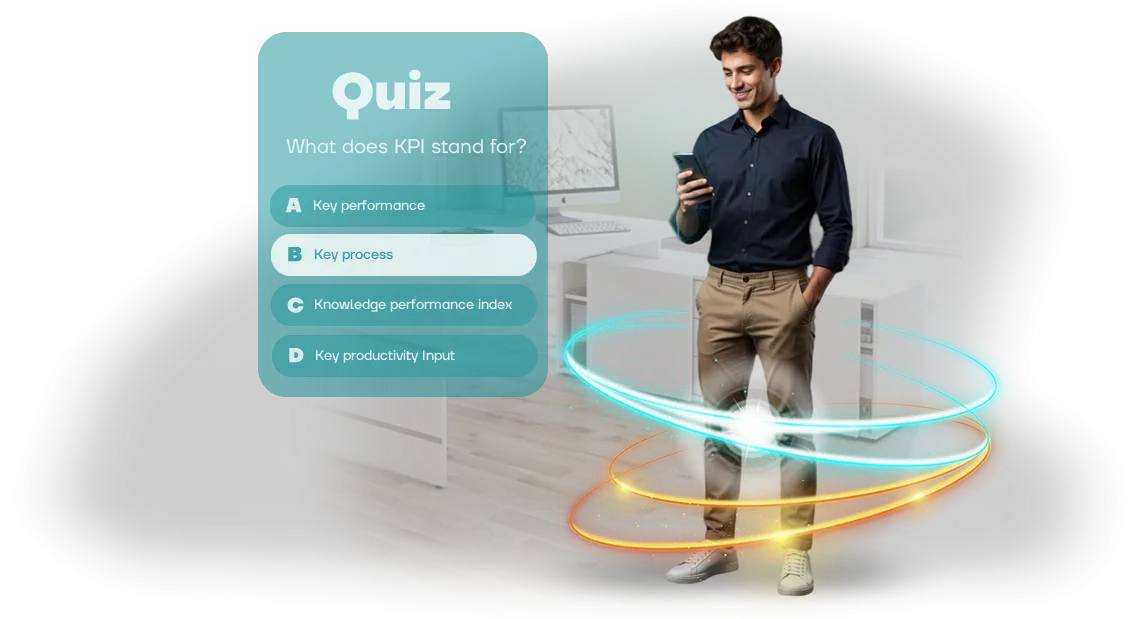
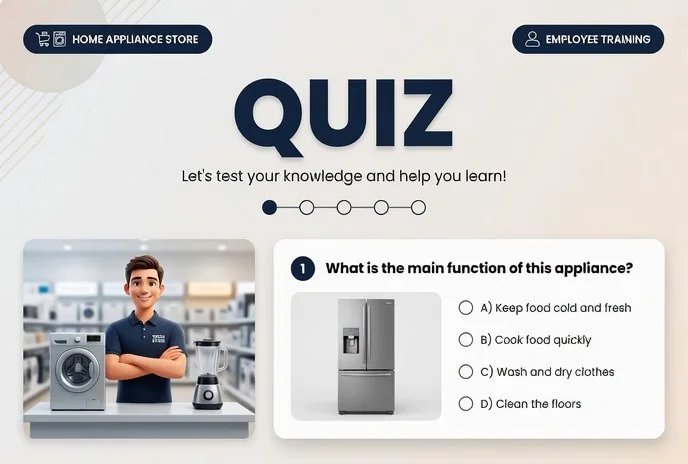
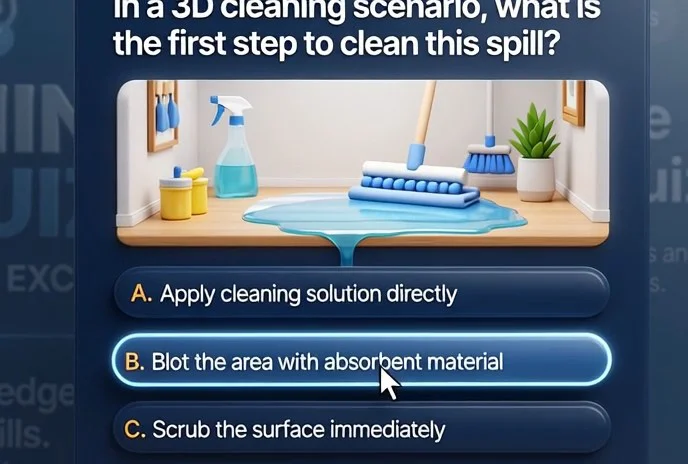
The solution is to change the format. We develop educational quizzes in the form of a computer game, where employees analyze real clinical cases, choose action algorithms, and compete in knowledge.
This approach increases engagement in training: staff themselves want to return to the material, and knowledge is reinforced through practical scenarios.
We help the clinic turn employee training from an obligation into a growth tool. Staff qualification becomes manageable, medical staff errors are reduced, clients receive a high level of service.
What game-based employee training gives
Game-based training turns staff preparation from a formal obligation into a tool that really affects the clinic's profit.
Veterinary staff remember up to 80% of information in a game format versus 20% at lectures — this means that new protocols and standards start working immediately, rather than after a dozen repetitions.
Gamification solves three main manager problems: staff turnover, slow adaptation of newcomers, and different levels of service.
When an employee sees their progress, compares results with colleagues, and receives rewards for achievements, training ceases to be a boring obligation. Instead, healthy competition is formed, which keeps people in the team.
### Qualification growth without interrupting work
Short game rounds fit into the clinic's schedule: 10-15 minutes a day is enough to maintain knowledge tone. Quizzes on pharmacology, diagnostics, or standards of communication with clients practice real work situations.
An employee develops skills on a simulator, not on a live patient — this is safe both for the staff and for the clinic's reputation.
### Reducing errors and improving service quality
Regular game checks consolidate correct action algorithms to automaticity. Fewer errors in prescriptions, fewer conflicts with pet owners, higher client loyalty.
This directly affects the average check and the number of repeat visits — owners return to where they feel care and professionalism.
We make quizzes on a professional game engine Unity — this guarantees stable operation on any clinic computers and simplicity of content updates. You do not need a programmer on staff: new questions and scenarios are added by the administrator, and employees play from any device. As a result, you get a cohesive team that learns with interest and works with dedication.
Formats of educational quizzes for veterinary clinics
Different tasks require different training formats: a beginner needs to be quickly brought up to speed, and an experienced doctor needs to update standards for working with difficult pet owners.
Weselect the format for a specific clinic task, so training solves a real problem rather than being done "for show".
Here are typical formats that we adapt to your protocols and practice cases:
| Format | For whom | What it gives the clinic |
|---|---|---|
| Five-minute quizzes | All staff | Quick repetition of standards without interrupting work |
| Situational scenarios | Doctors and assistants | Practicing complex cases: aggressive animal, non-standard diagnosis |
| Team quiz | Clinic employees | Team building and knowledge reinforcement in a game |
| E-course with quizzes | New employees | Accelerated adaptation: a newcomer gets up to speed 2-3 days faster |
| Quiz-exam | Medical staff | Transparent knowledge check and permission to work |
The choice of format depends on the goal: a series of short quizzes is enough for quick adaptation, while scenarios with error analysis are needed for advanced training.
We develop individual scenarios based on real cases of your clinic, so employees encounter situations that actually occur in practice. A ready quiz can be relaunched — for new employees and scheduled knowledge checks.
How the creation of a quiz for your company goes
Each stage is built so that you understand what is happening and what result you get. You do not dive into technical details — we take on the full development of the quiz turnkey: from idea to launch and further support.
Stages of work on the quiz
-
Brief and immersion into the task. We discuss why the quiz is needed: to check knowledge, train newcomers, raise the level of diagnostics. We study the specifics of your clinic, work standards, and typical employee errors.
-
Agreement on the format. We offer a suitable option: speed tests, situational tasks, competition between doctors or branches. Together we determine complexity, duration, and design style.
-
Preparation of scenario and questions. Our methodologists together with your experts compose questions based on your internal regulations and treatment protocols. This way, the quiz reflects exactly your specifics, not abstract theory.
-
Development and assembly. We create a convenient program that runs on ordinary computers in the clinic. Employees do not need to install anything or understand instructions — everything works immediately.
-
Testing and edits. You receive a demo version and see the quiz through the eyes of participants. We make adjustments: refine wording, change difficulty level, adapt design to the corporate style.
-
Launch of training. We install the quiz, configure access for employees, and conduct an instruction for administrators. We help with the first launch so that everything goes smoothly.
-
Support and updates. After launch, we stay in touch: we supplement questions, add new topics, update materials as your clinic develops. You do not need to look for a contractor again — we continuously support the training process.
As a result, you get a working training tool that is easy to launch and control. All stages of quiz creation are coordinated with you, so the result exactly matches the expectations and tasks of your team.
What is included in the finished quiz project
The finished project includes everything needed to launch employee training without a developer — and immediately see results. We hand over a working quiz "turnkey", with a clear set of documents and access to data. Inside is not just a game, but a tool for knowledge control and feedback.
- Scenario and question bank — a quiz based on real work situations in veterinary clinics: pet reception, communication with owners, service standards. Employees train on what they encounter every day.
- Design in your brand style — logo, colors, corporate identity. The quiz looks like part of the company, not a third-party service, so employees take it seriously.
- Methodological materials — administrator instructions, a memo for employees, and a description of what knowledge each block reinforces. You do not have to invent anything — everything is ready to hand out.
- Admin panel — you can create groups, launch a quiz for newcomers and experienced employees, and change questions when the clinic's work standards change.
- Training reports — for each launch, you can see who completed it, how much time they spent, which questions caused difficulties. This is a ready picture of gaps in the team's knowledge.
- Launch assistance — we connect, configure, and show the administrator how to use the system. Then you work independently, without contacting developers.
- Support and refinements — if after a while you need to add new questions or change the logic, we will quickly make edits to the project.
After launch, you get not just trained employees, but a systematic picture: which topics are lagging, who needs additional mentoring, how results change over time.
This helps improve the clinic's service quality and avoid typical mistakes in working with clients — that is, it directly affects pet owner loyalty and reputation.
Case: how game-based training paid off in a month
VetNet — a network of veterinary clinics with several branches. Their task was to quickly train new employees and reduce the number of errors when filling out records and choosing dosages.
Ordinary lectures and instructions did not give a stable result, and mistakes cost time and client trust. The problem was especially acute during peak seasons, when workload grows and experienced employees do not have time to mentor.
We developed an educational quiz for them on our professional engine. Instead of abstract tests — real cases from practice: how to react to a non-standard symptom, what to clarify before a procedure, how to fill out documents without losing data.
Each answer option is accompanied by an explanation, so the employee does not just guess, but understands the logic of the correct decision. Staff went through levels at a convenient pace, and management saw everyone's progress.
A month after launch, the number of errors in paperwork and work with patients decreased by 40%. Employees began to navigate protocols faster, and new specialists got up to speed twice as fast as usual.
The quiz did not just test knowledge — it formed the habit of acting correctly, including in non-standard situations where the animal's well-being depends on speed and accuracy.
The clinic head noted: training is no longer perceived as punishment; employees themselves ask for the next levels. The costs of developing the quiz paid off within a month — solely by reducing working time to fix errors and reducing conflict situations with pet owners. The savings turned out to be substantial: fewer redos, fewer nervous calls, higher client loyalty.
Since then, we have been receiving repeat orders from the clinic for new training modules — this is the best indicator that the format works and brings a measurable business result.
How to choose a quiz format for your business tasks?
There is no single "correct" quiz format — the choice always begins with a business task. If you need to quickly bring a newcomer up to speed, short training modules with hints are suitable. For knowledge control after training — a test with error analysis.
And if the goal is to practice communication skills with pet owners, a narrative case works better, where the employee makes decisions as in a real clinic.
A common mistake is to take a ready-made quiz template simply because others already have it. Veterinary specifics (breeds, medications, appointment protocols) do not fit into universal questions, and employees quickly lose motivation to complete it.
As a result, training becomes a formality, and the business gets neither knowledge growth nor an understanding of who on the staff is truly ready to work.
Therefore, when selecting a quiz format, we look at three things: who will undergo training, how many people are involved, and what result the manager needs.
For a clinic network, this could be a level system with competition between branches; for a small clinic, a compact fifteen-minute scenario that a doctor goes through between appointments.
It is important that the format matches the real rhythm of work rather than creating additional load.
We do not offer a standard out-of-the-box solution. At the first stage, we conduct a short audit of tasks, discuss expectations with the manager, and only then design the quiz: the number of scenarios, complexity, question types, and motivation mechanics.
Individual development allows us to account for your clinic's specifics and avoids unnecessary functions for which other studios charge extra.
As a result, you get not just a test, but a tool that shows staff growth in numbers. The manager sees who has mastered the material, which topics cause difficulties, and where training should be strengthened.
The answer to the question "which format to choose" comes from your business task — and we help translate it into a working quiz.
We address doubts before launching training
Before launching training, veterinary clinic managers often have the same doubts. Let's address the main objections — and show why the quiz covers them in advance.
Implementation will not require an IT department or complex settings. We take on all the preparation: we collect materials, configure the platform, and upload questions. All we need from you is a list of employees — then the system automatically sends invitations.
Employees are not distracted from work for long: a round takes 5–7 minutes, and the game format is perceived as a warm-up, not a boring lecture. The quiz can be taken between appointments — it does not block the work process.
Control of results stays with you. In the personal account, you can see who has completed the training, which topics cause difficulties, and where employees already answer confidently. Based on this data, it is easy to adjust the program or repeat problematic blocks.
Clinic data is protected: only authorized employees have access, and results are not transferred to third parties. Everything is stored in reliable infrastructure in accordance with medical data requirements.
How quickly can training be launched?
Usually preparation takes three to five business days. We coordinate the questions with you, upload them to the system, and invite employees. No installation on work computers is required — the quiz works through the browser.
Will employees perceive the quiz as control?
We adjust the presentation to your task: it can be friendly competition, a team tournament, or simply a quick self-check. Importantly, employees see their progress, and you get an objective picture of knowledge without extra pressure.
What if the quiz reveals weak spots?
We will show a report for each section. Based on this data, you can add a repeat round on the problem topic or analyze errors at the next planning meeting — this way training becomes targeted work on gaps.
Launch training that employees will complete to the end
Think about how much time and effort the clinic loses when employees act on intuition rather than accepted protocols. Ordinary presentations and memos stop working — staff skim them and quickly forget.
An educational quiz solves this task: it turns routine into a game, and knowledge is reinforced through practice.
We help veterinary clinics launch training that employees complete to the end rather than abandon halfway. Here is what you get by ordering a quiz:
- Individual proposal for your tasks: we discuss the scenario, topics, and difficulty level for specific staff — from administrators to surgeons.
- A finished product that works immediately: employees undergo training on their work computers, without complex setup or installing additional programs.
- Clear results for the manager: you see who has completed it, which topics cause difficulties, and you can adjust the training plan in time.
- Growth of staff engagement: the game format with points and competition motivates returning to the quiz again, which means standards are better remembered.
- Support at all stages — from brief to launch, and further if you need to change something or add new questions.
To start training, one call is enough. We will consult for free, clarify tasks, and offer a format suitable specifically for your clinic. Leave a request for a consultation — within a few days you will receive an individual proposal, and employees will start the first quiz.