

Why AR in Energy Is No Longer a Luxury, but a Necessity?
Energy is an industry where the cost of a mistake is measured not in fines, but in shutdowns of entire facilities and losses in the millions. One wrong step during equipment maintenance can lead to an accident, fire, or prolonged downtime that hits revenue and reputation.
At remote substations and power plants, the situation is worse: any failure requires specialists to travel, and waiting time increases losses. That is why owners and department heads are looking for ways to make staff work safe and error-free.
The main cause of accidents and downtime is human error. Employees work with complex equipment, instructions for which run to hundreds of pages, and training new specialists takes months.
Even experienced engineers find themselves in stressful situations where reaction speed matters more than knowledge of the documentation. Insufficient personnel qualifications and knowledge gaps are the main triggers of incidents.
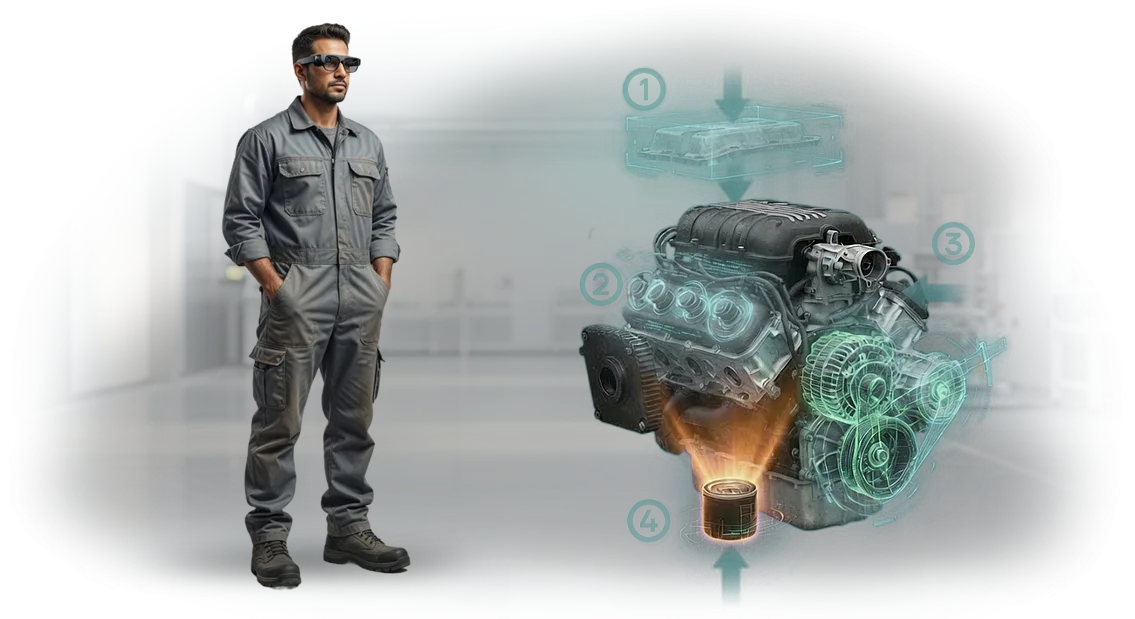
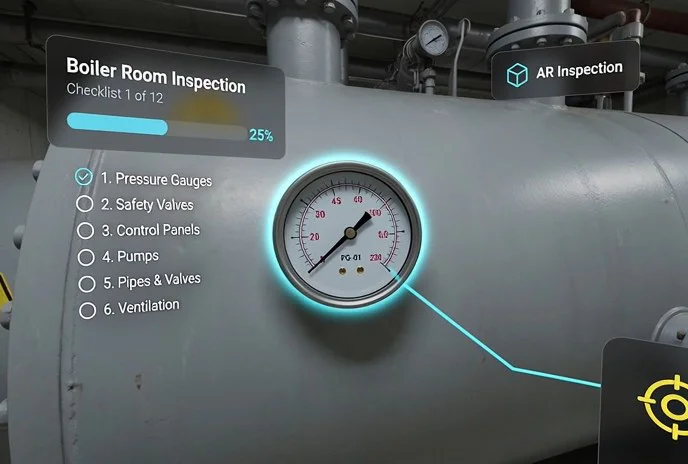
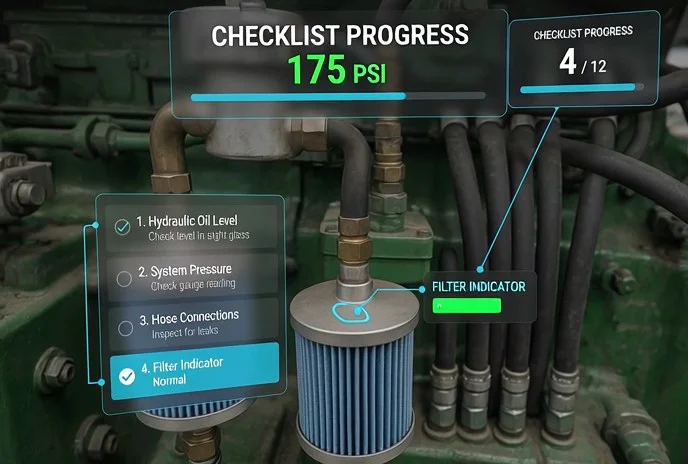
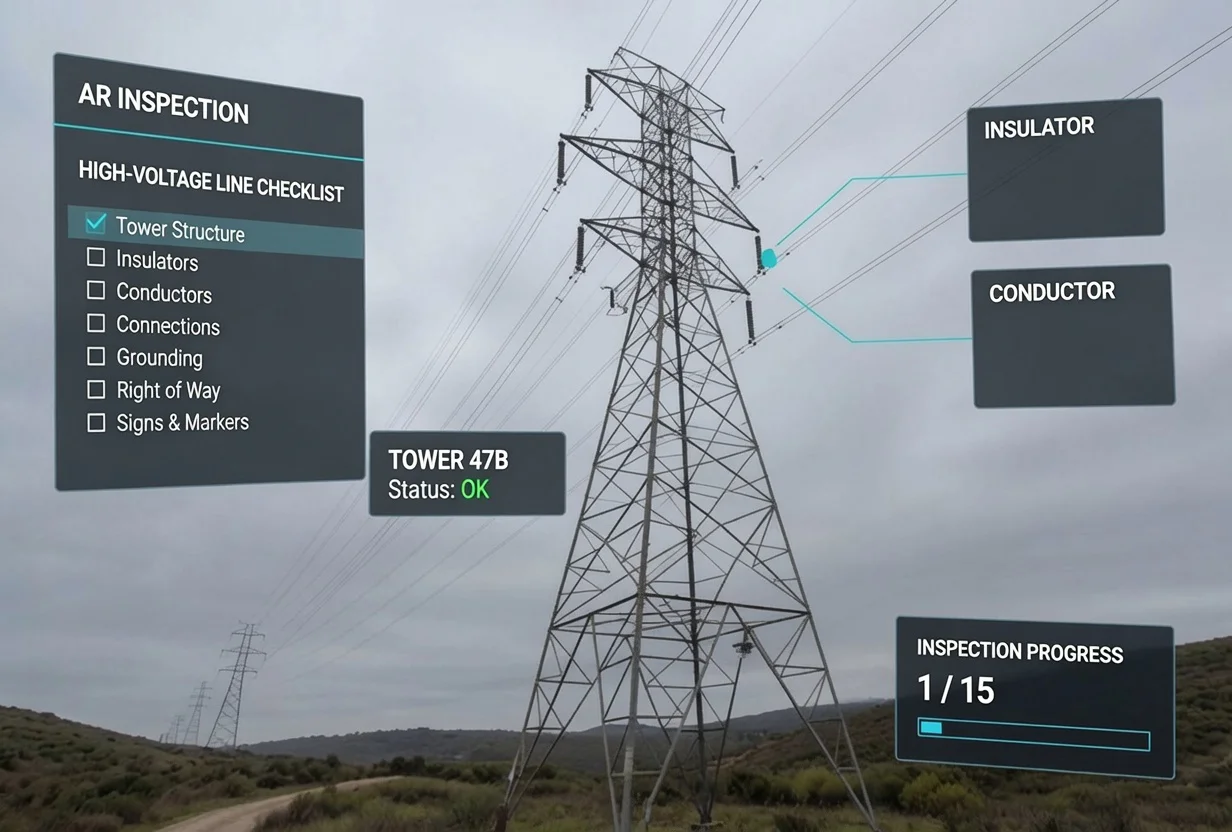
AR in energy helps avoid these risks. Augmented reality overlays step-by-step prompts directly onto real components and mechanisms: the worker sees what actions to perform, where the required valve is, and how to avoid mistakes.
This reduces the load on memory, speeds up task completion, and cuts emergency downtime. Augmented reality becomes a digital mentor that is always nearby — even when there is no experienced colleague around.
Implementing AR instructions pays off through rapid employee training and prevention of costly incidents. A new specialist can, within their first days, safely perform operations that previously required months of mentoring. The company gets fewer errors and higher operational efficiency at every facility.
Digital transformation in energy is no longer a matter of the future but an urgent necessity. Companies that implement AR instructions train employees faster, encounter fewer personnel errors, and pass safety inspections with confidence.
AR in energy is not a luxury but a working tool that protects people and assets, reduces costs, and increases the reliability of the entire system.
What results does augmented reality bring to operations?
When operating complex equipment, the main losses come not from the breakdowns themselves, but from the time spent on staff training, maintenance errors, and forced downtime.
An employee who encounters a new installation for the first time spends up to two shifts studying instructions and diagrams — and there is still a risk of incorrect actions. This is not only a financial cost but also an additional burden on safety.
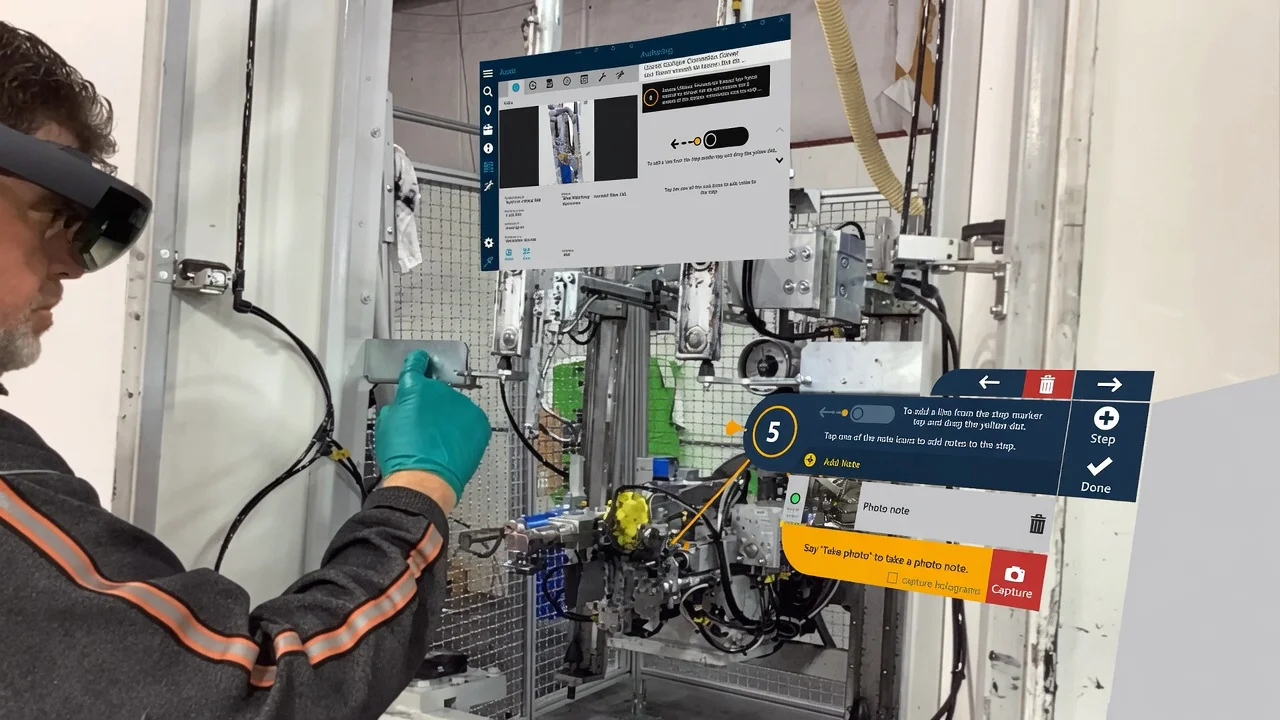
Augmented reality transfers knowledge from paper regulations and PDFs into direct overlays of prompts onto real equipment.
The operator sees the unit’s components in front of them, while the system highlights the required elements, shows the sequence of operations, and warns about risks.
As a result, a new specialist starts working correctly within the first shift, and the number of errors in routine operations falls by 30–50%.
These figures are confirmed by research, for example, a Deloitte report that notes productivity growth and reduced defects when using AR in industry.
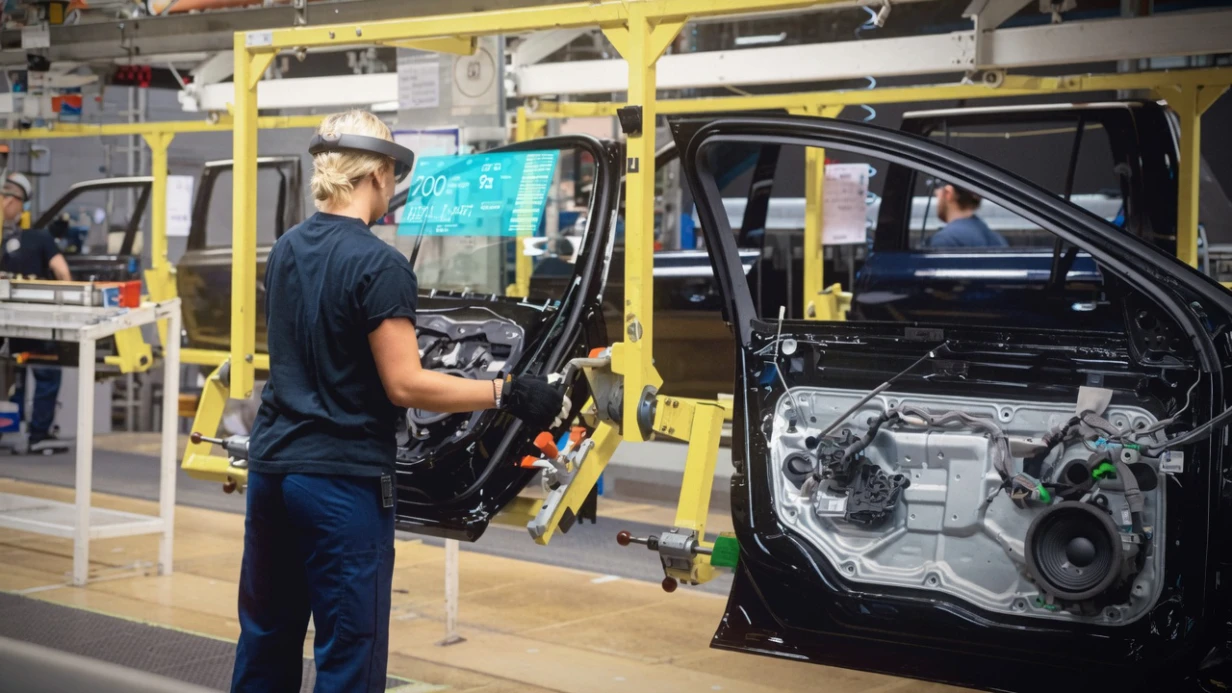
Work safety also reaches a new level. AR instructions do not force employees to look away from the equipment to paper documents — all data is displayed directly in their field of view.
Fault diagnosis becomes faster and more accurate: an engineer points the camera at a component, obtains its service history and repair recommendations, and can contact a remote expert who sees the same picture. This reduces downtime and lowers the risk of emergency situations.
The ultimate benefit is cost savings without large capital investments. Expenses for in-person training are reduced, the number of damaged components due to errors decreases, and equipment availability increases.
Our engineers already implement such solutions for energy facilities, adapting them to the customer’s specific tasks. We take on development, testing, and support — all you need to do is launch a pilot and measure the effect on your own metrics.
AR formats in energy: from instructions to simulators
There is no one-size-fits-all format: what helps a beginner safely master equipment will slow down an experienced repair technician, and urgent expert consultation wins over a full-fledged simulator.
We select the format for your specific task and production specifics — from a single instruction to a comprehensive training system.
| AR format | For whom | What it gives the client |
|---|---|---|
| Interactive instruction | Line personnel, repair teams | Step-by-step verification of components with automatic control: fewer “from-memory” errors, faster onboarding, lower risk of damaging expensive equipment |
| Remote expert assistance | Remote facilities, shortage of specialized experts | The expert “sees” the object through the employee’s eyes and guides them with prompts without traveling: reduced downtime, savings on business trips |
| Simulator with model overlay | Training centers, students, operational personnel | Practicing rare emergency scenarios without risk or production shutdown: the value is that experience does not depend on chance or luck |
Choosing a format is a matter of implementation speed and budget. We can launch an interactive instruction within 2–4 weeks based on your technical documentation, while a full simulator is a longer project that we build in stages.
To understand what you need, one meeting is enough: describe the problem — we will suggest which AR format in energy will solve it faster and more cheaply.
How we implement augmented reality: stages of work
We have structured the process so that you participate at every step and control the result. Implementing augmented reality does not require stopping production: we work with your documents and engineers, and conduct the final check on real equipment.
-
Brief and immersion. We study your equipment, regulations, and typical tasks: repairs, maintenance, training new employees. We record the goals and determine which operations to cover with AR first in order to achieve a quick effect.
-
Scenario analysis. We analyze current processes together with your specialists: where employees make mistakes, how much time is spent searching for instructions, how often equipment stops. Based on this, we plan the project phases and the expected result.
-
Design. We approve the structure of the AR instruction: step sequence, checkpoints, interactive prompts. You see the plan before development begins and understand the scope of work.
-
Instruction development. We create the AR instruction itself: 3D prompts, animations, text layers that overlay onto real equipment. We show intermediate versions — you make corrections at early stages, not after the final delivery.
-
Approval and testing. We test the scenario on real equipment with your engineers. We uncover non-obvious errors, refine wording, and ensure that the instruction is understandable to any employee.
-
Launch and support. We deploy the solution on tablets or glasses, configure access, and train staff. After launch, we stay in touch: we update instructions when equipment is modernized and add new components.
Project scope: what is included in the delivery
The delivery package includes not just a ready-made AR instruction, but a working system that employees will start using from day one.
We assemble a project for your task: from source 3D models and text regulations to the final version of the application that runs on your staff’s tablets and smartphones.
Here is what you receive at the end of the project:
- Ready-made AR instructions — step-by-step scenarios for assembling, repairing, or maintaining your equipment. An employee points the camera at a component and sees prompts directly on the parts, instead of searching for the right item in a paper manual.
- Content management panel — you make changes to instructions yourself: change text, photos, add new steps without involving developers.
- Documentation for your team — clear administrator and user guides that describe how to update the application and work with content.
- Adaptation to your hardware — the application works on the devices you already have in production (tablets, smartphones, industrial PDAs). No need to purchase expensive equipment.
- Personnel training — we conduct online training for administrators and key employees: using a real example, we show how to launch instructions, what to do in case of failures, and how to upload a new file version.
- Technical support — after project launch, we stay in touch: we answer questions, help with updates, and refine content based on your feedback.
Thus, the delivery package covers the entire cycle: you get a working tool, a trained team, and clear guides for independent work.
You will not have to understand technical details — the system is designed so that your employees simply open the application and complete the task with minimal errors.
Case study: how we reduced equipment downtime for an energy company
For a large energy company, we developed AR instructions for maintaining turbine equipment. Previously, during every abnormal situation, a crew spent up to two hours searching for the right diagram in paper manuals. Downtime was expensive: cost calculated after audit per hour at a single station.
We converted key regulations into interactive prompts that overlay onto real equipment through a tablet or glasses. Now an employee sees the step-by-step algorithm right at the facility, without being distracted by searching for documentation.
Implementation took three months — in parallel, we trained 14 crews and prepared a knowledge base for new employees.
Results after six months: diagnostic time fell by 60%, equipment downtime by 45%. The economic effect for the company was cost calculated after audit per station per year.
Training of new employees accelerated threefold — instead of several weeks, they reach full independence in a few days.
Client feedback
The head of the operations service noted: “Previously, a newcomer was afraid to approach the equipment; now they confidently work in tandem with the AR instruction.
The crew’s reaction speed has increased, and the number of errors has decreased several times” Chief Engineer of the energy company.
After a pilot project at one station, the company scaled the solution to 11 more sites. We continue to support the system — updating instructions and adding new components. For us, this confirms that AR in energy is not an experiment, but a working tool for reducing losses.
How long does it take to implement augmented reality?
A standard augmented reality implementation project takes from four to eight weeks.
The exact time depends on the complexity of the equipment, the number of components, and the readiness of source documentation: the more structured the technical charts and diagrams, the faster engineers can prepare the AR instruction.
At the first brief, we record the schedule and agree on dates — you immediately understand when you will get the result.
The main time is taken by adapting the equipment for augmented reality: marking key points, binding digital prompts to real mechanisms, and testing scenarios in operating modes. The interface development itself usually proceeds in parallel, so the stage is not prolonged.
Final commissioning takes place at your site: our engineers travel there, calibrate the instruction for the lighting and layout of the workshop, and train employees in one or two working days.
If you already have electronic instructions and a workshop model, the project can fit into three to four weeks. When digitization of documents and equipment measurements from scratch are required, one or two weeks are added for preparation.
We always state realistic timelines before the start: schedule changes are possible only if the source data changes, and you will learn about this in advance, not at the end of the project.
To test the hypothesis, we often launch a pilot on one or two components — this takes about two weeks and gives a measurable effect: reduced training time or fewer errors during repairs.
After confirming the result, we scale the solution to the rest of the equipment fleet without losing quality and on the same schedule.
In the end, you get a manageable project with clear stages and a fixed launch date. Leave a request — at the meeting, we will show examples of similar implementations and prepare a preliminary timeline for your task.
Frequently asked questions and concerns when ordering
Customers often postpone implementing AR instructions because they are afraid of the unknown: will the technology damage expensive equipment, will staff need to be retrained, and what budget is actually needed? Let us look at these concerns point by point — and show how we mitigate risks from the very start.
Won’t AR instructions break our equipment?
AR instructions work on tablets or augmented reality glasses and do not connect to the control circuits of machines. We overlay virtual prompts on top of the camera image — the equipment continues to operate normally. Before launch, we conduct testing on a real object and confirm safety.
Is AR compatible with our equipment and documentation?
We adapt instructions to specific equipment models, using your drawings, regulations, and diagrams. If an accurate 3D model does not exist, our engineers create one from photographs and measurements. Therefore, the solution suits most types of energy equipment.
How much does development cost and when will it pay off?
The cost depends on the number of instructions and the complexity of the equipment. Typically, the project pays off in 3–6 months by reducing downtime and accelerating the training of new employees. We prepare an estimate after a short brief and fix the cost in the contract.
How quickly can staff be trained to use AR instructions?
The interface is intuitive: the employee sees prompts directly on the screen and repeats the steps. Basic training takes 2–3 hours, and for most operations, 15 minutes of practice is enough. Additionally, we conduct a briefing for supervisors and provide cheat sheets.
Order development of instructions for your equipment
Leave a request for a consultation — we will tell you how AR instructions reduce downtime and speed up employee onboarding. We will help calculate a project for your equipment and show how the technology fits into existing processes, without stopping production.
What you get after contacting us:
- A preliminary estimate of cost and timeline specifically for your task — without vague ranges or hidden surcharges.
- A demonstration of similar projects — see how AR instructions look on real equipment.
- Format recommendations: voice guidance, animation, step-by-step prompts — we will select options based on the skill level of your staff.
- A clear implementation plan: from uploading 3D models to personnel training and integration with your documentation.
- Support at all stages — our engineers accompany the launch and update content when regulations change.
Leave a request — in response, we will send examples and answer your questions within one business day. We will calculate the cost so that you understand the budget before development begins. Write to us, and we will prepare a proposal tailored to your tasks.