

How to avoid downtime and costly errors? AR maintenance instructions
Equipment downtime means lost orders, missed deadlines, and extra expenses. When repairs or scheduled maintenance depend on a specific employee's experience, the risk of error is always high.
Paper instructions or videos don't answer the key question: "what exactly am I looking at right now?". An incorrect action leads to repeated breakdowns and even longer downtime.
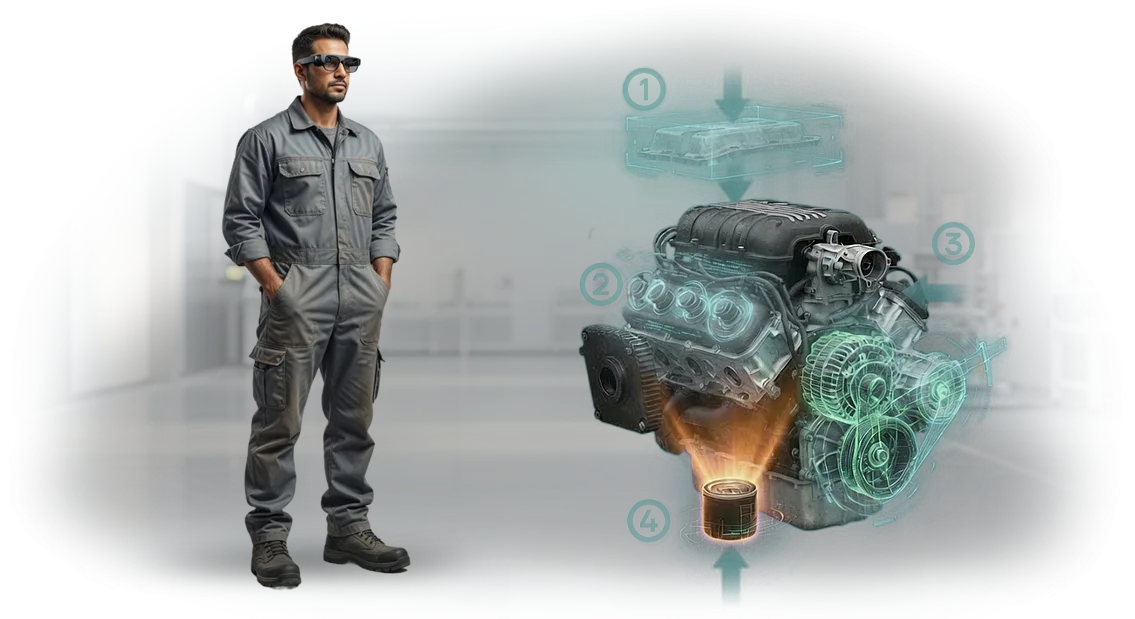
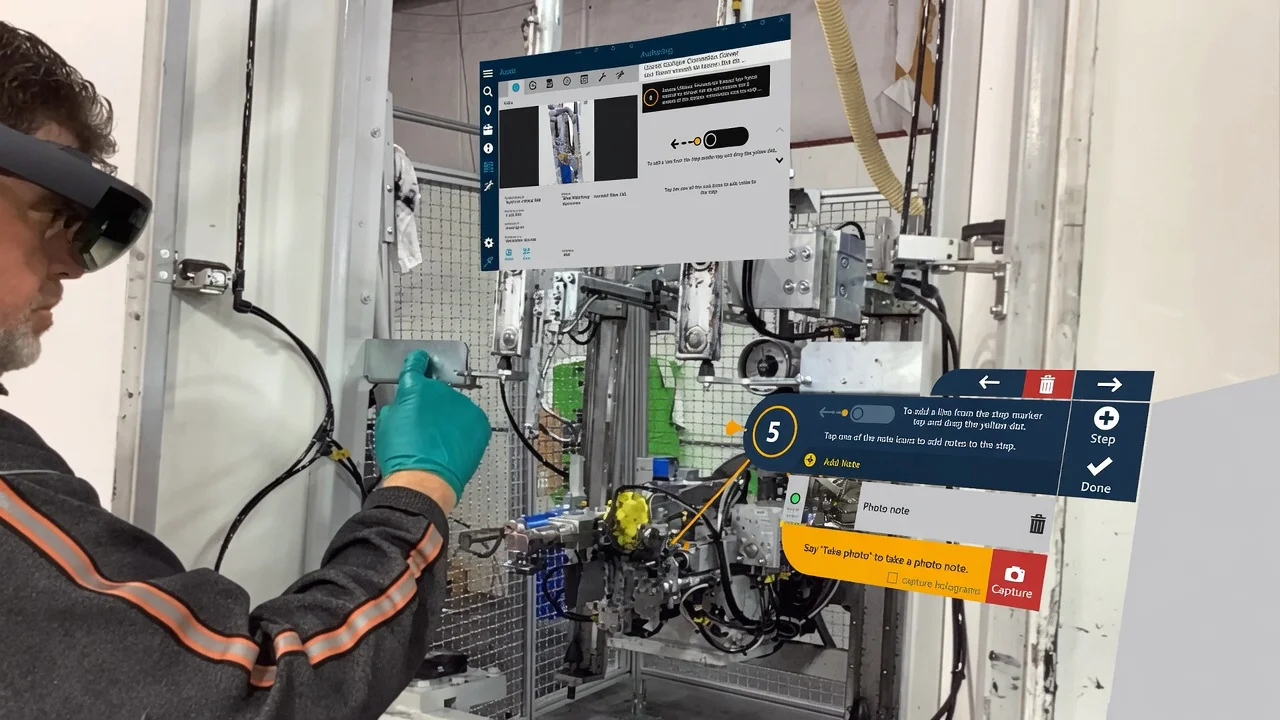
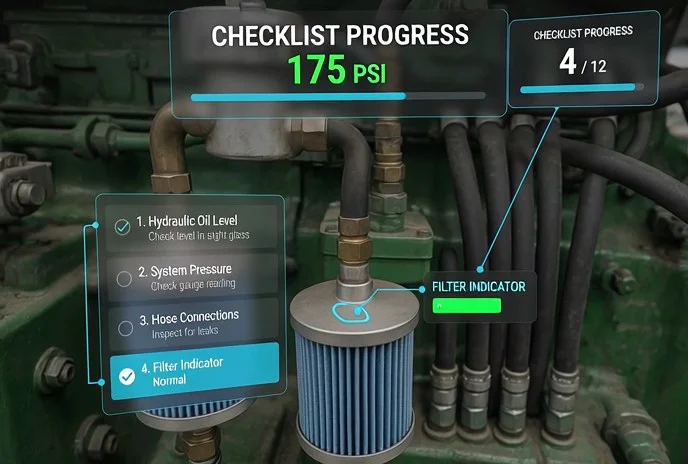
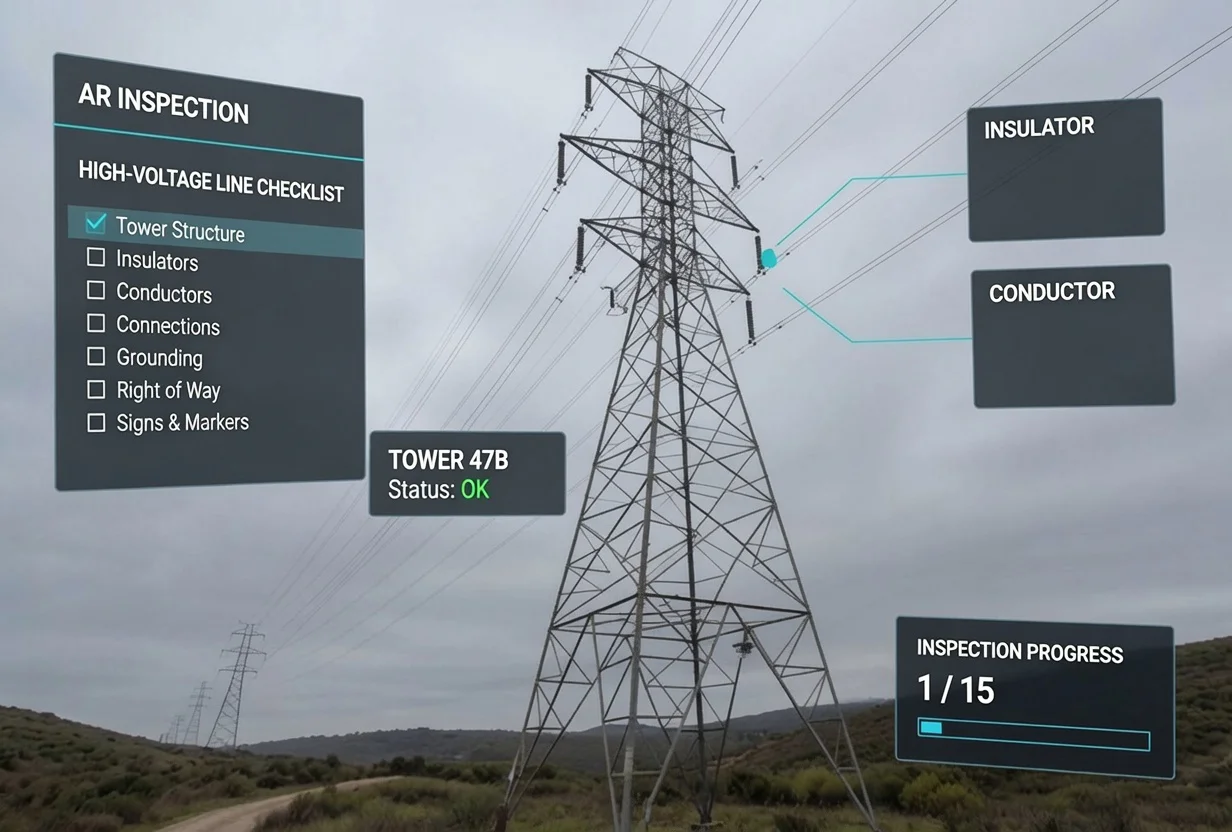
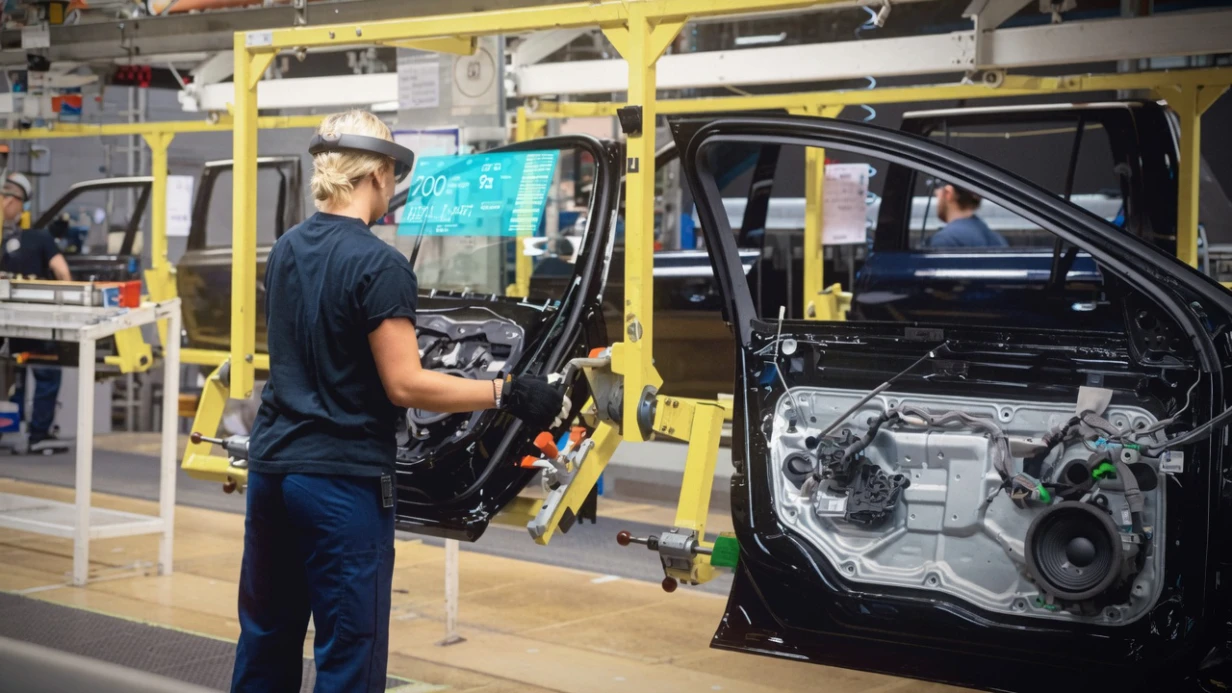
AR maintenance instructions solve this problem right on the spot. An employee points a tablet or smartphone camera at a component — and sees hints overlaid on the real object.
The system shows which part to unscrew, where to press, or what to check, eliminating guesswork and interpretation. The equipment "explains" itself, turning complex repairs into a clear step-by-step algorithm.
Business gets predictability. Following procedures significantly reduces the percentage of staff errors, and average equipment repair time is cut several times over. A young specialist completes in an hour a task that used to take half a day waiting for a mentor. Equipment returns to service quickly, and downtime stops being a manager's headache.
This reduces dependence on "star" employees and simplifies training of new staff. Instead of lengthy mentoring — a quick onboarding with a guaranteed result. We help implement this format at your enterprise, taking on the development and adaptation to your processes. You get a tool that works for stability and revenue growth, not for constantly putting out fires.
What augmented reality gives in equipment repair
A new employee needs up to a year to confidently service a complex machine, and an experienced specialist spends hours searching for the right component in paper instructions.
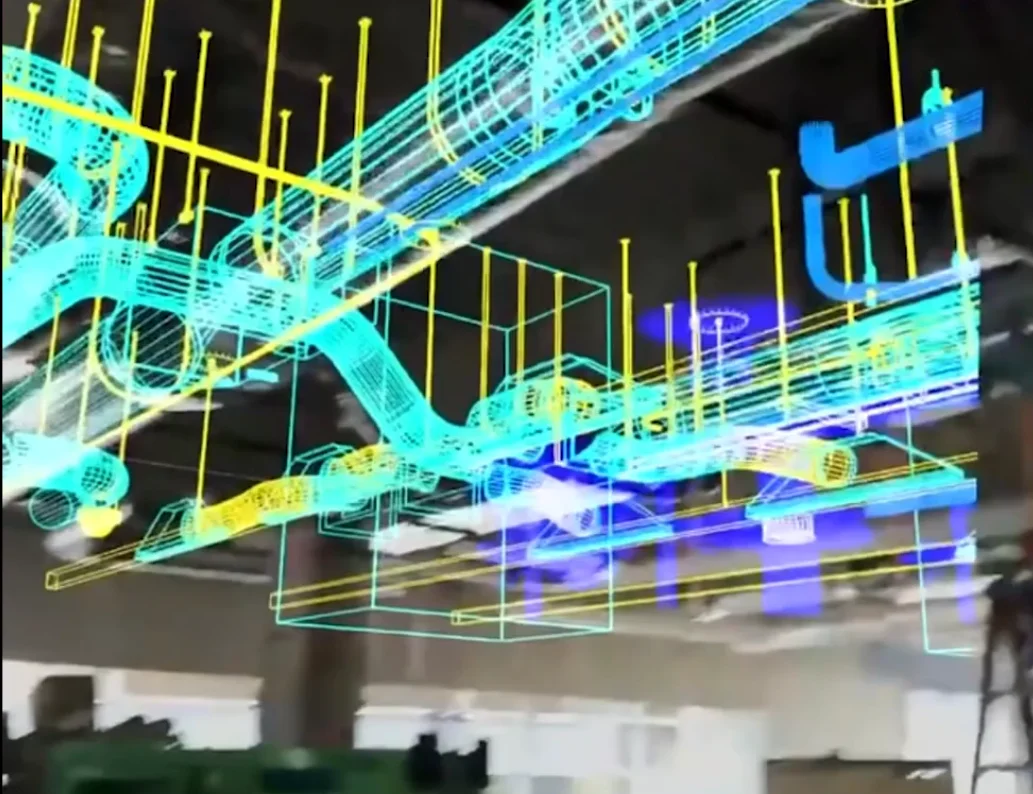
Augmented reality removes this gap: everything needed appears right before your eyes — hints are overlaid on the real equipment, not on abstract diagrams.
As a result, training takes days instead of months, and the likelihood of errors during repairs is reduced several times over.
The main benefit is a predictable outcome for every repair. The technician sees the sequence of actions, checkpoints, and acceptable tolerances in real time, so there's no need to rely on memory or personal experience.
This is especially important with high staff turnover and work on expensive equipment, where one inaccuracy can halt production.
Safety is a separate advantage. AR instructions warn about hazardous zones, remind about lockouts, and require confirmation before critical operations. The manager gets fewer injuries, downtime, and insurance cases — which means lower personnel and repair costs.
Transparency also matters. You see which operations employees perform, where errors most often occur, and how much time each task takes. This data helps improve processes, find weak spots in maintenance, and plan crew workload.
This way, augmented reality becomes not just a convenient tool but part of a management system that increases the efficiency of the repair service as a whole.
In practice, AR instructions pay off in the first months of use: newcomers are onboarded faster, emergency shutdowns happen less often, and work quality is higher.
The customer gets not just technology but a way to bring order to equipment maintenance and rely on proven processes instead of employees' personal experience.
AR instruction formats: from machines to turbines
AR maintenance instructions cover different production tasks — from scheduled inspections to emergency repairs.
What differs is not the technology but the delivery format: for a machine, step-by-step disassembly is convenient; for a turbine — component condition monitoring; for a new employee — a training scenario.
We select the format for a specific task so the customer gets a measurable result: less downtime, faster staff ramp-up, lower risk of errors.
Below are typical AR instruction formats that we adapt to your equipment.
Typical AR instruction formats
| Format | For which equipment | What it gives the customer |
|---|---|---|
| Step-by-step repair | Machines, presses, pumps | The operator sees each step on the real part — repairs are faster, defects are caught immediately |
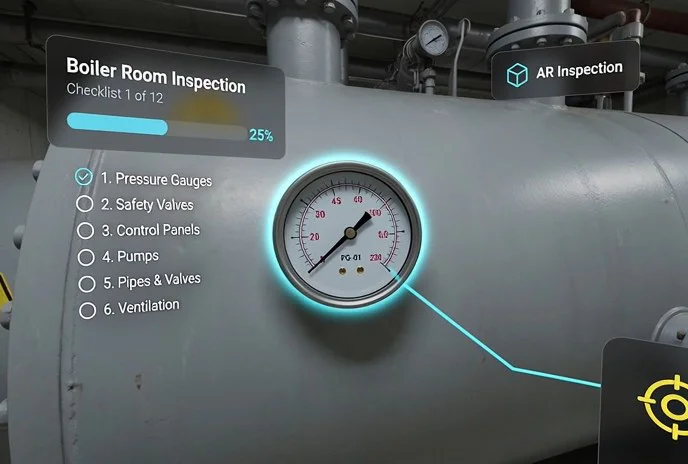
| Scheduled maintenance | Turbines, compressors | Compliance with maintenance deadlines without searching paper manuals, checklist-based control |
| Fault diagnosis | Automatic lines | Accurate determination of the cause of a failure, resolution without calling an engineer |
| Personnel training | Any equipment | A new employee reaches working pace in 2–3 shifts instead of weeks |
| Safety control | Hydraulics, electrical systems, power units | Fewer injuries and errors, compliance with regulatory requirements |
For the customer, this approach means not "living pictures" but managed maintenance: the time of each operation is recorded, errors are highlighted immediately, and knowledge isn't lost when staff changes.
If you don't know which format suits your equipment, send us your task. We'll suggest an option that solves your specific business problem rather than being just a technology demonstration.
How project work goes: from brief to launch
We've broken down the work on AR instructions into clear stages so you can see the result at every step and understand when the project will be ready.
This avoids typical problems: missed deadlines, endless revisions, and a "black box" where development happens in an unclear way. You participate at key points, and we handle all technical matters.
- Brief and audit. We discuss tasks and business goals: which operations need to be moved to AR, how complex the equipment is, who will use the instructions. We study existing documentation and, if necessary, visit the site to understand the specifics of your production.
- Scenario and prototype. We prepare the interaction logic: how the operator will see hints and what to do at each moment. We show the future interface on screen — before the main development begins. You immediately see what the product will look like and make changes without extra costs.
- Content and graphics. We create 3D models of components, disassembly and assembly animations, text hints, and diagrams. We coordinate all materials with you to ensure technical information is accurate and wording is clear to employees.
- Assembly and configuration. We put the application into a single system and configure it for your devices and working conditions. We use proven tools and professional equipment — this guarantees stable operation of AR instructions in the workshop, warehouse, or at a remote site.
- On-site testing. We test the instructions on real equipment together with your employees. We find inaccuracies, refine movements and wording, and polish the result. At launch, you get a tool that truly helps people work faster.
- Deployment and support. We install the application on devices, train staff, and hand over access. After launch, we stay in touch: we update content when procedures change and help extend instructions to other equipment models.
A typical project takes two to four weeks. The timeline depends on equipment complexity, the number of operations, and the desired launch date.
We fix the schedule in the contract and provide a clear result at the end of each stage — so you always know what's happening and when the next materials for approval will be ready.
What's included in the delivery package for an AR production solution
When it comes to purchasing an AR solution, the customer gets not just an application but a working tool for production.
The delivery package includes everything needed to reduce downtime and speed up staff training in the first weeks — without involving external developers or lengthy approvals.
- Ready-made AR instructions for your equipment models. Step-by-step scenarios with component highlighting and hints — the employee sees what to do and in what order, right on the tablet screen.
- AR application adapted to workshop tasks and running on regular tablets and smartphones. It doesn't require complex setup and is installed in one day.
- A complete documentation set: user guides for operators and setup technicians, instruction update procedures, and materials for internal training. Everything is designed to pass knowledge between shifts without loss.
- Training for your employees. We conduct training for key specialists and engineers so they can independently use AR instructions and adapt them to new procedures.
- Ongoing support after launch. We answer questions, update content when equipment changes, and help add new components and operations — the solution lives together with your production.
This package covers the main risk of any implementation: the technology remains functional months later rather than becoming a "shelf piece" after a demonstration.
You get a clear procedure, a trained team, and support — the things that turn AR instructions into a daily tool for your employees rather than a one-off experiment.
A real example: how augmented reality reduced repair time
Implementation case: for a major manufacturer of industrial compressors, Atlas Copco, we developed AR equipment maintenance instructions.
The task was typical: routine work was done using paper manuals that lost pages, became outdated, and required a long search for the right diagram. As a result, service engineers spent extra hours disassembling components and feared making mistakes during reassembly.
We converted complex operations into step-by-step augmented reality scenarios directly on the machine body. The engineer sees highlighted parts, the order of unscrewing, and the point where force is applied, without being distracted by an instruction manual.
Training of new employees happens on the real object rather than in a classroom — a mentor is no longer needed at every step.
Results: typical repair time was reduced by 40%, and the number of assembly errors was cut in half. Average equipment downtime at customers' sites dropped from five hours to three — hours that the plant can spend on production output.
The manufacturer's service team got a single work standard, which is especially important as the equipment fleet grows and experienced specialists are scarce.
For you, this means AR instructions pay off not as technology but as a tool for managing quality and maintenance timelines. We don't just overlay models on the screen — we analyze your procedures, find bottlenecks, and build a solution that integrates into your engineers' work.
If you want to evaluate the effect on your equipment, we'll start with a pilot component and record current metrics before and after.
Frequently asked questions about implementing augmented reality at an enterprise
The first questions about augmented reality usually concern not the technology but the consequences: how it will affect workshop operations, whether it will break familiar processes, and whether it will create new risks. We answer the main concerns — the same way we answer customers before starting a project.
Is it difficult to implement AR instructions if the equipment has been in operation for a long time?
There's no need to change equipment. Augmented reality works on top of what already exists: the operator sees hints right before their eyes at the workstation — we don't rework anything and don't stop production.
The data for the instructions comes from your technical documentation — from drawings to maintenance procedures.
Is this spending for the sake of technology or a clear business benefit?
The investment is comparable to developing high-quality video training, but the effect is measurable: fewer maintenance errors, shorter onboarding for newcomers, and less downtime caused by incorrect actions.
Employees learn directly on the real object rather than in theory, so the result is visible from the first weeks.
Won't the hints interfere with work, and is such an instruction safe for personnel?
The interface is designed so it doesn't block the view or distract from the process. Hints appear step by step and only at the right moment — the operator looks at the equipment, not at the screen.
Each scenario is coordinated with your technologists and occupational safety department, so there are no conflicts with internal safety standards.
How will this fit into current procedures and accounting processes?
Implementation doesn't require replacing systems: we only need your documentation and approval of the interface with your team. We handle content preparation, scenario assembly, and employee training ourselves. When a procedure changes, edits are made quickly and without stopping production.
If you still have doubts about your area — we'll send an example scenario adapted to your task.Leave a request — let's discuss how to speed up repairs and reduce downtime
Leave a request — get a consultation and a preliminary project estimate. We'll explain how AR maintenance instructions reduce repair time and where the savings come from. No obligation: you'll understand what steps are needed and what the result will be.
What you'll get from the first conversation:
- Whether the AR format suits your equipment and which operations cover the biggest downtime.
- How many components can be converted to AR, what the timelines are, and what it will cost.
- Which format to use: tablets, glasses, or screens — what actually works in your workshops.
- A pilot on one critical component: we'll make an instruction and test it with your repair staff while measuring time.
- What we need from you (equipment access, documentation, participation of specialists) — we handle the rest.
- How to scale the instructions to other lines after the pilot and integrate them into training.
To get started, you don't need a ready-made technical specification — we collect all the data ourselves: drawings, procedures, interviews with specialists. The first conversation is non-binding, and we lead the process with clear reports at every stage.
Leave a request — in a couple of days we'll prepare a preliminary estimate. If the pilot confirms faster repairs, we'll discuss rolling it out to other areas.
How to choose the right format for your task?
There is no universal AR instruction format — the choice depends on two things: equipment complexity and staff skill level. For some, a short "cheat sheet" on a component is enough; others need a full step-by-step guide with control over every action.
So first it's worth answering the question: what is the damage from an error, and how often is an instruction needed?
If we're talking about complex machinery where an error is expensive — a line stoppage, unit damage — choose a step-by-step format tied to real parts. The employee sees arrows, hints, and confirmation of each completed step right before their eyes. This format shortens training time and reduces the risk of incorrect operation.
For simple operations or experienced specialists, a brief mode is more suitable: point the camera at a component — see key checkpoints and the sequence of actions. This doesn't distract from work and doesn't require lengthy training. Essentially, it's a digital "reminder" that's always at hand.
Finally, consider the specifics of the site itself: whether there's stable network access, what devices employees use, and whether remote control by an engineer is needed. These factors affect how the instruction will be delivered and updated. Together with you, we record all constraints and select a format that fits into the workflow.
To avoid guessing, we offer a pilot project: we take one component, create a suitable format, and test it with real employees. As a result, you see how execution speed and error rates change, and then make an informed decision. This is the fastest way to find your format without unnecessary costs.