

AR-hardware Integration: Why Your Shop Floor Loses Up to 20% of Time
Every hour of production line downtime means idle equipment, disrupted shipping schedules, and payroll that still has to be paid.
A significant share of stoppages, however, is caused not by breakdowns but by waiting: an employee searches for the right instruction, tries to recall the sequence of operations, or waits for a more experienced colleague to become free and provide guidance.
This is especially noticeable when training newcomers and working with complex assemblies. Instead of producing goods, the shop floor spends hours on explanations, error reviews, and rework.
As a result, up to 20% of working time is wasted, and quality depends on the experience of an individual specialist rather than on a well-tuned process.
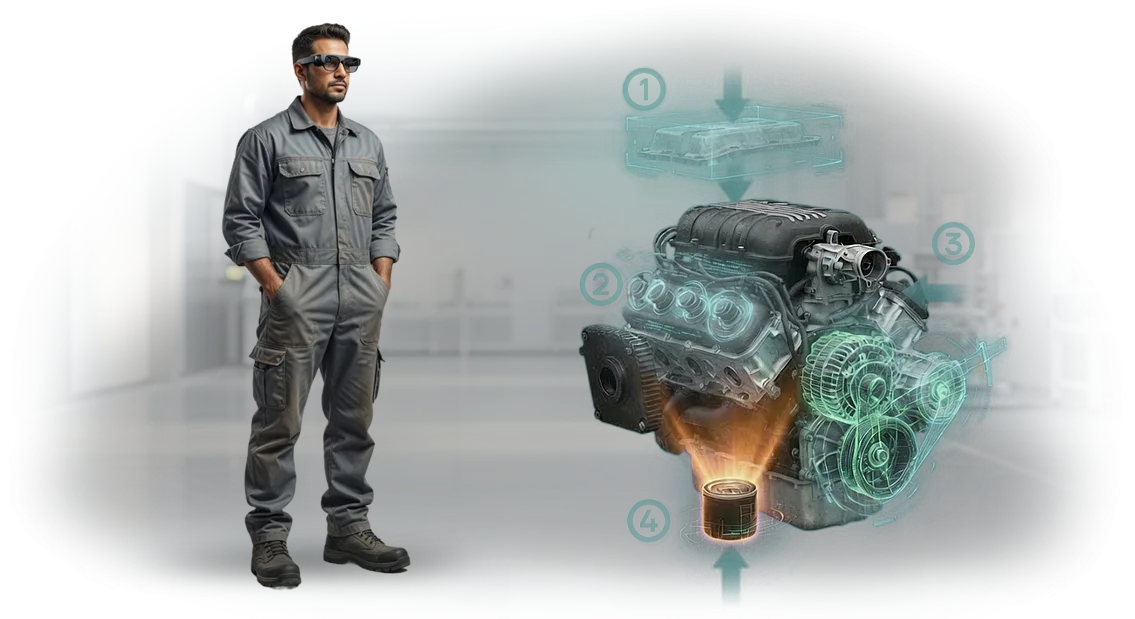
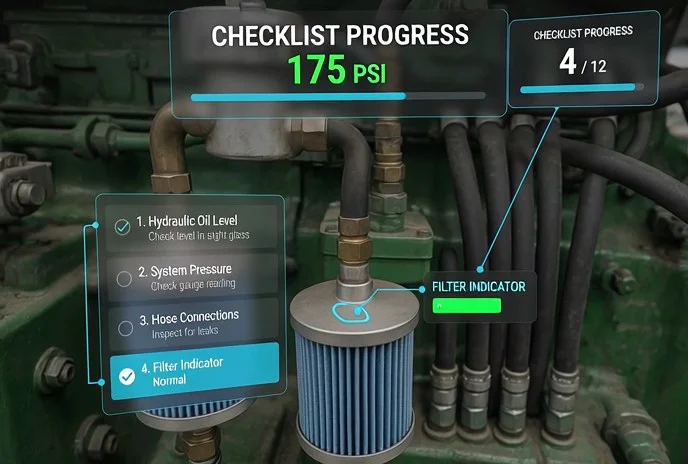
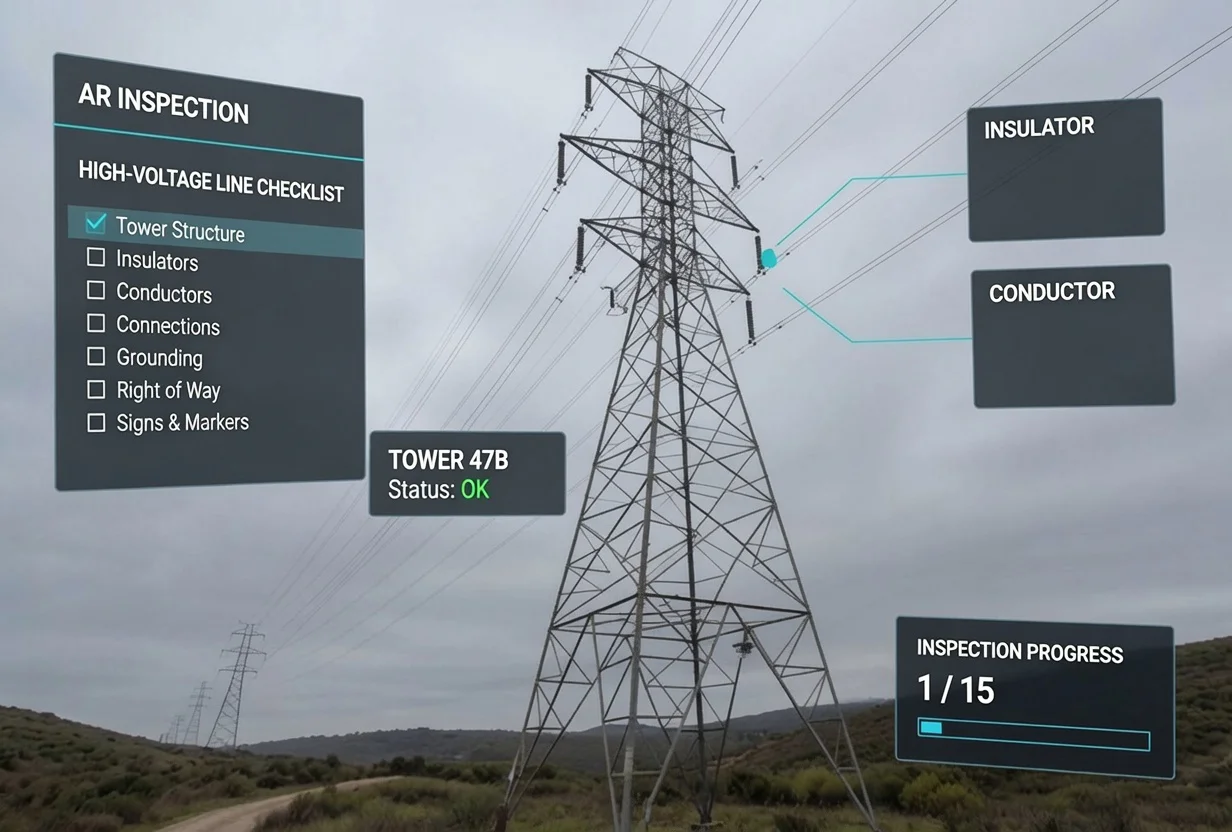
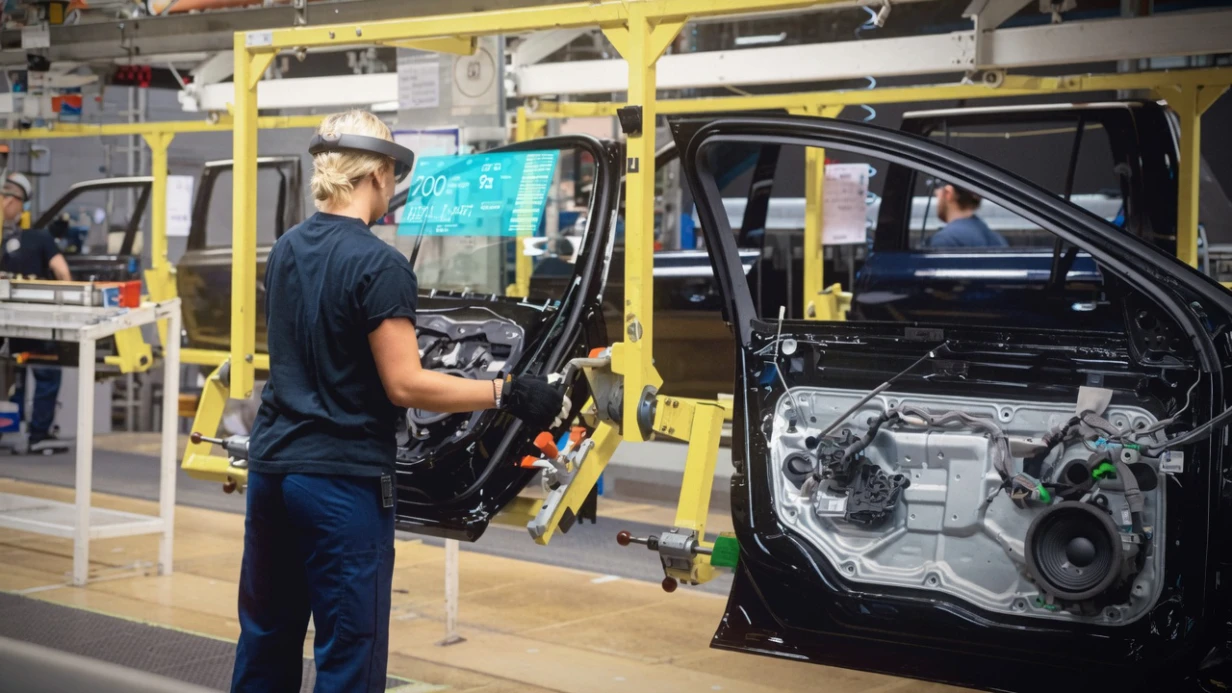
We close this gap with augmented reality. AR instructions overlay step-by-step prompts directly onto the equipment: the operator sees what to do and in what order, without paper manuals or information searches. This is not the future — it is a working solution already being deployed on production sites.
Downtime decreases, staff training becomes many times faster, and the number of errors in assembly and maintenance drops. The employee receives visual support at the moment of the task; the manager gets a predictable result and higher output without expanding the headcount.
What Will AR Technology Give Your Employees and Production?
Equipment repair and maintenance stall precisely where an employee lacks experience: time is spent searching for diagrams, calling in a narrow specialist, and repeated disassembly. Every hour of downtime means an unfulfilled order, a missed deadline, and extra costs.
A visual instruction directly on the equipment removes the main delay — the search for the right solution.
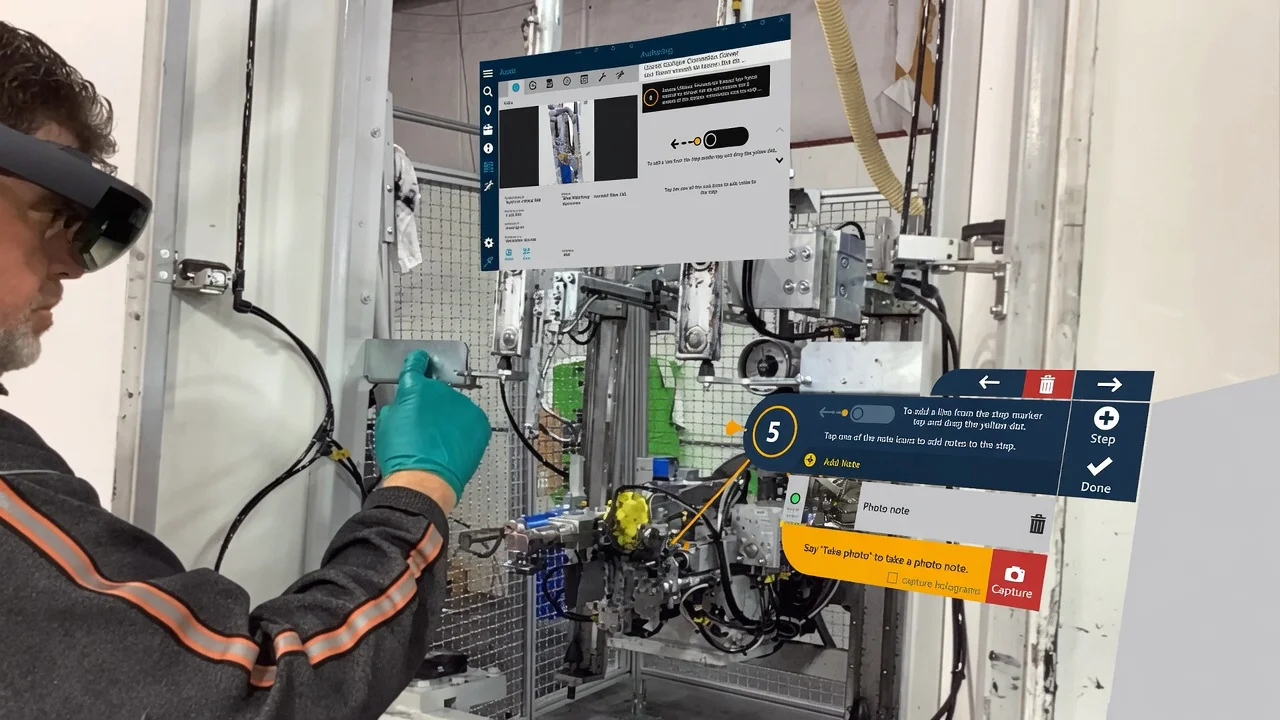
The employee sees a step-by-step prompt on a tablet screen or smart glasses: exactly where the part is, in what order to remove it, which tool to use. No need to flip through paper manuals or recall a rare operation — the system shows actions directly on the object. This speeds up fault-finding many times over, especially for new employees.
Errors during assembly and setup are the main source of repeat repairs and the risk of breakdown. An AR instruction controls every action: if an employee skips a step or tightens the wrong unit, the system stops them in time and gives a hint.
As a result, the share of defects and repeat callouts decreases, and equipment fails less often because of the human factor.
Training also becomes faster and cheaper. A newcomer does not need a mentor who drops everything for them — they work with a visual instruction while the experienced employee focuses on their own tasks.
A trainee reaches independent work faster, and the risk of spoiling something in the first months is minimal.
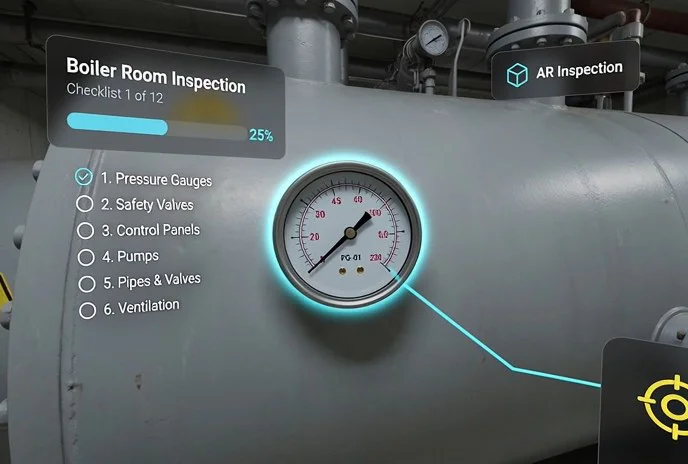
An additional plus is safety. The instruction warns in advance about hazardous areas, the order of de-energizing, and mandatory locking of mechanisms. An employee less often acts by guesswork, which means fewer injuries and emergency stops.
We implement such solutions turnkey: we analyze your operations, prepare instructions, and configure a system that speeds up work and reduces costs.
AR-hardware Integration Formats for Any Task
Implementing AR instructions starts with choosing the equipment and format — there is no universal solution. Somewhere a tablet or mobile device is more convenient, somewhere a hands-free industrial headset is better. We select the type of AR device based on your tasks, shop floor conditions, and staff skill levels.
Below are typical AR-hardware integration formats and the scenarios where each delivers maximum effect. The table helps you see in advance what the interface will look like for the employee and how quickly the implementation will pay off.
AR Formats by Device Type
| Format | Who it is for | What it gives the client |
|---|---|---|
| Voice control | Hands-busy craftsmen: welders, fitters | No need to be distracted; step-by-step commands directly in the earpiece |
| Gesture control | Assemblers of complex units, machine operators | Contactless navigation, work with gloves, no touchscreen |
| Tablets and smartphones | Repair crews, service engineers, machine setters | Detailed diagrams and video on a large screen; low cost of scaling across a crew |
| Industrial AR headsets | Specialists in hazardous areas, remote support | Hands-free operation + video link with an expert, fewer errors |
After choosing the format, we adapt the content to the specific device and test it on your samples. AR-hardware integration in our execution is a working tool built into procedures, not a delivery of gadgets: faster onboarding, less scrap, safer work on site.
Project Stages: From Audit to Launching AR Instructions
Implementing AR instructions is not buying a ready-made application but building a structured process.
We go through it with you from the first call to daily operation so that the result solves exactly your task: trains employees faster, reduces mistakes, and does not require rework. Here is how this work is arranged.
- Audit and brief. We study the equipment, processes, typical errors, and procedures. You receive a clear plan of where AR will deliver the greatest effect and pay off fastest.
- Plan and estimate. We fix the scope, timeline, cost, and acceptance criteria. No hidden work — only a transparent budget and clear stages.
- Scenario approval. We show the logic of the instructions, sample screens, and prompt texts before development starts. You make changes at an early stage, saving time and money.
- AR instruction development. We create step-by-step animations and prompts that appear directly on the equipment. Employees quickly understand the process without paper manuals.
- Real-equipment testing. We test with your operators on the shop floor, collect feedback, and refine. You get a stable version before the full launch.
- Launch and training. We deploy the system on the necessary devices and train key employees. The team starts working independently within a few days.
- Support and development. We update instructions when procedures or equipment change and help with new assemblies. Your investment keeps working for years.
What Is Included in the Delivery of an AR Solution for Your Equipment
Delivering an AR solution is not installing an app but handing over a ready-made work process embedded in your operations. We provide not "technology for technology's sake" but a set of tools that employees use on the very first day. Here is what is included in the project.
- Use-case scenarios. We study your real operations and create step-by-step algorithms for typical tasks: setup, diagnostics, scheduled maintenance, repair. Each scenario is validated together with your engineers.
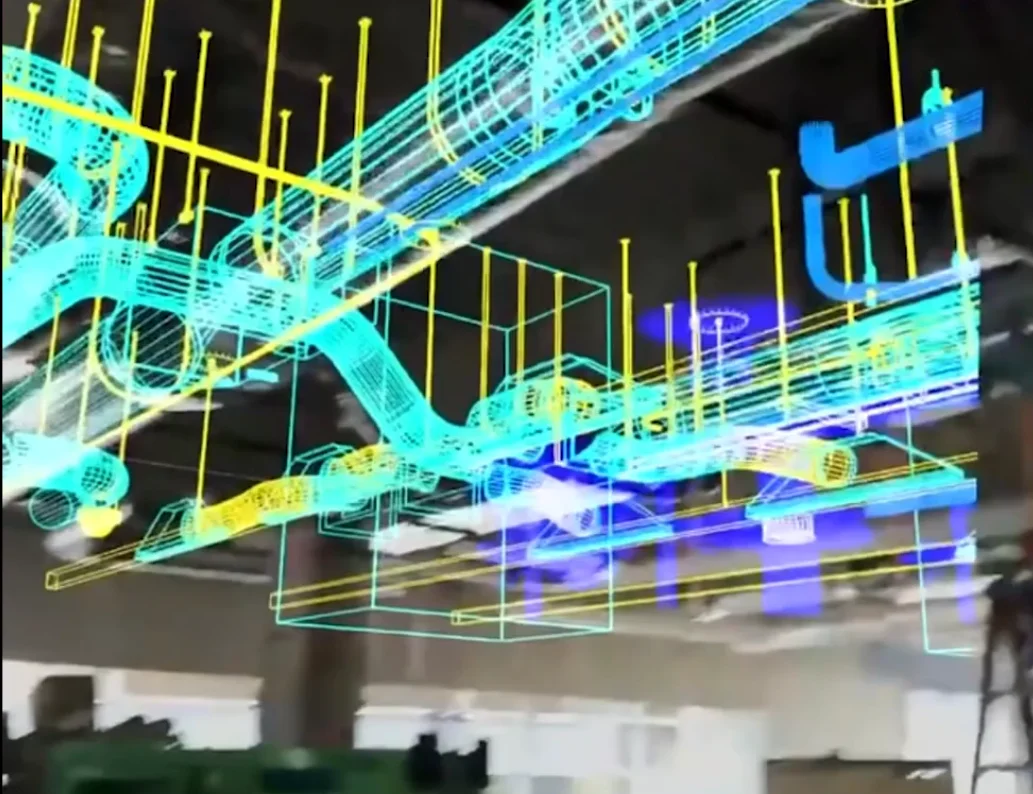
- AR content. Step-by-step prompts, arrows, diagrams, and animations that appear directly on the equipment. The employee sees where to press and what to tighten without looking at a paper manual.
- Device configuration. We choose the hardware type — tablets, smartphones, or AR glasses — to match shop floor conditions: lighting, dust, safety requirements. We configure the devices and connect them to your network.
- Employee training. We conduct hands-on practice for operators and repair crews: how to launch instructions, change the language, and receive reports. After training, your team works independently.
- Documentation and procedures. We hand over clear instructions for operating the AR system, the content update process, and the equipment maintenance procedure. This is your internal knowledge base, not "vendor secret files."
- Post-launch support. For the first month, we accompany the system's use, collect employee feedback, and make edits to scenarios. After that, we work according to an agreed schedule.
Each delivery item addresses a specific business task: reduce dependence on experienced mentors, cut the number of errors, and accelerate the transition of new employees to independent work. You get a measurable result, not an abstract "pilot."
Case Study: How AR Instructions Cut Repair Time in Half
In one of our projects — the machine-building plant PromTech — equipment repair had turned into a real quest. Mechanics had to dig through paper catalogs, call in an engineer from another shop, and often redo the same assembly twice.
As a result, line downtime reached two hours, and rare specialists were overloaded. Scheduled maintenance was missed, and production was losing orders.
We analyzed the five most common failures and realized the problem was not skill but access to information. An employee knows how the equipment works but spends time searching for the right diagram and sequence of actions.
So we converted key repair procedures into augmented reality format: point the camera at the assembly — and you see a step-by-step instruction highlighting the required parts.
Implementation Results
After launching AR instructions, repair time halved — from two hours to one. Assembly errors became rare: a 60% reduction within the first quarter alone. Mechanics stopped interrupting work to wait for an engineer, and newcomers got up to speed faster.
For the business, this means tens of hours saved on each line and an annual saving per production area equivalent to the cost calculated after audit, achieved through reduced downtime and rework.
The customer was so satisfied that they scaled the solution to three plants and use the same scenarios to train new mechanics.
Frequently Asked Questions About Implementing AR Instructions
Managers often postpone AR instruction implementation due to typical concerns: what if the equipment is damaged, employees do not master the new technology, and the budget does not pay off.
Below we address the most common questions — briefly and to the point, based on the experience of our projects.
Can an AR instruction damage the equipment itself?
No. An AR instruction is a digital layer on top of the real object: the employee sees prompts in glasses or on a tablet screen, but nothing is connected to the machine and no settings are changed. All actions are performed by the person following visual prompts.
The risk of error decreases because the system highlights the correct sequence of operations and warns about critical steps.
How difficult is it to train staff to use AR?
Training takes from half an hour to a few hours. The interface is built on intuitive gestures: look, tap, repeat. Our engineers design scenarios so that even employees with no experience of digital tools start using instructions within the first shift. Worker feedback helps improve scenarios and remove inconvenient steps.
How much does implementation cost and when will it pay off?
The cost depends on the number of instructions and the complexity of the equipment — typically the cost is calculated after audit for the first pilot area. Payback comes from reducing training time and lowering the number of errors.
In our projects, payback took from 3 to 6 months, and after that the savings continue: less downtime and faster onboarding of new employees.
What if employees refuse to use AR?
We do not simply "install an app" — we engage staff from the very beginning. We run demonstrations on real operations, collect feedback, and adapt scenarios to familiar workflows.
When an employee sees that AR helps them work faster and without unnecessary paperwork, resistance disappears. As a result, more than 80% of the target audience regularly uses instructions within a month.
How do you guarantee the safety of an AR solution on the production floor?
We follow industrial safety standards and do not use AR for critically dangerous operations — only for auxiliary prompts and sequence control. Data is stored on protected servers, and access to instructions is role-based.
Instructions do not replace existing procedures but complement them, which is confirmed by pilot launches at operating production sites.
If your question is still not answered, just write to us. We will explain how it works on your equipment, send example scenarios, and calculate a preliminary cost for the pilot within one working day.Ready to Increase Your Production Efficiency? Order an AR Solution
Production efficiency is built from small things: training time, number of errors, equipment downtime. AR instructions turn these small things into a manageable process — the employee sees prompts directly on the equipment and acts correctly the first time. We help implement such solutions turnkey, from idea to launch.
Start with a free consultation and demonstration: we will show how AR fits into your processes and calculate the potential effect for your area. If you like the result, we will scale the solution to all shifts and directions.
What you get after placing an order:
- An audit of your operations and selection of a scenario where AR delivers a fast return on investment.
- A demo on your equipment — the solution is tested under real conditions, not in a presentation.
- Content adaptation to your engineering and manufacturing documentation — without reworking existing documentation.
- Implementation without stopping the production cycle: training and integration run in parallel with operations.
- Preparation of your specialists: they work with AR independently on the very first day of launch.
- Post-implementation support: instruction updates and technical support are included.
Order an AR solution — leave a request for a consultation, and we will prepare an implementation plan with an effect assessment within five working days. We will start by talking about your tasks, not about technical details.
How to Choose the Right AR Format for Your Equipment?
The right AR format is determined not by the type of equipment but by the task you are solving: cutting employee training time, reducing maintenance errors, or speeding up on-call repairs.
The same machine can effectively use AR both as step-by-step instructions for an operator and as remote support for a service engineer. Therefore, choosing AR starts with answering the question of which exact link in your process should become faster.
To orient yourself, evaluate three working conditions: stationary equipment allows tablets or glasses, while moving objects require compact solutions.
Next, consider operation complexity: for short procedures, overlaying diagrams on the screen is enough; for complex diagnostics, an interactive model is needed.
Finally, staff readiness — an intuitive interface and team training are built into the implementation format during the planning stage.
Our engineers help you choose AR and select equipment for your budget and industry. We visit the site or hold an online consultation, study the specifics of the device and the procedures, and then propose two or three implementation scenarios with clear timelines and costs.
You do not overpay for unnecessary functions — you get exactly the format that pays off in your production.
If you are not sure which format suits you, start with a small pilot. After two weeks, you will see a measurable result: how much time the operator saves and how much the number of errors decreases. Then we scale the solution to other areas.
Book a consultation — we will discuss your task and show what AR-hardware integration looks like in practice.