

AR assembly software: how to eliminate assembly errors in production
Assembling modern equipment is a process where every wrong step leads to costly defects, missed deadlines, and downtime.
Engineers and fitters work from paper manuals, drawings, and videos, but this does not prevent assembly errors: parts get mixed up, the sequence of operations is disrupted, and complex assemblies are put together by intuition. As a result, production loses money before a line even starts.
Traditional staff training also cannot keep pace with the speed of change. A newcomer needs weeks to master a new piece of equipment, while experienced employees spend time reading instructions instead of working.
The company lacks flexibility: every shift, every new employee means repeating the training cycle and risking errors.
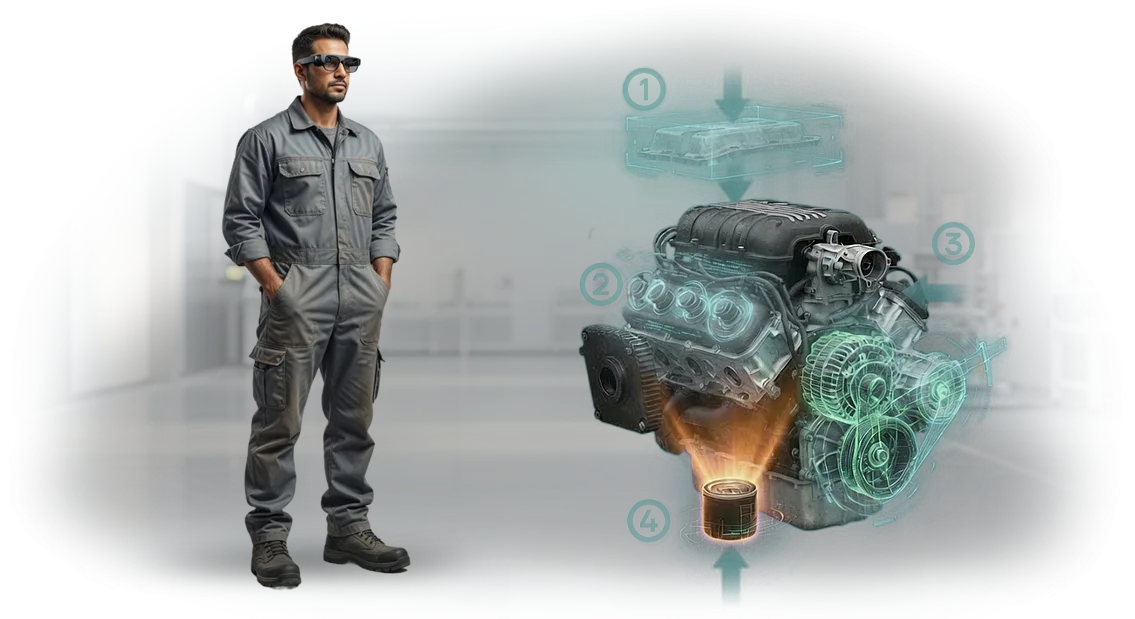
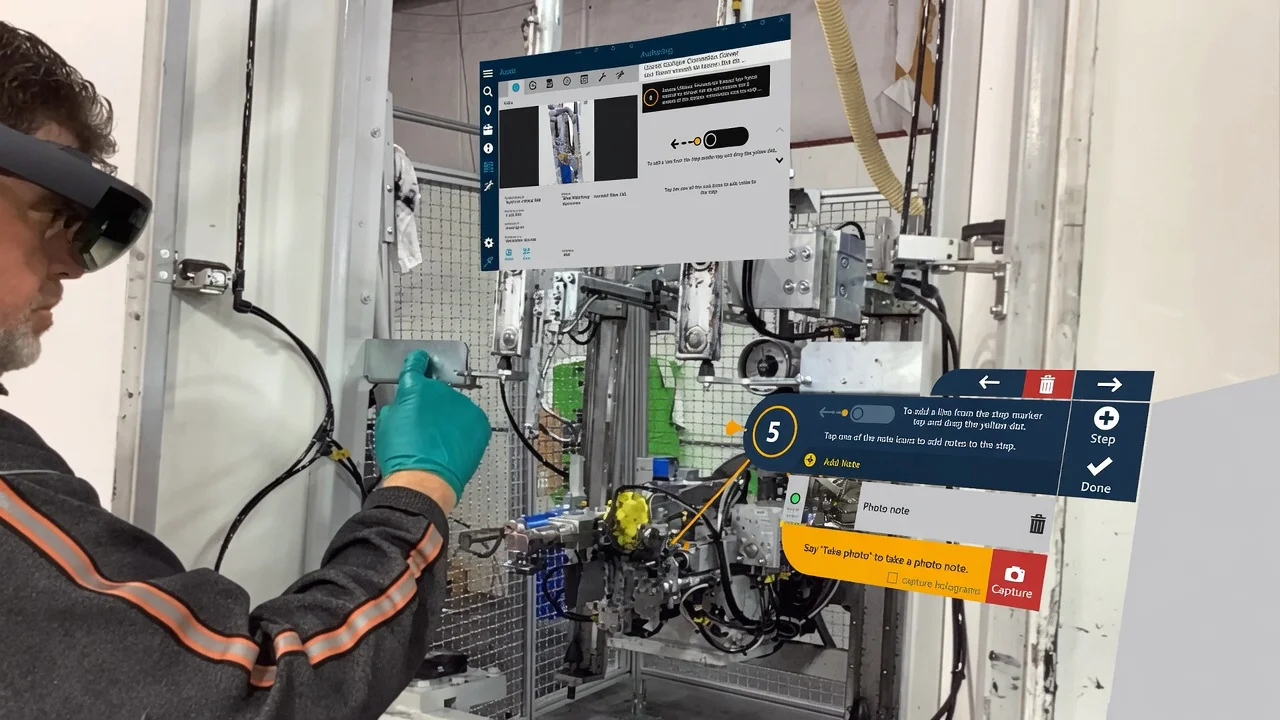
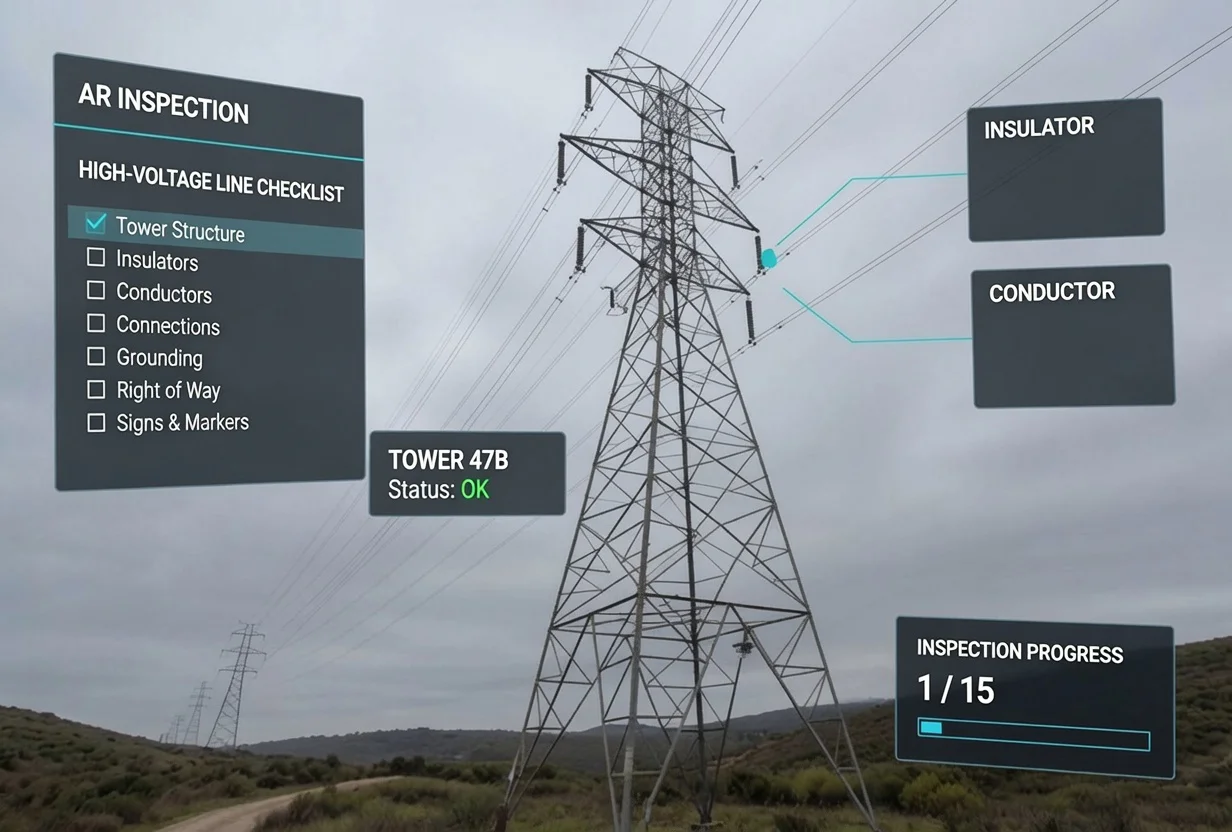
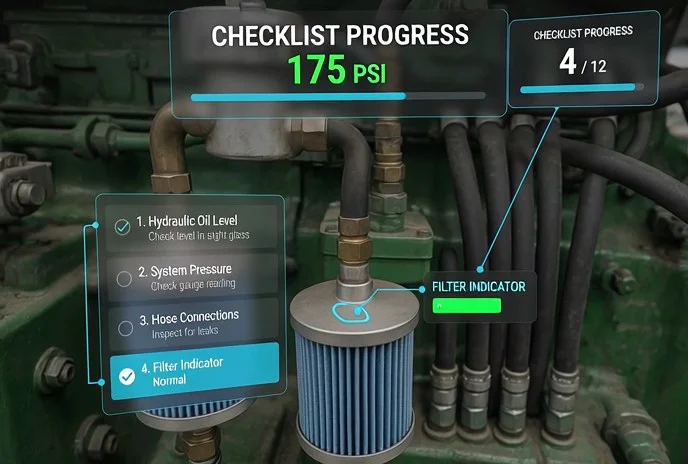
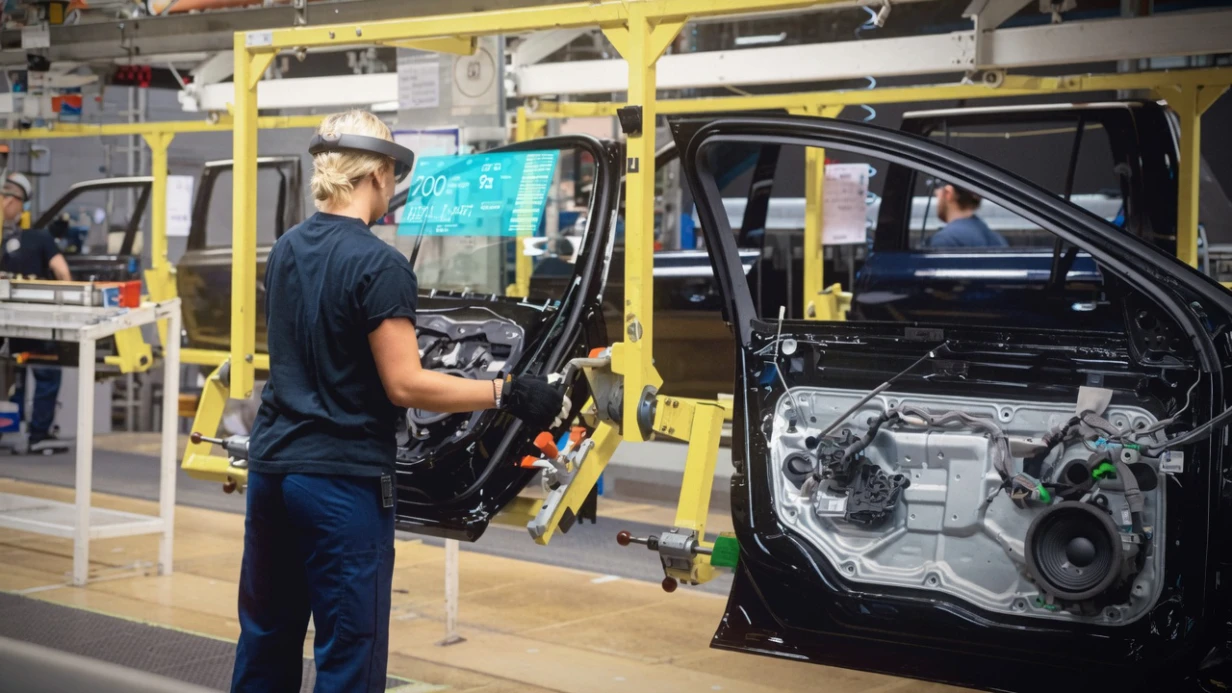
The solution is AR assembly software. We develop AR instructions and interactive guides that overlay hints directly onto equipment via a tablet or augmented reality glasses.
The fitter sees where to attach a part, in what order to tighten fasteners, and where cables run — without reading drawings or searching for the right page. Equipment assembly becomes visual, sequential, and controlled.
For a manager, this means fewer defects, faster ramp-up to full capacity, and confidence that every employee works to a single standard. Training takes days, not weeks, and expertise does not leave with a key specialist.
Our engineers adapt AR instructions to your production processes so that you get exactly the result you need — stable assembly without costly errors.
What you get from implementing AR instructions
Production loses money every time a line stops or an assembler makes a mistake. AR instructions solve both problems: the employee sees hints directly on the equipment and performs each step without delays for reading drawings.
As a result, typical assembly time is reduced by a third, and downtime due to the human factor disappears.
Assembly quality also reaches a new level: projected parts and the correct order of operations eliminate most errors. This is especially important for complex products where a mistake is expensive.
Fewer defects mean fewer reworks and returns, and therefore greater confidence among your customers.
Another benefit is training newcomers. Instead of months of mentoring, a few days of working with AR instructions are enough: a new employee quickly reaches the level of an experienced craftsman.
At the same time, AR reminds workers of safe practices and warns of risks, reducing injuries and insurance costs.
In the end, you achieve savings across several areas: less downtime, fewer defects, lower training costs, and safer production. The project usually pays for itself within the first months, and we help measure the results before and after implementation. Every plant gets a solution adapted to its operations and staff skill levels.
AR instruction formats for your production tasks
Every task in production is different: assembling a new unit, diagnostics, training a trainee, or urgent repairs at a remote site. That is why we do not make “one format for everything” but instead select AR instructions for a specific operation and employee skill level.
This way, you get a tool that takes root on the shop floor from day one, rather than remaining a demo.
Below are the formats we implement in projects and the benefit of each for your production.
| Format | Who it's for | What it gives the client |
|---|---|---|
| Step-by-step AR guides | Assembly operators, machine setters | The employee sees the next step directly on the equipment — fewer errors and reworks, faster ramp-up to working rhythm |
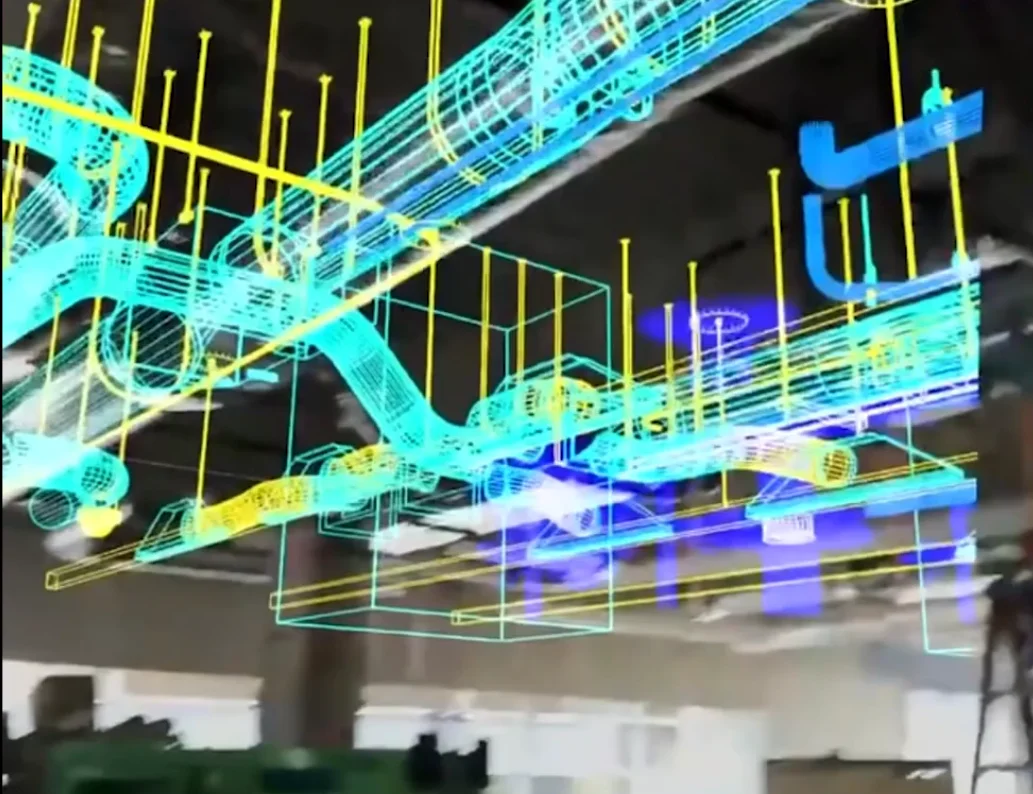
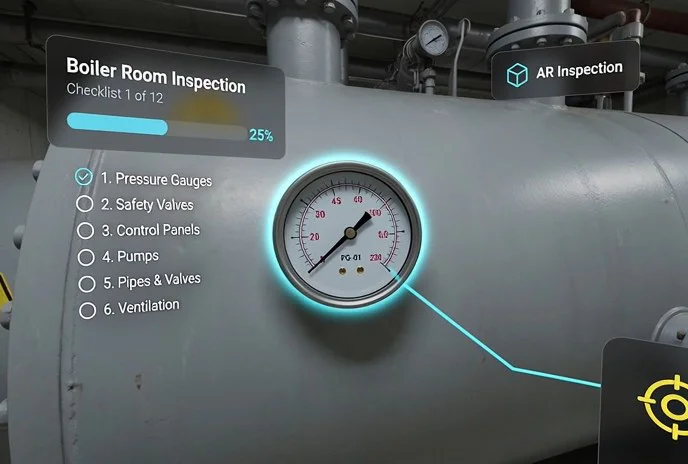
| Overlay of diagrams and parameters | Diagnostics, quality control | The needed components and allowable values are right in front of the eyes, no paper or searching through a general manual |
| Remote support | Engineers, service teams | The specialist sees the same as the employee on site and gives precise guidance, saving hours of downtime and site visits |
| Interactive diagrams and training | New employees, training centers | Safe practice before working with real equipment and clear progress tracking |
We combine formats in one project: for example, we supplement a step-by-step guide with remote support during launch. This speeds up implementation and allows changing the process without reworking the entire system.
And if the design or regulations change, we update only the necessary steps without touching other materials.
How implementation works: project stages
We understand that introducing new technology into production is a risk: it is unclear how employees will perceive the changes and when results will appear.
That is why we have structured the implementation stages so that you see intermediate results at every step and can adjust course without missing deadlines.
-
Brief and task audit. We study your equipment, regulations, and typical operations where AR instructions will deliver the greatest effect. We record goals, scope of work, and success criteria — you get a transparent plan with clear timelines.
-
AR instruction prototype. We take one complex or frequently repeated operation and show what it will look like on the shop floor: step-by-step hints, a component diagram, and checkpoints. You evaluate usability before we start scaling content.
-
Creation of the full content package. We prepare AR scenarios for all specified operations: action sequences, part highlighting, and error warnings. You get a single digital document that is easy to update when regulations change.
-
Validation on real equipment. We demonstrate the instructions on your site and collect feedback from technologists and workers. We make edits until everyone who will use them is satisfied.
-
Pilot launch. We implement the solution on one site or in one team. We measure newcomer training time, number of errors, and operation speed — and show you the actual effect, not theoretical calculations.
-
Training and support. We prepare your employees to work with AR instructions, hand over the methodology, and provide technical support. After a successful pilot, we help scale the solution to other sites and processes.
The entire path from brief to working prototype usually takes a few weeks. We deliberately start with a pilot project — it is your way to verify the value of the solution using real metrics and only then invest in full deployment.
What is included in an AR instruction package
You are not getting an abstract “mobile application” but a complete working package that can be immediately integrated into processes.
We take on the creation of all graphics, logic, and documentation, while your employees see a clear result: how to correctly perform assembly, repair, or maintenance right at their workplace.
Here is what is included in the delivery:
- Professional 3D models of the equipment. Accurate copies of components and parts that are overlaid on the real object. The employee sees the step-by-step process "on top of" the machine or unit and does not confuse instructions.
- Ready-made AR instruction scenarios. For each operation, we write an action sequence with highlighting of the required elements and error warnings. This replaces dozens of pages of paper regulations.
- Training materials for personnel. Short courses and quick guides on how to use the instructions, so that implementation goes quickly and does not require special knowledge from your team.
- Administrator guides. An internal system where you can change scenarios, upload new versions of parts, or add hints yourself, without contacting developers.
- Instructions for your technical specialists. Documentation on working with the package so that your engineers can support the system and help colleagues.
- Source files and access rights. You are not dependent on us: all materials are transferred to your ownership, and the server side is set up on your infrastructure.
The entire package is connected into a single environment: 3D models, scenarios, and training videos are automatically loaded onto employees' tablets and glasses.
If you change a drawing or process, edits are made centrally, and on the same day all employees work with the new version.
We don't just write code; we build a solution around your tasks: from the first demonstration on your equipment to full launch with staff training. In the end, you get a tool that speeds up work and reduces the risk of errors.
Case study: how AR instructions reduced assembly time by 40%
One of our clients — an industrial equipment manufacturer Siemens — approached us with a specific problem. Assembling a complex unit took experienced operators up to six hours, and assembly errors occurred in one out of every seven cases.
Reworks and downtime delayed order shipments, and training a new employee to work independently took almost a month.
We proposed replacing paper manuals with an AR instruction. The operator points a tablet at the equipment and sees a step-by-step hint right on the surface of the part — no need to flip through drawings or keep dozens of steps in mind. The system itself shows what to do next, so the person gets less tired and makes fewer mistakes.
The development took seven weeks: two of our engineers worked alongside the client’s technologists directly on the production floor.
Thanks to this, the instructions exactly followed the real sequence of operations and included quality checkpoints familiar to the customer’s quality control department.
Results
After implementation, unit assembly time dropped by 40% — from six hours to three and a half. The number of assembly errors fell threefold, and training for new operators was reduced from a month to a few days.
The site manager noted that the team finally stopped redoing work and began shipping orders on time.
The project paid for itself in three months: the savings on one production line came from reduced labor hours and fewer defects, with the exact cost savings calculated after audit. After that, the client ordered AR instructions for three more types of equipment.
How to choose the right AR instruction format for your task?
There is no universal “correct” format: what is ideal for a complex assembly line will be overkill for simple maintenance. The choice comes down to three practical criteria — type of equipment, scale of production, and budget.
If you set priorities correctly, you can get an instruction that actually reduces staff working time rather than merely looking high-tech.
For expensive and complex equipment, the main priority is eliminating errors. This is where step-by-step scenarios with visual control of every action are needed: the operator sees on the screen how the unit should look, where to apply force, and what the next step is.
This format is faster to master, and the cost of an error in complex assembly is many times higher than the cost of developing the instruction.
For frequent operations with many employees, it is better to choose lightweight formats that open on standard tablets and phones, do not require powerful hardware, and are updated centrally.
Budget is also a matter of scaling, not a limitation. You can start with a pilot area where losses from errors or downtime are greatest, and then roll out the solution to the rest of the production.
We select the format to fit your specifics, not the other way around: you get a working tool, not a technology demonstration for the sake of effect.
In practice, it looks like this: first an audit of tasks and bottlenecks, then a test fragment on one unit, an assessment of savings, and only then scaling. This approach makes it possible to forecast results and avoid overpaying for things that are not used.
Frequently asked questions and concerns about AR instructions
Production managers are often cautious about AR instructions: it seems expensive, difficult to implement, and unclear how employees will accept the technology. We hear these questions on every project and answer them before the contract is signed.
We have implemented dozens of AR instructions for equipment assembly and maintenance, from machine-building plants to small workshops. Below, we address the most common concerns.
Won’t employees struggle with AR instructions?
We design the scenarios together with your technologists and test them on operators before launch. The interface is extremely simple: point the camera at a component — get a hint, complete a step — the system shows the next one. Training takes one day, and full acclimation takes a couple of shifts.
What if the equipment is outdated or non-standard?
The AR instruction anchors to the real object, not the other way around. We create a 3D model based on your drawings or measurements and overlay hints onto specific machine parts.
All you need is the camera on a smartphone, tablet, or AR glasses that are already available on the shop floor. No need to replace the equipment fleet.
Who will maintain the instructions after launch?
You receive a complete package: source files, a manual for your team, and training. At first, we support the project remotely — making edits, adding new operations, and helping with updates. If the process changes, you simply send a request, and we make the changes within a few days.
If your question is not listed here, write to us — we will suggest a solution for your site and show examples from similar production facilities.Order AR instructions for your production today
Submit a request, and within one business day we will analyze where AR instructions will have the greatest impact: reduce assembly time, lower the number of errors, and help new employees get up to speed.
You will receive a clear proposal tailored to your actual process, with no vendor lock-in and no obligation to implement everything at once.
We conduct a short audit of your site or an online meeting with your technologists and look at the operations that slow down a shift.
Based on this, we calculate the savings: how many minutes and how much scrap each instruction will save, and over what period the pilot will pay off. No abstract presentation — only the numbers from your shop floor.
What you get after submitting a request:
- Free consultation: we analyze 2-3 typical operations where AR reduces labor costs and the number of reworks.
- Cost estimate for your site: a transparent budget, timelines, and payback points.
- Pilot implementation on one unit: you verify the effect on a real assembly, not just in words.
- Training for employees and supervisors: staff work with the instructions already in the first week.
- Ongoing support: we update instructions when operations change and help scale the solution.
- Fixed terms: we state the price before starting and do not change it during the work.
This way, in a few weeks you get a working tool that reduces dependence on experienced assemblers and speeds up the training of newcomers. Submit a request, and tomorrow we will send you an action plan and a preliminary estimate. Together, we will determine which area is the best place to start.