

AR for maintenance: how to reduce downtime and repair costs
Every hour of production-line downtime is lost revenue, broken contracts, and a stressed plant manager.
A breakdown happens suddenly, and repairing industrial equipment immediately becomes a search for answers: where is the diagram, which unit should be removed, in what order should fasteners be tightened.
While a specialist pages through paper instructions or tracks down the one "veteran" who knows the machine's quirks, the equipment stays silent.
Outdated manuals are a hidden cause of high maintenance costs. Drawings are scattered, procedures haven't been updated for years, and knowledge leaves with experienced employees.
New mechanics have to learn through trial and error, and every such experiment adds downtime and risks damaging expensive components. The company pays twice: for repair time and for the consequences of incorrect actions.
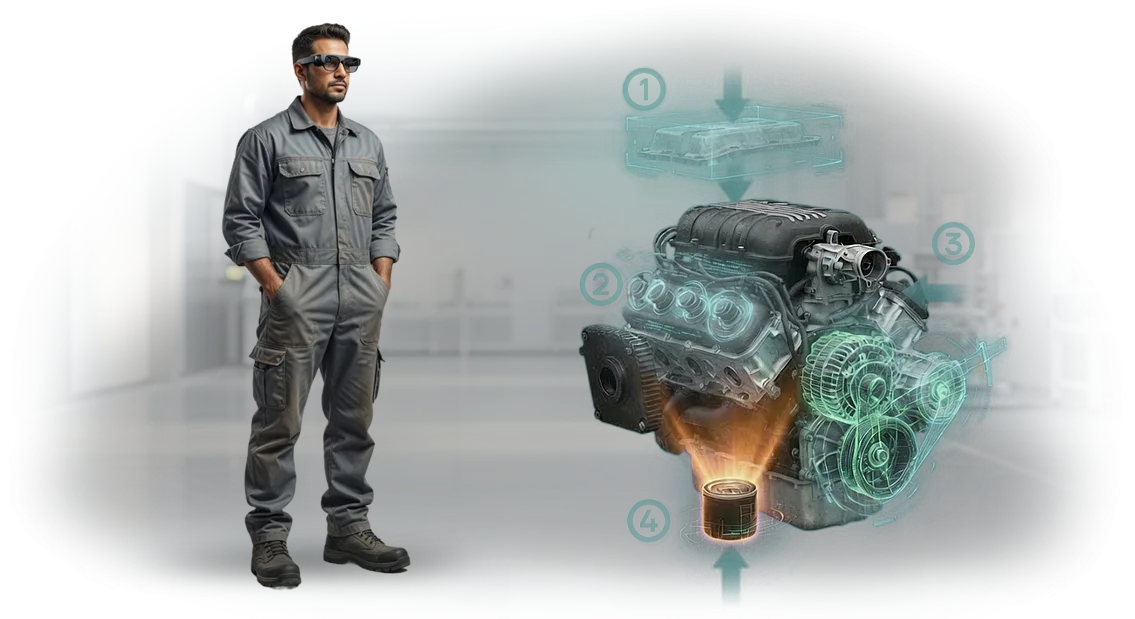
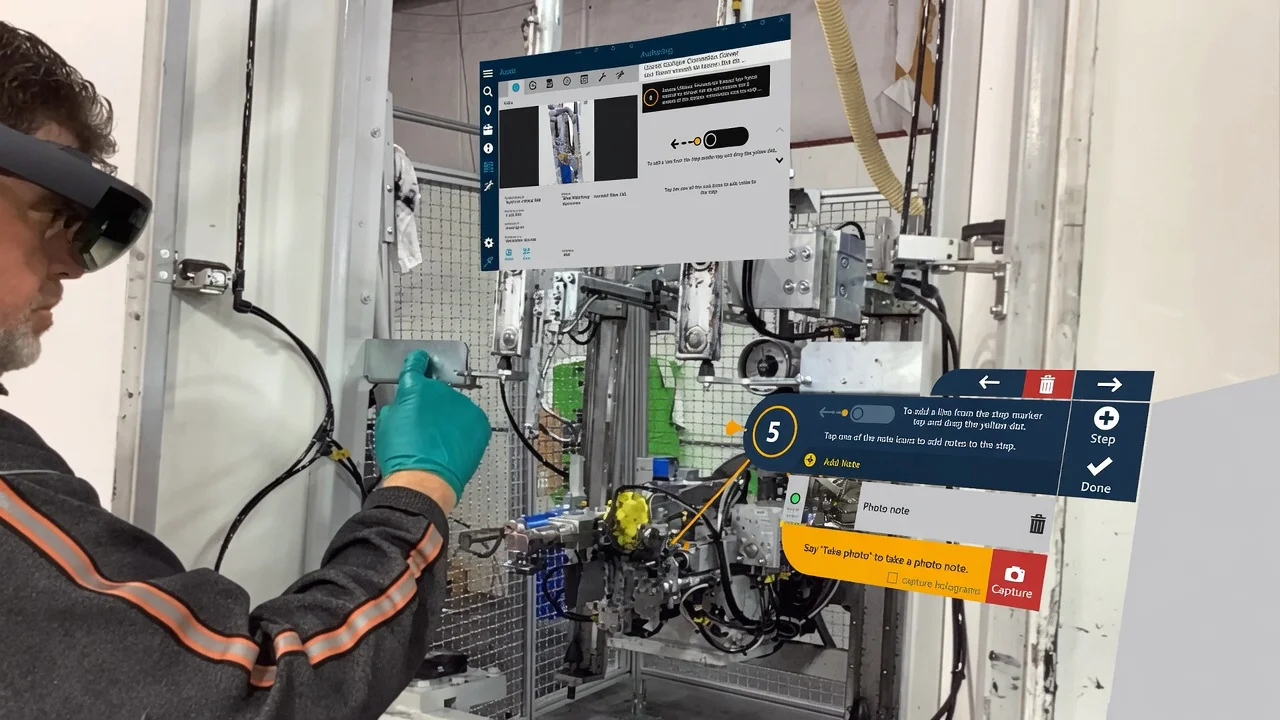
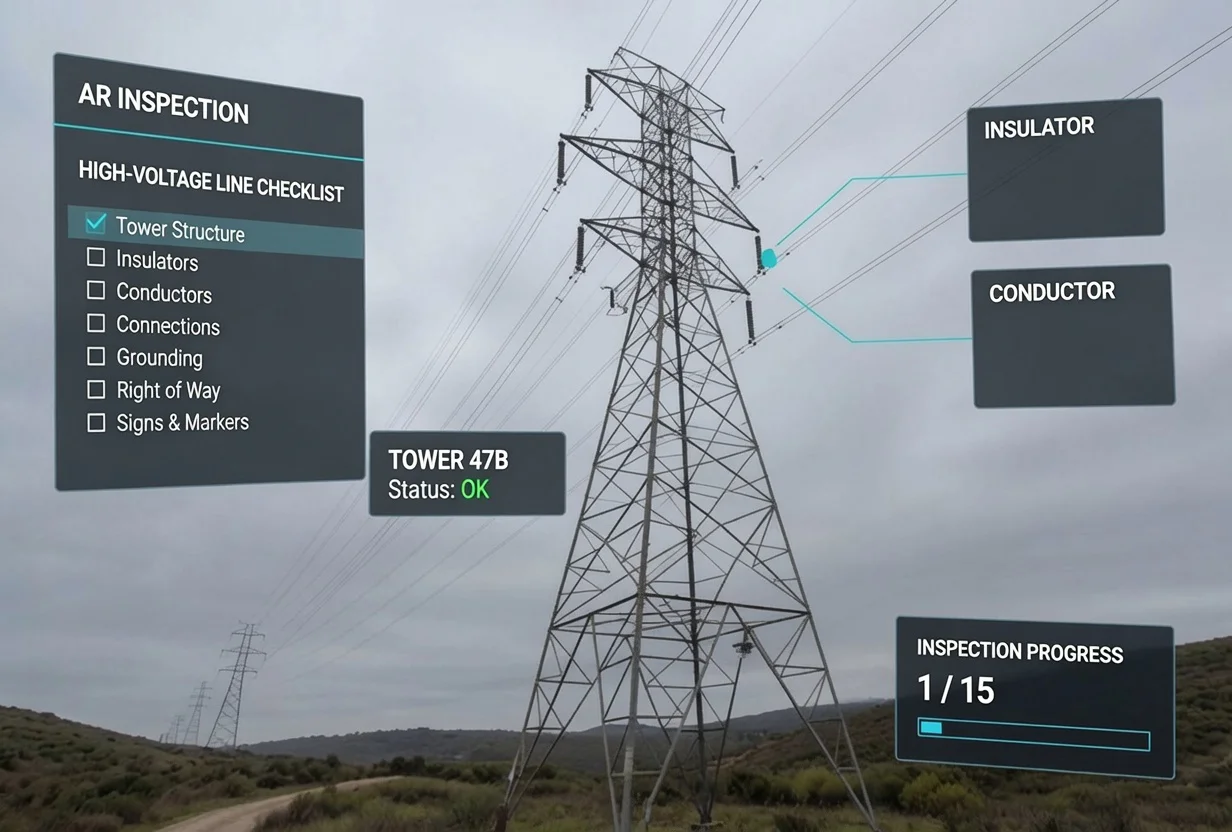
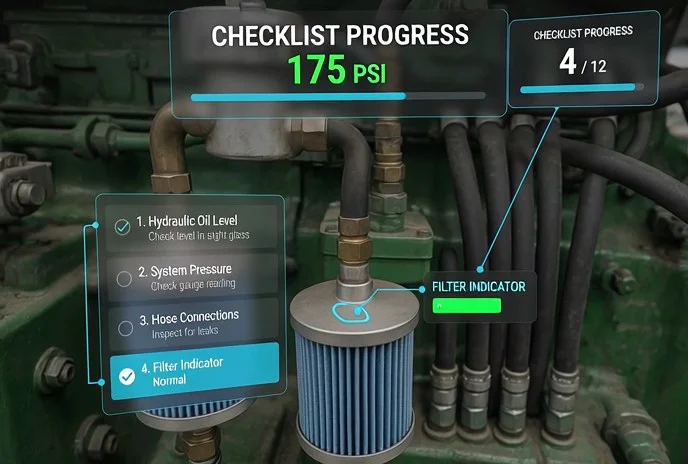
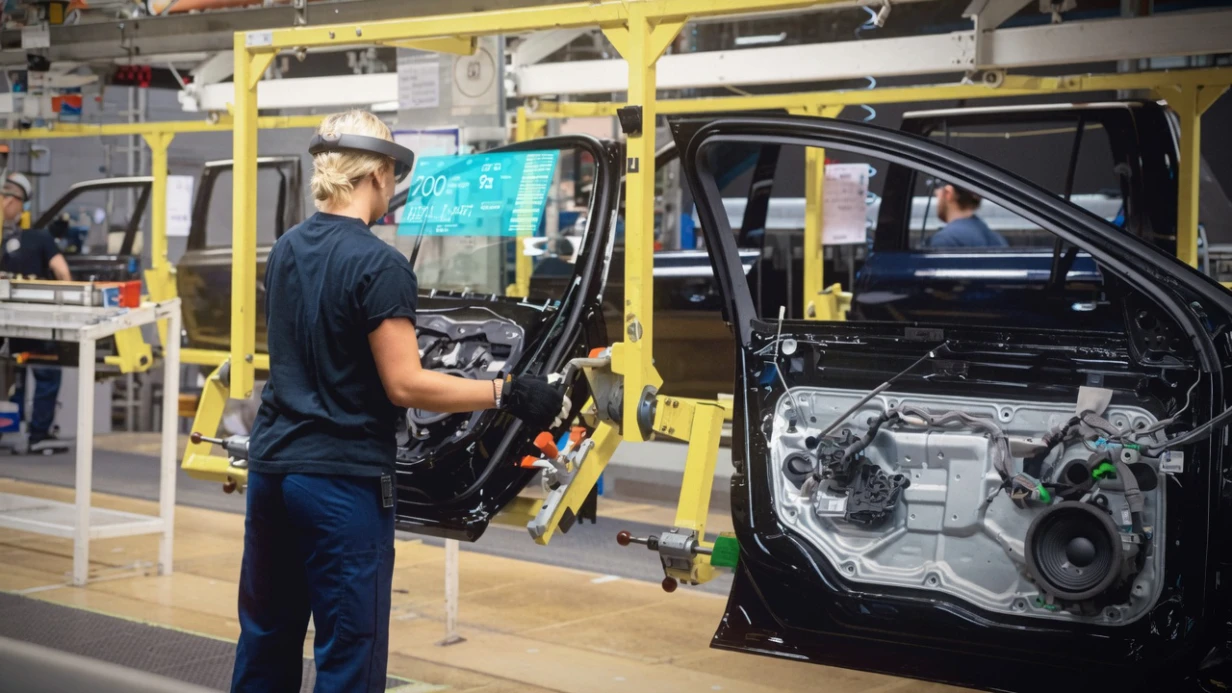
AR for equipment maintenance removes this uncertainty. Wearing a tablet or AR glasses, a mechanic sees directly on the machine what exactly needs to be opened, where to look, and how to properly remove the part.
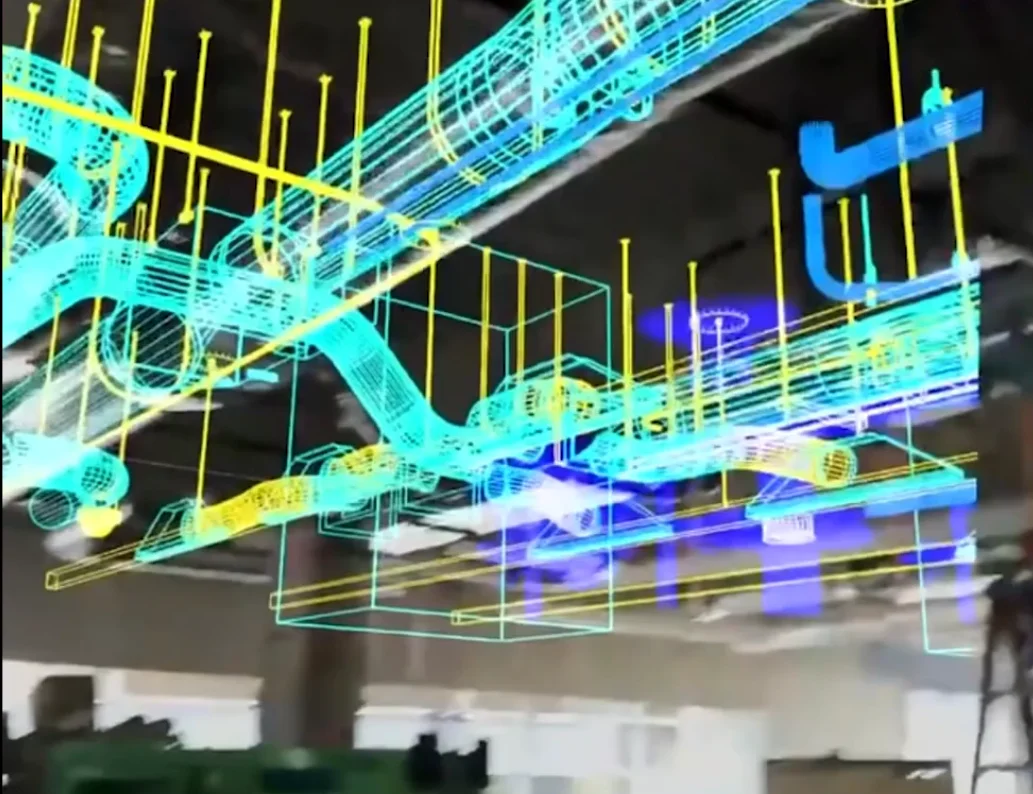
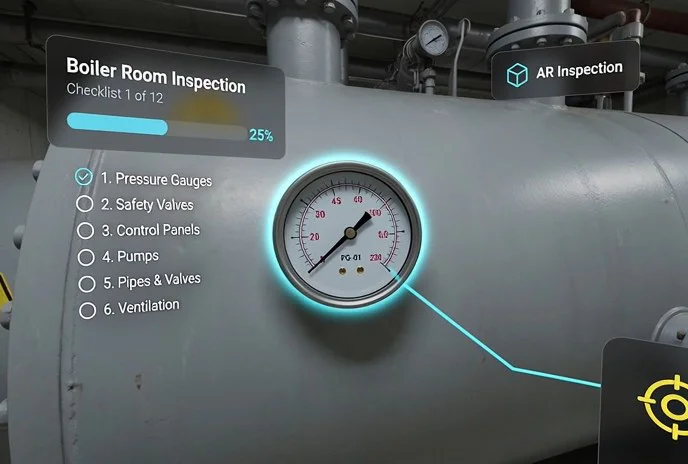
Hints — arrows, highlighting, explanations — appear sequentially, from diagnostics to assembly, without requiring equipment modification or production stops for training.
Thanks to this, repair downtime is reduced many times over: less searching, fewer errors, less rework. Maintenance costs become predictable and stop growing across staff generations.
Industrial equipment repair transforms from a "heroic" emergency into a standard procedure following a proven scenario, and the expertise of the best specialists is preserved and replicated across all plants and branches.
We help implement such instructions for your machines and processes: we study the object, prepare models, configure hint delivery, and support the launch. One prevented lengthy repair often pays for the entire implementation, and then you benefit from every repair operation.
What you get from digital instructions for personnel
Digital AR instructions turn equipment work from "remembering via paper procedures" into a visual process where every step is confirmed directly on the screen.
An employee sees which part to touch and which tool to use, without getting distracted by searching through documentation.
This reduces the number of errors during repair and maintenance, and also shortens diagnostic time — the technician finds the fault faster and immediately starts fixing it.
Personnel training also becomes easier: new employees ramp up faster because the instruction shows actions in a real environment rather than abstract diagrams. Experienced specialists get hints for infrequent scenarios that are easy to forget.
This reduces the need for expensive courses and mentoring. These instructions also work for brand image: you look like a modern manufacturer that cares about employee safety and convenience.
The company also gains operational benefits: less downtime from prolonged repairs, fewer calls to external specialists, lower risk of equipment damage due to incorrect actions. Errors are recorded less often, meaning lower costs for spare parts and rework.
Reliability metrics improve, and both customers and partners see it. That's why we embed AR instructions into your existing maintenance process — so you get measurable results without restructuring all procedures.
AR for maintenance formats: matched to your equipment fleet
The same machine can be described in a dozen ways, but only the description that matches the technician's real task speeds up maintenance.
Some just need to quickly glance at a diagram on a tablet, others need step-by-step guidance right on the part, and for rare breakdowns — help from a remote engineer.
We choose the AR for maintenance format for your equipment fleet rather than turning all instructions into one template.
Below are the basic formats we already use in projects for manufacturing, energy, and transportation. In each case, the client gets clear instructions for employees without retraining and with minimal equipment downtime.
| Format | Who it suits | What it gives the client |
|---|---|---|
| Interactive repair manual (tablet) | Technicians and repair crews | Fast component lookup, exploded 3D view, torque and replacement standards — fewer maintenance errors |
| Step-by-step AR instruction "warm-up/replacement" | Operators and line staff | Employee sees hints right on the machine without switching attention to paper or a laptop |
| AR assistant for commissioning | Engineers when bringing new equipment online | Reduced commissioning time, a unified action standard for different crews |
| Remote support with AR markup | Maintenance departments and service partners | Expert sees what the technician sees, with arrows and explanations overlaid directly on the camera feed — fewer site visits |
| Disassembly/assembly trainer | Training centers and learning departments | Training without risk of breaking the machine, evaluation of employee actions before they are allowed to work |
Obviously, one workshop often needs two or three formats: for example, a tablet instruction for scheduled maintenance and remote support for non-routine situations.
At the audit stage, we help prioritize and select the AR instruction formats that pay off fastest — based on downtime reduction, error count, and speed of onboarding new personnel.
How the project runs: from brief to instruction launch
To let you know in advance what you'll get and when, we've structured the project as a clear route: from the development brief to working AR instructions on your equipment. It usually takes 4–8 weeks depending on the number of components and the readiness of source documents. At each step, you see the project stage and what is required from your team.
- Brief and audit — you tell us which equipment needs instructions and who will use them: novices, experienced mechanics, or external service crews. We review the documentation, drawings, and procedures to assess the scope.
- Plan and budget estimate — we lock in scenarios, timelines, and the cost for each component. We agree on what is included in the first release and what can be added later without production stops.
- Mockup approval — we show how the instruction looks on a tablet or smartphone: step-by-step hints, highlighting of the required parts, short animations. You approve the visual style before full development begins.
- Content development — our specialists create digital copies of your equipment and attach hints to real components. In parallel, we write instruction texts in plain language, without complex terms or long paragraphs.
- Test launch — we check AR instructions on one real machine or unit: in the workshop, under different lighting, with work gloves on. We collect feedback from employees and make changes.
- Deployment and support — we install the app on your devices, train key specialists, and hand over administration. We stay in touch: update instructions when procedures change and add new components as your equipment fleet grows.
At each stage, you get a clear result — a plan, budget estimate, mockups, prototype, working version.
So there is no situation where "it's unclear what they're doing and when they'll finish." Based on our project experience, clients already see the benefit for their employees at the mockup stage and are happy to speed up approvals.
What is included in the digital instruction package
When you order the development of AR instructions, it's important to understand: you receive not just scattered files but a ready-to-use working package. It covers all stages — from first launch to regular use and further development. Here is what is included.
- AR instruction library. A complete set of step-by-step scenarios for servicing and repairing your equipment — from standard maintenance to complex faults. Hints are overlaid on real units, so the employee sees what and where to do, and doesn't waste time searching through paper documents.
- Employee training. We conduct training sessions for engineers and technicians: how to use the headset, quickly find an operation, and correctly interpret hints. This removes fear of technology and speeds up adoption.
- Work procedures and standards. Ready-made documents for integrating AR into your maintenance and repair processes: launch order, rights allocation, quality control. You embed them into your system without writing anything from scratch.
- Instruction updates. Instructions don't become outdated: when equipment design or procedures change, we update the content within an agreed period. You always know the screen shows current information, and employees act according to the latest standards.
- Post-launch support. After delivering the package, we stay in touch: provide consultations, help adapt instructions for new models, and quickly fix any issues. The contract includes a warranty period and conditions for further support.
- Usage analytics. Optionally, we connect a dashboard showing which instructions are opened most often and where delays occur. Based on this data, you improve processes and plan training more accurately.
In this way, you get a comprehensive solution that doesn't sit on the shelf but helps your employees work more accurately and faster every day.
Each delivery item is fixed in the contract with specific deadlines and responsibility — so you know in advance what and when you will receive.
Case study: repairs became faster and safer
When a machine stops on the production floor, every hour of downtime means unfulfilled orders, overtime for the repair crew, and the risk of losing a contract.
While the mechanic searches for a diagram in paper procedures or calls a more experienced colleague, the line stands still, and an error during incorrect disassembly can put the unit out of service. We deliberately put this case together to show how AR addresses this pain.
For electrical equipment manufacturer Siemens, we developed an AR instruction for maintenance of CNC machines. The employee points a tablet at the equipment and sees directly on the unit which assembly to remove, in what order, and with which tool.
A mechanic used to replace a bearing in 4–5 hours; now they do it in 2–2.5 hours. Assembly errors were cut in half, and a new employee goes from three months of training to independent work in three weeks.
For the business, this means less downtime and fewer defects. One crew maintains more machines, and scheduled repairs no longer eat up a work shift.
At the pilot site, the annual savings from reduced downtime represented a cost calculated after audit — the equivalent of a small additional line or an annual crew bonus.
It is also worth mentioning safety: the employee does not guess the sequence of actions but follows a proven algorithm. The number of minor injuries and equipment damage decreases, and the manager gets a standard that is equally clear to a novice and an experienced mechanic.
Today, we adapt this approach to any type of maintenance — from pumps to production lines — and for every client we record a measurable result already at the pilot stage.
How to choose the instruction format for your task?
The answer to "how to choose AR instructions" starts not with technology but with the task. There is no universal instruction: a format that is ideal for machine setup will be unnecessary for simple pump maintenance.
Choosing a format starts with three questions: what the employee does, how complex the operations are, and which errors are critical. This determines whether you need a step-by-step on-screen hint or a diagram overlaid on the equipment with action control.
The second factor is update frequency and number of users. If procedures change once a quarter and dozens of specialists read the instruction, choose lightweight formats with centralized management.
If the equipment is unique and workshop downtime depends on its maintenance, rich solutions with video, 3D diagrams, and automatic checks are justified. The budget is considered not as a one-time item but as the cost of preventing errors and reducing downtime.
Instruction requirements are determined by working conditions: noise, lighting, protective clothing. It is important that hints appear in clear language and do not require removing gloves. So our engineers test the format on real operations, not in a laboratory.
We help choose the AR instruction format before development begins: we analyze operations, calculate the economics, and propose a solution that fits the budget and delivers results in the first weeks. You get a working tool that reduces downtime and increases work safety.
We answer common questions about digital instructions
Before ordering an AR instruction, every manager has the same questions: how long will it take, how much will it cost, and what happens if it doesn't work. We answer briefly and directly — without fine print or technical details that matter to us, not to you.
How long will development take?
On average, three to six weeks. The timeline depends on the number of equipment components and the complexity of the step-by-step scenarios. At the start, we record the plan and dates in the contract so you know in advance when you'll receive the finished instruction.
How much does it cost?
We calculate the budget individually: it depends on the number of scenarios, device types, and level of detail. After the brief, we provide a cost range and propose a phased launch — for example, start with one workshop or one piece of equipment, then scale up.
What guarantees do you offer?
We take responsibility for the result: we record the requirements, show intermediate versions, and test the instruction on your equipment before launch. The contract specifies deadlines, scope of work, and responsibility. After project handover, we stay in touch — we will refine the instruction if new tasks arise.
What if the AR instruction doesn't work?
To avoid this, we study your equipment fleet and site conditions in advance. Before launch, we run a pilot test: you check the instruction on real equipment, and we make adjustments promptly. If something goes wrong, we fix it within the project without extra invoices.
Still have doubts? Tell us about your equipment and task — we'll send a timeline and cost estimate within one business day.Let's discuss your task: leave a request
Leave a request — and within one business day you'll get an audit of your task, a preliminary implementation plan, and a cost estimate. This is free and non-binding: we first show how AR instructions will reduce downtime and speed up maintenance, and only then talk about launch.
Immediately after your request, we'll send you:
- Express audit — we'll analyze your maintenance process and the points where AR will deliver quick results.
- Implementation plan — stages, timelines, responsible people, and expected result for each step.
- Preliminary estimate — a cost range for your scale, without hidden payments or "surprises" at the end.
- Examples of similar projects — cases from your industry with numbers: reduced repair time, fewer errors, fast onboarding of new employees to independent work.
- Format recommendations — tablets, glasses, or smartphones: what will pay off for you and what will be unnecessary.
If the task is complex or non-standard, we'll hold a short online review with our engineer so you get an honest assessment rather than a "universal solution." It will take 20-30 minutes but will save weeks of trial and error.
The consultation doesn't obligate you to start a project. Even if you just want to understand whether AR is suitable for your equipment, send a request and we'll help you figure it out. Describe the situation in a couple of words or upload a photo/diagram — we'll handle the rest.