

Equipment Downtime: How AR for Maintenance Reduces Losses
Every hour of equipment downtime means not just a stopped line, but missed deadlines, unfulfilled orders, and forced idle time at adjacent sections.
The longer a repair takes, the more visible the losses: contracts go to competitors, and customers begin to question supply reliability. Every stop is lost revenue that can never be recovered.
Mistakes in maintenance are especially expensive. A specialist may spend half a shift looking for the right instruction, and then an incorrect sequence of actions turns a minor repair into a major breakdown. Again, a call to technicians, new downtime, and an even larger bill.
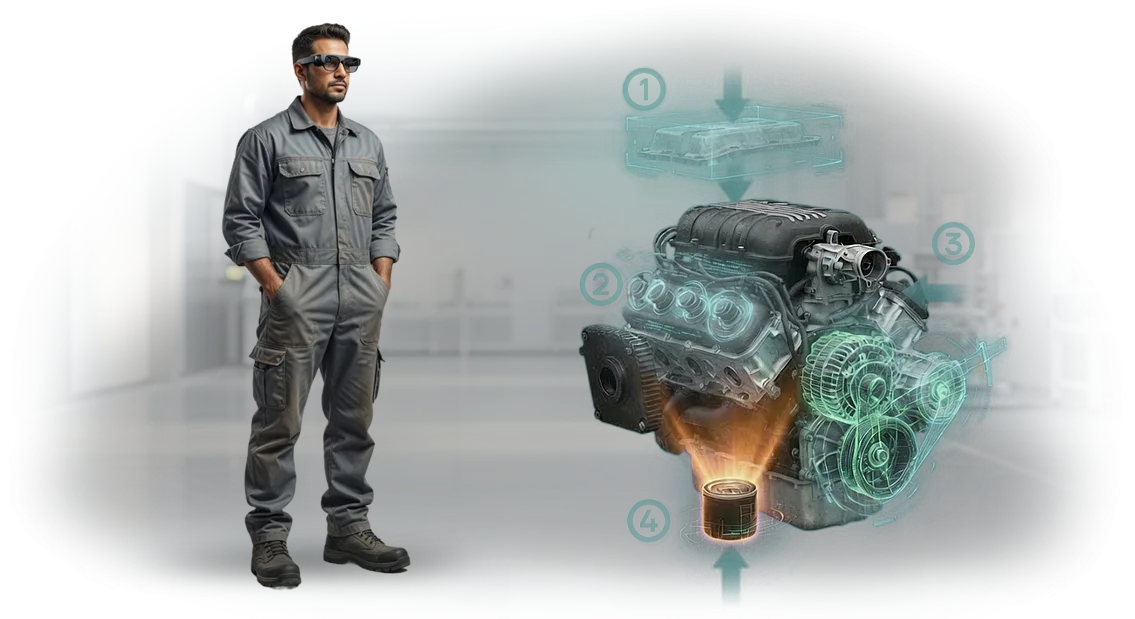
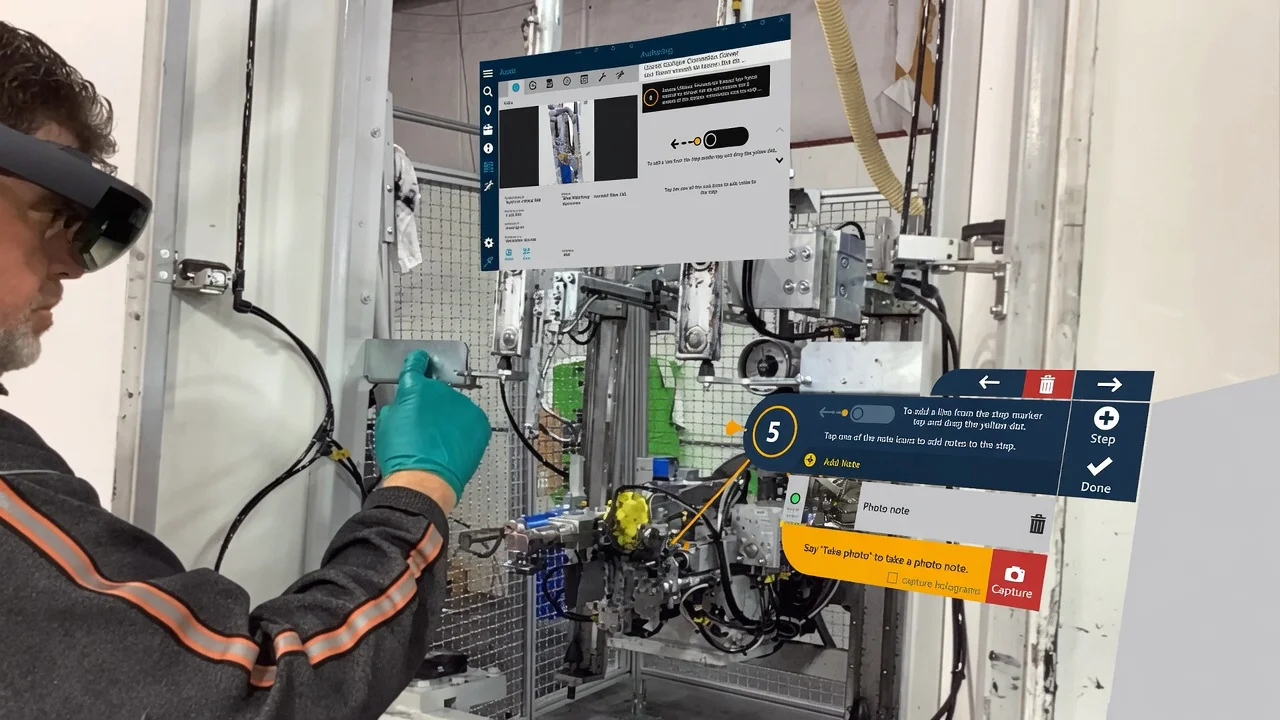
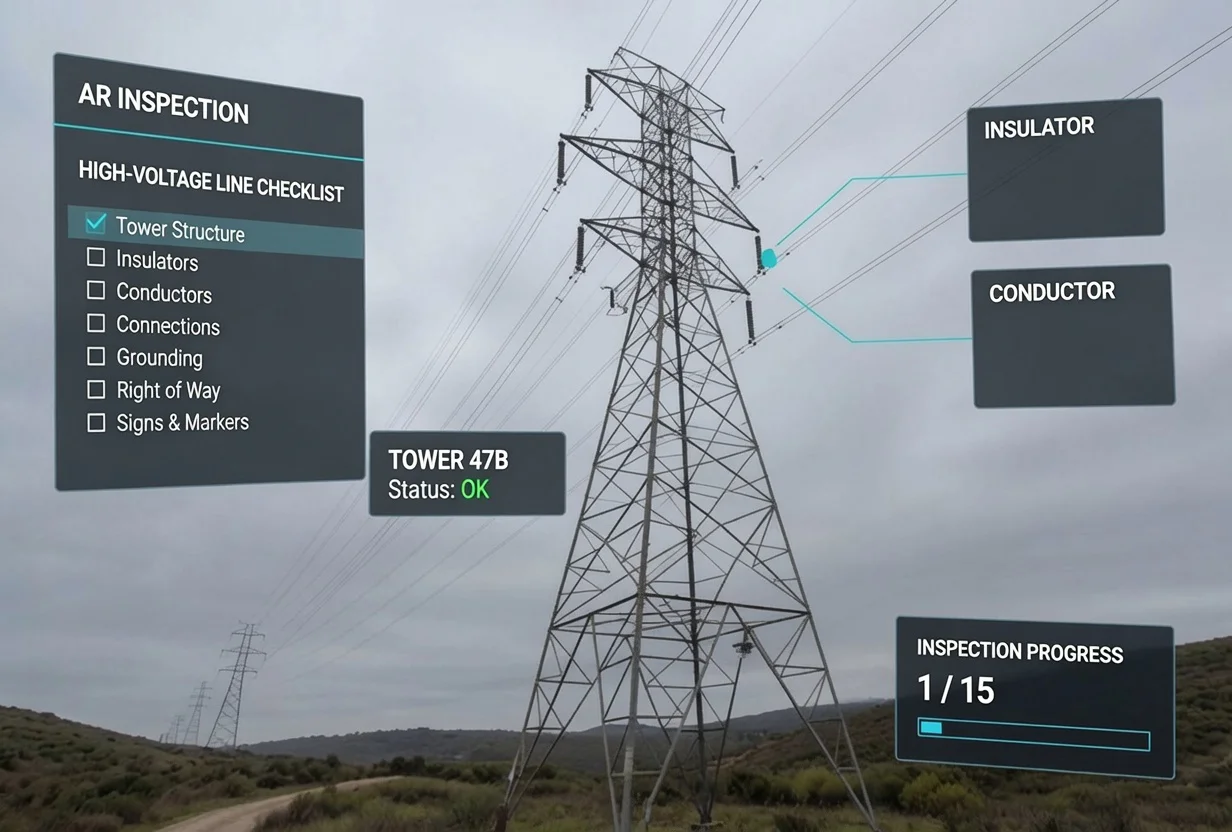
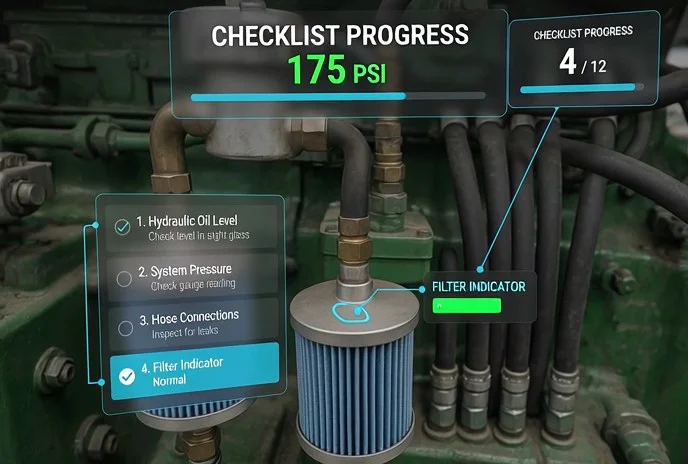
AR instructions for industrial equipment make the maintenance process predictable. A mechanic points the tablet or smartphone camera at a component and immediately sees which parts need to be removed, in what order to proceed, and what to pay attention to.
No paper procedures — all the necessary information appears right on the screen, tied to the specific equipment.
As a result, downtime is reduced dramatically. Repairs take a minimum of time, errors become rare, and experienced employees stop being a bottleneck — any specialist gets the knowledge they need.
This is exactly the kind of AR instruction we develop for manufacturing plants: tailored to your equipment, real work scenarios, and safety requirements.
The outcome is less downtime, stable production output, and confidence that any maintenance job will be completed quickly and without surprises.
What You Get from AR Instructions: 5 Key Benefits
AR instructions cut repair time dramatically: the specialist sees prompts right on the equipment and does not spend hours searching for the right page in a paper manual. An operation that used to take an entire shift is now completed in 1–2 hours. Less downtime means the machine returns to service faster and output increases.
Step-by-step AR diagrams eliminate guesswork, especially for newcomers. The technician performs actions in the correct order and does not skip steps that cause breakdowns and emergency stops. The result is fewer defects, fewer repeat callouts, and less expensive warranty repair.
The instructions work like a built-in mentor: a new employee sees the required actions directly on the real component and can repeat them from day one.
Onboarding time shrinks from weeks to a couple of days, and experienced technicians get up to speed faster on new equipment models.
Fewer stops, errors, and accidents mean lower maintenance and spare-part costs. The company stops depending on narrow specialists: basic repairs are handled by in-house staff, and external service visits remain only for rare, complex cases.
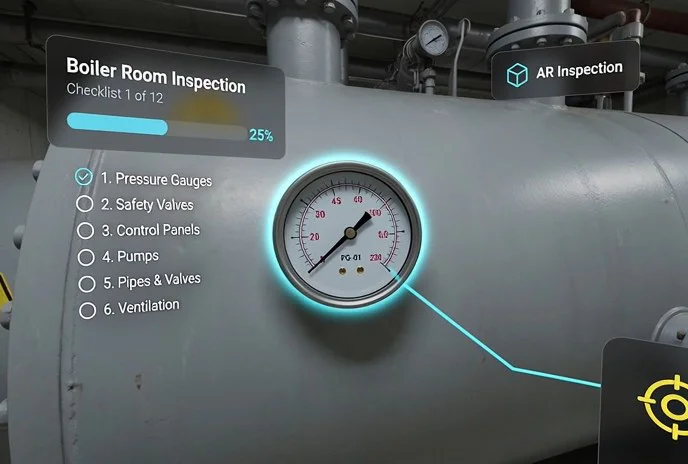
AR instructions monitor critical steps: before work begins, the system reminds the user about power isolation, lockout, or protective equipment. This reduces the risk of injuries and fines for occupational safety violations, and protects the company’s reputation.
We develop these instructions around your equipment and maintenance procedures. You get not just a demonstration, but a working tool that pays for itself on the first complex repair.
AR Formats for Maintenance: Matching the Format to Your Task
Equipment is never one-size-fits-all: in some cases, the procedure is a short inspection; in others, a multi-hour disassembly. That is why we select an AR format for each specific operation rather than imposing a single solution.
The right choice affects service speed, the number of errors, and how comfortable the technician’s work is.
Comparison of Formats
| Format | For Whom | What It Provides |
|---|---|---|
| Mobile AR | Maintenance crews, field service | Works on regular smartphones and tablets — no need for new devices, the instruction is always at hand |
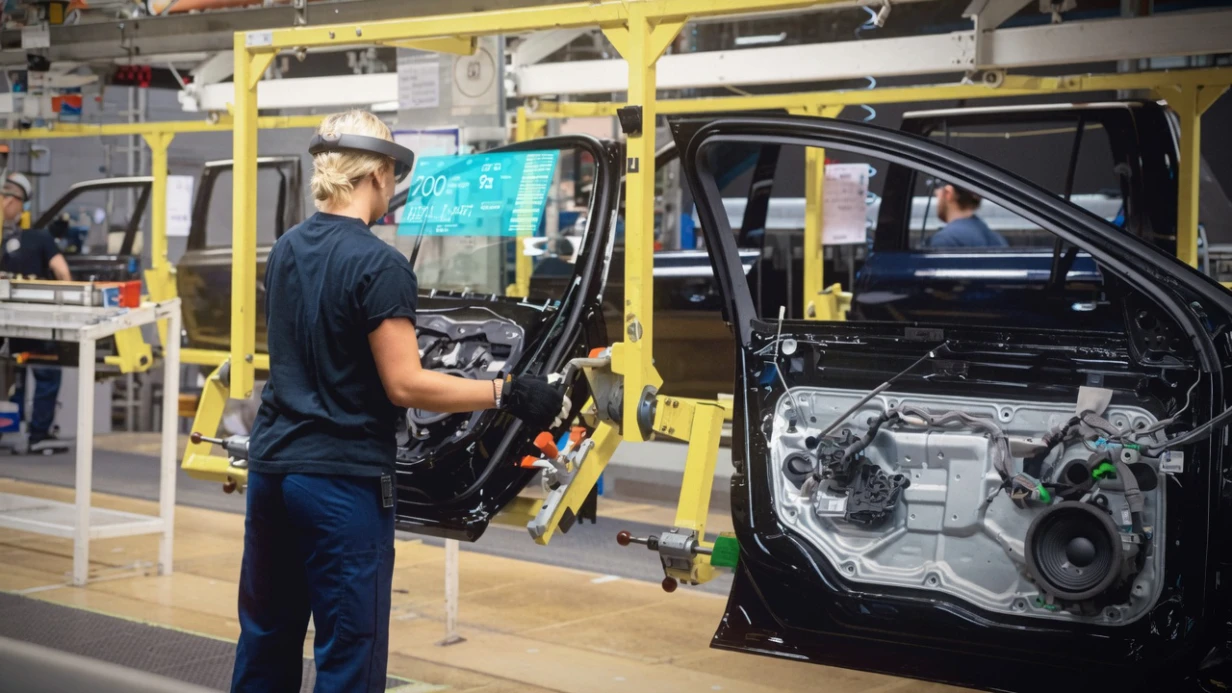
| AR Glasses | Complex repairs, work with both hands | Prompts appear directly in the field of view; the technician is not distracted by a screen and finds the right components faster |
| Web AR | Training, acceptance, previews | Launches via a link without installing apps — convenient for showing colleagues and partners |
How we choose: we assess the workshop environment, equipment type, and employee skill levels. For a stationary machine with a long procedure, we usually choose AR glasses; for mobile units, mobile AR. We add web AR as a fast delivery channel: open the link, get the required 3D model or animation.
How We Develop AR Instructions: 7 Steps
A transparent process is what separates predictable development from a black box. We define stages, timelines, and approval checkpoints in advance so you know what is happening with the project at each step and when you will receive the finished result. Below are the 7 steps we use to create AR instructions for industrial equipment.
- Brief and task discovery. We start with interviews with process engineers, engineers, and line staff. We find out which operations are the most difficult, where mistakes are most common, and what instruction format will be convenient for your employees.
- Equipment and documentation audit. We review technical data sheets, maintenance procedures, videos of actual repairs, and drawings. This allows us to accurately transfer all assemblies and sequences into AR without losing detail.
- Scenario prototype on a single component. We create a pilot scenario for the most representative operation. You see how the instruction looks on a tablet or glasses screen, and approve the logic and visual style.
- Approval of the instruction structure. We determine which steps will be step-by-step, where warnings and prompts are needed, and how an employee will confirm completion. The entire scenario is approved at this stage — subsequent production proceeds without unexpected changes.
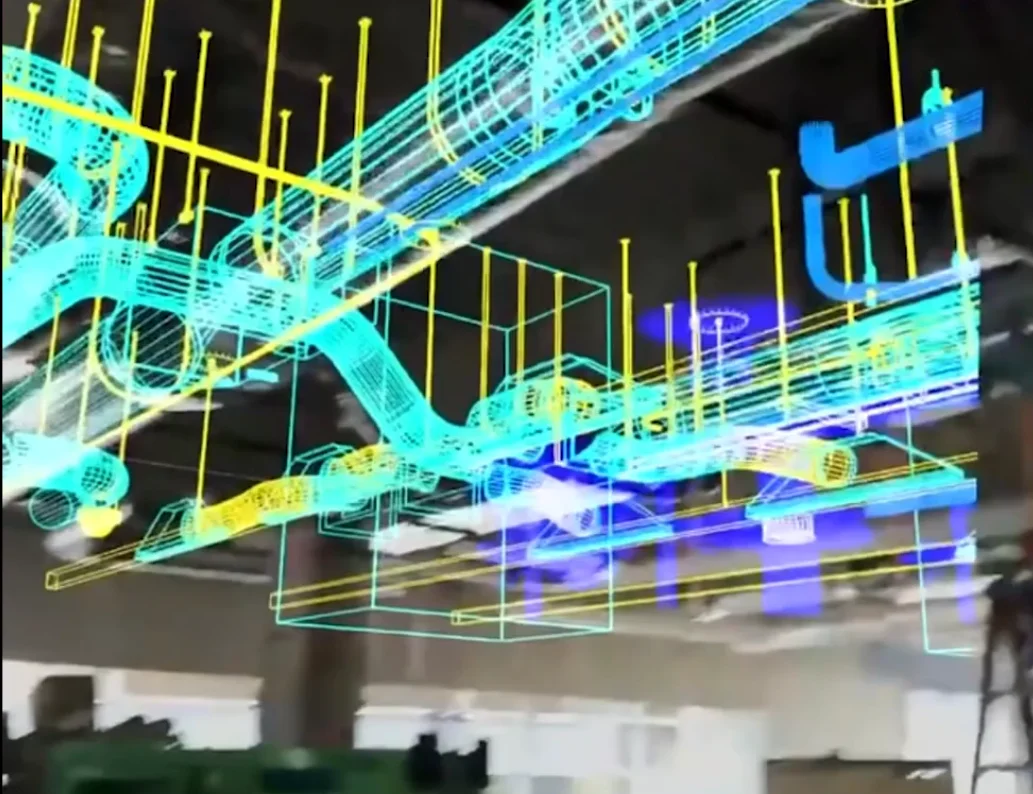
- Development of 3D models and animations. Our engineers create accurate digital copies of components and overlay them on the real equipment. The employee sees exactly what and in what sequence to turn, where to press, and which moment to monitor.
- Integration with your training or maintenance and repair (MRO) system. The finished instructions can be embedded in your portal, connected to service requests, or used standalone. We set up access and permissions so the technician gets the needed instruction in one click.
- Training, launch, and support. We run a short training session for key employees, hand over admin access for updating content, and stay in touch after launch. During the first months, we collect feedback and make adjustments if required.
The entire process takes 4 to 10 weeks depending on the number of components and the complexity of operations. At each stage, you receive an intermediate result that you can review and approve, so you stay in control of budget, timeline, and quality.
What Is Included in the Delivery of an Industrial AR Solution
We deliver not a “program” and not an app link, but a ready-made working tool for service and repair.
The delivery includes everything your engineers need to start using AR instructions from the day of launch, and everything you need to measure the effect by the numbers: faster repairs, fewer errors, easier training for new employees.
The standard package includes:
- Ready-made AR instructions for your equipment — step-by-step repair, maintenance, and diagnostic scenarios built on your procedures and reflecting real workflows.
- An instruction library with convenient search: a technician finds the required scenario by model, component, or fault code in seconds — right at the machine, from a tablet or smartphone.
- Personnel training: we conduct hands-on sessions for engineers and technicians and pass on the skills for independent work, so your team does not depend on us in day-to-day operations.
- Technical documentation: user manuals, update procedures, and descriptions of connection and setup steps — all documents presented clearly, without requiring special knowledge.
- Support and maintenance: warranty period, consultations on operational questions, content updates when procedures change, and adaptation of instructions for new components.
- Usage reporting: you see which instructions are used most often, where difficulties arise, and can make data-driven decisions to improve maintenance processes.
Thus, the delivery is not a one-off file but a working process: from initial installation to regular instruction updates without involving developers. All your service team needs to do is keep the tablets charged.
How a Plant Cut Repair Time by 40%: Implementation Example
When a large machine-building plant, VolgaProm, faced frequent equipment downtime, every repair hour meant significant lost revenue.
Engineers spent up to two hours searching for the right diagram in paper instructions, and younger specialists made mistakes when disassembling components.
We developed AR instructions that overlay step-by-step prompts directly onto the equipment via a tablet. A repair technician sees which bolt to loosen, in what order to remove parts, and where to get spare parts — without turning to paper manuals.
The system runs on professional equipment, so the image remains stable even in poor workshop lighting.
Over the three-month pilot, average repair time fell by 40%, and the number of assembly errors dropped by half. The plant saved significantly on reduced downtime and was able to train new employees twice as fast.
After these early results, management ordered the system to be rolled out across all five workshops.
The key takeaway from this case: AR instructions pay for themselves in one or two months simply by reducing downtime. For the client, this is not an experiment but an efficiency-improvement tool that delivers measurable results as early as the first quarter.
Frequently Asked Questions About Implementing AR Instructions
Before launch, our clients ask the same questions: will the technology work with their equipment, how difficult is it to implement, what will the project cost, and when can they expect results. We answer directly and honestly — without fine print or technical jargon.
Will AR instructions work with our equipment?
Yes, in most cases integration does not require replacing equipment. AR instructions work on the tablets and smartphones your employees already have, so there is no need to buy specialized devices.
We check compatibility with specific models in advance and adapt the scenario if you have a non-standard layout or a rare equipment type.
How difficult is it to implement AR instructions and how will employees learn them?
All the technical side is on our side: we configure the logic, attach prompts to real components, and debug the process until it is ready. Your specialists do not need to understand programming.
Operators and maintenance staff learn the interface in a short training session — usually half an hour to an hour, including test practice.
How much does it cost and how should I calculate the budget?
The cost depends on the number of operations, equipment complexity, and exactly which processes you want to move into AR. For initial steps, we offer a pilot project — it shows the effect without unnecessary expense.
After the pilot, you see which scenarios reduce service time and errors, and you can assess payback and future budget based on actual numbers.
What are the implementation timelines and when will we see the first result?
A typical pilot takes 3–4 weeks, from brief to launch at your site. If deadlines are critical, we discuss an accelerated plan and take on only priority scenarios.
At each stage, you receive a readiness report, so missing the date is practically impossible — we fix the plan and follow it strictly.
Ready to Discuss Your Project? Get a Cost Estimate
Leave a request — we will call you back within one business day, conduct a free audit of your task, and offer a cost estimate. First, we discuss your situation: we learn about the specifics of your equipment, maintenance frequency, and staff skill levels.
After that, we show exactly how AR instructions will fit into your processes and what will change in numbers — reduced downtime, training speed, quality control.
When you order the development of an AR solution, you get not just files but a complete implementation package:
- Transparent cost estimate — the estimate is fixed before the start, with no hidden extras.
- Technical specification tailored to your tasks — we describe usage scenarios and expected results so you can see what you are paying for.
- Demo version before the main stage — you evaluate the interface and logic before we begin large-scale development.
- Implementation plan with precise timelines — a work schedule and checkpoints so you can plan the launch without downtime.
- Employee training — a session for your engineers so they can work with AR independently, without constant dependence on us.
- Post-launch support — we help with refinements and updates when equipment or processes change.
Requesting a consultation is non-binding: we answer questions, show examples of similar projects, and give recommendations even if you are not ready to order yet. This is an opportunity to get an expert perspective on your task and understand what result is achievable.
Fill in the form on the page or message us in a messenger — we will send a cost estimate and work plan shortly. We will start with a free audit so you can make a decision based on facts, not guesses.
How to Choose the Right AR Instruction Format for Your Equipment’s Specifics?
Choosing an AR instruction format is not a matter of fashion but of fitting the specific task. The same solution may work perfectly for scheduled maintenance of a pumping station and prove useless for diagnosing a complex CNC machine.
That is why the first thing we do in such projects is study the specifics of your equipment: the type of operations, how often procedures change, site conditions, and personnel skill levels.
There are three key criteria. The first is the nature of the work: if an employee only needs to see a step-by-step sequence (replacing filters, cleaning components), a compact step-by-step instruction is enough.
If the task is more complex — for example, diagnosing a fault by symptoms or assembling a multi-component unit — the format must allow prompts to be layered directly onto the real object, without diverting attention to paper or a monitor.
The second criterion is environment and safety: in a noisy workshop or when working with gloves, voice guidance works better than text prompts, and explosive zones require special tablets, which we also take into account when choosing the solution.
The third criterion is integration with an existing maintenance system. A good format does not exist separately: it must fit into your electronic logs, work orders, and operating-time records.
Therefore, at the selection stage, we look at what data is already in your system (nomenclature, operating time, failure history) and how the AR instruction will pull up the relevant equipment card.
This way, you get not another application but a single interface where the employee sees the task, the prompt, and the confirmation of completed work.
The right answer to the question “what format do we need?” is almost always “start with a pilot.” We take one typical operation, prepare several presentation options (step-by-step markers, animated diagrams, voice prompts), and together with your engineers measure completion time, error count, and usability.
Based on this data, we choose a scalable format, which is then extended to the remaining components and procedures across your equipment fleet.