

AR VR in manufacturing industry: why the shop floor loses time
The shop floor loses time even before the machine starts working: the operator searches for the right instruction page, flips through paper, and gets distracted by diagrams that don't match the actual equipment.
This is exactly where AR VR in manufacturing industry turns from a trendy technology into a tool that recovers hours of working time. Paper instructions slow down both setup and training of new employees — instead of making parts, people are figuring out documentation.
Every minute of downtime is lost revenue and missed deadlines.
An experienced set-up technician spends up to half an hour searching for the right information, a newcomer spends several times longer, and the cost of an error keeps rising: an incorrect sequence of actions leads to defects, tooling damage, or line stoppage.
Add these losses across all shifts and you get a significant amount that the business loses every month.
Shop floor automation starts not with replacing machines, but with how knowledge about operating them is transferred.
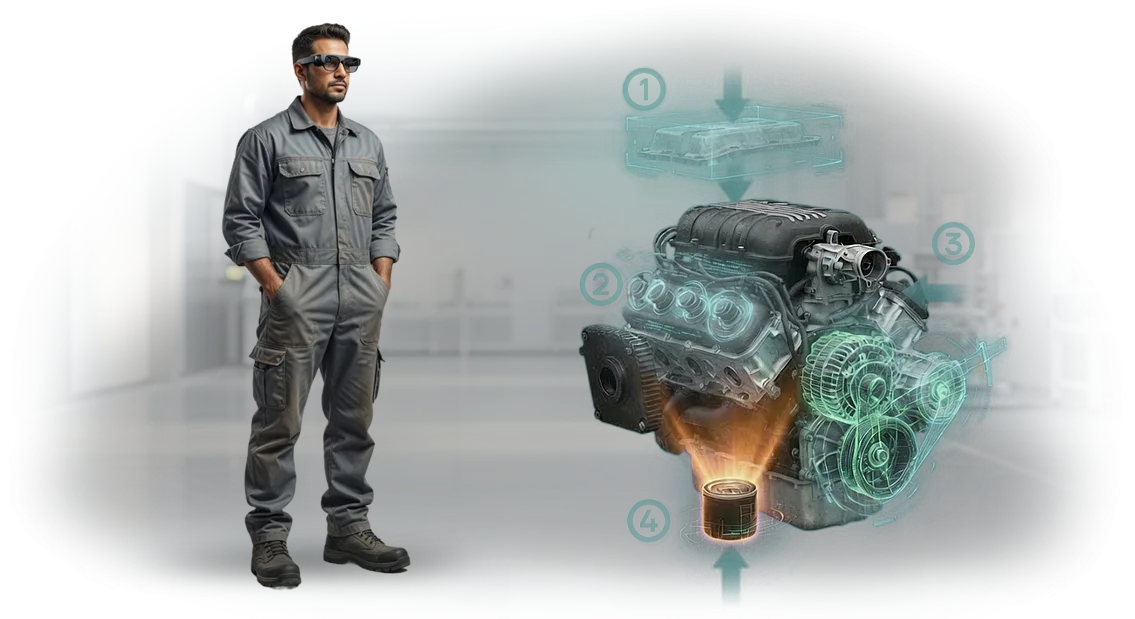
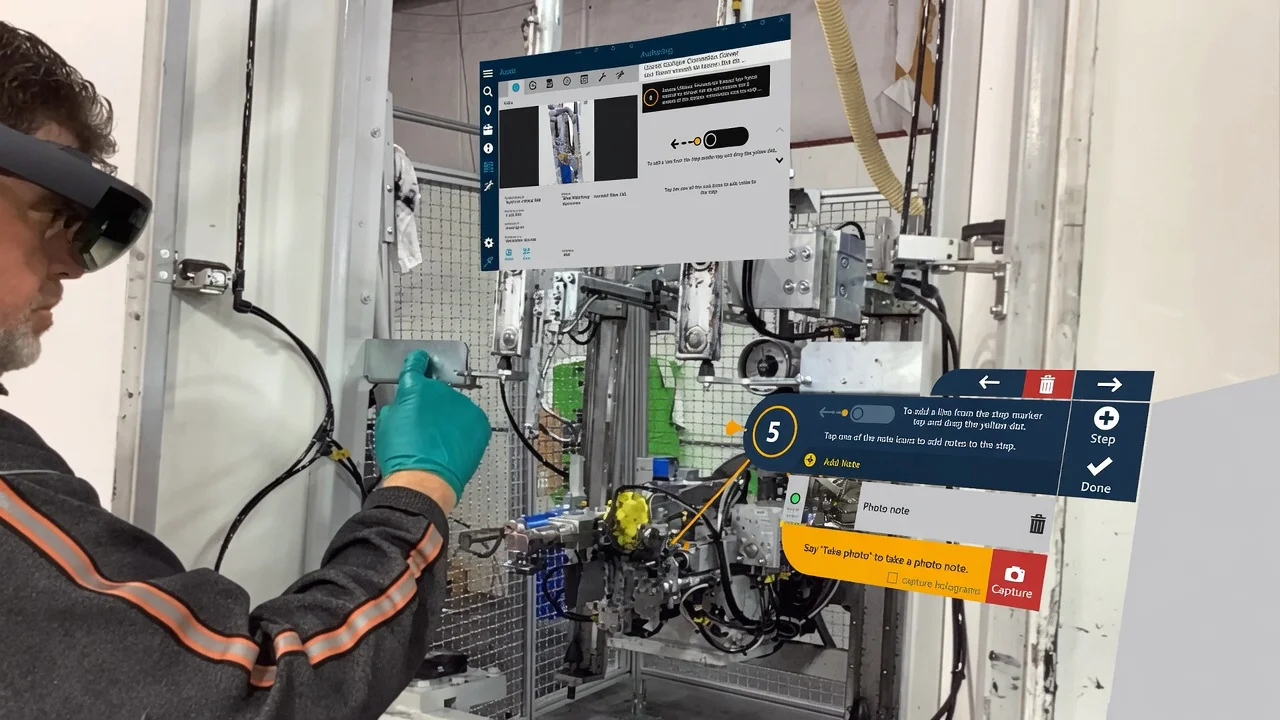
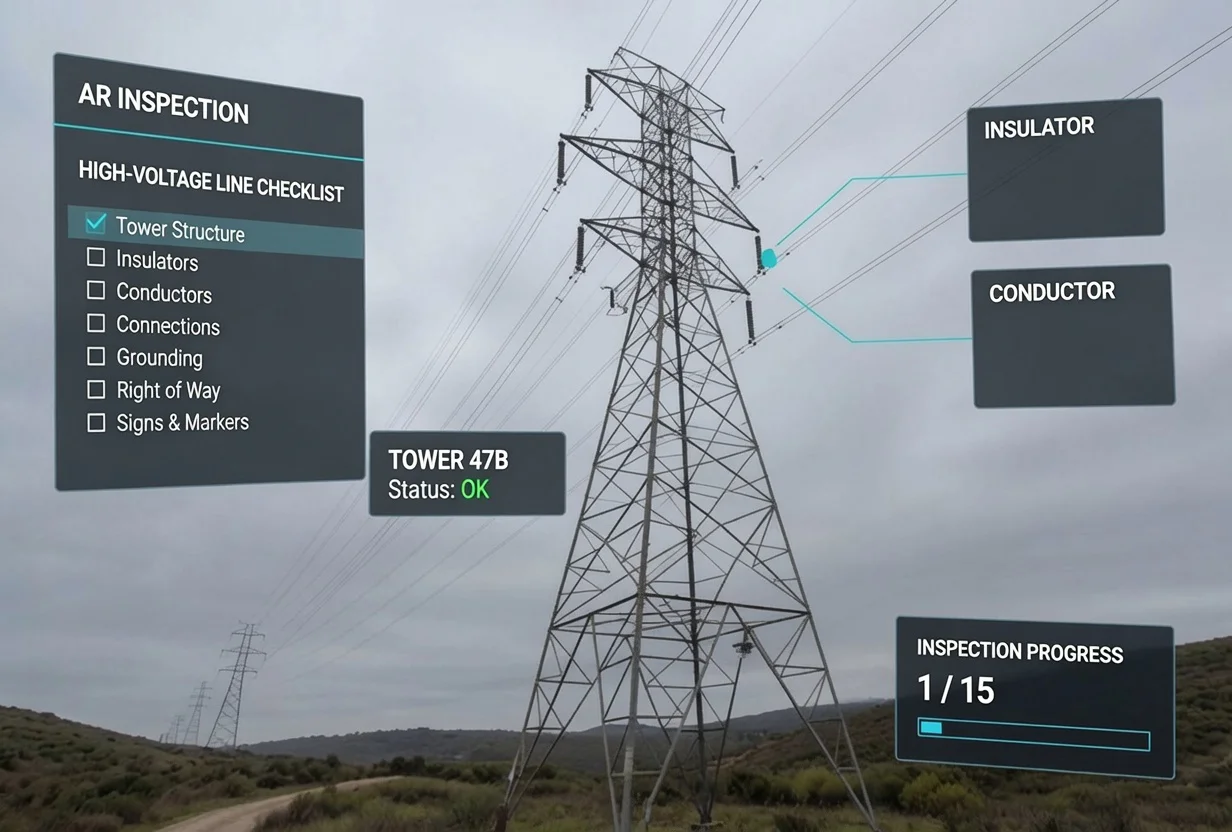
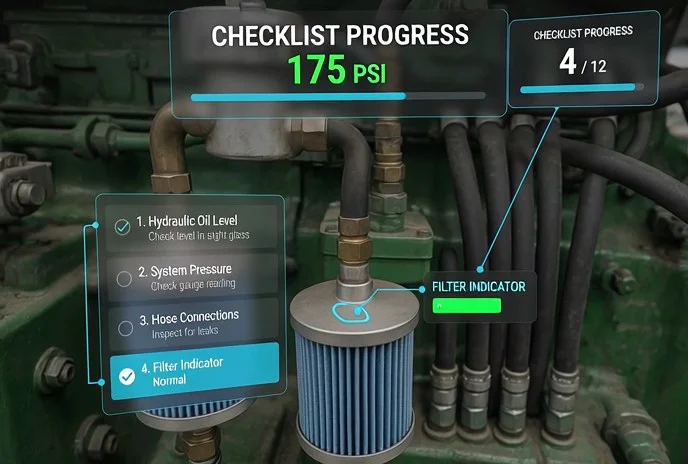
Digital manufacturing instructions overlay prompts directly onto the equipment: the operator sees the next step, the required tool, and checkpoints without looking away to paper.
Training of new employees speeds up, error rates drop, and the experience of senior specialists stops being a bottleneck — it becomes part of the system.
We help manufacturing companies implement such solutions turnkey: we analyze operations, convert instructions into an interactive format, and support the launch.
As a result, the shop floor works faster, employees are more confident, and the manager sees a measurable effect — less downtime, fewer defects, more output per shift.
This is AR VR in manufacturing industry in practical application: not technology for technology's sake, but saving time and money.
What does an AR instruction deliver in production?
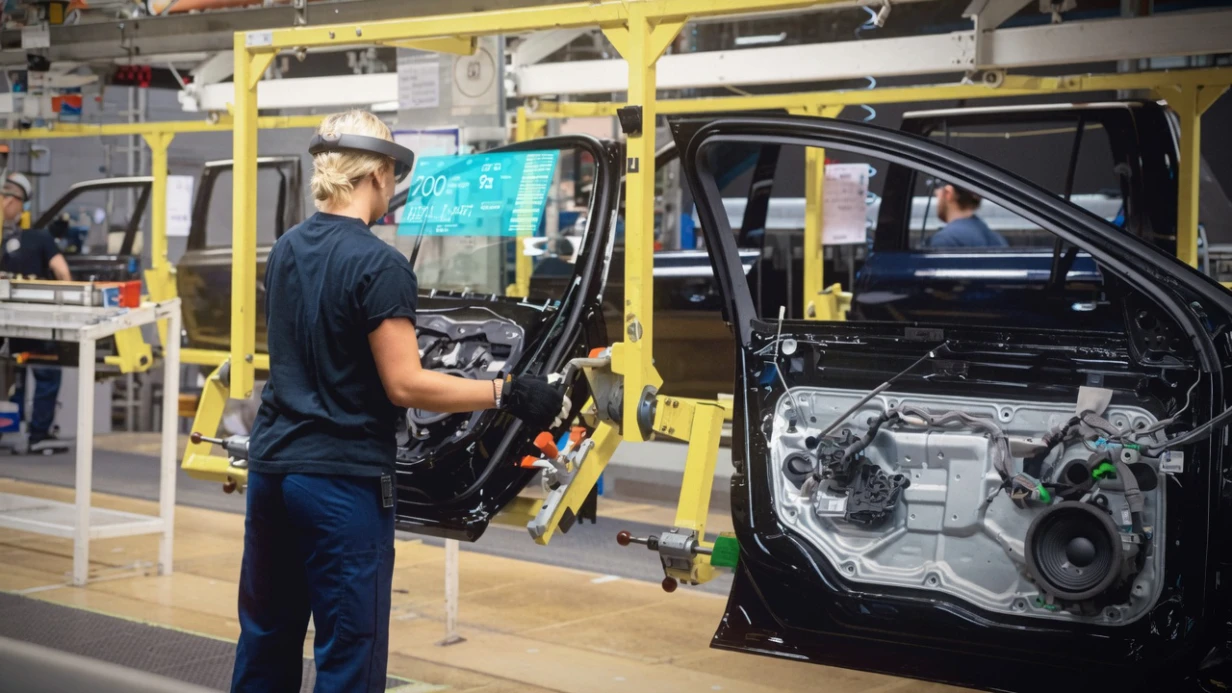
In production, an operator's mistake means downtime, rework, or risk. Paper regulations become outdated, are awkward to flip through, and make it hard for a newcomer to find the right component. An AR instruction shows digital steps directly on the equipment — in smart glasses or on a tablet.
For operators — faster onboarding and fewer mistakes
Instead of flipping through the regulation, a newcomer sees a clear visual prompt: where to stand, which part to take, how to perform the operation. The system marks the completed step and won't let the user move on until the action is done correctly. This reduces training time and lowers the number of errors during assembly and maintenance.
For quality engineers — transparent control
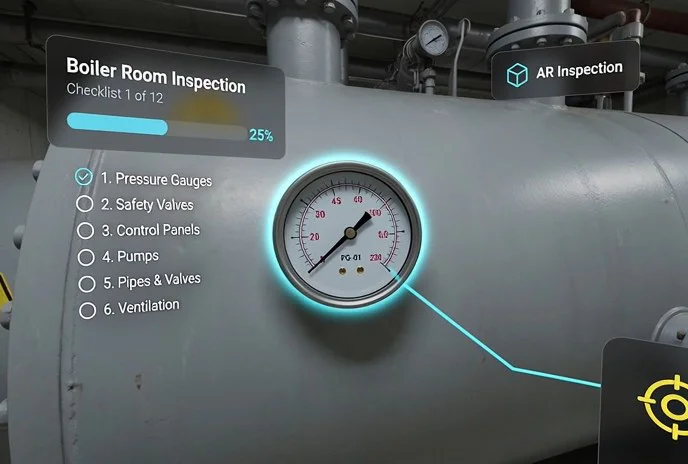
The AR instruction records every step and creates a digital protocol: who performed the operation, when, and in what order. The engineer sees deviations immediately and can stop the problem before it turns into a defect. Quality control becomes provable — during audits and claim reviews.
After AR instructions were launched on the assembly line of packaging equipment manufacturer TechnoPak, newcomer onboarding time was cut by two-thirds, and the share of assembly errors fell by almost 40%.
The production manager summed it up: "Operators themselves ask to work in smart glasses — the system walks them through the steps and it's clear that everything was done correctly."
AR instruction formats: choose the one for your task
There is no universal AR instruction: what works perfectly for an assembly shop gets in the way in a repair area. That's why we've divided augmented reality for production into three formats and match them to the specific task.
Unit and small-batch production
Here the product range constantly changes, and employees have to switch between different items.
A step-by-step AR instruction overlays the operation sequence directly onto the equipment: the worker sees where to attach the part, what tightening torque to apply, and makes fewer mistakes. The time to master a new operation is cut several times over.
Large-batch and mass production
On such lines, speed and repeatability are what matter most. A training simulator lets a newcomer practice a movement to the point of automation in a safe environment without stopping the conveyor.
And remote support via AR helps an operator resolve an abnormal situation within minutes together with an expert who sees the shop floor through the operator's eyes.
Below are the basic formats and who they suit:
| Format | For whom | What it delivers |
|---|---|---|
| Step-by-step AR instruction | Operators, assemblers, set-up technicians | Fewer errors, faster operations, fast product changeovers |
| Training simulator | New employees, personnel before being cleared to work with expensive equipment | Safe practice without breakdowns, fast ramp-up to target productivity |
| Remote support | Engineers, service teams, operators of complex areas | Instant expert help, reduced downtime and site visits |
If you're unsure which format will pay off for you, send us a description of a typical operation — we'll recommend the optimal option.
How AR instruction implementation works in 6 steps
Downtime and untrained personnel are the main risks in production. That's why we turn AR instruction implementation into a managed process with checkpoints: you always know what's happening and when the result will arrive.
Implementation roadmap
- Brief and goals. We determine which operations need instructions and what results you expect — faster training, fewer errors, a uniform work standard.
- Process audit. We study the equipment and process sheets, and select operations where AR will deliver a quick effect.
- Plan and estimate. We fix the scope of work, timeline, and cost. You see what you're paying for before development even starts.
- Scenario approval. We show instruction prototypes on real operations and refine the terminology and step sequence.
- Build and test. We assemble the instructions and test them on a pilot area or your equipment, taking your feedback into account.
- Launch and support. We train employees, put the instructions into operation, and update materials when production changes.
Each stage ends with a clear deliverable — a document, a prototype, or a finished instruction that you sign off on.
Results in practice
"Training new operators takes three days instead of two weeks, and setup errors have fallen by 40%," says the chief engineer. packaging production plant
This approach makes AR instructions a clear, practical tool for your team, not "just technology."
What's included in the delivery for a manufacturing division
The delivery is a complete working package, not an "empty application." Everything a production team needs for fast training and safe work is assembled into a single system and handed over together with the rights.
Contents
Work scenarios. Step-by-step prompts on screen: how to start the unit, replace a component, or perform scheduled maintenance. The employee sees the next step without flipping through a paper instruction.
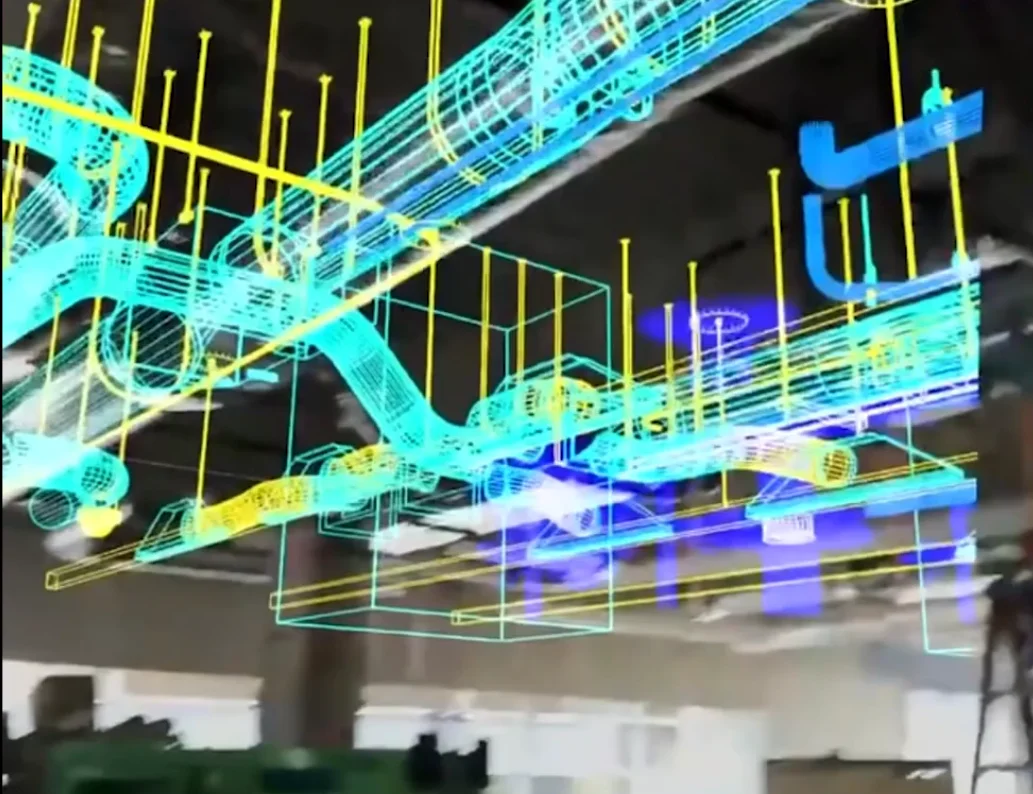
3D models of equipment. Accurate digital copies of your machines, components, and tools. An engineer can inspect a part from every angle, disassemble it virtually, and understand how it works before opening the housing.
Voice guidance. A narrator voices the actions in headphones, so your hands and eyes stay focused on the work alone. No need to look away at a screen.
Text instructions and diagrams. They duplicate the prompts for printing and for those who prefer reading over watching.
Rights and updates
Rights to all content — scenarios, models, voice-over, and source materials — are transferred to you in full. You can change contractors or refine the system in-house.
AR instruction updates. When equipment is modernized or regulations change, edits are made quickly — no need to reprint paper manuals.
Post-launch support. Our engineers help adapt the content and answer employee questions for an agreed period.
All of this is packaged into a clear interface and ready to use on tablets, smartphones, or industrial augmented reality glasses.
Case study: how AR instructions reduced downtime
At a machine-building plant with three production lines, setting up new equipment took up to two hours, and every operator error resulted in line downtime. Paper instructions existed, but they took time, and complex components required experience.
We proposed replacing them with AR instructions: the operator points a tablet at the machine and sees a step-by-step prompt right on the parts.
Instead of reading diagrams, the employee performs actions that are highlighted in their field of view. This reduced setup time by 40% and almost completely eliminated errors related to the sequence of operations.
Results
In the first three months after implementation, downtime due to incorrect setup fell by a third, and the average time to bring equipment into operation dropped from two hours to just over one hour.
The plant achieved significant annual savings just from reduced downtime and defect losses. In addition, training time for new operators was cut from three weeks to one.
The plant's chief engineer at Progress Plant says: "Operators have stopped calling process engineers with every question — now they handle it on their own. This changed the rhythm of the entire shop floor."
After the first results, we received a request to roll out the instructions to three more lines. The client came back with a repeat order — for them, this became the standard for working with new equipment.
How to choose the right AR instruction format?
Choosing AR instructions starts not with technology but with the task. If you need to reduce the time spent training new employees, simple step-by-step prompts are enough. If it's about complex repairs or quality control, you'll need an interactive 3D model with part recognition.
The cost depends on exactly this: a basic format will cost several times less than a full system tied to specific equipment.
The main risk is overpaying for a "universal" solution with features that never get used. We help you choose a format that addresses exactly your production task: training, assembly, maintenance, remote support.
Every task has proven scenarios — their cost is transparent and is calculated from the volume of content and integration complexity, not from abstract "bells and whistles."
The rule is simple: the higher the cost of an error in production, the deeper the visualization that is justified. For typical operations, AR prompts on a tablet or smart glasses are enough. For unique components and rare breakdowns — full 3D instructions with animation. We fit the budget to the task, not the other way around.
In summary: come with a description of the problem and the expected result — we'll offer 2-3 formats at different budget levels and show what each one delivers. You choose the one that pays off fastest.
This approach has already helped dozens of manufacturing companies avoid overpaying and get AR instructions that are actually used on the shop floor.
Answers to frequently asked questions about implementation
Before implementing AR instructions for industrial equipment, managers most often worry: will the technology become outdated, will employees manage, and will constant IT support be needed? These doubts are natural — we answer the key questions so you can see how the risks are covered.
Will the technology become outdated in a couple of years and will we be throwing money away?
We build solutions on proven professional platforms that evolve together with the industry. Updates are included in the support service, and our engineers maintain compatibility — you won't have to rewrite the system from scratch.
Will employees find it difficult to get the hang of it, and will we have to hire an IT specialist?
The interface is as familiar as a smartphone: point the camera at the equipment — get a visual prompt. Basic training takes one day, and new employees immediately join the process. We handle implementation, setup, and support ourselves, so no additional staff will be needed.
What if the system fails at the worst possible moment?
The instructions work in offline mode — even without a server connection; data syncs later. If a problem does arise, our support team will connect remotely and resolve it within a business day.
How much does implementation cost and when will the project pay for itself?
The budget depends on the number of instructions and workstations — we'll prepare an exact calculation before we start. Usually the payback comes from faster training and fewer errors and downtime: savings begin in the first months of operation.
Order an AR instruction pilot within a week
Launching an AR instruction pilot can be done quickly — without months of approvals or large investments.
We'll prepare a working prototype on your equipment in just 7 days so you can personally assess the effect on a real task: reduced downtime, faster training, and fewer errors.
In that time you'll get not slides but a working scenario for one operation or area. This lets you immediately check whether the technology suits your employees and processes — and make a scaling decision based on facts.
What you get after submitting a pilot request:
- Fast start in 7 days. We select one operation and build a working prototype; you don't need to prepare a technical specification — we handle all the questions.
- Clear results in a production environment. Instructions come to life on a tablet or smart glasses; employees see step-by-step prompts, diagrams, and checkpoints.
- Evaluation with simple metrics. We record operation time, error counts, and worker feedback — you can see whether the effect materialized.
- Fixed budget with no risks. You pay for the pilot as a separate stage, not the entire project. Transparent cost and clear timelines.
- A ready foundation for scaling. We use the findings and templates to roll out to other areas, lines, and types of equipment.
Order an AR pilot within a week — leave a request and we'll contact you within one business day. We'll consult you free of charge and suggest the optimal scenario, so you can see the benefit before making a decision on a larger project.