

Microsoft HoloLens for Industry: Why Paper Slows Down Your Factory
On the factory floor, every minute of downtime costs money. When a worker searches for the right page in a paper manual, checks outdated schematics, or waits for a supervisor, the machine stands still and production targets slip.
Estimates show such losses can consume up to 20–30% of working time — and with frequent staff turnover, the figure grows even larger.
Paper is also a quality risk: the operator misreads a diagram, skips a step, or assembles a component in the wrong order. Rework costs more than the original operation, and in hazardous industries an error can pose a direct threat to employee health. Each such case is not just a financial loss but a reputational risk for the company.
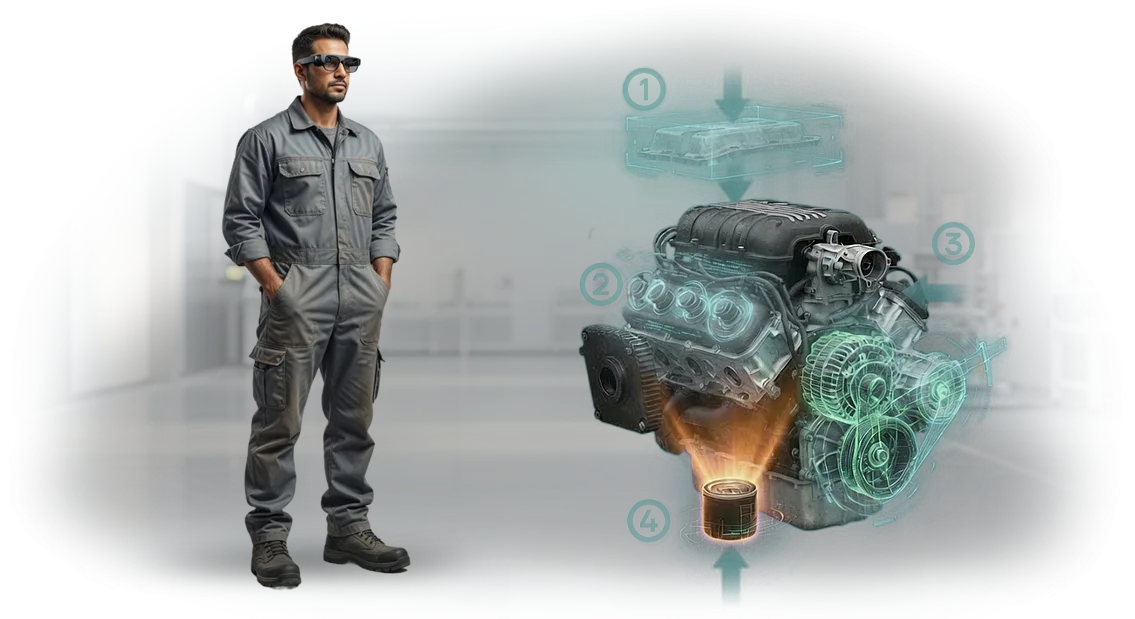
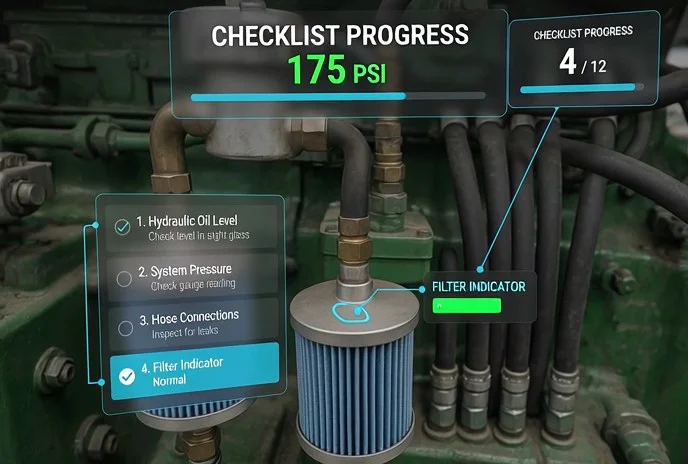
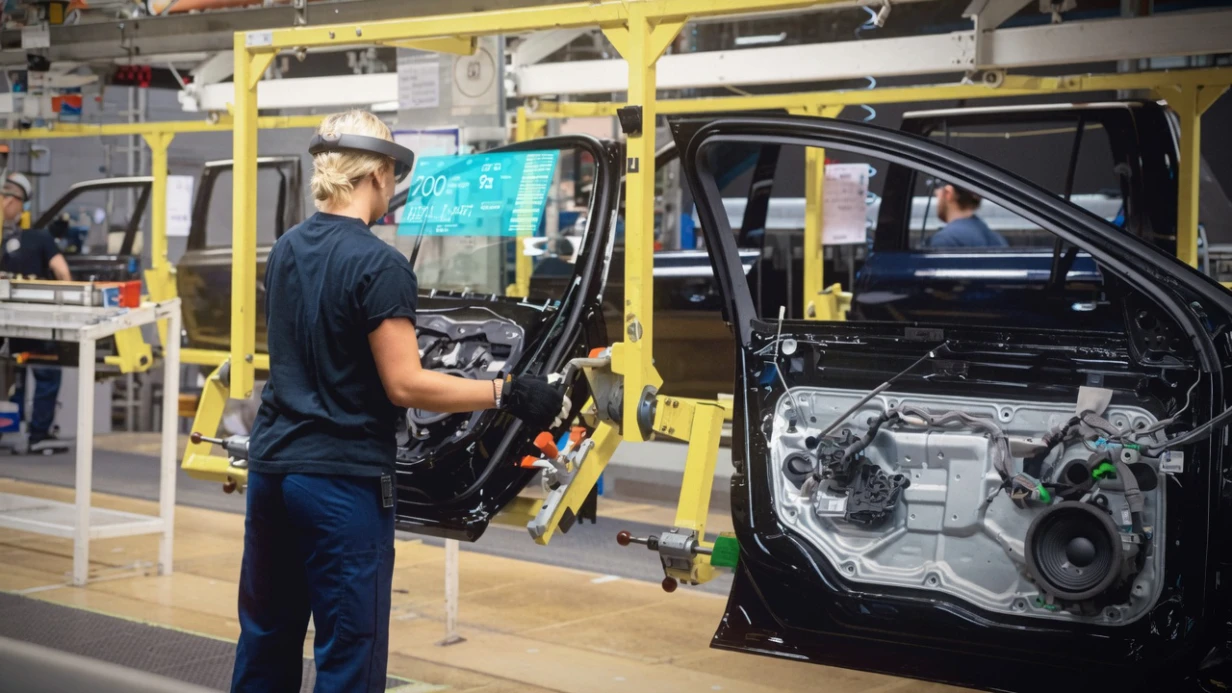
The modern answer is Microsoft HoloLens. This device overlays digital guidance directly onto the real object: the operator sees which part to pick up, where to place the tool, and which steps come next. Hands stay free, attention stays on the job — not on sheets of paper.
Instructions are always up to date because they are updated centrally and reach all devices instantly.
We help you implement augmented reality technology on your production floor: we tailor instructions to your processes, test them on real operations, and train your staff. The result: fewer delays, fewer defects, and faster ramp-up for new hires. Managers get a transparent picture — how long each operation takes and where the reserves are.
What HoloLens Delivers on the Shop Floor: 5 Measurable Benefits
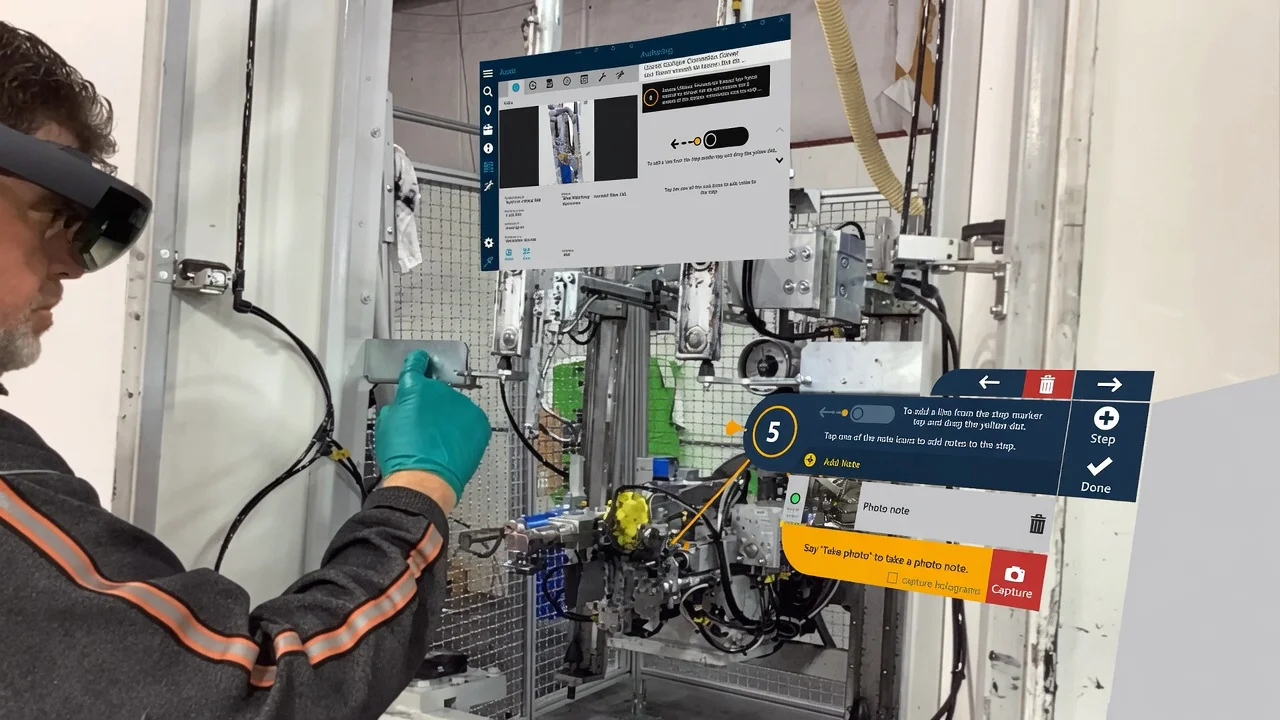
Industrial instructions based on Microsoft HoloLens help operators see step-by-step guidance directly on equipment components. Instead of thick paper regulations — interactive schematics that guide the employee through the operation.
Based on our implementation experience, we highlight five measurable benefits that directly affect shop-floor operational KPIs.
Faster training. An employee completes their induction 2–3 times faster because they see the sequence of operations right in front of their eyes.
For new operators that means confident work from day one; for the enterprise it means rapid onboarding without pulling people off the production line.
Fewer errors. AR prompts highlight the correct sequence of actions, so defects and rework drop by 30–40%. Less material waste, fewer customer complaints, and consistent product quality.
Remote support. An expert connects remotely and sees exactly what the operator sees through the headset camera. They mark the required elements directly on the image, and the employee understands within minutes what to do — no need to wait for a specialist to travel to the site.
Less equipment downtime. Real-time access to instructions and recommendations enables faster fault diagnosis. Maintenance takes less time, and machines return to service sooner.
Preserving expert knowledge. Experienced specialists record their working procedures, and these become available to all employees. Even if a mentor retires or moves to another project, their knowledge stays with the company.
AR Instruction Formats for Different Tasks
Each production task requires its own way of presenting information: a new hire needs clear steps, a repair crew needs a precise indication of the component, a quality inspector needs a verifiable checklist.
We develop AR instruction formats for each specific scenario — interactive guides for training, holographic schematics for repair, and other options. This way, you get exactly the instruction format that reduces downtime and errors on your equipment.
| Format | For whom and when | What it gives the client |
|---|---|---|
| Step-by-step guide | New employees, assembly and installation areas | Reduces training time and number of errors |
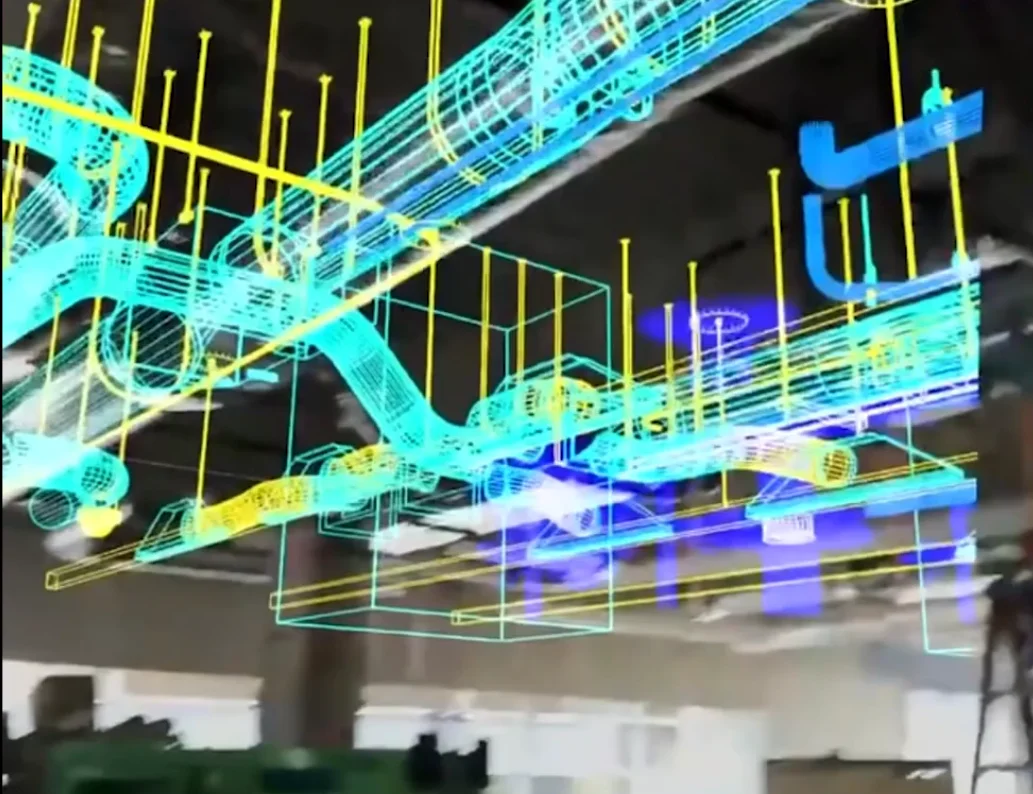
| Interactive schematic | Repair teams, diagnostics, maintenance | Fast component location, clear part highlighting |
| Virtual simulator | Staff training, skill practice | Safe practice without risk to equipment |
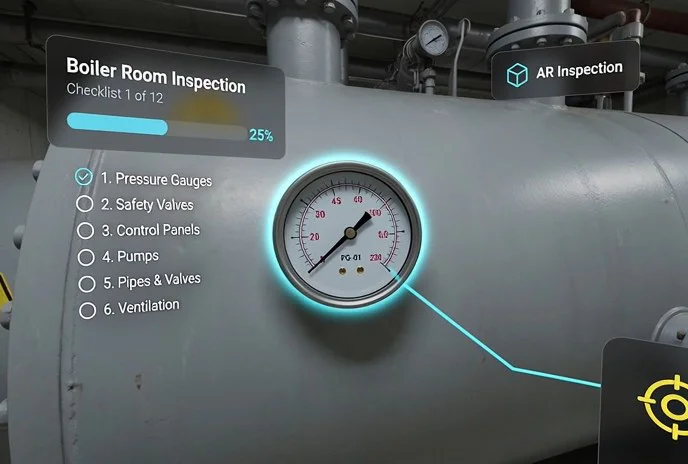
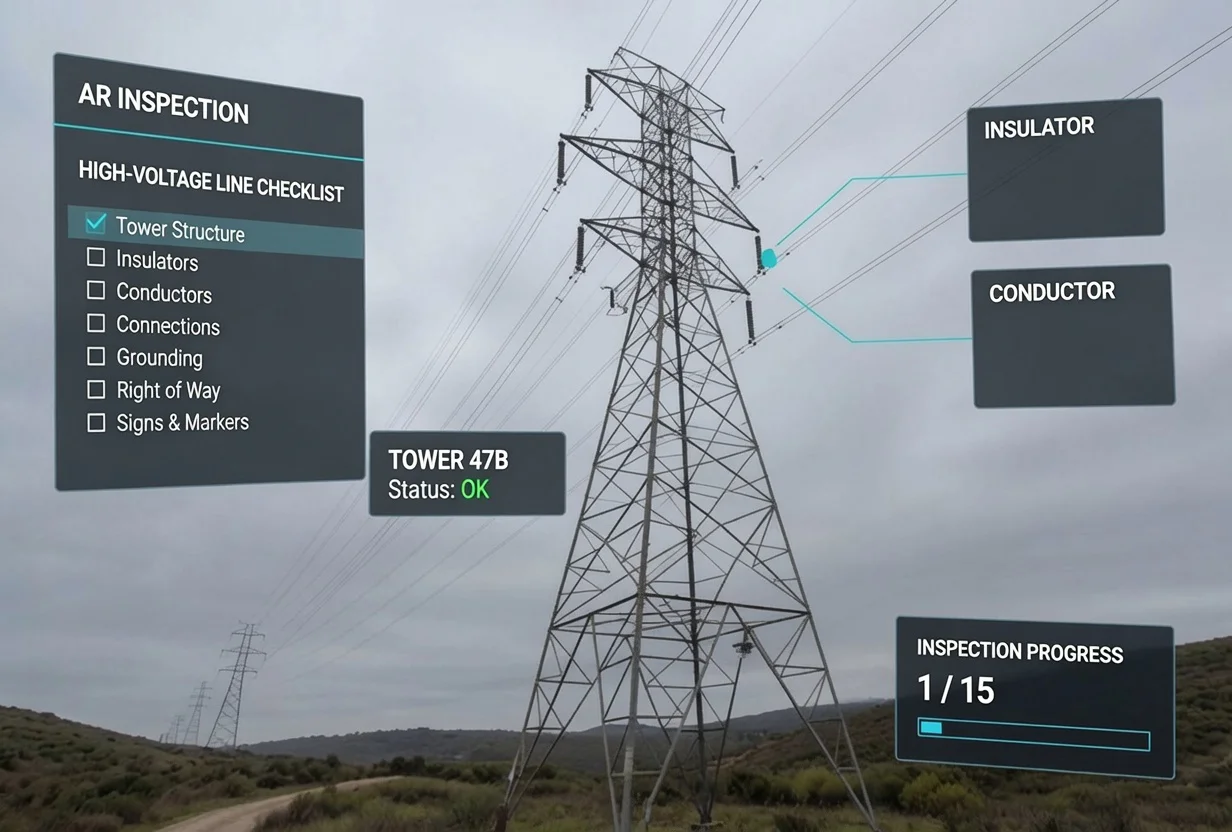
| Holographic checklist | Quality control, work acceptance | Objective verification of every step |
All formats run on augmented reality headsets (such as Microsoft HoloLens) already used in industry, and easily replace paper instructions and costly training sessions.
The format is selected to match the task: a compact schematic is enough for repairs, while training calls for a simulator with virtual prompts. The employee sees the required information in their field of view without breaking focus.
How the Project Unfolds: 7 Steps from Brief to Launch
We run the project through transparent stages so you always understand what you get and when results will appear. Developing AR instructions for Microsoft HoloLens is a managed process: you take part in key decisions, we handle the technical side and quality control.
- Brief and immersion. We capture which operations need instructions, who will use them and how. Output: an agreed specification with goals, success criteria, and realistic timelines.
- Plan and estimate. We define the scope of work, content formats, and number of stages. You receive a clear plan with a budget and checkpoints — no hidden work.
- Prototype and approval. We assemble a draft scenario for one operation and show it on the AR headset. You see the logic of the future instruction and make corrections before full development begins.
- Content development. We create 3D models, animations, text prompts, and voice comments. All materials are cross-checked against your documentation and real equipment.
- Integration with your system. We connect the instructions to your regulations and databases so updates appear without halting production.
- Testing with operators. We validate the instructions on a pilot area together with your employees. We gather feedback and refine the interface for maximum usability.
- Launch and support. We hand over the finished solution, train administrators, and accompany the project — updating content, adding new scenes, and expanding functionality to match your needs.
This sequence eliminates surprises: you know in advance when you will test and launch the solution. Each stage comes with a brief report, and any disputed issues are resolved at a live demo — in correspondence or on screen, not in theory.
What's Included in the Delivery: A Complete Package for Production
Too often the customer gets just an app, and implementation falls on their shoulders — the shop floor ends up without a working tool. We deliver a turnkey package so the solution is ready to run immediately after launch. Here is what's included.
- AR instructions for your equipment. Step-by-step scenarios for assembly, maintenance, and repair. Prompts are overlaid on real components, so the operator quickly finds the right actions.
- Operator and engineer training. We run on-site training sessions and cover common situations. The team works confidently with the system from day one.
- Technical documentation. Clear manuals and regulations — they remain in your knowledge base for new employees.
- Integration with your systems. We connect AR instructions to your accounting and planning processes — the employee sees the task, opens the instruction, and records completion.
- Support and updates. We accompany the launch, update scenarios when regulations change, and answer user questions.
- Source files. We hand over project materials so you can refine the instructions yourself or with a contractor.
This package covers the full cycle — from first launch to solution evolution. You get not dependency on the developer but a production tool that pays off at every stage of use.
Case Study: How a Factory Cut Downtime by 30%
A production line at a hydraulic equipment plant stopped every time there was a changeover: operators waited for the setup technician, searched for a paper instruction, or double-checked against drawings.
We replaced this process with an AR instruction based on Microsoft HoloLens — the operator sees the sequence of actions directly on the part and never takes their eyes off the machine.
Over two months we converted ten key operations to AR: press changeover, tooling replacement, weld quality control. The plant's engineers described typical scenarios and we turned them into step-by-step prompts with component highlighting and animation. The system was deployed without stopping production — team training took one day.
| Metric | Before implementation | After implementation | Effect |
|---|---|---|---|
| Changeover downtime | 40–60 minutes per operation | 25–35 minutes | 30% reduction |
| Assembly errors | 8–10% of operations required rework | 2–3% | Defect rate cut 3x |
| New hire ramp-up | 2 weeks of mentoring | 4 days | Training 3.5x faster |
| Payback period | — | 9 months | Annual savings verified after audit |
The main result is not dry report numbers but a change in how work happens: operators stopped waiting for help, and setup technicians now focus only on complex non-routine situations.
The customer saw such clear results that six months later they ordered a second phase — AR instructions for field service engineers.
If you have a similar situation — downtime, long training cycles, dependence on experienced employees — we are ready to run a two-week pilot on one area and show before/after figures on your equipment. That's a safe way to test AR payback before scaling to the entire enterprise.
How to Choose the Right Format for Your Task?
A common customer question is where to start when the task isn't obvious. That's normal: industrial scenarios differ, and what works perfectly on one production line can be overkill on another.
That's why we don't sell a "boxed" format — we select an AR solution for the specific operation, equipment, and skill level of your staff.
Choosing an AR format is always about balancing depth of detail with speed of implementation. For a simple instruction, step-by-step prompts right on the screen are enough; for complex diagnostics, you need a full 3D model with animated components.
We help the customer understand where their task sits on this scale — and avoid paying for unnecessary complexity.
Solution selection starts with a short analysis: who will use the instruction, how critical is an error, is remote control needed. Our engineers take this analysis off your hands — you get a ready recommendation rather than a hundred-page specification. That saves weeks of discussions and eliminates the risk of ordering the wrong thing.
The right format is always proven in practice. We suggest starting with one high-impact scenario that pays off fastest: reducing training time, cutting defects, or accelerating repairs.
Once you see the result on a real operation, the remaining tasks become clearer and easier to prioritize.
The answer to "which format should I choose" always begins with a consultation. Tell us which operation you want to cover — we'll propose the optimal implementation path, timeline, and expected effect. It's free and comes with no obligation.
FAQ: Common Questions About AR Instructions
Leaders considering AR instructions for the first time ask us the same questions: is it safe, how much does it cost, and will it stop shop-floor work. Here are brief, straight answers — no technical details, but with the numbers that matter for business.
Won't AR distract employees and increase the risk of injuries?
AR instructions don't replace operator attention — they remove the need to flip through paper, search for the right section, and memorize sequences. The worker sees prompts right in front of them, so they make fewer mistakes and react faster in non-standard situations. Errors drop, and hands stay free for the task.
Are AR glasses safe to use on the production floor?
Yes, if the instructions are designed properly. We position virtual prompts so they don't block important equipment elements or distract from process control.
The devices are built for industrial environments, and the system can be restricted to safe zones and operations only, preventing misuse.
How much does it cost to develop AR instructions?
The cost depends on the number of instructions and the complexity of the equipment. A typical project is comparable in cost to a few hours of line downtime — with the exact figure calculated after audit.
AR instructions reduce new-hire training time and cut defect rates, so the investment typically pays back within one to two quarters.
How long does implementation take, and will it stop production?
Implementation is staged: first we pilot one area, then scale to the rest. From the initial brief to launch usually takes two to three months, and the shop floor keeps running normally all the while — setup happens in parallel with production. We support the process until the system becomes a familiar tool.
If you'd like to try AR instructions on your own equipment — send us a description of one technology operation. We'll prepare a cost estimate and pilot launch plan within two business days.Order AR Instruction Development Today
Every minute of equipment downtime is lost money. Paper instructions don't help: employees get distracted, hunt for the right section, fear making mistakes. AR instructions for Microsoft HoloLens overlay prompts directly on the equipment — step by step, with correctness checks.
Ordering AR instructions means getting a turnkey development: we analyze your processes, create the instructions, test them with real operators, and implement them without stopping production. You gain a competitive edge — faster onboarding for new hires and fewer errors.
What you get when you order:
- Reduced training time — new employees reach the floor faster
- Fewer errors and less downtime — prompts appear exactly when needed
- Turnkey development — from task analysis to launch and team briefing
- Clear communication — we speak business language, no technical jargon
- Fixed estimate and timeline — no hidden charges or unexpected delays
- Post-launch support — we answer questions and update content as things change
Leave a request — we'll get in touch within one business day. We'll clarify the task, propose a solution that fits your budget, and show examples from your industry. You can start with a single area — the rest we'll deliver turnkey.