

RealWear AR Headset: How to Eliminate Downtime and Errors on the Production Floor
Every hour of downtime on the production floor means an idle machine, a delayed order, and lost revenue. Staff errors during equipment maintenance and setup lead to defects, accidents, and losses.
The more complex the equipment, the more expensive every mistake becomes: missed deadlines, fines, and lost contracts.
Specialists have to interrupt their work to consult paper instructions, search for the right section, or wait for an expert to arrive — time slips away, and the cost meter keeps running.
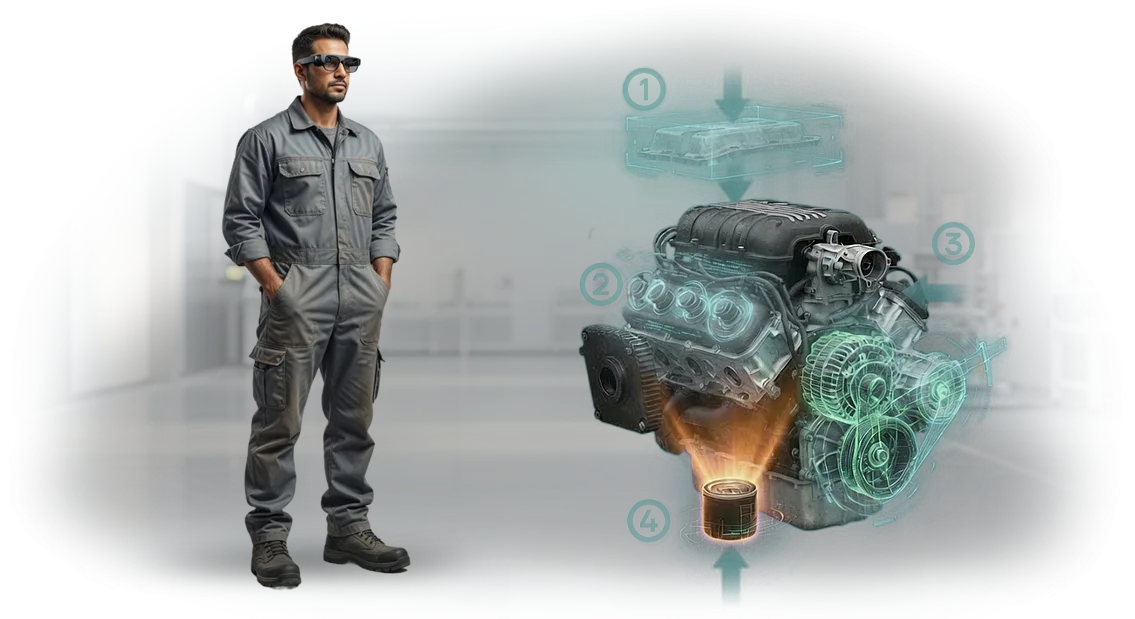
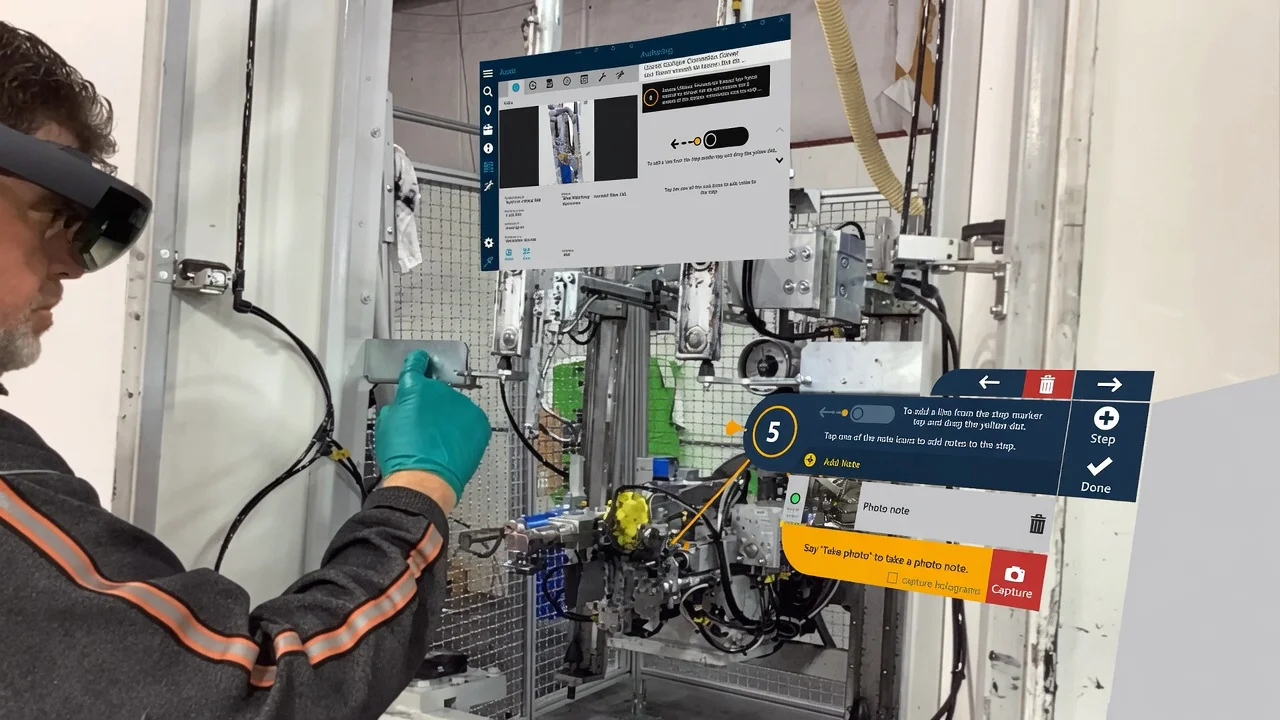
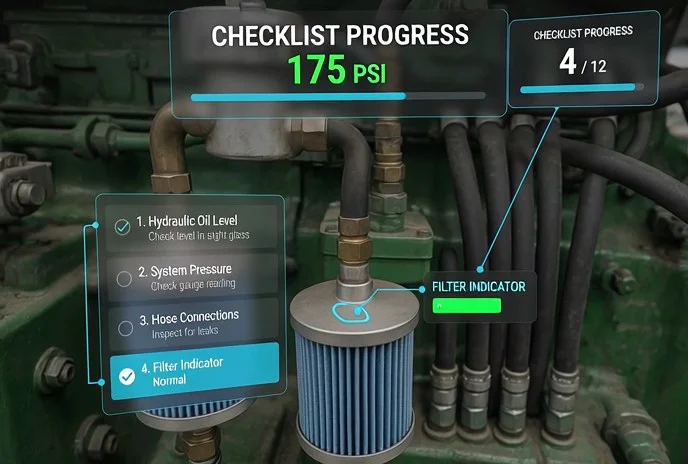
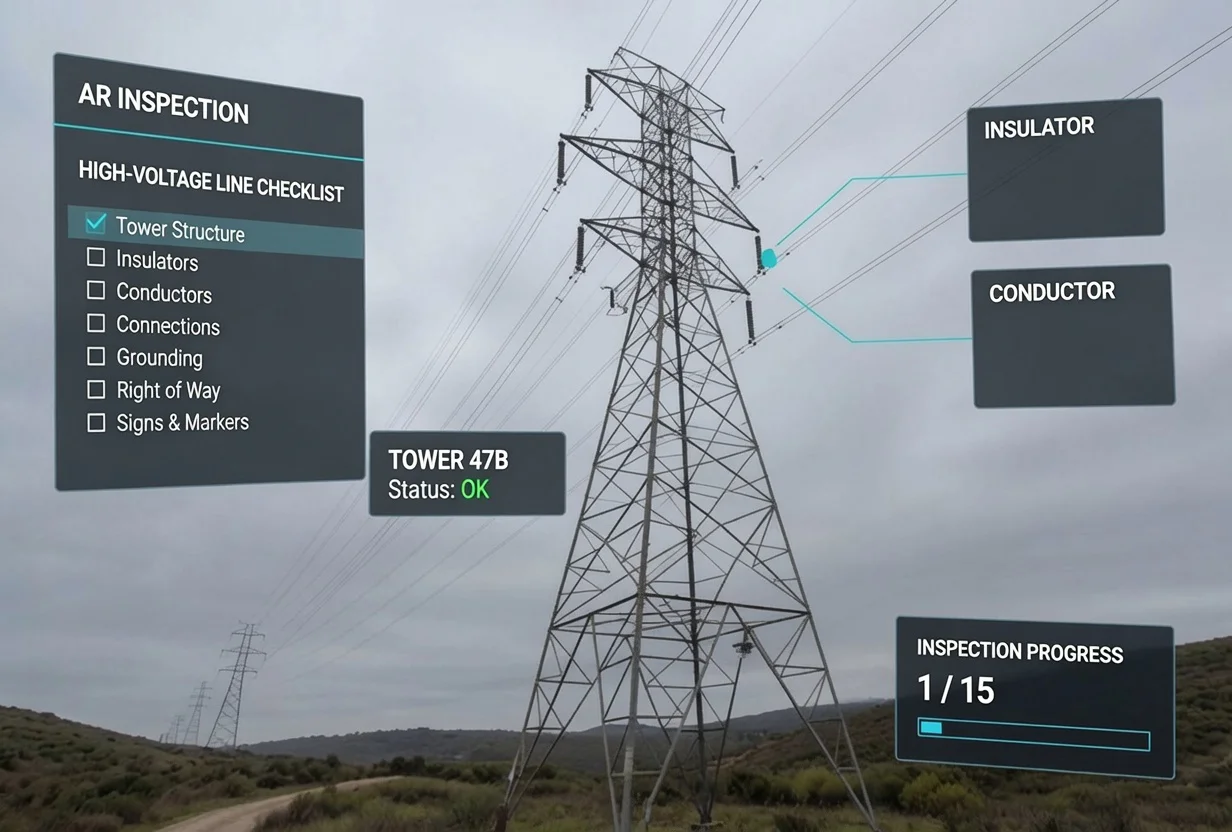
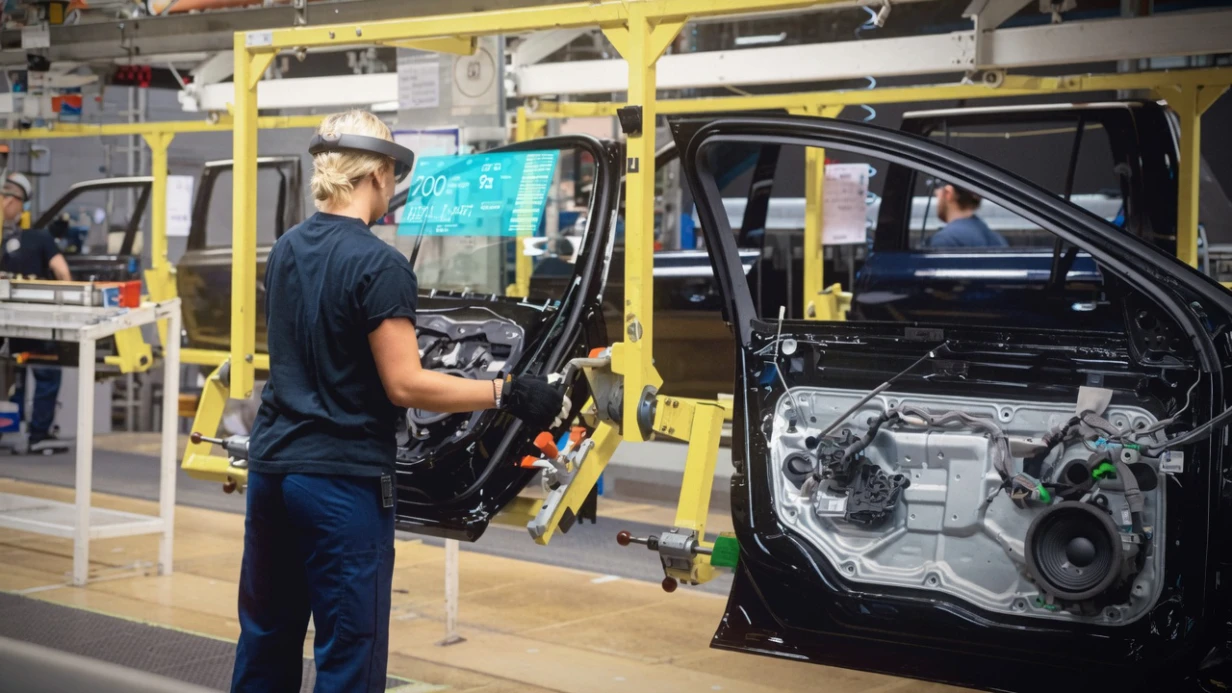
The RealWear AR headset solves both problems. The operator sees step-by-step guidance right in front of their eyes, without taking their hands off the tool or breaking focus.
This removes unnecessary actions: no need to flip through documents, memorize complex diagrams, or keep asking a teammate for confirmation. The result — less downtime and fewer errors, with consistent operation quality.
Safety also becomes predictable: employees see warnings and the correct sequence of actions in real time, reducing the risk of injuries and breakdowns.
Managers gain full visibility into the work being performed: bottlenecks become immediately visible, along with which operations take the most time and which employees need additional training.
Implementing RealWear pays off through reduced downtime, lower defect rates, and faster onboarding of new hires. Experienced workers pass knowledge to new employees directly on the job, without stopping production.
This is not a replacement for staff, but a tool that makes every worker more accurate and more self-sufficient. This approach allows faster reaction to order changes and launching new products without lengthy staff preparation. Shop-floor efficiency rises, and the cost of errors falls.
What You Get from Implementing AR Instructions
Reduced Equipment Downtime
When equipment sits idle, you lose money. AR instructions let the operator receive step-by-step prompts right on the spot, without stopping to search for documentation. Instead of waiting for a specialist, the employee handles setup or minor repairs themselves. Changing components and performing scheduled maintenance takes noticeably less time.
As a result, downtime drops and the production schedule stays on track. This is especially important with complex machines, where every minute of idle time is costly.
Faster Onboarding of New Employees
Usually, bringing an operator up to speed takes weeks: theory first, then work under a mentor's supervision. With AR instructions, a newcomer sees exactly what to do and in what order, right before their eyes.
There's no need to memorize hundreds of pages of procedures — the system prompts the next step at the right moment.
Staff training speeds up many times over: employees reach independent work faster, and experienced specialists are freed up for complex tasks.
Fewer Errors
Human error is the main cause of defects and accidents. AR instructions eliminate guesswork: the operator sees the exact sequence of actions with the relevant components highlighted.
Every step is visually confirmed, so mixing up parts or skipping a critical stage becomes nearly impossible.
The result — fewer defects and fewer hazardous situations.
Quality Control and Standardization
Managers get assurance that all employees work to a single standard. AR instructions cannot be "forgotten" or read carelessly — they always follow the approved procedure. What's more, the system can automatically record that the operator actually completed every stage.
This makes quality control transparent and significantly reduces dependence on the skill level of a particular operator. Together, this directly increases labor productivity — without capital expenditure on new equipment.
AR Instruction Formats for Production Tasks
Production tasks differ, so AR instructions can't be "one file for all cases." Some teams need only a quick "take the next step" prompt, while others need a full component repair scenario with verification of each action.
We match the format to the specific operation: we don't overload the employee, we don't slow the process down, and we provide exactly the information that reduces errors.
Below are the standard options we already use on production sites. In every case, the augmented reality headset (for example, RealWear) stays on the operator's head, hands remain free, and information appears right in the field of view.
| AR Instruction Format | Who It's For | What the Client Gets |
|---|---|---|
| Step-by-step assembly prompts | Conveyor operators, new staff | Shorter training time, fewer missed operations |
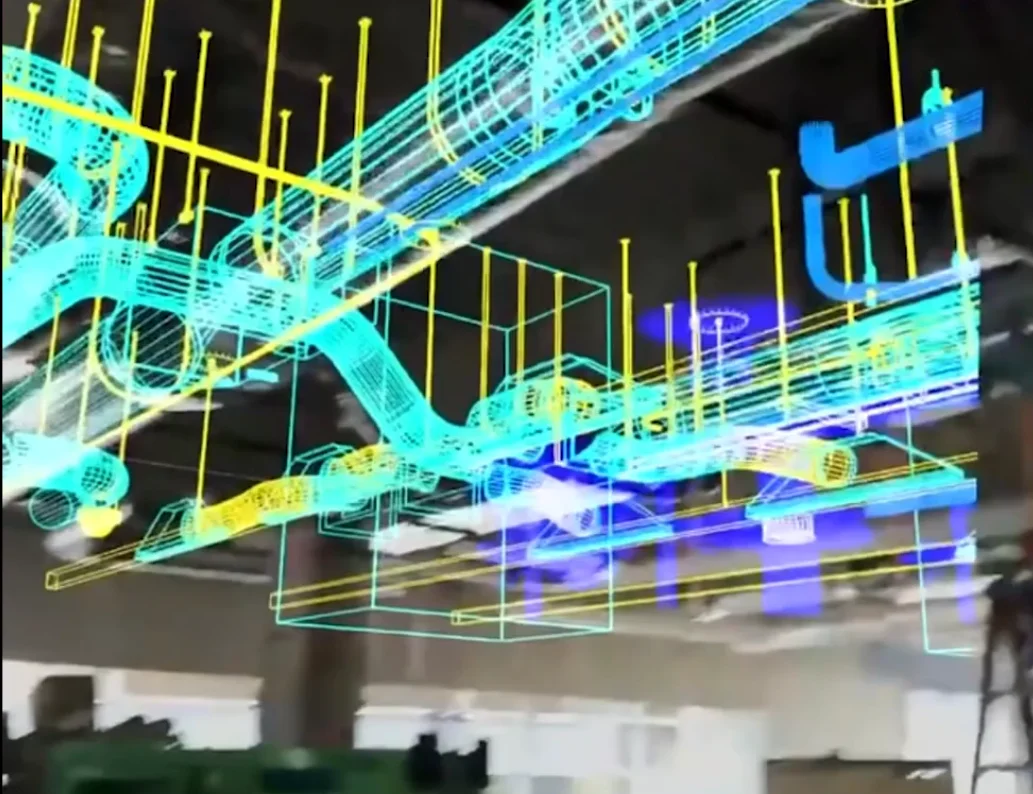
| Quick access to schematics and parameters | Setup technicians, repair staff | No need to flip through paper instructions — the component and its specifications are visible immediately |
| Remote video support | Field engineers, service teams | The expert sees what the employee sees and gives directions right in the frame — quicker than waiting for an on-site visit |
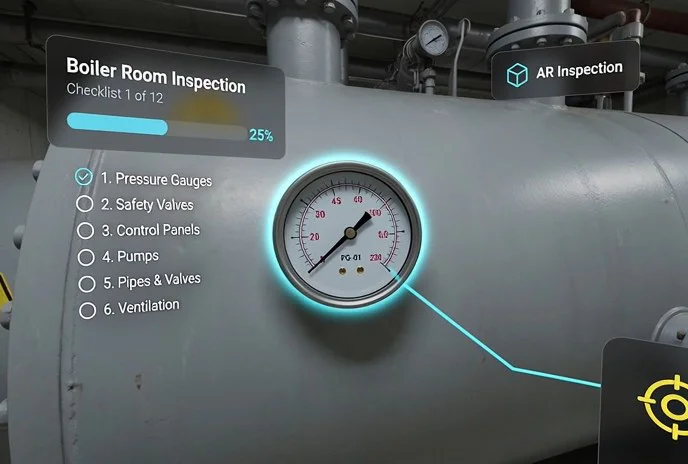
| Quality control and checklists | Shift supervisors, QC department | Completed steps are recorded, fewer omissions, clear reporting |
| Simulator-based training | New employees, trainees | Safe practice before working with real equipment, faster clearance for independent work |
| Complex repair with a step-by-step scenario | Rare faults, complex equipment | Even a rare operation can be completed without bringing in a specialist |
Format selection always starts with a question: what exactly needs to change in the workflow? If onboarding time is the bottleneck, we go with interactive scenarios. If assembly errors are frequent, we use checklists with verification.
We help identify that format in a short audit and immediately show how it will map to your processes.
Implementation doesn't require reconfiguring production. The operator puts on the headset, sees clear prompts, and keeps working with their hands as usual.
And you get transparent statistics: which operations took the longest, where difficulties arose, and where training worked most effectively. This turns AR from "technology for technology's sake" into a tool with a measurable result.
AR Instruction Implementation Stages: From Audit to Launch
Implementing AR instructions in production isn't about buying gadgets — it's about reshaping workflows. We start with an audit of the production area: identifying operations that eat up time and spots where errors most often occur. Then we proceed in short stages, and you review and approve each one.
- Workflow audit. We analyze your procedures, observe your operators, and find recurring time losses. We build an AR scenario map prioritized by value.
- Scenario approval. We show on the RealWear headset how the employee will see the instruction: steps, diagrams, prompts. You approve the logic before development so we don't have to redo finished work.
- Content preparation. We turn your procedures and your specialists' experience into short step-by-step instructions: text, photos, video. We adapt them to the headset format and cut anything unnecessary.
- Solution assembly. We build the headset application and show a working prototype. You provide edits, and we fix them right away — no long approval cycles.
- Testing on the production floor. Your employees run through the scenarios on real equipment. We measure speed and error rates and collect feedback for the final version.
- Launch and training. We install the system on the headsets, configure access, and train supervisors. They move their shifts to the new format without daily support from us.
- Ongoing support. After launch, we update scenarios, add new operations, and adapt content to equipment changes. You get long-term support, not a one-off project.
What Is Included in the AR Solution Delivery
You get not just an application, but a complete kit for equipment training and repair. We build the solution around your tasks and hand it over with documentation and support — so the team can start using AR scenarios right away, without a separate implementation project.
The delivery package includes:
- A package of AR instructions for your operations: step-by-step scenarios with video prompts and checkpoints. The employee sees what to do next and checks against the reference standard.
- An application for the RealWear AR headset with voice control. Hands are free, instructions are in front of the eyes — fewer errors and less downtime.
- An administrator panel for content updates: change procedures, add operations without developers.
- Documentation set: user guide, startup procedure, maintenance instructions.
- Employee training and setup for your infrastructure: we'll help implement AR scenarios and answer questions at the start.
- AR system support: warranty coverage, updates, and refinement of instructions for new processes.
In the end, you get a working tool rather than a "box": employees master operations faster, the risk of errors drops, and knowledge stays within the company even after specialists leave.
Case Study: How We Cut Operator Training Time by 40%
On the production floor, every incorrect action by an operator means lost time, defects, and equipment downtime.
That was exactly the challenge a large machine-building plant brought to us: training newcomers took up to two weeks, and when the product range changed, even experienced employees confused the sequence of operations.
Management calculated that due to human error, the line sat idle for up to 6 hours a month, and every minute of downtime was expensive.
We proposed replacing paper procedures with AR instructions. For the PromTech plant, we built an application for the RealWear industrial AR headset: the operator sees step-by-step prompts right in the field of view, without taking attention away from the equipment.
The diagram, checkpoints, and order of actions — everything appears at the right moment. Even a new employee can perform a complex operation without a mentor.
The implementation results speak for themselves. Training time dropped by 40% — instead of two weeks, newcomers reach the required pace in 6 days. The number of errors during operations fell by 35%, and downtime related to human error was cut in half. This delivered significant monthly savings on every site where we implemented the instructions.
The case confirmed the key point: AR instructions pay for themselves within the first few months. The client expanded the project to all workshops, and we continued to support them — adding instructions for new equipment and updating scenarios.
Today, this plant is our regular client, and together we are advancing the digitalization of production.
How to Choose an AR Instruction Format for Your Equipment?
Choosing an AR instruction format is not about a nice visual — it's about how your employees absorb information in real working conditions. The same process can be broken down into short steps with result verification, or built as a scenario with remote expert connection.
To avoid mistakes, base your decision on three things: operation complexity, employee experience, and site conditions.
Start with complexity. If a worker performs a standard operation that just needs fewer mix-ups, a step-by-step mode with a checklist is enough: complete a step, mark it off, move to the next.
If the operation is rare, costly, or sensitive to errors, it's worth choosing a format with video breakdown and automatic verification of key components. In the second case, the system doesn't just display text — it verifies that the action was performed correctly.
The second criterion is who uses the instruction. An experienced mechanic will take in a diagram and a short prompt more quickly, while a novice needs a complete scenario with emphasis on typical errors.
It's also important that the format adapts to each person's level rather than putting everyone through the same course. In practice, the instructions that work best combine a strict sequence of steps with quick access to reference information right in the middle of the work.
The third factor is the environment the employee works in. On a noisy production floor, holding a phone or tablet is inconvenient, so an augmented reality headset is more comfortable: hands are free, and the instruction is right in front of the eyes.
It's for exactly these tasks that we develop applications for the RealWear AR headset — they overlay prompts onto the employee's field of view and work without requiring attention to be diverted from the equipment.
In the end, the format is chosen for the specific operation: a short prompt for frequent actions, a full scenario for repairs, and video connection with an expert for unusual situations.
The key is not to pick a format abstractly, but to analyze the real scenarios of your production: who performs the task, how often, and under what conditions.
We help with this at the briefing stage, document the criteria, and propose a solution that pays off through fewer errors and less training time.
If you're unsure where to start, break down two or three of the most frequent operations: that's enough to determine the right format at the first working meeting.
Frequently Asked Questions About Implementing AR Instructions
Complexity, safety, compatibility, and budget are the main questions we hear from managers before launching AR instructions. Below are honest answers without technical details.
How difficult is it to integrate AR instructions into existing processes?
We handle the integration, so your staff won't have to restructure their work. A short session is enough — operators quickly get used to on-screen prompts. The whole process from audit to launch takes 2-4 weeks on a pilot site.
Are AR headsets safe for production work?
Yes. The headsets don't block the field of view — the employee sees both the equipment and the instruction at the same time. We use certified industrial devices that are resistant to dust and impacts. We configure the prompts so they don't distract from critical operations.
Will AR instructions work with our equipment?
We adapt the solution to your specific machines, lines, and procedures. Your documentation and technical processes serve as the foundation. If documentation is scarce, our engineers visit the site and record the operations — this speeds up development.
How much does AR instruction development cost?
The cost depends on the number of operations and the complexity of the equipment. The cost of a pilot project is calculated after audit — that's enough to evaluate the effect on one site. After the pilot, you decide whether to scale the solution to all workshops.
If you still have a question, submit a request. We'll prepare a quote for your equipment and show examples of similar projects.Ready to Discuss Your Project? Submit a Request
Industrial equipment is becoming more complex, and requirements for safety and training speed are rising. AR instructions on the RealWear headset help the employee see prompts right before their eyes without breaking focus from the work. The result — fewer errors, faster onboarding, and lower training costs.
Our team has already delivered such projects for manufacturing companies: from machine repair to conveyor line setup. We know how to adapt content to real processes and embed it into the training system. That's why we don't sell "hot air" — we offer a solution tailored to your task.
What you get after reaching out
- Free consultation: we'll identify where AR instructions will deliver quick results in your production.
- A preliminary implementation plan with stages, timelines, and budget — no hidden conditions.
- Payback assessment: we calculate savings on training, errors, and downtime.
- A demo on your scenario: we'll show how the employee sees the instruction in the headset and how it speeds up the work.
- A transparent contract and a fixed estimate — you know what you're paying for before we start.
- Post-launch support: updating instructions as processes change and training employees.
Submit a request on the website — we'll call you back within one business day and schedule a convenient time for the consultation. Or call us directly: we'll explain how to order AR instructions for your equipment and what's needed to get started.