

AR troubleshooting app: why repairs drag on and lose money
Every hour of production downtime is a direct loss: missed shipping schedules, idle crews, and logistics teams in emergency mode. The typical scenario looks like this: the equipment stops, the local mechanic cannot find the cause, and the wait for a service engineer begins. By the time the engineer arrives and studies the machine, a day or two has passed.
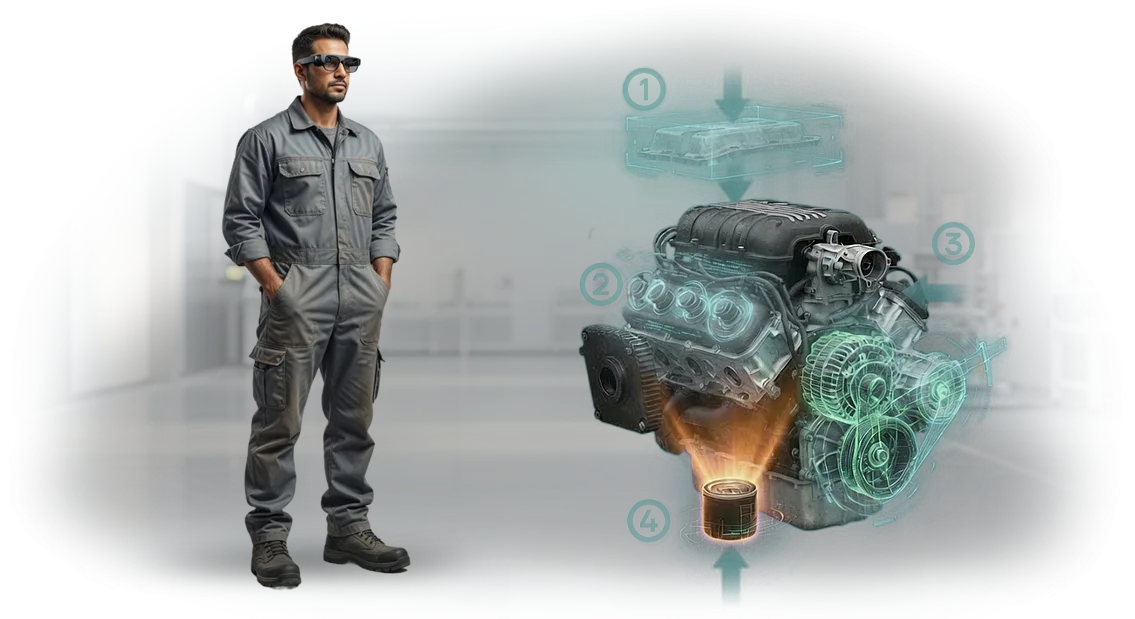
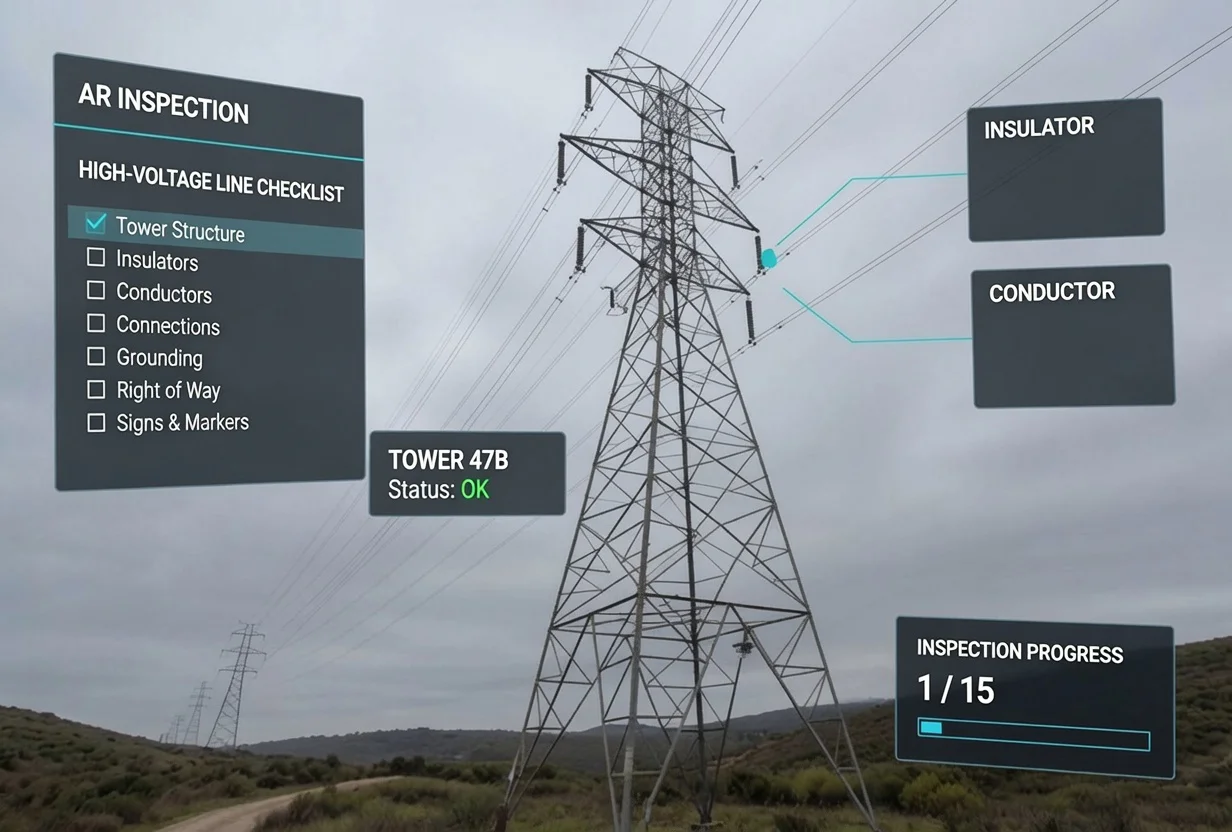
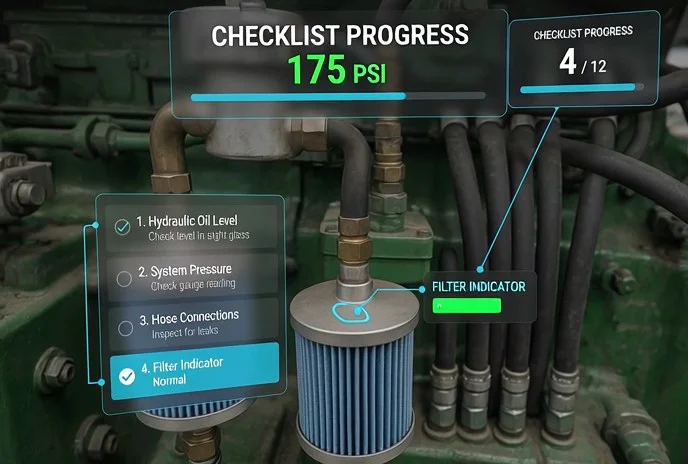
An AR troubleshooting app shifts diagnostics and repairs from rare specialists to employees already on site. An operator or mechanic points a smartphone or tablet camera at the unit — and the system shows what to check, which parts to replace, and in what order.
This is not a replacement for experienced engineers, but a way to find and fix faults faster without waiting for them.
The second cost factor is the shortage of skilled staff. The average age of repair technicians is rising, while younger employees are still gaining experience. That is why the same equipment stops for hours at some plants and is fixed in half an hour at others.
AR instructions turn expert knowledge into clear visual prompts that any specialist with basic training can understand.
The business result is fewer downtime hours per year, fewer expensive service visits, and confidence that contracts will be met. Implementing such an application pays for itself after the first prevented downtime, and then delivers value on every incident.
We help close this pain point end to end: we design the scenarios, fill them with content, and implement them so that repairs genuinely get faster.
Benefits: predictable repairs, less downtime, longer equipment life
AR instructions turn repairs into a clear step-by-step process: the technician sees prompts directly on the parts and finds the fault faster. Such an AR troubleshooting app cuts diagnostic time and returns equipment to work within the same shift.
Reduced downtime
Every hour of downtime is lost revenue. Instead of paper diagrams and waiting for a consultant, the repair technician gets an answer instantly — diagnostics and fault resolution take far less time.
Staff training
A newcomer with AR instructions can handle operations that previously required years of experience. This removes the dependency on staff turnover and speeds up employee onboarding without stopping production.
Increased equipment life
Following maintenance schedules and correct operation sequences is key to long equipment service life. AR instructions capture correct practices and prevent errors during assembly and maintenance, which increases equipment life.
Safety and lower costs
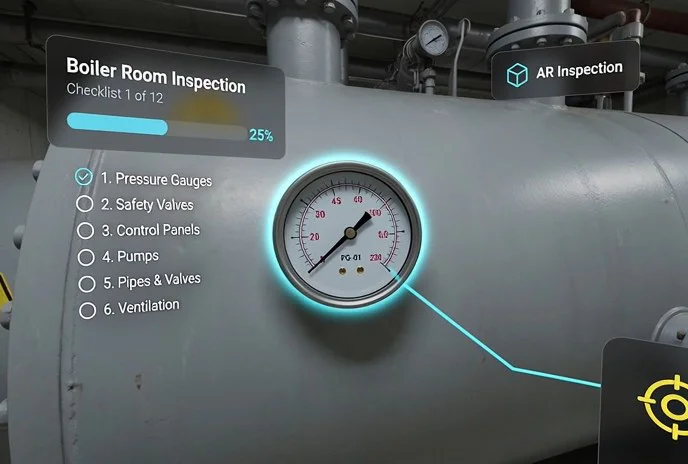
Prompts warn which units to de-energize and which tools to use — reducing the risk of injuries and breakdowns. Fewer emergency stops and errors mean lower repair and spare-part costs: savings can reach the cost calculated after audit per year at a single plant.
Compatibility with industrial equipment
We adapt instructions to your lines, including those controlled by Siemens controllers. Data for prompts is taken from your control system — the technician sees current readings in real time. Integration does not require replacing the equipment fleet.
AR instruction implementation formats: from simple to full cycle
Equipment downtime is a direct loss: every minute spent waiting for a repair technician hits the production plan.
AR instructions let an employee act immediately: a step-by-step prompt appears on a smartphone screen or in the field of view, and even a rare fault can be resolved without calling in an external specialist.
This format does not require a complete process overhaul — you can start with one workshop or area and then scale. Below are typical implementation options, from simple to comprehensive.
| Format | Who it is for | What it gives the client |
|---|---|---|
| Mobile instruction | Repair crews and operators | Step-by-step repair via smartphone or tablet: the employee finds the fault faster and makes fewer mistakes because they see prompts directly on the screen |
| Remote support | Dispersed sites, field specialists | An expert connects to the worker's camera and shows with arrows what to do — fewer business trips, faster problem resolution |
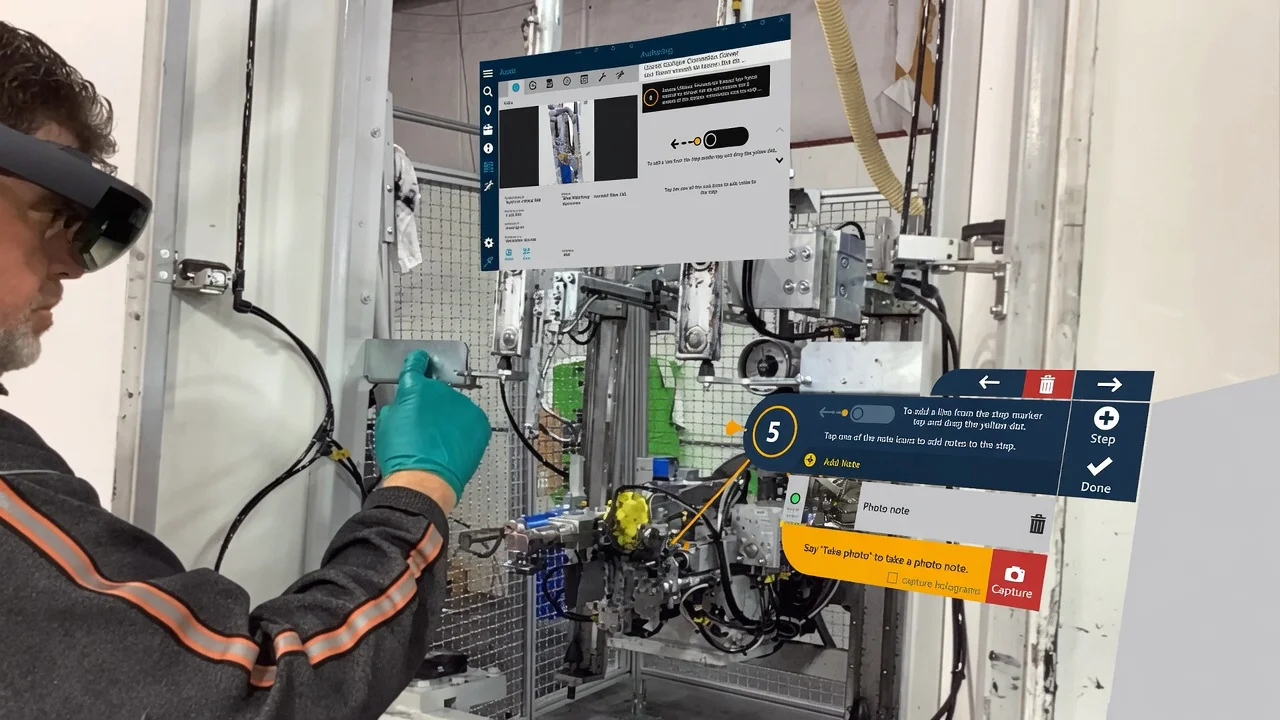
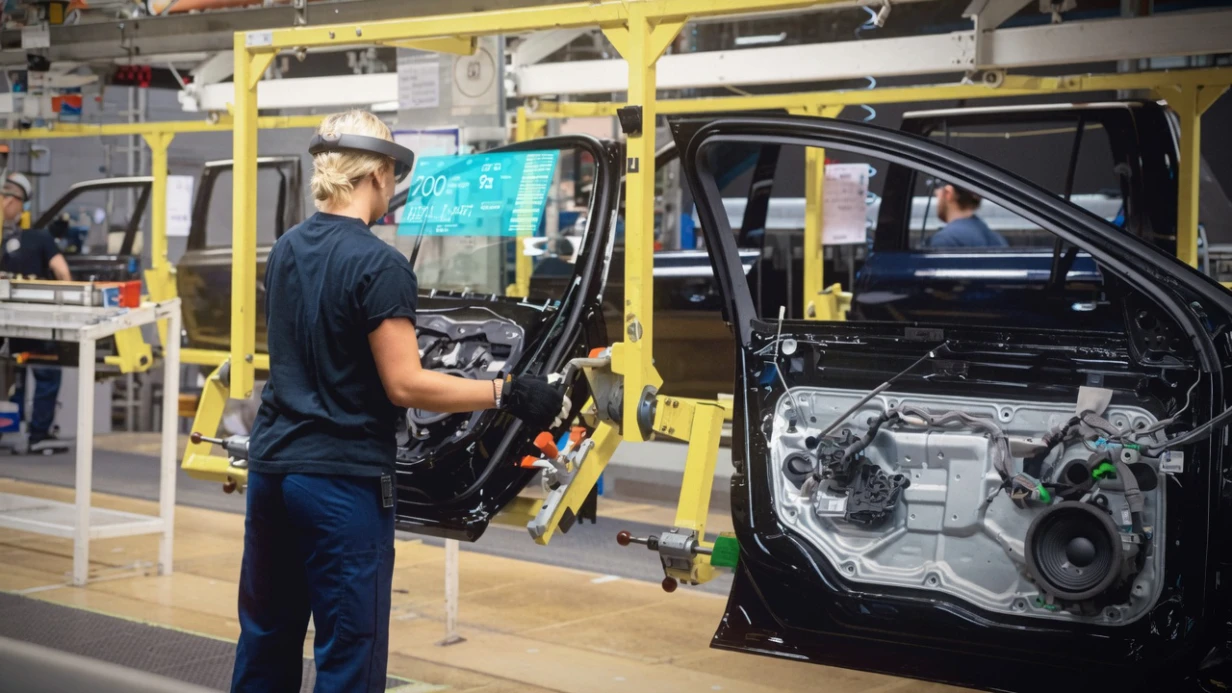
| Augmented reality glasses | Complex and hazardous work where hands are occupied | Prompts appear before the eyes, no need to hold an instruction manual or look at a screen; action verification happens in real time |
| Comprehensive system | Enterprises with multiple workshops and a large equipment fleet | A single set of AR instructions for all equipment models: regulations updated in one day, employee action analytics, training for newcomers without a mentor |
We will help you choose the right format and start with a pilot project on one unit — so you can see the effect in numbers and only then scale the solution across the entire production facility.
How we implement a troubleshooting app: 7 steps from audit to support
We have structured the AR instruction implementation process so that the client sees results at every stage. Instead of a "box," you get a working scenario: from auditing real failures to employee training and support. Below are the seven steps we use for most projects.
-
Brief and needs audit. We find out which operations most often cause errors and where downtime costs the most. This lets us focus AR instructions on areas with maximum benefit.
-
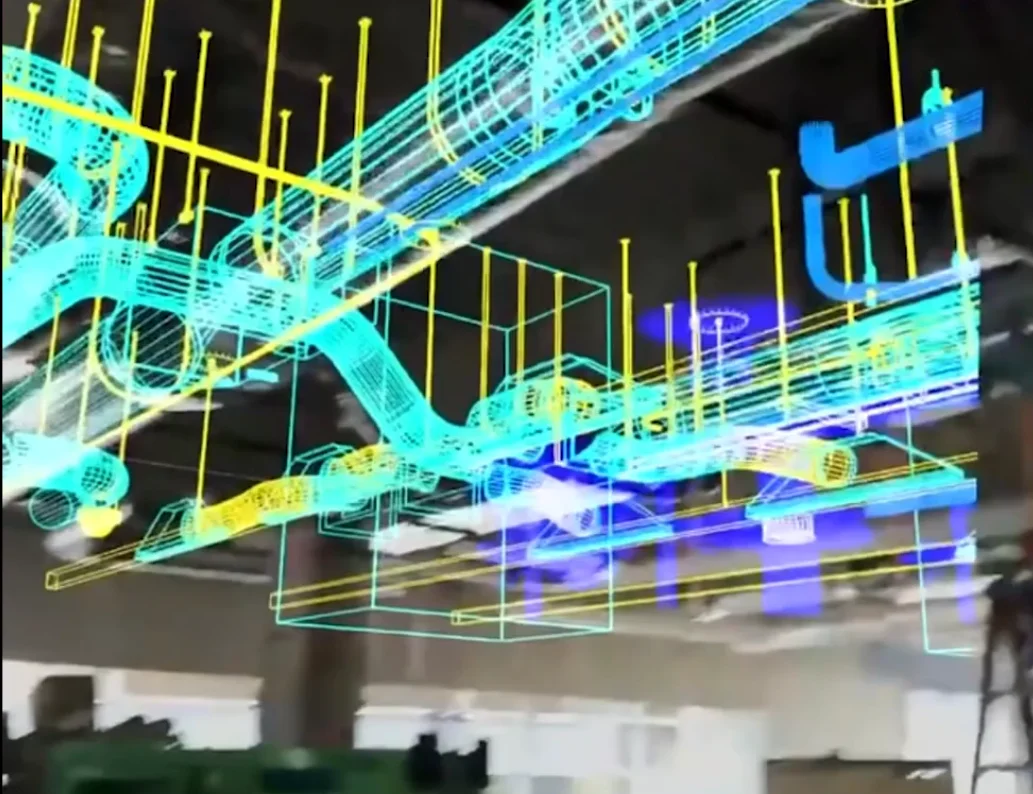
On-site equipment audit. We come to your site and study the units and regulations. At this stage we use HoloLens to check how digital prompts will overlay real parts — before development, it becomes clear what is convenient for the mechanic.
-
AR instruction development. We create step-by-step scenarios: visual markers, animations, action verification. Each step is aligned with your technologists so that the instruction speaks the language of your production.
-
Review and refinement. Your experts check the completeness and correctness of the steps. We make edits until the scenario is clear to an employee with any level of training.
-
AR testing on the real site. We involve your mechanics: they run through the scenario on the equipment while we measure time and error counts. Based on the results, we adjust the instruction before the solution is rolled out to all employees.
-
Launch and training. We install the application on your devices and conduct briefings for supervisors and shift managers. We hand over a simple guide to working with AR instructions.
-
AR solution support. We update instructions when equipment or regulations change, monitor usage analytics, and help expand scenarios to new units. Support lasts for the entire service life.
What is included in the AR solution delivery: a complete package for your production
When you order an AR solution, the delivery includes not just software but a complete package for production. The composition of the AR solution is designed so that repair instructions start working from day one: from adapted scenarios to staff training and technical support.
- Adapted repair instructions — step-by-step scenarios for your equipment and accepted regulations. The employee sees the operation sequence directly on the machine parts without flipping through paper manuals.
- Voice control — the supervisor gives voice commands without being distracted by a tablet. Hands remain free for work, and the system automatically shows the next step.
- Prompt system — if a specialist hesitates or makes a mistake, AR highlights the required unit and suggests the correct action. This reduces the risk of incorrect assembly and equipment damage.
- Repair data export — you receive statistics on typical failures, service times, and employee skill levels. This data helps plan preventive maintenance and adjust training.
- Staff training — we run training sessions for your specialists and setup technicians so they confidently work with AR from day one. Employees quickly master the system and do not return to old paper instructions.
- Technical support and updates — we support the project after launch: we answer questions and update instructions when equipment or regulations change. Your production always has current documentation.
In the end, you get not scattered files but a single system that reduces downtime, speeds up repairs, and simplifies onboarding for new employees.
Case study: how we reduced repair time by 40% at a client's plant
At one client's plant there was a familiar problem: an equipment fleet of hundreds of units, each repair taking up to several hours, and some work had to be redone due to setup errors.
Every hour of downtime cost a significant amount, so the request was clear: reduce repair time and lower the risk of errors.
We implemented AR instructions for key units, integrating them with ABB equipment — our long-time partner.
Through a tablet, the repair technician sees a step-by-step sequence of actions directly on the real machine: where the required unit is located, how to disassemble it, and what parameters to check. This is not a "paper instruction" but prompts tied to a specific model.
We started with the three most common faults. Engineers came to the site, observed the mechanics at work, and turned real experience into clear AR scenarios.
Employee training took one day, and within a week almost the entire crew was working with the tablet, without using paper or distracting supervisors.
Result after three months: typical repair time fell by 40%, and the number of setup errors dropped threefold. With less downtime, the line became more stable, and the project's return on investment arrived within six months.
The plant is now scaling the solution to other workshops, while we continue to support the system and add new scenarios.
How to choose the right AR format for your task?
An AR format cannot be chosen "in a vacuum" — it is determined by three things: the scale of the task, the skill level of employees, and the implementation budget.
There is no universal solution: what is ideal for a small line with one operator will be inconvenient at a large facility with dozens of specialists.
If you have a small amount of equipment and employees already know the process well, a light AR layer is enough — quick prompts over the camera or text markers on units. This format covers 80% of typical errors and can be introduced in a couple of weeks.
When dealing with complex machinery, frequent staff turnover, or high safety requirements, you will need a full interactive environment: step-by-step interactive guidance with 3D models and employee action control.
Budget here works not as a limitation but as a prioritization tool. You can start small — with one critical unit or a frequent breakdown that stops the line.
This delivers a fast, measurable effect and lets you scale the solution to other processes based on facts, not expectations.
We help you decide on the format before development starts. We base our approach not on "impressive AR" but on the point where you are losing money: planned repairs, trainee onboarding, defects caused by incorrect operation sequences.
We show which level of complexity will pay off fastest and do not push anything unnecessary. Maybe you do not need full functionality, only a "prompt at the right moment" — but that alone can cut the number of errors by 2-3 times.
The result is a format employees accept rather than find irritating, and investments that pay back through reduced downtime and faster onboarding.
And if your tasks grow in the future, you can add functionality without replacing the entire system — we build that into the architecture from day one.
Common concerns when ordering AR instructions: honest answers
Before launching AR instructions, every manager has the same five questions: will it work with old equipment, will employees dismiss it, what if the equipment breaks down right in the workshop, and when will it all pay off.
We answer honestly — without promising a "magic button," but with clear conditions and guarantees for every risk.
Will AR instructions work with equipment that is 10–15 years old?
Yes. We do not rebuild machines or connect to plant systems — the AR layer works on top of the real object through a tablet or smartphone. The instruction is "bound" to the equipment's appearance and controls, so it works even with machines without digital sensors. Our engineers go to the site in advance or conduct a video audit to ensure marker accuracy.
Employees are used to paper instructions. Won't they ignore AR?
The implementation is designed so AR becomes an assistant, not a replacement for habits. For the first two weeks, we work with key mechanics and adapt the interface to their requests — and only then roll it out to the whole shift. In practice, loyalty comes after the first fault fixed without calling tech support.
This is expensive. Will the implementation pay off?
Think about it this way: one conveyor stop caused by waiting for a specialist can cost a significant amount — that is lost shift time, an urgent call-out, and downtime at related sections.
The average AR instruction project pays for itself in 3–6 months through reduced downtime and faster crew response. Before starting, we calculate the payback using your data: failure scenarios, average diagnostic time, and the cost of an hour of downtime.
What if the equipment breaks down during the process? An AR tablet isn't going to replace a repair.
Correct — AR does not repair for the person; it shortens the path to a solution. The instruction shows which cover to open, which unit to check first, and in what order to perform the steps. This reduces the risk of disassembly errors and cuts the time spent finding the cause.
And if the process requires complex intervention, the AR scenario ends with a handoff: "transfer the work to the service department" — you get a fast, safe, and predictable process.
What guarantees do you provide for the result?
We take responsibility for the scenarios working on your equipment: this is recorded in the contract with a trial operation stage. If an instruction does not reproduce correctly or a step does not match the real unit, we fix it until it fully matches.
You also receive support for the first 30 days after launch and access to scenario updates when regulations change.
Order an AR solution for your task: get a cost estimate in 2 days
Leave a request — and within 2 days you will receive an estimate for your task. We will select the AR solution format for your equipment type and use case: from simple step-by-step instructions to full troubleshooting guidance. This is free and creates no obligation.
The estimate will include an implementation plan, delivery scope, and the turnkey AR application cost. We will show you where you will save time and money: less downtime, faster commissioning, fewer employee errors.
The quote will be transparent — no hidden extras, you immediately understand what you are paying for. You will get not an abstract presentation but a concrete proposal with figures and timelines.
After your request, you will receive:
- An AR instruction format selected for your equipment and staff tasks.
- An implementation plan: stages, timelines, and areas of responsibility for each party.
- Delivery scope: application, content, operator instructions, updates.
- The exact turnkey development cost broken down by stage — that is the price of the AR application with no surprises.
- A benefit calculation: how much you will save on training, downtime, and errors.
We work with professional equipment and proven tools, so we give realistic timelines and guarantee results. We handle turnkey AR implementation — from brief to launch at your production facility — without unnecessary approvals, with clear reports at every stage.
Order your AR solution now — in 2 days you will know how it works, how much it costs, and what it will bring to your business. Leave a request, and we will take it from there: select the solution, prepare the plan, and calculate the benefit specifically for your task.