

AR Remote Expert: How to Cut Equipment Downtime
Every hour of equipment downtime is lost revenue and missed delivery deadlines. When a production line stops and the required specialist is in another city or even another country, repairs stretch out over days: waiting, business travel, obtaining permits.
In industry, such downtime incurs a significant cost per incident — the exact figure is calculated after an audit.
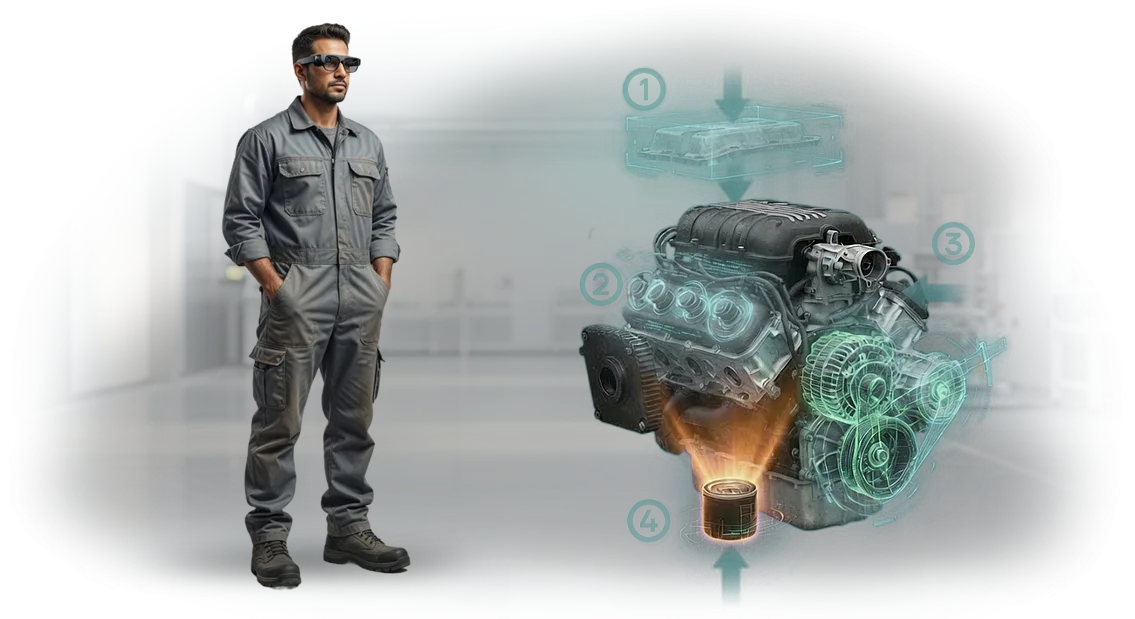
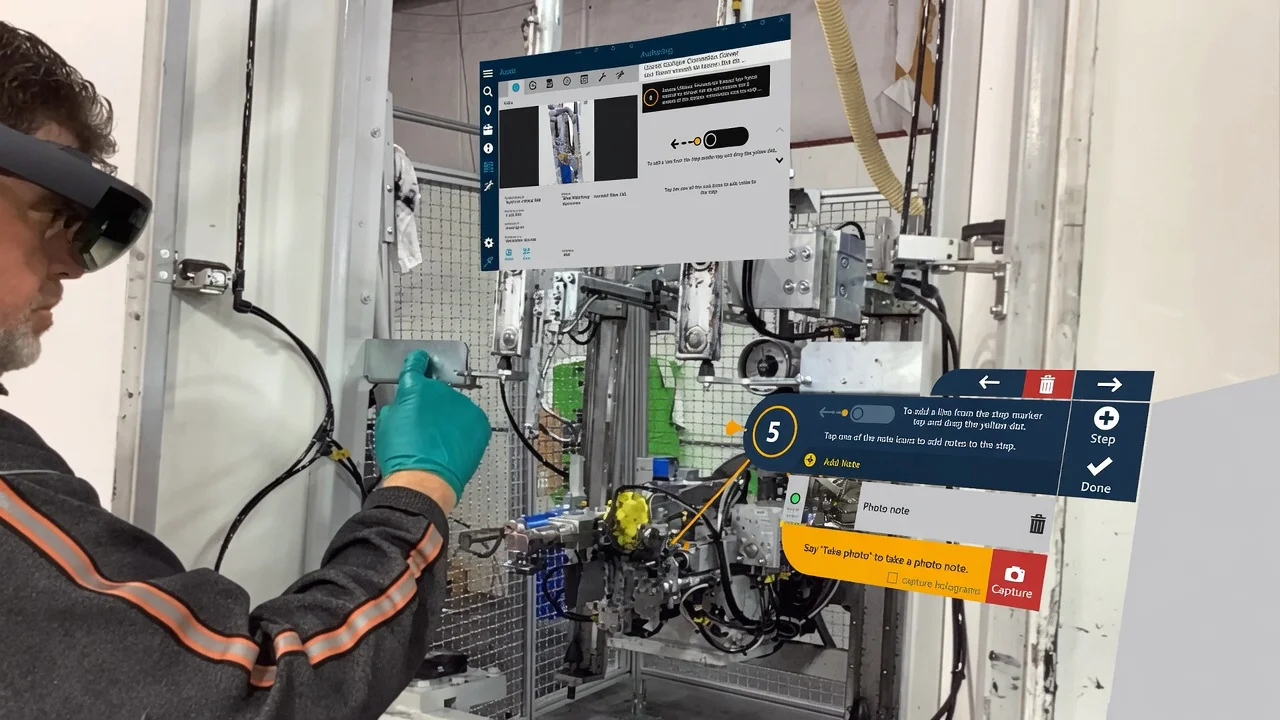
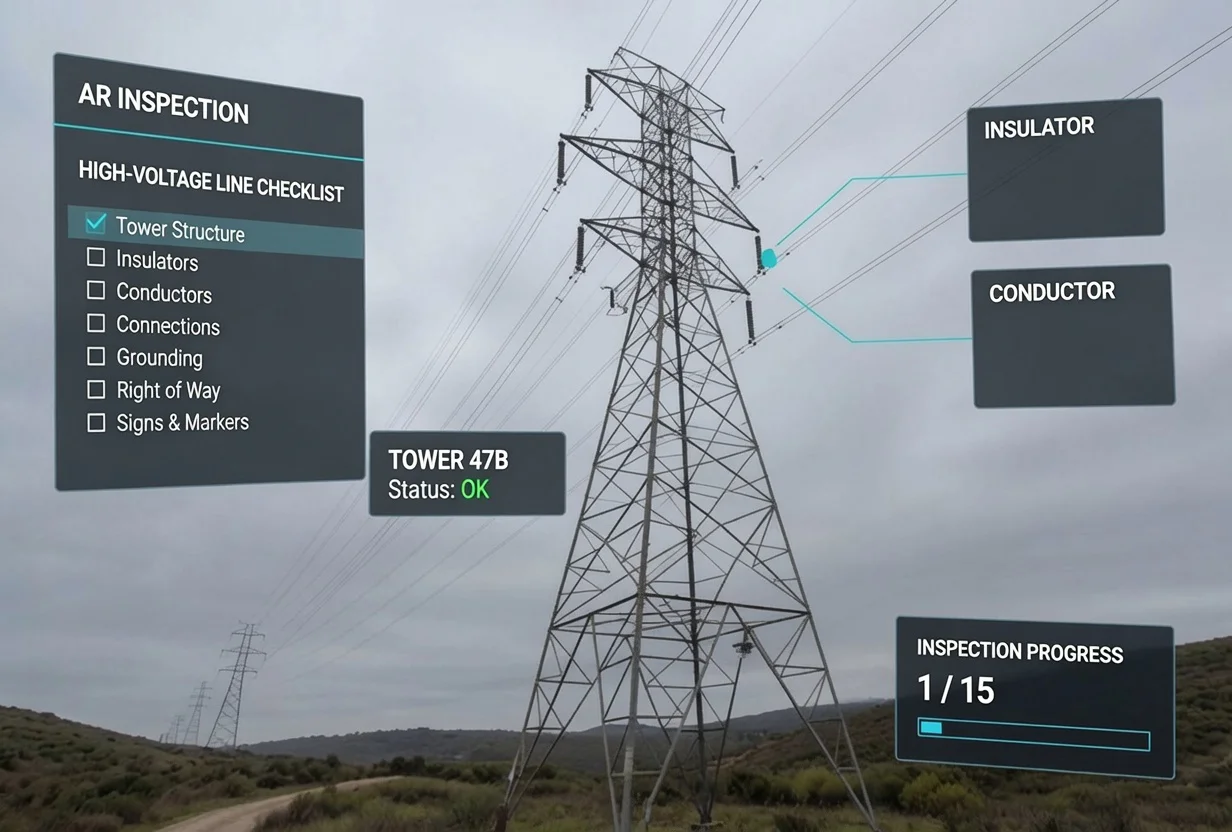
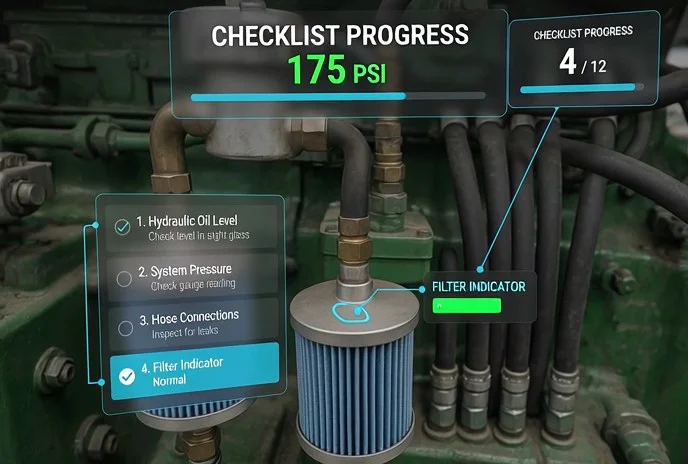
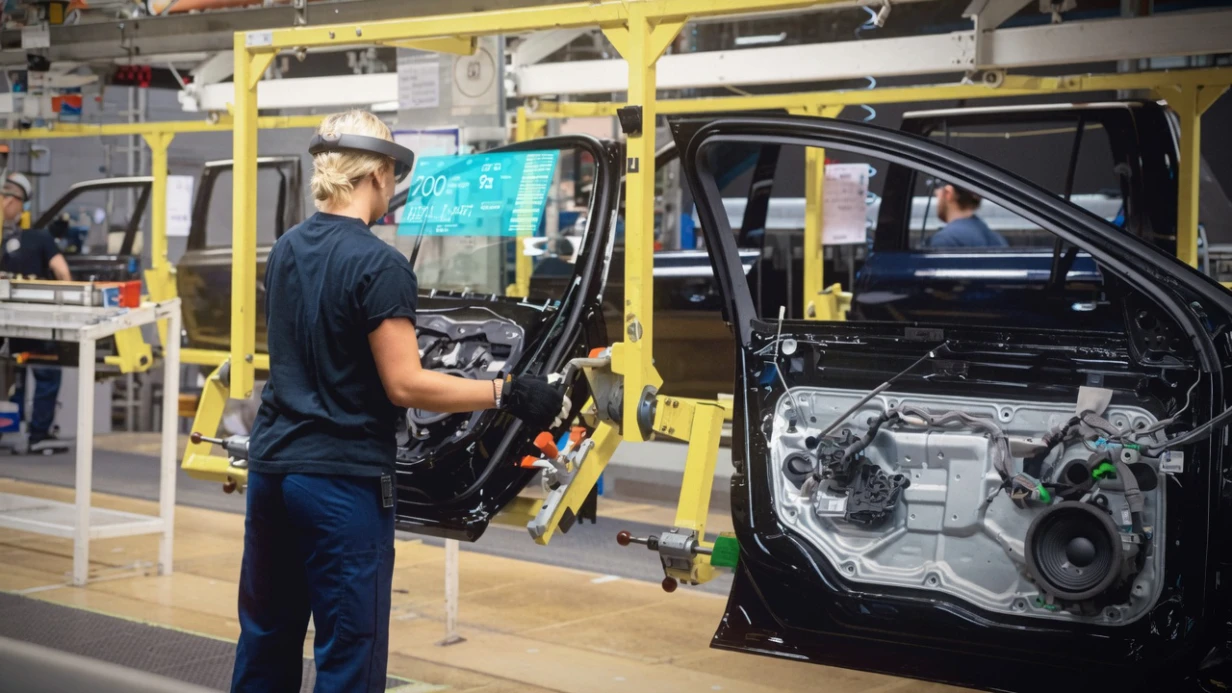
The solution is a remote AR expert. The engineer on site puts on an AR headset, and the expert sees exactly what they see: equipment, components, sensor readings. Remotely, they circle the relevant parts, give voice prompts, and display diagrams right before the eyes.
We use professional devices such as HoloLens and integrate them with standard plant systems — the specialist gets full context without lengthy training.
The result: downtime shrinks from days to hours. Repairs start immediately after the first request, not after the expert arrives. Across our projects, troubleshooting time drops by 30–50%, and travel expenses go to zero.
Remote assistance works even in complex cases: the expert connects to any area, sees the real picture, and makes decisions faster than with photos or phone video.
This is how we address the main pain point of industry — long downtime caused by waiting for qualified help. The AR remote expert turns the plant's most valuable resource — an engineer's experience — into an instantly available service.
What Remote Support Brings to Repairs and Training
Reaction speed is the first thing a client notices. Instead of waiting for a specialist to arrive or traveling to the site, the on-site engineer receives AR prompts from a remote expert.
The problem is solved in minutes, not days, which directly reduces equipment downtime and, in turn, protects revenue.
Reduced business travel is an obvious budget saving. Our clients no longer pay for flights, accommodation, or time on the road. The expert connects remotely, sees what the on-site employee sees, and guides them step by step.
Support costs drop while coverage grows — facilities in different regions can be served without travel and without losing quality.
Personnel training happens right at the workplace. A new employee doesn't study hundreds of pages of instructions; instead, they receive visual prompts while performing tasks.
This shortens ramp-up time, reduces the number of errors, and makes training uniform across all branches.
Knowledge transfer — accumulating expertise within the company. Every expert decision is recorded and becomes part of a knowledge base used for future breakdowns.
Experience doesn't leave with a departing specialist; it stays in the company and raises the skill level of the entire team, including newcomers.
In the end, remote support covers several tasks at once: fast repairs, travel savings, systematic training, and knowledge retention. These are the benefits we build into every AR instruction we develop.
Remote Expert Work Formats for Your Task
A remote AR expert is not a single scenario but several formats: from one-time assistance during an emergency shutdown to regular support during commissioning.
We choose the format to match your situation, so help arrives on time without waiting for a specialist to travel to the site.
The expert sees on the screen exactly what your employee sees, via the camera of a smartphone or tablet. They overlay arrows, diagrams, and prompts directly onto the equipment.
This works on most industrial sites, including machines and robotic complexes from popular manufacturers such as KUKA.
For clarity, here is a table mapping formats to typical tasks:
| Format | Who It's For | What It Gives the Client |
|---|---|---|
| Emergency support | Emergency line stoppage, urgent repairs | Back to work in 15–20 minutes instead of a day of downtime |
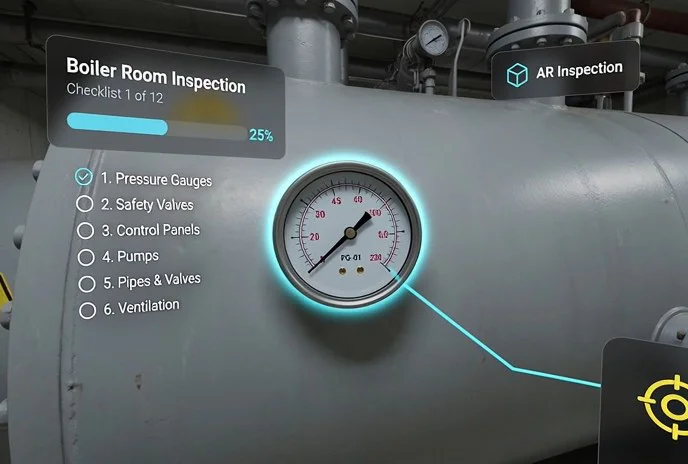
| Scheduled commissioning | Launching new equipment, seasonal maintenance | Checklist-based verification with an expert, no engineer visit |
| Personnel training | New employees, changing work areas | Visual prompts right on the components, fewer errors |
| Diagnostics and audit | Preparing for inspection or modernization | Expert inspects components remotely, provides a precise work plan |
After a short brief, we will propose the right format, demonstrate it on your equipment, and set up the process. You get a remote expert who works as quickly as an on-site specialist, but without travel and downtime.
How a Project Goes: From Brief to Launch
Every turnkey project begins with a brief and ends with a working system, not a "rough mockup." We set goals, timelines, and budget at the first stage so you understand what you are paying for and what result you will get within 4–6 weeks.
- Brief and task audit — you describe the equipment, complex operations, and current problems. We ask clarifying questions, identify where employees most often make mistakes, and record the goals: who the AR expert should help and how.
- Work plan and estimate — we create a detailed plan: stages, timelines, cost, and areas of responsibility. You receive a transparent document where every step is tied to a specific result.
- Scenario approval — before development, we show what the instruction will look like in practice: which prompts the technologist sees and how each step is performed. You make edits at this stage rather than after launch — this is cheaper and faster.
- Content creation — we prepare 3D models, animations, text and voice prompts. For each module, we send intermediate versions so you can control quality without diving into technical details.
- Tests on your equipment — we visit or connect remotely to check how the instructions work in real conditions: lighting, viewing angle, response speed. We make final edits before launch.
- Launch and training — we install the system, train employees, and hand over the usage guidelines. You receive a finished AR instruction and a contingency plan for any questions.
- Support and development — after launch, we don't disappear: we update instructions when regulations change, add new operations, and help if something goes wrong. You get not a one-time service but a working tool that evolves with production.
What Is Included in the Project Work Package
We provide a complete delivery package — everything needed to launch and independently support AR instructions. Below is the list of project artifacts.
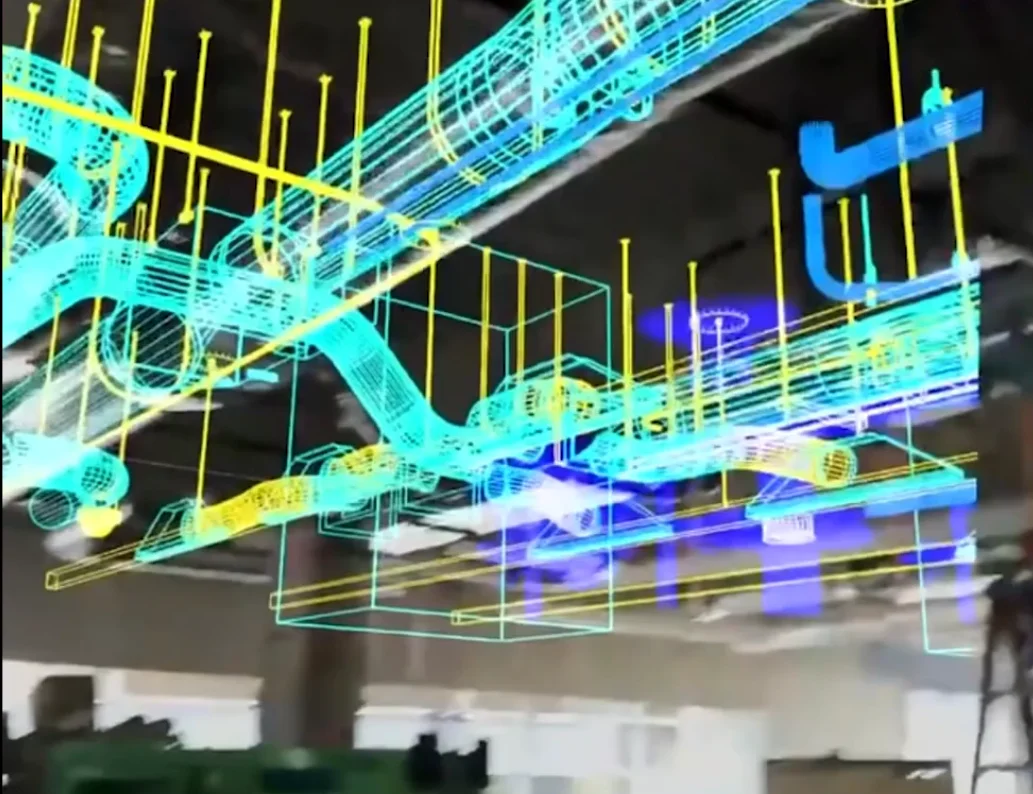
- AR instructions for key operations. Step-by-step 3D prompts overlaid on equipment, guiding the employee from start to finish. Each instruction is tested on your equipment and ready to use.
- Configured user interface. A simple window where the operator selects the required operation and immediately sees the sequence of actions. No long texts — prompts appear right in the field of view.
- Integrations with your systems. Connection to knowledge bases, documentation, and accounting systems so everything works in a single ecosystem. You manage content without involving developers.
- Admin panel. A tool that lets your specialist add and edit instructions independently and manage access rights.
- Training for your team. We provide hands-on training for administrators and operators — after which your employees can maintain the system without our help.
- Full documentation. Administrator guide, user instructions, and descriptions of all settings. This is the foundation for your internal knowledge system.
Case Study: How a Plant Cut Downtime by 40%
For an industrial manufacturer, every half hour of downtime means a substantial loss of revenue, and waiting for a rare specialist from another plant can take days.
We launched a pilot project to implement a remote AR expert at a large machine-building plant, TechnoMash — the task was simple: give local engineers the ability to handle complex commissioning without an external specialist having to visit.
The workflow is clear to everyone: an employee wears a tablet or smart glasses, and a remote expert sees their point of view in real time through the camera and augments the image with arrows, instructions, and attention zones. The local engineer doesn't waste time on phone requests and consultations — they act immediately.
Pilot Results
Over three months, equipment downtime dropped by 40%, and first-line diagnostics time went from two to three hours down to twenty minutes. Line changeover to a new product type is now handled by the shop team itself, without waiting for a traveling specialist.
The plant saved a substantial amount in lost revenue and travel costs during the pilot period alone.
The key outcome — the client scaled the solution to three more sites. A remote expert now serves all plants in the holding from a single center, and commissioning begins the same day rather than after a consultant arrives.
This is an example of how a remote AR expert turns a staffing shortage from a production stoppage into a managed process: key expert knowledge stays in the company and is applied where it is needed.
Measurable results matter to us: we define them at the start and report on the numbers after launch.
Common Concerns When Ordering Remote Support
The main fear when ordering a remote expert is that the solution won't work and the money will already be spent. We understand: remote equipment support must deliver a predictable result, not create new risks. That's why we address common concerns before we start.
We work in stages: we study the process, propose a pilot scenario, and set expectations in the contract. At each stage, you see the intermediate result and can influence the decision.
What if the AR instruction doesn't work on our equipment?
We start with a pilot on one section: if the instruction doesn't improve speed or reduce errors, you don't pay for the pilot. Or we refine the solution until it meets the agreed metrics — this is written into the contract.
You pay only for the stages you accepted based on testing on your equipment.
How is the security of remote connection ensured?
All work is carried out under the supervision of your engineer. The connection is protected; access is opened for the duration of the session and closed at your command. We do not change equipment settings without written confirmation — we only provide visual prompts through AR.
The system does not interfere with line control and does not affect the production process. This has been proven in industrial projects.
Will you stay with us after launch?
After implementation, a support engineer is assigned to you. We provide a regulated response time and update instructions if the process changes, within the support package.
The communication channel remains for the entire life of the solution, not just for a month after the sale.
We do not offer "implement and leave" — we are responsible for the result. Let's discuss acceptance criteria for your equipment and situation.Get a Cost Estimate and a Pilot Project
Leave a request, and we will prepare an individual cost estimate for an AR solution tailored to your equipment and tasks. We will tell you how long implementation will take, what stages we will go through, and when you will see the first result. If needed, we immediately discuss the pilot project terms: its format, scope, and success criteria.
After you contact us, you will receive:
- A personal consultation on applying AR instructions in your production — no generic presentations, only your process and your bottlenecks.
- A preliminary cost estimate for your scenario: volume of instructions, types of operations, level of detail, and potential areas for quick implementation.
- An assessment of pilot feasibility: which section will deliver a measurable effect — reduced commissioning time, fewer staff errors, or faster onboarding of new employees.
- A project roadmap: team structure, timelines, checkpoints, and expected results at each stage.
- A demonstration of capabilities using your reference cases: we will show what an AR instruction looks like for a technician at a machine and evaluate usability and speed.
- A transparent pilot plan: how we measure effectiveness, what counts as success, and how you scale the solution to other areas.
No hidden conditions: after the estimate, you can launch a pilot without long-term commitments. This is the best way to test the value of AR instructions in practice and make an informed decision.
Leave a request — we will call you back within a business day, clarify the details, and prepare a proposal to fit your budget and timeline.
How to Choose the Right Collaboration Format?
The choice of collaboration format is determined by two things: what result you need and what budget you have.
We match the format to the task, not the other way around — that's why every project starts with a short conversation about your situation, not with selling a ready-made package.
If you need to cover a specific area — for example, teach staff to perform a complex operation safely — a one-time project with a fixed scope is enough. You get a finished AR instruction embedded in the workflow and pay once.
If the technology is new and you want to test it on a single unit, the pilot option is effective: minimal investment, one instruction, measurable result — reduced training time or error count.
When it comes to dozens of pieces of equipment and regular updates to regulations, a long-term partnership is more advantageous.
In that case, the cost of each subsequent instruction decreases, updates are cheaper, and our team already knows the specifics of your workshops and documentation.
The budget is spread over time rather than falling as a one-time burden — this is convenient for planned spending and for justifying to management.
It is important to understand: the choice of format is not tied to a rigid "expensive-cheap" scale. The price depends on the complexity of the operations, the number of units involved, and the need for integration with your systems.
We always suggest an option that solves the task without overpaying for unnecessary functionality, and before we start, we give an exact budget range. You know in advance what you are paying for and what you will get at the end.
If you are unsure which format suits you, start with a pilot. It reduces risks, lets you see the AR instruction on real equipment, and provides concrete numbers to justify the decision within your company. This is the shortest path to understanding the value of the technology without extra costs.