

Why AR Smart Glasses Reduce Downtime and Defects
Every hour of equipment downtime costs production real money. When a machine stops, a technician hunts for the right diagram among paper folders or opens a manual on a tablet — this takes minutes, and over a month it adds up to hours of stoppages.
Even experienced employees make mistakes during repairs: wrong sequence of operations, an over-tightened assembly, a missed sensor. The result is rework after repair, repeat callouts, and the risk of accidents.
The problem is compounded by the fact that traditional manuals require shifting attention: you look at the diagram — you look away from the equipment — you go back to work. Each such shift slows down the repair and increases the chance of error.
Paper becomes outdated after any machine update, and electronic documents do not always reflect the current modification.
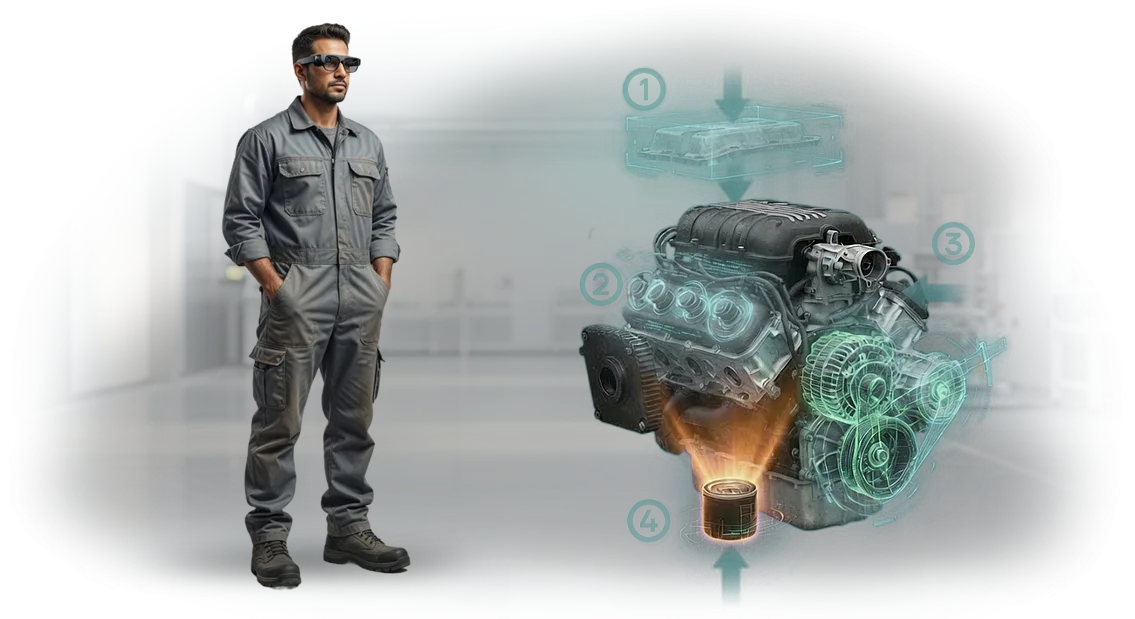
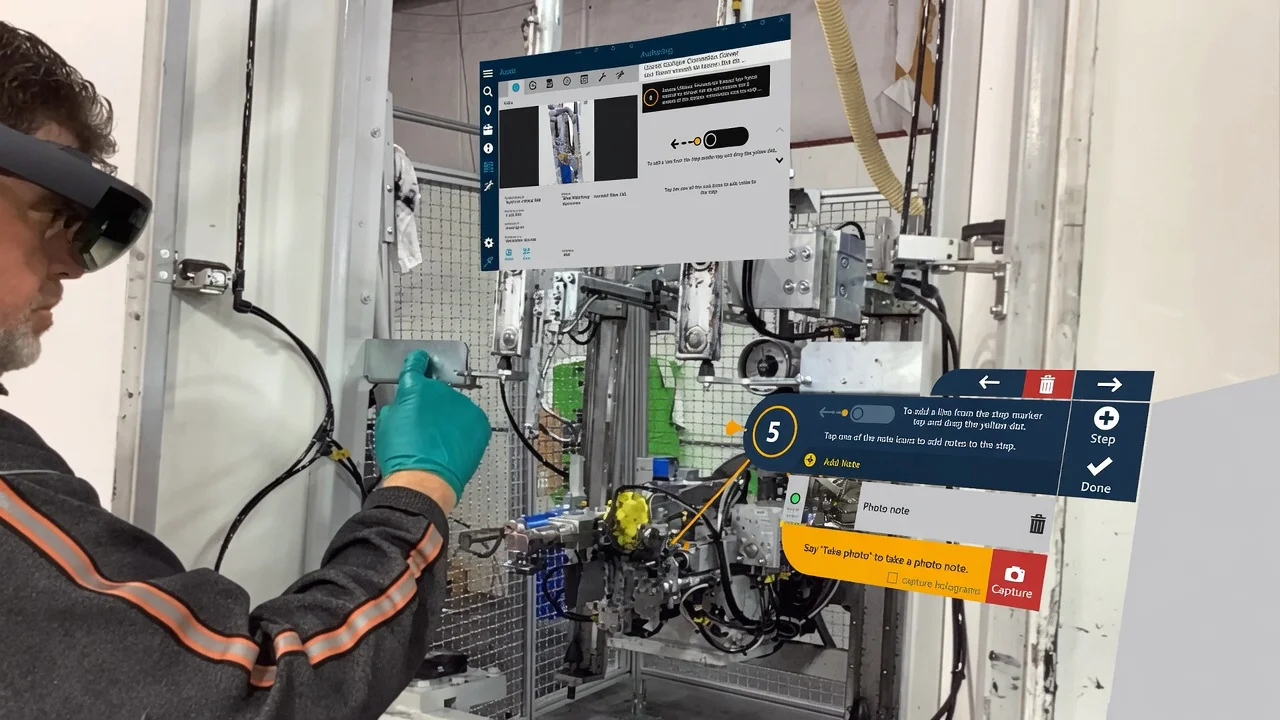
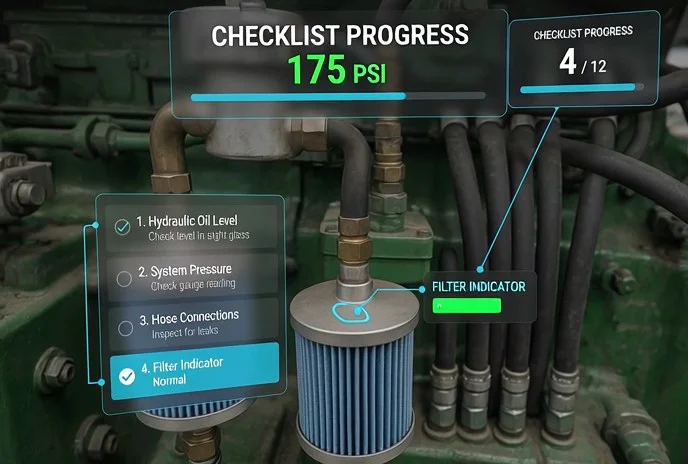
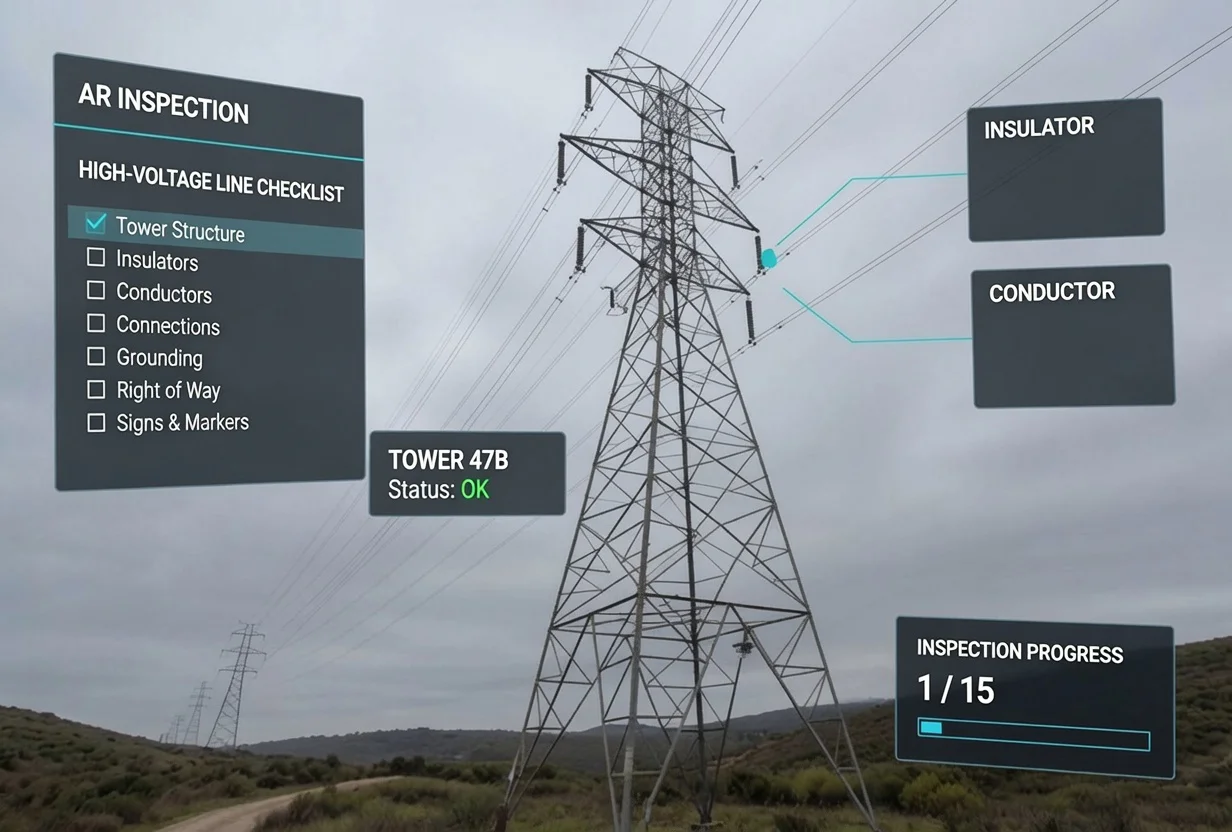
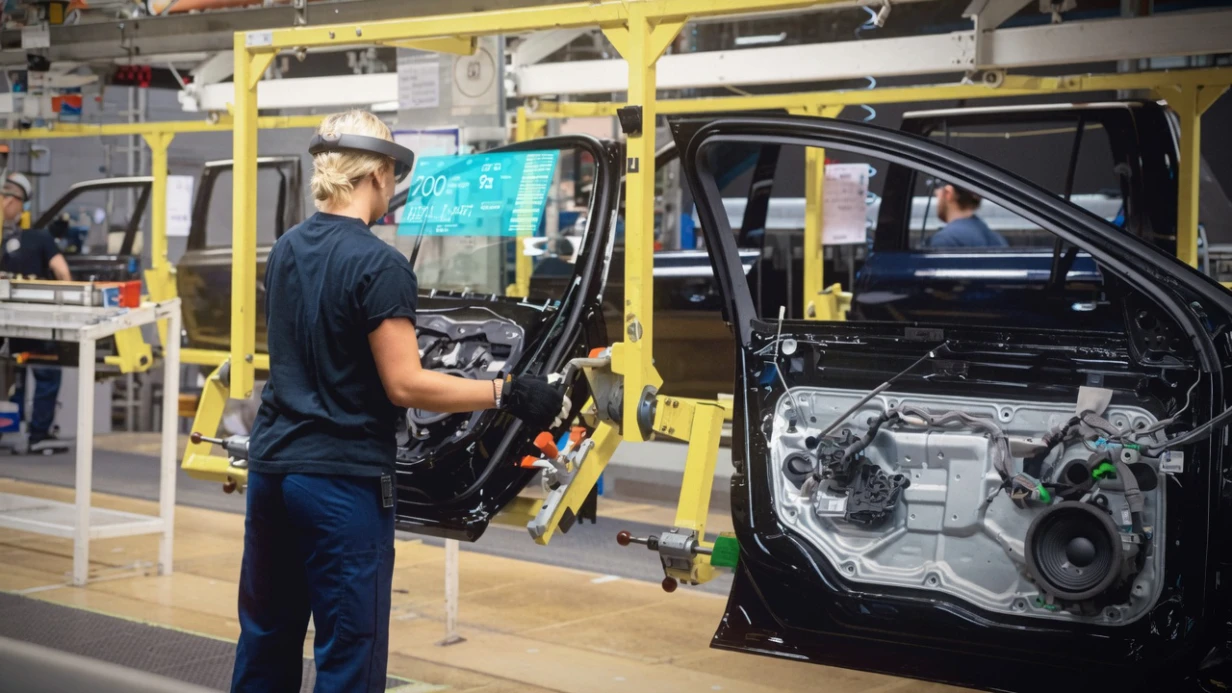
AR smart glasses change this approach: digital instructions are projected directly onto the equipment, and the employee sees prompts without taking their hands off the work.
The diagram, the sequence of actions, the acceptable parameters — everything appears in their field of view at the right moment. This eliminates searching for documentation and reduces the number of errors caused by the human factor.
As a result, equipment downtime is reduced several times over, and the share of defects during repairs drops. A technician does the job quickly and confidently, even when encountering a machine for the first time.
For the business, this means fewer losses, a predictable production schedule, and peace of mind about work quality.
What You Get from Digital Instructions in Manufacturing
Digital instructions on the production floor solve problems that cost more than any equipment: training newcomers takes weeks, operator errors lead to defects and downtime, and process control depends on the human factor.
AR instructions in smart glasses turn an experienced mentor into a digital assistant that is always next to the employee. A newcomer sees step-by-step prompts directly on the equipment and performs the operation correctly the first time — not from memory or a paper diagram.
The main benefit is the speed of staff training. Instead of long courses and working alongside a mentor, the employee gets clear prompts at the moment of performing the task: which button to press, which assembly to tighten, in what order to act.
Time-to-competence is reduced several times over, and staff turnover stops being a disaster — a new person reaches working rhythm in days, not months.
The second benefit is fewer errors and defects. The system highlights the correct sequence of operations and warns about critical steps, so the likelihood of skipping or mixing up an action drops dramatically.
This directly affects product quality and the amount of rework: fewer defects means lower costs for materials and reprocessing.
The third benefit is process control for the manager. You see which operations are being performed, how long each one takes, where delays occur, and which employees are struggling.
This is not surveillance but a management tool: you can spot a weak point in advance, redistribute the workload, and train staff precisely rather than "just in case."
Finally, time savings are the most measurable benefit. Employees stop searching for information in manuals, calling technologists, and redoing work.
Every minute saved on an operation adds up to hours of production time every day — and therefore to increased output without additional staffing costs. You get not just a technology, but a tool that pays for itself through the daily work of your own team.
Instruction Formats for Different Types of Equipment
Every enterprise faces the same challenge: an employee must quickly understand unfamiliar equipment and do everything right the first time. There is no universal instruction here — a lathe, a packaging line, and a diagnostic bench require different training approaches. That is why we develop formats for a specific type of machinery and the skill level of the staff.
For some, a short step-by-step card on the smart glasses screen is enough; for others, a fully interactive scenario with control over every action is needed. Below are the main formats you can order and the situations where each one delivers maximum value.
| Format | For whom | What it gives the client |
|---|---|---|
| Step-by-step cards | Operators performing standard tasks | Fast on-the-job learning, fewer errors |
| Interactive scenarios | Complex equipment, rare or emergency situations | Employee performs actions with prompts; the system checks each step |
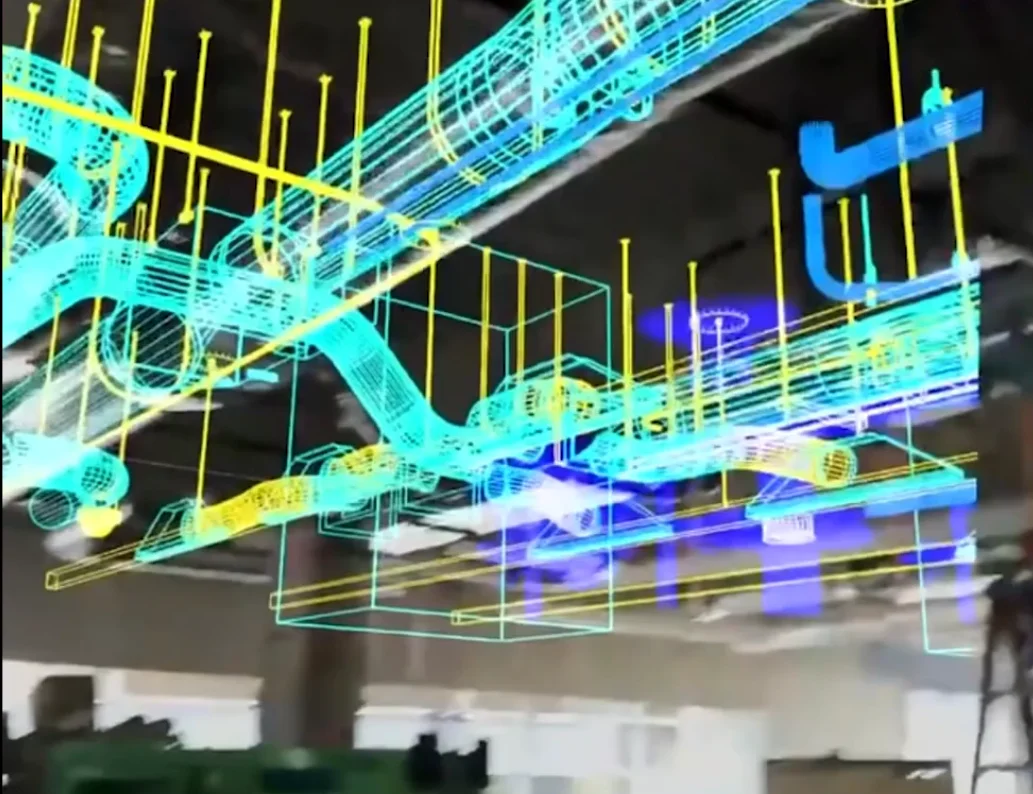
| Overlays with part highlighting | Service engineers, repair crews | Precise prompts directly on equipment components, quick troubleshooting |
| Virtual instruction | New employees before being allowed at the machine | Safe training without the risk of breakage or injury |
We do not choose a format based on "the more complex, the better," but on the end goal: do you need fast onboarding or zero defects on the production line? Our engineers adapt any scenario to a specific machine — from parameter setup to the full maintenance cycle.
Stages of Developing Instructions for Your Workshop
We understand that any implementation in a workshop raises questions: will it stop production, how long will it take, who will be responsible for the result. That is why we have built a transparent path of clear stages — from the brief to launch and support. You always see what stage the project is at and what you get at the output.
- Creation brief — we study your equipment, procedures, and typical employee errors. We define the goals: reduce training time, lower defects, speed up diagnostics.
- Content approval — we prepare the instruction scenario: step-by-step actions, checkpoints, and prompts for the operator. You approve the logic and texts before development starts — no surprises at the finish line.
- Prototype on your equipment — we show how the instruction looks through smart glasses in real workshop conditions. We gather feedback from supervisors and make edits right away.
- Final version development — our engineers build the instruction and test it under different lighting conditions and viewing angles. You get a stable working solution, not a "rough" mockup.
- Production implementation — we set up the smart glasses and train your employees. The instruction is embedded into daily processes, not sitting in a file.
- Support and updates — has the procedure changed or has a new operation been added? We update the content and stay in touch after launch.
Thanks to this approach, implementation takes weeks, not months. You control every stage, understand what you are paying for, and get a clear system that delivers results immediately: faster newcomer training, fewer errors, and less downtime. All risks are removed at early stages — before the solution reaches the workshop floor.
Delivery Package: From Scenarios to Operator Training
We take on the entire cycle of creating AR instructions — from analyzing production tasks to commissioning. You get a ready-made solution that operators can use on the day of launch, without needing to understand technical details.
The delivery package includes:
- Instruction scenarios based on your procedures. We rely on the real operations of your production: we record the sequence of steps, control points, and typical errors.
- Interactive AR models and visualizations. Each equipment component is shown in detail, with prompts and animation — the operator sees what to do and where, rather than reading abstract bullet points.
- Integration with your systems. We connect instructions to your accounting system or knowledge base: data on completed operations flows back automatically, without manual entry.
- Setup and calibration of equipment for your device fleet. We adapt the interface to the specific smart glasses and tablets your employees already use.
- Operator and supervisor training. We conduct hands-on sessions at your site or remotely: employees learn gestures, voice control, and the workflow immediately after installation.
- Clear documentation and support. We provide administrator guides, operator quick-reference cards, and a content update procedure. Our support team responds within one business day.
As a result, you get not just a set of files, but a working tool: the average training time for new employees decreases, and the number of errors during operations drops.
We also support the project after launch — updating scenarios when procedures change and expanding the package for new tasks.
Case Study: A Plant Reduced Equipment Changeover by 30%
An Instrument-Building Plant — a major manufacturer of packaging lines — came to us.
Changeover of each line took more than two hours, and when switching formats, operators flipped through paper instructions: looking for the right page, getting distracted, making mistakes in the sequence. This meant equipment downtime and defects in trial batches.
We developed AR instructions for smart glasses: step-by-step prompts right in the operator's field of view, highlighting of the needed components, and automatic verification of each step.
Paper disappeared from the process — a new employee works without a mentor, an experienced one does not lose focus, and the result no longer depends on human memory.
After the first months of operation, the plant measured the effect: changeover time was reduced by 30% — from two hours to one and a half, defects on the trial batch fell by almost a quarter, and line downtime dropped by half.
The customer ordered instructions for three more workshops and included the AR format in the standard training program for trainees.
According to the customer's calculations, savings on just one line represented a significant annual figure, measured after an audit — through reduced downtime, lower losses from defects, and faster ramp-up of new operators to full speed.
This is exactly the kind of result we consider the norm: every case we deliver is built on measurable metrics and ends with a repeat order.
Frequently Asked Questions About Implementing Digital Instructions
Implementing digital instructions on smart glasses raises similar questions among managers: will processes have to change, will the equipment fail at the worst possible moment, will employees need to be retrained.
We answer these concerns briefly and to the point — the way we would explain it to a plant director or a workshop manager.
Is it difficult to implement AR instructions in an existing production facility?
No, this is not a replacement for your production system but an addition to it. We integrate AR instructions in parallel with core processes: first on one site or with one team, then we scale.
Implementation takes from a few weeks to a couple of months, depending on the number of operations, and production continues running normally the entire time.
Our engineers handle the setup for your equipment and integration with existing documentation. You do not need to hire a separate IT department — just assign a technical specialist to coordinate the details.
Will the instruction equipment break down?
We use professional industrial smart glasses designed for workshop environments: they are protected against dust, moisture, and impacts. This is not fragile consumer electronics but a tool that passes vibration and temperature fluctuation tests.
We also configure backup scenarios: if the glasses run out of battery or fail, the employee can open the same instructions from a tablet or computer. Production never stops for even a minute.
Will staff need retraining?
Learning to use the glasses is not required — the interface is designed so the employee simply looks at a part and sees prompts. It takes 15–20 minutes to get comfortable, not days.
We conduct a short briefing for each shift and provide quick-reference cards; after that, staff work independently.
What is more, AR instructions reduce the training time for new employees: they reach planned productivity faster because they see every step right before their eyes instead of searching through paper procedures.
What are the system and equipment requirements?
You will not need to replace your machine fleet or purchase servers. Instructions work on any industrial smart glasses we select based on your tasks and budget. To get started, all you need is stable Wi-Fi in the workshop or an internal network — that is enough.
We design the interface around your operations and host the content on a secure server. The entire package is delivered turnkey, including licenses and technical support.
How do we update instructions when the technology changes?
Updates happen centrally and take minutes. You make changes to the digital document — and the new version immediately appears on all employees' glasses. No need to reprint paper procedures and distribute them across the workshop.
This is especially important when technology changes frequently: employees always see the current sequence of actions, and the risk of errors caused by outdated documentation disappears.
Order Instruction Development for Your Production Facility
Every minute of equipment downtime costs money, and searching for the right page of a manual among hundreds of documents is a waste of time and a risk of error. We create AR instructions that appear right before the specialist's eyes when they look at the machine.
This reduces training time, lowers the number of errors, and speeds up the onboarding of new employees.
Leave a request for a consultation — we will analyze your task and offer a solution within your budget. We work with production facilities of different scales: from a single workshop to a network of plants.
Our engineers have already created AR instructions for dozens of projects in mechanical engineering, the oil and gas industry, and logistics.
What our work includes:
- An audit of your site and selection of operations where AR instructions will deliver the greatest effect.
- A prototype of the instruction on your equipment — you see how it works before full development starts.
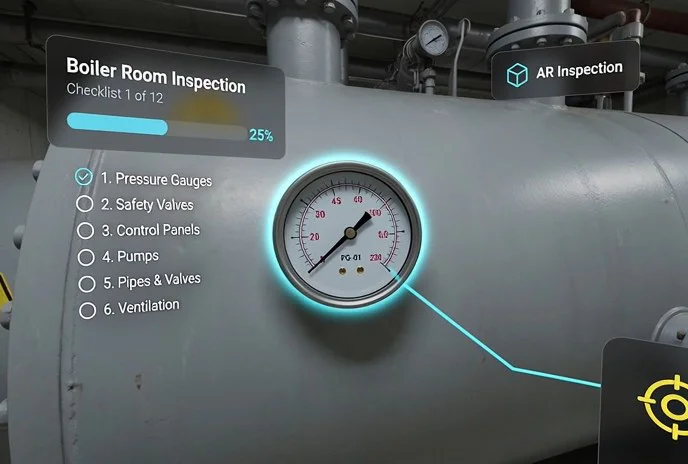
- Creation of step-by-step scenarios with prompts, diagrams, and action verification.
- Adaptation for the smart glasses and tablets already used in production.
- Implementation with training for your specialists and technical support after launch.
We handle all stages: from the brief to on-site support for your employees. All you have to do is accept the finished result and evaluate its economics — reduced operation time and fewer defects.
Leave a request, and we will come back with solution options within one day. Tell us about your task — we will advise where it is best to start.
How to Choose Smart Glasses for Industrial Tasks?
Choosing smart glasses starts not with the model, but with the task you want to solve.
In industry, the same glasses do not suit everything: one thing is a step-by-step instruction right on the assembly line, another is a remote expert consultation during repairs, and a third is quality control in a warehouse.
There is a class of devices for each scenario, and properly selected equipment pays for itself within the first months.
The main criteria are working conditions and employee comfort. What matters is how the glasses behave in the workshop: under bright light, dust, or vibration, how long the battery lasts during a shift, and how easy they are to control by voice or gesture without removing gloves.
Compatibility with your infrastructure is just as important — the glasses must "get along" with your accounting system, reference guide, or remote support application, otherwise the result will be worse than expected.
The budget should be calculated not from the device price tag, but from the total cost of implementation. This includes licenses, instruction preparation, operator training, and technical support.
An expensive model that is not adapted to your processes will bring less benefit than a more modest solution that is tailored to a specific operation.
We help you choose glasses for your tasks and budget: we run a pilot at your production site, test devices in real conditions, and prepare a final recommendation. This way you get a solution that actually works, paying for results rather than for a well-known name. Let us find the optimal option for you — it will save time and protect you from costly mistakes.