

Smart AR Glasses Rokid Max: How to Reduce Losses from Personnel Errors?
Personnel errors in manufacturing are not just a human factor but direct financial losses: defects, rework, equipment downtime, accidents, and even injuries.
A newcomer takes weeks to master a complex unit, an experienced worker in a hurry skips a step, and a paper instruction won't warn them in time. Each such failure adds to the cost of products, slows down shipments, and undermines customer confidence in your reliability.
Losses consist of material costs, rework wages, machine downtime, and reputational risks—the annual total can be substantial, with the exact amount calculated after an audit.
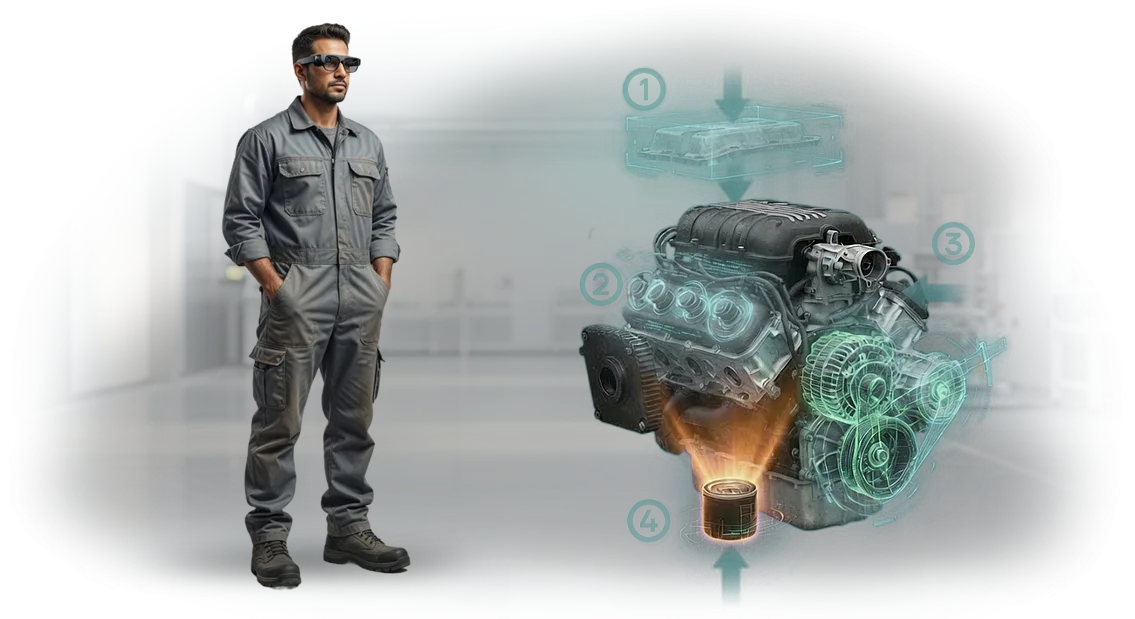
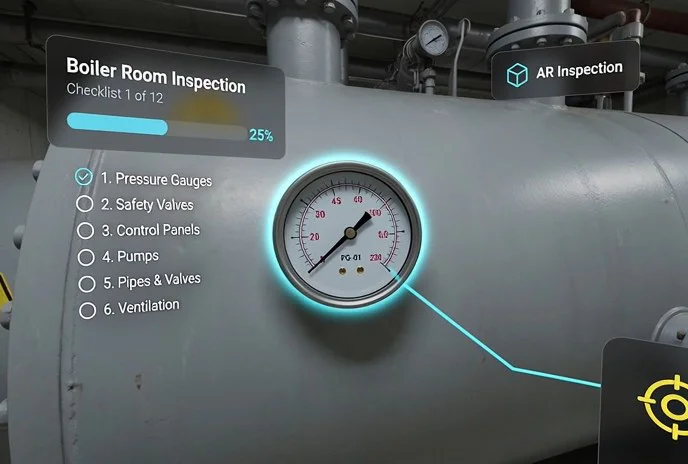
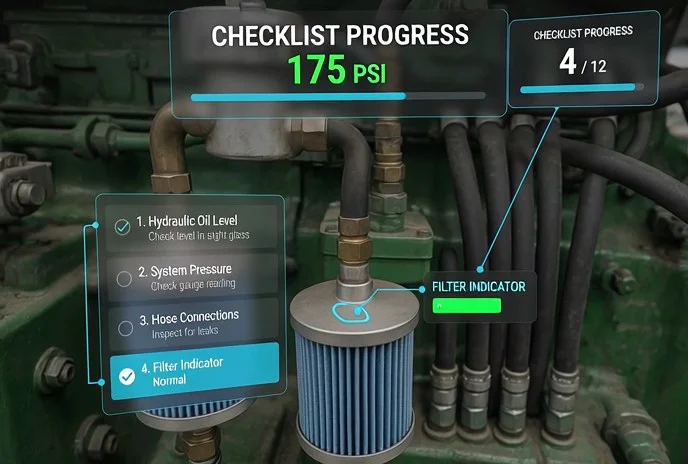
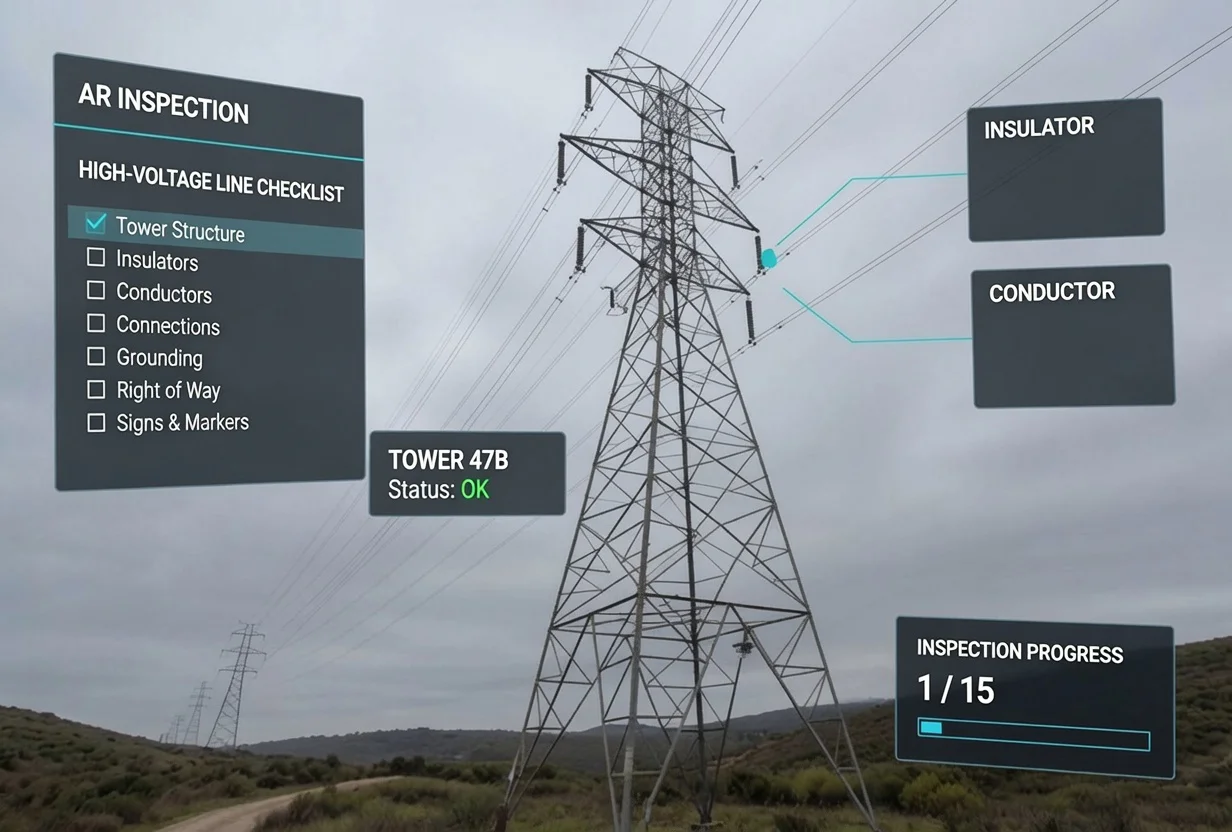
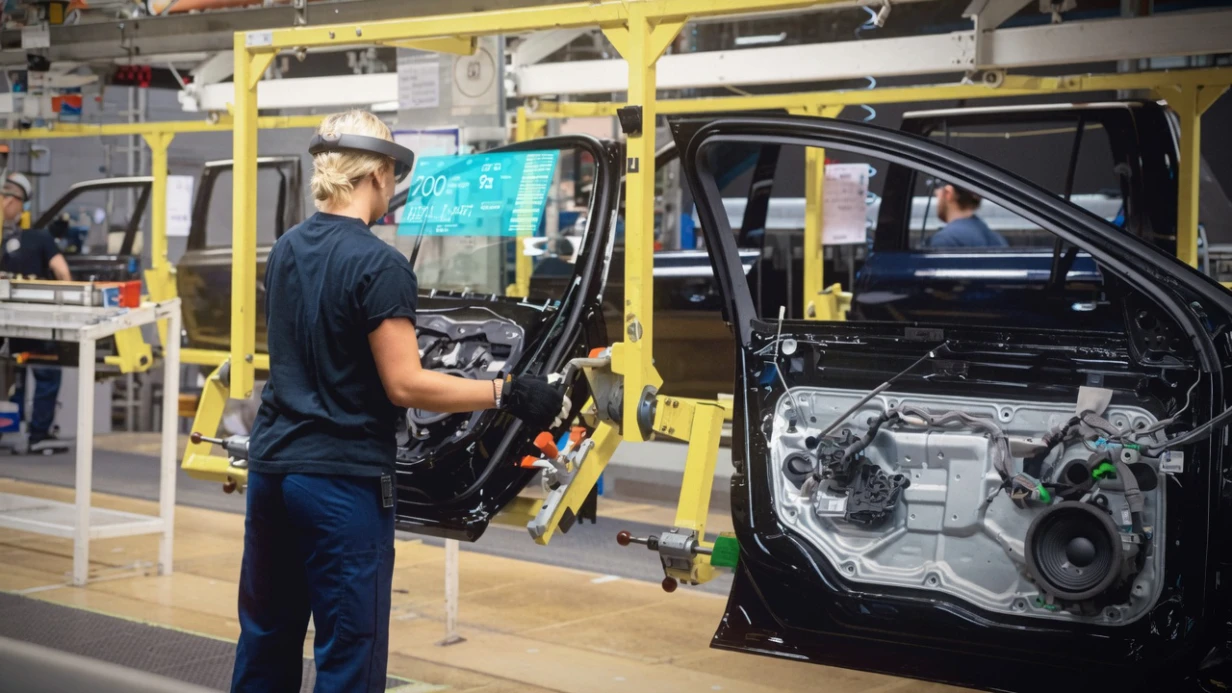
Industrial AR instructions are designed exactly for these situations. Smart glasses for factories—such as Rokid Max—display step-by-step prompts directly in the employee's field of view, overlaid on real equipment.
The worker sees what to do and in what order, without being distracted by a tablet or reference manual, and doesn't call a supervisor for every operation. Errors are reduced many times over, newcomer training accelerates from weeks to days, and production losses stop growing.
We develop such instructions for your specific technological processes and implement them without stopping the shop floor or changing equipment. We support you at every stage—from operations analysis to staff training. This addresses a manager's key request: fewer errors, stable quality, and predictable cost.
Five Benefits You Will Get in the First Month of Use
Implementing AR instructions on Rokid Max smart glasses pays off within the first month. After just 30 days, you see measurable changes in operations: training accelerates, errors decrease, and specialists' time is freed up for real tasks. Here are five benefits you will get almost immediately.
Rapid Onboarding of New Employees
Instead of a week of theory and a mentor, a newcomer gets step-by-step prompts directly on the equipment. They immediately perform operations with minimal help, and time-to-competence is reduced by two to three times.
Fewer Defects and Errors
The current sequence of actions is always in front of the employee, so they don't rely on memory or "fill in" the process themselves. The number of errors and defects drops by 20–30% in the first month alone.
Time Savings on Information Search
Procedures and manuals no longer need to be searched for in folders, email, or chats. The required instruction appears before the worker's eyes in seconds, and each operator saves up to an hour of working time per day.
Faster Repairs and Maintenance
In an abnormal situation, the service team sees the cause of the fault and the sequence for resolving it directly on the unit—without phone calls or waiting for an expert. Average repair time is reduced by a third, and equipment downtime is cut in half.
Standardization and Quality Control
All employees work according to unified, proven scenarios, so the result does not depend on the operator's experience. A manager can see at which stages prompts were used and can more easily monitor compliance with the technology.
Collaboration Formats: We Will Find a Solution for Your Budget
This format is useful for those who already understand the value of AR instructions but want to choose the right entry point. To make it easier, we have divided collaboration into three formats—from a quick hypothesis test to full deployment across all production areas.
Below is a summary table to help you navigate by task and result.
| Format | For Whom | What the Client Gets |
|---|---|---|
| Pilot project | Managers who want to evaluate the effect on one area or one piece of equipment | Quick results in 2–4 weeks, clear metrics for management, and a basis for scaling |
| Turnkey development | Companies that need to convert their entire equipment fleet to AR instructions | A unified training standard, reduced downtime, and full replacement of paper procedures |
| Support and development | Those who already use AR and plan to update instructions during modernization | Up-to-date content without involving your team and fast adaptation to new models |
In all formats, we stay in touch after launch and help integrate the solution into daily processes. To start, you don't need to buy equipment—we will choose compatible glasses for your budget, and when scaling up, we will help you justify the purchase to your CFO.
If you are unsure where to start, start with a pilot. Its cost is low compared to the annual training and downtime budget, yet it delivers measurable results that speak for themselves. And based on the numbers, you can easily decide whether to scale the solution to all workshops.
Project Stages: From Brief to Launch at Your Plant
We work according to a transparent framework: you always know what stage the project is at, what is ready, and when the launch will happen.
The process has been refined across dozens of implementations, so we state timelines before we start and fix them in the contract—no hidden stages or unexpected changes.
- Brief and task audit. We gather requirements: which operations need to be covered, who will use the instructions, and which scenarios matter. We record the result criteria and production constraints.
- Plan and estimate. We calculate timelines, team composition, and cost. You receive a clear plan with milestones—so you know when the first versions will be ready and when the plant launch will occur.
- Interface prototype. We show how an instruction looks in the smart glasses: step sequence, prompts, control buttons. At this stage, changes are easy to make before main development begins.
- Content creation. Our engineers prepare 3D equipment models, animations, and texts. You approve every element—nothing appears in the final version without your confirmation.
- Testing on equipment. We test the instructions on the shop floor: recognition stability, usability in different lighting conditions, and accuracy on real units. We eliminate all issues before the system reaches employees.
- Launch and training. We deploy the solution on your equipment, configure the glasses, and train the staff. We hand over documentation and support contacts.
- Support. We stay in touch after launch: we update instructions when equipment changes, add new scenarios, and help expand the system to other areas.
Thanks to this sequence, you get a working tool within the agreed timeframes and without production downtime. Each stage ends with a clear result—you always see progress and control the budget.
What's Included: A Complete Kit for Your Production
We deliver not just software but a working solution your employees will start using from day one. The kit includes everything needed for AR instructions to replace paper procedures and speed up equipment maintenance.
This means a launch within a few weeks and a clear system that works in your production environment.
- Ready-to-use AR application for Rokid Max smart glasses: the employee sees step-by-step prompts directly on the equipment, without flipping through paper procedures or being distracted from work.
- Library of instructions for all operations: startup, setup, repair, maintenance—each with 3D animation, text, and checkpoints to prevent errors.
- Administrator panel: you update procedures yourself, add new scenarios, and publish them to the whole team immediately—without involving developers.
- Training for your engineers and technologists: we conduct hands-on sessions on real units and review typical situations so your team works confidently in AR every day.
- Support and warranty: our engineers are available, update compatibility in a timely manner, and refine instructions if equipment changes on the production floor.
- Transfer of your paper procedures into AR: we preserve the accumulated experience of repair technicians and setup specialists and make it available to any employee within seconds.
- Usage analytics: you see which instructions are in demand, where employees get stuck, and improve processes based on real data.
Case Study: Assembly Time Reduced by 30% in Three Months
A major hydraulic equipment manufacturer came to us with a pain point: assembling complex units took up to 40% of working time, and errors caused by paper instructions regularly led to rework.
Training new employees took weeks—and during all that time, a supervisor had to step away from their own work to explain the sequence of operations.
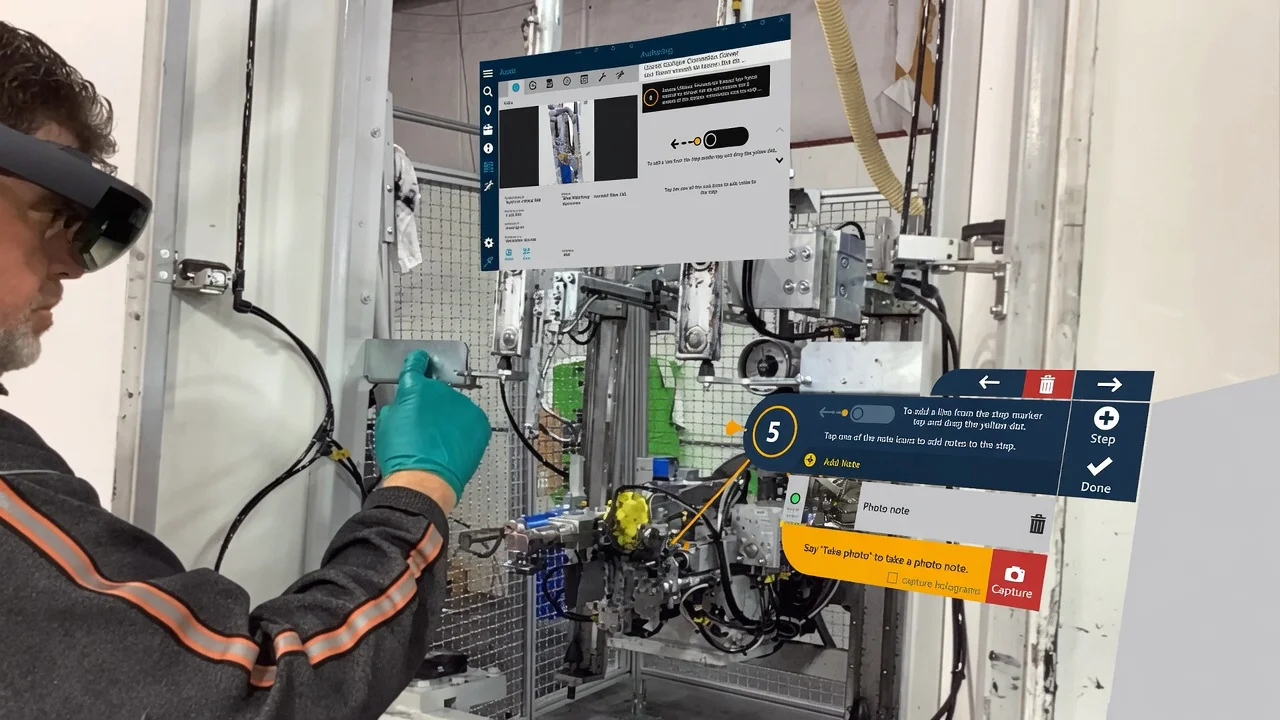
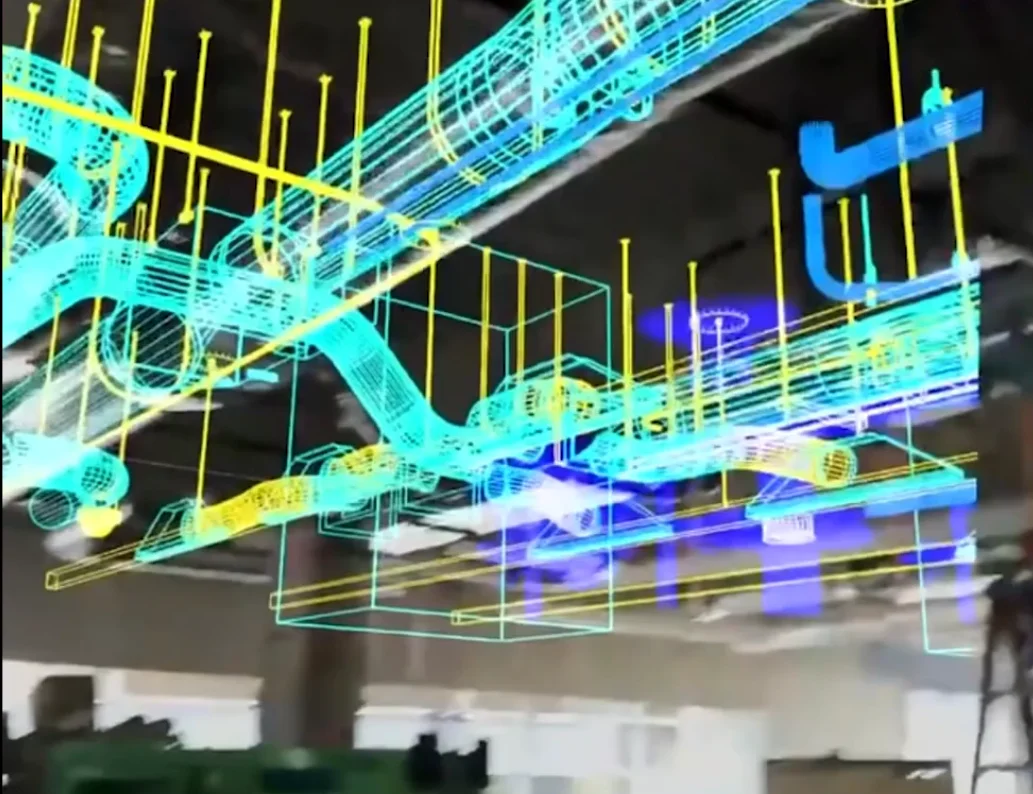
We proposed replacing paper with augmented reality and developed step-by-step AR instructions for Rokid Max smart glasses. The operator sees a 3D diagram of the unit directly on the real equipment—no need to reach for a tablet or printed manuals.
Our engineers converted the technical documentation into an interactive format: each step is highlighted, and if an incorrect action is taken, the system instantly shows the correct sequence.
Results After Three Months
The average assembly time for a typical unit dropped by 30%—from 4.5 hours to just over 3 hours. The number of errors caused by incorrect operation sequences fell by half, and equipment downtime was cut by nearly a quarter.
Training new operators became twice as fast: after two days of working with the glasses, they met the standard that previously took a whole week.
The plant's management quickly recognized the economic effect and expanded the project to neighboring workshops. We continue to support the AR system: we update instructions when designs change, add new units, and have already received a repeat order for other equipment lines.
How to Choose the Right Format for Your Task Without Overpaying?
Many people ask how to choose an AR instruction format without overpaying. We answer directly: there is no "best" format—there is a format that fits your specific task.
We choose a solution based on the number of operators, equipment complexity, and how often instructions are updated, not on "maximum features".
The first criterion is scale and how critical errors are. If a line has dozens of employees and every error causes downtime, you need full visualization of units and step-by-step control.
If the task is to introduce a newcomer to basic operations, a lightweight version with on-screen prompts is enough: the result is the same, but the budget required is several times smaller.
The second criterion is how often instructions change. We go through your documentation and see what mechanics actually use: we transfer some parts into AR as-is and simplify others.
We work with professional equipment, including Rokid Max smart glasses—they are convenient on the shop floor and require no complex setup.
The third point is budget. We honestly show where you can save: for example, start with a pilot area and scale up after the first evaluation of the effect.
This way, you pay not for "technology for technology's sake" but for a measurable result: less training time, fewer errors, and faster employee readiness for shifts.
That is why at the first brief we ask about the process, not the technology. As a result, you get a format that solves your task and fits the project budget. Leave a request—we will send you the structure and an estimate of timelines and cost.
Addressing Common Doubts Before Ordering
Before ordering AR instructions, managers tend to have the same doubts: reliability, implementation complexity, timelines, and budget. We answer them based on dozens of projects for manufacturing companies.
We work with professional AR smart glasses Rokid Max, which operate reliably in workshops. Below are answers to the main questions clients ask.
How reliable is this?
The hardware and software are tested under real-world conditions: dust, vibration, bright light. We provide a warranty on the solution's operation and support it after launch.
Is it difficult to implement?
There is no need to replace existing equipment. The instructions are integrated into current procedures. We configure everything for your processes and train employees in two or three short sessions.
What are the timelines?
A typical project takes two to four weeks after the brief. We create a plan with milestones so you can see progress.
How much does it cost?
The price is calculated based on your tasks; we state the final amount before the project starts. Payment is made in stages. The project pays off: reduced training time and errors deliver annual savings, with the exact amount calculated after an audit.
Order Development and Get a Ready Solution in 4 Weeks
Take the first step: submit a request for a free consultation—an engineer will visit your site or hold an online meeting, review your process, and show where AR will deliver a quick solution.
We work with manufacturing companies across the country, so all you need to get started is your interest and available equipment.
After ordering, you receive a complete turnkey solution. No surprises and no hidden stages—only what affects how quickly your employees work:
- Site diagnostics and selection of scenarios that will pay off first.
- Interface design mock-up tailored to your process and brand style.
- Completed AR instructions for 5–10 operations, verified on real equipment.
- Training material for employees and instruction for mentors.
- Deployment on worker glasses and configuration for your network.
- Post-launch support and refinements based on the first week of use.
You get a working tool, not an "experiment". Employees start using the instructions immediately, and you see the effect in reduced setup time and fewer errors.
Ready to discuss your task? You can order development through the contacts on this page or leave a request—we will call you back within one business day. We will lock in timelines, cost, and scope of work before we start, so you understand the expected result from day one.