

Smart glasses for maintenance: how to eliminate production downtime?
Every hour of production downtime means lost revenue, missed deadlines, and frayed nerves across the whole team. When equipment stops and the right specialist is not nearby, repairs turn into a fire drill: searching for instructions, calling colleagues, acting on guesswork.
Such situations eat up to 20% of the maintenance team's working time and are extremely costly per stoppage.
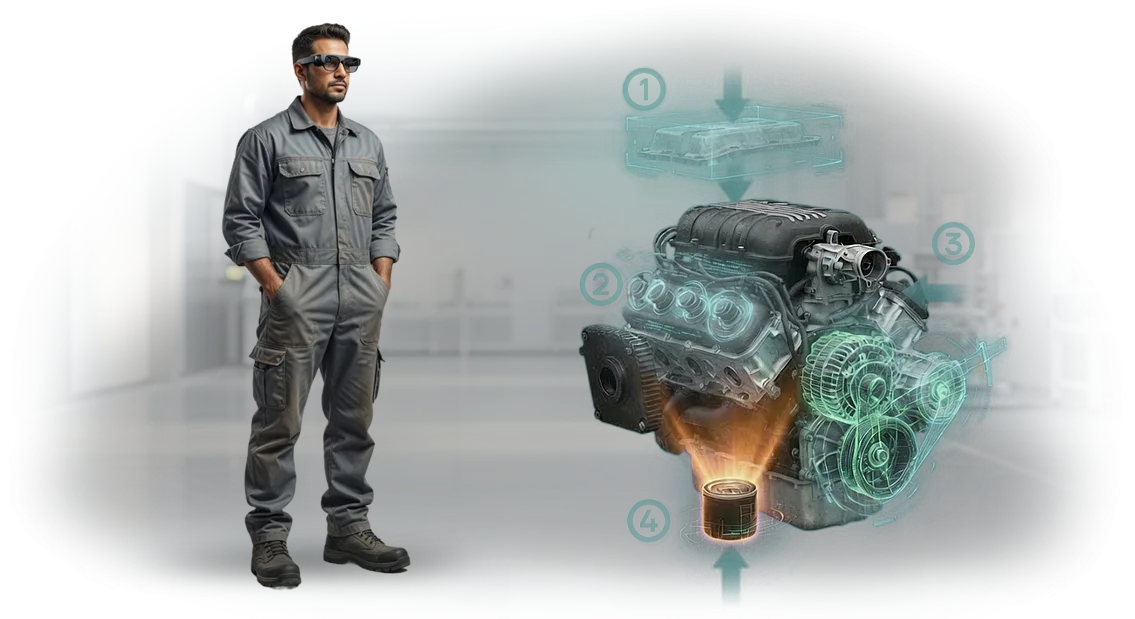
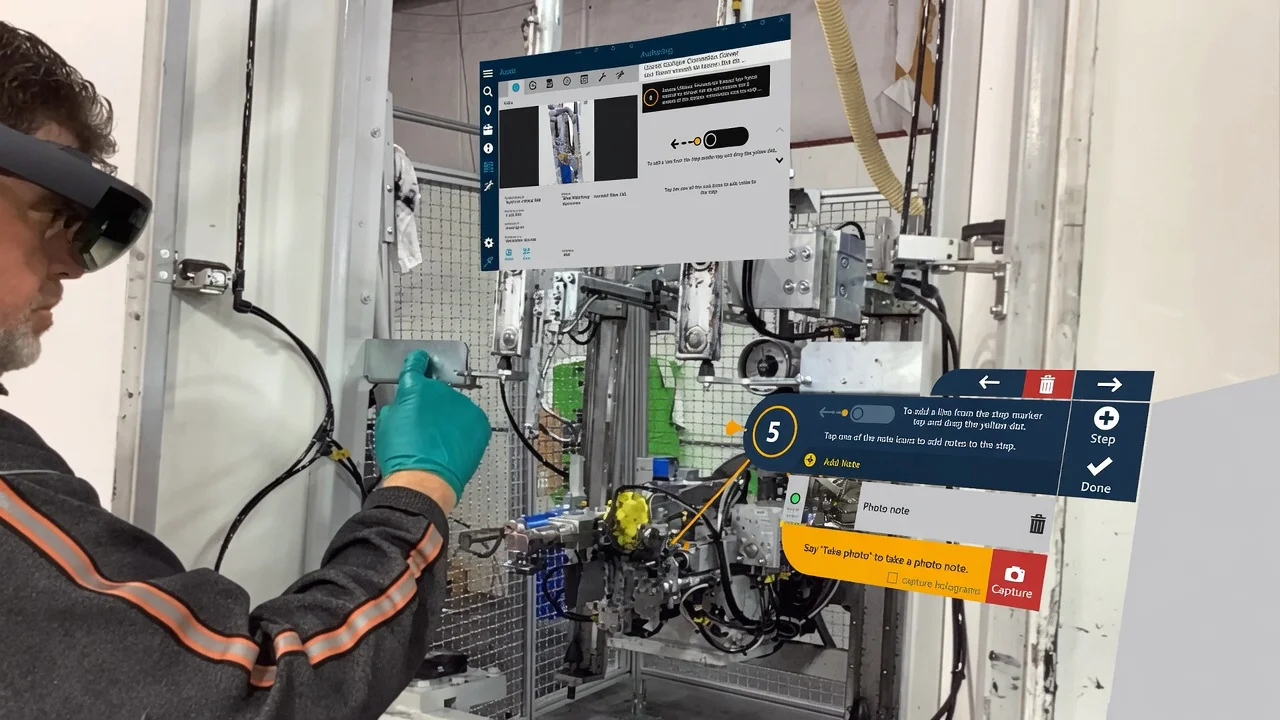
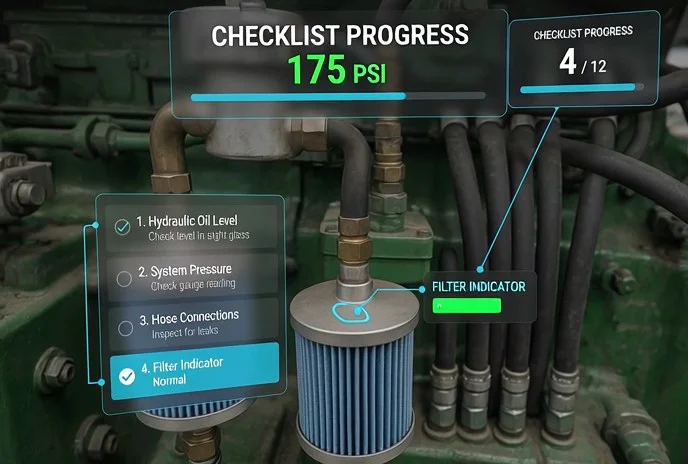
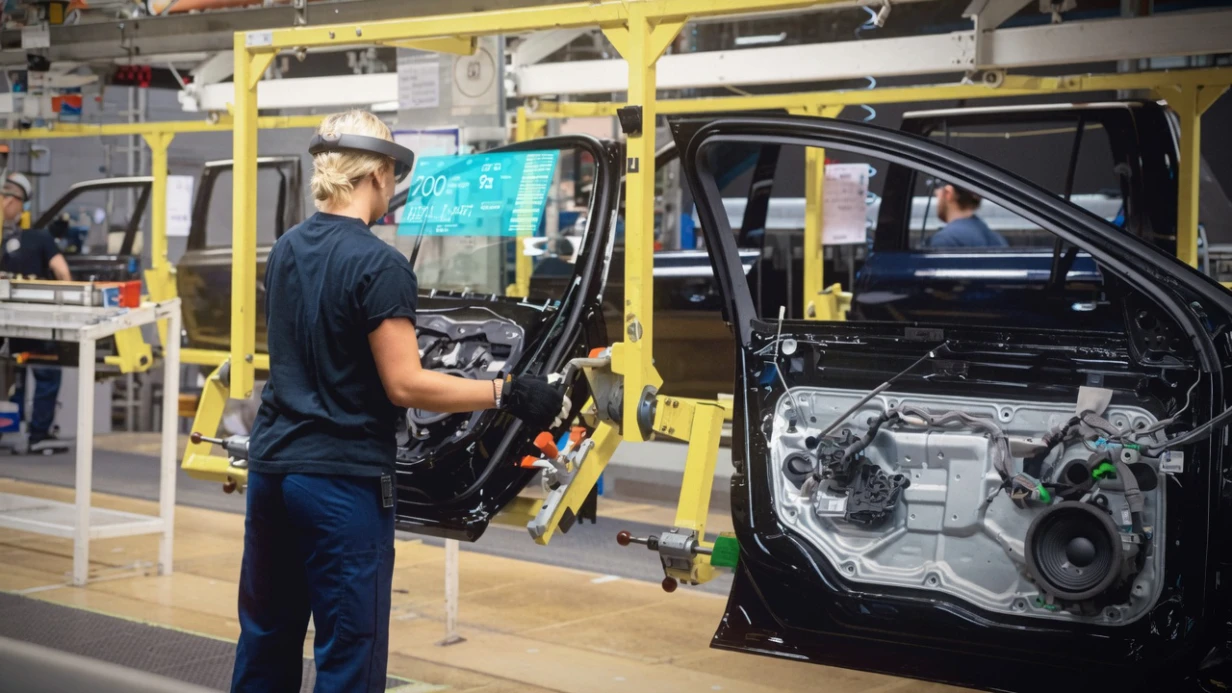
The solution — smart glasses for maintenance: the mechanic sees step-by-step AR instructions right on the machine — arrows, highlighting of the right components, and checkpoints. A remote engineer watches the same view and provides guidance as if present in person.
Repairs with smart glasses take two to three times less time, and the risk of mistakes from fatigue or inexperience virtually disappears.
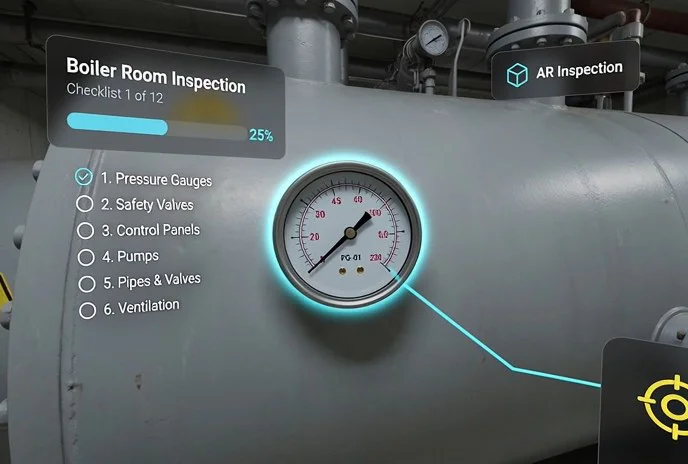
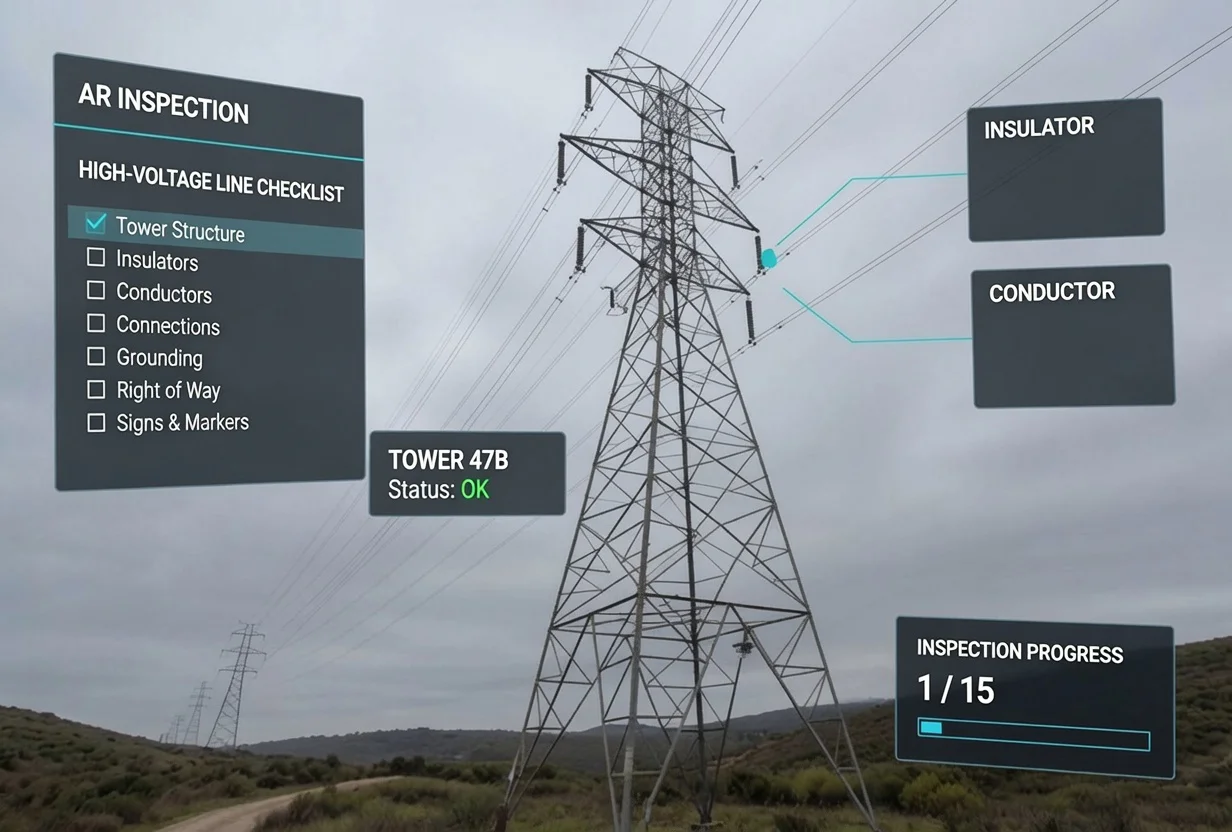
The technology also helps with planned work: equipment maintenance runs on digital checklists in augmented reality, with no step skipped. For a manager, this means predictable quality of work regardless of the shift, the employee's experience, or the complexity of the component.
Scheduled procedures are completed faster, unscheduled stoppages happen less often — equipment stays in service longer.
Another plus is the preservation of expertise. The experience of the best machine setters is turned into AR instructions for plants, so knowledge stays in the company even when people leave.
A beginner reaches a normal pace in days, not months, and doesn't require constant supervision. Gradually, the system accumulates a knowledge base across your entire equipment line.
Implementation doesn't restructure processes: we adapt scenarios to your machinery, deploy the system in a couple of weeks, and train the shift. From there — fewer stoppages, stable line utilization, and confidence that the service won't let you down at the most critical moment. The savings from avoided stoppages pay back the project within the first months of operation.
What you get: 5 key benefits from AR instructions
The key question during implementation is not "how does AR work" but what it will deliver to production. We have compiled 5 measurable benefits that customers receive after switching to AR instructions for maintenance smart glasses. Below is what we record in figures across implementations.
-
Reduced downtime. AR instructions running on HoloLens show every step right on the equipment. The technician doesn't flip through paper — they see arrows, diagrams, and hints in real time. The operation is completed 30% faster, and line downtime shrinks from hours to minutes.
-
Fewer errors. The system doesn't let a critical step be skipped and suggests the right tool. This reduces defects and repeat repairs — up to 40% fewer repeat requests.
-
Fast onboarding. A beginner with AR hints performs at the level of an experienced specialist from the first shift. Training time is reduced by 2-3 times, and a mentor is no longer needed for every operation.
-
Increased safety. The instructions remind about protective equipment, flag hazardous zones, and block risky actions. This reduces injuries and cuts losses from downtime and fines.
-
Training savings. AR instructions are rolled out instantly: update the content once, and all employees see the new version. No need to print procedures or run in-person training.
Implementation formats: from stationary stands to smart glasses
When instructions are stored in PDFs and on paper, an employee spends minutes searching for the right page, and the quality of the operation depends on the technician's memory. AR instructions change this: the hint appears right on the equipment, in the worker's field of view. The main question is which device to display it on.
Each format has its own role and its own economics: a stationary stand trains beginners without the risk of stopping the line, a tablet with AR supports the shop floor, and smart glasses for repair free up the specialist's hands.
| Format | For which tasks | Business value |
|---|---|---|
| Stationary stand | Training new employees, practicing standard operations | Fast onboarding, no risk of damaging equipment, skills verification before line access |
| Tablet with AR | Diagnostics, scheduled maintenance, on-site instructions | Faster information search, unified knowledge base, fewer maintenance errors |
| Smart glasses for repair | Complex repairs, hands-free work, remote support | Faster troubleshooting, less downtime, expertise without a specialist's site visit |
This separation prevents overpaying: a stand is enough for training line staff, while smart glasses pay off where an hour of downtime costs more than the device.
We match the format to your scenarios and budget rather than selling the "newest hardware" — which is why the solution delivers a measurable effect in a short time. We calculate the economics on your numbers, run a pilot at one site, and show the result before scaling.
Implementation process: 7 steps from brief to maintenance support
Implementing AR instructions should not be a black box with unexpected deadlines. We have built a transparent process of seven stages: at each stage, you see what you receive and where you can make changes.
Implementation steps
- Audit of equipment and tasks. We visit the site or work with your records to identify operations with frequent errors and downtime. The output is a prioritized list of scenarios for AR.
- Development of AR instructions. We create step-by-step scenarios with 3D hints and action verification. You receive a benchmark that replicates the best experience of your specialists.
- Approval on real equipment. We show the instruction in smart glasses, you check it on your machine, and approve the wording before the full version is released.
- Delivery and setup. We select suitable smart glasses and configure the interface and integrations. The hardware arrives ready to work.
- Employee training. We run short practical sessions: mechanics learn to work with the hints instead of retraining. The first tasks are performed under an instructor's supervision.
- Trial operation. We launch a pilot with one team, collect feedback, and refine the scenarios before full deployment.
- Post-launch support and maintenance. We update instructions when equipment changes, answer questions, and develop the system. You are not left alone with the technology.
This sequence allows AR to be launched quickly and without production downtime.
What's included in the delivery: a complete package for the maintenance department
You receive not just software but a ready-made kit for launching AR instructions in the maintenance department. Everything is configured, verified, and ready to work — the AR Operations Service is delivered as a single package.
The delivery includes:
-
Smart glasses application — the main tool that shows step-by-step instructions right on the equipment. The technician sees hints, diagrams, and animations without being distracted by paper or a tablet.
-
AR instruction library — ready-made scenarios for your equipment. We prepare from 10 to 100 operations for your machinery fleet, taking into account procedures and safety standards.
-
Admin panel for instructions — a simple web interface through which a manager updates instructions on their own: changing steps, adding photos and videos, adjusting texts. No programmers or lengthy approvals are needed.
-
Staff training — we conduct online sessions for technicians and engineers and also prepare in-house instructors. The customer quickly gets an independent team that works without our daily support.
-
Warranty and technical support — we support the project for the entire subscription period: updating the application for new eyewear models, answering questions, and helping expand the instruction library.
-
Documentation and access — an admin guide for the panel, work procedures for technicians, and access to updates and materials.
All of this is already included in the