

AR training for pickup points: how to eliminate staff errors
Training staff in manufacturing often comes down to reading regulations and occasional sessions with a mentor.
In real work, an employee is left one-on-one with complex equipment—and this is exactly where errors occur: a missed step, the wrong order of operations, incorrect setup.
Each such failure results in line downtime, batch defects, or a safety risk—and these are direct losses for the business.
Traditional instruction does not solve the problem because knowledge is quickly forgotten. After a course or lecture, only a small part remains in memory, and in practice the employee acts from memory rather than from the instruction.
While a mentor is nearby, there are fewer errors, but when a specialist is left alone, the cost of inaccuracy rises and there is no time for re-checking.
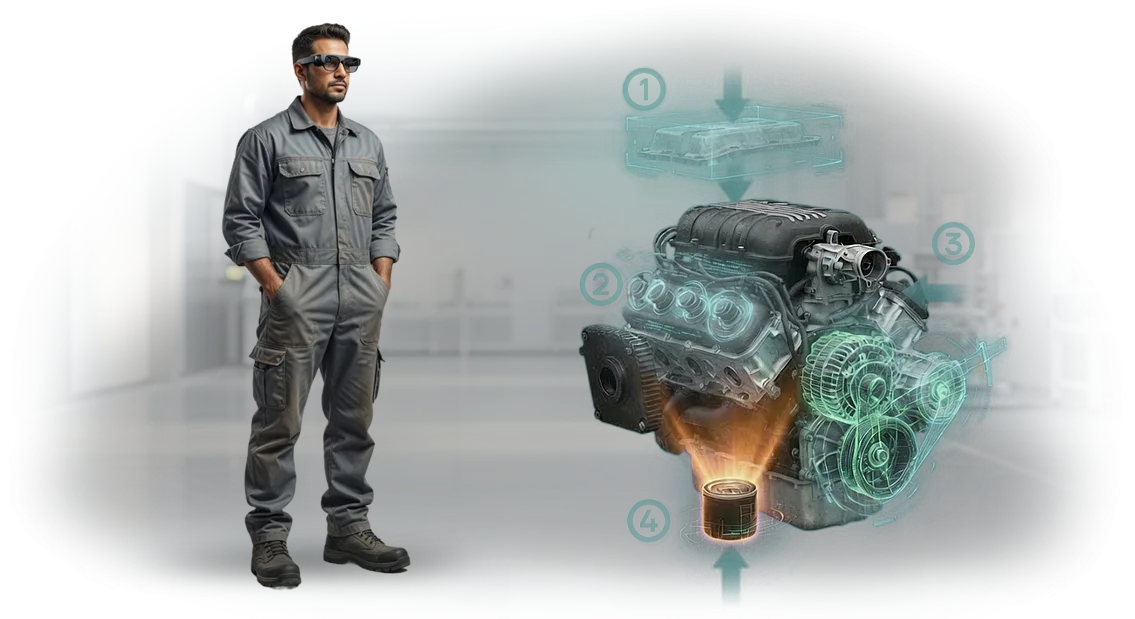
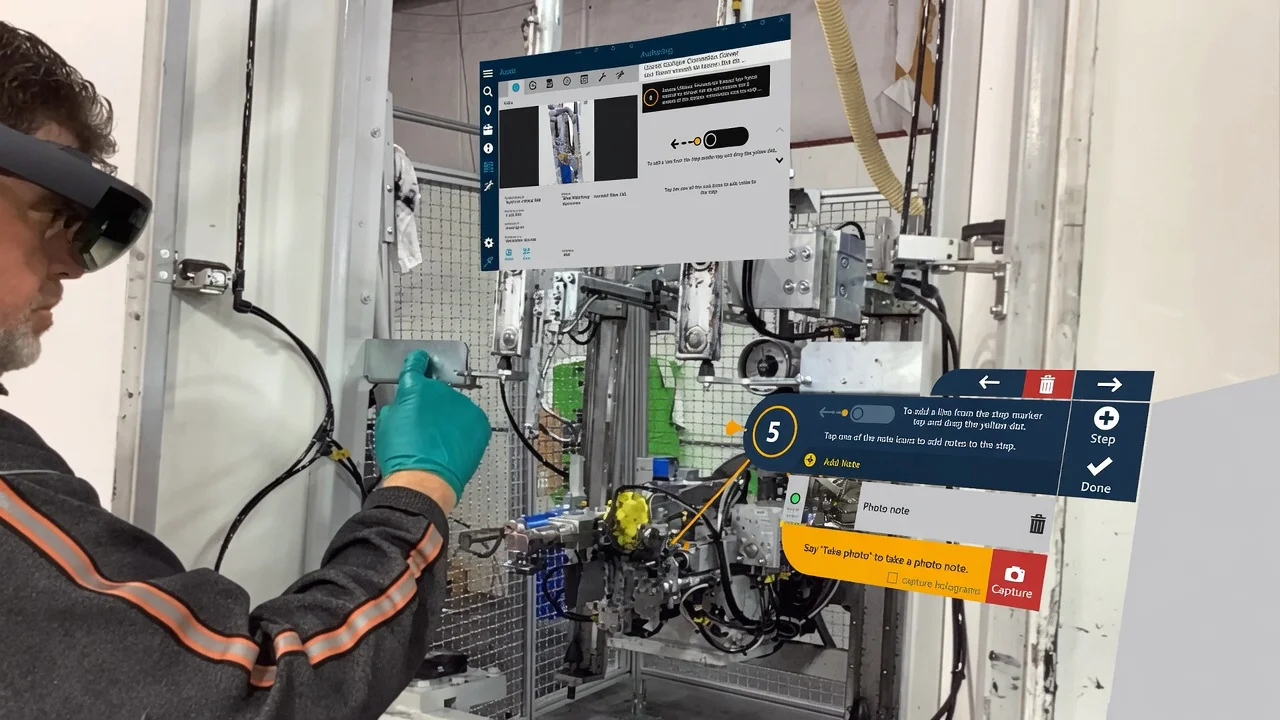
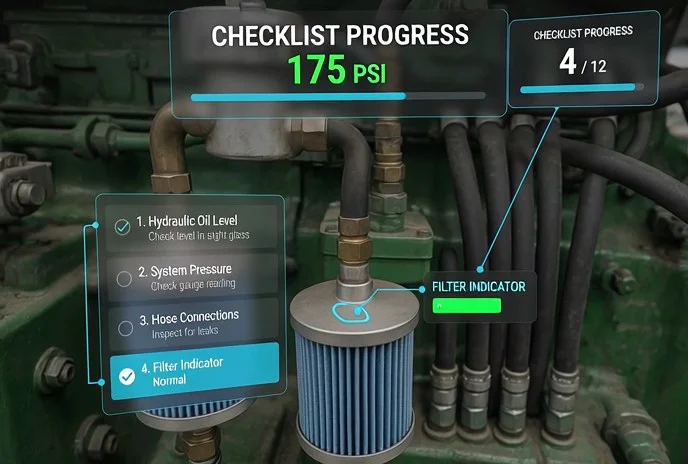
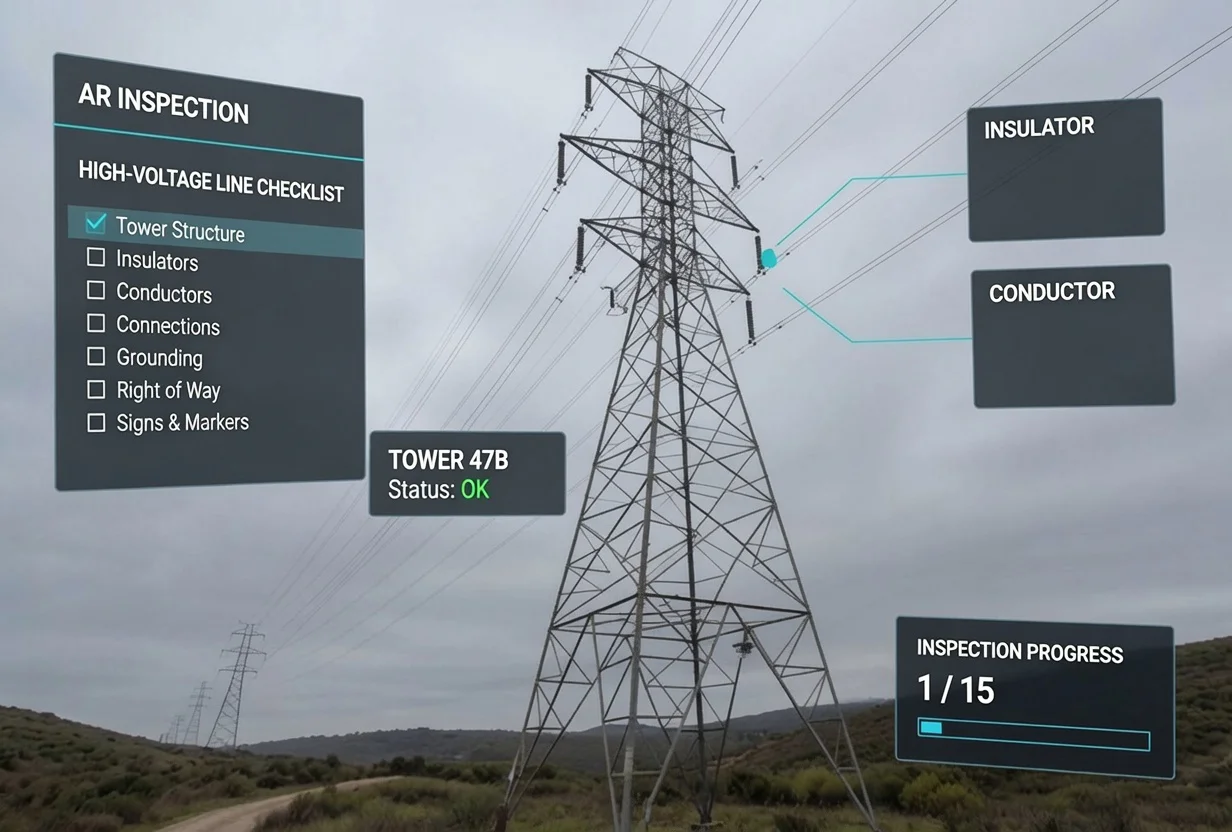
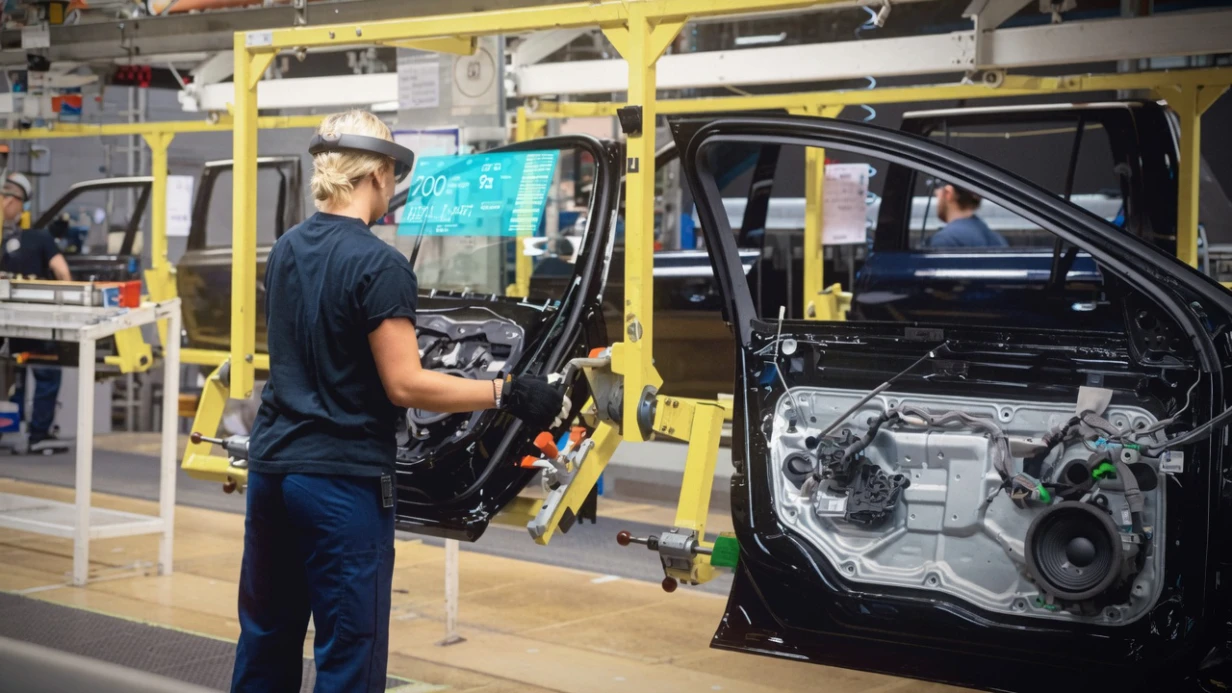
AR training changes the very format of working with instructions. The employee sees prompts directly on the equipment: what to do, which component to engage, and in what order. This is not theory but practical guidance at the moment of action.
The system prompts, monitors, and warns about errors, so the employee does not make unnecessary movements and does not skip important steps. Training is embedded into the real operation rather than distracting from it.
We help companies implement such AR instructions and rebuild the staff training process. As a result, the number of errors decreases, new hires reach independent work faster, and experienced employees stop being a bottleneck. Below we break down how this works in practice and what exactly the business gains.
Business benefits of AR instructions in manufacturing
When a beginner approaches a machine for the first time, the cost of an error is not only a ruined part, but also line downtime, missed deadlines, and a safety risk.
Paper instructions and lengthy courses pull experienced mentors away from their work and still leave knowledge gaps.
AR instructions directly on the equipment show the employee the sequence of actions, highlight important components, and warn about critical steps—when it really matters.
Beginner errors are reduced several times over, onboarding takes days instead of weeks, and work quality no longer depends on the memory and experience of a specific person.
For business, this means predictable quality and increased production efficiency. The operator does not ask again, does not search for a process engineer, and does not wait for a mentor—he works at the same pace as experienced colleagues from the second or third shift.
Retraining during changeovers also speeds up: instead of repeated theory, the employee gets a short prompt in the field of view and immediately performs the new operation. The result: less downtime, stable yield of good parts, and faster launch of new orders.
A separate value is reducing the load on key specialists. Mentors and process engineers stop spending hours on the same explanations and focus on improving processes.
Less scrap means lower material and rework costs; faster ramp-up of new hires to planned productivity means personnel investments pay back sooner.
Training investments stop being an abstract expense and become a measurable contribution to productivity, while investments in AR tools pay back within months, not years.
We help build AR instructions around your regulations and real workplaces. Our engineers capture the actions of the best operators, turn them into visual scenarios, and integrate them into the training process so that employees immediately see the benefit.
You get a measurable effect: fewer errors, faster onboarding, higher production efficiency. This is a clear outcome that you can build into your development plan and present to management.
Training formats for industrial personnel
When training industrial personnel, one format rarely fits everyone. A newcomer needs step-by-step prompts, an experienced worker needs a reminder of a rare operation, and in an emergency, a quick verification of actions is important.
AR instructions cover these scenarios, turning scattered regulations into live prompts right at the workplace.
AR for training does not replace a mentor but amplifies him: the worker sees the next step on the equipment, controls the sequence, and immediately gets feedback on errors. Below is a selection of formats for typical tasks that makes it convenient to start implementation.
| Format | For whom | What it gives the client |
|---|---|---|
| Step-by-step mode with component highlighting | New employees, operators | Fast ramp-up to work pace, less mentor time |
| On-demand instruction with action control | Setup technicians, repair crews | Fewer errors in rare and complex operations |
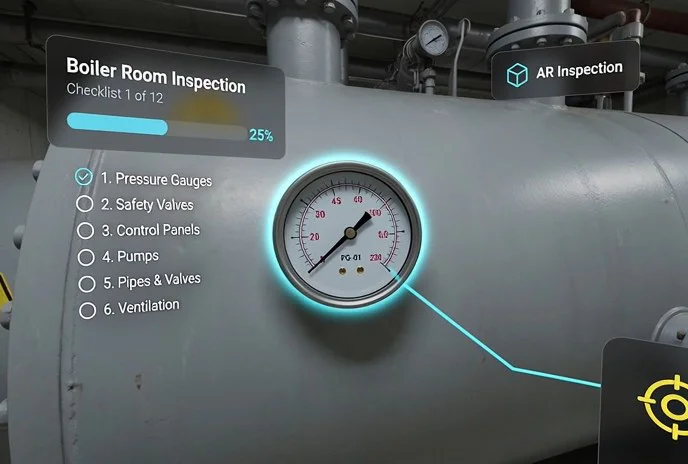
| Quick prompts and checklists | Entire shift personnel | Reduced downtime and requests for help |
| Simulation of emergency situations | Workers in hazardous industries | Skill practice without risk to people or equipment |
We adapt the format to a specific group and equipment type—this allows the same instructions to be used for both trainees and experienced masters. As a result, the number of errors decreases, the launch of new employees speeds up, and the workload on instructors is reduced.
You get not a separate application but a working tool that already "speaks" the language of your manufacturing processes.
How the implementation of instructions works at an enterprise
Implementing AR instructions is not just installing a program; it is changing how employees learn and perform work. We go through the entire journey with you: from brief to launch and support, so that you get a measurable result rather than a set of technologies.
The main stages of implementation:
-
Brief and process audit. We look at where errors occur, which operations are the most complex, and where training takes the most time. We define goals and metrics to know whether the project is successful.
-
Scenario design. Together with your process engineers, we examine each operation, create the structure of future instructions, and approve the work plan. This is a foundation that prevents unnecessary costs for rework.
-
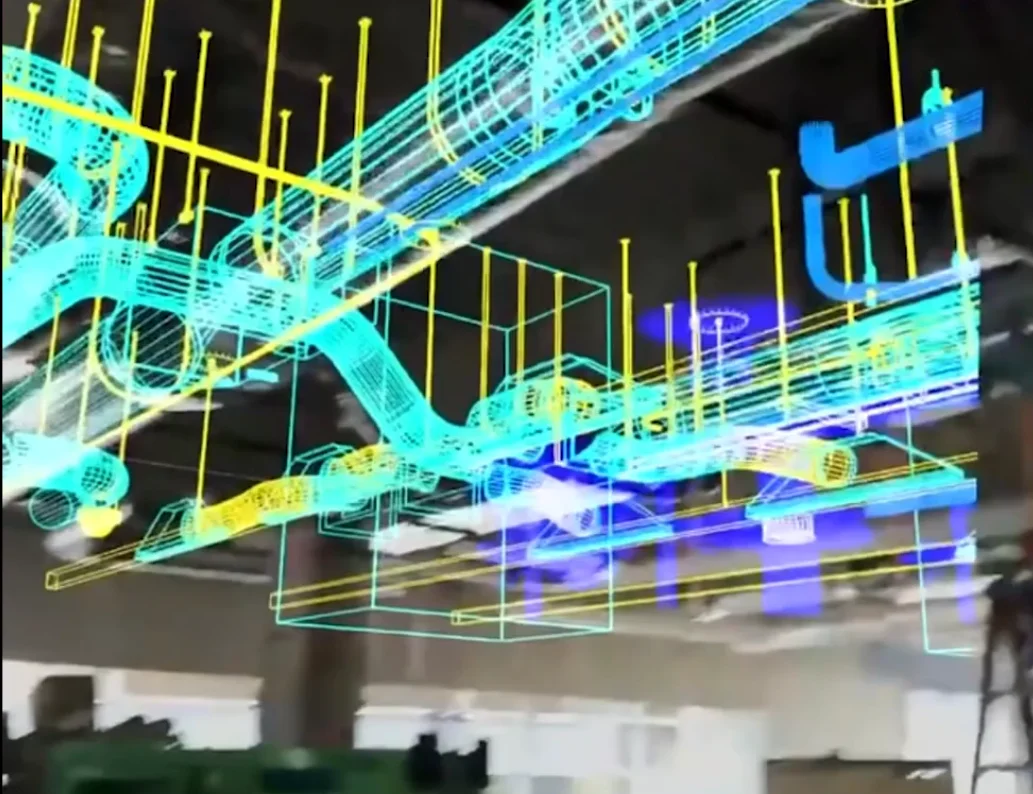
Development of AR instructions. We create step-by-step prompts, 3D models, and animations that are clear to the worker without reading long texts. We use professional equipment to ensure the image is clear and stable.
-
Testing at your site. We try the instructions on real equipment together with future users. We collect feedback and make adjustments before the solution enters permanent operation.
-
Launch and training. We install the system, set up devices, and conduct a short briefing for mentors and the employees themselves. Users start working with AR on the very first day.
-
Support and development. We monitor usage, update instructions when regulations change, and help roll the solution out to other workshops or plants. You are not left alone with the technology.
Delivery package for the customer
The customer receives not just an application, but a complete package for launching AR training for workers. Everything is ready to work: instructions, administrative tools, methodological materials, and clear content rights.
The delivery includes:
- Working AR instructions for your equipment—adapted to the actual operations of employees, from start-up to scheduled maintenance.
- Administrative panel: assigning courses, tracking completion, and statistics on errors and results for each employee.
- Methodological materials for your team: instructor guide, assessment checklists, and an onboarding plan.
- Source files and editable templates—you can make changes yourself without contacting developers.
- Content rights: all materials become your property—instructions, 3D models, texts, and voiceovers.
- Technical support and training for your administrators during the launch period.
- Update package: adjustments to instructions when regulations or equipment change, or when new employees are added.
All content rights are secured in the contract. You freely use the materials at other sites, replicate and develop them without restrictions or hidden fees. This is your property, not a lease.
Real project: how we reduced the number of errors
For the machine-building holding Promash, we developed AR instructions for setting up packaging lines. Previously, employees worked with paper regulations and PDF diagrams: on average, 45 minutes per shift was spent searching for the right page and deciphering notations.
Manual calibration errors led to defects and equipment stops, and each newcomer had to be onboarded for almost a week.
We turned key operations into AR prompts that project directly onto the equipment: the worker sees the sequence of actions, target parameters, and risk warnings. Training a new operator was compressed to one day, and the number of setup errors fell by 37% within the first month.
Downtime due to incorrect settings dropped from 40 minutes to 12 minutes per shift—this produced annual savings calculated after audit on a three-shift production line.
The pilot took five weeks: from operational audit to implementation and shift verification. After that, the client ordered scaling to two more plants and asked to add AR-based safety compliance control—the repeat order confirms the value of the format.
Now we are using the same principles to launch AR training for pickup point staff for a logistics operator: the approach works equally well at industrial sites and in warehouses.
How to choose the instruction format for your task?
Choosing a format for AR worker training starts with your task, not the technology. For a short operation, a point prompt on the equipment is enough; for a multi-step procedure, a scenario with action control is needed. This way you don't overpay: we select the minimally sufficient format for a specific operation.
Selection criteria include the specific requirements of your production: skill level, staff turnover, and workplace conditions. If personnel change frequently, a short augmented reality prompt is better than long texts.
In hazardous areas, use voice and visual signals so that the worker is not distracted from the equipment.
Our engineers start with a process audit: they look at where questions arise and which operations require control. Then they offer options—from audio scenarios to full interactive training.
During a trial session, you see how the format works on your equipment and whether employees accept it.
The right format reduces onboarding two or three times and cuts errors on the line. The wrong one—well, the tool is ignored. That is why we test the solution on one shift and adjust details: language, level of detail, step duration. You get a result that is used, not a demo.
Answers to frequently asked questions about implementation
Managers often ask us the same things: how much does it cost to develop AR instructions, how quickly can they be implemented, and will it disrupt current processes. We answer the main questions—without technical details, only what matters for a decision.
How much does developing an AR instruction cost?
The cost depends on equipment complexity and the number of steps in the instruction. For a typical unit, the cost is calculated after audit; for complex lines with dozens of operations, the cost is also calculated after audit.
These are one-time investments: the instruction works for years and pays off through reduced downtime, scrap, and new-hire training time.
How quickly can training be launched?
We usually launch the first pilot area in 2-4 weeks. Full implementation across several workshops takes 1-2 months.
Production does not stop during this time: employees learn during shift changes or at their workstations, and instructions are embedded into the existing mentoring process.
What if the equipment changes or a new model appears?
Instructions are easy to update: changes are made to the digital copy, and the new version immediately becomes available to all employees. There is no need to reprint posters or reshoot videos—you always work with up-to-date information.
How safe and reliable is it?
Data is stored on your infrastructure or in a protected perimeter, and access is controlled. The instructions themselves work without the internet—on employees' tablets or smartphones. Therefore, communication failures will not stop training.
What if employees are not used to AR?
Training is designed so that the specialist simply looks at the screen and repeats the actions. Learning takes 15-20 minutes, and after a couple of shifts employees work confidently. We support the launch and collect feedback to adapt the interface to your team.
If you still have questions about implementing AR instructions, cost, or timelines, ask them directly. We will prepare an estimate for your equipment and show how it works on a real example.Shall we discuss your project? Leave a request
Submit a request for development, and we will contact you within one business day.
This is a free consultation: you describe how employee training is currently conducted and what equipment they work with, and we show examples of AR instructions and suggest where they will have the greatest impact. We will handle the technical details for you.
After the conversation, you will receive an implementation plan with a budget estimate and timeline. We will take your scenarios into account: new-hire onboarding, knowledge checks, and help with equipment setup. You will immediately see how AR training reduces onboarding time and lowers the number of errors.
How we work after your request:
- You submit a request and describe your task.
- We contact you within the day and provide a consultation.
- We analyze your documentation and processes.
- We prepare a proposal with timelines and budget.
- We launch the development of AR instructions.
- We test with your specialists and make adjustments.
- We hand over the finished product and provide support.
What you get after contacting us:
- An accurate estimate of budget and timelines.
- Examples of AR instructions for your industry.
- Recommendations for training scenarios.
- A team with implementation experience.
- Support at every stage.
Do not postpone implementation: the request involves no obligation, and the benefit is obvious. Contact us now—within a few days you will understand how to improve training and save resources.