

Without an operating instructions example, equipment sits idle
Every 10 minutes of equipment downtime means unproduced products, missed shipping deadlines, and extra negotiations with the customer. The cause is most often not a breakdown: the operator simply cannot quickly find the answer on how to perform the operation.
Paper manuals, scattered electronic documents, and verbal tips from colleagues take time and leave room for errors.
Personnel errors caused by a misunderstood instruction lead to defects, damaged tooling, or the need to redo the work. Each such case means hours of downtime, material consumption, and the risk of receiving a claim. On a monthly scale, time losses due to unclear operation reach 15–20% of a shift's working time.
A telling operating instructions example is a situation where a new employee cannot start the machine without a mentor's help, while an experienced specialist spends half a day distracted from their own tasks.
Production stands still, and the manager is forced to solve operational issues instead of developing the business. This repeats every day as long as instructions remain unclear and inaccessible at the right moment.
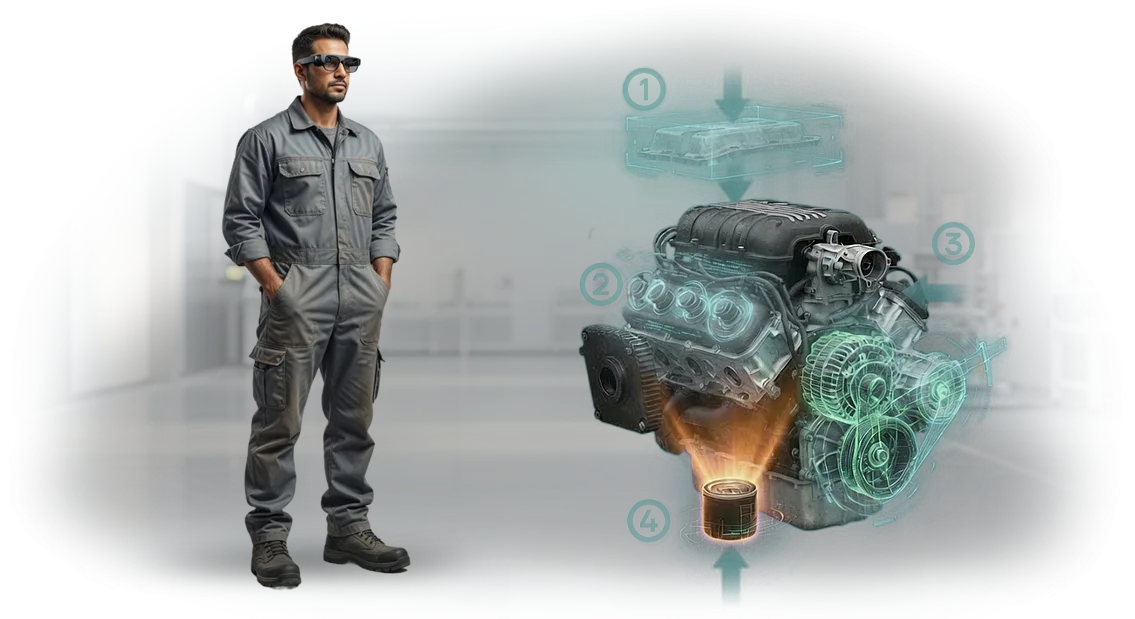
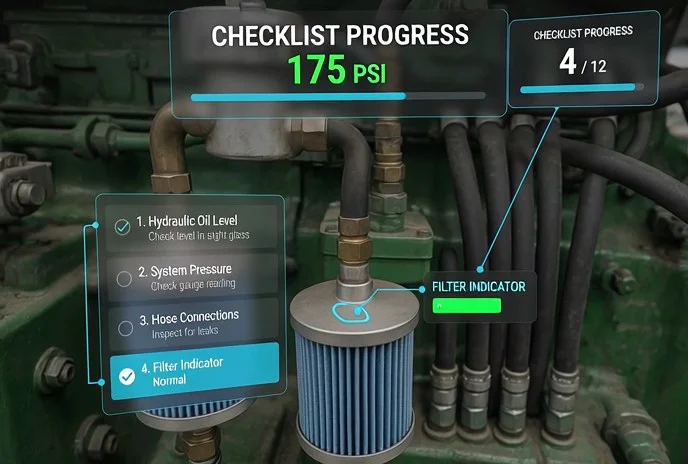
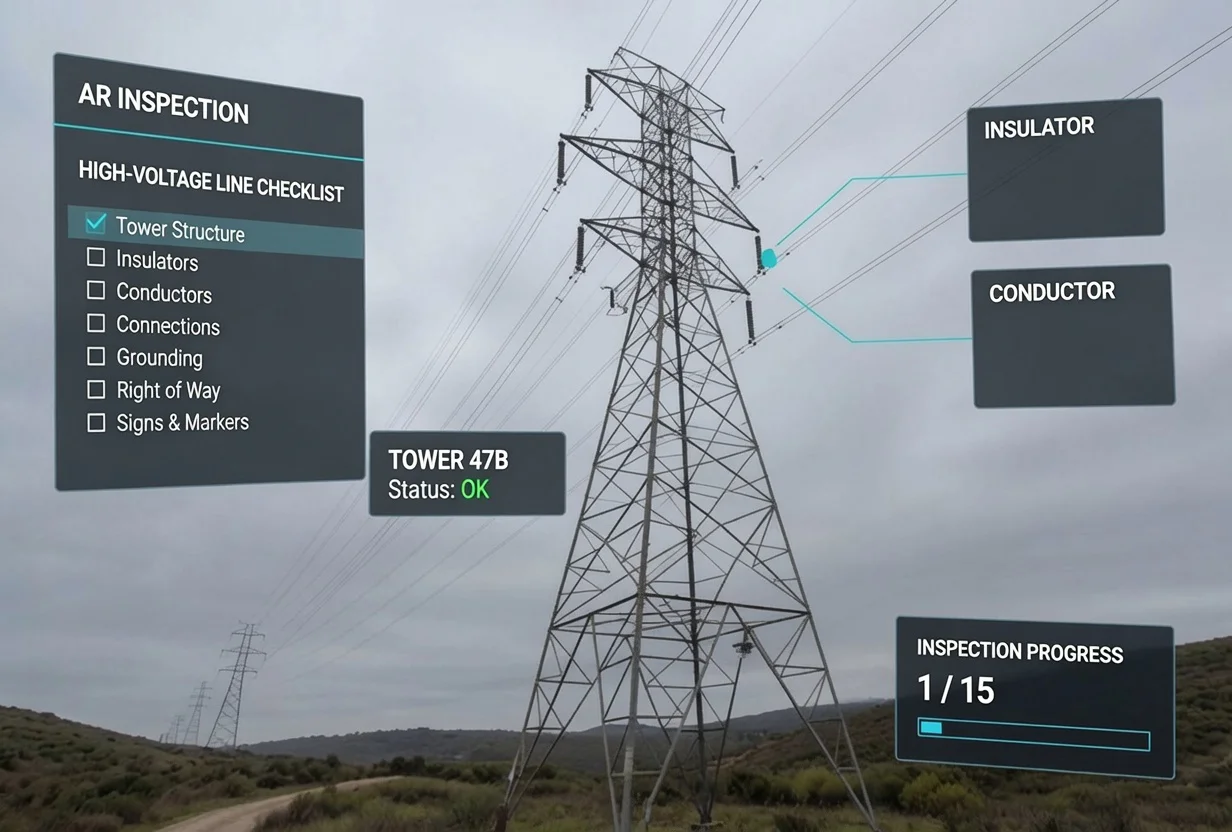
We remove this problem: we turn operating instructions into visual step-by-step prompts that appear right on the equipment. The operator sees what to do without searching for documents or calling senior staff. Training and operation time is reduced, and equipment works without downtime.
How AR instructions speed up equipment maintenance
Maintaining industrial equipment often becomes a long process: a technician searches for the right page in a paper manual, then matches the drawing to the actual component. This consumes hours of downtime and increases the risk of errors.
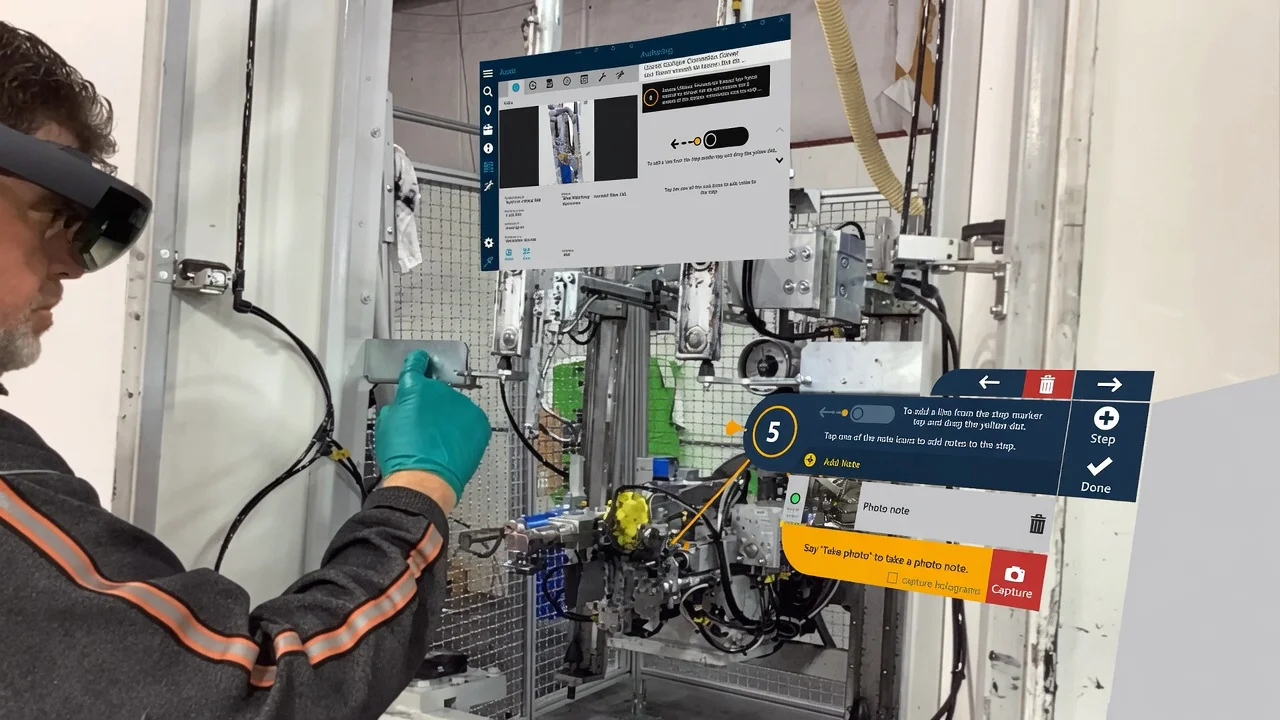
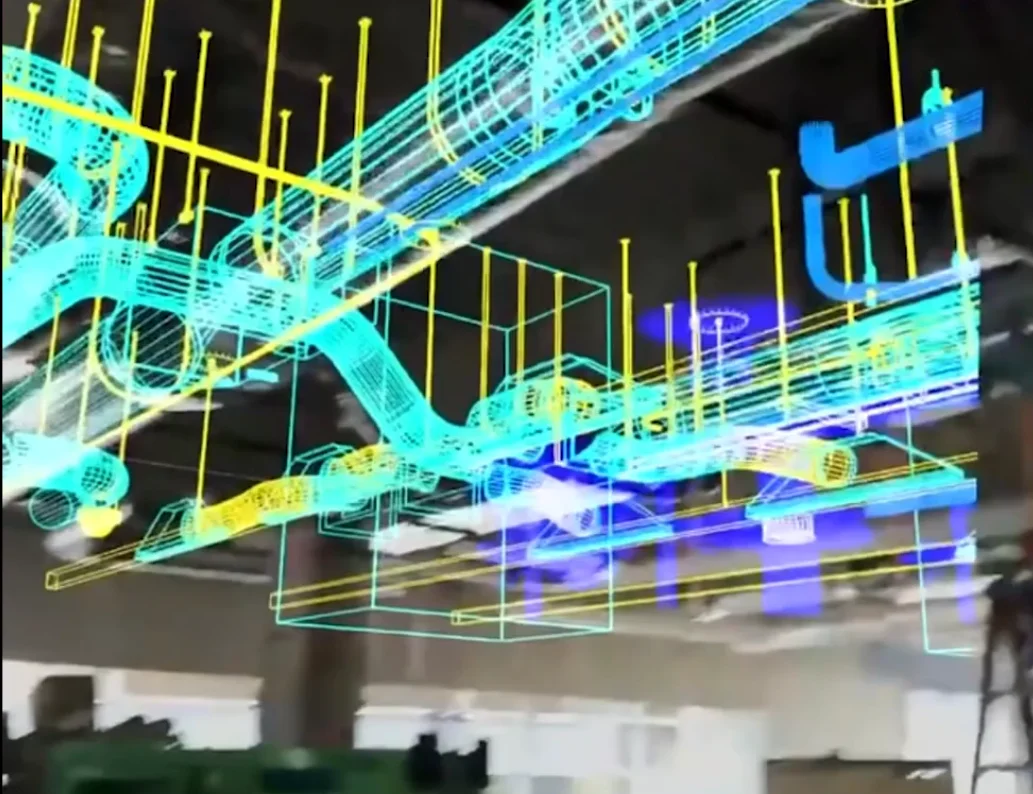
AR instructions solve this problem — unlike a classic operating instructions example, the needed information appears directly on the screen over the mechanism. The technician sees prompts in context instead of searching for them in documentation.
What this delivers in practice:
- Personnel training is cut by 2-3 times: a new employee quickly masters the procedures and starts working independently.
- Maintenance errors decrease: algorithms eliminate unnecessary actions and incorrect interpretations.
- Repairs speed up: step-by-step instructions are tied to specific components, so there is no need to disassemble the equipment "by eye."
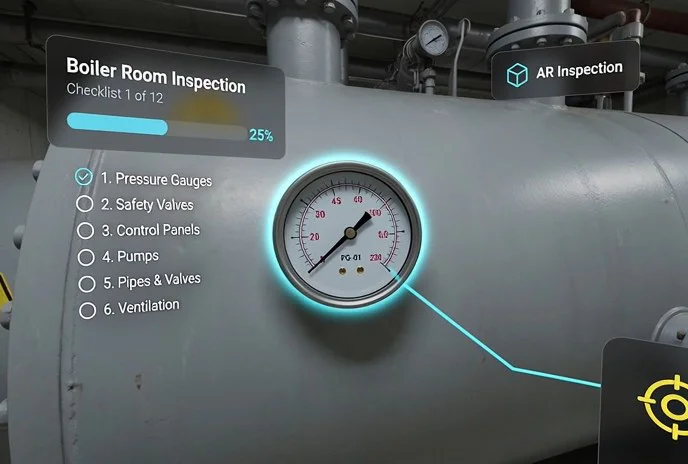
- Safety improves: every action is checked automatically, and the risk of accidents due to the human factor is reduced.
Thanks to the visual nature of AR instructions, a specialist finds and eliminates the fault faster. For example, in one of our projects for the manufacturer NordMash, average scheduled repair time dropped from eight hours to five.
This means equipment returns to service faster, the production cycle is not disrupted, and output volume is maintained.
In the end, the company gets stable operation of its equipment fleet and lower repair and training costs. We design AR instructions for your specific equipment models, so they fit easily into current processes. No production restructuring — just a clear tool for your employees.
AR instruction formats for your workshop's tasks
The same equipment requires different approaches for different tasks: an operator at the machine needs a quick prompt, a repair technician needs a detailed component breakdown, and a supervisor needs to monitor training completion.
That is why we offer three main AR instruction formats and combine them to suit your workshop's tasks.
Below is a table with typical scenarios so you can immediately estimate which medium suits you.
| Format | For whom | What it gives the client |
|---|---|---|
| Mobile app | Field service, setup technicians, field crews | Instruction always at hand, automatic updates, search by equipment part number |
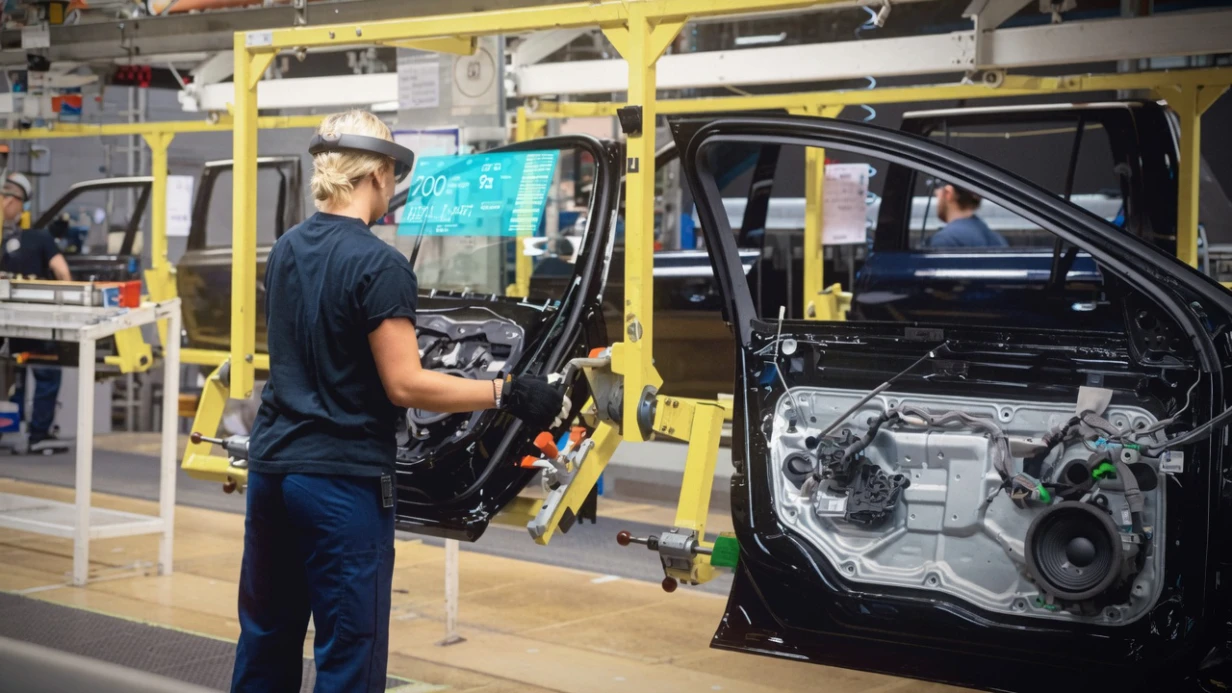
| Smart glasses | Operators of complex units, repair services | Hands free, prompts before your eyes, fewer errors and less downtime |
| Stationary terminals | Assembly areas, quality control, new hire training | Instruction available from any device, protection against unauthorized edits |
All formats are built on a single process and align with the Industry 4.0 concept. That is why they can be combined: glasses for repair, a terminal for training, an app for field work, with data synchronized.
We have implemented such solutions at machine-building and food industry enterprises. If you are unsure about the choice — send us a description of your tasks and working conditions. We will suggest the format, design a pilot, and calculate the savings.
How we create an AR instruction: from brief to launch
We understand that missed deadlines and unclear interim results are the main risk for you. That is why the AR instruction development process is built as a transparent route: you always see which stage we are at and what you will get as the output.
- Brief and task definition. We capture which operations the instruction covers, who its audience is, and by what criteria you will understand that it works.
- Equipment and procedure analysis. We study technical documentation and real work processes to find where employees most often make mistakes or lose time.
- Creating three-dimensional content. We build an interactive model of components and parts, overlay animations and prompts — so the steps are visible from any angle.
- Interim version approval. We show a prototype on real equipment, you make edits, and we take them into account before the final build.
- Launch and implementation. We deploy the instruction on tablets, phones, or glasses, train employees, and hand over a clear operating manual.
- Support and updates. When the design or procedure changes, we quickly update the content and publish it again — without a long development cycle.
Each stage ends with a clear result: first a goals document, then a prototype, then a working version. This lets you control the budget and timelines rather than just "waiting for the finished product."
What is included in the delivery of AR instructions
When ordering an AR instruction, it is important to understand: you get not just a 3D model or a file, but a ready-made working solution that employees start using immediately.
We put together a turnkey set — from the instruction itself to the procedure for its updates and support. Therefore, the delivery includes:
- A ready AR instruction for your equipment. We adapt the content to the specific model and operations and test it on a real device. The operator sees step-by-step prompts right on the equipment and performs the work without unnecessary movements.
- Update procedure. If the technological process, configuration, or design changes — you do not buy the instruction again. We update the content within the agreed timeframe, and you get a new version without additional approvals.
- Training for operators and administrators. We conduct hands-on training for employees: how to use the instruction, what to do in case of failures. We also prepare an administrator who can make small edits independently.
- Technical support. A dedicated channel for communication with our team. We help with setup, answer operator questions, and resolve issues within the working day. No one is left one-on-one with an unclear system.
- A complete documentation set. User guide, administrator manual, short quick-reference cards for operators. All in Russian, written in plain language, without unnecessary technical complexity.
We also transfer source materials and rights for content modification. This means you are not dependent on us in the future — if needed, you can develop the system with your own team.
Delivery takes from two weeks; the exact timeframe depends on equipment complexity and the number of operations. After handover, we stay in touch: for the first two weeks we monitor implementation and collect feedback from operators to adjust the instruction if necessary.
Case study: AR instructions for a machine tool manufacturer
When a production machine breaks down, every minute of downtime hits revenue. A service engineer wastes time on paper manuals: searching for the right section, diagrams, shifting the gaze from the part to the drawing.
Often this turns a half-hour component replacement into a two-hour quest. We encountered this pain in a project for one of the leading machine tool manufacturers.
Our solution — AR instructions that project the steps directly onto the equipment. The engineer points the tablet camera at the machine and sees highlighted elements: which bolt to loosen, in what order to remove panels, where the sensor is located. All information appears before their eyes, and hands remain free for work.
Results
The numbers confirmed the effectiveness: typical repair time decreased by 30%, and the number of assembly errors almost halved. The average time to find the right component in the instruction decreased threefold, and downtime decreased by a quarter.
The service team reaches the required qualification level faster. The manufacturer, producing machines under the DMG MORI brand, appreciated the effect and expanded the project to all equipment lines.
This case shows how a digital instruction can become part of the product, not just an application.
The client got not only reduced repair time but also a competitive advantage: now its customers can service the machines more easily, which means they are more willing to return for new models.
How to properly compose an operating instructions example?
A proper operating instructions example starts with the logic of actions, not a list of specifications. The operator does not need the history of the machine's creation — they need a scenario: what to check before startup, how to set up the mode, what to do in case of deviation.
When the instruction is built as a sequence of steps, it works like a prompt and turns from a document on the shelf into a real tool.
The structure of such a document is always subordinate to the operator's tasks. We recommend highlighting three levels: basic operations, setup, and response to emergency situations.
A new employee goes through them in order, while an experienced one finds the needed step in a minute.
A single template within each section — goal, actions, result — helps quickly onboard people, reduces errors, and makes it easy to update the instruction when equipment is modernized.
The rules for composing are equally important: short phrases, minimal terminology, mandatory visual cues. Photographs, diagrams, and examples with a clear outcome are absorbed faster than solid text.
Test the draft on real operators: if two people independently performed the operation the same way, the structure is successful. If discrepancies appear — go back to the template and rebuild the sequence until you get a reproducible result.
In practice, we turn such examples into universal templates and often bring them into augmented reality — then the prompts are displayed directly on the equipment. This reduces training time and the number of errors at startup by several times.
But even in classic form, a properly composed operating instructions example remains the foundation of stable work: a unified structure, clear language, and a proven scenario protect against downtime and incorrect personnel actions.
Frequent questions: what if the instruction breaks?
Before launching AR instructions, clients have the same doubts: what if the equipment changes, if an old model does not support the technology, or if the instruction suddenly stops working.
This is normal — any digital solution requires maintenance, and we build it into the project from the very beginning.
Below we cover the most frequent questions. Did not find yours — write to us, we will discuss your case.
What if the instruction becomes outdated after equipment components are replaced?
The content is kept up to date through a unified database, and updating takes hours, not weeks. When the design changes, you send new drawings or a description — we adjust the digital model and rebuild the instruction.
All changes are recorded, employees always see the latest version, and old ones remain in the archive.
Will an AR instruction work for old equipment?
Yes. We do not tie ourselves to specific models — the instruction works with machinery already in operation at the enterprise. It runs on regular tablets and smartphones, so it does not require replacing the device fleet. If necessary, we adapt the interface to your existing processes and procedures.
What if the instruction breaks or access is lost?
We provide a warranty and technical support for the entire period of use. Data is stored on your side or in a secure environment — automatic recovery is provided in case of failures.
Additionally, a backup text version is always available, so training and repairs will not stop even under force majeure.
Order AR instruction development for your equipment
We will start with a short consultation: our engineers will review your procedures, suggest where AR instructions will deliver quick results, and prepare a cost calculation after audit.
You do not need to implement anything in advance — just show the equipment and the typical operations you want to cover.
To make the solution safe, we offer a pilot project: we take one real operation from your production, create an AR instruction for it, and show the result on your employees. You will see the effect in days, not months, and will be able to assess the value before full payment.
When ordering development, you get:
- A pilot project: an AR instruction for one of your operations — before paying for the full scope.
- Engineer consultation: we will suggest which instructions pay off fastest on your equipment.
- Cost calculated after audit: a transparent estimate without hidden payments or extra charges "along the way."
- Implementation without stopping production: employees master the instructions during work, not away from their shift.
- Work on your devices: we use the tablets and smartphones personnel already have.
- Support after launch: we update instructions when equipment or procedures change.
Submit a request — within the working day we will send a preliminary calculation and suggest a convenient time for consultation. If the pilot does not show value, you will only lose a couple of hours on the demonstration.