

AR/VR Work Instructions: How to Reduce Losses from Personnel Errors
Every operator error on the production floor is not just the human factor. It means a stopped line, a spoiled part, and sometimes a threat to employee health.
Production losses from incorrect staff actions consist of time spent on corrections, the cost of defects, and downtime that must be compensated with urgent orders.
Managers know: even a trained specialist can mix up the sequence of operations, especially with complex equipment or in a stressful situation.
Traditional instructions—paper or PDF—often sit away from the workstation. The employee has to get distracted, find the right section, and match the text to the actual component. That is exactly when an error occurs.
Occupational safety suffers too: a missed step can lead to injury. The manager faces a choice—tighten control or rethink the training system—but both paths take time and money.
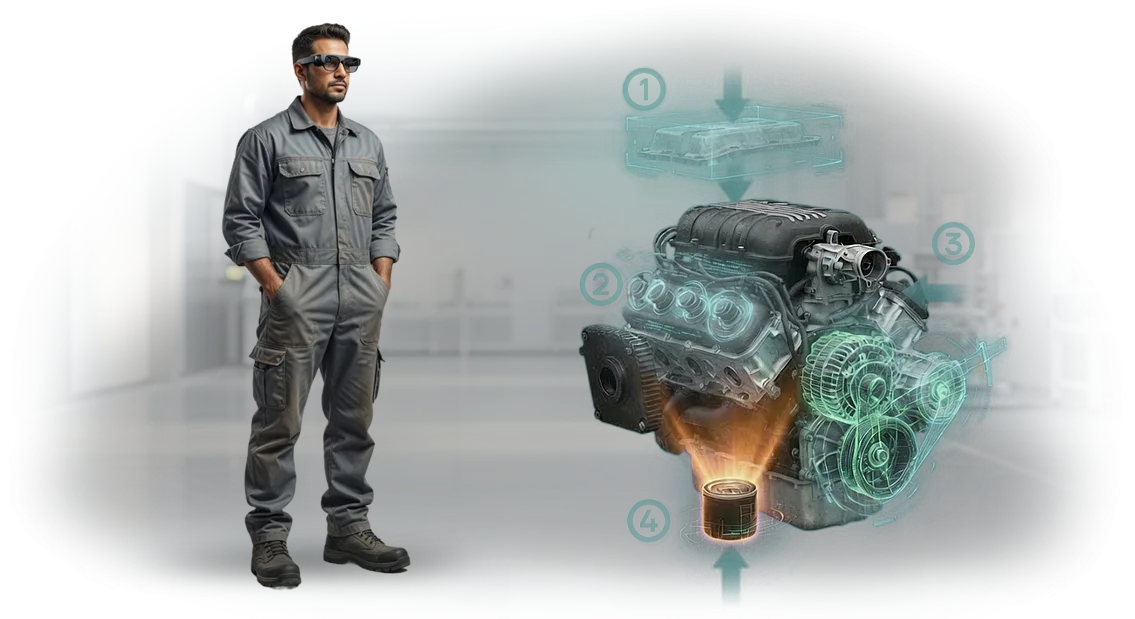
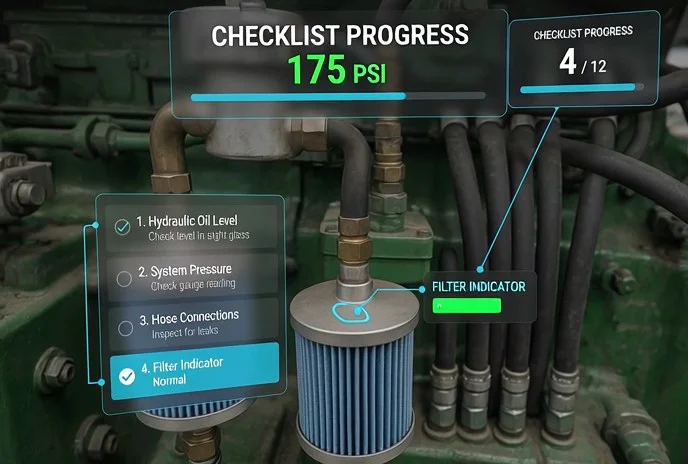
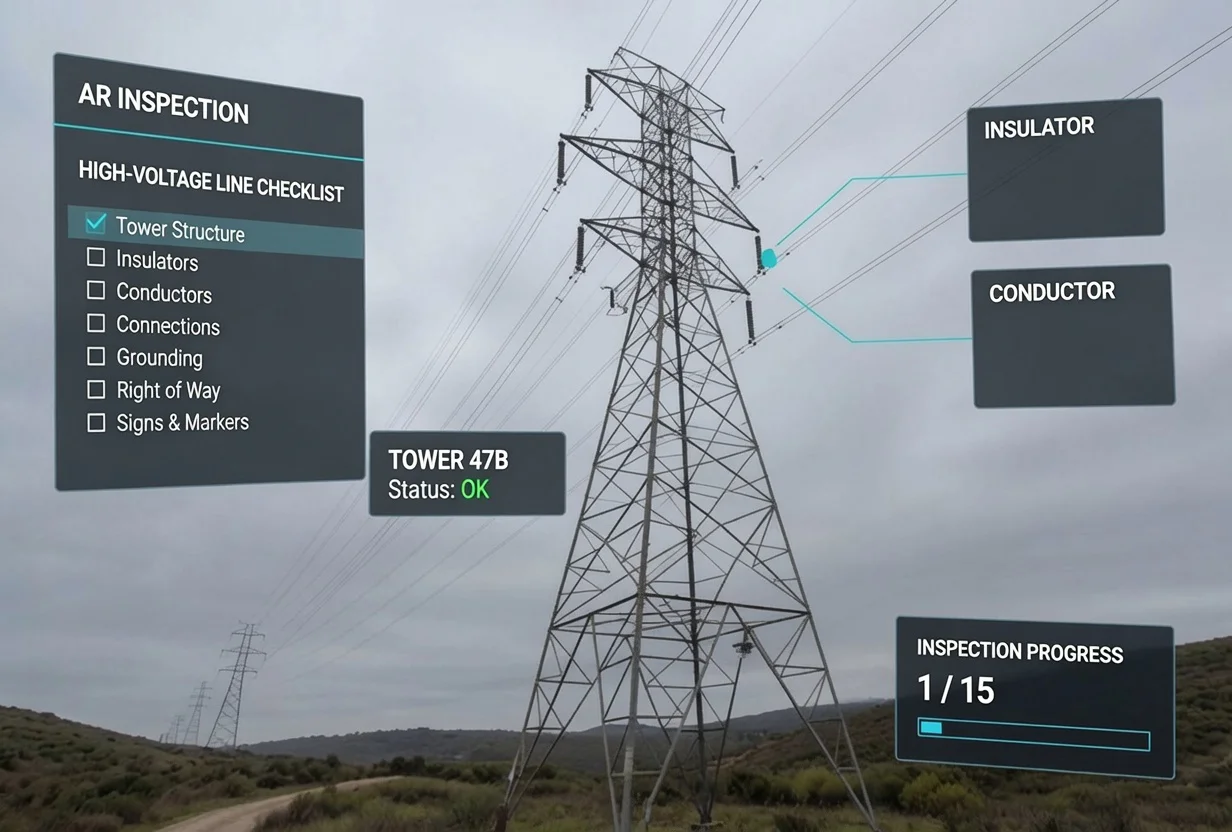
AR/VR work instructions solve this problem differently. Instead of an abstract diagram, step-by-step hints appear right in the operator's field of view: arrows, highlighting of the necessary elements, and verification of each action.
Virtual instructions prevent skipped steps and automatically adapt to the employee's pace. A new worker does not need to memorize hundreds of operations, and an experienced one does not need to consult a reference manual. As a result, production losses decrease, and occupational safety reaches a new level.
We help companies implement AR/VR work instructions for industrial equipment: we develop instructions for your real tasks, integrate them with existing processes, and train personnel.
This is not an experiment for the sake of technology but a tool that pays for itself by reducing errors and increasing efficiency.
What Results You Get from Digital Instructions
Digital instructions replace paper manuals and guesswork: the operator sees step-by-step hints right on a screen or in a headset. For the manager, this is not just convenience but measurable benefit—fewer defects, faster training, and full control over every operation. Our clients see positive results within the first few weeks.
Error Reduction
Fatigue and inattention are the main causes of defects. The instruction highlights each step and does not allow inaccurate execution. At facilities where we have implemented such solutions, the defect rate drops by up to 80%.
Training Speed
A rookie doesn't need a constant mentor. They work with hints on real equipment and reach full productivity 2–3 times faster. Experienced employees don't get distracted repeating the basics.
Safety
The system warns about dangerous actions and blocks violations. Injuries decrease—downtime and fines disappear. Safety becomes managed, not accidental.
Savings on Defects
Every rework is a loss of materials and time. Step-by-step guidance strictly to the standard eliminates rework. Often, payback occurs within a few months solely from defect reduction.
Operation Control
You know exactly who performed each operation, when, and how. The data highlights bottlenecks and helps improve processes without arguments. This is the foundation for staff training and development.
We handle the setup for your equipment and support your team until a stable result is achieved. Implementation is phased and does not stop production.
Instruction Development Formats for Your Type of Production
Every production environment faces different training and procedure scenarios. What works for a beginner at a machine isn't suitable for a rare complex operation or maintenance at a remote site.
That's why we determine the type of tasks in advance and offer an AR instruction format that solves precisely your task—without unnecessary complexity or overpayment.
The table below shows four typical formats most often ordered by enterprises. For each, we adapt the interface, level of detail, and how hints are presented so that personnel work without interrupting their process.
| Format | For whom | What it gives the client |
|---|---|---|
| Beginner Training | New employees, trainees, workers transferred from other areas | Quick entry into working rhythm, fewer errors, mentors don't get distracted from their own tasks |
| Complex Operations | Experienced operators, rare or non-standard procedures | Step-by-step hints right before the eyes, reduced defects and downtime |
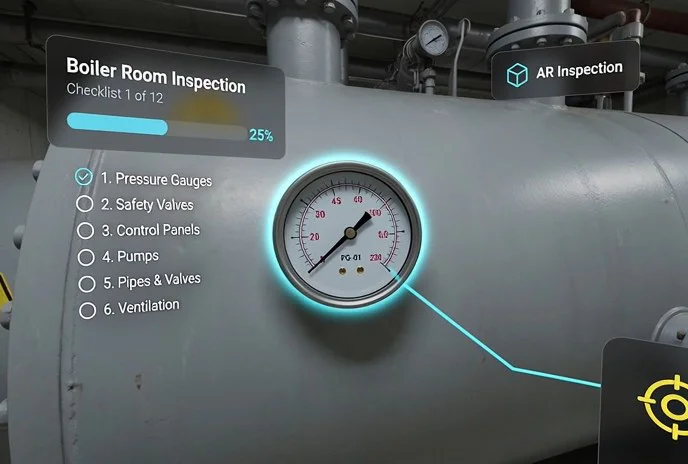
| Maintenance Regulations | Service engineers, maintenance teams | Guaranteed completeness of execution, automatic logging of each item, no missed steps |
| Remote Support | Field personnel, experts at other sites | Problem resolution without sending a specialist, saving time and travel expenses |
Stages of Creating Instructions: From Brief to Support
The process is designed so that at each stage you see the result and can influence the final product. This way, we avoid surprises in timelines and costs, and the working AR instruction is created precisely for your production's tasks.
- Brief and objectives — we determine which operations need simplification, who will use the instruction, and what result we consider successful.
- Operations audit — engineers analyze workflows: they identify complex components, common errors, and points where an AR hint will deliver the most value.
- Scenario prototype — you see the logic of the future instruction on screen and make edits before full development starts, while changes are still inexpensive.
- Review and approval — we discuss the prototype with technologists and experienced employees, clarify details, and approve a scenario that is clear to a beginner.
- Development — we build the final AR instruction: visual 3D models, animations, text and voice hints. We work with professional equipment—so you get a stable result.
- Production test — we test the scenario in real conditions, measuring time and error rates. We make adjustments before launch, not after.
- Launch and support — we train staff, deploy the instruction on devices, and hand over the procedures. We stay in touch to update content when equipment or processes change.
The result is an instruction that genuinely reduces training time and staff errors—not just a trendy experiment.
What's Included in the Delivery: A Package for Your Production
We put together the delivery package for a specific production area—you get not scattered files but a ready-made system that can be implemented immediately. Everything needed for launch is already included: from AR modules to operator training.
- AR modules for key operations: step-by-step scenarios overlay real equipment; the employee sees hints directly in the field of view and is less distracted by paper instructions.
- Scenarios tailored to your procedures: we review existing instructions and turn them into clear algorithms—without reworking production processes or stopping production.
- Operator instructions: available on tablets and smartphones, understandable for beginners, no special training required.
- Admin panel: you update the content yourself, change steps, and add new operations without involving developers—saving on maintenance.
- Team training: we conduct a hands-on workshop for technologists and operators so they can confidently work with AR from day one.
- Warranty and support: we accompany the launch, answer questions, and update modules when your processes change.
This is a fixed part of the delivery—without hidden charges or "finishing touches" paid for separately. You get a working tool that reduces training time and lowers the number of errors, and the warranty removes implementation risks.
Case Study: 40% Reduction in Setup Time
For a machine-building plant with a large fleet of machine tools, the problem looked familiar: equipment setup took up to two shifts, and every downtime cost money. Experienced engineers managed, but any error in the sequence led to readjustment and lost time. Young specialists needed weeks to master complex operations.
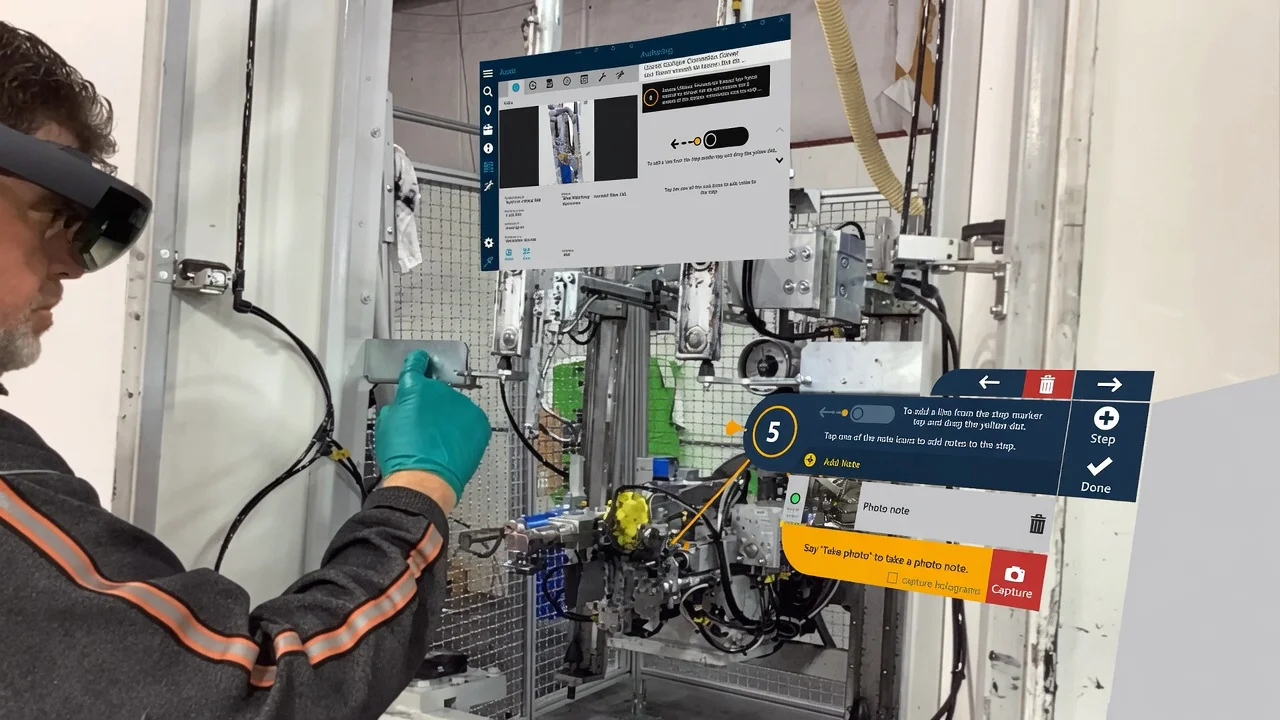
We proposed replacing paper instructions with AR hints. Instead of reading manuals, the technician sees step-by-step markers right on the equipment: where to go, which component to secure, and in what order to set the parameters.
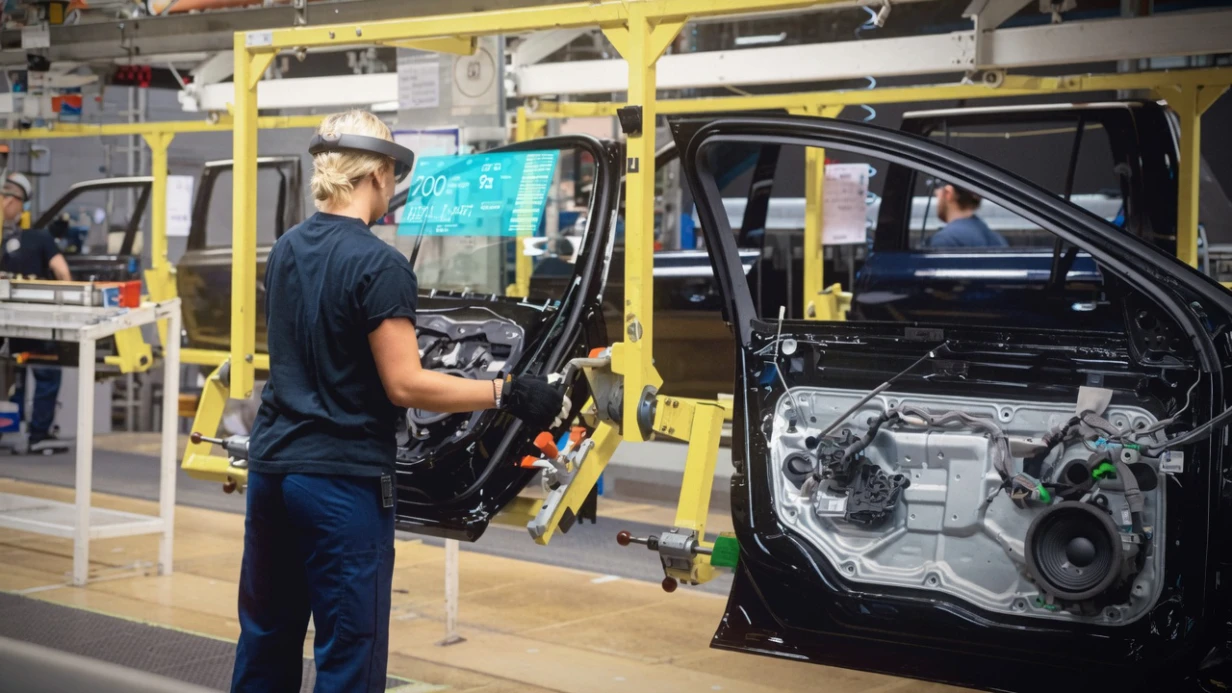
We work with the professional AR headset HoloLens—it doesn't restrict movement and displays information in the field of view, so hands remain free.
Numbers After Launch
After a month of operation, setup time was reduced by 40%, and the number of errors during readjustment halved. A new employee, after a short induction session, performs operations that previously required a week of training.
The plant stopped halting the line for consultations with the senior foreman—hints are always at hand.
Why It Pays Off
The savings come from three components: less equipment downtime, faster onboarding of new employees, and lower risk of damage to expensive components due to incorrect sequencing.
As a result, the project paid for itself within three months, and the client ordered a second phase from us—AR instructions for routine maintenance of the entire fleet.
We are now replicating this solution at other plants. If you have similar challenges, we are ready to run a pilot in one area and show the effect in numbers even before full implementation.
How to Choose an AR/VR Solution for Your Task?
The choice between AR and VR starts not with the technology but with your task.
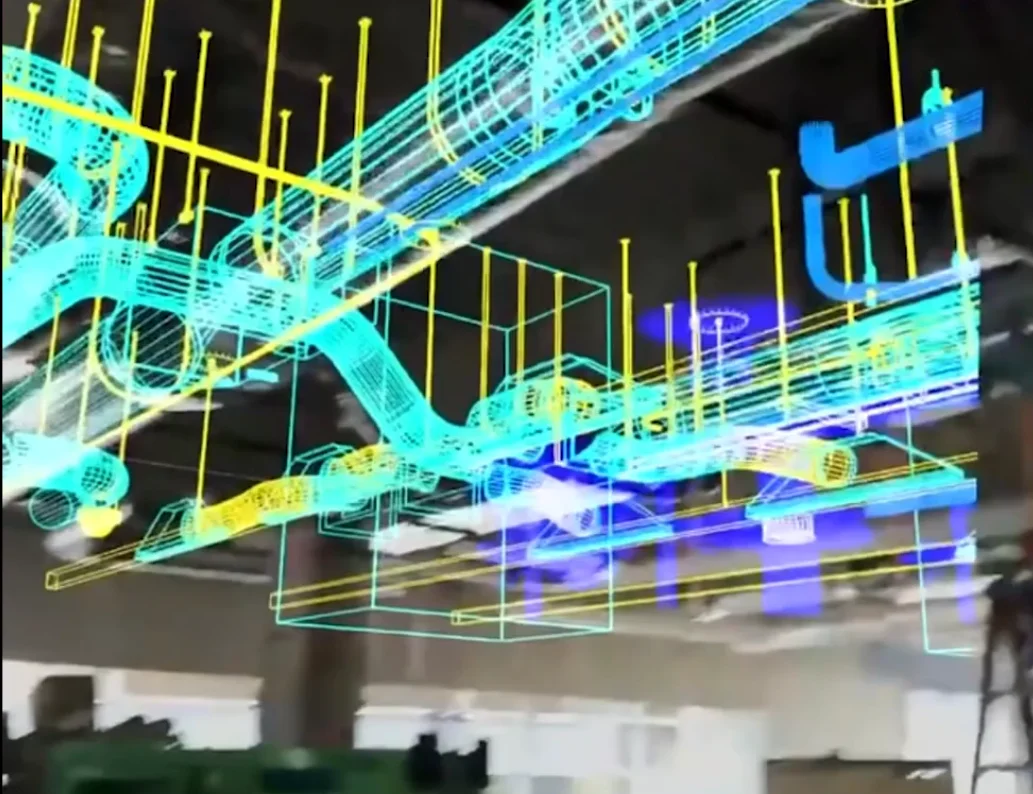
If employees need to perform actions on real equipment and get hints right in their field of view, AR instructions work: they overlay step-by-step diagrams onto the mechanism without distracting from the process.
If you need to safely practice rare or dangerous scenarios, or study the structure of a complex component before accessing it on the shop floor, VR is a better fit: the employee immerses themselves in an exact copy of the setup and acts without risk to themselves or the equipment.
Before choosing, formulate what should change: reduce the time to bring a new hire up to speed, decrease the number of errors during maintenance, enable remote training, or cut costs for specialist visits.
The answer to this question already suggests the format—AR is more practical for short operations at the workplace, while VR is better for practicing sequences and "what if" scenarios. Often the optimal choice is a combination: AR for daily work, VR for training and certification.
We help you decide without technology pressure: first, we briefly analyze your task, calculate which format will pay off faster and fit more easily into existing processes, then show a demo example on your actual components.
No abstract presentations—only what can be evaluated hands-on and in working conditions. After the pilot, you'll understand which solution to scale and can make a decision based on numbers, not marketing promises.
The main criterion when choosing is not the trendiness of the technology but its ability to deliver measurable results: speed, accuracy, safety. Typically, 2–4 weeks after launch, it becomes clear where AR/VR has proven itself and where a simple instruction is enough.
We take on the risk of the first steps: we select the right format, create a prototype on your equipment, and bring it into real use so you benefit from day one.
Frequently Asked Questions About Development and Implementation
We've collected the questions managers most often ask before launching AR instructions: from implementation timelines to what happens if equipment breaks down or a process changes. We answer honestly—without technical details, only about your benefit and safety.
Implementation is phased: you control every step, and we handle content, configuration, and support. Below are answers to the main concerns.
How long does implementation take?
We show the first working instructions within 2–3 weeks of the start. Full launch in an area or shop typically takes 1–2 months—we train employees in parallel and don't stop production.
What if the equipment breaks down or the process changes?
AR instructions don't interfere with equipment control—they only guide the employee through the sequence of operations. When the technological process changes, we quickly update the content. Edits take days, not months, so the documentation always matches reality.
Who will support and refine the instructions?
Our engineers take on support: monitoring performance, updating content, and refining for new operations. We assign a dedicated manager and set response times in the contract. If you don't need support yet—you can start with a one-time project and return to us as needed.
How can we tell that AR instructions really pay off?
We calculate together with you at the start: training time for new employees, number of errors, equipment downtime. After launch, we show actual metrics—speed of reaching independent work, reduction in requests to mentors. In most projects, payback is visible within the first few months.
What if we don't like the result?
Work proceeds in stages with acceptance: you see intermediate versions and confirm each step. We don't start the next stage until the quality satisfies you. Payment is tied to the accepted result, so your risks are minimal—and this is stated in the contract.
Order Turnkey Instruction Development
For the client, this is a simple path: you describe the task, and we take care of everything—from equipment audit to launch and employee training.
You don't need to understand the technologies or control every stage; it's enough to know what result you want: fewer errors, faster onboarding, lower downtime.
We start with a free audit of your processes—we look at where errors most often occur, how much time beginners lose, and which operations are more profitable to convert to AR format.
Based on the results, we provide a plan, timeline, and cost, and after launch we remain on support so the instructions update together with your equipment.
What you get after ordering:
- Free audit — we analyze your current instructions and production processes, identify points where AR will deliver quick effect and measurable time savings.
- Format consultation — we select the right fit for your task: tablet, smartphone, or AR glasses, based on how your employees actually work, not on "what's trendy."
- Discount on the first project — we lock in the terms before work starts, so you can show the result to management without extra negotiations.
- Prototype on a real component — before the final contract, you see how the instruction looks on the shop floor, and only then make a decision.
- Integration into your document workflow — employees open instructions from the same system they use daily, without switching between applications.
- Staff training and support — your specialists will be able to update content themselves, and we stay in touch after launch.
Leave a request—we'll call you back within a day, conduct a free audit, and show you which operations will make AR instructions pay off specifically on your equipment.