

Standard work instructions example: how to reduce downtime
Every hour of downtime costs a company real money: an unfulfilled order, an idle crew, missed deadlines. When a machine stops, the operator searches for the right page in a multi-page instruction manual, tries to figure out which component to unscrew and in what order. This takes dozens of minutes, and if the repair is complex, mistakes lead to repeated breakdowns.
Take a standard example: standard work instructions example for replacing a component. In paper form, this is text and flat diagrams that need to be carefully cross-referenced with the actual equipment.
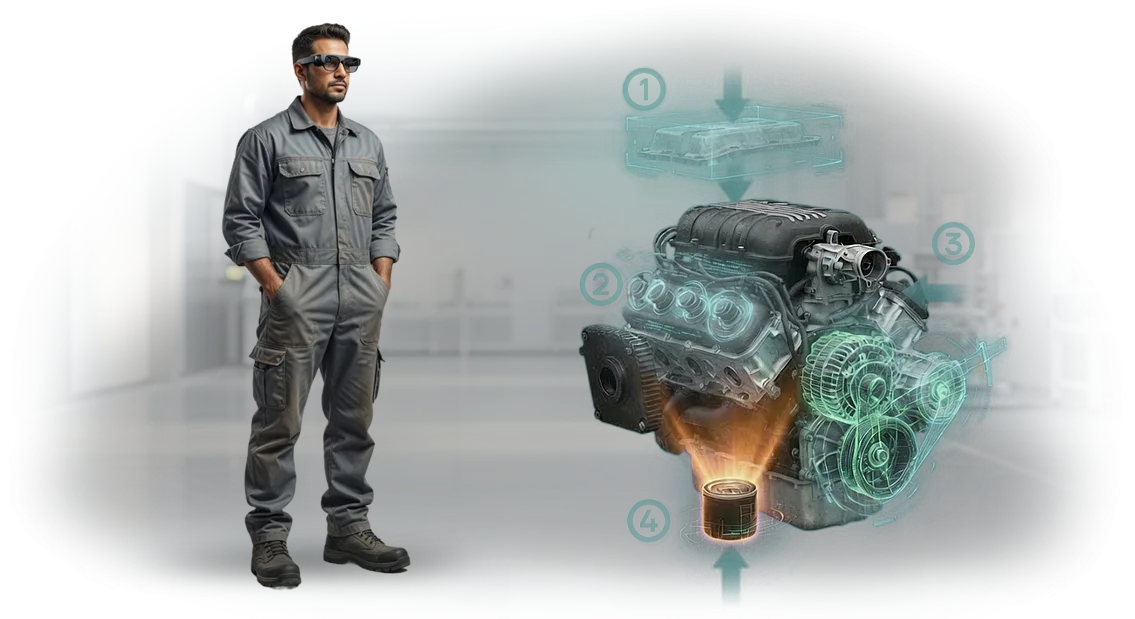
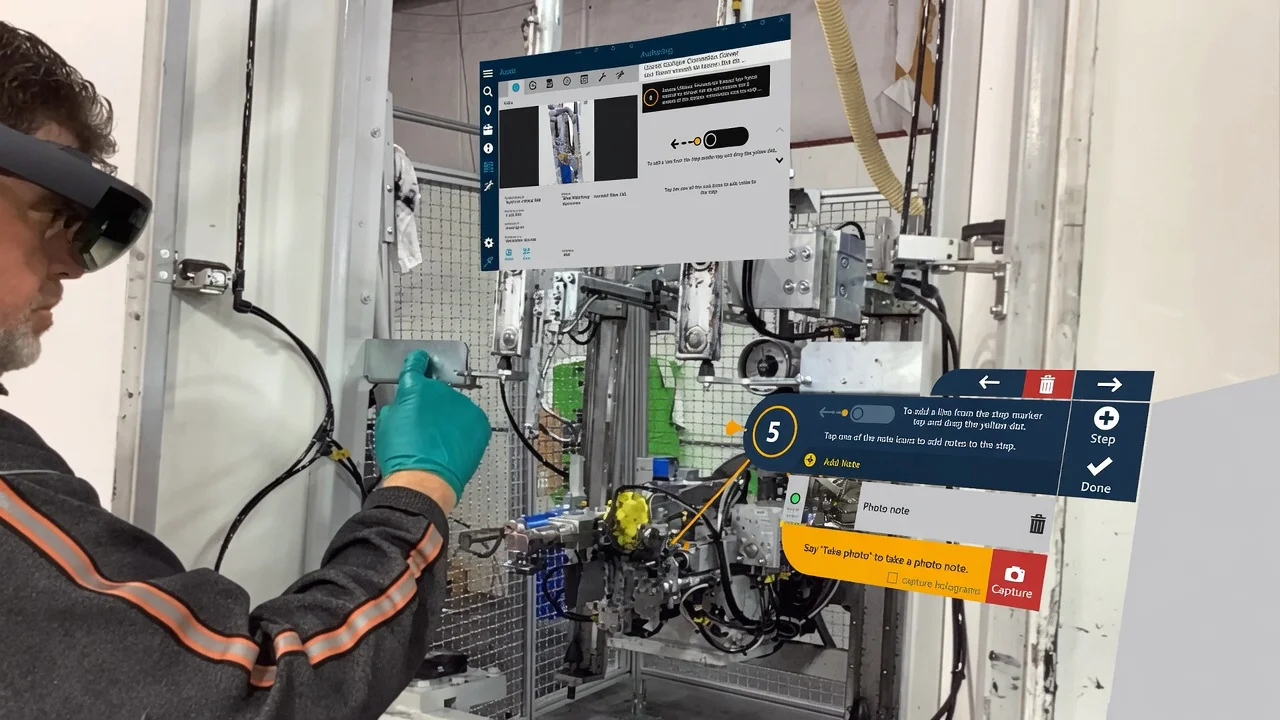
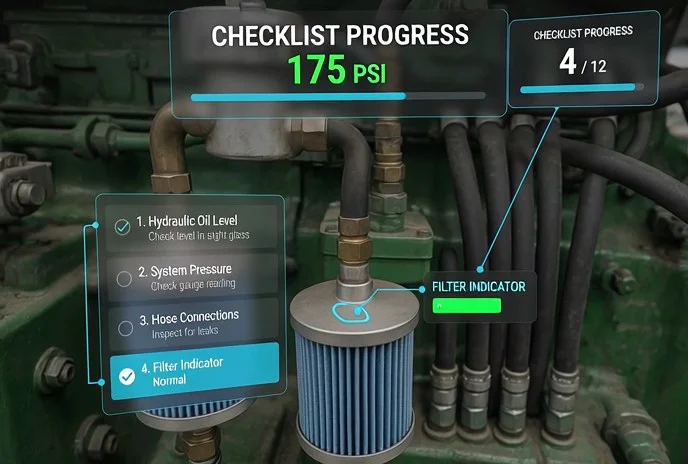
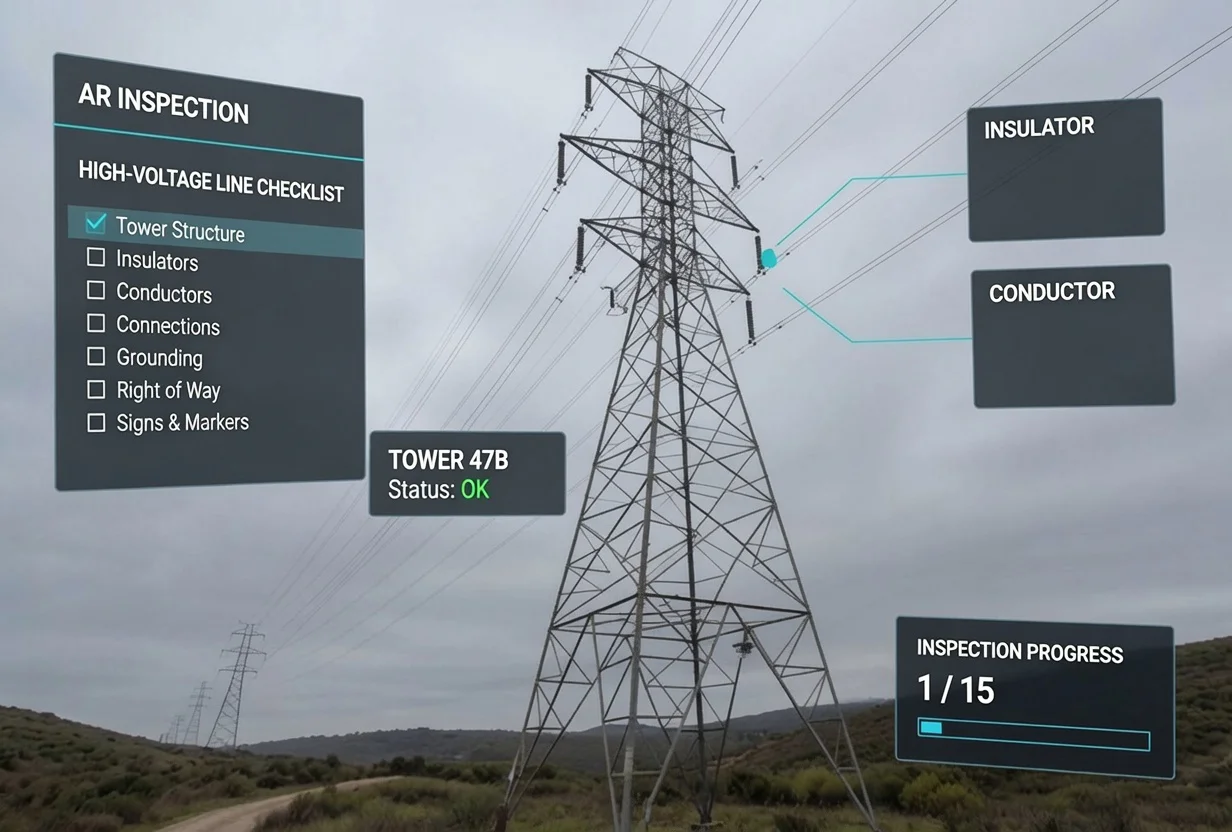
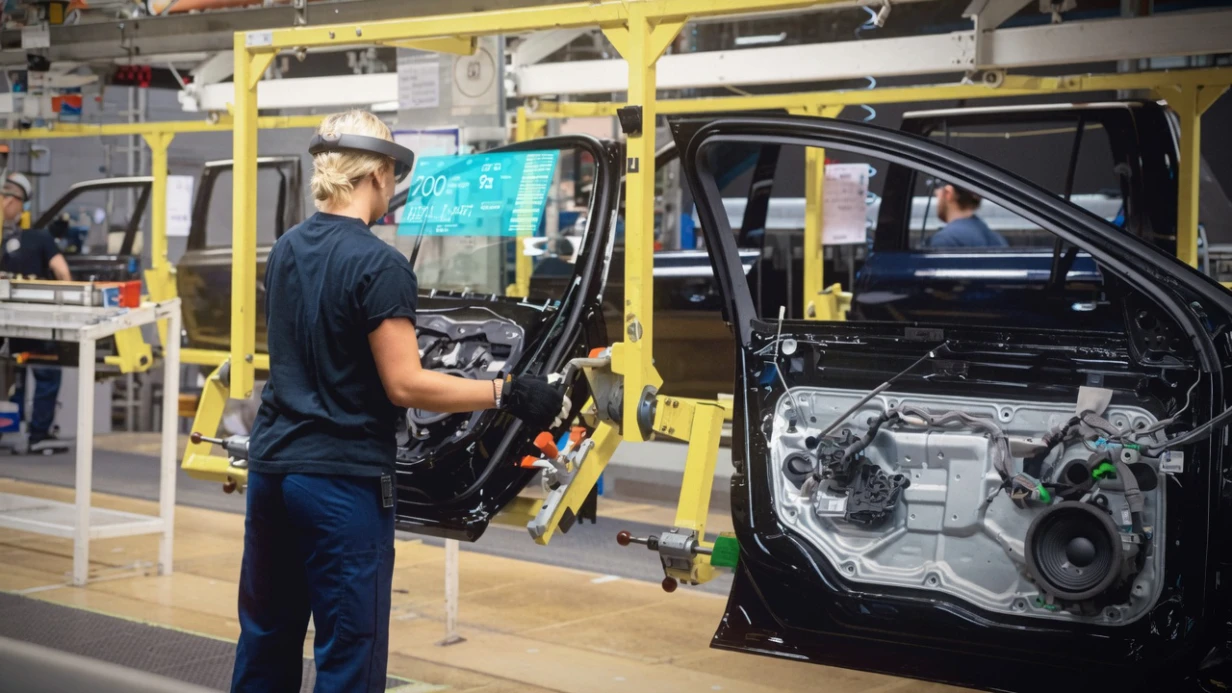
AR instructions overlay hints directly onto the mechanism: the operator sees which part to remove, which tool to use, and how to check the result. Hands are free, eyes are on the equipment, the path is clear from the first step.
As a result, operation time is reduced by two to three times, and errors are eliminated through visual control. Employees don't need to memorize anything: the sequence of actions is always in front of them, and the instructions are available at any moment.
Moreover, such instructions are easy to update: if a process changes, the new version instantly appears for all employees.
We develop AR instructions for the specific needs of your production: from simple operations to complex repairs. Implementation takes a few weeks, and the effect is immediately visible—fewer downtimes, higher productivity, and a less stressful workflow for the repair crew.
What AR Instructions Deliver: Fewer Errors, Faster Training
Every day of equipment downtime and every repair error is a direct loss: a disrupted schedule, rework, and safety risks. Training new employees takes weeks: first theory, then practice under the supervision of a mentor who is distracted from their own tasks.
We address this pain point with AR instructions—step-by-step hints that overlay directly onto real equipment.
Through a tablet or glasses, the employee sees which component to unscrew, which tool to use, and in what order to perform the steps.
This reduces errors in operations by up to 70% and shortens onboarding time by 2–3 times, with a newcomer working independently after just a couple of shifts.
A clear example from practice: for a client in the energy industry, we developed an AR instruction for maintenance of a pump unit based on Siemens equipment. Mechanics began performing the procedure 30% faster, and the number of assembly errors dropped threefold.
Experienced staff work without paper checklists, and newcomers no longer bother senior colleagues over every small issue.
Real ROI from implementation:
- Training savings: one mentor can cover the work of several newcomers at once
- Lower costs for reworking defects and repeated repairs
- Reduced equipment downtime thanks to faster and more accurate work
The result is predictable repairs and stable quality that is ensured by the system rather than by the employee's memory. We take on the development for your equipment and guarantee a result that pays for itself within the first few months.
AR Instruction Formats: From Full Scenario to Quick Hints
AR instruction formats differ in the depth of detail and the time an employee spends learning them.
Complex repairs require a full step-by-step scenario with detailed 3D models and voice prompts, while for daily replacement of consumables, a brief highlight of the required component is enough. The right format choice affects work speed, error rates, and employee training time.
We have divided all options into three basic formats and compared them in a table so you can immediately see what suits your production.
Format Comparison
| Format | Who and what tasks it is for | Type of production | What it gives the client |
|---|---|---|---|
| Full scenario | Complex operations, repairs, training new employees | Single-unit, small-batch | Accelerates ramp-up, preserves the knowledge of experienced specialists |
| Quick hints | Everyday work, parameter monitoring, tooling replacement | High-volume, assembly line | Reduces operation time, lowers fatigue |
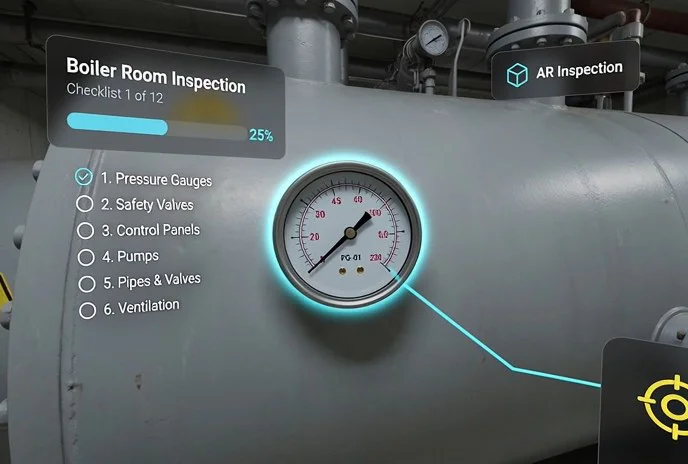
| Checklist with confirmation | Mandatory steps, maintenance, safety checks | Any type with regulations | Less scrap, transparent control, audit readiness |
For different areas, you can use different formats: quick hints on the assembly line, and full scenarios for rare and complex operations.
This does not require separate development—we create a single instruction base from which each employee receives exactly the format needed for the current task.
Whichever format you choose, they all display hints right in the employee's field of view—on a tablet, smartphone, or AR glasses. We select the appropriate device for the workshop conditions: dust levels, lighting, and the need to work with gloves.
Importantly, the scenario is developed based on your existing procedures, so employees don't have to retrain.
How AR Instruction Development Works: 7 Steps from Brief to Support
AR instruction development is broken into project phases, each of which is transparent and approved together with you. We don't slip into a months-long 'creative process': you know the timelines, scope, and control points in advance. Below are the 7 steps a client goes through from the first conversation to daily support.
- Brief and operations audit. We study the equipment, current procedures, and typical employee errors. Together, we identify which operations should be converted into AR instructions and what standards they must meet.
- Step and scenario plan. We prepare a detailed plan: which actions to break down, which hints to show, and in what sequence. We align it with your process engineers before launch—this eliminates rework in later stages.
- Digital content creation. Our engineers work with professional tools and prepare models, animations, and annotations for each operation. You receive a clear AR instruction that even a new employee can understand.
- AR instruction assembly. We combine the elements into a unified scenario: step-by-step actions, checkpoints, and warnings about hazardous areas. The interface stays simple so the operator is not distracted from the task.
- Approval on your side. We hand over the material to technologists and engineers and make edits based on their feedback. If a procedure changes, we adjust the scenario with a short iteration, without launching a new project.
- Pilot launch. We test the instructions on a real shift, collect operator feedback, and quickly fine-tune the details. AR should help people work faster, not add extra steps.
- Support and updates. After launch, we stay in touch: update instructions to match new procedures, add operations in other areas, and help scale the rollout.
This process delivers a predictable result: you get working AR instructions, not a 'prototype for show.' Every phase is controlled, and final support is formalized in the contract.
What Is Included in the AR Instruction Package
The package includes not just an AR instruction, but a complete set of tools for launching and supporting the solution in production.
We design scenarios in advance and prepare content for your equipment, so operators can start following visual prompts after a short training session.
- Work scenarios: step-by-step algorithms for standard operations—setup, maintenance, troubleshooting. Each scenario records the sequence of actions and checkpoints to prevent missing important steps.
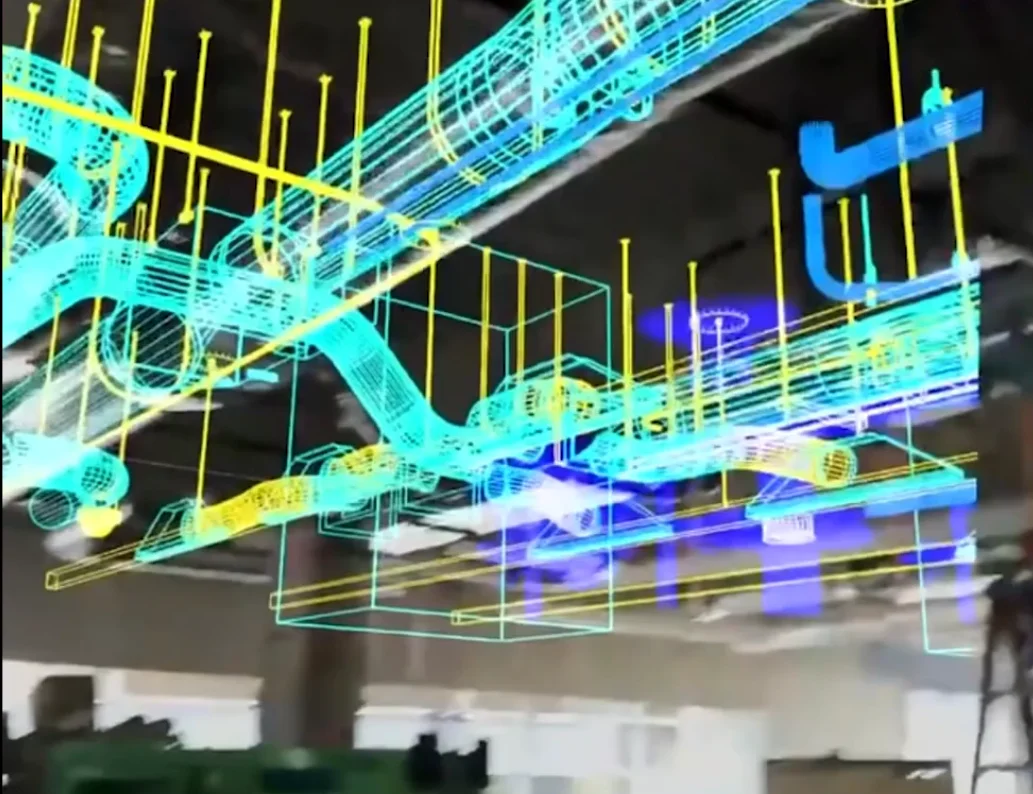
- AR instruction content: 3D models, animations, and text prompts adapted to the specific components of your machinery. The worker sees what to do and how, directly on the equipment, without referring to paper documentation.
- Integration with the production environment: the instruction overlays on the real object via a tablet, smartphone, or glasses. This does not require stopping the line or changing the familiar work process.
- Operator training: a short hands-on session in which staff learn to call up prompts and navigate through steps. A few hours are enough for employees to start using the instruction on their own.
- Technical documentation: user manual, content update procedure after modernization, and support contacts. Everything needed for independent work after launch.
The package covers the entire cycle—from demonstration to daily use. You won't have to search for training contractors or dive into technical details: everything is tuned and documented.
Case Study: How AR Instructions Accelerated Line Repair by 30%
At a machine-building plant, the assembly line stopped for an average of 4 hours with each failure. While the repair technician searched for drawings and checked paper procedures, the crew stood idle and the shift lost output.
We proposed converting standard repair and setup operations into AR instructions based on PTC—the employee sees step-by-step prompts directly on the equipment without getting distracted.
The result was measured against real downtime statistics: the average line repair time dropped from 4 to 2.8 hours, i.e., by 30%. Over a month, this saved about 6 hours of line operation, and in annual terms, the cost calculated after audit.
At the same time, onboarding of newcomers accelerated: a new employee reached working pace in 2–3 days instead of two weeks, because the AR instruction itself prompted the next step and checked the correctness of actions.
For the client, the main thing is not even the numbers, but that the dependence on a 'golden' specialist disappeared. Knowledge is now captured in a digital procedure: any repair technician with a tablet or smartphone performs the operation according to a single standard.
Diagnostics have become transparent—every step is logged, and managers can see where delays occur and which operations should be simplified.
After the first success, the client ordered three more AR instructions for neighboring areas. We audited the operations, collected procedures, configured the platform, and trained the crews—so the project took only a few weeks and paid for itself in the first month of use.
How to Choose Standard AR Instructions for Your Task?
Choosing a standard AR instruction starts not with technology, but with the task on the shop floor: what should change—shift ramp-up speed, reduced defects, fewer requests to a mentor.
So we don't offer one format for everything; we match it to the specific operation and the skill level of the staff.
The main selection criteria are the complexity of the operation, frequency of repetition, and shop floor conditions. For simple routine actions, step-by-step hints are enough; for rare and complex ones, detailed 3D diagrams with automatic control are needed.
Based on the Standard Work methodology, we break the operation into elements and choose a format that delivers a measurable result, not just a 'pretty picture.' To help you navigate on your own, we have compiled a table of typical formats for different production tasks:
| Format | Who it is for | What it gives the client |
|---|---|---|
| Step-by-step AR hints | New employees, personnel without experience | Quick ramp-up to the required pace, fewer errors in the first weeks |
| Interactive 3D component diagram | Repair services, rare operations | Reduced downtime, no need to find a narrow specialist |
| AR checklist | Assembly line operators | Reduced defects, all steps completed without omissions |
| AR training simulator | Training centers, personnel assessment | Skill practice without risk to equipment or materials |
This checklist is a practical filter: you mark your operation, and we show 1–2 suitable formats and samples of standard AR instructions from similar industries.
This way, the decision is made based on an example rather than advertising, and you know exactly what result you will get and what you are paying for.
FAQ About AR Instructions: The Fear That Equipment Will Change
The concern that AR instructions will become outdated after equipment replacement or modernization is one of the most common when ordering. We design solutions to remain relevant even when the machinery changes, and we address these pre-purchase doubts.
What if we replace the equipment?
The instructions won't need to be developed from scratch. We build in a modular structure: just update the models or operation descriptions—and the AR instruction matches your equipment again. This takes days, not months.
How often do the instructions need to be updated?
Only when the process operation itself or the component design changes. We set up the workflow so that you send us new data—and the updated instruction comes back within a few days. No downtime in personnel training.
What if the equipment breaks down?
The AR instruction helps diagnose the fault and suggests the correct sequence of actions. We also keep a backup copy of all materials and can quickly adapt the instruction to a changed configuration.
Who is responsible for support after launch?
We take on support ourselves. The contract specifies response times for update requests, and edits are made without stopping your production. You always work with up-to-date instructions.
Order AR Instruction Development and Gain Control Over Processes
Paper procedures get lost, experience leaves with employees, and control weakens. Turnkey AR instructions turn scattered knowledge into a unified system that is easy to manage and replicate.
By ordering AR instructions from us, you get a working process management tool. Here is what changes after implementation:
- Standardized operations: every employee performs work according to a single standard, with no inconsistencies.
- Transparent control: you see how instructions are executed and spot deviations in time.
- Rapid onboarding: reaching the level of an experienced specialist is several times faster.
- Fewer errors and less downtime: on-equipment prompts prevent incorrect actions.
- Preserved expertise: the knowledge of experienced employees is captured and independent of the human factor.
- Process scaling: ready-made instructions are easy to transfer to new areas and sites.
We take on the entire cycle—from operations audit to launch and support. First, we create a pilot scenario on your equipment, you see the result, and only then do you scale.
Leave a request—we'll show you what standard work instructions examples look like in AR on a real site. You get control, and your team gets a clear work system.