

Why drilling rig maintenance slows down operations
Every hour of drilling rig downtime means a shift in the drilling schedule, broken commitments to the client, and extra costs for equipment rental and crew wages.
Most often, equipment stops not because of part wear, but because of personnel mistakes: someone skipped a step in the procedure, someone mixed up the sequence of operations, and someone simply couldn't quickly find the right instruction in a stack of papers.
The problem is compounded by the fact that training new employees takes weeks, and key specialists with experience are worth their weight in gold. The company becomes hostage to a few experts: if they leave or move to other sites, the pace of maintenance drops.
An instructor physically cannot be at every site at the same time, and in field conditions even an experienced technician spends time searching for the right solution when the equipment requires an unconventional approach.
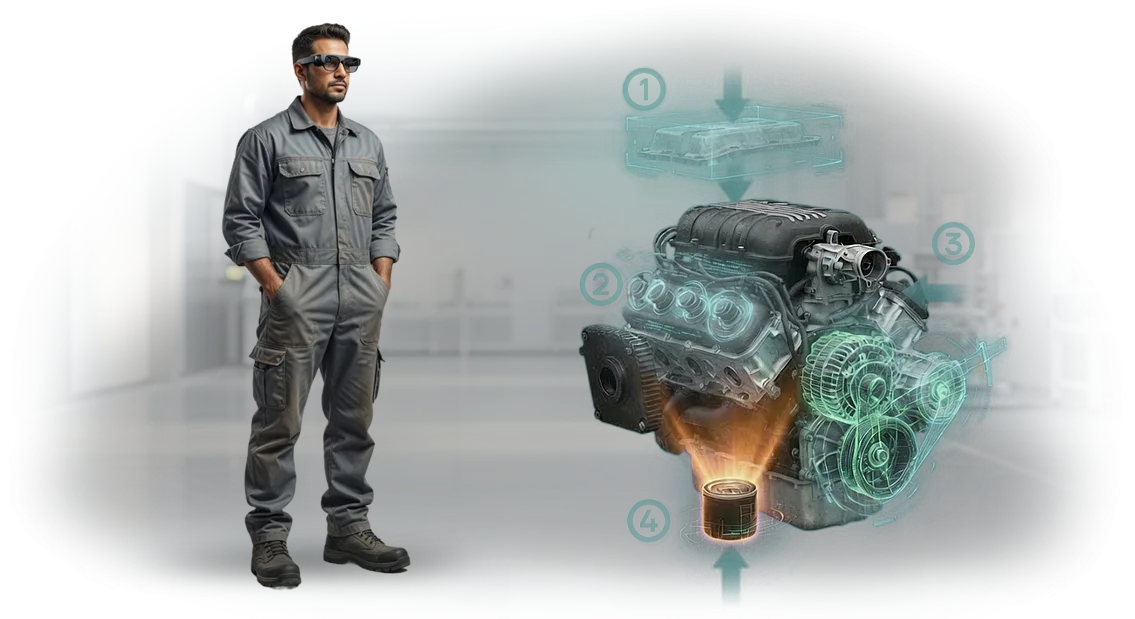
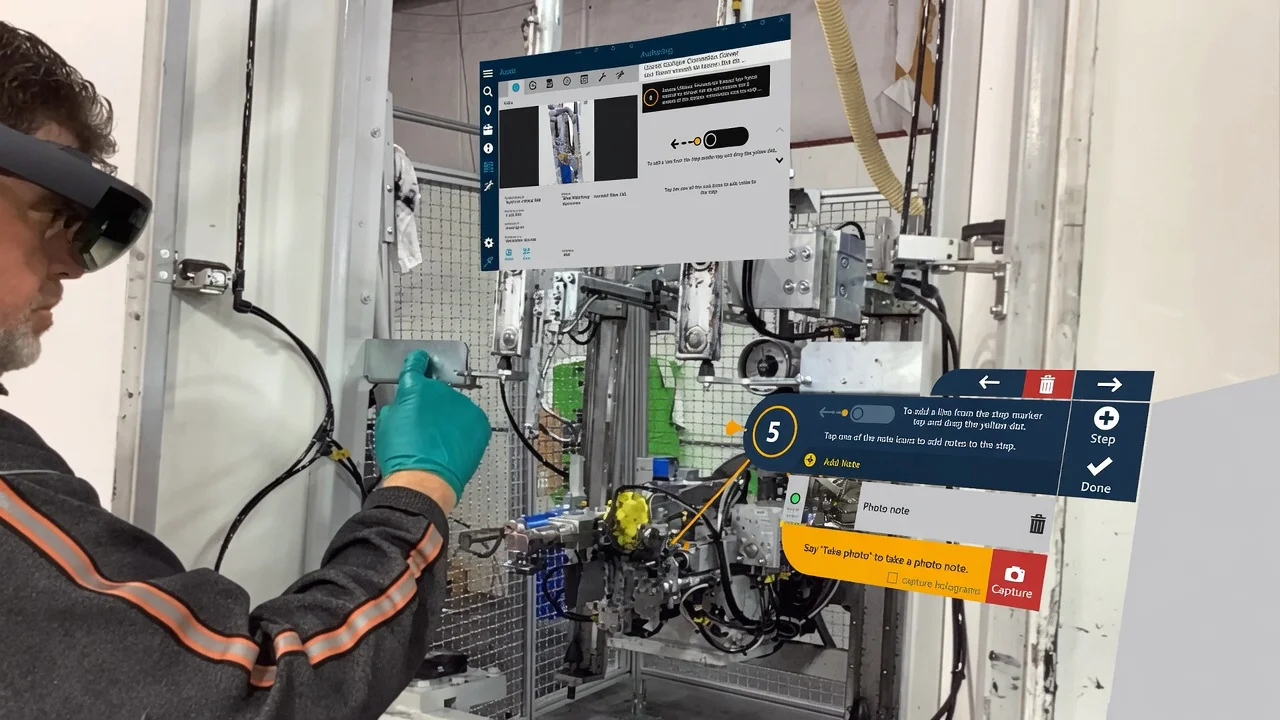
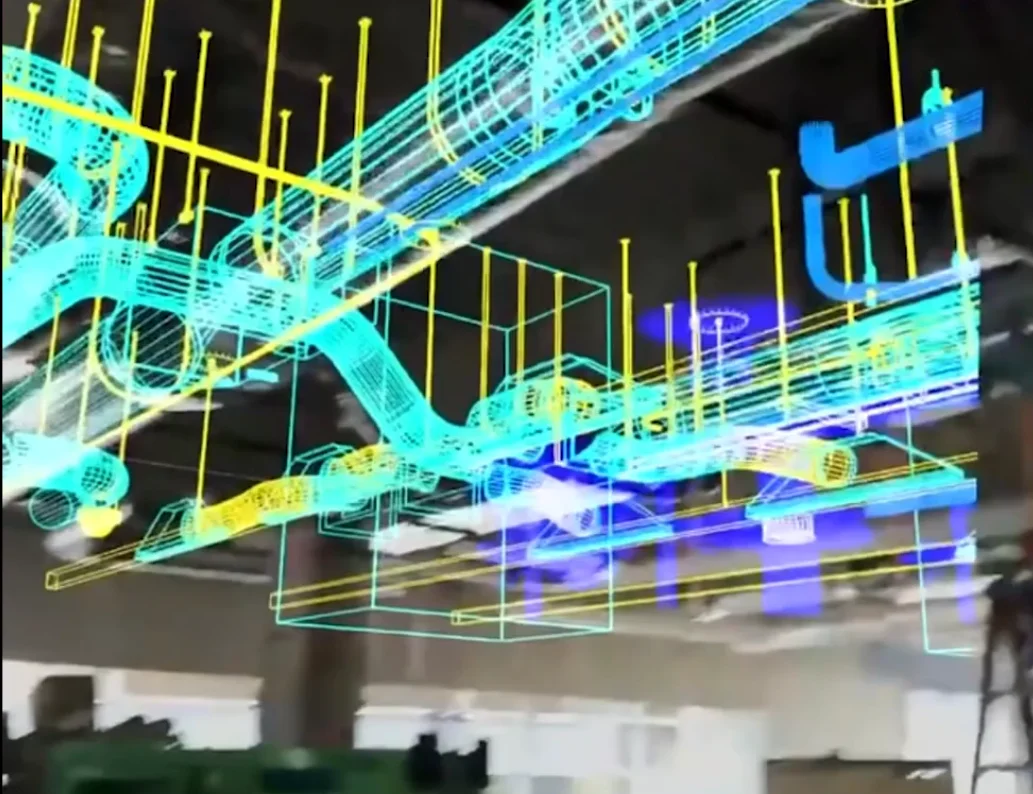
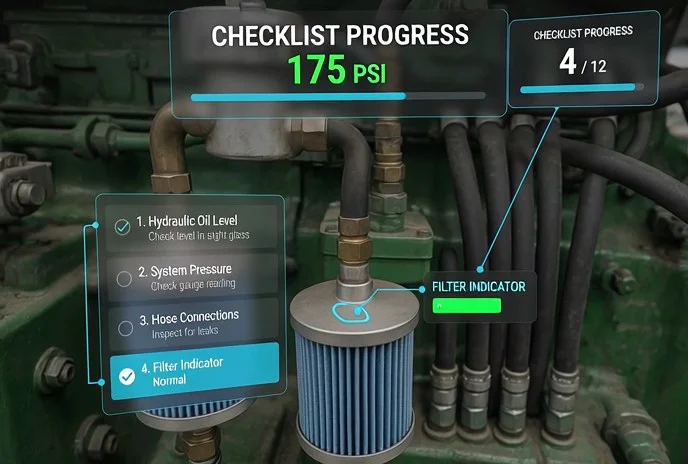
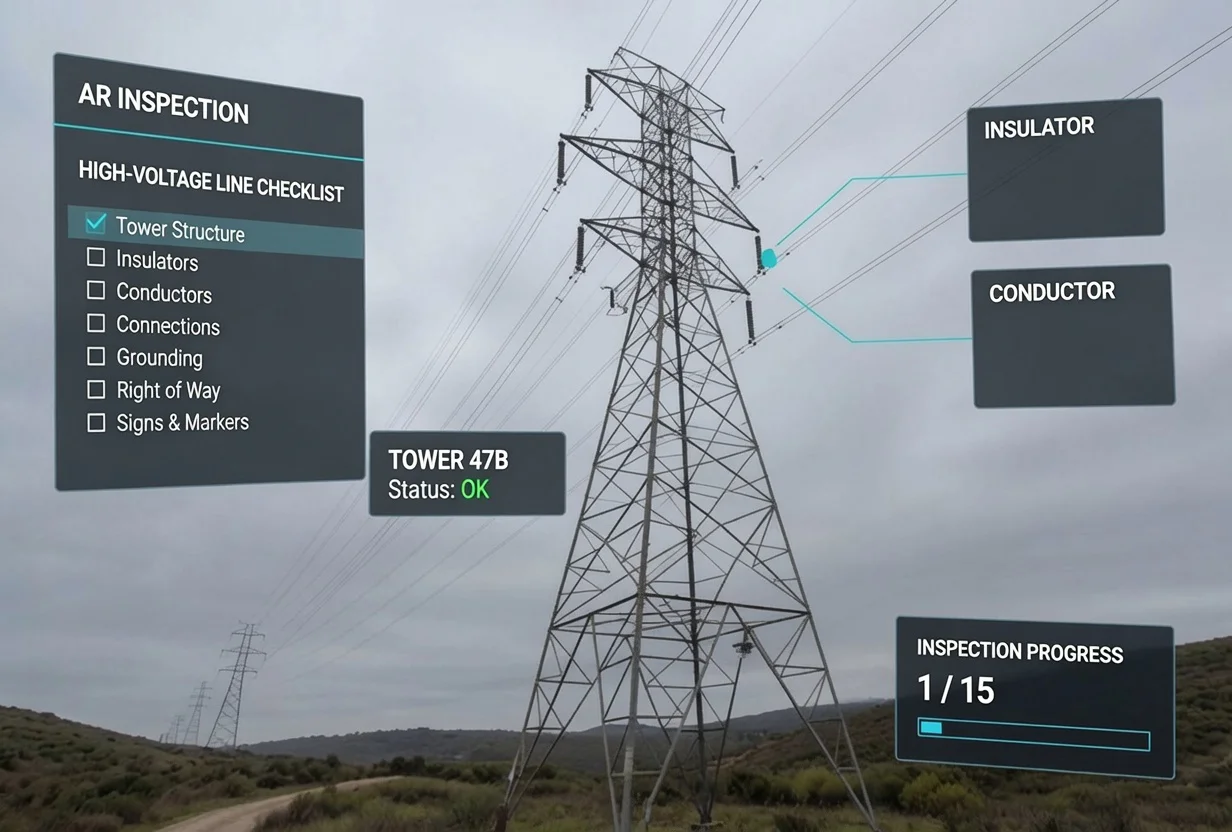
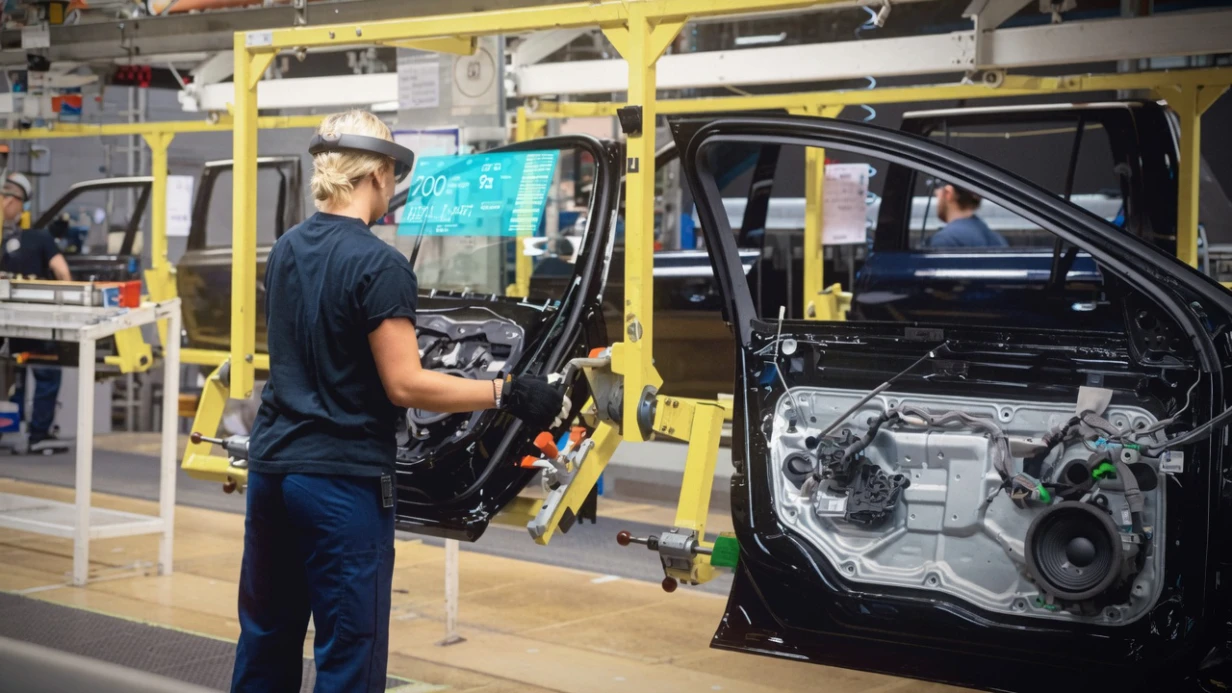
We solve this pain point with AR instructions for drilling rig maintenance. A specialist picks up a tablet or puts on smart glasses and sees the sequence of actions right on the equipment: where the component is, which tool to use, which parameters to check.
This eliminates equipment downtime caused by the human factor, speeds up onboarding for new employees several times over, and reduces dependence on a limited circle of instructors.
What AR instructions deliver in production
When working with drilling rigs, every maintenance mistake results in downtime, repairs, or risk to people. AR instructions overlay prompts directly onto the equipment: the employee sees the sequence of actions without being distracted by paper procedures and complex diagrams. The result is fewer errors, faster task completion, and peace of mind about on-site safety.
Staff training is no longer long and expensive. A new specialist learns the components of a drilling rig much faster because they receive step-by-step guidance at the moment of work.
Experienced employees also benefit: they don't need to keep procedures for rare operations in their heads — AR will prompt the right order of actions at the right moment.
Production safety is strengthened through built-in control. The system tells you where to stop, what check to perform before startup, and warns about potentially dangerous actions.
This reduces the number of incidents and injuries, and therefore eliminates unplanned downtime and inspections by regulatory authorities.
Accuracy of operations directly affects quality control. Every completed step is recorded automatically, forming a digital maintenance record. You can see what work has been done on each piece of equipment and identify a deviation in time before it turns into an expensive repair.
Taken together, the benefits of AR give production the main thing — cost reduction. Faster training, fewer defects, lower costs for emergency repairs and logistics.
Equipment runs more consistently, planned work stays on schedule, and your team spends its energy on development rather than on fixing the consequences.
AR instruction formats for your task
Different tasks on a drilling rig require different approaches to instructions. Some need a quick prompt right at the equipment, some need remote expert support, and some need safe training before starting a shift.
There is no one-size-fits-all solution, so we offer three working AR formats that cover most scenarios at drilling sites.
The formats differ in the degree of immersion and the purpose of use: from simple overlay prompts to a full simulator. The table below shows how to choose the right option for your task.
| AR format | Who it is for | What it gives the client |
|---|---|---|
| Step-by-step AR prompts | Repair crews and operators when servicing drilling rigs | Reduces time spent finding components and following sequences, lowers the risk of error when replacing parts and checking equipment condition |
| Remote expert support | Young specialists and field crews in remote locations | Quick resolution of abnormal situations without an engineer's visit — fewer downtimes, lower travel costs, more confident personnel |
| Simulators for training | Training centers and talent pool | Safe training on a virtual copy of a drilling rig, practicing procedures before going to a real site, reducing the number of novice errors |
The choice of format depends on the frequency of the task and the skill level of the employee.
For daily maintenance, lightweight prompts are enough; for rare and complex operations, expert support is more effective; and for training beginners, a full-fledged simulator is required.
We help determine which operations should be converted to AR first, and combine formats in one system. As a result, the client gets not just scattered instructions, but a tool that speeds up work and reduces dependence on the "golden hands" of individual specialists.
The solution works on regular tablets and augmented reality glasses — without restructuring production processes.
How we develop AR instructions for drilling rigs
The process of developing AR instructions for drilling rigs is designed so that you don't just get a nice prototype, but a working tool that repair crews and operators use every day.
We started with dozens of industrial projects and know: the main thing is not the technology, but a clear result at every stage. That's why we broke the work into six steps, where you see intermediate results and can influence the course of the project.
- Equipment and task audit. We study your drilling rig, maintenance procedures, and typical mechanic work scenarios. We identify which operations most often cause errors and where AR prompts will deliver maximum effect — saving time or reducing the risk of breakdown.
- Scenario design. Together with your engineers, we break down every step: what the specialist should see, which parameters to check, how to record the result. The output is an instruction logic that is clear even to a beginner, without unnecessary technical complexity.
- AR content development. We create 3D models of components, animations, and text prompts that overlay onto the real equipment. We build the content in a modular way: if the procedure changes, you only need to update one module, not redo the entire instruction.
- Approval on real machinery. We test the instruction directly on the drilling rig with your specialists involved. We gather feedback and refine the wording and visualization — so the instruction is user-friendly, not just nice-looking.
- Launch and integration. We install the app on your crew's tablets or smart glasses, set up access, and start pilot operation. We help build AR instructions into the existing maintenance process so they become part of the work, not a separate experiment.
- Support and development. After launch we stay in touch: we update content when procedures change, add new components, and train your staff. You get a tool that lives and grows alongside your equipment fleet.
This approach ensures that the implementation of AR instructions won't turn into a "prototype gathering dust on the shelf," but will become a working system that reduces maintenance time and lowers the number of errors.
We handle the entire cycle — from the first audit to post-launch support — and you get a transparent process and a clear result at every stage.
What is included in the AR instruction delivery
Before launch, it's important to understand what you get in the end. We don't just hand over an "app file" — we build a working system that employees can use right on the drilling site.
The delivery includes everything needed for the AR instruction to deliver results from day one — without in-house development or additional investment.
A typical package includes:
- Ready-made AR scenarios for key drilling rig maintenance operations — step-by-step prompts overlay onto the real equipment, and the mechanic sees what to do and where.
- Operational documentation — scenario descriptions, update procedures, access rights for different roles.
- Instructions for employees — short guides so operators and repair crews quickly master the new format without leaving the shift.
- Access to the AR platform from our team — a single content management point; you update scenarios at any time to reflect procedure changes.
- Training for key specialists — hands-on sessions on real components, including handling abnormal situations.
- Support during launch and the first weeks of operation — we answer questions and help adapt instructions to the specifics of your site.
- Rights for further development and source materials — you can expand the scenario base on your own or order new ones from us.
What does this mean in business numbers? Downtime from errors is reduced, new employees adapt faster, and the burden on mentors decreases. And the platform lets you scale instructions to other equipment models or new sites without repeated development investment.
Each delivery item solves a specific task: from quick onboarding to maintenance quality control. As a result, you get not a one-off service but a manageable tool that works to improve the safety and efficiency of repair work.
Case study: reducing equipment downtime
When a drilling rig is idle because of an operator error, every hour costs the company serious money. Ordinary paper instructions and mentor-led training take weeks, and a newcomer still makes mistakes in abnormal situations.
We solved this problem with augmented reality: the operator sees prompts right on the equipment, and the maintenance process becomes clear without lengthy preparation.
For a major drilling company BurTech, we developed AR instructions for scheduled rig maintenance.
Over three months of the pilot project, we managed to cut downtime by 30%, reduce the number of repair errors by half, and accelerate new employee onboarding from three weeks to five days.
The instructions run on the regular tablets and rugged smartphones already used at the sites, so the company didn't have to buy additional equipment.
The implementation results speak for themselves: planned work is now completed 20% faster, and the number of repeated service calls has dropped several times over.
Operators find the right components faster and receive step-by-step prompts with error control — the system doesn't allow an important step to be skipped. This is especially important when working in low-visibility conditions and at height, where the cost of a mistake is highest.
After the successful pilot, the client expanded the project to all its drilling sites. We support the implementation and update the instruction content as procedures change.
For us, this is the best measure of success: the company got measurable savings and trusted us to roll out the system further.
How to choose the right AR instruction format for your task?
There is no universal AR instruction: the format is selected for a specific task and working conditions. There are two deciding factors — the complexity of the equipment and the skill level of the specialists who will use the instruction.
Their combination determines what is more profitable to implement: quick visual prompts or a full step-by-step scenario with action control.
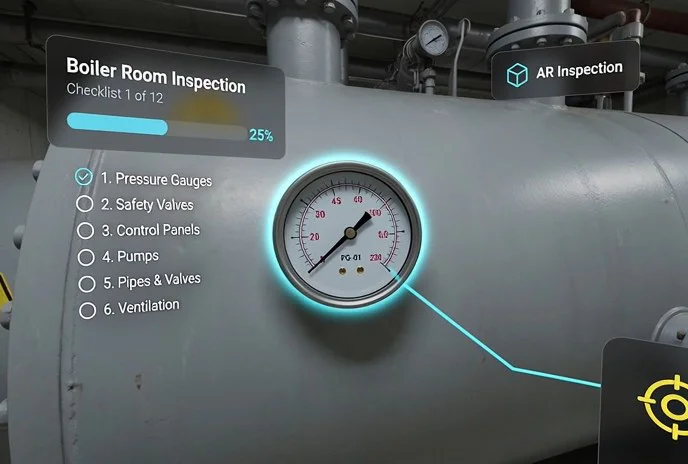
If the equipment is standard and the maintenance procedure consists of familiar operations, a lightweight format is enough — visual markers, prompts, and short checklists right in the specialist's field of view.
This option is faster to develop, easier to integrate into existing processes, and doesn't require long staff training. It solves the main task — reducing the number of errors during routine maintenance.
It's a different story with drilling rigs that have complex structures, many components, and high safety requirements. Here, a detailed format with step-by-step 3D visualization, automatic verification of each stage, and alerts for incorrect actions is useful.
The mechanic sees not text and diagrams, but the exact sequence of operations on the real equipment — this reduces downtime and eliminates skipped critical steps.
The skill level of specialists also determines the format choice. Beginners need training scenarios with explanations and result control; experienced employees need compact reminder instructions that speed up work rather than distract from it.
We'll help you choose a solution for your situation: we'll analyze the equipment, tasks, and team, and propose exactly the AR instruction format you need that will pay off at your maintenance volumes.
Frequently asked questions about implementing AR instructions
Before launching AR instructions for drilling rig maintenance, clients most often ask about implementation complexity, device requirements, safety, and updates. Below are direct answers based on our experience with industrial projects.
Is it difficult to implement? Will we stop production?
No. Implementation runs in parallel with current operations: we start with a pilot site and scale up after the result is confirmed. Operator training takes 1-2 hours, and downtime is excluded — content is prepared in advance.
What devices are needed? Do we have to buy expensive ones?
The basic scenario works on the tablets and smartphones employees already have. For complex operations we can offer industrial headsets, but they aren't required to start. We'll determine the device list after the task audit.
Is it safe for personnel?
AR instructions reduce the risk of errors and defects: the worker sees the correct sequence of actions right on the equipment. The system doesn't connect to machinery — it only displays information. We coordinate scenarios with your occupational safety department.
How often should instructions be updated? Who will do this?
Updating takes minutes: you change the text or video in the admin panel, and the changes are immediately visible to employees. No need to reprint procedures. We train your specialist and remain on support under the contract.
Submit a request — we'll start with an audit of your task
Each drilling rig operates in its own conditions: some equipment can be handled with universal instructions, while others need a step-by-step breakdown tied to a specific model.
Without a preliminary analysis, it's easy to pay for unnecessary options or choose a format that won't take root with the crew. A task audit removes these risks before the work even begins.
We conduct the audit in two days: we study your equipment, procedures, staff skill levels, and typical maintenance errors. At the end, you get an AR instruction plan, the implementation scope, and a cost estimate — without hidden work or guesswork.
What you will learn from the audit:
- where AR will reduce maintenance time and the number of errors;
- which components and operations should be covered in the instruction first;
- which format will suit your employees — from simple prompts to full step-by-step control;
- what implementation timelines are realistic for your equipment fleet;
- what the project will cost and how it will pay off;
- what is needed from your side to launch without stopping operations.
No generic presentations — only an analysis of your situation and a concrete plan. Submit a request through the form on this page, and within one business day we'll contact you, clarify the details, and start the audit. You'll have the solution and the estimate within two days — then you decide how beneficial it is.