

Why Does Generator Maintenance Cost More Than It Seems?
A generator maintenance estimate usually includes spare parts and technicians' labor. But these figures rarely reflect the true cost: most of the money goes into downtime that begins when the equipment stops.
While the line sits idle, costs grow with every hour, even if the repair bill itself looks moderate.
Imagine: a diesel generator Cummins fails in the middle of a shift. While the technician searches for a diagram, figures out which component to remove first, and recalls the order of operations, production stands still.
Every hour of downtime means lost revenue, delayed shipping schedules, overtime for adjacent shops, and a stressed customer. All told, these losses often exceed the repair itself.
And on top of that come maintenance errors: a mixed-up disassembly sequence, a skipped step, an incorrectly torqued component. Any small mistake leads to another technician visit, damage to neighboring parts, or risks to staff safety.
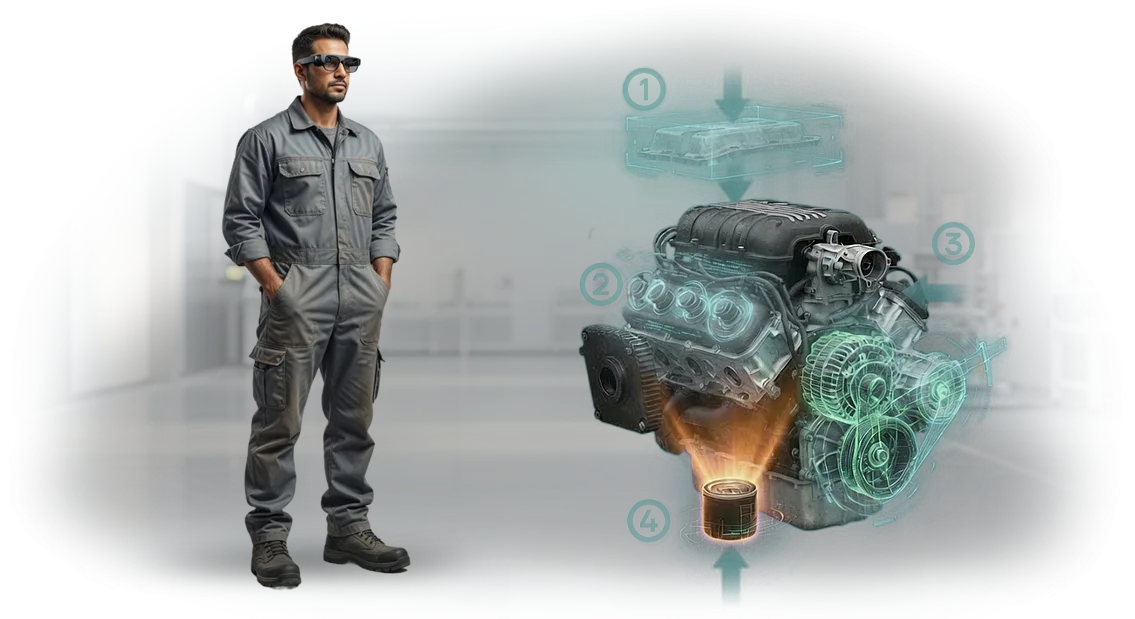
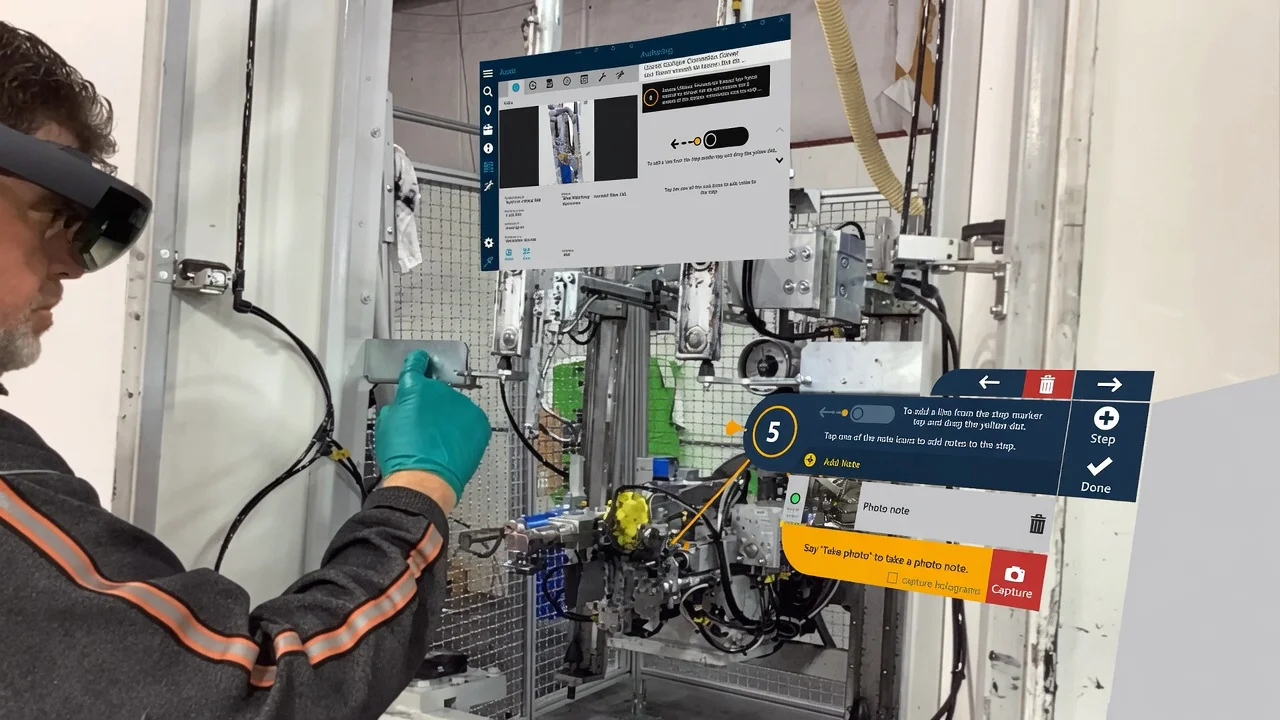
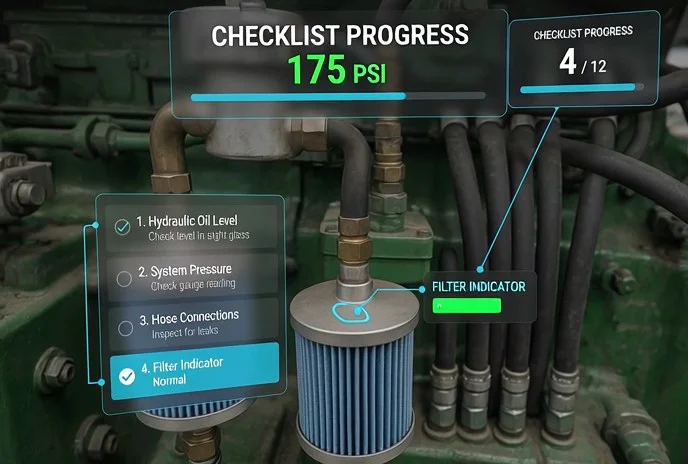
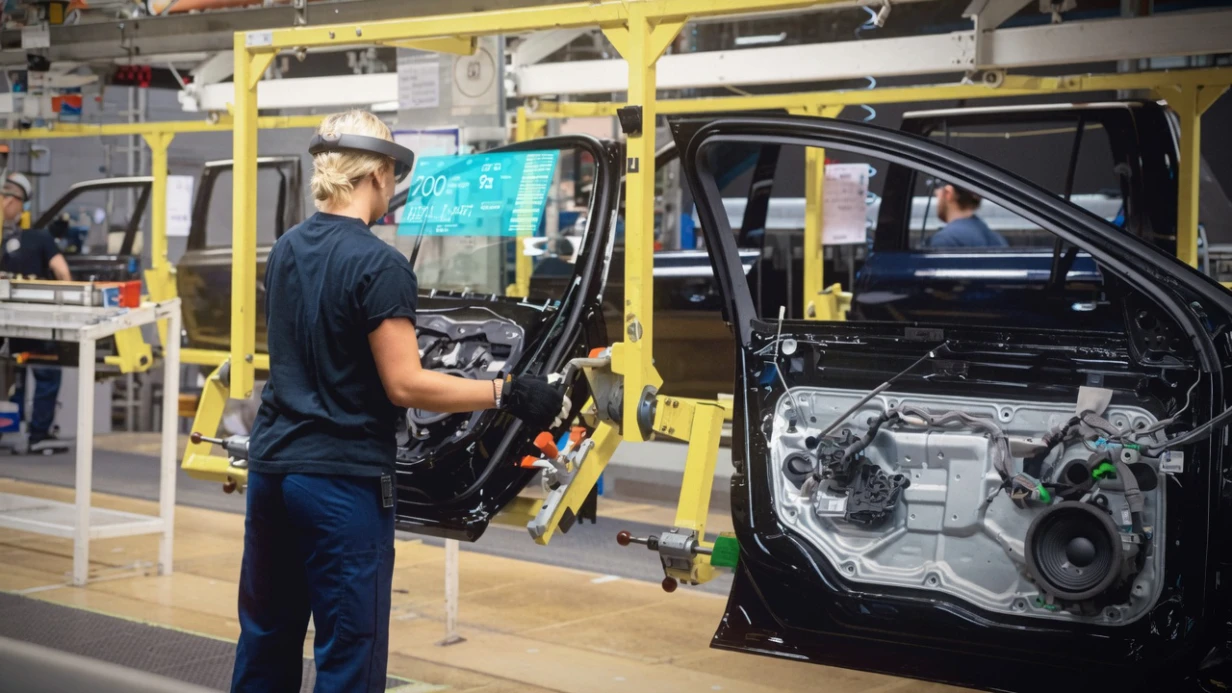
We close this problem. Instead of paper instructions and the technician's memory — step-by-step AR prompts overlaid on the real equipment.
The technician sees directly on the unit which component to remove, in what order, and with what tool — generator maintenance takes less time, goes without errors, and downtime is minimized.
What an AR Instruction Gives Your Staff and Business
Generator maintenance is a high-responsibility area: an error in the sequence of operations can stop a facility and lead to expensive repairs. Meanwhile, experienced specialists leave, and training a new engineer takes months. An AR instruction solves this problem on several levels at once.
Speed of work: the technician sees on the tablet screen which exact component and in what order to service — hints are overlaid directly on the equipment.
No need to flip through paper regulations or search for the right drawing; service operation time is reduced by multiple times.
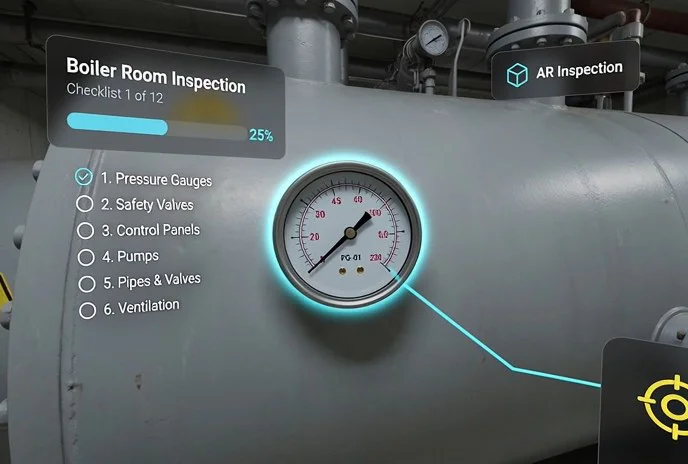
Accuracy and fewer errors: the system highlights the correct zones, records completed steps, and controls critical moments, such as torque settings or connection order. This eliminates the "human factor" and repeat visits to the same unit.
Training without stopping production: a new employee works with the same prompts as an experienced mentor — competencies are transferred right on the shop floor, without separate simulators or halting service.
You also get data on the technician's actions and can see where the instruction or skill falls short.
At the core is the proven Unity platform: it precisely aligns 3D prompts with the generator's actual components and works reliably on standard tablets. No complex equipment — just a tablet the technician already has.
As a result, speed, accuracy, training, and control work as a single system, and your engineers deliver consistent results at every site.
Formats of AR Instructions for Generators and Their Application
Generator maintenance is always a balance between speed, safety, and completeness of information.
Different tasks require different presentation: a field mechanic needs an instant prompt, an engineer during planned maintenance needs a clear procedure, and a newcomer needs the ability to practice without risk.
We develop AR instructions in three formats so you can choose for your process rather than fit the process to the technology.
| Format | Implementation Complexity | Content Depth | Tasks Solved |
|---|---|---|---|
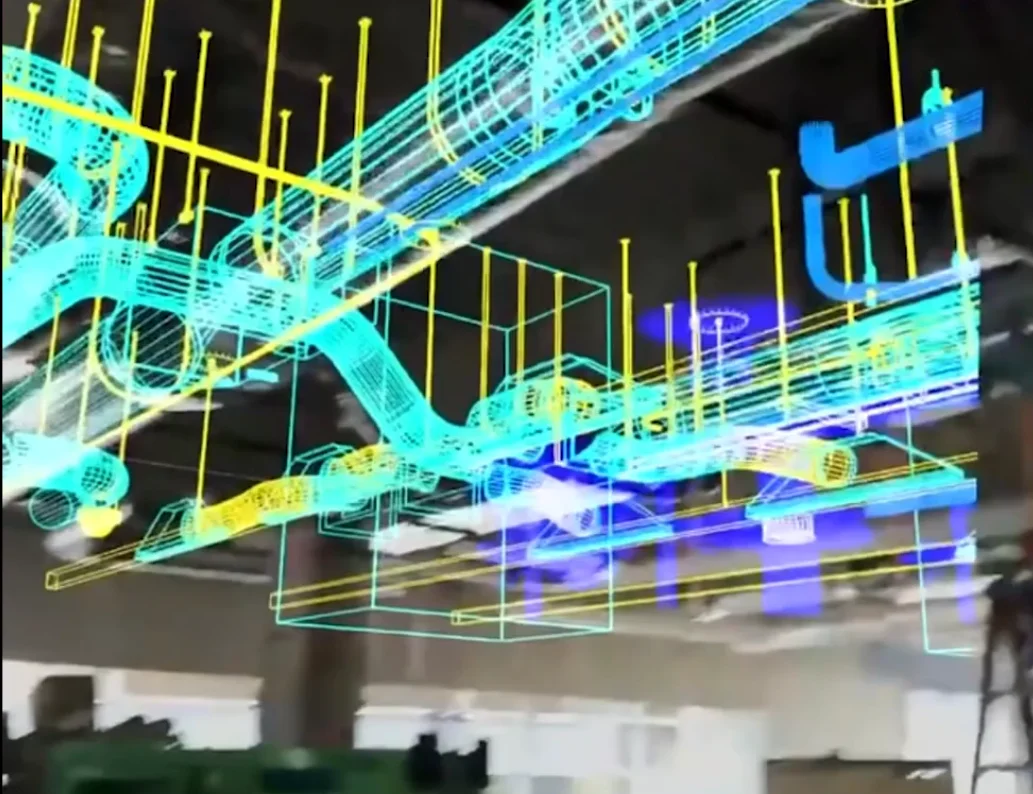
| 3D overlay | Low, launch in 1–2 weeks | Part highlighting, arrows, labels on equipment | Fast diagnostics, shorter downtime, field support |
| Step-by-step mode | Medium, requires operation descriptions | Detailed scenario with control of each step | Planned maintenance, fewer staff errors |
| Training simulator | High, creating scenarios and tests | Full course with knowledge checks and skill practice | Training new employees, professional development |
Formats can be combined: start with a 3D overlay for fast diagnostics, then implement step-by-step mode for procedures. If you have staff turnover or are expanding your team, augmented reality training shortens onboarding time and reduces the burden on mentors.
When choosing, we consider the specifics of your equipment, staff skill levels, and real work scenarios. We'll advise which format will deliver maximum effect and adapt the content to your generators. As a result, you get a clear tool that works right on site.
How an AR Instruction Is Created: 7 Steps
We have structured the process so you see results at every stage. No black box: from the first brief to launch, you understand what is happening, who is responsible for what, and when the final product will be ready.
All stages are recorded in the contract and coordinated with your side — you always know what stage the project is at.
-
Brief and equipment audit. We find out which generator models your specialists work with, which operations they perform most often, and where errors occur. Based on this, we determine which instructions are needed first and how they should look.
-
Scenario and step logic. Together with your engineers, we record the sequence of actions for each operation. You approve the scenario before development begins — this eliminates unnecessary edits and extra rework costs.
-
Content preparation. We turn technical documentation and procedures into clear visual assets: photos, videos, 3D models. At this stage, you see the first drafts and can adjust details.
-
Layout and logic approval. We assemble a trial version of the instruction and show it on your tablet or computer. You check how it looks in real use and make edits before the rollout.
-
Pilot launch. We deploy the instruction to one team or site. We collect feedback from mechanics and operators — those who will use it every day — and adjust details.
-
Final launch. We hand over the complete turnkey solution: access credentials, an instruction guide for employees, and brief training. If needed, we help integrate the instruction with your internal document system.
-
Support and updates. After launch, we don't disappear. If a procedure changes, the equipment model changes, or a new operation is added, we update the instruction so it stays relevant.
An average project takes two to four weeks depending on equipment complexity and the number of operations. At every stage you receive intermediate results, so the final product exactly matches your employees' expectations and requirements.
What's Included in the Delivery: A Kit for Safe Operation
The kit includes everything the operations and occupational safety departments need to start working with AR instructions without delay. We don't just hand over files — you get a complete system: from the scenarios themselves to inspection procedures.
- AR instructions for generator maintenance: step-by-step scenarios with 3D prompts overlaid on real equipment. The employee sees the sequence of operations and moments requiring control — the risk of mistakes when replacing components decreases.
- Administrator tools and access: you can independently edit scenarios — add new components, change the order of work when updating your equipment fleet.
- Training materials: short videos and quick-reference guides for working with the interface. Staff master the system within a shift, without stopping production.
- Documentation for the occupational safety department: descriptions of safe maintenance methods, recommendations on protective equipment, and procedures for using AR in production environments. A ready-made package for justifying permits and inspections.
- A methodology guide for engineers and technologists: how to adapt instructions when generator designs change, which metrics to track, and how to evaluate the effect of use.
- Scheduled support and updates: consultations on using the kit, scenario updates when standards change or new equipment models are released.
This kit removes the "figure it out yourself" burden: materials are structured, documents are ready to use, and staff are trained. The result is a transparent maintenance process with quality control at every step.
Case Study: How We Cut Diesel Generator Repair Time
A common situation in production: a diesel generator stops, and the repair specialist waits for an instruction or drawing to understand the disassembly order of the unit.
Every hour of downtime is missed deadlines and losses, so the client came to us with a request to speed up maintenance.
We developed an AR instruction for diesel generator repair that shows the mechanic step by step directly on the equipment housing. The specialist points a tablet and sees which component to remove first, which tool to use, and how to avoid typical mistakes.
The result exceeded expectations: repair time dropped by 40%, and the number of disassembly errors fell threefold. Previously, replacing parts took 6 hours; now it takes 3.5 hours.
The client from «ЭнергоСервис» noted that crews reach sites faster and the service department's workload grew without hiring new staff.
After the first project, the company ordered two more instruction kits for other generator models. This is a typical scenario: when a client sees measurable results in money and hours, they come back to scale the solution.
How to Choose an AR Instruction Format for Your Tasks?
There is no one-size-fits-all answer: the right AR instruction format depends on your tasks, equipment specifics, and implementation scale. For generator maintenance, the complexity of scheduled work, the skill level of technicians, and typical failure scenarios matter.
We don't sell a ready-made template — first we analyze your situation, budget, and timelines, and only then propose a format.
During the consultation, we determine which operations you want to cover: regular maintenance, troubleshooting common faults, or complex major repairs.
Based on that, we offer either compact step-by-step prompts that overlay the equipment and guide the employee through the procedure, or full interactive guides with diagnostics, diagrams, and control of every action.
This approach gives you not "technology for technology's sake" but a clear format that solves a specific problem.
You immediately see how much time the instruction will save on training, how much the error rate will drop, and how quickly an employee will start working independently.
We also assess which option is easier to integrate into current processes and how much data will need to be prepared.
The consultation produces a specific recommendation: the right AR instruction format, an implementation plan, and a scope-of-work estimate. If needed, we suggest starting with a pilot site so you can see the effect on a real generator and adjust the solution before full launch.
This way, you choose the format deliberately, without overpaying for unnecessary functionality, and with clear payback.
Frequently Asked Questions About Implementing AR Instructions
Implementing AR instructions is a responsible step, so it's natural to have questions before ordering about how this will affect the work of service crews and process safety. Below are answers to the topics most often discussed by technical service managers.
Is it difficult to integrate AR instructions into current processes?
There's no need to change established working practices or replace existing systems. We adapt the instructions to your documentation and equipment, and employees start using them within a day or two.
The instructions appear on a tablet or smartphone — right next to the equipment, at the moment of maintenance.
What happens if a procedure is updated or the generator model changes?
Text and graphic materials are easy to update — edits are made in the electronic version, and crews immediately see the current information. No need to reprint paper manuals or wait for a new edition. When the model changes, we help adapt scenarios to the new specifics.
What guarantees do you provide for implementation?
We start with a pilot site on a single generator so you can evaluate the result in real conditions without risk to the entire equipment fleet. After launch, we stay by your side, support your employees, and ensure the instructions work reliably. The terms are fixed in the contract, so you understand the timelines and scope of work.
If you didn't find your question, write to us — we'll show examples and respond within one business day.Order AR Instruction Development for Your Equipment
Submit a request for an AR instruction for generators and other industrial equipment. We'll contact you, clarify your tasks, and propose a solution that accelerates employee training and reduces maintenance errors.
After your inquiry, you receive:
- A personal consultation: we analyze which of your production processes are best suited for AR instructions and assess the potential of such scenarios.
- A transparent cost estimate: the cost and timelines are provided after we analyze operations, content volume, and the number of equipment units — with no hidden surcharges.
- Examples and demos: we show AR instructions for similar tasks so you can see the format and presentation style before work begins.
- Adaptation to your equipment: we create step-by-step scenarios for maintaining generators, pumps, machine tools, and other units according to your procedures.
- Support at all stages: from task definition to implementation, including training your specialists and handing over materials.
- Post-launch support: we update instructions when procedures change so the content always meets current requirements.
Submit a request on the website or contact us any way you prefer. We'll tell you how an AR instruction for equipment is already saving your mechanics time and reducing downtime risk.