

Why do refrigeration unit maintenance services require AR instructions?
Any breakdown of refrigeration equipment means production stoppage, product loss, and disrupted supply chains. Every hour of downtime hits revenue, so repair speed and accuracy directly affect business results. But most service teams still rely on paper instructions and flat diagrams.
For emergency repair of refrigeration units, this approach is especially dangerous: even an experienced engineer wastes time searching for the right component in the documentation, and an incorrect sequence of actions during compressor maintenance can put equipment out of service for a long time.
Paper cannot show the internal structure in motion, does not suggest the next step, and does not warn about dangerous zones.
Personnel training is a separate pain point. A new employee spends weeks figuring out the specifics of a particular model, and staff turnover in industry remains high.
As a result, people with insufficient qualifications are allowed to work with complex equipment, and the risk of a costly error is baked in before work even begins.
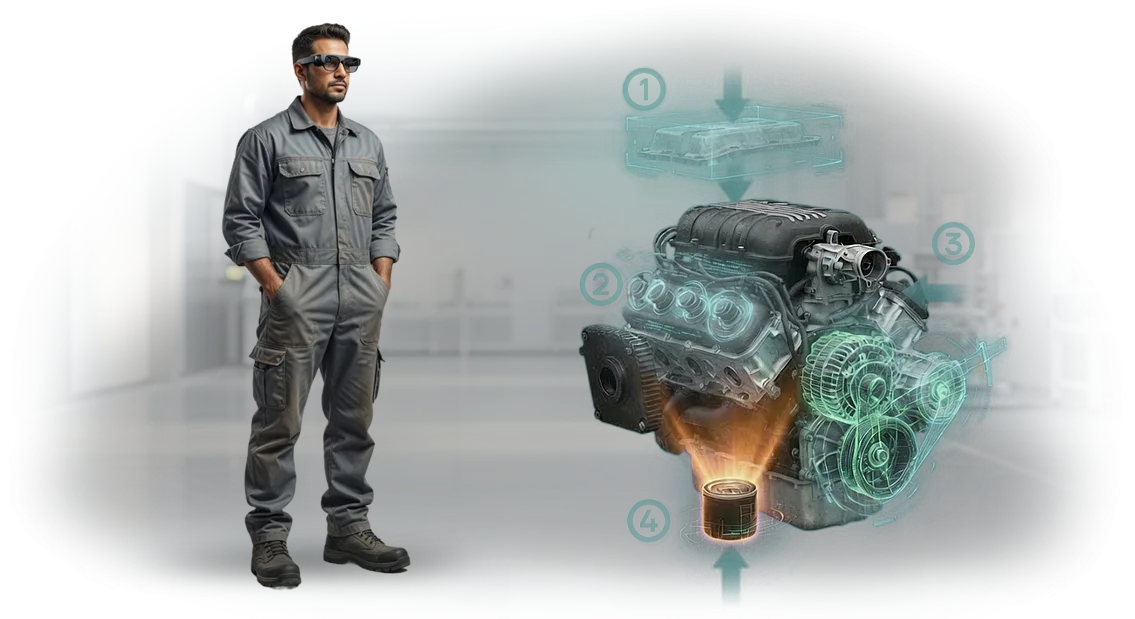
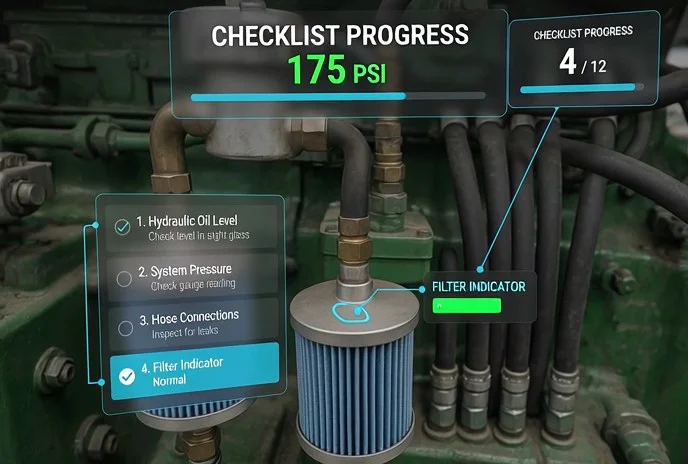
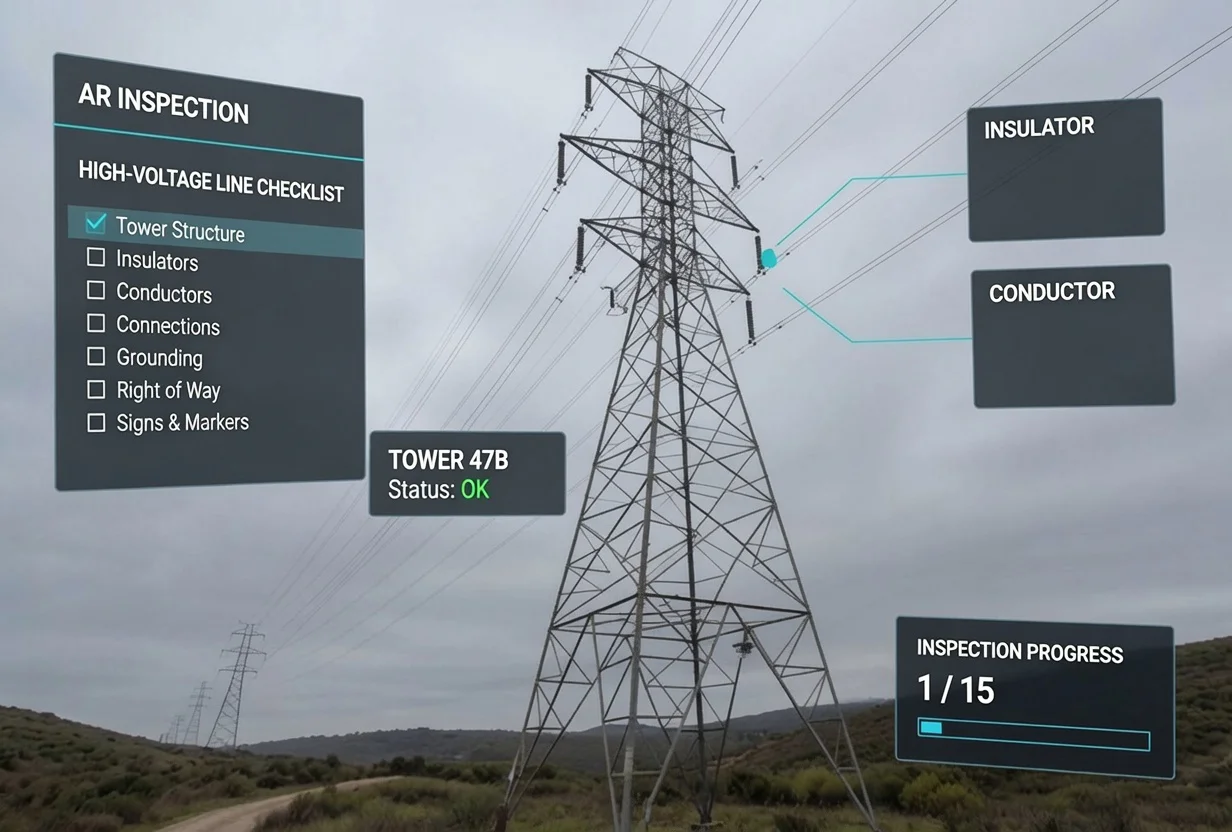
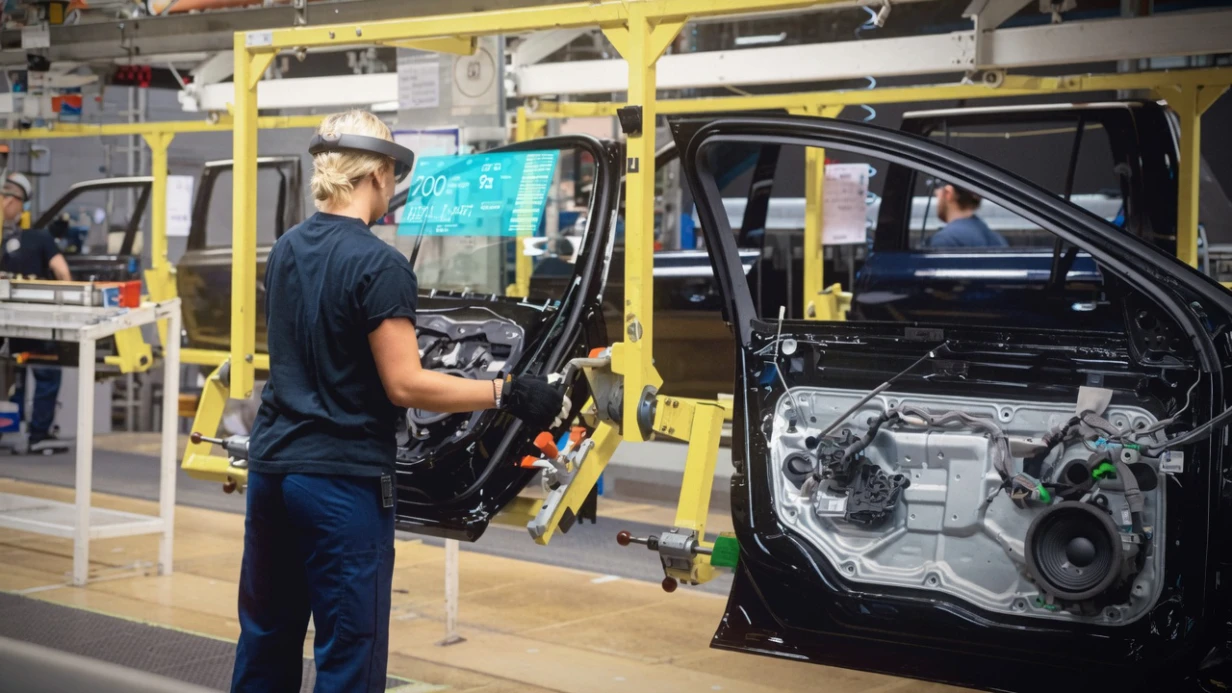
AR instructions completely change the picture: the technician sees the required component directly on the equipment, receives step-by-step prompts tailored to the model, and immediately understands what to do next.
This reduces refrigeration equipment maintenance time, lowers the number of errors, and accelerates onboarding of new employees.
We have been developing such instructions for ten years and adapt them to any equipment fleet and enterprise operating mode. The result is predictable maintenance and fewer downtimes — a direct contribution to the stability and profitability of your business.
What AR instructions will bring to the service department
The service department has to work under harsh conditions: every minute of customer equipment downtime means losses, and errors in refrigeration unit repairs result in repeat visits and a damaged reputation.
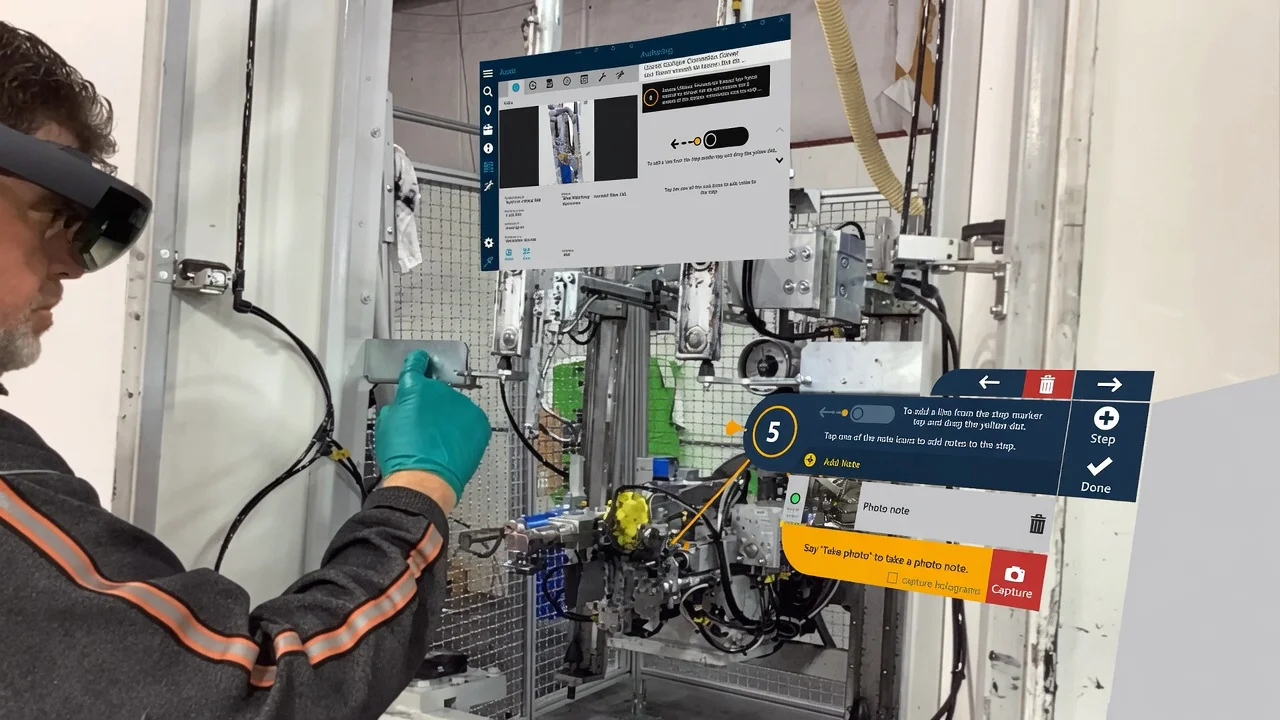
Familiar paper instructions and reliance solely on engineer experience do not save the day: much time is spent finding the right component or operation sequence. AR instructions solve this by overlaying step-by-step visual prompts directly on the equipment.
The engineer sees what to do and in what order without getting distracted by reading documentation — results come faster and with fewer errors.
Service speed and accuracy are the first effects a service manager notices. An operation that used to take several hours now takes noticeably less time, and the quality of execution no longer depends on the fatigue or experience of a particular specialist.
Fewer errors mean fewer repeat requests, fewer spare parts consumed, and fewer disputes with clients about the causes of malfunctions.
The second result is fast training of new employees. Instead of long months of mentoring and studying thick manuals, a newcomer gets practical support right at the workstation: the system shows how to disassemble a unit, check pressure, or replace a part.
They go out on independent visits faster, and experienced engineers stop spending time on the same explanations. The team's qualifications grow without taking time away from real tasks.
For the client, this translates into minimized downtime for refrigeration equipment.
Scheduled maintenance or repairs take less time, errors are eliminated, so the enterprise does not lose product, does not miss deliveries, and is confident that the service team will arrive and resolve the issue on the first visit.
Ultimately, implementing AR instructions improves overall service efficiency: operating costs decrease, the number of repeat visits drops, and the service itself becomes manageable and predictable.
The manager gets a team that works faster, learns without stopping production, and generates more revenue with the same resources.
AR instruction formats for refrigeration units
Standard instructions and PDF regulations force engineers to search for the right section, match a diagram against the real component, and spend time getting up to speed. In industrial equipment, every minute of downtime means losses.
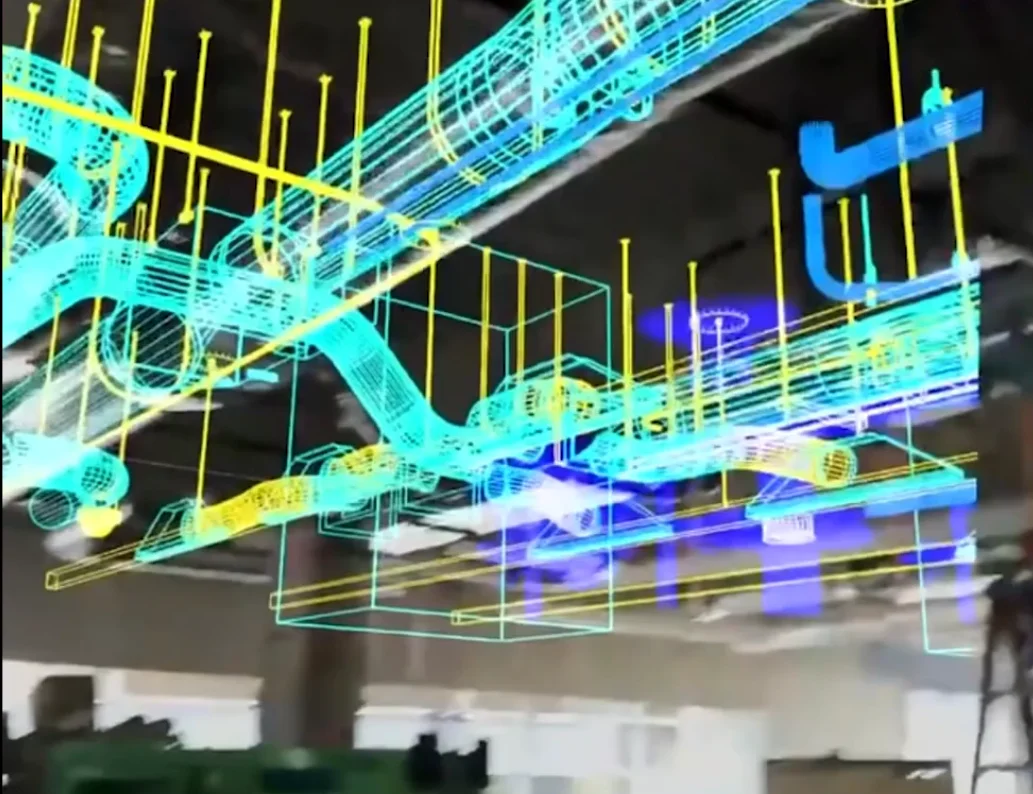
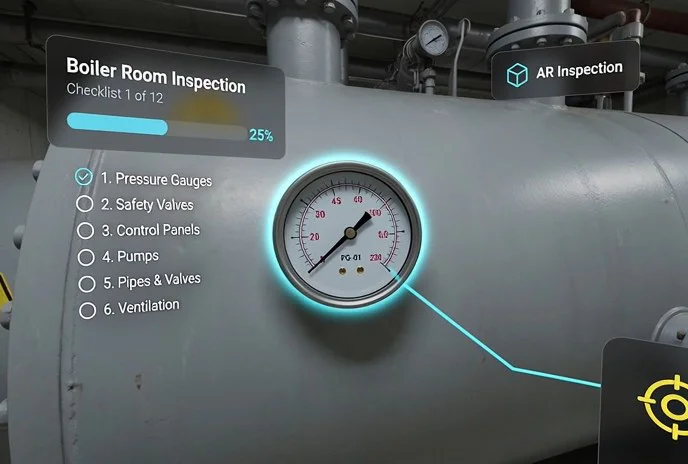
An AR instruction overlays prompts directly on the refrigeration unit: the specialist sees the sequence of actions, checkpoints, and parameters without leaving the equipment.
To make the format genuinely time-saving, we adapt the presentation to the specific task. Commissioning, scheduled maintenance, and emergency repairs require different levels of detail and different interfaces. Below is what this looks like in practice.
| AR instruction format | For whom | What the client gets |
|---|---|---|
| Commissioning | Commissioning engineers, installation crews | Fast equipment startup: fewer errors at first launch, no need to re-read documentation, commissioning timelines are shortened. |
| Scheduled maintenance | Service engineers, operations departments | Compliance with regulations and control of each stage. Employees skip operations less often, and maintenance time decreases — equipment stops less frequently. |
| Emergency repair | Emergency crews, on-duty specialists | Instruction directly on the component: fast diagnostics, precise fault-elimination sequence, minimal refrigeration unit downtime. |
This approach reduces new employee training time and reduces dependence on "senior" specialists who keep knowledge in their heads.
AR instructions work on professional equipment and adapt to specific refrigeration unit models, your company's regulations, and personnel qualifications.
Choose the scenario you need — we will prepare a format for your task and help integrate it into daily processes.
Development stages for AR instructions for your equipment
We understand that developing AR instructions is not buying a ready-made application but creating a tool for your tasks and equipment. That is why we designed the process so that you see results at every stage: from the initial brief to launch and ongoing support. Below is how we work with refrigeration units and other industrial equipment.
- Brief and audit. We start by diving into your task: what operations employees perform, where errors most often occur, and which equipment needs visual instructions. We study documentation, regulations, and real work situations on site.
- Scenario prototype. Based on the brief, we create the logic of the future instruction: break the process into steps and determine when an employee will need a prompt. You receive a text scenario and a visual diagram — before any money is invested in development.
- Approval. You approve the prototype, make edits, and add the specifics of your regulations. At this stage, we record all requirements for the interface, navigation system, and presentation of information — so the result exactly matches your standards.
- AR instruction development. We create the application itself for refrigeration unit maintenance: overlaying prompts on real equipment, step-by-step guidance, control of critical operations. We work on professional equipment and proven tools — you get stable performance across different devices.
- Testing at your site. We test the instructions together with your employees: is it convenient to use, are the wording clear, does the system lag. We collect feedback and refine everything to a comfortable level.
- Deployment. We help roll out AR instructions across your equipment fleet or team: install on devices, configure access, train administrators and key employees. You get a ready-to-use tool, not a "raw prototype."
- Support and growth. After launch, we stay in touch: we answer questions, update instructions when regulations change, and add new scenarios. If other equipment types appear, we scale the solution without losing quality.
This approach removes the risks of misunderstanding and unnecessary costs: you always see what you are getting at every step, and the final product solves exactly your problem — reduces training time, lowers the number of errors, and makes refrigeration unit maintenance predictable.
What is included in the AR instruction delivery package
The delivery package includes a complete set of materials needed to put AR instructions to work from day one. This is not just a file — it is a ready-made solution your employees can use in the workshop, in the field, and when training newcomers. Below is everything you receive.
- AR application — installation on your team's tablets or smartphones, adapted to your workflow. Point the camera at the refrigeration unit and see step-by-step prompts directly on the equipment.
- User guide — a clear manual for your employees: how to open the required diagram, how to go back a step, what to do if an error occurs. No fluff — only practical scenarios.
- Instruction library — a set of AR scenarios for maintaining the specific refrigeration unit models you work with. The scenarios account for your equipment's specifics and typical regulations.
- Content updates — after launch, you receive regular instruction updates: when regulations change, new models appear, or your specialists provide clarifying feedback.
- Technical support — a dedicated communication channel with our team for the entire usage period. If a question arises about the application or scenario configuration, we are available.
- Administrator training materials — short guides on how to add new steps and edit existing ones on your own, if needed without us.
This package covers all needs: you get the tool, documentation, and post-warranty support. You do not need to understand technical details — everything is configured and handed over.
We also run a demonstration for your team so every employee understands how to use the instructions before the official launch.
Case study: how AR instructions cut equipment maintenance time by 30%
Challenge
The service company BaltKholod maintains refrigeration units at dozens of food production facilities. Each engineer visit took 4–5 hours: part of the time was spent searching for the right diagram in a paper regulation, reading instructions, and double-checking components. When installing new equipment, errors occurred — up to 7% of requests had to be repeated.
Solution
Instead of thick folders and PDFs on a laptop, we proposed AR instructions that show the sequence of operations directly on the unit's housing.
The engineer points the camera at a component — the system highlights the correct valve, shows the torque moment, and then the next step. Hands are free, and all data is right before the eyes.
Implementation results
Over the two-month pilot, average service maintenance time decreased by 30%, and the number of repair errors nearly halved. New employee onboarding time dropped from two weeks to three days — the specialist works using prompts without waiting for a senior colleague.
After the pilot, the client expanded the project to all regional teams.
A repeat request followed a quarter later — which shows the solution addressed a real need rather than remaining a "token experiment." Currently, more than 200 refrigeration units in 12 cities are maintained using these AR instructions.
We handle content development, platform configuration, and engineer training. The client gets a measurable result: less time per repair, more completed requests per day, and a calm service without the "human factor."
How to choose the right AR instruction format for your tasks?
Choosing the AR instruction format is not a matter of preference but a matter of your production's specific tasks. For refrigeration units, three factors matter most: equipment type, personnel qualifications, and service speed requirements.
They determine which augmented reality option will deliver real value — cut repair time, reduce the number of errors, and simplify training for new employees.
If the equipment is complex — many components, different models, specific refrigerant charging and automation settings — full step-by-step instructions with diagrams overlaid on real mechanisms are optimal.
They let the mechanic see exactly where the required valve or sensor is without being distracted by drawings and paper regulations.
For routine operations, such as scheduled filter replacement, brief prompts that appear in the field of view without slowing down the familiar process are enough.
Personnel qualifications are the second important criterion. Beginners need detailed scenarios with step-by-step control: the system checks every action and highlights possible errors. This dramatically reduces the risk of damaging expensive equipment.
Experienced technicians, in contrast, need speed — they are looking only for a specific parameter or sequence of operations, so interactive diagrams and quick access to the required section matter more than detailed explanations.
Speed requirements also affect the format. In an emergency shutdown of a refrigeration unit, every minute of downtime means product loss, so the instruction must open instantly via a QR code or model number. For planned maintenance, richer materials with video fragments and comprehension tests can be used.
The specifics of refrigeration equipment are such that differences in compressors, evaporators, and control systems cannot be ignored — we adapt the format to your specific equipment units.
Ultimately, the right format is the one that solves your task with minimal time cost and maximum reliability.
Our specialists help you select and configure AR instructions for your conditions: audit the equipment, assess the skill level of your technicians, and determine which operations will benefit most from augmented reality.
This lets you implement technology that pays off immediately through reduced downtime and fewer errors.
Frequently asked questions about developing AR instructions for enterprises
Before developing AR instructions for refrigeration unit maintenance, clients have similar doubts: will it work with the existing equipment fleet, how long will deployment take, and how will staff master the new format. We answer the key questions so you can make a decision without uncertainty.
Are AR instructions compatible with our equipment?
Yes. We adapt instructions to the specific refrigeration unit models at your facilities. There is no need to replace equipment or introduce new systems — AR instructions work on the tablets and smartphones your staff already have.
How long does development take?
On average, two to four weeks per standard instruction — depending on the number of components and regulated operations. We gather material with your engineers in parallel, so the process does not stop the service department's current work.
Is it difficult to train staff to use AR instructions?
No. Our instructions rely on visual prompts rather than reading text. A short 2–3 hour introductory session is enough — mechanics and engineers start using them in daily work immediately. For new employees, this format shortens the time to full proficiency.
What guarantees do you provide?
We test the finished instructions directly at your site to make sure they work in real service conditions. After launch, we stay in touch, make edits, and supplement materials when regulations change.
Have questions beyond typical situations? Describe your task, and we will prepare a tailored solution for the specifics of your refrigeration units and your team's working schedule.Order AR instruction development for your equipment
Submit a request for AR instruction development for your refrigeration units, and we will contact you within one business day. The initial consultation is free: we will discuss your task, the appropriate format, and implementation timelines.
You will understand where AR will deliver the greatest impact — scheduled maintenance, troubleshooting, or new employee training.
After the consultation, we will prepare a cost calculation and an AR implementation plan for your equipment fleet. You will get a clear commercial proposal with no hidden items.
We accompany the project from scenario description to full launch and make sure the instructions fit into current processes rather than requiring you to break established routines.
What you get after contacting us:
- A free consultation on AR instructions for refrigeration units — we will explain which format suits you best.
- A cost calculation based on your scope and complexity — we will fix the price in the contract and keep it unchanged throughout the process.
- A ready implementation plan with stages and timelines — you see the entire path to the result and control every step.
- Instructions adapted to your employees' real operations — only practical scenarios, no unnecessary theory.
- Team training on the AR tool and technical support at all stages of launch.
- A result guarantee: if an AR instruction does not simplify the work, we refine it to the required level.
Start with a request — there is no obligation. We will show examples for equipment similar to yours and estimate the time and resource savings. AR implementation pays for itself through fewer errors and faster repairs, and then works as built-in experience for new employees.
Submit your request now — and within 2-3 weeks, your technicians can start using the first AR instructions.