

Why Irrigation System Maintenance Requires New Solutions
Irrigation system maintenance is a constant battle against downtime. Equipment works in a harsh environment: moisture, sand, temperature swings. Any minor fault that goes unnoticed turns into costly emergency repairs and disrupted watering at the very height of the season.
At the same time, rapid diagnostics runs into the human factor. Finding a qualified specialist who truly understands your specific pumps, filters, and valve models is no easy task.
And professional training for new employees takes weeks: they need to study schematics, procedures, and tolerances. While the trainee figures things out, the system runs at its limits or sits idle.
As a result, operating costs grow in two areas at once: emergency repairs and overpaying for downtime. Add human errors during manual maintenance, and the annual maintenance budget grows by tens of percent without any visible improvement in reliability.
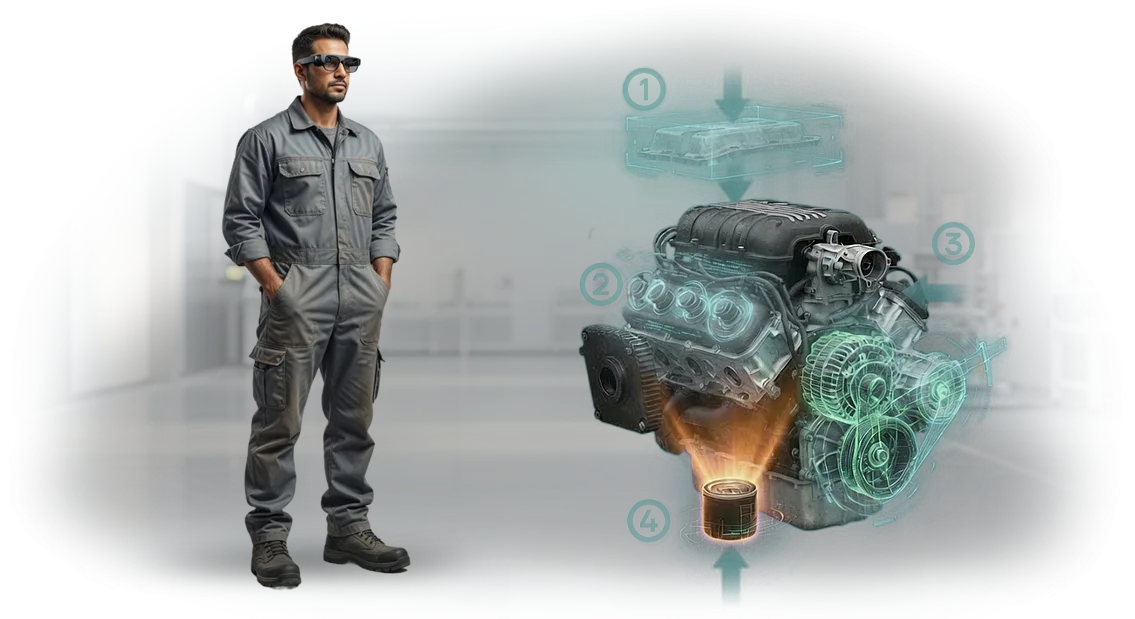
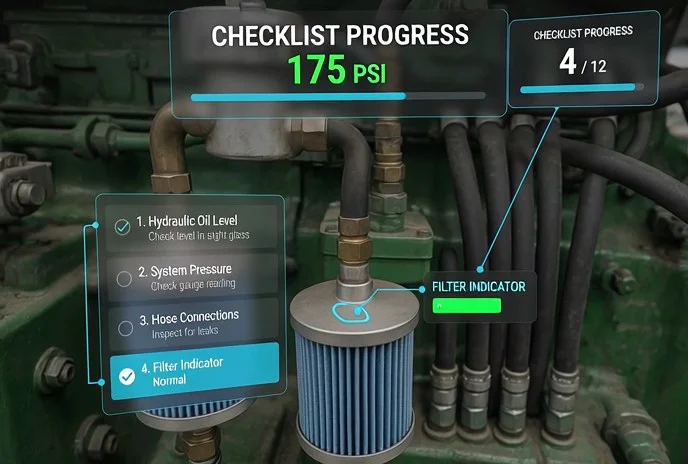
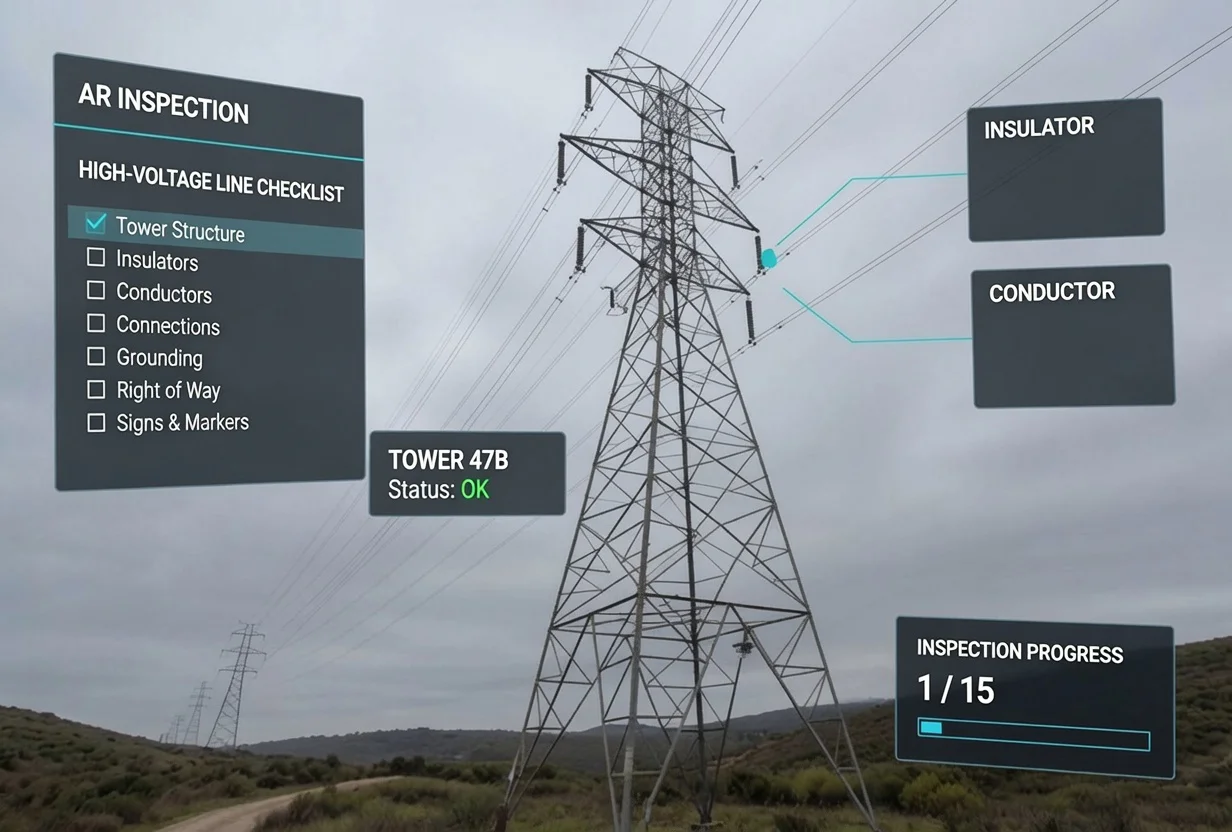
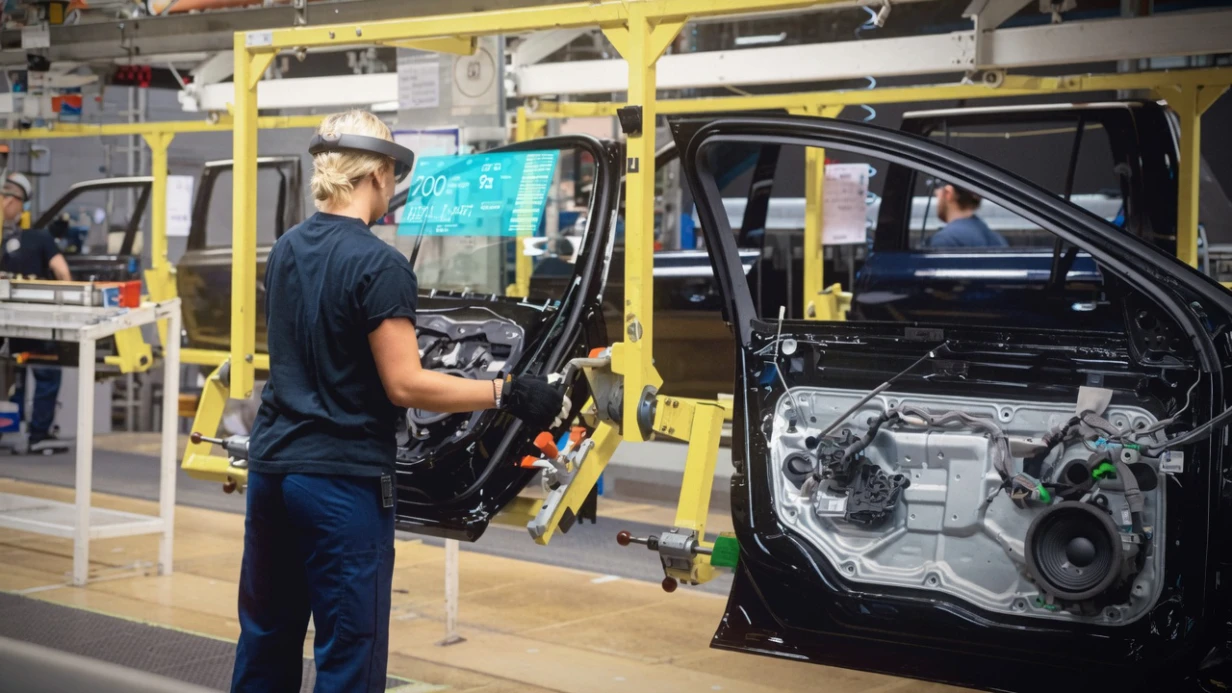
We address this need with augmented reality. AR instructions overlay step-by-step prompts directly onto the equipment: the specialist sees what to do and in what order without reading thick manuals.
This reduces the time needed to master new tasks, lowers the error rate, and removes dependence on "irreplaceable" employees. Irrigation system maintenance becomes a predictable, controlled process rather than a string of breakdowns and firefighting.
What You Get from AR Instructions
Irrigation equipment downtime is expensive: while a technician searches for the right manual page or waits for a service engineer to arrive, pumping stations stand idle and the watering schedule falls apart.
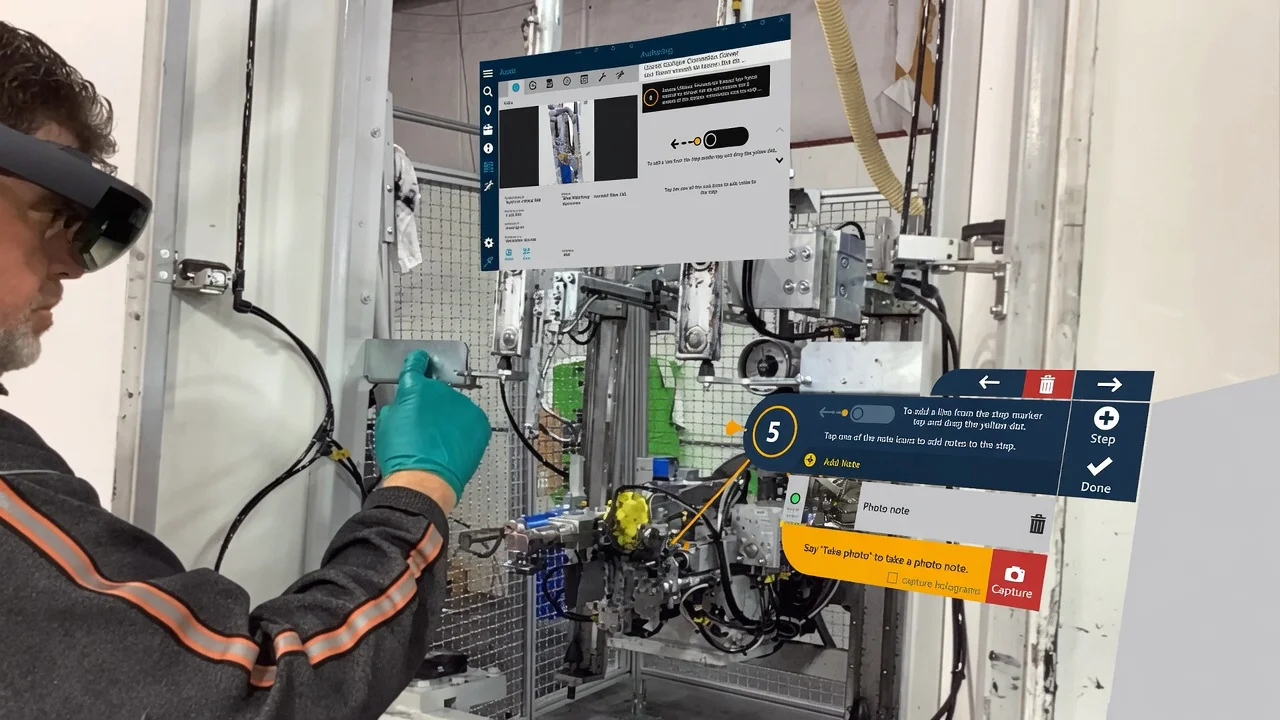
AR instructions solve this problem — step-by-step prompts are overlaid directly onto the real object, and the worker sees what to do and in what sequence.
Downtime reduction is achieved because all the necessary information is always at hand — on a tablet or augmented reality glasses. No need to flip through paper manuals or call an engineer for every question.
The average time to resolve a typical fault drops dramatically, and that's direct money in your budget.
Personnel training speeds up too. A new employee with no irrigation system maintenance experience sees the exact sequence of operations, and the system records their actions and prompts them when they deviate.
Installation and setup errors become a thing of the past — which means fewer rework cycles and less damaged equipment.
Remote assistance works on the same principle: an experienced specialist connects to the worker's tablet, sees their point of view, and guides their actions by voice or visual markers.
This lets your service department cover sites in different regions without business trips, while service quality remains consistently high.
Wecreate such instructions using professional equipment and a proven methodology.
Over 10 years, we have delivered dozens of projects for industrial clients — and every time, the client gets a predictable result: less downtime, faster training, higher work quality. Tell us about your equipment — we'll propose a solution tailored to your task.
AR Instruction Formats for Irrigation Systems
Irrigation system maintenance requires different approaches: some tasks are more convenient to view on a tablet, while others — in augmented reality glasses, right out in the field.
That's why we don't offer a single "universal" format but select one for the specific task. Here's what this looks like in practice:
| Format | Target audience | Client value |
|---|---|---|
| Interactive guide | Field specialists and service crews | Step-by-step instructions on a smartphone or tablet screen — no need to flip through paper regulations, everything needed is right before your eyes |
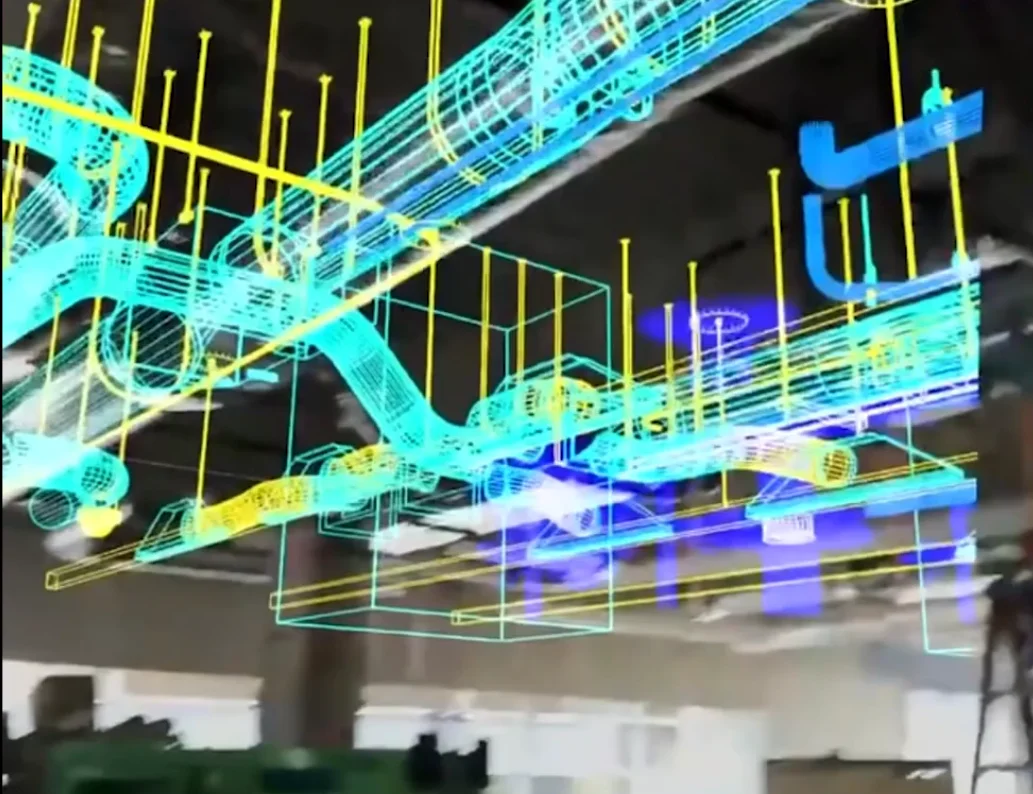
| 3D instruction | Engineers and technologists | Visual disassembly of a component or the entire line: see how the system works inside, how to remove and replace a part |
| Step-by-step scenario | New employees | Safety procedures and a step-by-step sequence of operations — a newcomer gets up to speed faster and makes fewer mistakes |
| Mobile application | Managers and owners | Unified access to instructions, version control, and training statistics — you can see who works with the materials and how |
Whichever format you choose, we integrate it into your existing document flow and configure it for your equipment.
We often use a combination: a 3D instruction for complex components, a step-by-step scenario for daily tasks, and a mobile app for access to the complete set — so employees get the right information at the right moment, and you save hours of downtime and accelerate commissioning.
How AR Instructions Are Developed
AR instruction development is a clear six-stage process that takes from one to three weeks depending on equipment complexity. We handle all the organization and the technical side, while you participate only at key checkpoints: content approval and acceptance of the result.
- AR brief — we capture the tasks: which operations need to be covered, who will use the instruction, and under what conditions. The output is a technical specification with clear acceptance criteria.
- Equipment and procedure analysis — we study the documentation, schematics, and typical maintenance errors. We talk with your engineers to pinpoint the steps that most often raise questions.
- Content approval — we show the structure of the future instruction: the sequence of actions, text prompts, and where visual markers will appear. You make edits before filming and 3D modeling begin — this eliminates rework at later stages.
- Creating AR scenes — we overlay digital prompts, arrows, and animations onto the real equipment. The employee sees in the tablet camera where to look, which component to open, and in what order to perform the actions.
- On-site testing — we go to the site and test the instruction in real conditions: lighting, technician position, part sizes. At this stage, we fine-tune the overlays so prompts are clearly visible and don't interfere with the work.
- Launch and handover — we install the application on your devices, train the staff, and transfer all materials. From then on, you work independently, and we remain available for technical support.
This sequence guarantees that the instruction will be genuinely useful to your employees, not just a polished demo video. You get a result that truly reduces maintenance time and lowers the risk of errors.
What's Included in the AR Instruction Delivery
After the project is completed, you receive not just "pictures on a screen" but a working kit for your service department. Everything needed to use AR instructions for irrigation systems in daily work: from scene archives to staff training and launch support.
- AR scene archive — all developed instructions for your equipment are delivered in a structured form. They can be stored on the company server, opened from tablets and smartphones, and transferred to new devices when needed.
- User manual — a clear description in Russian: how to open the desired scene, select a system component, view prompts, and record a completed step. With it, a new employee starts working without lengthy training.
- Instructions for the responsible specialist — how to add new elements, change prompt texts, and update equipment information. Your technologist or engineer can keep the instructions current without contacting the developers.
- Instruction updates — when the irrigation system is modernized, components are replaced, or procedures change, we promptly update the scenes. All edits are coordinated with your department so the materials always match the actual state of the equipment.
- Technical support — after handover, we stay in touch: we advise staff, help configure devices, and resolve tricky situations during the initial launch. This removes employees' fear of the new technology.
- Training materials — a short presentation or video memo that shows staff how to work with AR instructions in 15–20 minutes. No need to gather the entire department for a three-day training session.
- Warranty documentation — acceptance certificates, a description of the delivery contents, and terms of use. You get a complete package for internal accounting, reporting, and audits.
Thus, after project delivery, you have everything needed for autonomous operation: files, rules, support, and clear instructions for your staff. You don't depend on us for routine tasks, yet you can always reach out for help when modification or consultation is needed.
Case Study: How AR Instructions Reduced Downtime at an Agricultural Complex
Every hour of irrigation system downtime means lost watering volumes and pressure on planting deadlines. When a pump breaks, the dispatcher calls a specialized technician, waits two or three days, and pays for the visit.
A generalist engineer with a paper manual spends 3–4 hours searching for the right component and is afraid of making a mistake.
We solved this problem with AR instructions — prompts that show the sequence of actions directly on the equipment. This format is understandable to an employee without special training and requires no thick documentation. We verified the effectiveness of AR on a real project.
The Situation
The client — Yuzhny Agricultural Complex — has 800 hectares of irrigated land and 12 pumping stations. The main failures were filter clogging, seal wear, and control system malfunctions.
Previously, repairing one station took up to 4 hours, and during the season every hour cost the business in lost harvest.
We selected the 10 most frequent faults and created step-by-step AR scenarios for them. The engineers completed training in a single day — no retraining, they simply put on the glasses and started working.
The Result
In practice, repair time dropped from 4 hours to an hour and a half. Equipment downtime fell by 70%, and the number of successful operations without calling in an external specialist tripled.
That's the real return on investment: the development cost was recovered in less than two months thanks to the preserved harvest and reduced emergency callouts.
The complex is now expanding the instructions to cover five additional components — the repeat order is the best confirmation of AR's effectiveness for us.
How to Choose the Right AR Instruction Format for Your Equipment
The right AR instruction format for your equipment is determined by three criteria: component complexity, staff skill level, and the conditions in which the work is performed.
For irrigation systems, this means a pumping station needs one approach, while regular filter flushing needs another.
If you need to train a newcomer or repair a complex unit, choose a step-by-step instruction overlaid on the real object. It guides the specialist from step to step and eliminates guesswork.
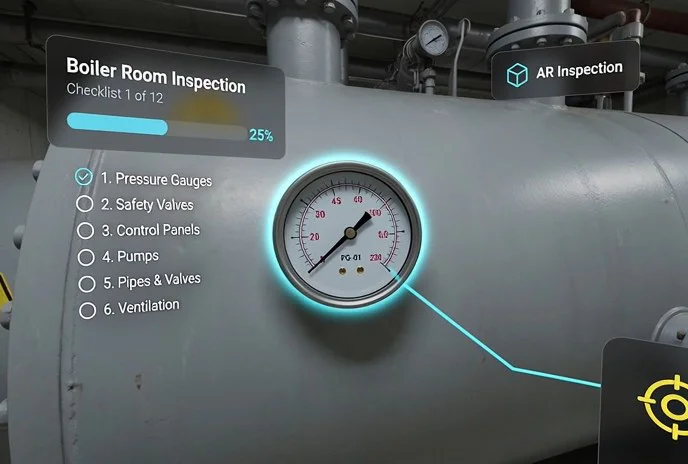
For daily maintenance — pressure checks, seal replacement — short checklists are effective. For a non-standard breakdown, remote support works: the employee shows the part, and the expert draws prompts directly on the image.
Adaptation to equipment also depends on the work location. Stationary pumping and filter stations are convenient to service with a tablet mounted nearby; mobile units require smartphone instructions that don't get in the way of your hands. Open fields need high-contrast graphics, while indoor settings need a night-lighting mode.
Start not with the format but with the most frequent errors and breakdowns of your irrigation equipment. We'll analyze typical scenarios and propose a format that addresses them fastest — combining a daily checklist with a service repair scenario when needed.
Frequently Asked Questions About Implementing AR Instructions
Implementing AR instructions raises questions with every client: how much it costs, whether equipment will need to be changed, how to integrate the new format into current processes.
We've collected answers to the main concerns — honestly, without technical details, only what affects your work.
How much does developing an AR instruction for an irrigation system cost?
The cost depends on the complexity of the equipment, the number of components, and maintenance scenarios. After an audit of your system, we lock in the estimate — it doesn't change during the process. The investment pays off through reduced repair time, fewer errors, and faster employee training.
No hidden fees: you pay for the finished result, not for development hours.
Is the AR instruction compatible with our equipment?
Yes. The instruction runs on standard tablets and smartphones — no need to purchase new devices. We adapt the content to specific irrigation system models: pumps, valves, filters, controllers. Everything you already use keeps working.
If the equipment changes — the instruction will be updated too.
How does implementation work, and will it halt production?
Implementation is gradual and doesn't require stopping processes. We prepare the instructions while training staff in parallel — this usually takes a few days. Employees quickly switch to the new format because it's intuitive: point the camera at a component — get a prompt.
After launch, we stay in touch and help get things running smoothly.
Who will update the instructions after launch?
We support the project after implementation. If maintenance procedures change or new equipment is added — we update the content. You won't be left alone with outdated documentation.
Support is tailored to your schedule: from one-off updates to ongoing maintenance. The answers to these questions are part of our approach.
We don't just develop an AR instruction — we embed it into your company's workflows, making irrigation system maintenance clearer and faster. If you still have doubts — ask us, and we'll show how it works on your equipment.
Order AR Instruction Development for Your Equipment
Irrigation system repair can't wait: every hour of downtime means lost crop, a disrupted watering schedule, and extra costs for visiting specialists.
An AR instruction cuts maintenance time dramatically, but before investing in development, it's important to understand whether the format suits your equipment and processes. That's exactly why we offer a free consultation on AR instructions and calculate a project for your task.
We work remotely and have specialized in industrial solutions for over 10 years. Our experience spans dozens of projects for agricultural, energy, and manufacturing equipment.
our team takes on everything: from idea to implementation, so you get a ready-made tool, not rough drafts.
What's included in the consultation and project estimate:
- Assessment of your task: which operations and components are worth converting to AR, and where a standard instruction is sufficient.
- Calculation of the scope of work and realistic launch timelines.
- Demonstration of similar solutions for your industry — you'll see the result, not just a presentation.
- Format recommendations: tablets, smartphones, or AR glasses for field conditions.
- Preliminary structure of the future instruction: stages, checkpoints, safety measures.
- Post-launch support: refine details, add operations, train staff.
No abstract promises: after the estimate, you'll know exactly what you'll receive, in what timeframe, and how it will affect equipment maintenance speed. If you're looking for a way to reduce downtime and simplify the work of your field crews — this is your first step.
Submit your AR request right now — we'll get back to you within one business day, answer your questions, and prepare a project estimate for your equipment. Start with a short conversation that will save your irrigation system weeks of downtime.