

Error-free Compressor Maintenance: AR Instructions for Personnel
Any mistake in compressor maintenance costs more than just time — it means production downtime, unscheduled repairs, and extra spending on spare parts.
Personnel rely on memory or outdated paper instructions, so even an experienced mechanic can mix up the sequence of operations or skip a critically important step.
The result is always the same: equipment fails, and you pay for idle time and rushed repairs.
Classic Instructions Are No Help
Paper regulations and PDF files don't work in real conditions. An employee gets distracted from the equipment, searches for the right section, tries to match a flat diagram to a three-dimensional machine — and the risk of misinterpretation remains.
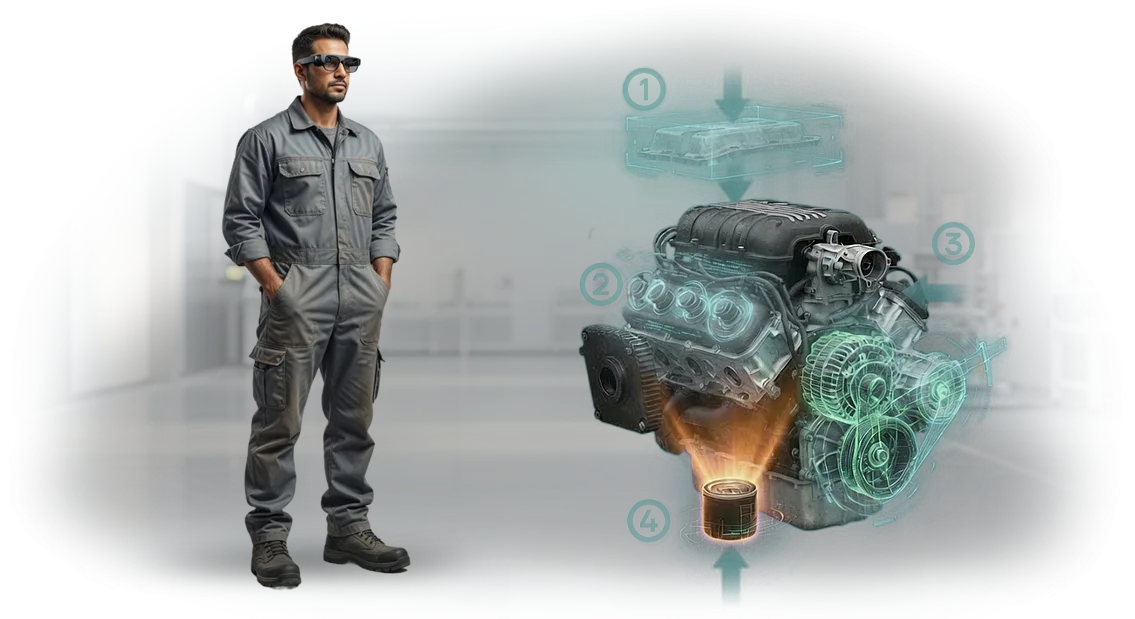
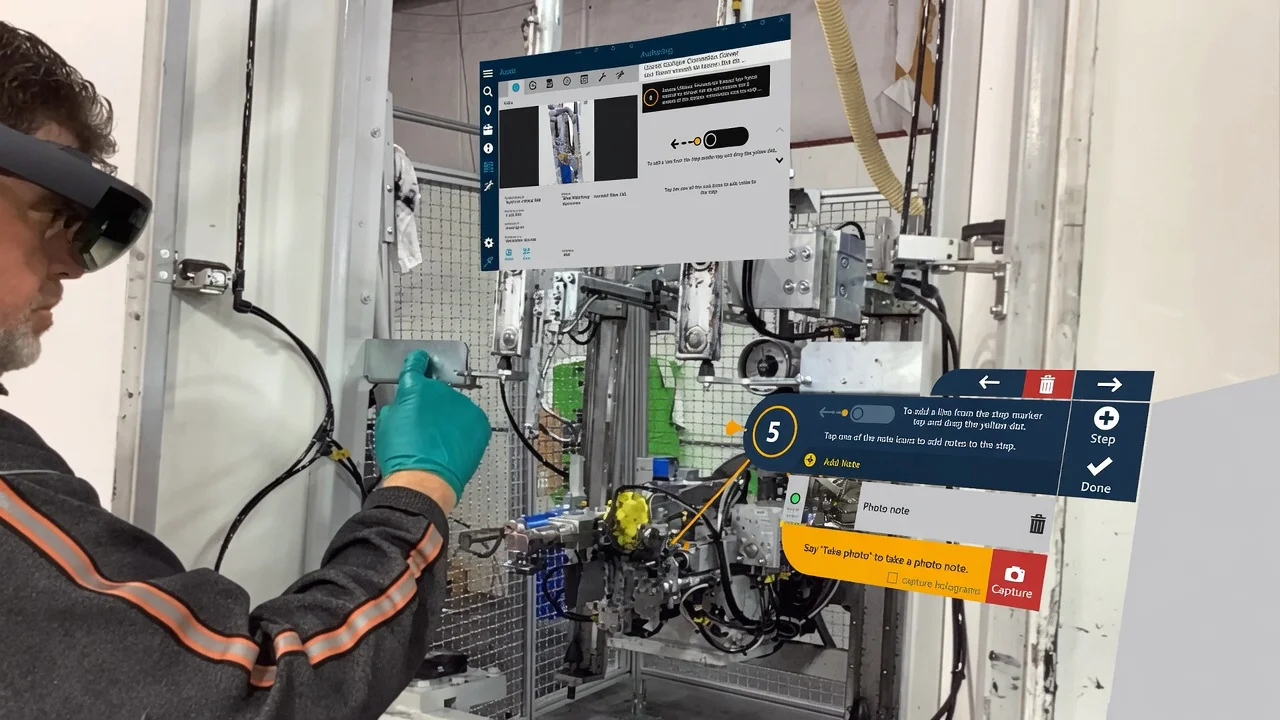
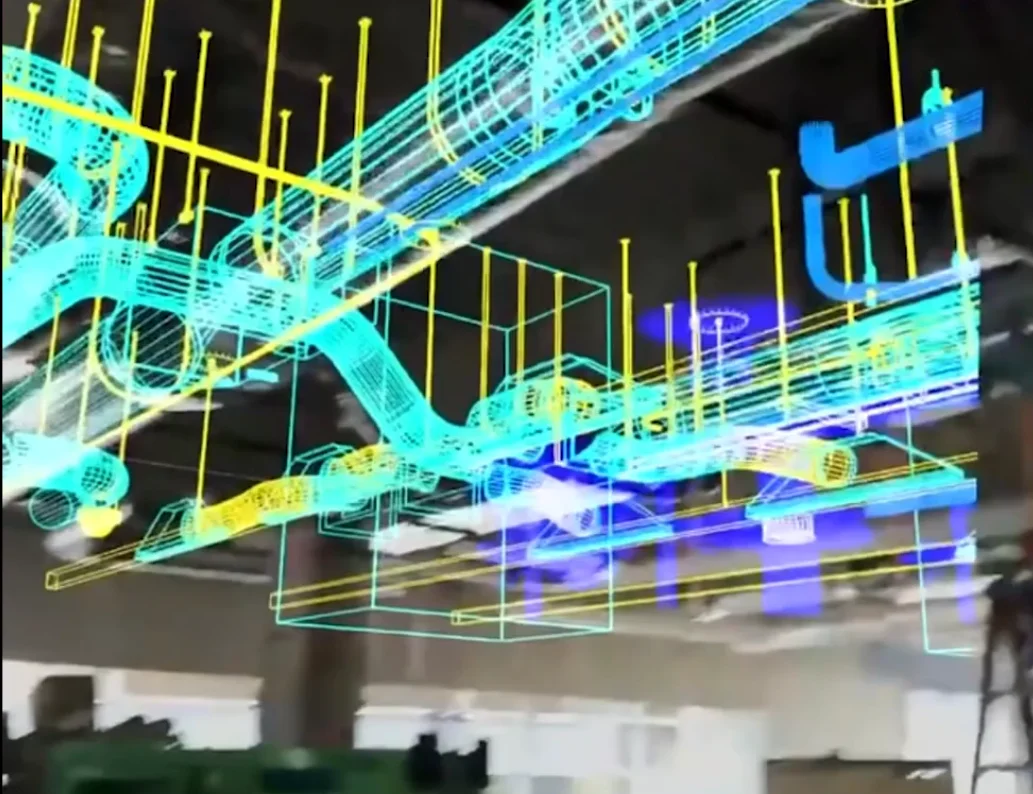
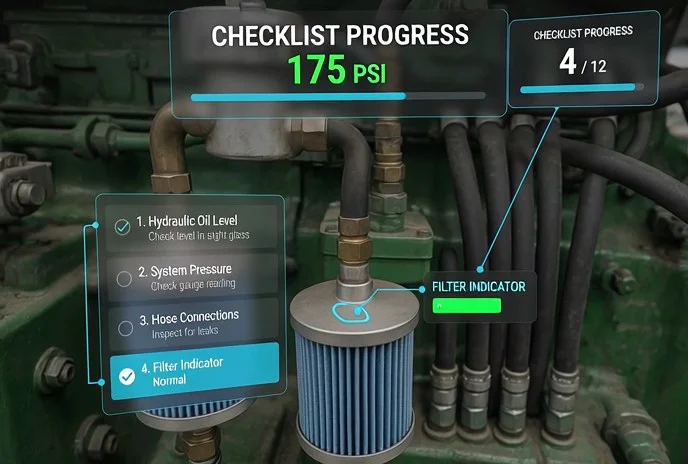
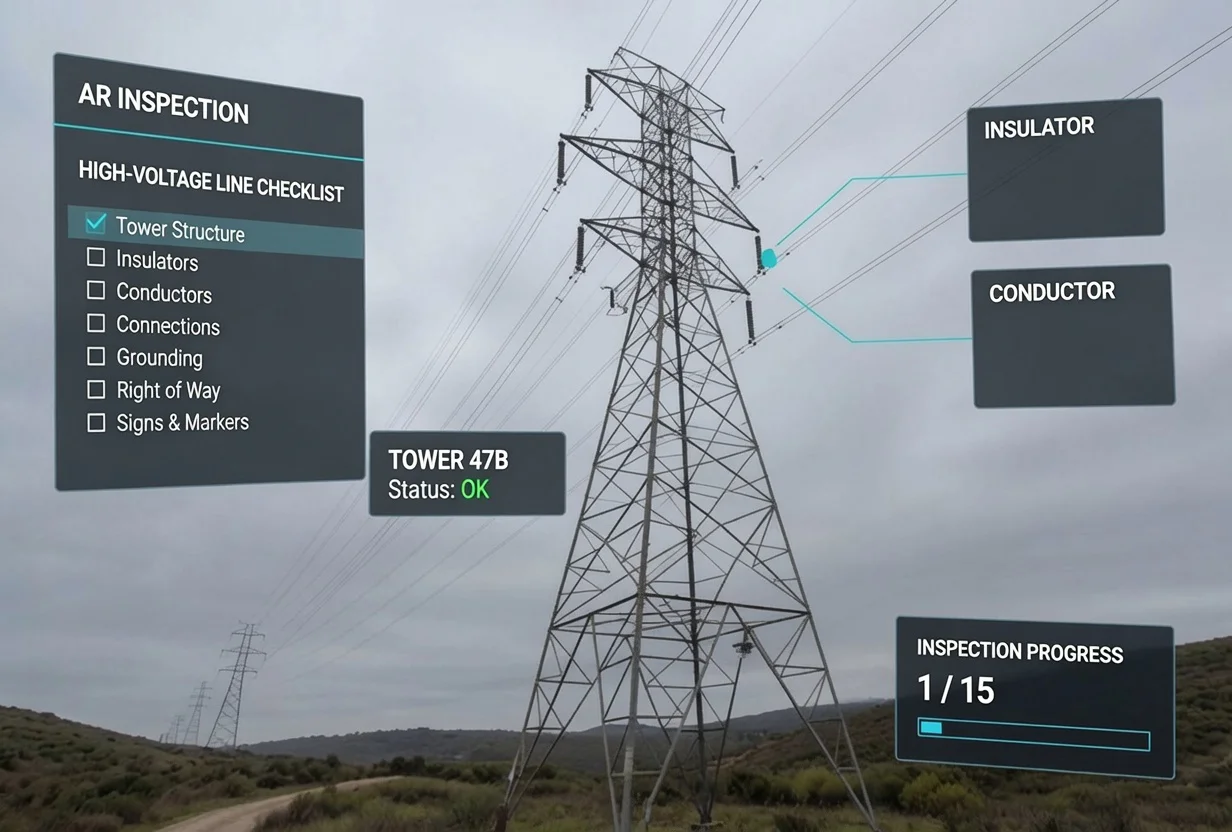
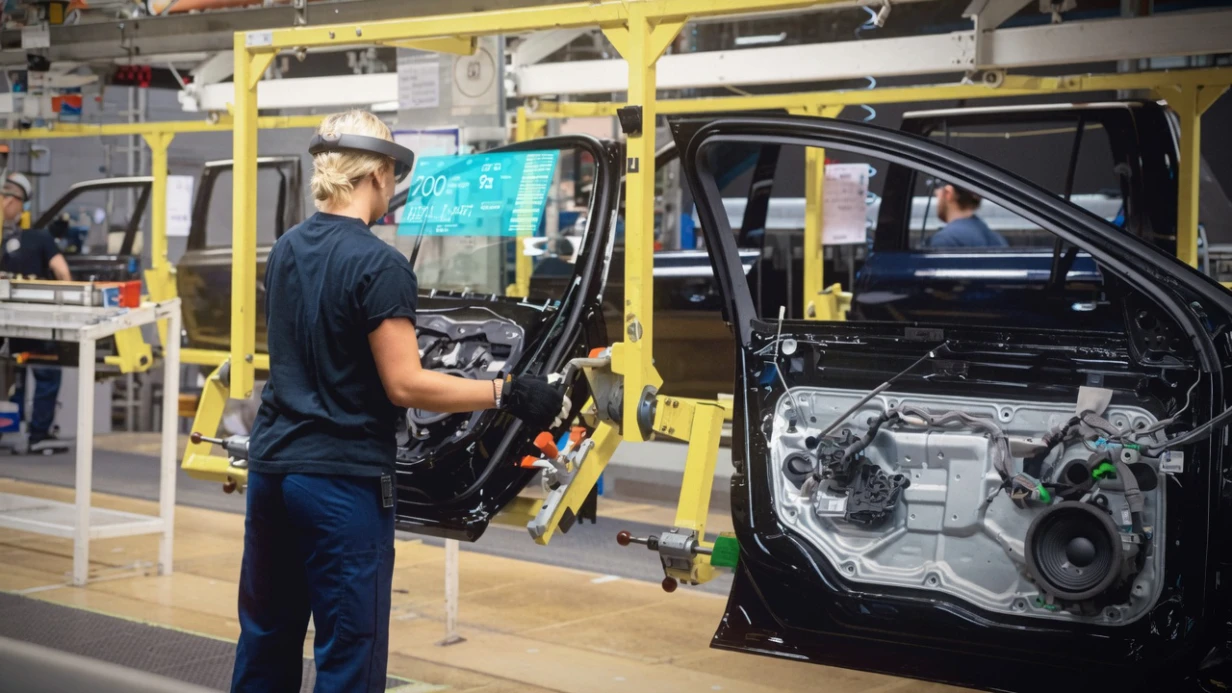
AR instructions solve this problem differently. The employee sees virtual prompts right on the equipment housing: which component to unscrew, in what order to act, where the lubrication point is.
There's no need to remember or search — the system guides the specialist step by step, eliminating human error.
A Result Measured in Money
When compressor maintenance follows AR instructions, the number of errors drops, the time for each operation shrinks, and the maintenance schedule stops falling apart because of the “human factor.” Equipment runs reliably, downtime disappears, and you stop spending your budget on emergency fixes.
That is exactly what we cover: we turn the expertise of your best specialists into step-by-step AR instructions available to every employee right at the workstation.
What You Get from Implementing AR Instructions
The customer's main question is what will change after implementing AR instructions for compressor maintenance. The answer is simple: less downtime, faster training, lower costs, and higher safety. Here is a checklist of the real benefits you get in practice.
- Reduced repair time. The mechanic sees prompts right on the equipment instead of searching for the right page in a paper manual. Typical operations are performed 2–3 times faster.
- Fast staff training. A new employee learns the maintenance procedure in a couple of days, not weeks. The AR instruction guides them step by step, reducing the risk of errors.
- Lower costs. Fewer mistakes during disassembly and assembly — fewer spare parts, repairs, and service engineer visits. Direct savings on every unit.
- Improved safety. The instruction warns in advance about dangerous zones and the correct sequence of actions. This reduces injuries and the costs associated with them.
- Quality control. A supervisor sees which scenario the employee is following and can quickly update the instruction when the procedure changes. The process becomes transparent.
At our team we implement such solutions at industrial sites: customers report a 20–30% reduction in downtime and project payback within the first maintenance season. Each instruction is adapted to your equipment and procedures, so you get a working tool, not an abstract demo. Request a pilot on your own compressors — we'll show the effect on a real unit.
AR Instruction Formats for Compressor Maintenance: for Any Task
Each compressor task requires its own format: planned maintenance, emergency repair, and new employee training are different processes with different decision-making speeds.
The same set of drawings and text steps doesn't work for all three scenarios: in the workshop a technician wastes extra minutes, and during an emergency he also gets stressed.
That's why we develop AR instructions driven by the logic of the specific job: the employee sees only the prompts needed at that moment.
Below are three basic formats that cover the most common compressor maintenance and repair tasks. Choose your scenario, and we'll adapt the instruction to it.
| Format | For whom | What it gives the client |
|---|---|---|
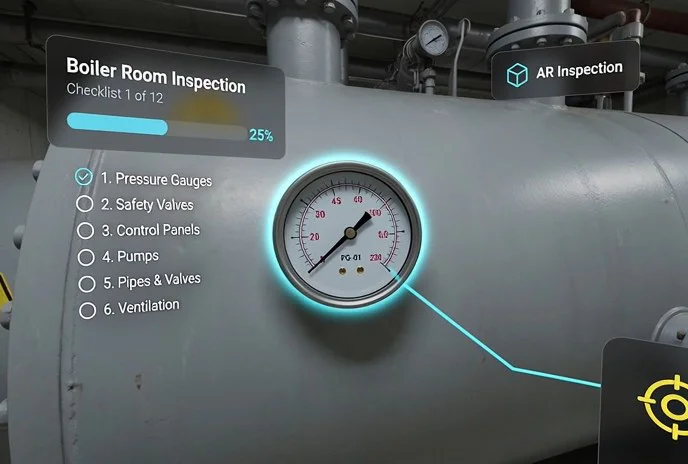
| Planned technical maintenance | Service engineers and repair crews | Step-by-step checklist by unit: nothing is skipped, procedures are followed, downtime is reduced |
| Emergency repair | Duty specialists and emergency service | Fast diagnostics and troubleshooting: less time spent finding the cause, equipment back in operation |
| New employee training | Trainees, new workers, training centers | Visual guidance through the first independent operations: the trainee gets up to speed faster, fewer mistakes and rework |
In any format, the employee works with visual prompts overlaid on real equipment. This reduces the time spent reading paper procedures and lowers the number of errors. Tell us about your task — we'll select the AR instruction format that fits your compressor fleet and use case.
How AR Instruction Development Works: from Brief to Launch
The development of AR instructions for compressor maintenance is structured as a transparent project: you see the result at every stage and can influence it before launch.
We start with a brief that captures goals, typical operations, and control points, and we finish with implementation, staff training, and post-launch support.
-
Brief and equipment audit — we study your procedures, compressor types, and common staff errors. We determine which units need visual prompts and agree on the list of future instructions.
-
Plan and estimate — we fix the formats, scope of work, timelines, and responsible parties. You get a clear plan with stages and dates — no hidden work or unexpected revisions.
-
Scenario approval — we show how the instruction will look: step order, texts, 3D prompts. We make changes before content production begins, while it's cheap and fast.
-
AR content creation — we model compressor unit diagrams, write short instructions, and anchor them to real points on the equipment. At each stage you receive intermediate versions for review.
-
Testing at your site — we test the instructions in real conditions: on the same compressor, with the same tools, and under the same lighting. We fix anything that could cause an employee to pause or make a mistake.
-
AR instruction launch — we install the app on tablets or smartphones, configure access, and provide short training. Your mechanics and engineers start working with the instructions on launch day.
-
Support and updates — we accompany the project after implementation: update instructions when procedures change, add new units, and answer the team's questions.
As a result, you get not just a “file with pictures” but a working tool that reduces errors and downtime. The entire path — from brief to launch — takes a few weeks, and at every step you understand what is happening and what you are paying for.
What's Included in the Delivery: a Package for Your Production
You receive not just a ready-made AR scene but a working production kit. It contains everything your employees need to work independently with the technology from day one: from source materials to training and technical support.
Here's what's included in the delivery:
- AR instruction source files — editable projects and all assets. You are not tied to us: you can make changes with your own team or order further development from us at any time.
- Final compressor maintenance instructions — calibrated scenarios for specific equipment models, ready for use in production.
- Operator manual — a clear guide to launching and using the AR mode daily. Written for technical staff, not developers.
- Operator training — we run a session with your employees: we show how to point the tablet, work with component highlighting, and confirm completed steps. Your people can test the convenience of the scenarios themselves.
- Technical support — we answer questions for an agreed period after launch. We help with updates if the maintenance procedure changes.
- Result guarantee — if a scenario works unstably on your equipment or employees find it inconvenient, we refine the solution free of charge.
Chief engineer of a gas compressor production plant: “We liked that they gave us all the source files. We refined the labels ourselves to match our procedures — we didn't have to wait for the contractor and pay for every little thing.”
Case Study: How AR Instructions Cut Maintenance Time by 30%
At a food production facility, a line shutdown caused by a compressor failure threatened to delay shipments and lose product. Specialists from BelCompressor spent up to two hours finding the fault using paper instructions — even though the repair itself took 20–30 minutes. The customer came to us for an AR instruction that would speed up diagnostics and maintenance.
We analyzed typical compressor failures, prepared step-by-step scenarios, and delivered them through an AR interface. The technician points the tablet at a unit — and sees prompts right on the equipment: what to unscrew, where to press, in what order to check parts. No need to flip through paper procedures and search for the right section.
Result
The average compressor recovery time dropped by 30%. Where a typical failure used to take up to two hours, the team now handles it in just over an hour.
The number of assembly errors also decreased — the tablet guides the sequence of actions and prevents skipping an important step.
The customer also noticed the impact on new employee training: instead of a week of mentoring, just a couple of shifts with the AR instruction are enough. New employees get up to speed faster, and experienced specialists stop wasting time constantly guiding newcomers.
After a successful pilot, the client ordered a second kit — this time for pump equipment maintenance.
The same approach applies to any industrial facility: from compressor stations to packaging lines. Want us to calculate how much time and money AR instructions could save on your equipment? Write to us — we'll prepare an estimate and a pilot scenario for your task.
What If My Compressor Isn't in the Standard Catalog?
A non-standard compressor is not a barrier but a working situation. In practice, a significant share of industrial equipment differs from factory catalogs: modifications, retrofits, years of service. We design AR instructions for a specific piece of machinery, not an abstract template.
Adaptation begins with a survey: we study the compressor itself, its passport, diagram, and real operating conditions. If documentation is lacking, we use photos, measurements, and the experience of your mechanics.
That way we build a digital copy of the equipment and place prompts exactly on the components the employee works with.
The individual approach is also reflected in the scenarios. We take into account how your compressor is actually maintained: who performs the procedure, what tools are at hand, which mistakes happen most often.
The AR instruction is not “generic” but tailored to your procedures and staff skill levels — this reduces the risk of errors and downtime.
We also work with equipment that has been discontinued from production. If the compressor is still operating, that's enough for us: we preserve accumulated maintenance experience in digital form and pass it on to new employees without losing knowledge.
The bottom line is simple: you don't need to replace equipment to get a modern training format. Describe your model in the request — we'll propose an adaptation option for your compressor and an implementation timeline.
Common Doubts: Will AR Instructions Work with the Equipment?
Compatibility of AR instructions with specific equipment, the risk of breakdowns, and the fear of retraining personnel are the main reasons customers postpone implementation.
Most often the problem is not the technology but uncertainty about how it will fit into current processes. We remove these doubts even before the contract is signed: we audit the site, build a prototype on your equipment, and only then propose a solution.
We have a mixed fleet of machines — will the instructions work for all units?
You don't need to digitize everything at once. We choose 2–3 typical units and test the approach on them. For the rest, we use a common template: only the sequences and details change, while the logic stays the same.
As a result, the instructions work on both old machines and new lines — without rework for each model.
Employees aren't used to tablets — won't that slow down repairs?
The interface works on the “point at a unit — get a prompt” principle. An average employee learns it in one shift, and basic training takes from 30 minutes to a few hours. This time quickly pays off: the number of errors and downtime decreases, and maintenance speed increases.
What if the tablet distracts or gets in the way during work?
The instruction does not replace safety rules — it shows the sequence of actions and prevents dangerous operations. The tablet is mounted on a stand or on the arm, and control is done with one button. If the employee gets distracted, the system simply waits for confirmation of the next step.
Do you guarantee that this will work in our conditions?
Before we start, we analyze the site: dust, humidity, lighting, and access to units. Then we conduct a pilot on your equipment — you see the result before full launch. If something is wrong, we correct it. The result guarantee is fixed in the contract.
Didn't find your question? Describe your situation — within one day we'll tell you whether the task can be solved and how. We usually find a working option even for non-standard cases.Start Saving on Maintenance in Just 2 Weeks
Start with a request — and within two weeks your specialists will be working with the first AR instruction for compressor maintenance. We designed the process so the first result appears quickly: a short brief, scope agreement, and immediate development of a pilot area.
On the first day, we clarify the details and send you an individual proposal with a fixed price and timeline. On the second or third day, we agree on the work plan and the list of compressor units for the first instruction.
By the end of the first week, you receive a prototype for approval, and one week later — a finished instruction ready for use on tablets and smartphones in the workshop.
After launch, the effect is immediate: less downtime, faster training for new employees, and a lower risk of repair errors. We stay in touch and refine the material based on feedback from your mechanics.
Immediately after ordering, you receive:
- A personal manager — oversees the project from brief to implementation and answers questions within a day.
- A clear work plan with dates — you know what will be ready and when, without surprises.
- A trial version of the AR instruction on your equipment — to evaluate the format before full development begins.
- A fixed estimate — the price won't change during the process, even if revisions are needed.
- Priority support during the trial period — adjustments are made within two working days.
- Recommendations for scaling to other units and assemblies — so savings grow with every new area.
Leave a request — we'll discuss your tasks and prepare a solution for your compressor fleet.