

Maintenance of conveyors and transport systems without downtime
Every minute of conveyor line downtime is lost revenue, a missed shipment deadline, and stress that costs more than any spare part.
When conveyor maintenance and repair depend on an employee's memory or scattered paper checklists, the cost of mistakes multiplies: incorrect equipment diagnostics leads to repeated failures, and searching for the right component in a catalog stretches the shutdown into hours.
The situation is aggravated by staff turnover: a new specialist is afraid to make independent decisions, and an experienced mentor physically cannot be in two areas at once.
As a result, maintenance becomes "firefighting" — when the problem has already stopped production. But most of these failures can be avoided if staff are given clear step-by-step prompts right at the workplace.
We address this pain with AR instructions for conveyor and transport system maintenance.
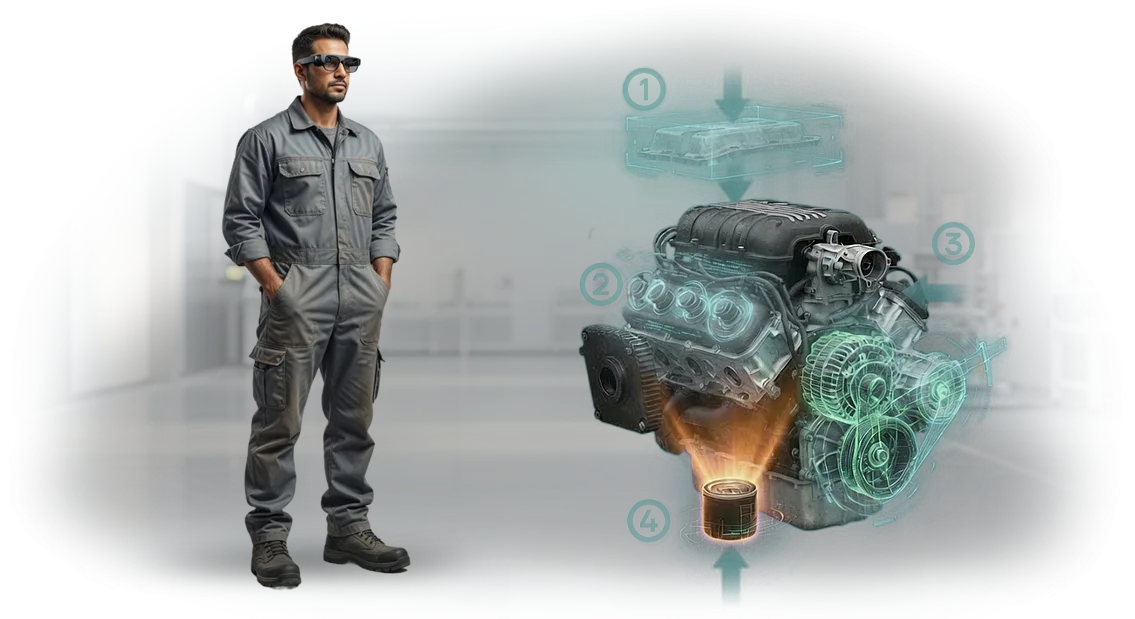
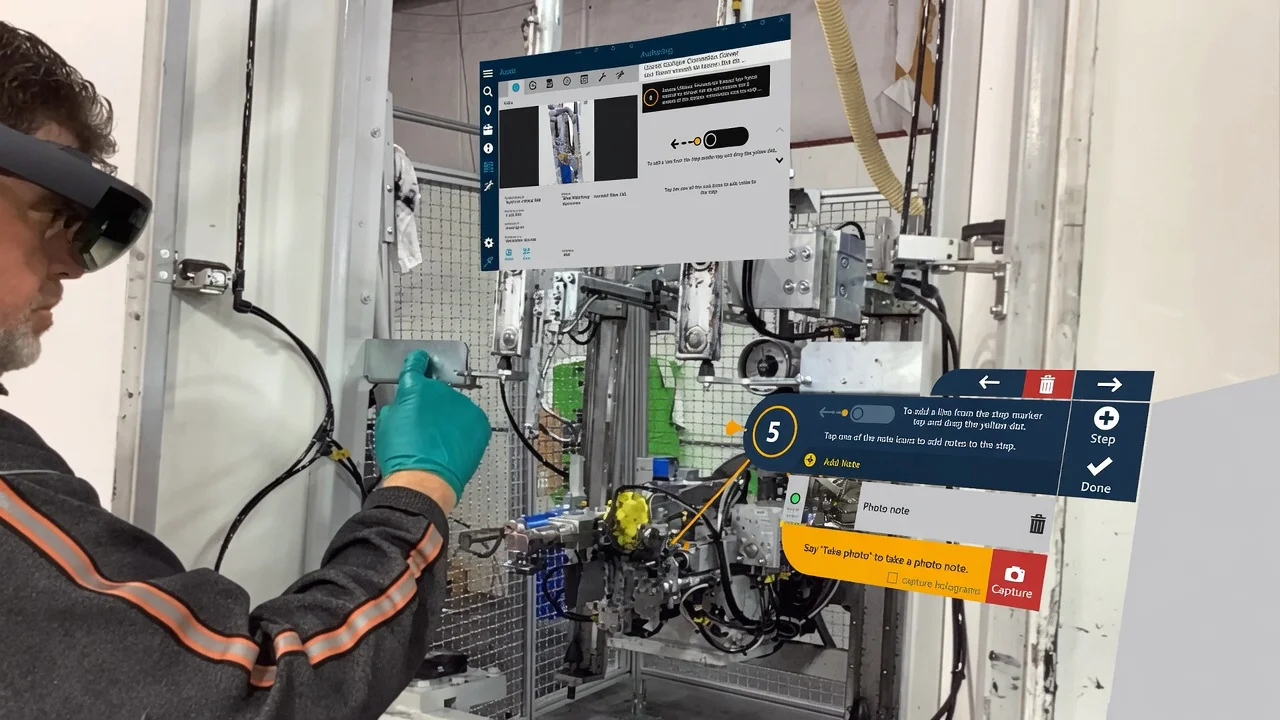
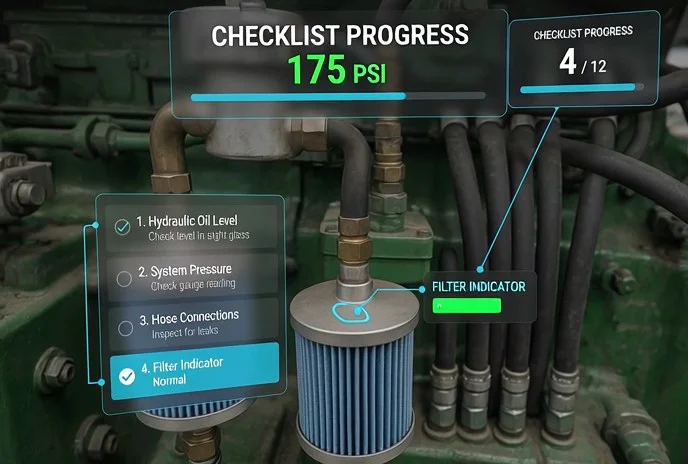
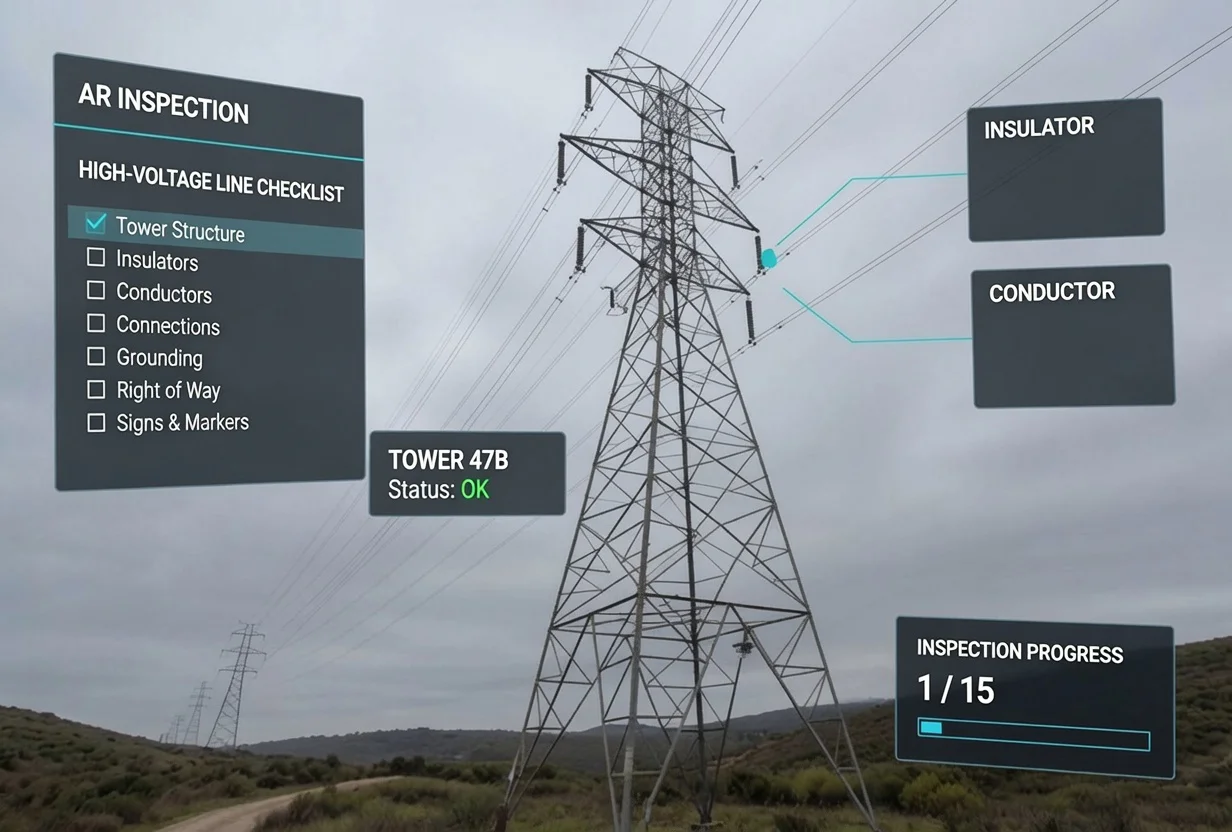
A specialist points a tablet or smartphone camera at a component — and sees directly on top of the equipment in what order to unscrew fasteners, where the lubrication point is, and how to diagnose equipment without disassembling the entire mechanism.
This is not an abstract technology "for hype," but a working tool that turns the experience of the best engineers into an algorithm accessible to everyone.
The business result is measurable: up to 30% reduction in scheduled maintenance time, fewer errors in conveyor repairs, quick onboarding of newcomers without distracting experienced specialists from their tasks.
The line runs more stably, scheduled stops are shorter, and unscheduled ones are rarer. That is how AR instructions pay for themselves within the first month of operation.
What AR instructions bring to your production
Every minute of conveyor downtime is a direct loss of output and missed shipment deadlines. An AR instruction right on the line tells the employee which component needs attention and in what sequence to act.
As a result, diagnostic and repair time is cut significantly, and the equipment is back to work instead of waiting while the specialist finds the right section in a paper checklist.
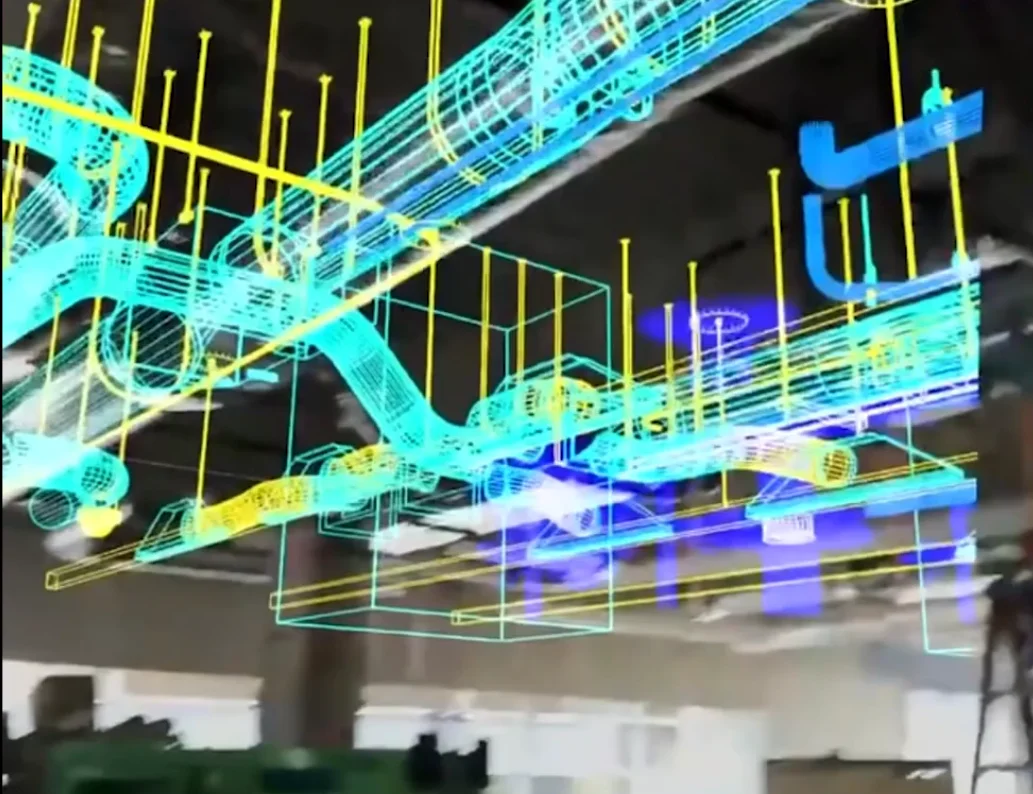
Accuracy of operations is the second key effect. A mechanic sees a step-by-step diagram directly on the component housing, with the required bolts and connections highlighted.
No need to recall the details of a specific modification or rely on "colleague experience." Mistakes during disassembly and assembly practically disappear, which reduces rework and spare part consumption.
Training new employees is no longer long and costly. Instead of weeks of theory and observing an experienced mentor — a few hours of practice with visual prompts.
The AR instruction acts as a personal trainer: even a beginner can safely perform standard maintenance operations on the first try, and experienced workers use it as a safeguard against forgetfulness.
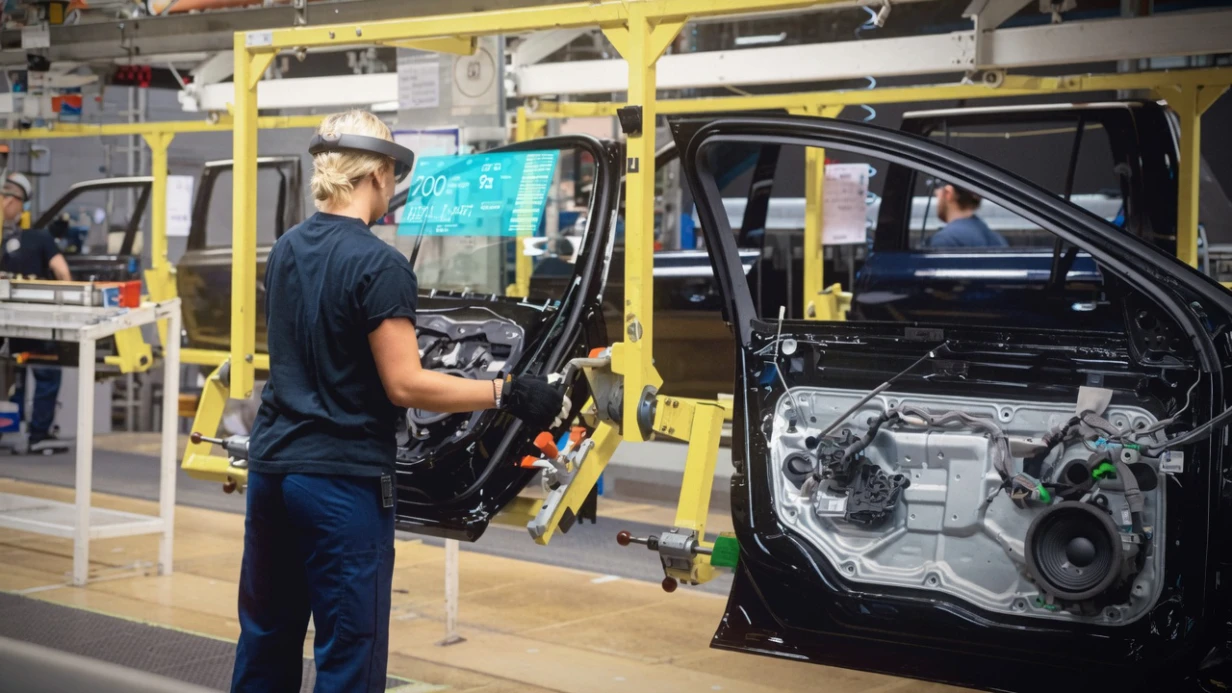
Safety is enhanced automatically: the worker is not distracted by paper instructions, their hands are free, and their eyes are on the object. The system warns in advance about hazardous areas and critical steps, reducing the risk of injuries and damage to expensive equipment. This means lower costs for fines, compensation, and unplanned shutdowns.
The cumulative effect is predictable operation of the entire production line. Fewer downtimes, stable work quality, quick attainment of required qualifications, and a clear operation control system.
Instructions are easily updated when lines are modernized — edits are made centrally and immediately become available to all teams. You get production that does not depend on the "golden hands" of a single specialist.
AR instruction formats for different tasks
The same maintenance tasks look different for a beginner, a repair technician, and a scheduled maintenance engineer. That is why we break down AR instructions for conveyors and transport systems into formats — tailored to the specific task of the person at the line.
The customer receives not "fancy 3D" but a tool that speeds up work and reduces the number of errors.
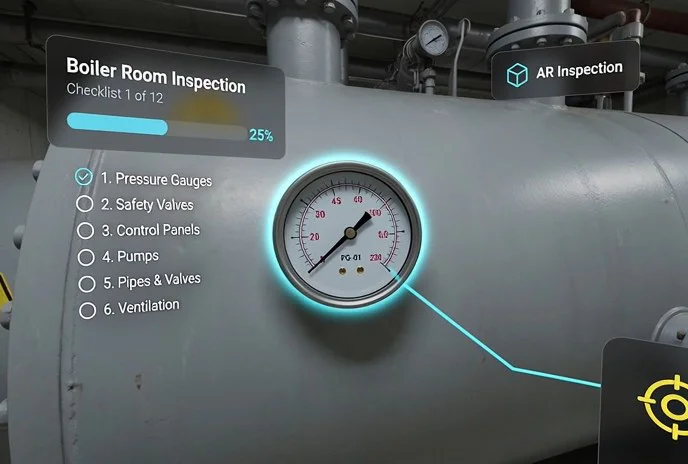
Below are the main formats we have refined in projects. In each case, the employee sees a prompt directly on the equipment: arrows, highlighting of the required components, and a step checklist.
This removes the "what do I do next" question and eliminates the need to reread paper checklists.
| Format | For whom | What it gives the customer |
|---|---|---|
| Training instructions | New operators and repair technicians | Fast onboarding: employee learns the sequence of actions without a partner |
| Repair instructions | Duty engineers, service departments | Reduced downtime: step-by-step guidance on finding the fault and replacing the component |
| Scheduled maintenance | Chief mechanic's department | Checklist compliance without omissions: each step is recorded and controlled |
| SOP | Shop floor staff | Uniform work standard: fewer deviations, predictable quality and safety |
Formats are easy to combine: for example, training instructions for new employees and SOPs for daily operations. Before development, we conduct a briefing with your technologists, identify complex components, and select the appropriate format.
As a result, you get instructions that are actually used on conveyors and transport systems, rather than sitting in a cabinet.
Stages of developing AR instructions for conveyors
A clear process is the key to a predictable result. We guide the client through all stages, from the initial briefing to launch and support, so you always know what is happening with the project and when results will arrive.
- Briefing and task immersion. We record which conveyor operations need to be covered, who will use the instruction, and under what conditions — on the line, during maintenance, or during an emergency stop. This is the foundation for all decisions.
- Equipment and scenario audit. We study the documentation, conveyor line layout, checklists, and typical personnel errors. We create a list of instructions and their priorities.
- Prototype and implementation plan. We create a sample AR instruction on one component, show it on your device, and align the step-flow logic and interface. You see the future product before full development.
- Scenario review and approval. We send you the texts, sequences, and visual prompts for checking. We incorporate edits from technologists and line staff — so the final instructions are accurate and convenient.
- Full package implementation. We develop AR instructions for all selected components and operations: prompt overlays, animations, error control, and adaptation for various tablets and smartphones. In parallel, we prepare usage memos for employees.
- Launch and support. We help implement, train staff, and provide support after launch. When checklists change or equipment is replaced, we update the content — instructions do not become outdated.
This way, you get a manageable process: each stage has clear results and deadlines. Risks are minimized, and the final product is a working tool that reduces downtime and the number of errors in conveyor and transport system maintenance.
What is included in the AR instruction delivery package
The delivery package is not just annotation files. You receive a ready-made solution for conveyor and transport system maintenance that works in the field and pays for itself by reducing downtime and personnel errors. Everything included in the package is configured for your equipment and your team's tasks.
Here is what you get in the end:
- Ready-made AR instructions for key operations: setup, diagnostics, scheduled component replacement, and fault finding. Step by step, across the full range of conveyors and transport systems.
- Visual 3D diagrams and animations that show the sequence of actions directly on the equipment — via a tablet or smartphone. The worker does not need to search for drawings or recall the instruction.
- Technical documentation — checklists, guides, operating and maintenance manuals. In electronic and printed form, with access control.
- Personnel training program — short training sessions for engineers and operators on using AR instructions and built-in prompts. Your employees will start working from day one.
- Convenient instruction launch — by QR code, by unit number, or directly from a repair request. No need to switch between systems.
- Updating and revisions — when equipment or checklists change, we make edits to the instructions without stopping production.
- Post-launch support — assistance with all implementation matters, consultations, and quick help when new areas or equipment types are added.
Such a package covers the entire cycle: from the first instruction to regular maintenance. Your engineers always have the exact sequence of actions at hand, documentation is updated and not lost, and training time is reduced from weeks to hours.
If needed, we will send a detailed package composition tailored to your conveyors and transport systems.
Implementation results: a real example
We implemented AR instructions for a major conveyor systems manufacturer — let's call it TechLine. Before that, fixing a typical breakdown took 2 to 5 hours: operators flipped through paper manuals, waited for an engineer, and the line sat idle.
We replaced paper with AR instructions that show directly on the equipment which part to inspect, which cable to check, and in what order to perform operations.
The result appeared already in the second month. Total downtime across three pilot lines decreased by 30%. The average time to fix a fault nearly halved — from 3.5 to 1.8 hours.
There were also fewer repair errors: operators see every step over the real mechanism and do not miss important actions.
Payback in 4 months
We calculated the economic effect fairly: we compared losses from downtime before and after implementation, training costs for newcomers, and repair crew callouts. The project paid back in four months. After that, every reduction in schedule slippage worked as additional profit.
We separately noted the increase in operator confidence: new employees reached independent work a third faster. Engineers stopped traveling to every minor case — they connect remotely and see the same AR space as the operator on the line. Today, these instructions are used across all conveyor areas of the enterprise.
How to choose the right AR instruction format for your task?
There is no one-size-fits-all format — you need to choose for a specific task. For conveyor and transport system maintenance, the specifics matter most: component complexity, working conditions (noise, lighting, limited space), and personnel skill level.
One thing is a scheduled belt inspection, another is replacing rollers or adjusting a drive station: each scenario requires its own level of detail.
What should you look at when choosing? If operations are short and repetitive, simple step-by-step prompts fixed directly on equipment parts are enough. If repairs are rare and complex, you need animated component breakdowns and the ability to return to a previous step.
For frequently changing personnel, it is useful to add video inside the prompt, and for remote teams, a communication mode with a technologist who sees what is happening and helps right on site.
We do not sell a universal "box" — first we analyze your situation. Based on diagrams, photos, and a short video of the site, we select a format that will actually reduce downtime and the number of errors.
Often the result is a combination: quick prompts for the current operation and detailed component breakdowns for complex repairs.
Focus on the result: the instruction must be understandable to an employee without an instructor and without searching for "that one specialist." This determines the format choice. We will handle the rest — we will offer a suitable solution already at the briefing stage.
Frequently asked questions about AR instructions for equipment
Implementing AR instructions most often raises questions not about the technology but about practice: will production stop, how quickly will employees master the new format, and what will happen to documentation in a year. Below we answer typical customer concerns — briefly and to the point.
Is it difficult to implement AR instructions in an existing production facility?
No. The system works in parallel with existing processes: there is no need to stop lines or reconfigure equipment. Instructions are prepared according to your checklists, and employees use tablets or smartphones — without changing the familiar technological cycle.
Who will update the instructions when a checklist changes?
Updates are part of support. You send the changes, we make edits to the AR scenario and deliver the updated version. Employees always see the current sequence of actions, and old versions do not "circulate" around the shop in paper form.
Can personnel without technical training handle it?
The interface is built so that the worker sees prompts on the screen overlaid on the equipment: what to take, what to unscrew, in what order. Training takes one working day.
Experience shows that employees accept this format faster than regular checklists — because there is no need to read and memorize, just to repeat.
What does the contractor guarantee after launch?
We are responsible for the solution's functionality and provide a guarantee for all stages: scenarios, device loading, and display stability. During the pilot project, we assign a support engineer who promptly resolves emerging issues.
If you need to expand coverage or add new components, that is a matter of development, not rework "from scratch."
If you are unsure where to start, request a demo on your equipment. We will show on a real component what an AR step looks like, how long one maintenance cycle takes, and what data you receive for quality control.Order the development of AR instructions for your production
Submit a request for developing AR instructions for conveyors and transport systems — and get a cost estimate and project plan tailored to your production. We do not work "blind": first we analyze your situation, and only then propose a solution. This way you understand what you will get and how long the path to launch will take.
After contacting us, you go through five clear steps:
- Request. You submit the form on the website — indicating the type of equipment, number of employees, and tasks that need to be solved.
- Consultation. We clarify problem areas in maintenance and select the AR instruction format: for repairs, scheduled maintenance, or training newcomers.
- Cost estimate. We lock in the estimate and timeline with no hidden surcharges. You know the budget before work begins.
- Plan approval. We determine the list of components and operations to be included in the instructions and approve the structure.
- Development and demo. We create the instructions and show a working example for review. You make edits before launch.
- Launch and support. We implement AR instructions into production processes, train employees, and provide support after start.
This approach already helps production facilities train personnel faster and reduce the number of errors when maintaining complex equipment. It will take no more time than the usual approval of a technical specification.
In the end, you get step-by-step instructions available to employees right at the conveyor — without paper checklists and lengthy searches for the needed information.