

Why Maintenance of Boiler Equipment Requires New Solutions
Industrial boiler equipment is the heart of production, on which the operation of entire workshops depends. When a unit stops for repair, every hour of downtime translates into lost revenue, missed deadlines, and frayed nerves for management.
And it is not only about money: a malfunction can create risks to the safety of employees and valuable assets.
The problem is that quality maintenance of boiler equipment today depends on a narrow circle of specialists. Experienced engineers with the right qualifications are worth their weight in gold, and their time is booked weeks in advance.
If a key employee is unavailable, the enterprise comes to a standstill, and replacement staff act by guesswork, increasing the risk of errors. The cost of a wrong step during repair far exceeds the cost of proper preparation.
Traditional paper instructions and training videos do not solve the problem: they are easy to get lost in, they do not account for the specific equipment model, and they lose relevance.
What is needed is a way to transfer the experience of the best engineers directly to the workplace, at the moment of task execution, without lengthy training and risk.
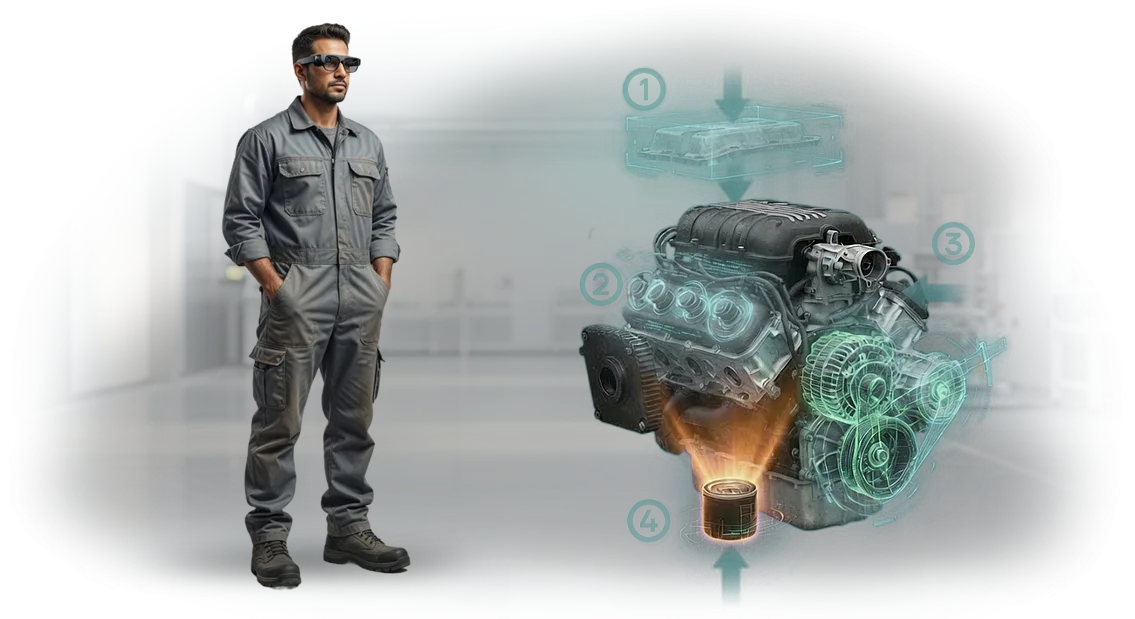
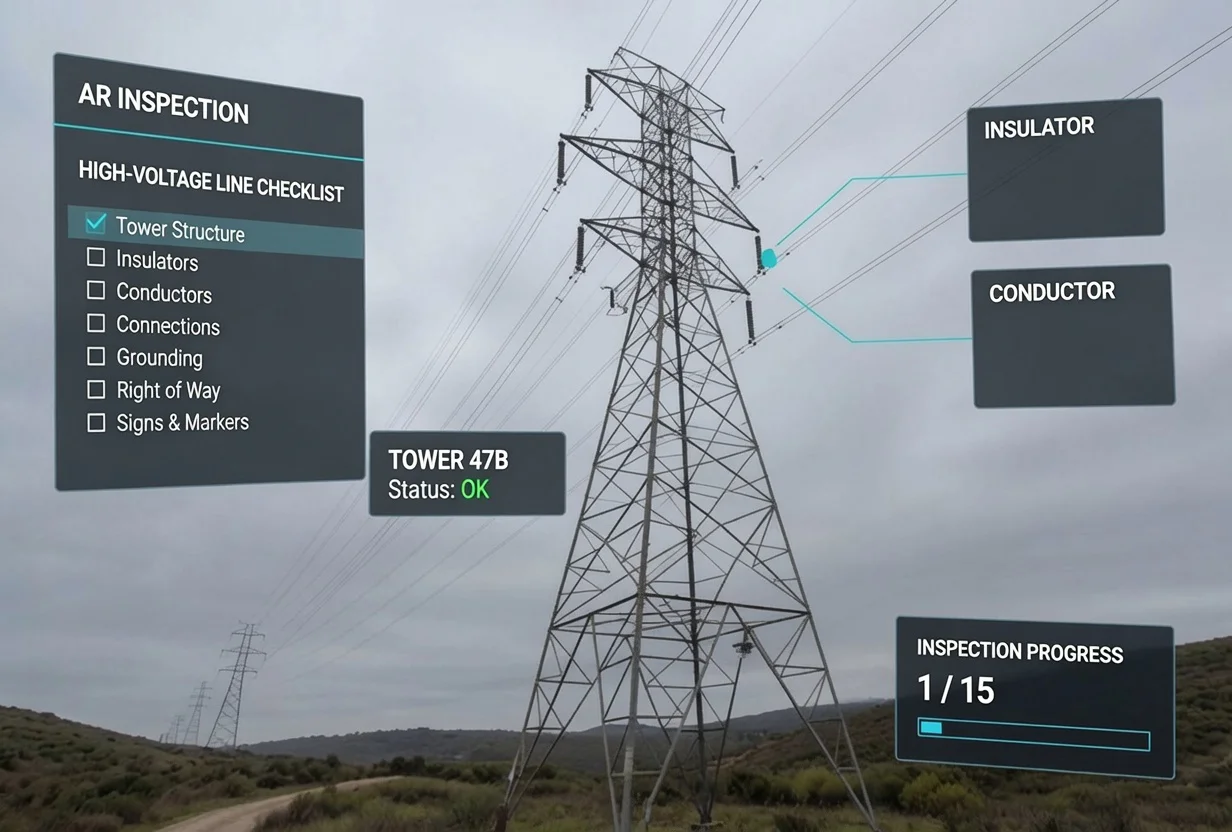
Augmented reality addresses exactly this need: step-by-step AR instructions overlaid on real equipment turn a complex repair into a clear process for a specialist of any skill level — quickly, visually, and safely.
What an AR Instruction for Equipment Maintenance Provides
Imagine a workshop where a line stops because of a single malfunction, and a new employee cannot quickly find the right component. Every hour of downtime is a loss, but the problem is not only money: deadlines, reputation, and nerves suffer.
An AR instruction for boiler equipment maintenance changes this picture — making the process clear, fast, and predictable.
We have been implementing such solutions for 10 years. Below is what the customer specifically gets.
Reduced Downtime
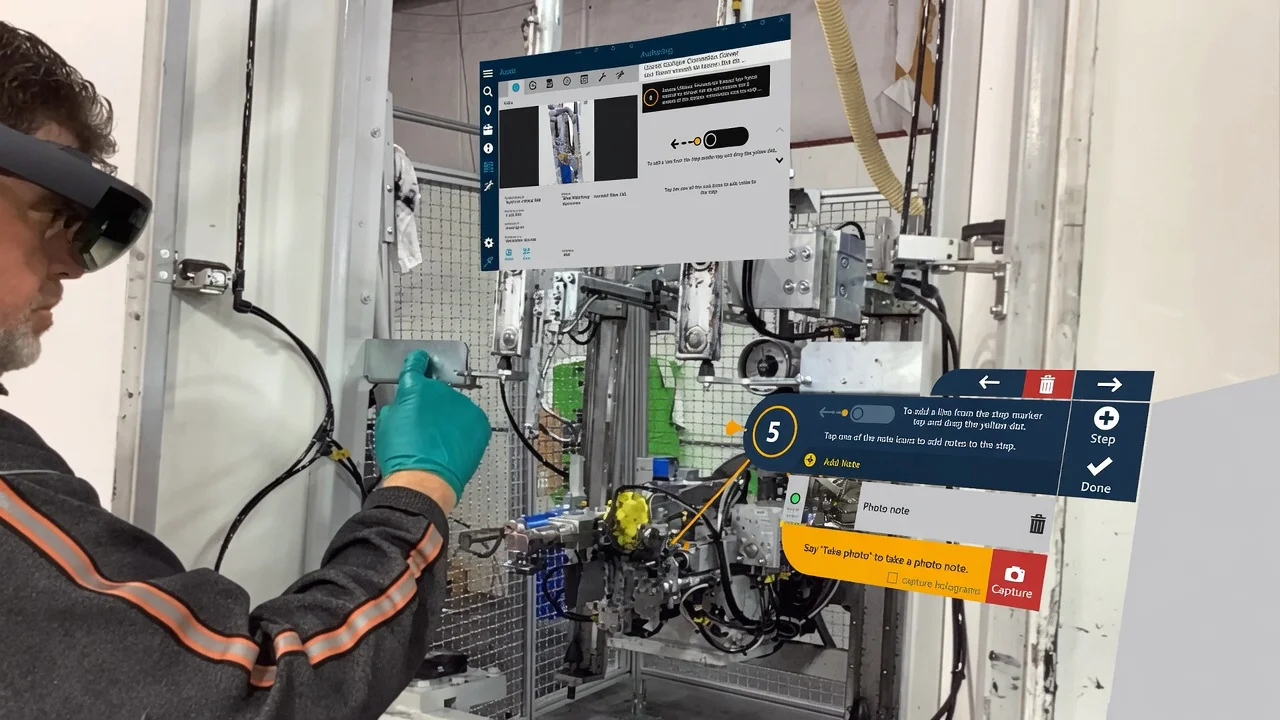
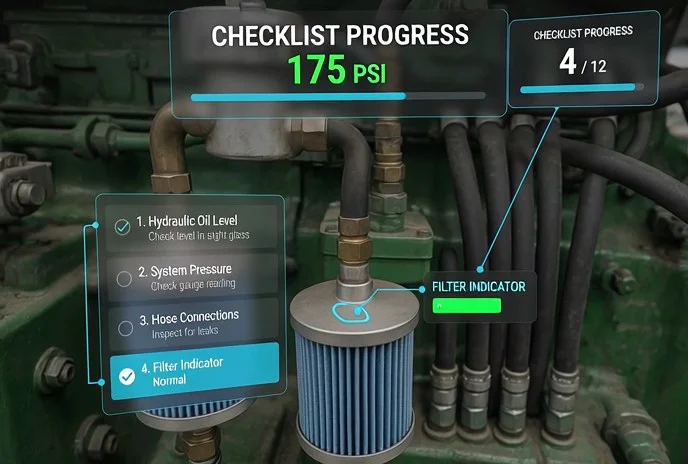
Time spent searching for instructions, deciphering drawings, and listening to the senior master's explanations — all of this goes to waste. An AR instruction overlays hints directly onto the equipment: the employee sees the sequence of actions and immediately gets down to work.
As a result, typical maintenance takes noticeably less time, and downtime shrinks from hours to tens of minutes. For the enterprise, this means a predictable schedule and fewer supply disruptions.
Training Staff Without Disrupting Production
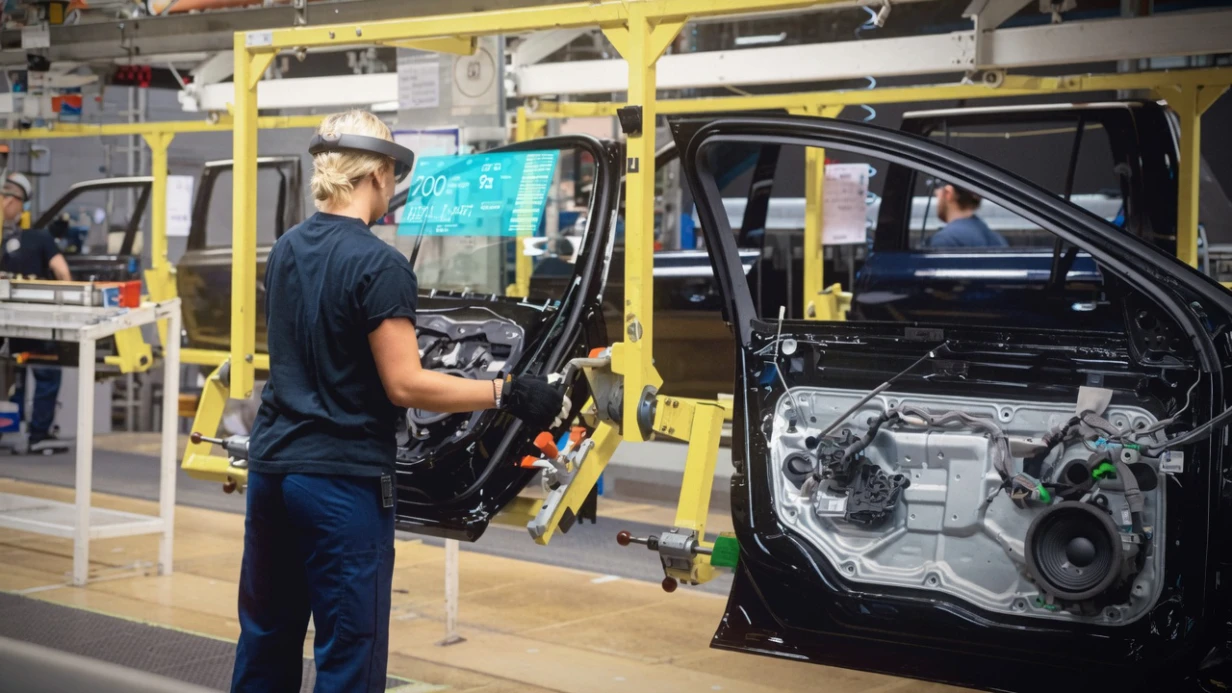
A newcomer does not need to spend weeks studying paper regulations. They simply put on a headset or point a camera — and the system will show what to do and in what order. Experienced employees benefit too: less routine explaining, more time for complex tasks. The team's competence grows without spending on courses and business trips.
Predictable Repair Quality
Even an experienced technician can skip a step when working under stress. An AR instruction eliminates the human factor: each stage is confirmed, and all operations are recorded. This means fewer errors and a lower risk of repeated breakdowns. The manager gets a standardized process for which they can be accountable to the customer.
Measurable Result
We do not just show a pretty picture. The implementation is structured so that you see the effect: maintenance time, number of errors, share of successful repairs. These metrics go into a report for management and help justify investments in new projects.
In the end, an AR instruction for boiler equipment is not a technological experiment but a working tool that delivers value from the very first month.
AR Instruction Formats for Boiler Equipment
Maintenance of boiler equipment requires different AR instruction formats — depending on who works with the object, how complex the operation is, and whether expert assistance is needed.
We break down three basic options so you can choose the optimal one for your scenario and budget — without overpaying for unnecessary functionality.
Each format covers its own type of task: from quick on-site hints to full remote support. The table below compares the key parameters.
| AR Instruction Format | For Whom | What It Gives the Client |
|---|---|---|
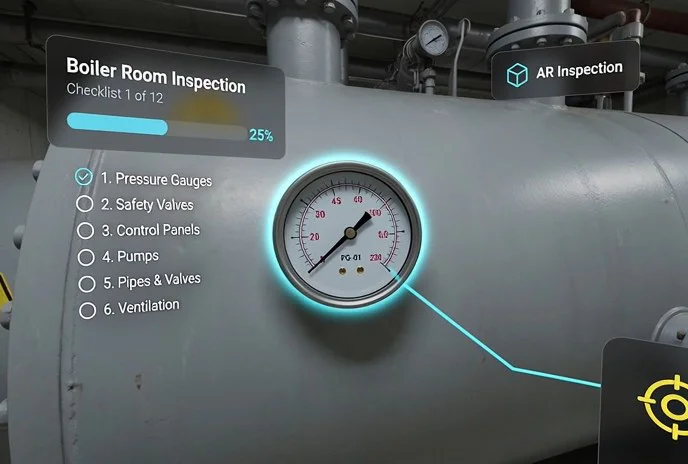
| Single-screen hints | Operators and duty personnel during daily inspections | The employee sees the required parameter directly on the equipment, fewer errors and fewer calls to service |
| Step-by-step instructions overlaid on components | Service engineers during scheduled maintenance and repairs | Full sequence of actions without paper manuals; a new employee works like an experienced one |
| Remote support with AR markup | Rare or complex failures, work in another location | A specialist at the support center sees the same thing as the person at the boiler, adds annotations, and guides the operation — no site visit needed |
With this approach, you cover both maintenance scenarios and unscheduled emergency situations. The first two formats save time on every operation; the third reduces equipment downtime through the rapid response of a remote expert.
We help you choose a combination of formats for your real tasks and prepare content for your type of boilers. Send us a description of your equipment — we will offer the optimal option.
How AR Instruction Development for an Industrial Facility Works
Developing an AR instruction for boiler equipment is a process without surprises: you see the result at every stage and participate in the approvals. That is why we have broken the work into six clear steps — from the initial brief to post-launch support.
- Brief — we gather the input: what equipment, what operations, and who will use the instruction. The output is a technical specification with scope, timeline, and result format.
- Scenario design — we break the process into steps and decide where an AR hint is needed and where text. We align the logic with your engineers so the instruction matches real regulations.
- Content creation — we model components, create animations, and captions. The team knows industrial terminology, so there is no need to "translate for developers."
- Prototype — we assemble the scenario and test it on your devices or using materials from the facility. You see how it works before the final version.
- Testing with your specialists — your employees perform operations using the prototype, we collect feedback and make edits. This removes errors before the official launch.
- Launch and support — we deploy the instruction, train the administrator, and support the project: we update content when equipment changes.
This way you control the process and influence the result. And the final AR instruction turns out to be practical and clear for your employees.
What Is Included in the AR Instruction Delivery
After an AR instruction is implemented, the customer gets not just an application but a working package that is immediately used on the shop floor. Below is the AR delivery package: each item covers a specific task of boiler equipment maintenance and staff training.
-
A ready-made AR instruction for your boiler equipment model: step-by-step scenarios for inspection, start-up, scheduled maintenance, and troubleshooting of common failures.
-
A digital scenario library on the customer's server: updated to reflect enterprise regulations and new equipment versions.
-
A control panel for the maintenance engineer: change text, photos, and videos in scenarios independently, without involving developers.
-
A staff training program: operators and repair technicians practice actions on real components with AR hints, not on paper regulations.
-
A master's checklist: a memo on launching the AR instruction, a template for a skills log, and an employee feedback form.
-
A manual on integrating AR instructions into existing work permits and process sheets.
-
Support during the pilot operation period: content updates, scenario refinement, and on-demand consultations.
Case Study: How We Cut Pump Repair Time in Half
The company — a boiler equipment manufacturer, EnergoKotel — approached us with a typical pain point: pump repairs took too long. Mechanics worked from paper instructions, spent 2.5–3 hours per operation, and constantly called technical support when replacing parts. This held back field teams: they managed fewer jobs per shift, and customers saw growing downtime.
We developed an AR instruction for servicing the pump unit. A specialist points the tablet camera at the equipment and sees step-by-step hints: the disassembly sequence, the required tool, and control points.
No scattered PDF guides — the current procedure is always in front of their eyes. The system additionally records which steps cause difficulties, so the instructions gradually become even more accurate.
What Changed
The average repair time dropped from 2 hours 40 minutes to 1 hour 20 minutes — half the time. The number of assembly errors decreased by 80%, and the need to call technical support practically disappeared.
A new mechanic can now be brought up to speed in a single shift: the AR instruction itself guides them through every step, eliminating the "human factor."
Why It Paid Off Quickly
For a field team, saving an hour on each repair means an extra 2–3 services per shift. The customer calculated that the instruction's development paid for itself in two months through reduced downtime, fewer repeat callouts, and less defective work.
Another bonus is centralized updates: when a regulation changes, edits are made once rather than distributed through paper folders.
The case confirms: AR instructions solve not a "technological" problem but a business problem — reducing costs and accelerating service. That is why the customer came back to us and ordered three more instructions for other equipment.
Frequently Asked Questions About Implementing AR Instructions
AR instruction implementation raises questions among operations departments and technical directors: how the technology will fit into existing regulations, who is responsible for the result, and what happens when equipment changes. Below are answers to the most common concerns. If your question is not on the list, we will send a detailed consultation within a day.
What guarantees do you provide after implementation?
We are responsible for the performance of AR instructions from the moment of launch and for the entire support period. Our team specifies deadlines, scope of work, and areas of responsibility in the contract, and after implementation trains engineers and operators.
If a failure occurs, the support service helps remotely or visits the site — the response time is defined in advance.
What happens when the equipment or regulations change?
AR instructions do not "freeze" after launch. We use a modular structure, so edits are made precisely: if a maintenance regulation changes or a component is replaced, we update only the relevant step.
As a rule, a new version is ready in a few working days, not weeks, and immediately becomes available on your devices.
Can workers handle it without special training?
The instruction appears directly in their field of view and shows exactly what to do, with no need to leaf through paper manuals. The interface is designed for minimal experience: you only need to show the operator once how to put on a headset or point a camera. Our customers usually put the system into operation within one shift, without stopping production.
Do we need to rework existing instructions?
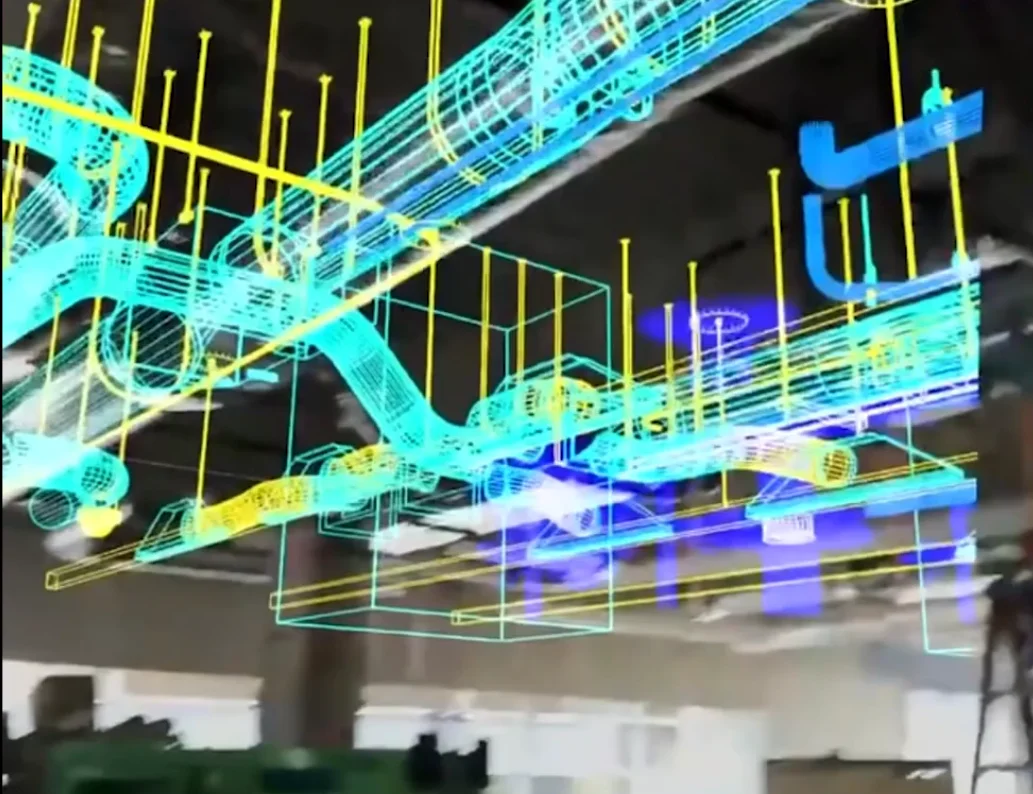
No. We take your current regulations and technical documentation as the basis and transfer them into AR format. Maintenance specialists do not have to learn new logic — they see familiar operations in a more visual form, with 3D hints and key-step control.
Order AR Instruction Development for Your Equipment
Submit a request to order the development of an AR instruction for your boiler equipment. We will conduct an express audit: we will look at which operations most often cause difficulties for staff and suggest a format that will reduce training time and lower the risk of errors.
An engineer's consultation is free — you will find out whether the technology suits your equipment model and how quickly it can be implemented.
We work remotely, so we can give you an estimate of timelines and cost after the first discussion. The cost calculation is tailored to the customer's task: the type of equipment, the number of instructions, and the depth of scenario development. No template prices — you pay only for what you will actually use in your work.
What you get as a result:
- A review of your equipment and maintenance scenarios together with an engineer;
- An accurate cost and timeline estimate for your task — no hidden payments;
- A working AR instruction that an employee can understand without special training;
- Training for your specialists on using the instruction, plus technical support;
- Adaptation to existing software and equipment, without buying new hardware;
- Readiness for implementation: a test report and a rollout plan for other facilities.
Take the first step — submit a request for a cost estimate. An engineer will contact you within one business day, ask clarifying questions, and propose a solution for your budget and regulations. You can order the development in one click — we will take everything from there.
How to Choose an AR Instruction Format for Your Equipment?
There is no universal AR instruction format. The choice depends on the frequency of maintenance, the complexity of operations, and working conditions.
For boiler equipment, it is important that hints appear directly on the object, without distracting the employee with paper or a tablet. That is why selecting a format starts not with technology but with your real task.
For example, a step-by-step format with on-screen hints is convenient for regular inspections. For rare, complex repairs, an interactive model that can be studied in advance is better. These are solutions of varying complexity, and we help you choose the one that will pay off.
We help you navigate the formats and choose a solution for your task. During a short consultation, we discuss operations, frequency, and staff skill levels. We show examples of similar projects — without technical details, in terms of your benefit. We will explain how the format fits into your process and answer questions.
You receive a well-considered recommendation: which format will bring results and what is better to avoid. If you are unsure, start with a pilot on one piece of equipment — within a couple of weeks, it will become clear how the tool works in your environment. We will support you at every stage. This way you avoid unjustified expenses and get value faster.