

Why maintenance of laboratory equipment takes time and money
Every piece of laboratory equipment operates under strict procedures. While the instrument is functioning properly, results are accurate, but any scheduled check involves lengthy routine work that halts the process.
Even a couple of hours of equipment downtime in a laboratory turns into delayed research timelines and urgent coordination with clients. Shifts have to be rescheduled, double runs performed, and delays explained.
Worst of all are emergency shutdowns. They happen suddenly, when the instrument is needed most: before a report, in the middle of a series of analyses. Searching for instructions, figuring out schematics, waiting for an engineer — that means hours, sometimes days, of downtime. Each such case is not only lost time, but also the risk of failing commitments to clients.
Add employee training to this. A new lab technician or technologist spends weeks learning the equipment because a paper manual doesn't provide answers at the right moment. Maintenance errors lead to breakdowns and further downtime. The result is rising training costs and no improvement in efficiency.
We solve these problems with AR instructions: step-by-step prompts right on the equipment reduce routine maintenance time, speed up response to emergency shutdowns, and enable confident work from the very first try. Equipment downtime decreases, and the laboratory manages to complete more analyses on time.
What AR instruction gives you: less downtime, higher safety
Equipment downtime means lost orders and missed deadlines. Even a slight delay in troubleshooting turns into hours of downtime, and an operator error can lead to an accident.
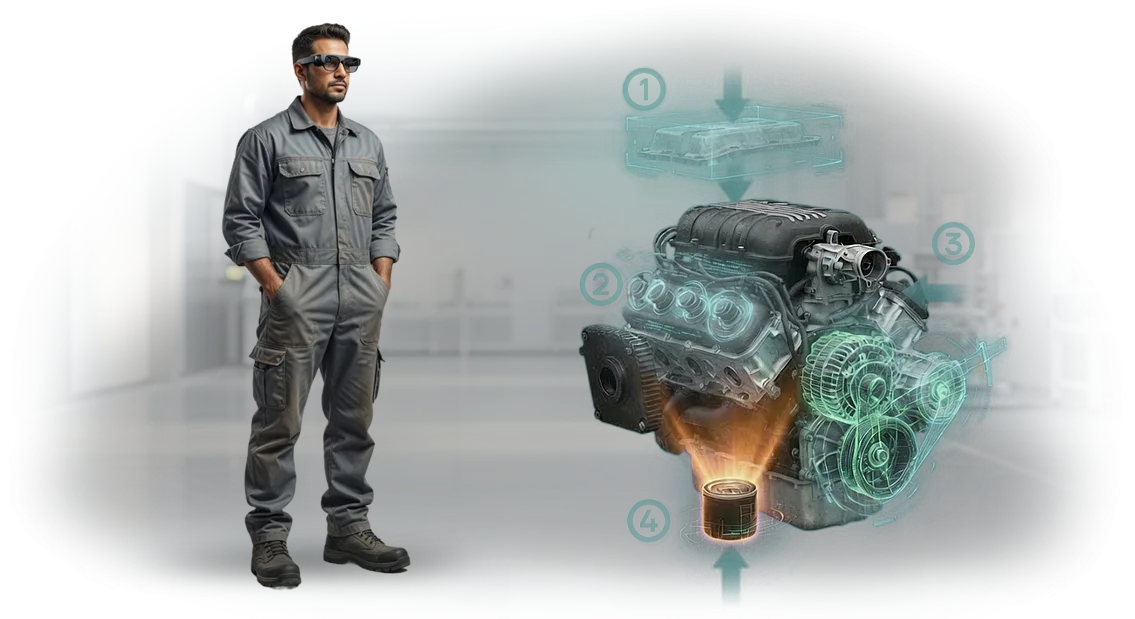
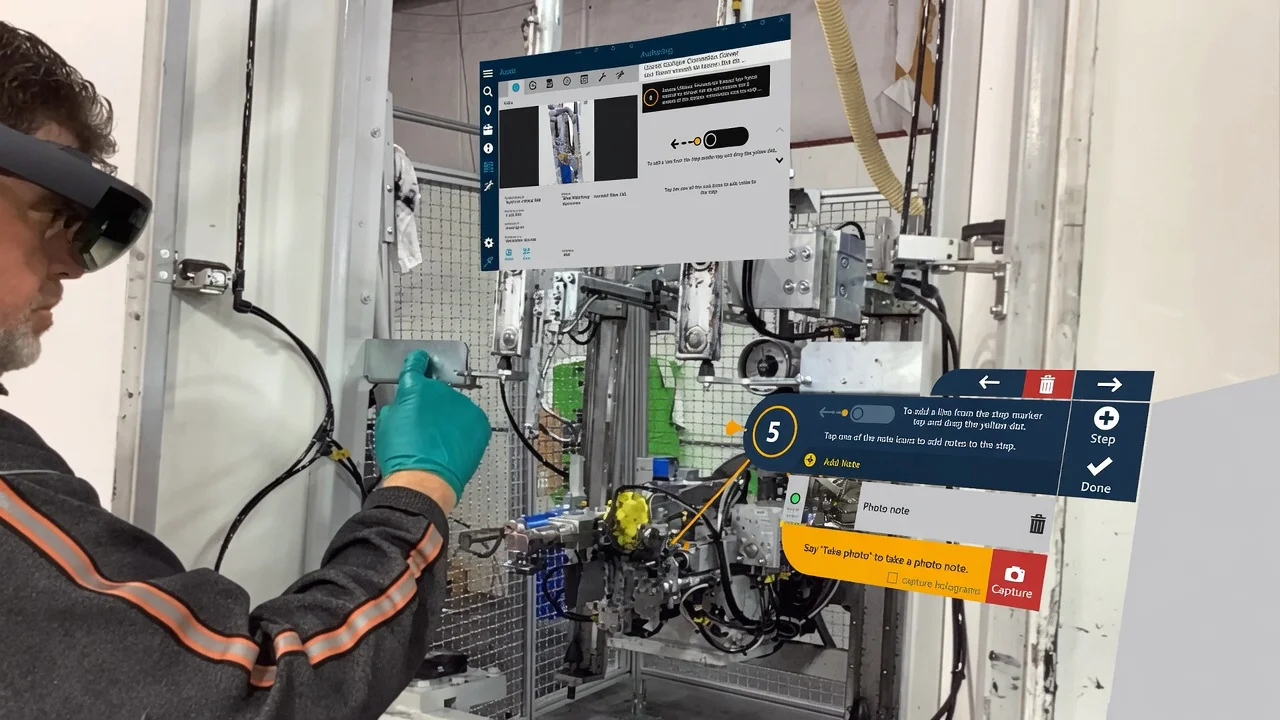
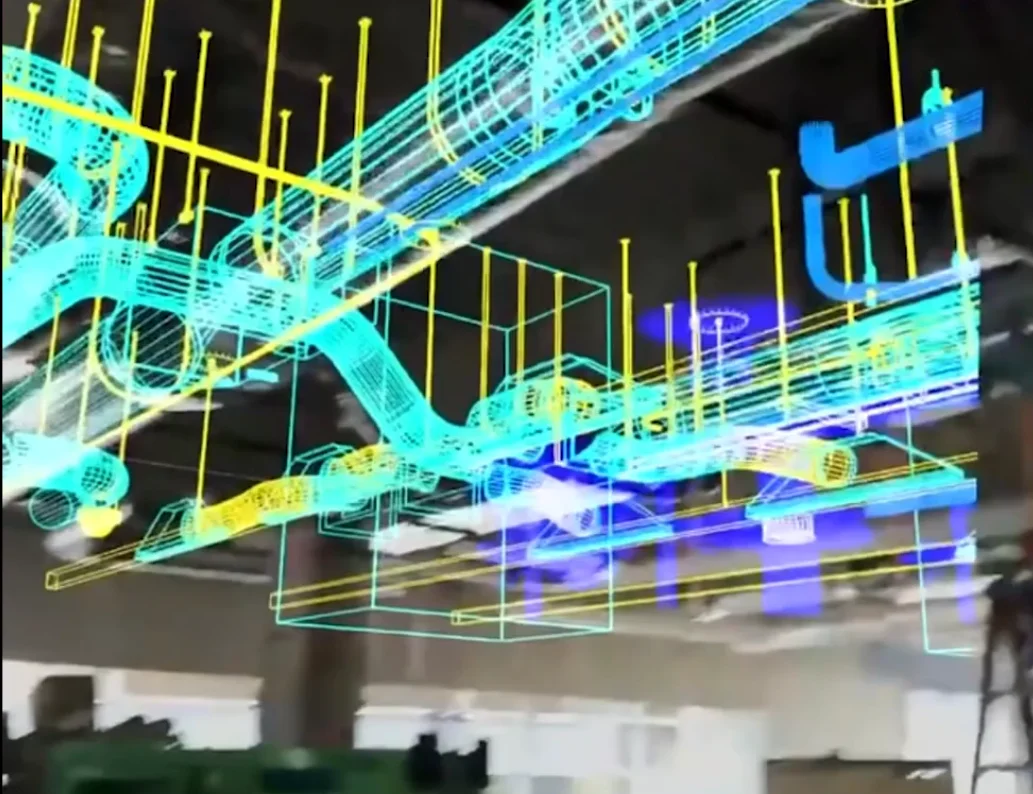
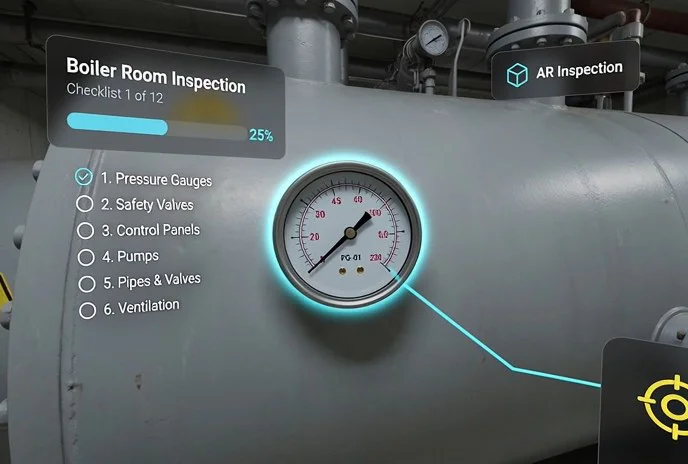
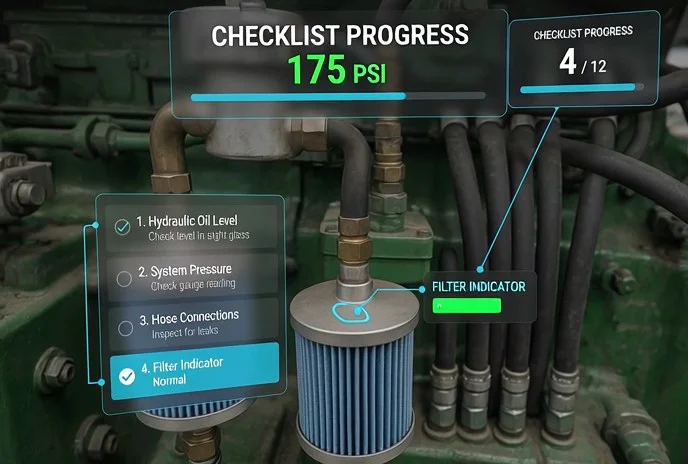
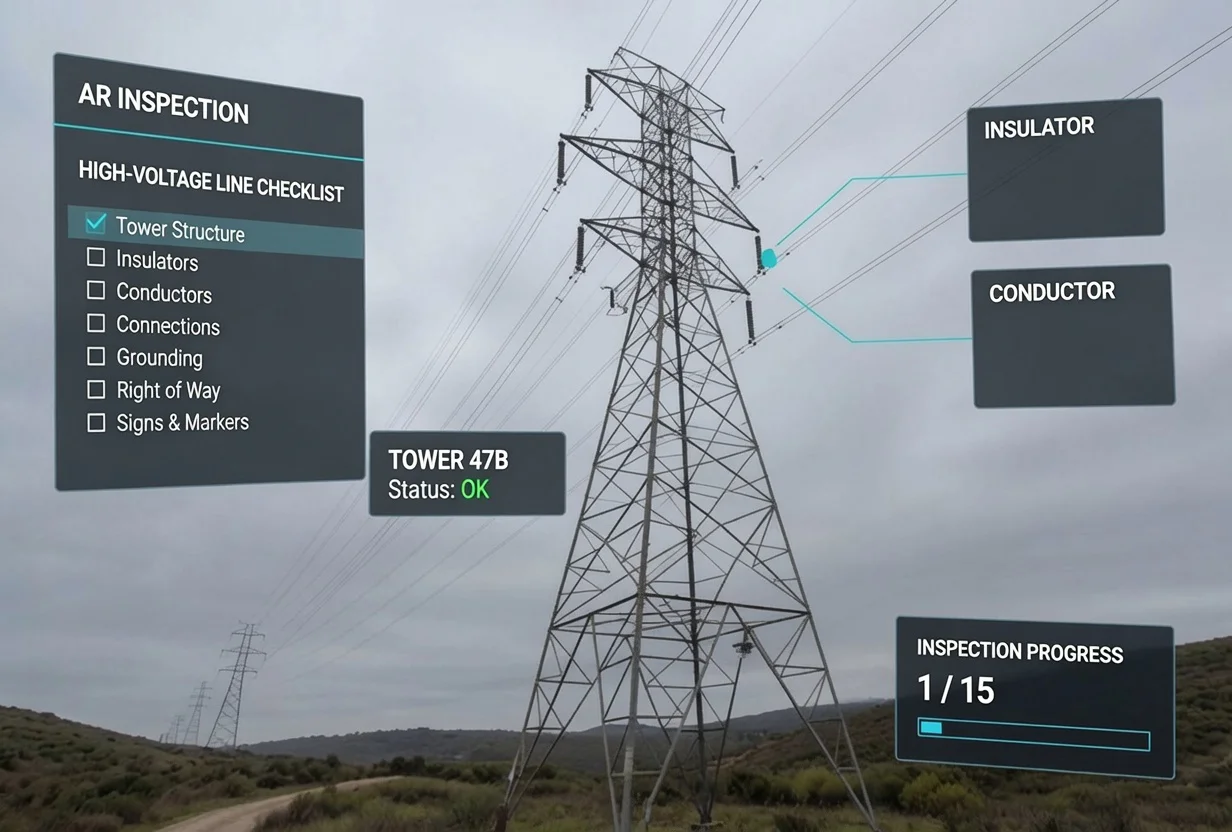
An AR instruction overlays prompts directly onto the equipment — a specialist sees what to do and where, without having to consult paper manuals.
What you get from implementation:
- [ ] Reduced downtime: fault-finding time drops by 30–40% because the relevant component is highlighted right in the field of view.
- [ ] Workplace safety: the system warns about hazardous areas and reminds about protective measures, reducing the risk of injuries and accidents.
- [ ] Personnel training: new employees learn complex equipment faster — a digital instruction replaces hours of mentoring.
- [ ] Digital instruction: updates are made centrally, all documentation is always current and at hand.
- [ ] Fast achievement of target metrics: fewer errors, faster reaction — performance indicators reach planned levels in weeks, not months.
This is not a concept but working projects. We have already implemented AR instructions for laboratory equipment manufacturers, and clients confirm: downtime is reduced by an average of 1.5 times, and workplace safety levels improve immediately after launch.
We develop such instructions for your equipment and processes. You don't need to change your usual workflow — augmented reality integrates into existing operations and works on tablets, smartphones, or AR glasses. Contact us to discuss a pilot area and see the effect on real equipment.
AR instruction formats for your task and budget
Complex laboratory equipment requires precise actions — the accuracy of analyses and employee safety depend on it.
But the same procedure doesn't suit everyone: a beginner needs step-by-step prompts, an on-duty worker needs quick expert assistance, and a technical specialist needs safe training.
That's why we divided AR instructions into three formats so you can choose the instruction format that fits your task and project budget.
| Format | For whom | What it gives the client |
|---|---|---|
| Step-by-step instruction | Employees who work with the instrument daily | Visual step-by-step actions directly on the equipment — fewer errors, less downtime, and fewer spoiled samples |
| Instruction with remote support | On-duty personnel and external experts | Quick resolution of non-standard situations without a specialist visiting — saves time and budget |
| Training simulator | New employees and practical course students | Safe skill practice without the risk of breakdown — fast transition to independent work |
This breakdown helps you select the instruction format for a specific task and project budget. If needed, we combine options: for example, you start with a step-by-step instruction and after six months add a training simulator for new employees. We'll help you assess what suits your equipment and processes and propose the optimal solution.
How the project runs: from brief to launch
We work transparently: you always see what stage the project is at and what you'll get as a result. We fix tasks, timelines, and completion criteria before starting — so implementation goes without 'surprises' or delays.
- Brief and immersion. We discuss your tasks, types of laboratory equipment, and maintenance procedures. The output is a document with project goals and each party's area of responsibility.
- Equipment and process audit. We review manuals, procedures, and typical work scenarios. We identify where AR instructions will deliver quick results: complex repairs, scheduled diagnostics, training new employees.
- Prototype for approval. We create a working sample of an AR instruction for a single component or operation. You see the format, test it with your specialists, and make edits before full development starts.
- Development and testing. We create a full set of instructions and test scenarios on real equipment. We record the results: reduced operation time, fewer errors, faster onboarding for newcomers.
- Launch and integration. We connect AR instructions to your workflows, configure access rights, and conduct employee training. We hand over clear procedures — the team uses them without constantly asking developers questions.
- Post-implementation support. We support the project: update instructions when procedures change, help with new scenarios. You get a working system, not a 'box' that you have to refine yourself.
This scheme lets you understand the timeline, budget, and scope of work in advance. Each stage has a control point, so you don't lose project control and know exactly when the result will be ready.
What is included in the AR instruction delivery
The delivery includes not just an AR application, but a package that is immediately ready for use in the service department. We hand over both tools and knowledge so you can manage the instruction without hiring a contractor — this removes dependency and speeds up implementation.
- Ready-to-use AR instruction. A working scenario for specific operations on your laboratory equipment: from assembly and configuration to scheduled maintenance.
- Admin panel. A simple web interface that lets a responsible employee change prompt text, photos, and step logic without involving developers.
- Training for responsible employees. Hands-on training: how to use the instruction on a tablet or glasses, how to edit content, what to do in non-standard situations.
- Documentation. Clear guides and procedures: operation, updating, adding new operations — everything is documented on paper.
- Source files. All materials and developments are transferred to your ownership. You can develop the instruction with any team and not depend on us.
- Start-up support. We stay in touch during the first weeks, answer questions, and fine-tune content to real tasks.
This package covers the main risks: you don't get a 'black box' and you don't depend on a single contractor. Employees start working on the very day of implementation, and when equipment changes, you update the instruction yourself. That's a complete solution, not just a demo model.
Case study: how we reduced line downtime by 30%
The client — a laboratory equipment manufacturer — faced a typical pain point: routine maintenance took too long, and new employees made mistakes when servicing complex components.
With PDF instructions, everyone spent 5–10 minutes searching for the right section, and any missed step resulted in restarted tests and line downtime.
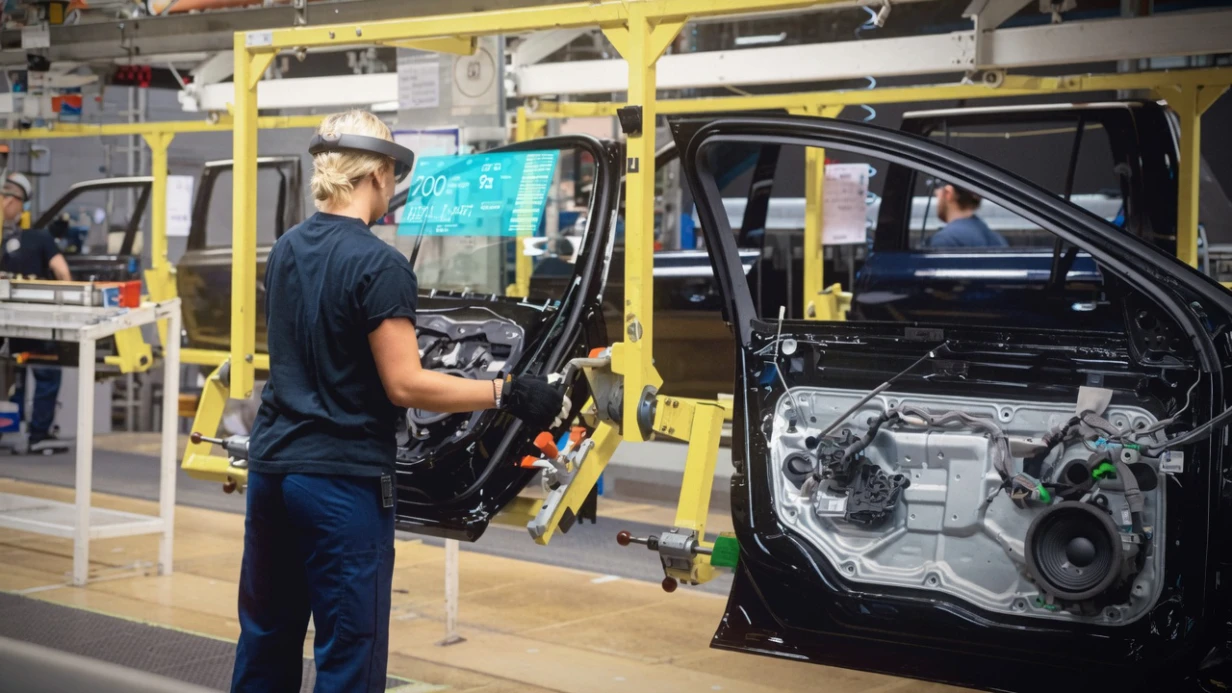
We implemented an AR instruction that overlays step-by-step prompts directly onto the equipment. The technician sees in the headset which component to service, in what sequence, and with what tool — without having to consult paper, a laptop, or a senior mentor.
What changed in numbers:
- Routine maintenance time was reduced by 30% — the line now has less downtime.
- The number of errors among new employees fell by almost half: the system highlights only the correct sequence of actions.
- Newcomer onboarding to independent work accelerated by 1.5 times — mentors no longer spend hours repeating routine tasks.
Employees don't 'study' the instruction — they work and learn at the same time. This is especially important for night shifts and high staff turnover, when every day of downtime in one area significantly impacts the production plan.
The client has already returned to us with a request to scale the solution to a second workshop and to train service engineers outside production.
Experience has shown: our AR instructions pay for themselves within the first month, and downtime is reduced predictably without sacrificing quality.
We work with professional equipment and proven tools — the client gets a stable result.
If the same problems — maintenance delays, errors, long onboarding of newcomers — are familiar to you, let's discuss your case on a short call: we'll show exactly where the first saved hours will appear.
How to choose the right AR instruction format?
The choice of AR instruction format depends directly on the task you are solving: training dozens of employees in basic operations or guiding a technician through a complex maintenance procedure.
There is no universal solution, but there are proven principles that help you avoid overpaying and achieve results right away.
For mass training, when you need to quickly familiarize personnel with typical actions, short AR prompts work best. An employee points the camera at the equipment and sees directly on the parts where the button is, how to open the cover, or in what order to perform three steps.
This format is easy to replicate, doesn't require a long adjustment period, and reduces onboarding time to one day.
For complex equipment with multi-stage procedures and high safety requirements, step-by-step AR instructions with action control are suitable.
The system not only shows the next step, but checks whether it was performed correctly and doesn't let the user move on until the operation is completed.
This reduces the risk of errors, decreases emergency shutdowns, and allows less experienced personnel to work without compromising quality.
Often, a combination of formats gives the best result: short prompts for daily operations and extended guides for rare or complex procedures.
Start with a pilot project in one area or on one type of equipment — you'll see real time savings and quickly understand which format to scale.
We help you choose the optimal option for your tasks and budget, and if needed, develop a hybrid solution. Tell us what equipment your specialists work with, and we'll propose a format that pays off within the first weeks of use.
Frequently asked questions about AR instruction development
We understand that before launching AR instructions, you have practical questions — from timelines to updates. Below are answers to clients' main concerns.
How long does it take to develop an AR instruction?
On average, a project takes two to six weeks — the timeline depends on the number of operations and the complexity of the equipment. We work in parallel with your production cycle: you don't stop processes, and we prepare the instruction in stages. At the start, we set dates and deliver without delays.
Is it difficult to integrate AR instructions into an existing system?
Integration doesn't require replacing equipment or rebuilding IT infrastructure. AR instructions run on tablets and smartphones, and data can be placed in your internal system or in a separate secure application. We help configure access for employees and administrators — the process takes a few days.
What happens if the maintenance procedure changes?
Procedures change — that's normal. We design instructions as modular: edits are made to specific steps without affecting other sections. You send us the new procedure — we quickly update the AR scenario and keep versions. Employees always see the current sequence of actions.
Is it difficult to train staff to work with AR?
Training takes one day. The interface is intuitive: an employee points the camera at the equipment and sees prompts, animations, and checkpoints. We also provide a short briefing for mentors so they can help colleagues without contacting us.
Still have questions about timelines, integration, or updates? Write to us — we'll explain how it will work on your equipment.Order an AR instruction for laboratory equipment
Order an AR instruction for laboratory equipment — and within a few days you'll receive a ready-made solution that will reduce downtime and protect employees from maintenance errors.
We don't offer a 'boxed product': first, we analyze your task, calculate the economics, and show how the AR instruction will fit into existing procedures.
Immediately after your request, you receive:
- Consultation with an implementation engineer — we discuss which operations most often require assistance, who will use the instruction, and which format is more convenient: a tablet, glasses, or an employee's mobile phone.
- Cost estimate for your scope of work — a transparent estimate with no hidden fees, taking into account the number of components, operation complexity, and the need for integration with your maintenance system.
- An AR instruction prototype on one real component — you see how animated prompts overlay onto the equipment and immediately assess the effect before the full launch.
- Recommendations for personnel training — what minimum preparation lab technicians or engineers need to use the instruction without stopping work.
- Preliminary implementation plan and timeline — you understand when you'll receive the final version and what approval stages will be required.
- Calculation of savings from reduced errors and reduced maintenance time — so the solution pays off after the first routine maintenance work.
Leave a request — and we'll prepare a proposal for your task within one business day. You don't need to understand technical details: we'll propose the optimal solution ourselves, and the prototype will let you make a decision without risks or extra costs.