

When Elevator Maintenance Slows Down, You Lose Clients
Elevator downtime is not just a technical fault. It means disrupted schedules and unhappy residents and tenants demanding an immediate solution.
The longer a lift stays out of service, the more expensive every minute becomes: contracts often include downtime penalties, and the reputation of the management company or service department suffers.
During emergency repairs, every minute counts. A mechanic has to quickly find the cause and fix it, but instructions are often scattered: paper manuals, loose files, the experience of senior colleagues. In a stressful situation, this leads to mistakes, repeat callouts, and the loss of precious time.
Elevator maintenance is made even harder by the variety of models: different components, different connection diagrams. A specialist has to keep dozens of variants in mind, while a newcomer spends weeks on training.
As a result, scheduled work drags on, and the budget goes into extra hours and fixing other people's oversights.
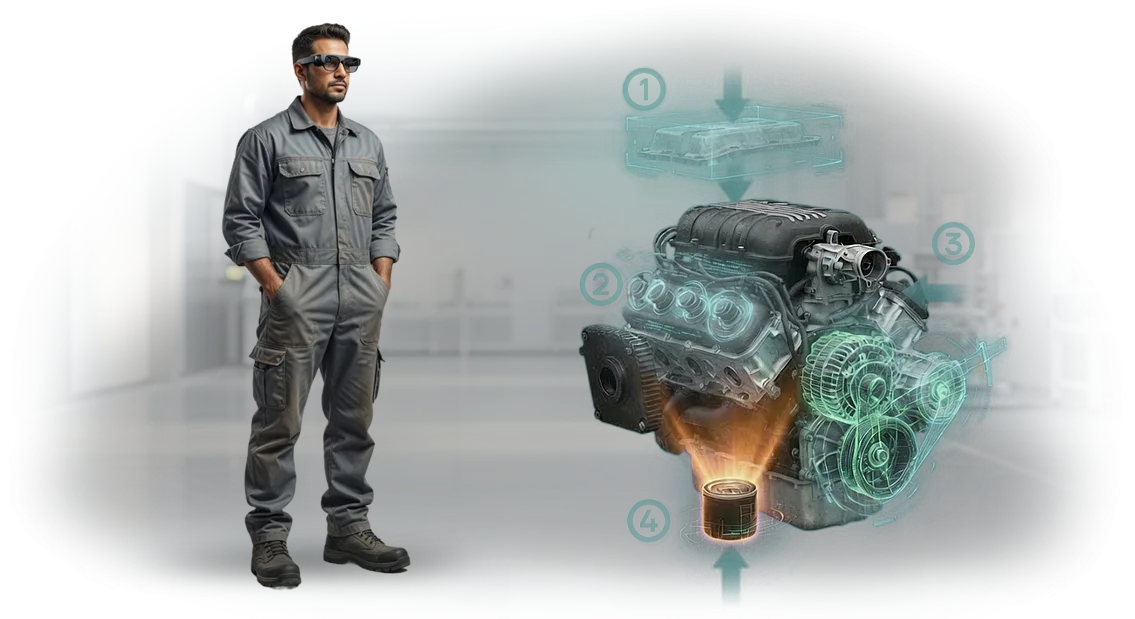
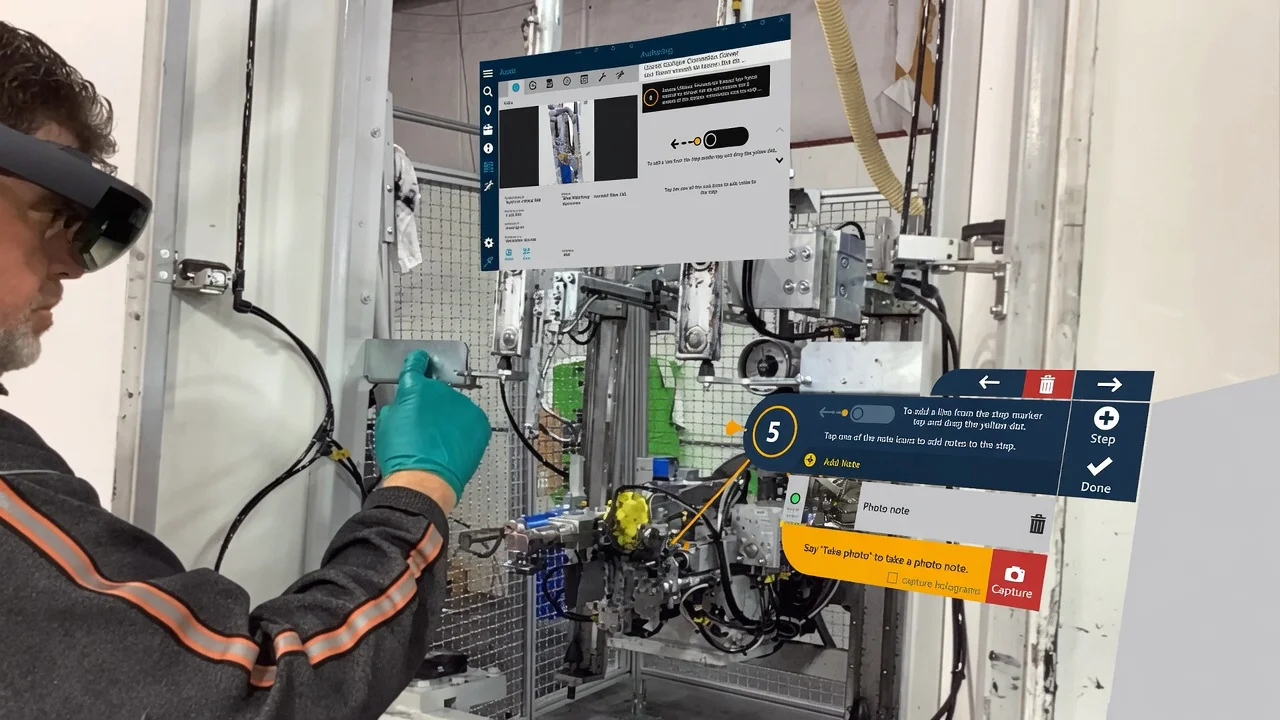
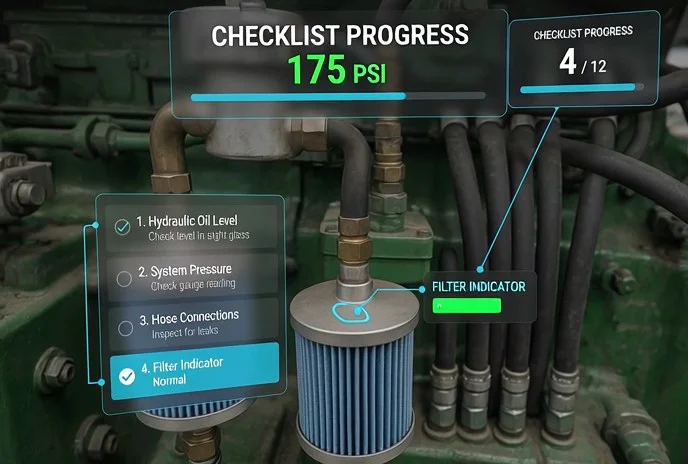
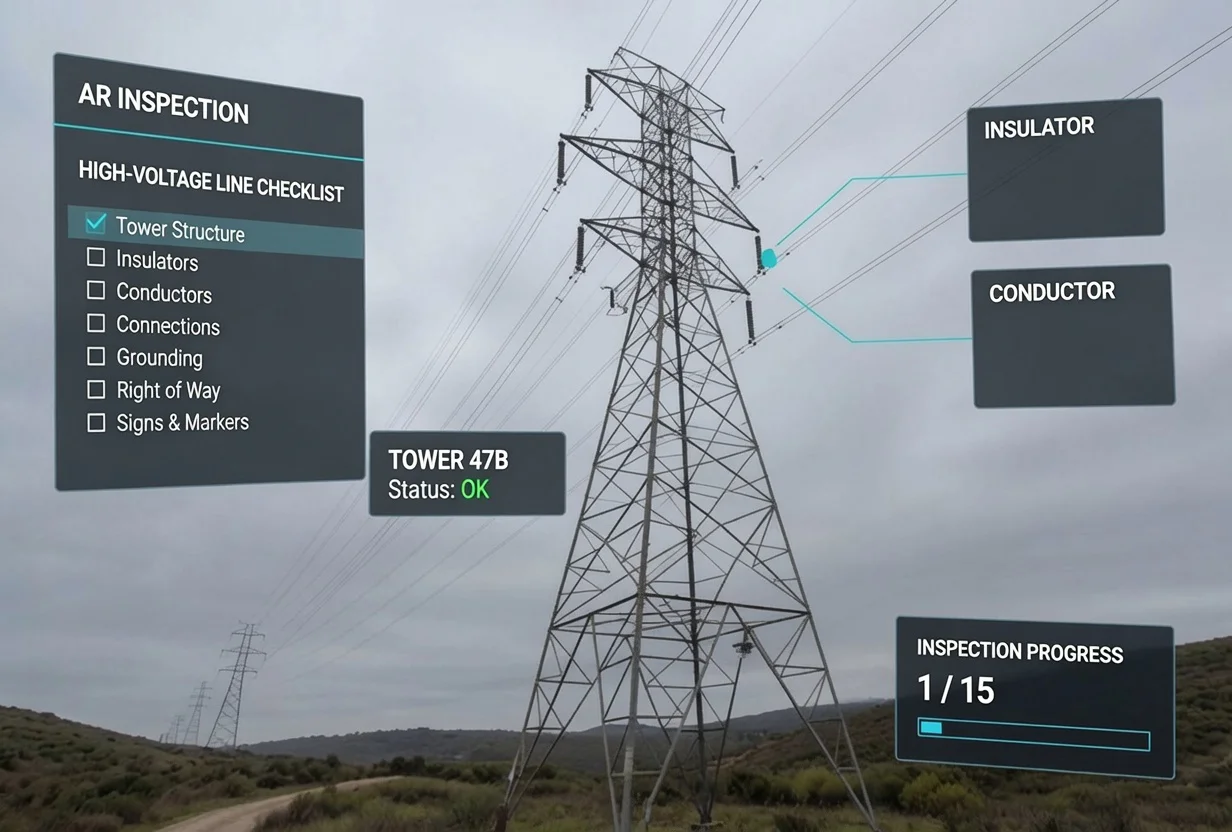
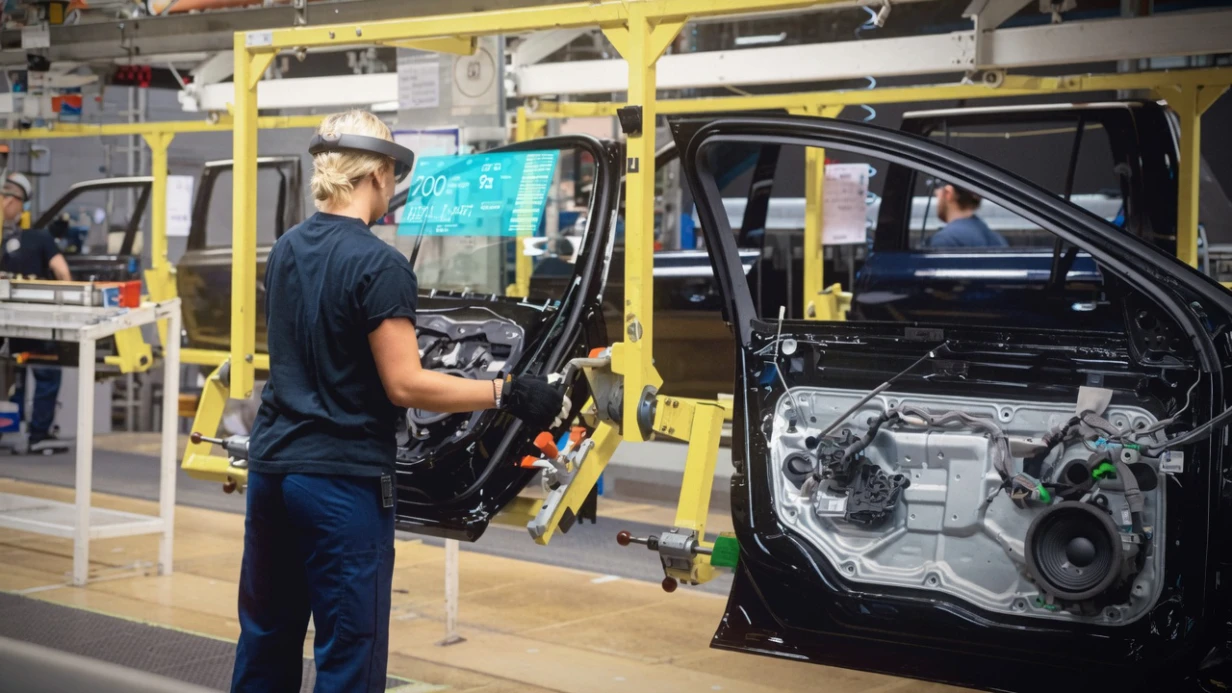
We solve this problem with augmented reality. Right on the equipment, the mechanic sees step-by-step prompts: what to check, what to unscrew, where to press.
The time spent searching for information drops to seconds, mistakes are eliminated, and every elevator returns to service faster. This reduces downtime, removes penalties, and restores client trust — customers are ready to wait again because you work professionally.
What AR Instructions Deliver in the Field
When equipment is idle, every minute costs money. A specialist wastes time searching for a paper instruction, studies diagrams, and still risks skipping a step.
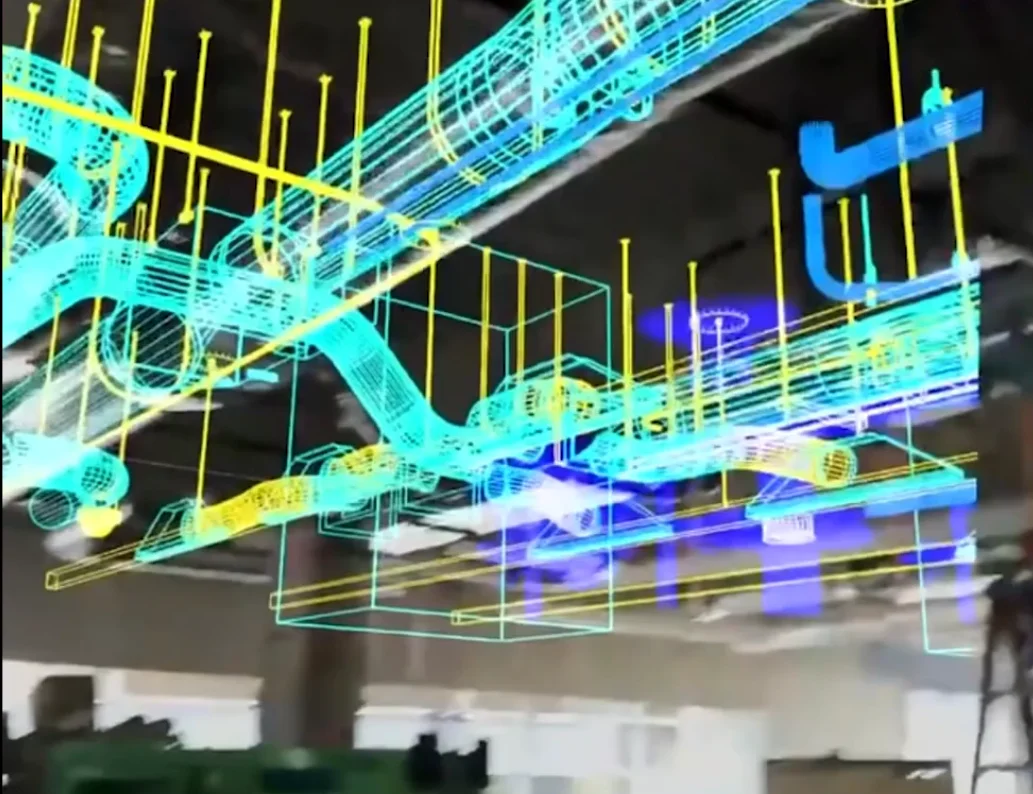
An AR instruction overlays prompts directly onto the object: the mechanic sees which parts to remove, the order of actions, and where hidden fasteners are. Repairs and maintenance speed up — this is not a promise but a result confirmed by projects.
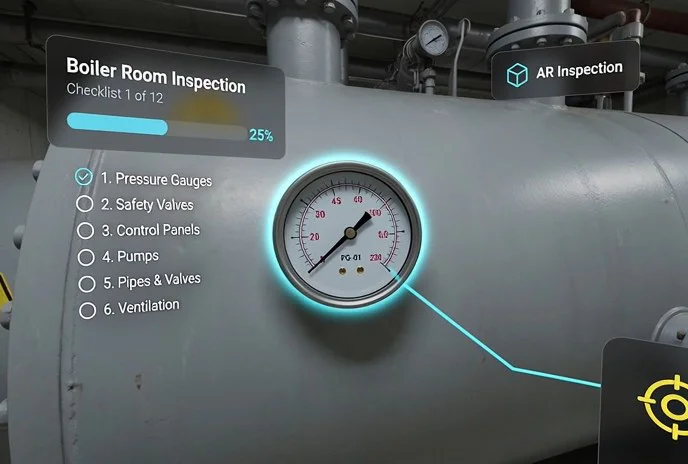
Mistakes in elevator maintenance lead to repeat callouts and additional expenses. Augmented reality controls the process step by step: the system shows what has been done and what hasn't. Skipping an important stage is impossible — so errors and unfinished work decrease. This, in turn, reduces complaints and employee stress.
Personnel safety is a separate value. AR instructions visually mark risk zones and remind about lockouts and protective mechanisms. The worker gets a warning if they approach a dangerous area or perform an operation incorrectly. This reduces injuries and makes every shift predictable.
Training new specialists stops being a long process. Instead of spending weeks studying regulations, a newcomer puts on glasses or opens a tablet and sees prompts in real time.
They learn right on the job, while experienced employees gain the key benefit — no longer do they need to keep hundreds of instructions in their heads; the right prompt is always before their eyes.
Finally, AR instructions make work transparent for the supervisor. The system records which operations were actually completed and how long they took. This helps objectively assess staff workload, find bottlenecks in the process, and plan service work more accurately. Management becomes simpler, and quality becomes measurable.
AR Instruction Formats for Elevator Maintenance
AR instruction formats are chosen to match the specific task — and that's an important advantage. For scheduled elevator maintenance, lightweight prompts over the real equipment are enough, while complex repairs require full guidance with verification of each step.
Below are the typical scenarios we work with:
| Format | Who It's For | Client Benefit |
|---|---|---|
| Step-by-step AR prompts | Installers, technicians during scheduled maintenance | Cuts inspection time, prevents missing components |
| Interactive component diagrams | Diagnostics and fault finding | Faster localization of the cause, less elevator downtime |
| Repair guidance | Complex replacements, major overhauls | Control over every step, lower risk of error and repeat callouts |
| Training mode | New employees, retraining | On-the-job training without taking time away from work |
This format selection saves resources: there's no need to build a "heavy" AR instruction where short visual prompts are enough.
We capture the specifics of your equipment, procedures, and staff skill levels, and then propose a format that solves the task without overspending.
At the same time, all formats share one thing: the technician sees a digital prompt right on the real object, without being distracted by paper or tablets. This speeds up maintenance, improves safety, and simplifies knowledge transfer within the team.
How AR Instruction Development Works
We structure the process so you understand what's happening at each stage and when you'll receive the finished result. No "black box": from the first brief to deployment at your site, you work with a dedicated manager and see the status of the work. The entire cycle takes 2 to 4 weeks, depending on equipment complexity and the number of scenarios.
- Instruction brief. We define the goal: which equipment, which operations employees perform most often, and where errors occur. You send documentation, photos, or video — that's enough to get started.
- Audit and scenario plan. Based on the brief, we propose the instruction structure: step sequence, control points, and warnings about danger zones. We approve the plan before production begins.
- Creation of AR scenarios. We mark up each step on the real equipment: prompts, arrows, animations, voice comments. You receive a test version to check with your employees.
- Review and refinement. You collect feedback from mechanics and operators. We make edits to the text, step logic, and visual emphasis — 2–3 iterations are usually enough.
- On-site deployment. We activate the instruction on your specialists' tablets or smartphones. We conduct a short training session — 15–20 minutes — so the team starts working independently.
- Post-launch support. We update scenarios when procedures or equipment models change. We're available during business hours, with a 12-month warranty on the result.
As a result, you get not just a file but a working system: an employee opens the instruction right at the elevator, performs the operation step by step, and records completion.
If something changes during maintenance, you write to us and we update the content without the need to order development from scratch.
What's Included in the AR Instruction Package
When you order an AR instruction for elevator maintenance, you receive not just an annotated file but a complete working solution. We've assembled the package so the service team can start using it from day one — without programmers or lengthy setup.
Here's what's included in the package:
- AR app for tablets and smartphones that overlays step-by-step prompts directly onto the real elevator. It works even without a stable internet connection — important for building entrances and technical floors.
- A digital instruction library — from scheduled technical inspections to component replacement. Each step is tied to a specific elevator model and serial number, so the engineer sees exactly their case.
- An admin panel for updates: if a procedure changes or new regulations come out, the update goes to all devices automatically. No more reprinting paper technical cards and distributing them across sites.
- Training for your team — a few hours after which engineers and dispatchers work with AR confidently. Training can be repeated for new employees at no extra cost.
- Technical support and a warranty for the entire period of use. We help with setup, add new instructions, and answer questions in work messengers.
In the end, you get not a set of documents but a well-structured process. Digital instructions reduce elevator maintenance time and lower the risk of repair errors, and regular updates are already included in the package — with no separate fees or hidden conditions.
Case Study: How We Cut Lift Repair Time
The service company Lift-Service maintains more than 300 elevators in residential neighborhoods and shopping centers.
Most callouts were for typical breakdowns, but each repair took up to 2–3 hours: mechanics searched paper manuals for the right section, called senior colleagues back, and new employees simply couldn't work without a mentor.
We developed AR repair instructions for them: point your smartphone camera at a component — and you get a step-by-step prompt on where to loosen a fastener, which cable to check, and when to replace a part. Such an instruction can't be mixed up or left behind in a warehouse.
What Changed After Launch
Average fault resolution time dropped by 30%, and the number of repeat callouts to the same elevator fell by nearly half.
A new mechanic is ready for an independent shift in 2 weeks instead of a month and a half — training happens right on site, without taking time away from work.
Budget savings are the key outcome for the client. Fewer elevator downtimes means fewer complaints from residents and claims from management companies, and fast onboarding of newcomers allows the team to keep up with growing order volumes without expanding headcount.
The head of the service department noted: "We used to depend on two or three experienced technicians. Now any employee with a tablet can handle 80% of tasks.
Repair time has dropped by a third, and we see it in our reports every month." Six months later, the client ordered AR instructions for three new elevator models.
How to Choose the Right AR Instruction Format?
The right AR instruction format isn't a question of "the newer the technology, the better," but of how well it fits the task.
For elevator maintenance, the same process can be shown in different ways: quick visual cues on a screen, step-by-step animation, or full spatial guidance with action verification.
Each option solves its own task, and paying extra for the most complex scenario is justified only where it genuinely cuts time or reduces errors.
Start with the equipment type and staff skill level. If mechanics already know the elevator design and you need to speed up typical operations, a lightweight format focused on key components and common faults is enough.
If, however, you're dealing with new models or rare procedures where the cost of an error is high, choose a format with full step-by-step guidance and action verification. This way, you get a clear instruction without unnecessary complexity.
Next, consider timelines and budget. Simple formats are noticeably faster and cheaper to produce, while complex spatial guidance requires more time to refine scenarios.
But that doesn't mean saving is always better: for complex elevator components, a poorly thought-out instruction will lead to downtime and repeat callouts. We select a format that fits your budget and still actually solves the task.
The main thing is not to choose a format head-on, but to base it on the use case. Tell us about your equipment fleet, who will work with the instruction, and which operations need to be covered first.
Based on that, we'll propose an option that delivers the right result without overspending — and, if needed, we'll split the project into stages so you can move at a comfortable pace.
Frequently Asked Questions About AR Instruction Development
Clients ask the same questions: will the technology work with their equipment, what to do if a device breaks, how quickly instructions can be updated, and whether data might be lost.
We answer the most common ones — so you can see how we work and make a decision without unnecessary risk.
Is it compatible with the equipment we already have?
Yes. Before starting, we test your tablets, smartphones, and augmented reality glasses. Just send us the device model — we'll show you an example working on it. You won't need to buy new equipment.
What happens if a tablet or glasses break?
The instructions are stored on your server or in a secure cloud, not on the device. If a tablet breaks, you take another one and all the materials are already there. If necessary, engineers can remotely restore the data within minutes.
How quickly can changes be made?
Edits are made within a few business days. You send a request, we adjust the content and publish a new version. The change history is preserved, so you can always roll back to a previous revision.
What guarantees do you provide?
We guarantee correct operation of the instructions and the availability of technical support for the entire period of use. If something displays incorrectly or a button doesn't respond, we fix it on a priority basis at no extra charge.
Who is responsible for data security?
Your data remains yours: we don't transfer it to third parties and don't use it for our own purposes. Access is configured by role — only the right employees can see the instructions. The terms are set in the contract.
Order AR Instructions for Industrial Equipment
Maintenance of industrial equipment — including elevators and lifting mechanisms — is impossible without precise instructions. Paper procedures often don't match the actual design, and new employees spend weeks on training.
AR instructions solve this problem: the technician sees prompts directly on the device, which reduces errors and repair time.
Ordering development is simple — we handle every stage, from cost calculation to launch. Here's what the path looks like:
- Submit a request on the website — it's free and non-binding. We'll clarify the tasks and calculate the cost within one business day.
- A specialist visits the site — an engineer studies the equipment, working conditions, and control points to make the instruction accurate.
- A prototype on your equipment — you'll see how the AR instruction looks in reality and can make edits before full development begins.
- Contract and fixed estimate — we lock in timelines, scope, and price so there are no surprises.
- Development and approval of the full version — iterations until your team is satisfied with the result.
- Turnkey launch — installation on tablets or glasses, staff training, technical support.
In the end, you get a working tool that cuts downtime and improves maintenance accuracy as early as the next day. Submit a request — and we'll prepare a cost estimate and a prototype, while we take care of the launch.