

Why Injection Molding Machine Downtime Costs More Than It Seems
Downtime of an injection molding machine is not just a single piece of equipment stopping. It is a disrupted production schedule, idle operators, and a whole chain of unfulfilled commitments to customers.
When a plant operates in a continuous cycle, even a few hours of equipment downtime result in tangible financial losses that are rarely accounted for in full.
The cost of downtime consists of several components. It includes unproduced products, paid idle time for personnel, as well as possible fines and loss of reputation due to delayed deliveries.
At the same time, repair of injection molding machines can drag on not because of the complexity of the failure itself, but because of the time spent finding the right solution: going through documentation, waiting for a narrow specialist, checking versions of action algorithms.
Downtime is especially expensive when industrial equipment maintenance is performed inconsistently. Every mistake during disassembly or adjustment can lead to another breakdown, and then the cost of downtime doubles.
Managers often estimate only direct costs for spare parts and the service crew's work, forgetting about lost profit and emergency loads on the remaining machines.
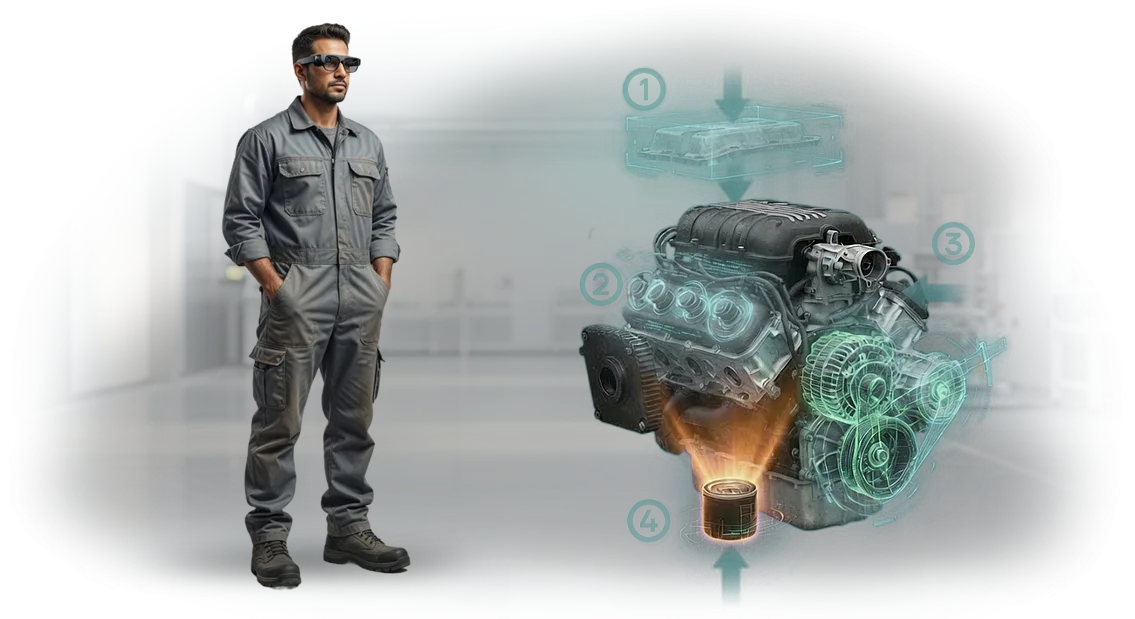
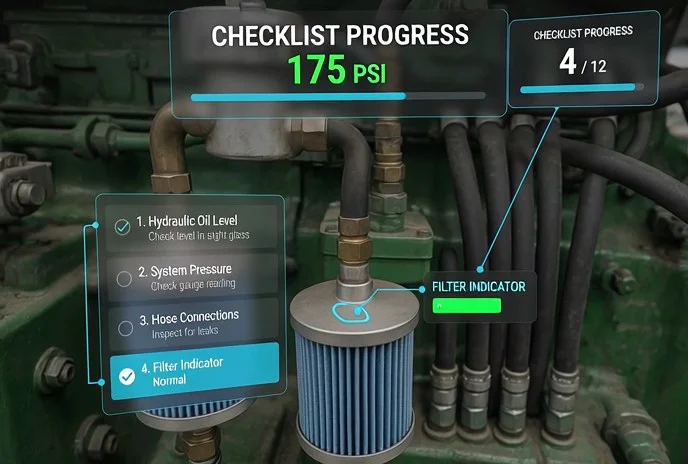
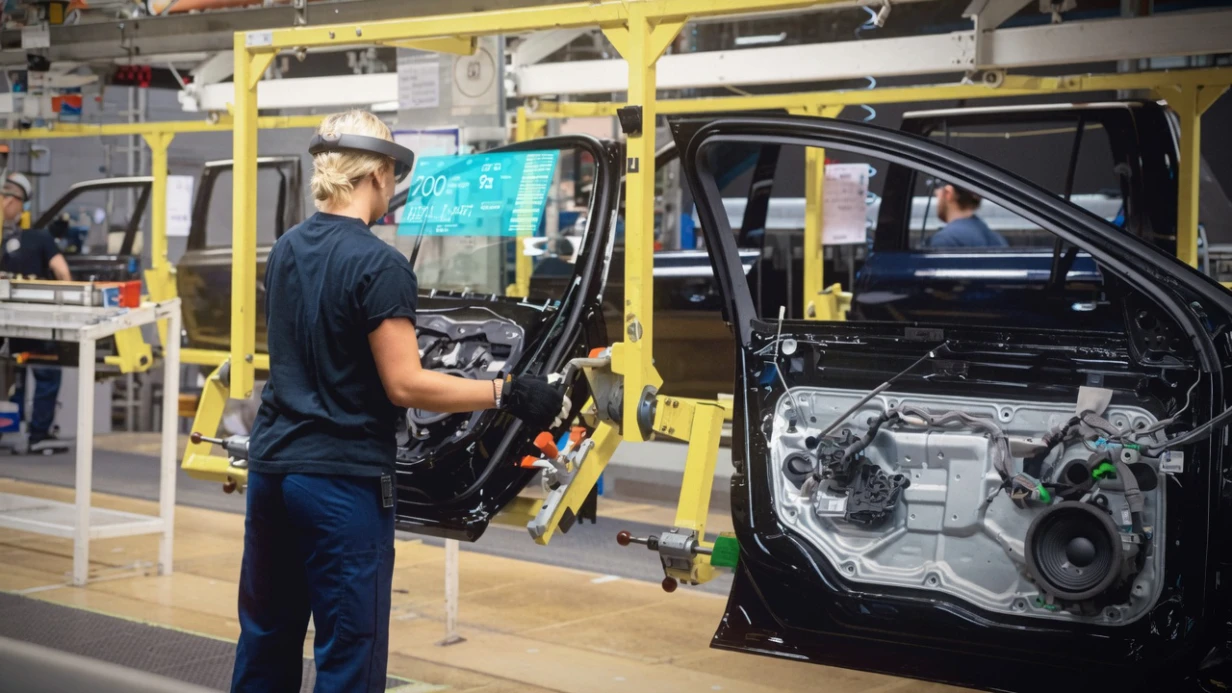
We propose solving this problem at the process level. AR instructions allow an employee to see step-by-step actions, components, and tools needed for repair right at the workplace.
This reduces equipment downtime, lowers the risk of errors, and makes the plant less dependent on external specialists. The result is a predictable production rhythm and a lower cost of every hour of stoppage.
AR Instructions: Obvious Benefits for Production
Maintenance of injection molding machines is a process where every mistake turns into downtime, defects, or expensive repairs.
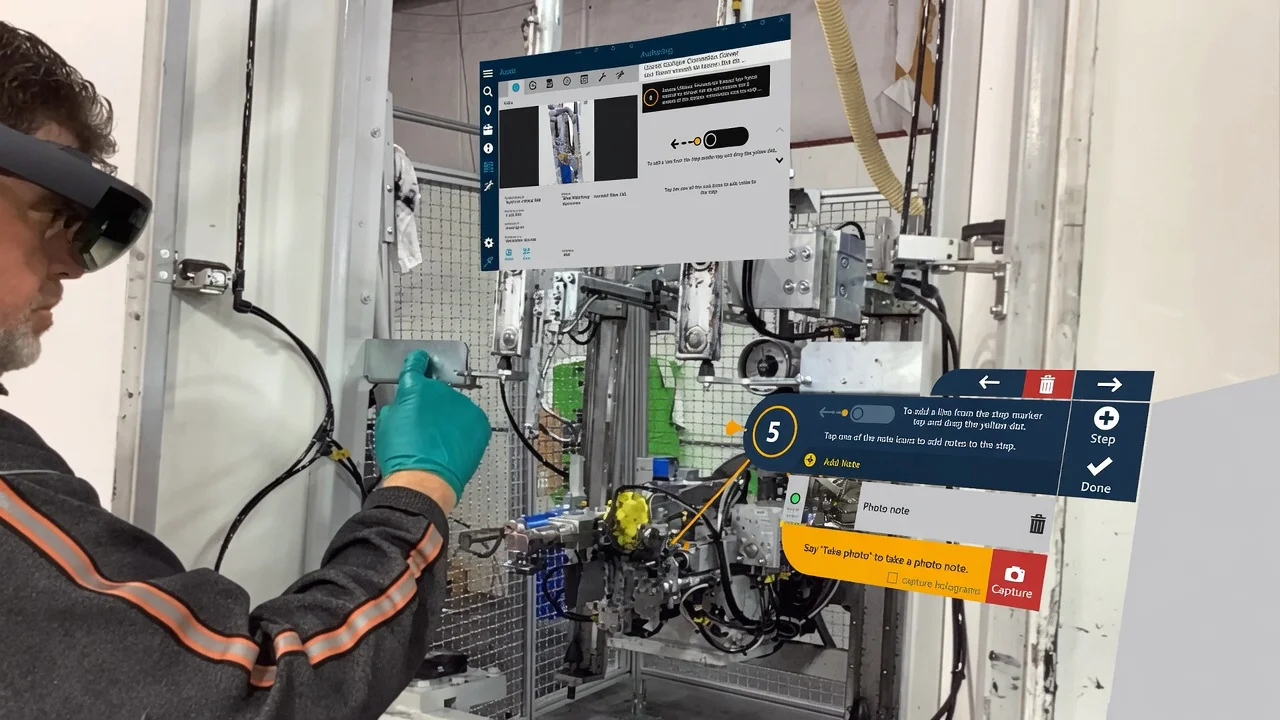
Paper instructions and video tutorials force an operator to look away from the machine, memorize sequences, and act at random in a non-standard situation. AR instructions solve this problem by overlaying step-by-step prompts directly onto the equipment.
Fast Employee Training
A new employee sees precise guidance right in front of them: what to press, where to look, in what order to act. They don't need to flip through regulations and match diagrams to the real component.
Time to full proficiency is reduced several times over, and experienced operators master new operating modes faster.
Fewer Errors and Defects
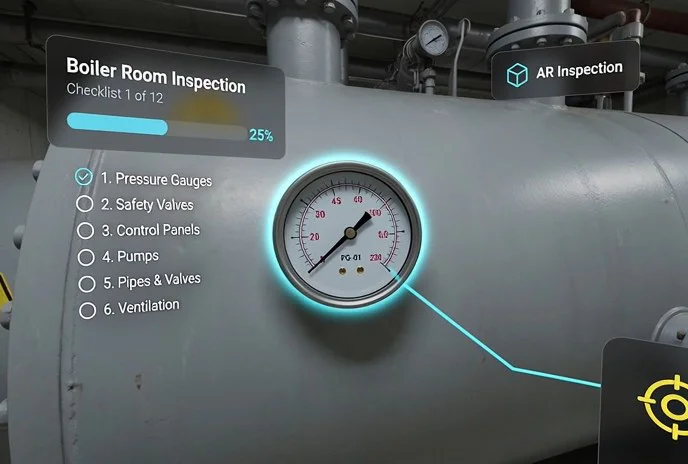
The system checks the employee's actions against the reference algorithm and highlights missed steps. The operator always works according to the current version of the process, not from memory. This reduces the number of defective parts, repeated changeovers, and unplanned stoppages.
Enhanced Safety
AR instructions warn about dangerous zones, remind about lockouts, and prevent performing an operation in the wrong order. The risk of injuries and accidents drops, and managers gain confidence that personnel follow safe procedures.
Cost Savings and Efficiency Growth
Speed, accuracy, and safety add up to the main production metric — efficiency. Less downtime and scrap, faster changeovers, lower training costs.
As a result, AR instructions for injection molding machines reduce production costs and increase the return from every piece of equipment.
These advantages are confirmed in practice: manufacturers that have implemented AR note noticeable productivity growth within the first weeks. You get a tool that pays for itself through consistent quality and reduced downtime.
AR Instruction Formats for Injection Molding Machines
Injection molding machines operate in different modes, and "one instruction for all cases" does not work.
An operator needs a quick prompt, a repair technician needs a step-by-step guide, and a process engineer needs an understanding of the internal structure of components.
That is why we at our team develop several types of AR instructions — from simple overlays to interactive guides with a full virtual twin.
The format is selected according to the production task and the type of equipment used by the employee. This allows you to avoid overpaying for unnecessary detail while getting exactly the level of support that reduces downtime and the number of errors.
| Format | For whom | What it gives the client |
|---|---|---|
| Quick AR prompts | Line operators | Less downtime during changeovers, instant reference on a smartphone or tablet |
| Step-by-step instructions with video overlay | Repair crews | Clear action sequence, error control, faster troubleshooting |
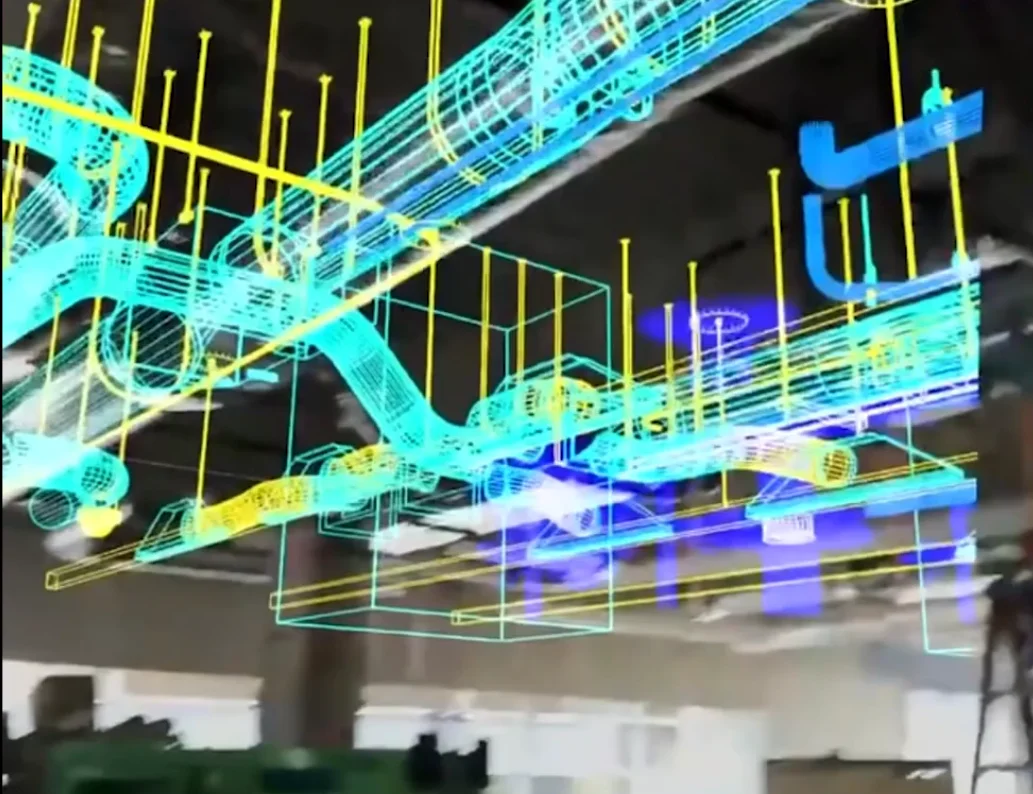
| Interactive 3D guides | Setup engineers | Component inspection without disassembling equipment, visual training for new specialists |
| AR glasses with remote expert | Young employees on the shop floor | Practical help from anywhere, reduced downtime during complex failures |
| Digital twin of the injection molding machine | Process engineers and production managers | Full picture of equipment condition, maintenance planning, wear prediction for parts |
Each row is not a "checkbox feature" but a solution to a specific production problem. Below we explain in detail how the chosen format is implemented and adapt it to your procedures.
How We Create AR Instructions: 7 Steps
We understand that introducing new technologies into production processes raises questions: how will it work, who is responsible for the result, and how long will implementation take?
That is why we have built the AR instruction development process as a clear route: at every stage you see the intermediate result and make decisions, while we take on all the technical implementation — from scenario design to post-launch support.
Below are the seven steps we work through. At each stage, you receive a concrete artifact: a document, a prototype, or a finished instruction — not just promises.
-
Brief and equipment audit. We record your task: which injection molding machine models need instructions, who will use them (operators, setup technicians, service engineers), and which operations are most important to cover first.
-
Scenario design. We break down the technological process of repair, setup, or maintenance into clear visual steps. We agree on the instruction logic with you before development begins — this saves time on rework.
-
Preparation of digital materials. We create 3D models of components and mechanisms, and shoot video and photos of the actual equipment. All graphics reflect your machines, not abstract pictures from a catalog.
-
AR application development. We assemble the instruction in an augmented reality environment: the operator points the camera at the machine and sees prompts, animation, and checkpoints directly on the equipment.
-
Testing at your site. We test the instruction with your employees and process engineers. The application must work in real shop-floor conditions: lighting, dust, network load.
-
Approval and training. You approve the final version. We conduct short training for key employees and provide a clear guide for updating content by your own team.
-
Post-launch support. We stay in touch: we update scenarios when procedures change, help add new operations, and make sure the AR instruction works reliably on staff tablets and smartphones.
This approach removes the main risk of any project — uncertainty. You know in advance what you will get at each step and can influence the result before significant resources are invested in final development.
What's Included in the AR Solution Delivery
Every set is a ready-to-use solution, not a collection of technical components. We build it for a specific task, so you don't need to figure anything out, assemble anything, or configure anything yourself.
Everything works right after implementation and covers the full cycle: from application installation to staff training and ongoing support.
-
Application for tablets and smartphones — a working tool for the operator with a clear interface. No special training required: the employee opens the required instruction and sees prompts right on the screen.
-
Library of AR instructions for injection molding machines — operation-by-operation scenarios for standard and complex procedures: shutdown, changeover, component replacement, troubleshooting. Each scenario describes the steps the operator sees in their work area.
-
Integration with equipment — AR prompts read the current machine state and show the employee only the operations that are relevant here and now. This reduces the risk of errors and speeds up procedure execution several times over.
-
Training materials for personnel — ready-made onboarding programs for new operators and advanced training courses for experienced employees. You won't have to develop training from scratch — it is already included in the delivery.
-
Support and content updates — we stay in touch after launch: we make edits to instructions, add new scenarios, and update the application to match procedure changes. Technical support is included in the service package.
This set covers the entire implementation chain — from installation to daily staff work. You get a measurable result: faster employee preparation, fewer maintenance errors, and reduced equipment downtime.
Case Study: How a Factory Cut Repair Time in Half
A typical injection molding machine repair means line downtime, waiting for a specialist, and flipping through paper instructions. Finding the right diagram takes up to 40 minutes of working time, and every minute of downtime means an unproduced batch. For a plant running three shifts, such delays are expensive.
We implemented AR instructions at the PlastForm plant, which produces plastic packaging.
On six injection molding machines, technicians received tablets with step-by-step prompts: point the camera at a component — and see which tool to take, in what order to unscrew the fasteners, and where the sensor is. The first two weeks were spent on adaptation, then the crews started working independently.
Concrete results after two months: average time to resolve a typical breakdown dropped from four hours to two, and requests to the equipment manufacturer's engineers halved.
Line downtime decreased, and scheduled equipment maintenance now takes place without stopping production for an extra shift.
What the client says
The plant's technical service manager described the result as follows: "Previously, diagnostics took up to three hours; now forty minutes is enough. Young employees quickly master the machines, and experienced ones no longer keep instructions in their heads.
We have already expanded the project to a neighboring shop and plan to implement it at another site."
For us, this case confirms that AR works not in test mode but in a real industrial environment. The client recouped the investment in six months through reduced downtime and ordered training for another twenty employees.
If a typical repair at your plant takes more than two hours, the same results are achievable for you.
How to Choose the Right AR Format for Your Task?
Choosing an AR format is not a question of "what's trendier" but "what will solve your task faster and cheaper." There is no universal solution: what works for training a beginner may get in the way during urgent repairs.
That is why we start with an analysis of your situation — types of operations, staff skill levels, working conditions.
The first criterion is the purpose of the instruction. If you need to train employees to work with an injection molding machine from scratch, step-by-step scenarios with highlighted components and action-sequence animation are suitable.
If the task is to help an operator quickly resolve an abnormal situation, overlaying markers on real parts is more effective, so the person sees exactly where the required valve or sensor is.
The second criterion is the usage environment. On a clean assembly site, a tablet is convenient, while in a workshop with vibration and oil mist, a rugged terminal or augmented reality glasses are better.
We account for lighting, noise levels, and safety requirements so the instruction is readable and does not cause interference.
The third criterion is scale and flexibility. One equipment model or an entire product line? How often do maintenance procedures change? For frequently updated processes, a modular scheme is better, where edits are made without rebuilding the entire project. We select AR for the task based on these criteria, not on ready-made templates.
Individual requirements are normal. We help you navigate AR capabilities and estimate the cost and implementation timeline before development. Leave a request for a consultation — we will analyze your case and offer a format that will pay off.
Frequently Asked Questions and Concerns About AR Implementation
Implementing AR instructions usually runs into concerns rather than technology: "will it work on our old equipment," "how much time will retraining take," "will production stop." These are normal questions — behind each one is a desire not to risk shop-floor continuity or budget.
Wehave been implementing AR at industrial sites for over 10 years, so we have collected answers to the most common concerns.
Will AR work for injection molding machines that have been running for years without stopping?
Yes, and such machines are exactly our main use case. AR does not require changing equipment or stopping the shop for installation: we overlay instructions on the real machine through a tablet or phone. The worker sees which panel to open, which component to remove — all over the live equipment.
How long does it take for mechanics to learn AR?
Training takes less than an hour — the interface follows the logic of normal work. There is no need to deal with complex settings: open the tablet, point at the machine, get a step-by-step prompt.
Experienced employees won't need retraining — they get used to a visual prompt faster than reading long instructions.
How quickly will AR instructions pay off?
The main savings come from reduced downtime and errors. The operator does not wait for an engineer but handles tooling changes or minor troubleshooting themselves.
The second source of savings is training newcomers: with AR, a trainee reaches full productivity two to three times faster than with paper procedures.
What if the equipment breaks down or changes? Who supports the project?
We do not abandon the project after launch. The instructions are stored in your system — when a procedure changes, you make edits yourself or send us a request. Our engineering support responds within one business day, and content updates do not require a programmer on staff.
Will AR interfere with shop-floor work? Is it safe?
AR instructions are a prompt, not a replacement for safety procedures. The worker always sees the real machine, and the system only highlights the relevant zones. Implementation happens without stopping production: first a pilot on one machine, then rollout to the rest.
We take on the entire cycle — from auditing your equipment to training employees and post-launch support. To address any remaining doubts, we offer a demonstration on your injection molding machine: you will see how it works before making a purchase decision.Get a Consultation on AR Instruction Development
A consultation on AR instruction development is not a general discussion of technology but an analysis of your task: which injection molding machine maintenance operations need to be covered, who will work with the instructions, and how to measure the result. We get straight to the point — what we do, in what timeframe, and what is needed for it.
After your inquiry, you will receive:
- a commercial proposal with a cost calculation based on your task, the number of machines, and the level of instruction detail;
- a demo fragment of an AR instruction on your equipment or on our examples, so you can evaluate usability before work starts;
- an analysis of your current paper instructions and procedures — we will show which operations are easier to convert to AR;
- timelines and development stages tailored to your schedule: from pilot to full rollout across the entire equipment fleet;
- examples of projects for industrial enterprises with results in training speed and error reduction;
- recommendations on the launch format: how to integrate instructions into the workflow and train personnel.
No binding to a "raw" technology — we select a solution for your tasks and equipment. We address cost, timeline, and support questions at the very first meeting.
Leave a request through the form on the website or write to us in a messenger — we will get back to you within one business day, clarify the details, and prepare a proposal.
This way you will save time and get a clear plan for how AR instructions will reduce injection molding machine downtime and speed up onboarding of new employees.