

Operational complexes: why your instructions don't work?
Operational complexes are complex equipment where even a small maintenance error can stop an entire line. Standard instructions barely work in such conditions: dozens of pages of text, small diagrams, and component numbering that doesn't match the actual layout. An employee spends time searching for the right section instead of doing the job itself.
The result is predictable: downtime due to incorrect actions, repeated calls for mentors, and the risk of damaging expensive components. According to our practice, during repairs and scheduled maintenance, up to 30% of working time is spent searching for information.
For operational complexes, this means not minutes but hours of downtime — and every such stoppage affects order fulfillment.
A particular pain is staff training. A new employee takes a long time to get up to speed, and experienced specialists take their knowledge with them when they leave. The company pays twice: for equipment downtime and for retraining.
Paper instructions don't solve this problem — they describe ideal conditions, not the real situation.
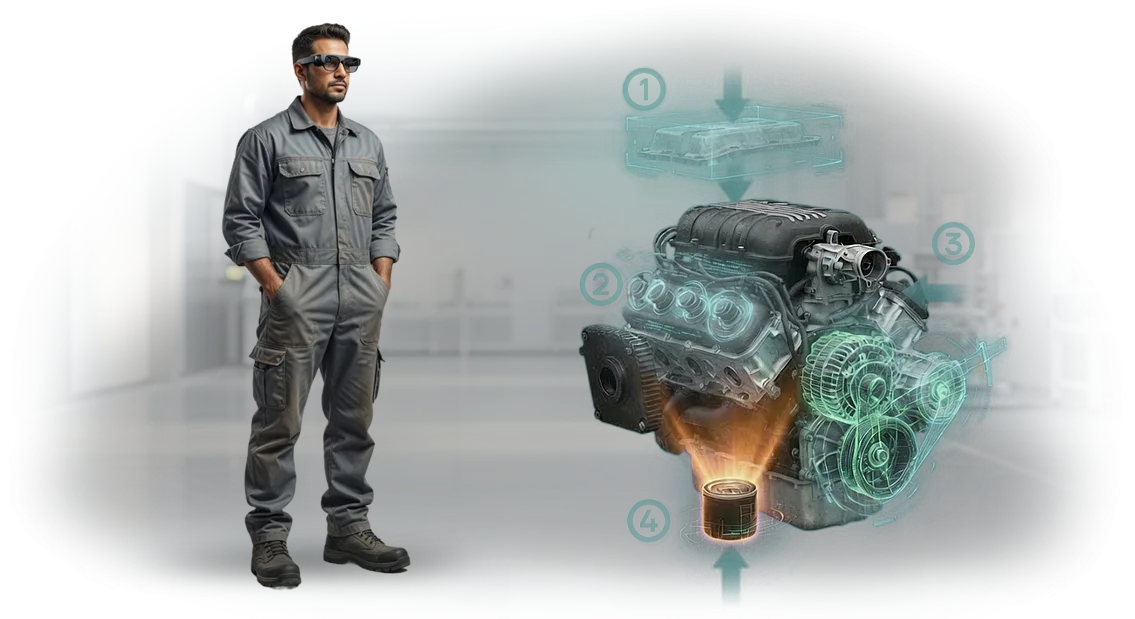
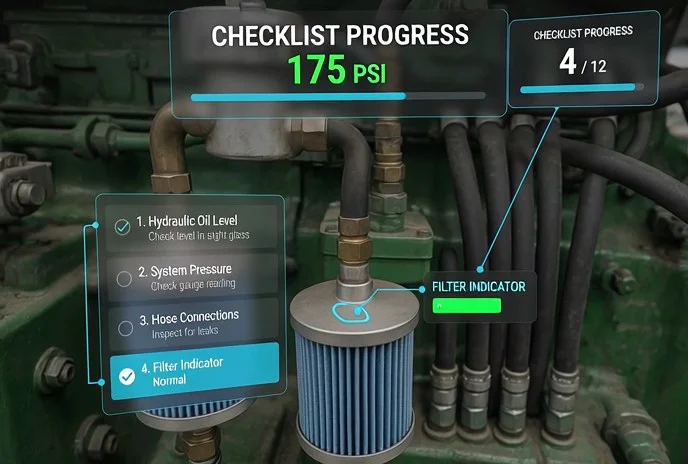
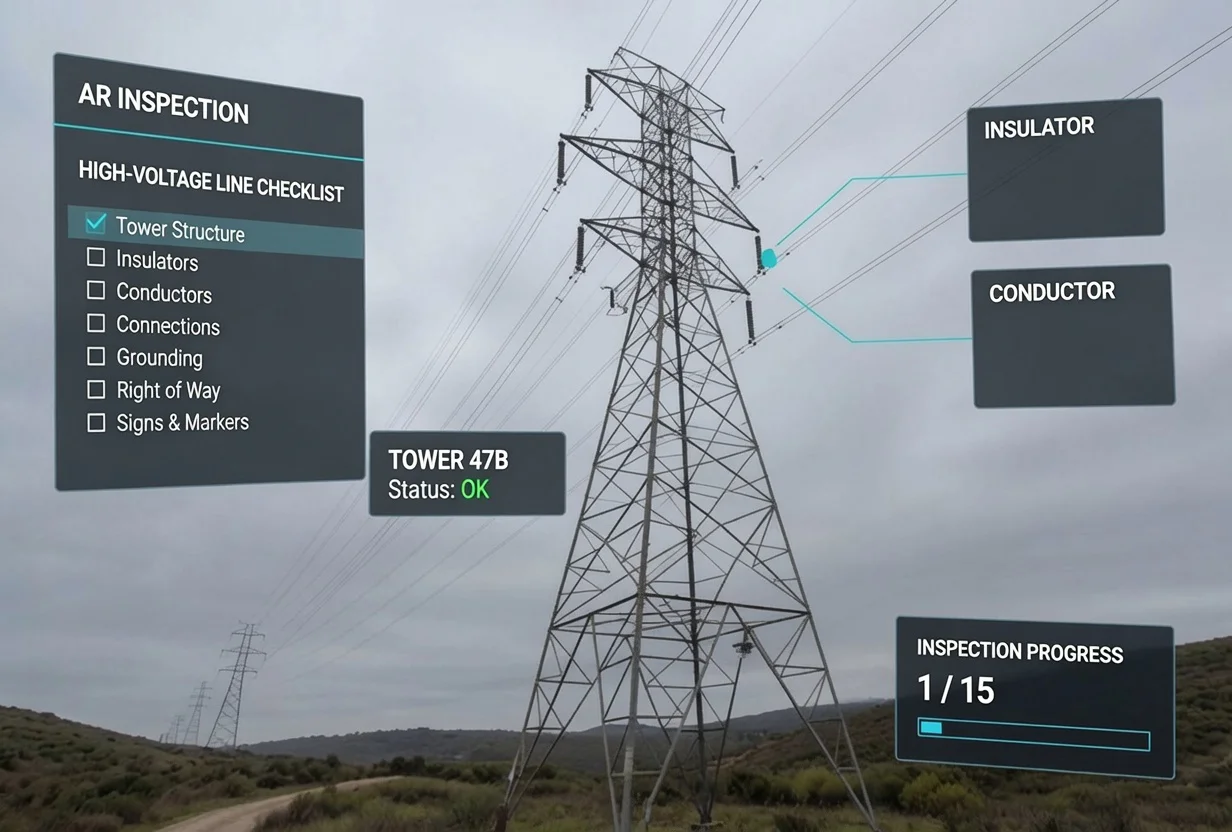
That's why we at our team offer AR instructions for operational complexes. Instead of searching through paper — step-by-step hints right on the equipment, in the specialist's field of view.
The system shows the required component, the sequence of actions, and warns against mistakes. As a result, downtime is reduced, repairs and staff training are accelerated, and knowledge stays within the company rather than in one specialist's head.
What augmented reality brings to equipment maintenance
Downtime of an operational complex is a direct loss: a disrupted schedule, delayed shipments, lost revenue. Faster repairs directly affect profit, and this is exactly where augmented reality delivers a measurable effect.
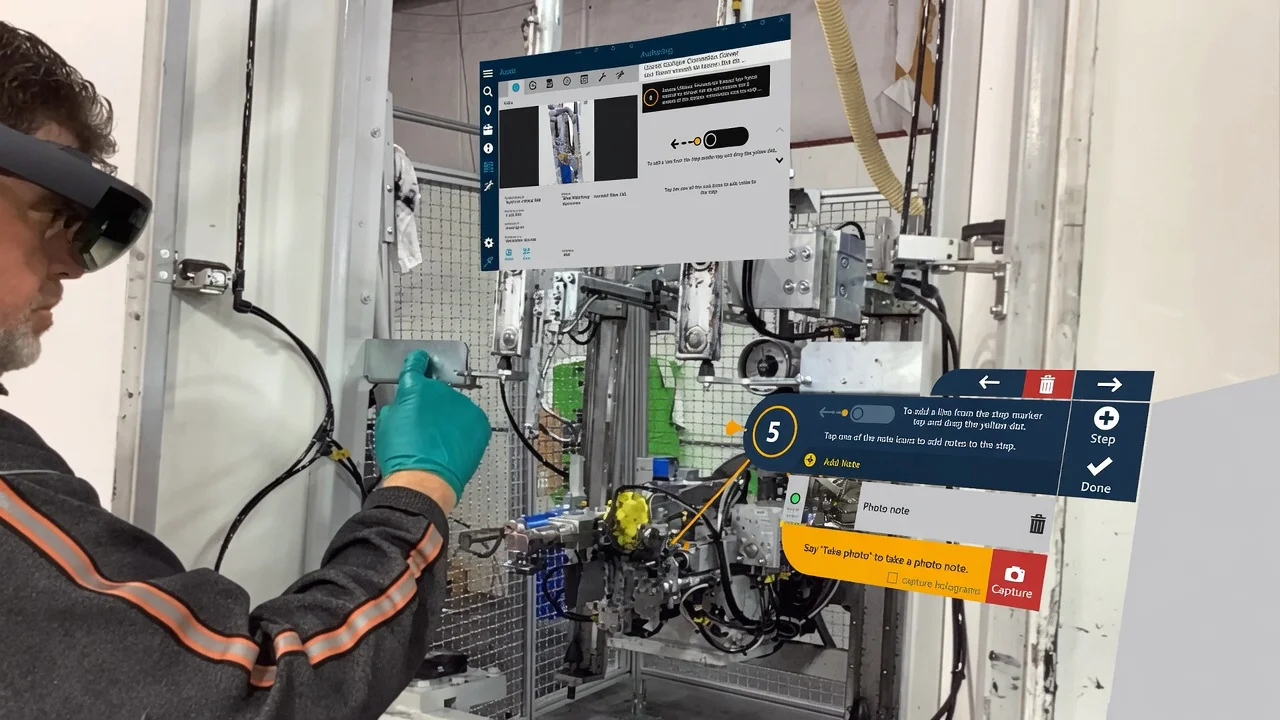
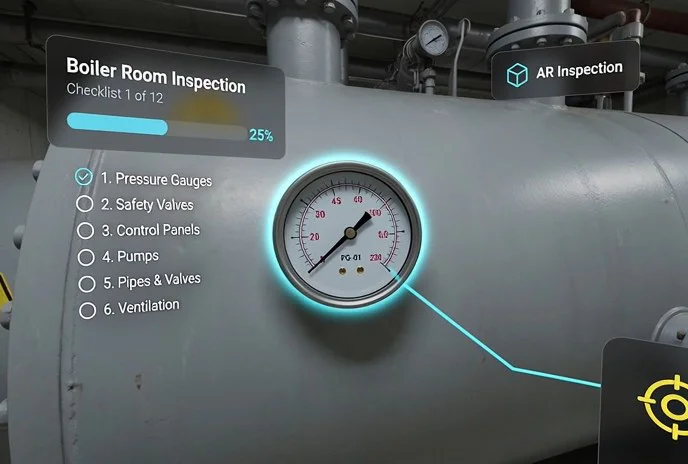
Instead of paper instructions, the specialist sees hints directly on the equipment: work stages, control points, warnings. There's no need to transfer a diagram onto the actual component — everything is already aligned. This cuts fault-finding time significantly and reduces the risk of error.
Work safety is the second major benefit. The AR system shows danger zones, prohibited actions, and the correct sequence of operations in advance. Even an inexperienced employee creates emergency situations less often, meaning the enterprise avoids injuries and costly downtime.
Training also becomes faster and cheaper. A new specialist works with visual hints from day one: there's no need to memorize hundreds of pages of regulations. Onboarding time is reduced, and the quality of first repairs immediately meets standards.
We — our team — have been developing AR instructions for maintenance of operational complexes for over 10 years. We work remotely and tailor the solution to your equipment fleet and processes. You get a predictable result: less downtime, higher safety, and significant savings on training.
AR instruction formats for operational complexes
Each task on an operational complex is unique, so AR instructions are made in different formats: stationary, tablet-based, and head-mounted. The choice of format determines how quickly staff receive a hint and how convenient it is to use in real conditions.
We use three main types of instructions that cover both everyday operations and rare repairs at industrial sites.
| AR instruction format | For whom and when | What it gives the client |
|---|---|---|
| Stationary | Operator at the machine, regular scheduled operations | Hints always in front of your eyes, no need to flip through paper regulations |
| Tablet | Inspector, diagnostics, commissioning | Point the tablet — see parameters and the next step, immediately record deviations |
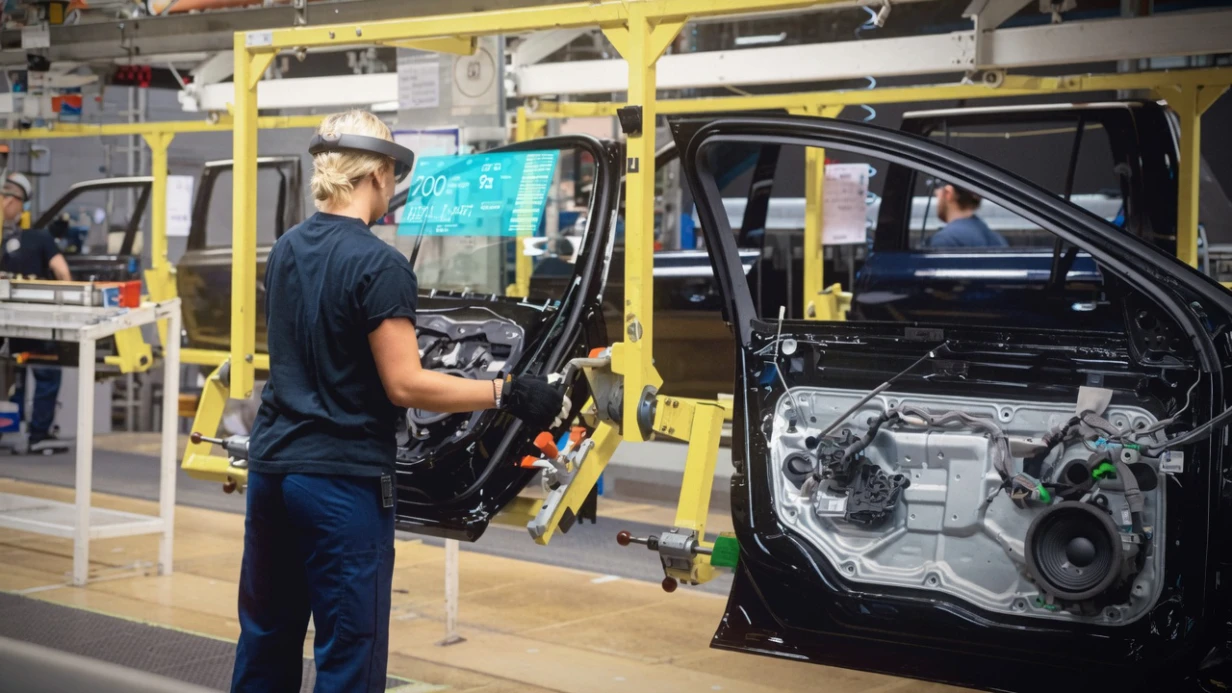
| Head-mounted | Repair team, complex assembly, maintenance | Both hands free, video instruction in the field of view — fewer errors and faster results |
How to choose a format
Choosing a format depends on three things: how often the operation is performed, the conditions in which the employee works, and whether they need free hands. For regular maintenance, a stationary instruction is enough. For mobile teams, tablets or headsets are more effective.
We help you choose a format for your operational complexes rather than imposing a single solution. At the briefing stage, we evaluate scenarios and create an AR instruction that fits into current processes without restructuring production.
How we develop an AR instruction: project stages
We start with a briefing and audit: we examine how maintenance of operational complexes is currently organized, which operations are repeated most often, and where time is lost.
This allows us to set project goals — reduce downtime, speed up training of new employees, and lower the risk of errors during repairs and setup.
Next, together with your technologists, we select real scenarios and record them in text form. We agree on the sequence of actions, control points, and completion criteria for each step.
You see the scenario before AR content creation begins and can make edits without rework at later stages.
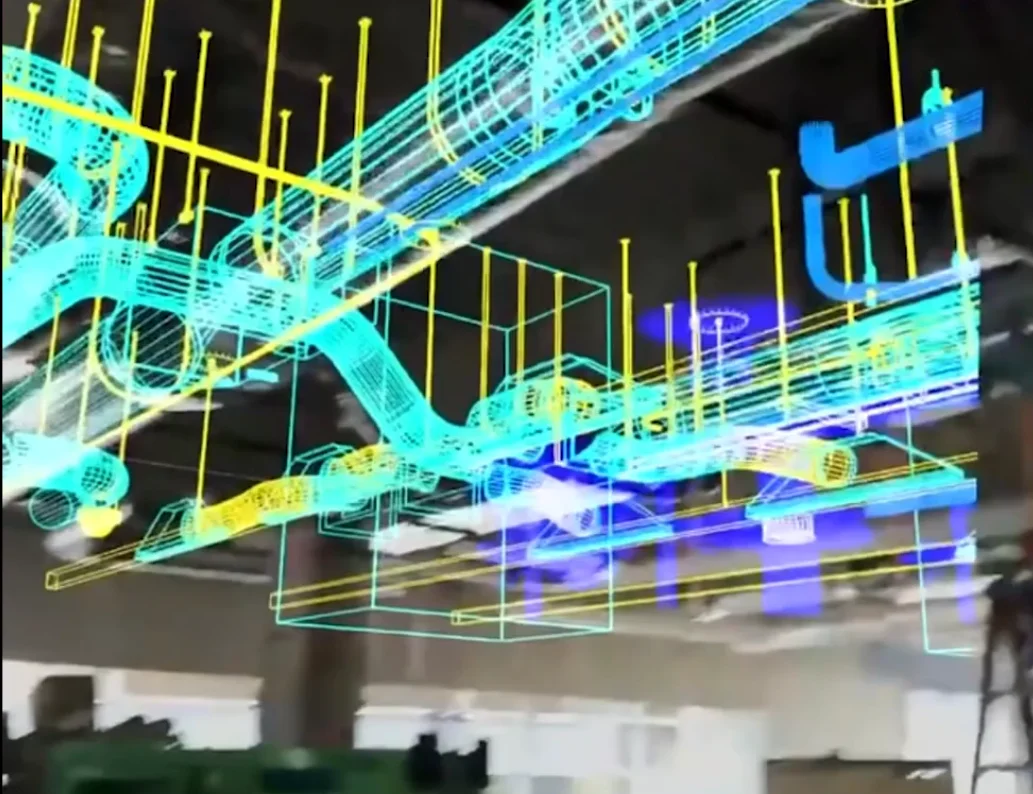
Only after the scenarios are approved do we move on to development: we create 3D animations, text hints, and element highlighting that are overlaid onto the real object.
This is done on professional equipment, so the image remains stable even in the variable lighting conditions of a workshop. You receive a test version and check it directly on a running operational complex.
Once the test is passed, we put the instruction into operation: install the application, configure access, train employees. You get a clear reference guide, and our specialists are available during working hours.
2–4 weeks after launch, we hold a review: we look at which steps raised questions among employees and adjust the content if necessary.
This is what the full cycle looks like — from the first meeting to support of the finished instruction.
- Briefing and audit — we identify operations that cause the most errors and downtime.
- Scenario approval — you approve each stage before content creation.
- AR content creation — animations and hints are overlaid onto the real object.
- Test verification — you see how the instruction works on a running complex.
- Implementation and training — we configure the system, show employees, and hand over access.
- Support and refinement — we adjust steps and add new operations based on your requests.
What is included in the delivery of an AR instruction for production
You receive not just a file with an instruction, but a complete working solution. Everything needed to launch an AR instruction at your production site — from source materials to employee training — is already included in the delivery.
Here is what you get as part of the work:
- Ready-made AR instructions for key operations — step-by-step maintenance and repair scenarios adapted to your equipment. The worker sees hints directly on the unit's components, so there is no need to flip through paper regulations.
- Source files of all instructions — you keep editable versions and all used 3D models, diagrams, and animations. You can update them yourself or order refinements from us — no "closed code".
- Access to instructions via a convenient platform — employees open the required regulation from a tablet, smartphone, or AR glasses. Access is configured by role: a mechanic sees one thing, an operator another.
- Staff training — we conduct 2-3 sessions for your employees so they confidently use the instructions from day one. The result is a working group that doesn't need constant support.
- Technical support after launch — you are not left alone with the system. We answer questions, help update instructions, and resolve any difficulties throughout the entire cooperation period.
This package covers the entire cycle: from component diagnostics to training mechanics and quality control of work. You get not scattered files, but a system that immediately integrates into maintenance processes and reduces dependence on experienced employees.
Case study: how downtime was reduced at one of the plants
At one plant — MetallurgProf — repair teams spent up to 25% of their shift searching for paper diagrams and coordinating actions. Maintenance of operational complexes was delayed, and human error caused mistakes that led to repeated stoppages. We proposed replacing instructions with AR hints overlaid directly onto the equipment.
Within two months of implementation, downtime was reduced by 30%. The operator sees the sequence of operations, component highlighting, and control points right before their eyes — no need to flip through documents or keep complex algorithms in mind.
New employees reach working mode twice as fast, and the number of errors during repairs fell almost threefold.
A plant engineer described the result this way: "Previously, finding the right page in an instruction took 10–15 minutes, but now all the information is right before your eyes.
Even a beginner can manage without guidance from a senior foreman — this saved us not only time but also nerves."
After the pilot project, the client ordered the scaling of AR instructions to all production lines. For us, the main indicator is not the number of headsets worn, but the fact that equipment experiences less downtime and orders ship on time.
The experience of MetallurgProf confirms: even targeted AR implementation quickly pays off through reduced downtime and faster maintenance.
How to choose an AR instruction format for your equipment?
There is no universal answer to the question "how to choose an AR instruction format" — the right option is determined by the specifics of the equipment and the tasks employees must handle.
One thing is a simple operation that can be shown on a single screen; another is a complex maintenance regulation for operational complexes, where an error leads to downtime or expensive repairs.
For simple components, a short step-by-step instruction on a tablet or smartphone is enough for an employee to verify the sequence of actions. For complex complexes, a deeper system is needed: with control of each step, interactive diagrams, and real-time hints.
In this case, instruction selection is based on the features of a specific model, its modifications, and typical faults.
Common customer questions when choosing: how quickly to train new employees, what to do in a non-standard situation, and whether the instruction can be updated if the regulation changes.
The answers determine the depth of detail, the number of steps, and the way an employee interacts with the instruction. We help resolve these questions during a short audit — we study the specifics of your equipment, maintenance scenarios, and staff skill levels.
Individual requirements are taken into account at all stages: we design the interface around the designations you use, adjust the level of detail for different categories of specialists, and provide the possibility of quick edits.
This way you get not a template, but a tool that truly reduces the number of errors and speeds up work.
Therefore, the main criterion for choosing a format is not a trendy technology name, but how much the instruction helps an employee act confidently and quickly.
If you are unsure which format suits your equipment, ask us: based on the specifics of your facilities, we will suggest the optimal option.
Frequently asked questions about AR instruction development
Before a project starts, we usually hear the same questions: is it too complicated, how long will development take, what about the warranty. We answer directly — so you understand how the work is structured and what result you get.
Equipment complexity is not an obstacle. We have already made AR instructions for complexes with thousands of components and regulations dozens of pages long.
We break the process into simple visual steps that the employee sees directly on the object, so even a beginner can understand it.
Timeframes depend on the scope of the task. Below are benchmarks to help plan the launch.
| Process complexity | Timeframe | What you get |
|---|---|---|
| Single component, 3–5 operations | from 2 weeks | Quick replacement and setup without lengthy training |
| Linear process, 10–20 steps | 3–4 weeks | Step-by-step guidance for each operation |
| Full maintenance cycle | from 6 weeks | Comprehensive instruction and staff error control |
Will developing an AR instruction lead to equipment damage?
No. Augmented reality works as a hint on top of real objects: we do not interfere with control systems and do not change settings.
We first test scenarios on a test site or a digital model, and for especially sensitive processes we assign an engineer to accompany the implementation. We provide a written guarantee for the work.
Order AR instruction development — we'll start as early as this week
There is no need to postpone project launch for months — we begin developing AR instructions for operational complexes as early as this week. After a short briefing, we agree on the scenario and control points so that you see the result at every stage.
To order development, you only need to leave a request or get a consultation — we then take over the entire organization of the process. You won't have to deal with technical details: the team will prepare a plan, allocate tasks, and assign those responsible for project launch.
What you get immediately after ordering:
- a personal manager and a dedicated team for your task;
- a precise work plan with dates and control points — no "floating" deadlines;
- access to the AR instruction prototype at an early stage;
- regular progress reports and the ability to make edits during development;
- final testing on your equipment and delivery of all materials;
- post-launch support: operator support and instruction refinements as needed.
Starting work does not require lengthy approvals. Fill out the form or contact us in any convenient messenger — in our reply, we will send you the first-stage plan and book time for the start.
Leave a request today so that the AR instruction can work at your production site within the coming weeks.