

When Furnace and Reactor Maintenance Disrupts Production Plans
Equipment downtime is not just a line in a report—it means a halted workshop, missed deliveries, and an emergency that the entire shift has to deal with.
When furnace maintenance and reactor repairs require a precise sequence of actions, a paper manual or a note on a tablet does not save the day: the technician gets distracted, skips a step, and instead of a quick repair, the system is restarted. Every hour of downtime hits the production plan, and finding someone to blame does not help.
Even experienced staff work from memory, while new employees are afraid to approach a complex unit.
PDF instructions and videos on a phone are not tied to the specific piece of equipment: while the specialist searches for the right section, they lose concentration, and the risk of error in furnace and reactor maintenance grows. As a result, equipment downtime becomes chronic, and repair deadlines keep slipping.
The problem is not the skill level of the people, but the way knowledge is transferred. A person remembers an action better when they see it right on the object, rather than reading an abstract description.
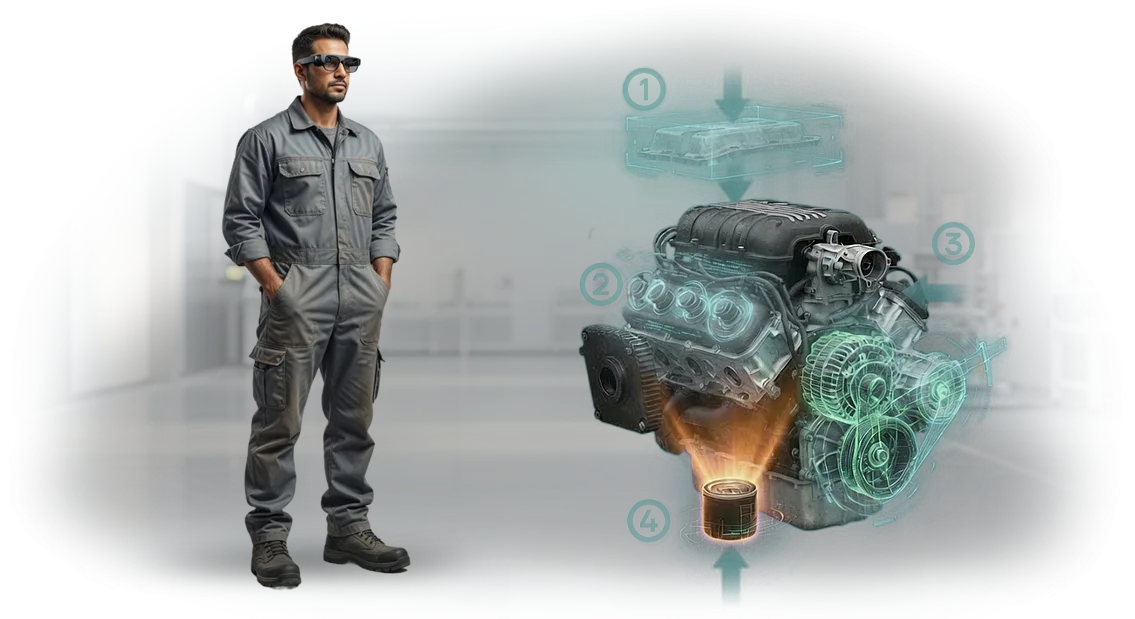
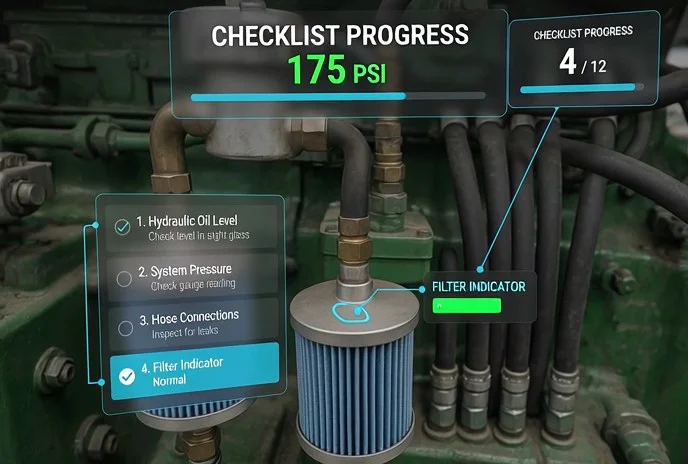
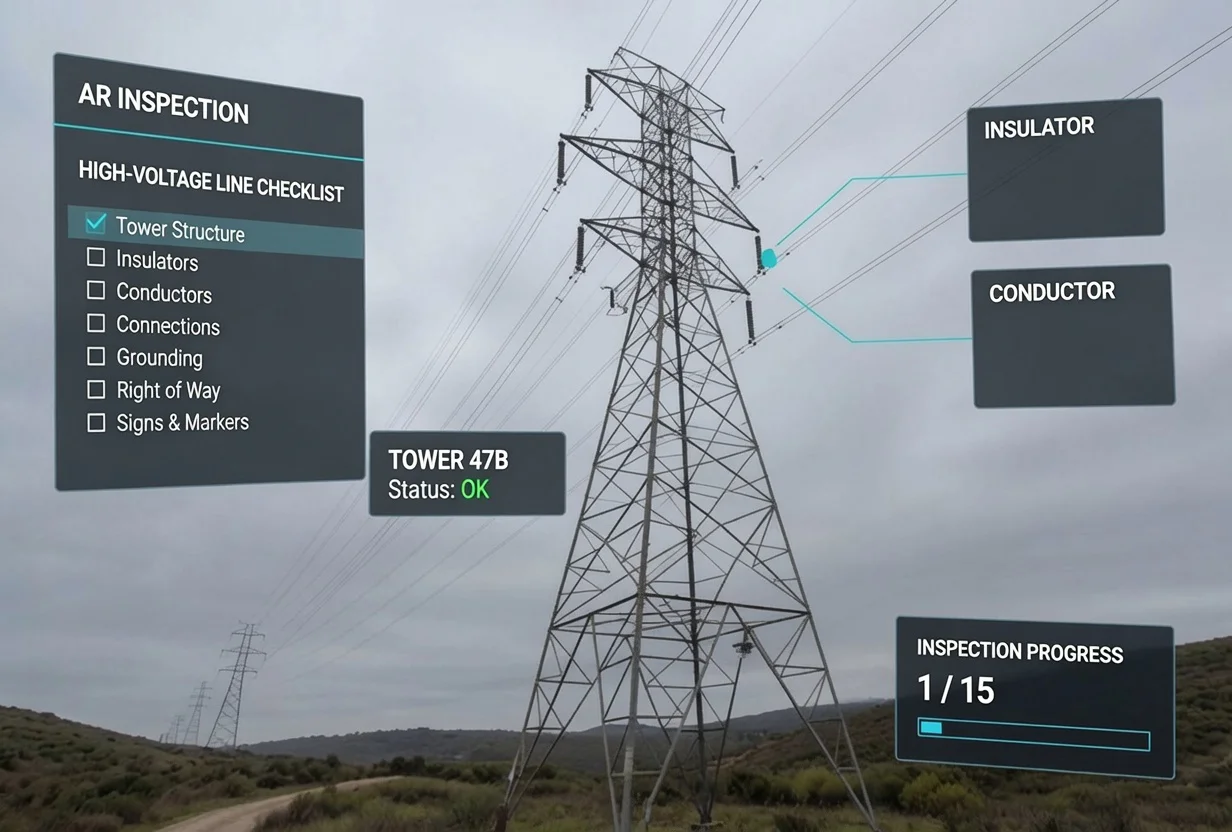
That is why we close this gap with AR instructions: step-by-step prompts are projected directly onto the equipment, personnel perform reactor repairs and furnace maintenance faster and without referring to paper. You get a predictable process, fewer errors, and control over timelines.
This format of training and support reduces onboarding time and lowers dependence on the "golden hands" of individual specialists.
The procedure is always in front of your eyes—even in a stressful situation, the technician follows a clear scenario, and equipment downtime stops being a surprise for management.
What Results You Get from AR Instructions
Furnace and reactor maintenance is complex, expensive, and high-responsibility work where the cost of an error is measured in downtime and personnel safety.
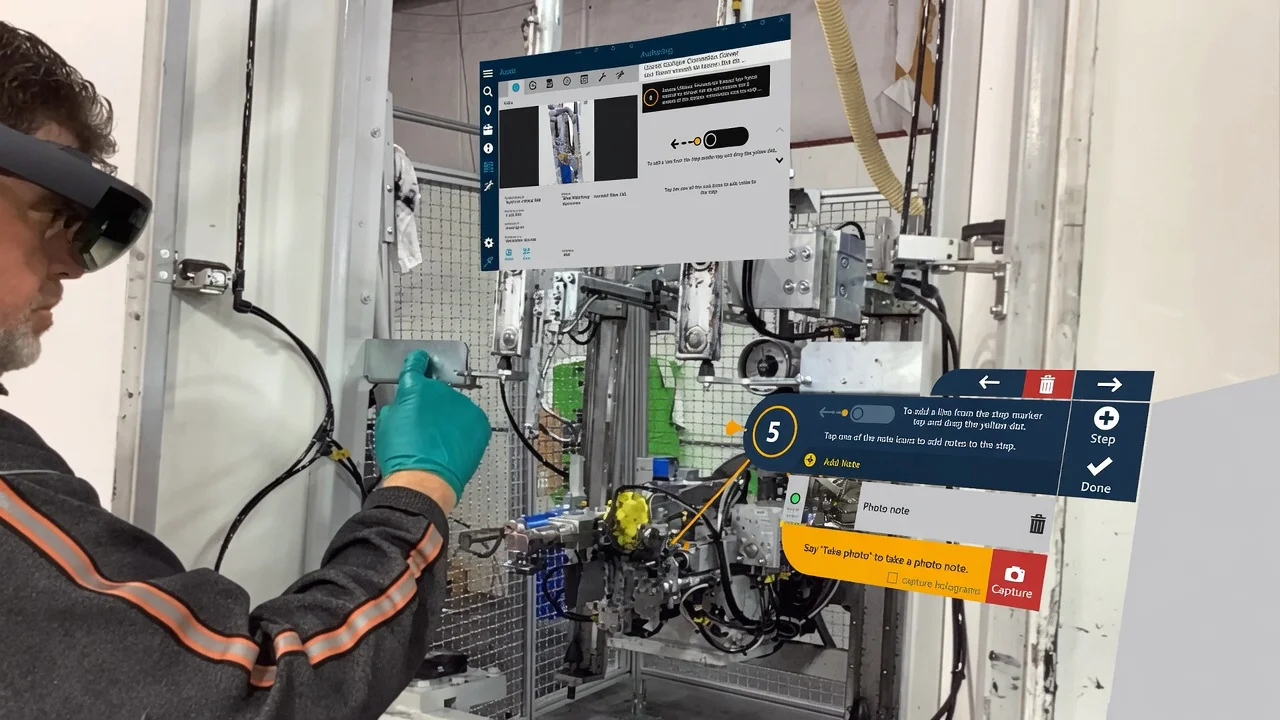
AR instructions turn this process into a clear step-by-step system: the employee sees prompts directly on the equipment instead of flipping through documentation.
The result is measurable business outcomes: faster employee independence, fewer errors, and greater control over operations.
Personnel training accelerates many times over. Instead of spending weeks studying procedures, a new specialist masters key operations in a few days—AR shows the sequence of actions, highlights important components, and warns about risks.
Experienced employees stop being constantly distracted by mentoring and can focus on the work itself, while staff turnover becomes less critical.
Fewer errors are another obvious result. Instructions make it impossible to skip a step or mix up the order of operations: the system tells you which component to open, where to measure parameters, and when to tighten fasteners.
This is especially important for furnaces and reactors—any inaccuracy can lead to overheating, depressurization, or unplanned repairs. The result is less scrap, fewer repeat visits, and fewer unscheduled stops.
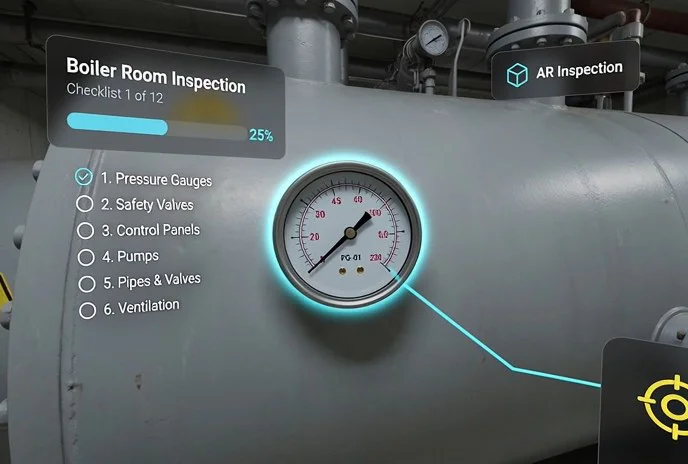
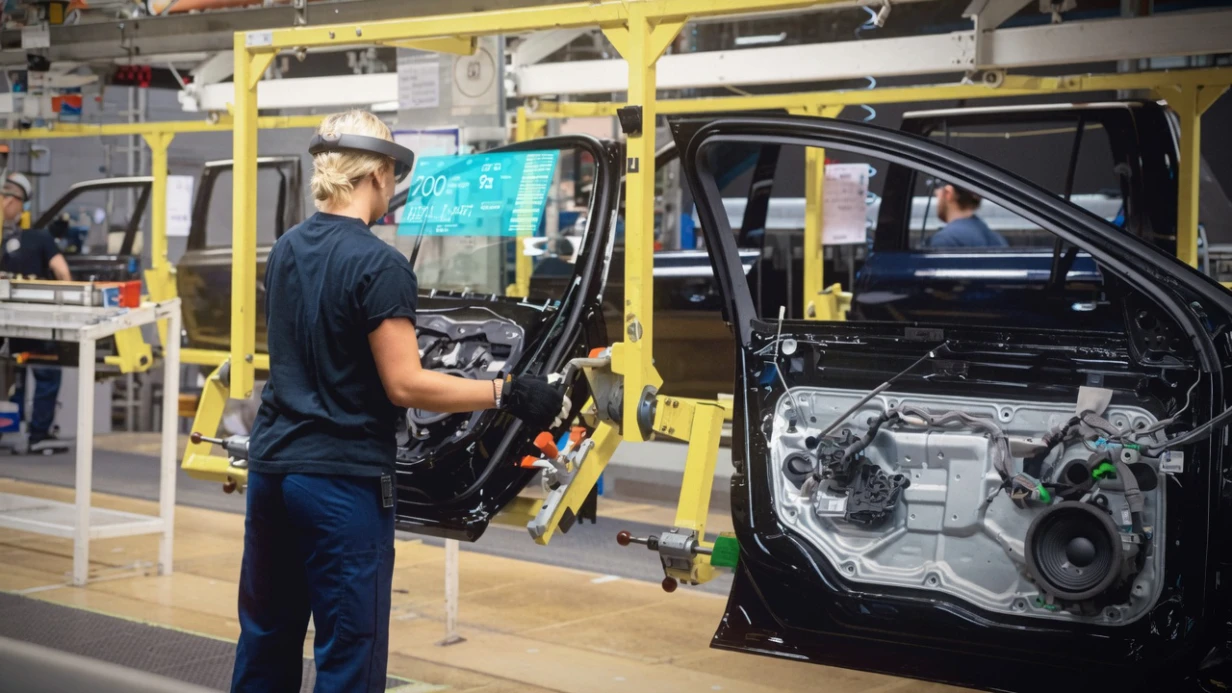
Safety reaches a new level. AR instructions keep the employee's hands free and their attention on the object: they see warnings and hazardous zones in context, rather than trying to match a paper diagram to reality. This reduces the number of injuries and accidents and builds a culture of safe work.
Finally, you gain control over processes. The system records who performs which work and how: where delays occur, which operations cause difficulties, and who actually completed training.
This data allows you to improve procedures, plan maintenance more accurately, and forecast the need for spare parts. Instead of a "black box," you get a manageable and predictable process that protects your budget and reputation.
AR Instruction Formats for Furnaces and Reactors
For furnaces and reactors, the AR format must precisely match the task: planned maintenance, emergency repairs, and training require different approaches and different levels of detail.
We select the format for each operation so that personnel receive information quickly, without overload.
AR Formats for Different Scenarios
| Format | For whom | What it gives the client |
|---|---|---|
| Step-by-step AR instructions on a tablet and in glasses | Service engineers during planned maintenance | Fewer errors and rework, a unified standard for performing operations |
| AR with quick access to diagrams and a digital twin | Repair crews during emergency shutdowns | Reduced downtime: the component, part numbers, and disassembly order are immediately visible |
| Interactive AR-based simulators | New employees and students at training centers | Training without stopping the furnace: safe practice with the full cycle of operations |
For planned work, a controlled process with confirmation of each step is suitable. For emergency repairs, a minimalist interface and quick access to critical information are needed to reduce downtime. For training, scenarios that allow mistakes without risk to the equipment are ideal.
Choosing a format is not a technical decision but an economic one: each format directly affects repair timelines and the speed of personnel preparation. Tell us about your typical situation, and we will propose a format that addresses exactly that.
How an AR Instruction Is Developed for Your Task
Every production site is unique: its own procedures, components, and equipment features.
That is why the development of an AR instruction begins not with technology but with studying your task—so that the end result genuinely simplifies employee work rather than remaining a nice prototype.
We have completed dozens of implementations for industrial enterprises and have built a process that delivers a working system in 4–6 weeks without stopping production.
How the development works
- Development brief. We discuss which equipment the instruction is needed for: furnace, reactor, or mixer. We record the maintenance scenario, difficult areas, and current personnel errors.
- Analysis of procedures and components. We study design documentation and technological maps. We determine which components to show in AR, in what order, and with what level of detail.
- Creation of the 3D model and animation. We build a simplified volumetric model of the equipment based on your drawings. We add animation of component movement so the employee can see exactly how to remove, disassemble, or replace a part.
- Development of the AR instruction itself. We assemble the project: step-by-step prompts, pop-up labels, and completion control. We prepare the instruction for your tablets or AR headsets. If devices have not been chosen yet, we will recommend which ones fit the task and budget.
- Testing AR with your specialists. We show the instruction to technologists and workers who will use it. We collect feedback: what is unclear, where different wording is needed, and which operations require additional prompts. We make revisions.
- Launch and training. We hand over the finished system, install the application on devices, and conduct a short training for instructors. Employees start working with the AR instruction immediately.
- Support and updates. If procedures change or new equipment is added, we promptly update the instruction. You receive consultations and technical support after launch.
The result is a working AR instruction validated on your site, not a "project for the shelf." You see every stage, control timelines, and immediately understand how the new technology integrates into existing furnace and reactor maintenance processes.
What Is Included in the Delivery: A Package for Your Production
When you order AR instructions for furnace and reactor maintenance, it is important to understand: you receive not just a set of files, but a ready-made tool that integrates into your daily work.
The package includes everything needed for personnel to start using the interactive guides within the first days after implementation—without lengthy setup or modifications.
What is included in the delivery:
- Interactive AR scenarios for furnace and reactor maintenance. Step-by-step instructions that overlay real equipment through a tablet or smartphone. The employee sees which part to remove, where to press, and where to check readings—right at the work site, without being distracted by paper documents.
- Electronic manuals in 3D and video format. All operations for scheduled maintenance, repairs, and adjustments are converted into visual training materials. This replaces outdated folders with instructions and reduces the time needed to onboard new specialists.
- Training content for personnel. Short video lessons and analysis of typical situations can be used for briefings and self-study. This allows you to build a unified training system without bringing in external trainers or pulling experienced employees away from work.
- Integration with your document management system. Scenarios and guides are connected to your accounting system and EDMS—data on training completion and performed operations is saved automatically. This addresses quality control, certification, and internal audit requirements.
- Administration and content updates. Your specialist can independently expand scenarios or change the order of operations through a clear interface, without involving developers or lengthy approvals. Changes take effect immediately.
- Technical support and post-launch assistance. We help with setup, answer employee questions, and adjust content as needed during the warranty period, so you are not left alone with a new tool.
The entire package is delivered as a single bundle—together with methodology materials and an administrator guide. You do not need to hire separate specialists or purchase additional services: everything is already configured for your production, your procedures, and your tasks.
Case Study: How an AR Instruction Reduced Repair Time by 30%
At one chemical production plant, reactor repair turned into a problem every time: technicians spent a long time looking for the right documentation, and outdated drawings did not match the actual layout. Stopping the production line cost the company serious money, so every hour of downtime hit revenue.
We proposed converting the maintenance procedure into an AR instruction. Instead of paper diagrams—a step-by-step 3D prompt directly on the equipment. The worker sees which part to remove, in what order to act, and where hidden fasteners are located. Errors caused by misinterpretation of drawings were almost completely eliminated.
Implementation Results
At the chemical plant (let's call it that conditionally), reactor repair time was reduced by 30%. Previously, replacing an assembly took several hours and required a more experienced master; now the regular shift crew handled the task.
The average duration of work decreased, and equipment downtime was shortened by several hours. The client calculated the savings: every reduced hour of downtime is a significant amount of preserved revenue.
| Metric | Before | After |
|---|---|---|
| Assembly repair time | 10 hours | 7 hours (30% faster) |
| Assembly errors | 2–3 per operation | almost zero |
| Onboarding a new specialist | about a week | 2–3 shifts |
Why It Works
The secret is not in "magic glasses" but in the proper transfer of experience. We created the instruction together with the plant's technologists: we compiled their knowledge into a clear step-by-step sequence, and AR neatly overlays it onto the real equipment. Such a case paid for itself at the first scheduled repair.
After implementation, the plant ordered instructions for three more units. When technology delivers measurable results, clients come back—and that is the best indicator of reliability.
How to Choose the Right AR Instruction Format?
Choosing an AR instruction format is not a question of "what is trendier" but of what task is being solved at a specific site.
For furnace and reactor maintenance, it is important to understand three things: the complexity of operations, the frequency of work, and the skill level of personnel. If the procedure rarely changes and employees already know the equipment, a light prompt is enough.
If every repair is a multi-step process with a high risk of error, you need a full instruction with step-by-step control.
The second criterion is working conditions at the site. Furnaces and reactors are often located in areas with limited access, high temperatures, and poor lighting.
The AR instruction must work without a stable internet connection, require no hands to flip through, and clearly show components even when wearing personal protective equipment.
Therefore, format selection always starts with an audit of the workspace: we understand exactly where the operation takes place, which sensors, valves, and fasteners need to be shown, and how it is most convenient to overlay the prompt—directly on the body, on a marker zone, or on the tablet screen.
Based on these inputs, we offer three typical solutions. The first is an AR prompt: a short animation over the equipment that helps find the service point, remove the cover, or check the level. It is suitable for daily inspections and quick operations.
The second is a step-by-step AR diagram with action control: the instruction guides the employee through steps, records completion, and does not allow moving forward until the component is confirmed.
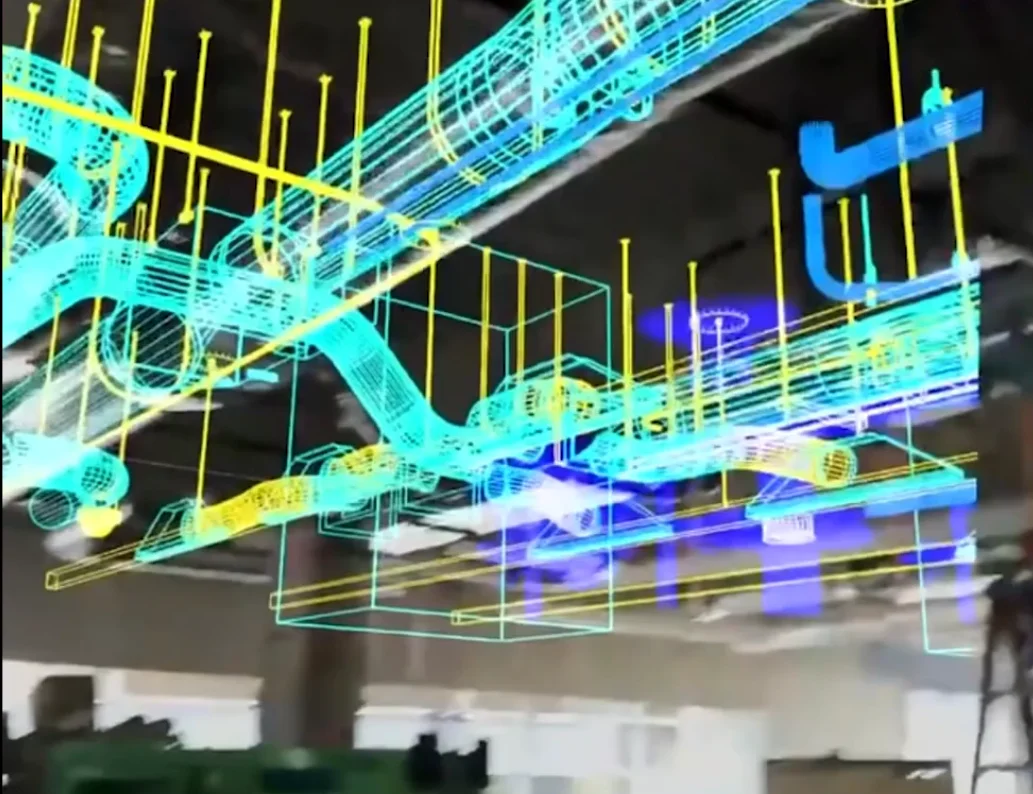
This is the option for scheduled maintenance and medium-complexity repairs where sequence matters. The third is a spatially anchored instruction: an equipment model fixed in the workshop, with detail on each component and pop-up data on tolerances and tightening torques. This format is justified for complex disassembly, major overhauls, and training new specialists.
Budget does not always determine quality. A full AR instruction pays off faster if several crews work on the equipment and an error leads to downtime or an accident. For a single furnace with rare maintenance, a simplified marker-based format is sufficient.
We help you decide based on your situation and do not push the maximum package: first we test a prototype on a real site, show it to your mechanics, and only after that do we finalize the scope.
The main thing is to avoid making the wrong choice before launch. We take on the audit, format selection, and pilot testing on your equipment so you see the result before full development.
If you are unsure which option is right for your furnaces and reactors, send us the task—within one working day we will prepare a recommendation with the rationale for the format and budget.
Common Concerns: Answers to Your Questions
Any new technology in a workshop raises questions, especially when it comes to the safe maintenance of furnaces and reactors.
Production managers and chief engineers ask us the same things: will procedures have to be changed, will AR work on old equipment, and will the technology create new risks. We answer briefly and to the point.
Will the entire maintenance process have to be restructured?
No. AR instructions integrate into existing procedures: the specialist sees step-by-step prompts directly on the equipment, but the order of operations remains the same. Mastery takes one or two days, and implementation does not stop production.
Will this work on old or non-standard equipment?
Yes. We create an accurate volumetric model of the furnace or reactor from ordinary photographs—factory drawings are not needed. Instructions open on the same smartphones and tablets employees already use, so nothing additional needs to be purchased.
Does AR distract from work or reduce safety?
Prompts appear step by step, only when needed, so the specialist always sees the real object and is not distracted. This reduces the number of errors rather than creating new risks. If necessary, we configure role-based access and save work history.
What if employees do not use the instruction?
We make the interface as simple as possible, conduct training before launch, and support technical staff during the first month. After a month, you see usage statistics—it becomes clear what return the technology delivers specifically at your site.
If your question is not here, ask us directly. We will show examples for similar furnaces and reactors and calculate what will change for you.Ready to Discuss an AR Instruction for Your Production?
Leave a request—and within two working days you will have a commercial proposal and a demo of an AR instruction adapted to your furnaces and reactors.
We do not offer a "boxed solution": first we analyze your maintenance procedure, typical operations, and complex components, then we show how augmented reality will speed up personnel work and reduce the risk of errors.
This is not a verbal presentation—you will receive a working sample that can be tested at your site.
From there, you get a transparent roadmap:
- AR request—you describe the task, and we record the requirements for the instruction and desired timelines.
- Consultation—an engineer and a methodologist clarify the details: which equipment, which operations, who will use it.
- Commercial proposal—we fix the scope of work, cost, and implementation timelines without hidden payments.
- Demo on your equipment or on a mock-up—you see how an employee interacts with AR prompts: step-by-step actions, component highlighting, and operation order control.
- Scenario approval—we adjust the text, logic, and control points to your procedure.
- Implementation and support—we train personnel, help with integration, and stay in touch after launch.
This approach removes the risk of misunderstanding: you see in advance how the instruction will work during an actual repair or scheduled maintenance and make a decision based on facts.
Fill out the form below or call us—we will respond within one working day and present a proposal and demo within two days.