

Maintenance of lifting and transport equipment: the pain and the solution
Any enterprise operating lifting and transport equipment will sooner or later face downtime. The reasons are standard: repairs, scheduled maintenance, waiting for a specialist, or searching for the right information in a thick paper manual.
Every hour of downtime means unmet targets, missed deadlines, and direct losses. At the same time, most of the time is spent not on the work itself, but on finding the correct sequence of actions.
We are used to a manual being a book with fine print and diagrams. But in a real situation, a mechanic or operator cannot stop to read dozens of pages — they need to quickly understand what to do right now.
Traditional manuals are not adapted to real work: they describe general cases, while each piece of equipment has its own specifics. The result — errors, repeat repairs, unsafe actions.
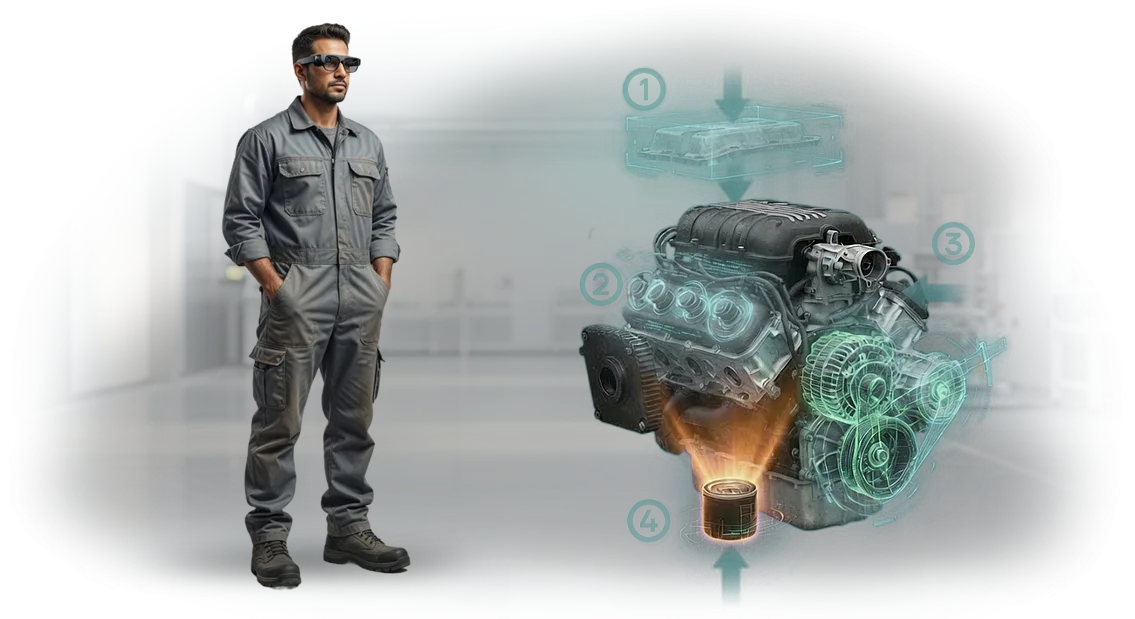
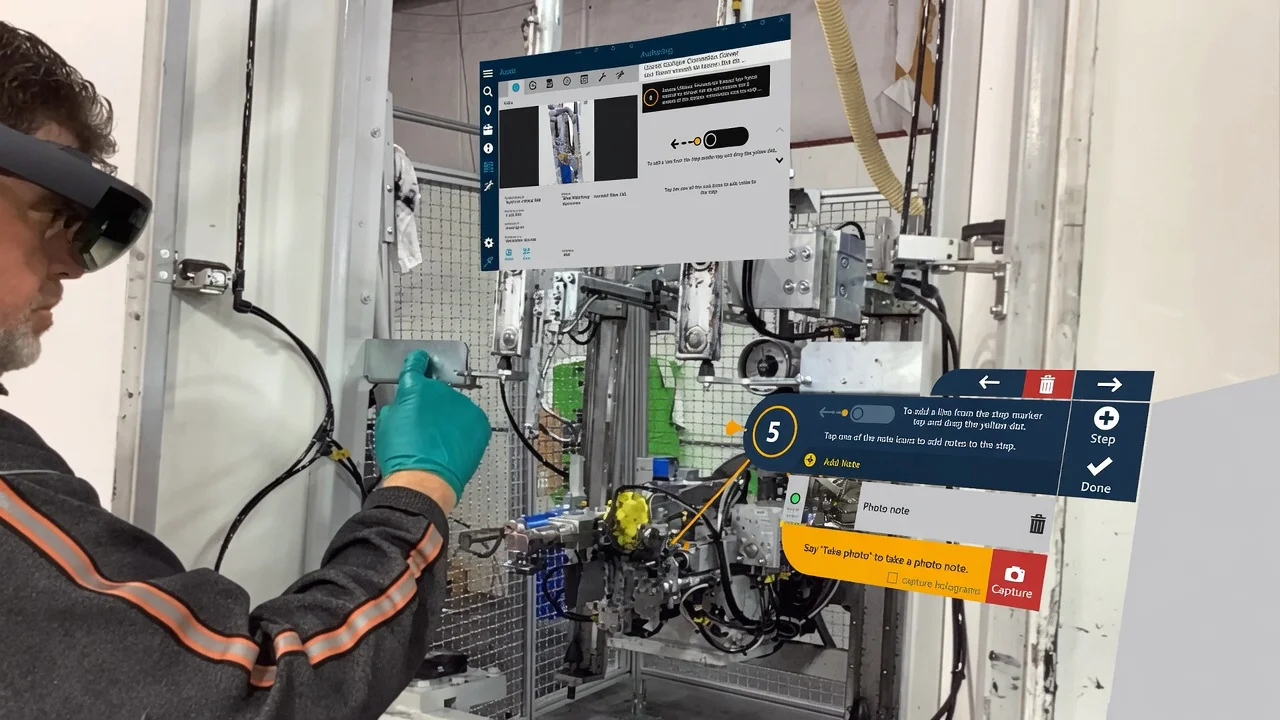
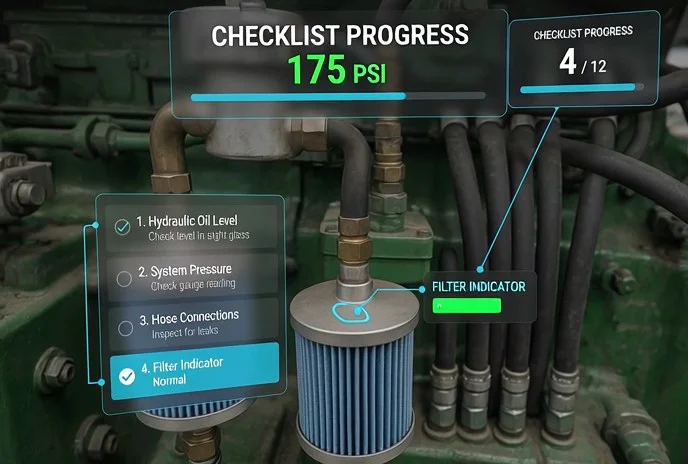
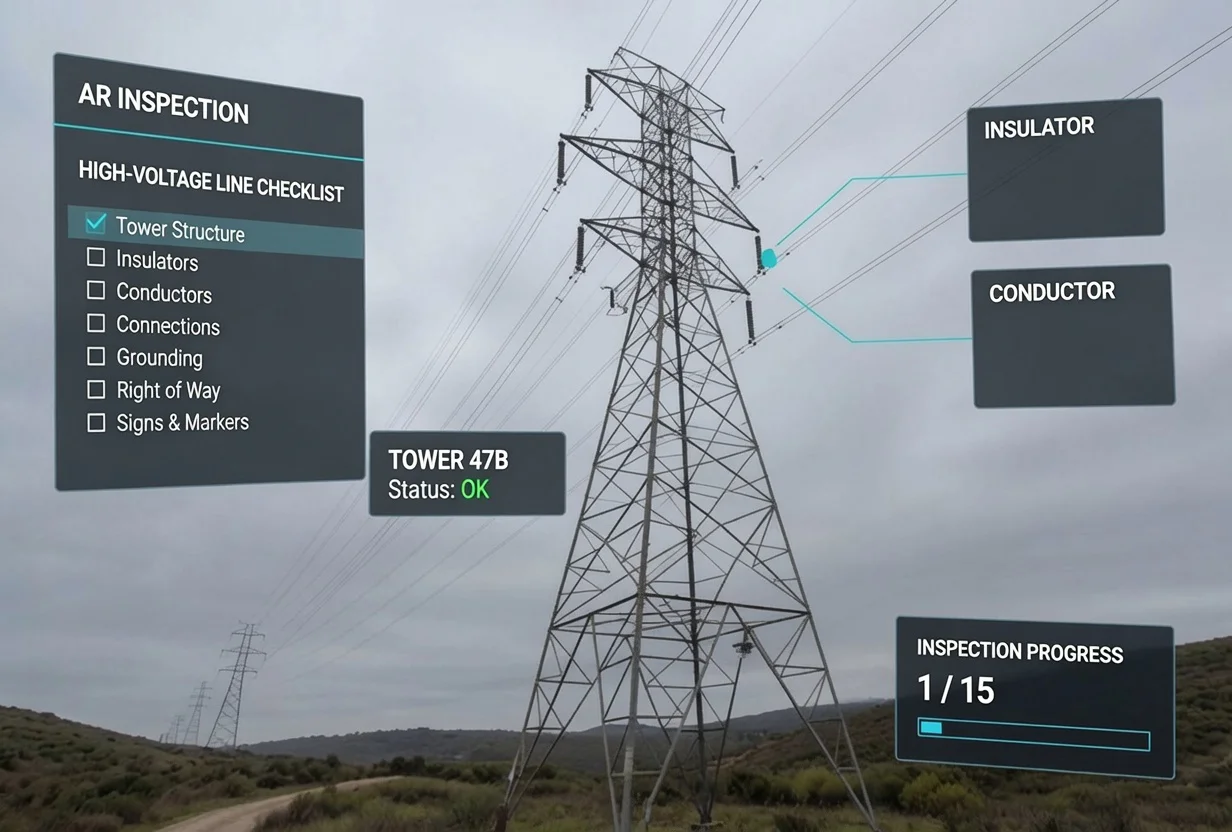
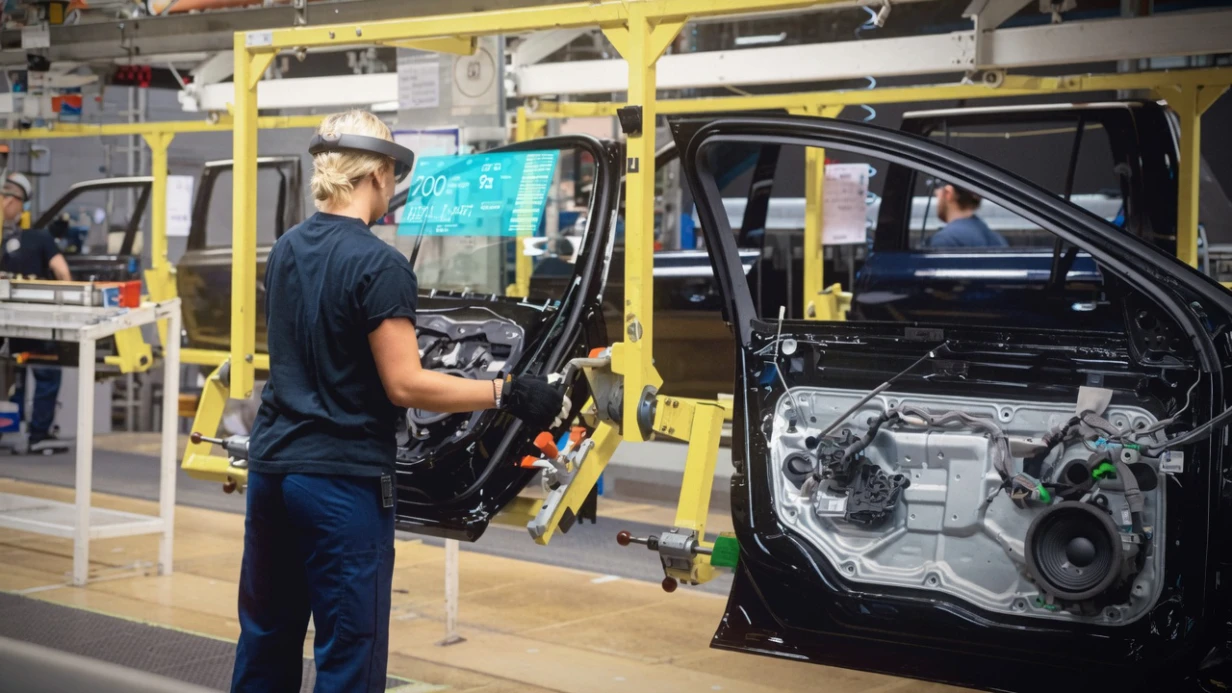
This is where AR instructions come to the rescue. They are step-by-step interactive guides that overlay real equipment through a tablet, smartphone, or smart glasses. The employee sees an exact hint in front of them: which unit to remove, in what order to check.
No need to flip through documents and recall something — the system itself guides the person through the process.
The main business result is reduced downtime. Our clients note that repair and maintenance time is reduced many times over, especially for employees with little experience.
AR instructions reduce the risk of errors: each step is visually confirmed, which eliminates wrong actions that lead to repeated breakdowns. Training new specialists is also faster — they don't need a mentor constantly by their side.
We develop AR instructions for specific models of lifting and transport equipment: from forklifts and stackers to overhead cranes. Already at the analysis stage of your fleet, we identify the most frequent maintenance and repair scenarios. You get a tool that pays off from the very first prevented downtime.
What an AR instruction gives your production
An AR instruction turns maintenance of lifting and transport equipment from "find the right page in the manual" into "perform a step while seeing a hint in front of you." A mechanic, repairman, or new employee points the camera at a unit — and the system shows what exactly to check, in what order, and what to pay attention to. As a result, production gets tangible benefits: speed, accuracy, safety, and savings.
Speed is especially noticeable during scheduled maintenance and minor fault elimination. Instead of searching for a reference book and decoding diagrams, personnel receive a step-by-step scenario right at the workplace.
The maintenance standard is reduced by 1.5–2 times, and equipment downtime decreases. The production rhythm does not break, planned work finishes faster — this directly affects output.
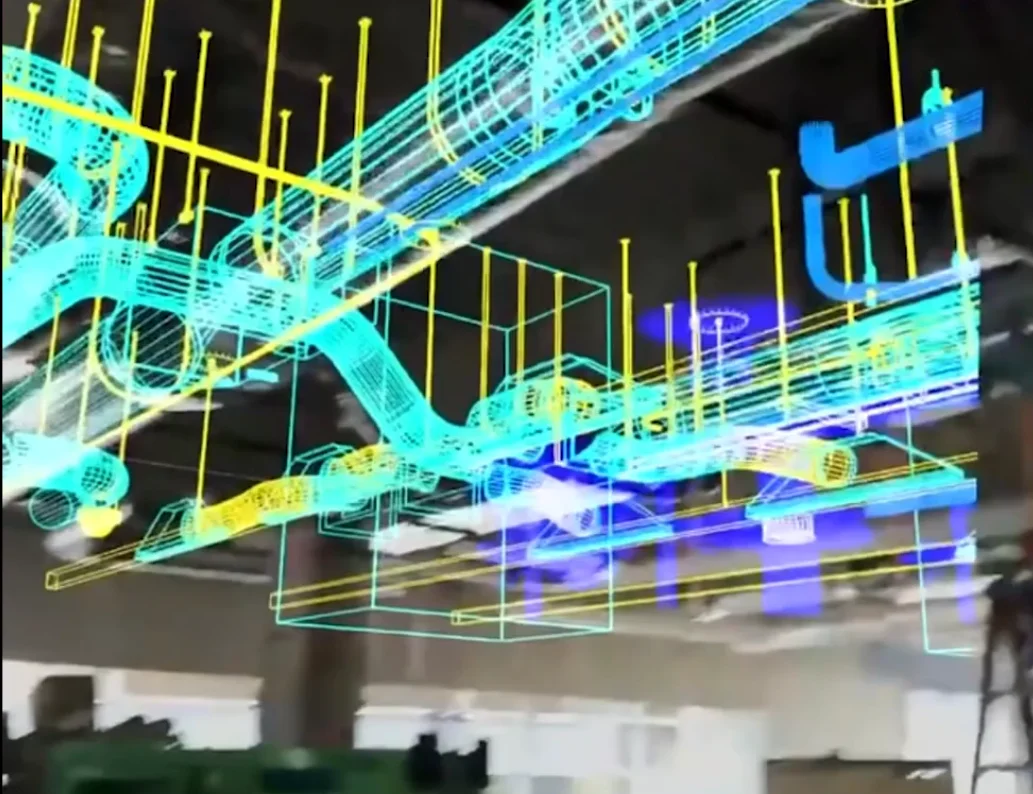
Accuracy is achieved because the instruction is tied to the real object. The operator sees arrows, highlights, and labels on a specific unit, so mixed-up parts and missed operations are eliminated. Fewer errors — less scrap, fewer repeat callouts, and fewer emergency stops.
This is especially critical when equipment operates in several shifts and responsibility for its condition passes from one specialist to another.
Safety is a separate advantage of AR: the instruction itself reminds about locks, protective equipment, and dangerous zones. The employee does not rely on memory but follows a proven algorithm.
For enterprises with high occupational safety requirements, this is a way to reduce accident risks and avoid fines. And AR instructions make training visual: a newcomer understands the structure of lifting and transport equipment faster and depends less on a mentor.
Savings come from all of the above: fewer downtimes, errors, injuries, and training time. Once you create a digital instruction, you use it for all shifts and new employees without reprinting paper manuals.
Check with a simple checklist: you spend less time on maintenance, make mistakes less often, are confident in safety, and train staff faster — meaning the AR instruction is already paying off.
Formats of AR instructions for lifting and transport equipment
For lifting and transport equipment — cranes, hoists, stackers, and forklifts — there is no single universal format. Training a newcomer, scheduled maintenance, and emergency diagnostics require different ways of presenting information.
That is why we develop several types of AR instructions that cover all typical production scenarios.
| AR instruction format | Who it suits | What it gives the client |
|---|---|---|
| 3D model with unit disassembly | New employees, training centers | Clearly shows the structure of the mechanism and assembly sequence — training is faster, risk of errors is lower |
| Step-by-step overlay on the real object | Service teams, repair departments | The technician sees every step directly on the equipment — fewer downtimes and less need to refer to paper manuals |
| Interactive part marking | Procurement and supply department | Accurate identification of spare parts using AR tags — ordering of components is accelerated and nomenclature errors are eliminated |
| Quick call-up of a diagram via QR/AR marker | Operators and shift personnel | Instant access to the needed instruction from a tablet or glasses — no need to look for a document in the regulations, response to an emergency is faster |
Whichever format you choose, our team specialists with ten years of experience will adapt it to your model of lifting and transport equipment.
All instructions work on professional devices — tablets, smartphones, or smart glasses — and data is displayed on top of the real object. As a result, the employee receives information at the very moment it is needed, without studying hundreds of pages of documentation.
How we implement AR instructions: project stages
To make the implementation of AR instructions actually reduce downtime and errors, it is not enough to simply record a video or draw diagrams. This is consistent work with your production environment, regulations, and people. We have completed dozens of such projects and built a process that delivers a predictable result.
How AR instruction development works
-
Brief and audit. We study the fleet of lifting and transport equipment, operational documentation, and typical operations — scheduled maintenance, fault fixing, unit replacement. We record where employees most often make mistakes and where time is lost.
-
Scenario approval. For each unit, we describe step-by-step actions in plain language: what to take, where to look, in what order to unscrew and check. We agree the scenario with your technologists and mechanics — so that the instruction matches real practice.
-
Creating AR modules. We transfer scenarios into interactive instructions that work on ordinary tablets and phones. The employee sees hints, diagrams, and warnings directly on top of the real equipment — without searching for the needed page in a paper manual.
-
Pilot at your site. We test the instructions on real equipment together with operators and repair services. We collect feedback, refine wording, and check that all steps are feasible in working conditions.
-
Launch and training. We put the instructions into operation: configure access, conduct short training so employees quickly master the new format. Immediately after launch, the reduction in operation time and number of reworks becomes visible.
-
Technical support and updates. If regulations change, a new model is added, or your team has comments — we promptly update the content. The instructions remain relevant, and personnel always work with the latest versions.
This approach solves the main task: lifting and transport equipment is serviced faster and safer, and the dependence on the experience of individual specialists is reduced. You get a working tool, not just technology "for show."
What is included in the AR instruction delivery
When ordering an AR instruction, you get not just an application, but a ready-to-use work set — from digital content to employee training. Everything needed for launch is included in the delivery, without hidden surcharges and without needing to buy anything separately.
The set includes:
- AR application — works on the tablets and smartphones your specialists already use. No need to purchase expensive equipment.
- Digital equipment model — step-by-step maintenance scenarios for lifting and transport equipment: units, checkpoints, operation sequence. The content is adapted to your equipment model.
- Methodological materials — instructions and regulations for personnel that can be used in work and when training new employees.
- Team training — we conduct a session with your specialists so they confidently use the AR instruction from day one.
- Support and updates — we provide post-launch support: answer questions, make adjustments when regulations change.
- Integration with documentation — we link the AR instruction to existing operating and maintenance instructions so as not to duplicate processes.
This set covers the entire cycle: from app installation to daily use. You do not need to hire contractors or understand technologies — you get a working "turnkey" system.
Case: reducing downtime in a warehouse
Warehouses lose profit every minute of downtime, and repair of lifting and transport equipment often turns into a multi-hour affair.
Waiting for an external specialist, searching for the right diagram among paper instructions, disassembling units by eye — all this delays shipments and misses deadlines. We solved this problem with AR instructions that speed up diagnostics and repairs right on the spot.
For a large warehouse operator TechnoSklad we developed AR instructions for maintenance of forklifts and stackers.
The technician points the camera of a tablet or smartphone at the equipment and sees hints on the screen: which unit to check, in what sequence to unscrew fasteners, how to safely remove hydraulics.
No booklets and no calling an engineer for every little thing — the whole process happens step by step, with error control.
Results after launch
Repair time decreased by 40%. Previously, replacing a hydraulic distributor took almost three hours; now the team completes it in 1 hour 45 minutes. The average warehouse downtime due to a forklift breakdown decreased from four to two and a half hours.
Over a month, this returned about fifteen additional working hours of equipment to the enterprise — without hiring new staff or buying spare parts.
I will separately highlight the reduced dependence on external contractors.
In-house mechanics now handle 80% of faults themselves, and the risk of an error due to improper disassembly of a unit is virtually eliminated — the system does not allow moving to the next step until the previous one is completed correctly.
What this means for your warehouse
The case confirms: AR instructions pay off in the first month by reducing downtime and increasing the productivity of the repair team. The client has already expanded the project to another line of machines and plans to roll out the solution across all sites. Tell us about your task — we will show how the same approach can be applied to your equipment.
How to choose the right format for your task?
Start with the question: who will use the instruction and under what conditions. If the operation is complex, multi-step, and requires high attention — a step-by-step AR hint with unit highlighting and correctness control suits you.
If the task is simple and frequent — a brief marker with the main parameters is enough. It is important to understand what equipment the employee works on: for mobile units a compact tablet is better, for stationary lines — a stationary screen or augmented reality glasses.
Assess personnel experience. Beginners benefit from detailed video instructions and voice prompts that guide them by the hand. Experienced specialists want quick access to reference data: tolerances, diagrams, regulations.
The right format adapts to the user's level — this reduces the number of errors and speeds up getting into the working rhythm.
Think about where the instruction will be used. In a noisy workshop, voice commands may not work, and in a fire-hazardous area, AR glasses may be unsafe. Choose a format that is physically convenient and does not interfere with manual work.
In addition, it is important how the instruction fits into current processes: if you already have an electronic work order system or a knowledge base, AR instructions should complement them, not create a separate loop.
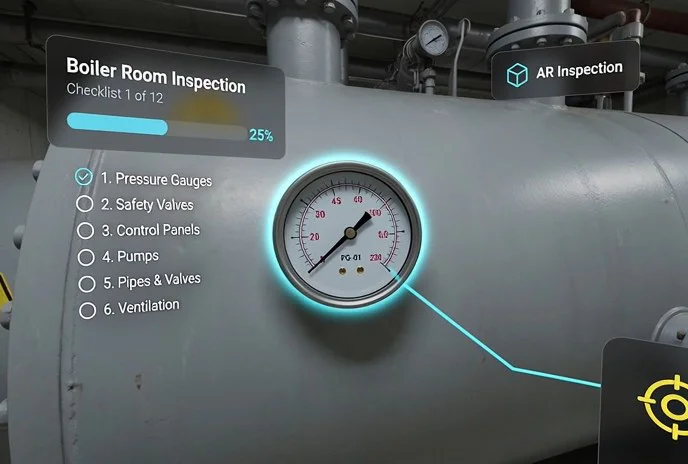
Don't forget about measurability of the result. Choose a format that allows progress tracking: marking completed steps, saving a report on operation time, seeing error statistics.
This way you will understand that the format really solved the problem, and not just is an "interesting tool." The best way not to make a mistake is to first test the chosen format on a pilot group of employees and measure the speed and quality of work before and after.
We help you choose a format for your specific task, taking into account the type of equipment, employee qualifications, and production conditions. You will get not "raw technology," but a ready-made solution that pays off by reducing downtime and the number of errors. Contact us — together we will determine the optimal option and test it on a real site.
Frequently asked questions about developing AR instructions
The main concerns of customers when ordering AR instructions for lifting and transport equipment: compatibility with existing equipment, difficulty for employees, and unjustified costs. Below we answer these questions — without technical details, only what is important for business.
Compatibility: will an AR instruction fit our equipment?
Yes. The instruction works through ordinary tablets and smartphones that employees already have. It is enough to point the camera at a unit — the system will recognize it and show the needed steps.
It is suitable for new and old models of lifting and transport equipment, including machinery from different manufacturers.
Difficulty: will all personnel have to be retrained?
No. This is a simple video guide with hints, not a drawing with technical symbols. A mechanic or operator starts using it after one or two minutes of viewing. In practice, this speeds up onboarding of newcomers and reduces errors during repairs.
Cost: how much does it cost and when will it pay off?
The cost depends on the scope of work, but we always start with a small demonstration area. You see the result on your equipment and then decide on scaling. Thus, you pay only for what brings value and can estimate the payback in advance.
If you still have questions — just write to us. We will show examples and calculate timelines for your case.Order turnkey AR instruction development
Ordering a turnkey AR instruction is a solution that you receive ready to use. We take on the entire cycle: equipment analysis, review of typical operations, scenario development, testing, and implementation. You don't need to understand technical details — just set the task and accept the result.
What you get after ordering:
- A ready scenario for each operation — understandable for a repairman or adjuster, from a draft to a final video sequence.
- Employee training — your specialists learn to work with the AR instruction without leaving their shift.
- Integration with tablets, phones, or AR glasses already used at the enterprise.
- Technical support after launch — we answer questions and update content when regulations change.
- Fixed deadlines and estimate — the cost does not change during the process, so you know the budget in advance.
- A results report — usage statistics and staff feedback so you can see the effect.
We give a guarantee for each project: if the instruction doesn't work or employees cannot use it, we refine it at our expense. The guarantee is stated in the contract, so you are protected from empty promises.
Then everything is simple — send a request, and we conduct a short audit of your equipment and tasks. We prepare a commercial proposal and work plan; after approval, we start production and approve each stage. As a result, you get a working AR instruction within the agreed timeframe.