

Why Press and Die Maintenance Requires AR Instructions
Without visual instructions, maintaining presses and dies turns into a trial for the repair crew: a specialist spends hours locating the required component, cross-checking it against a diagram, and trying to recall the correct sequence of operations.
Every hour of such downtime means lost output, a disrupted delivery schedule, and extra strain on the rest of the equipment.
Most often, companies address this problem with paper regulations and the experience of the “old guard.” But regulations become outdated, and experience leaves along with employees.
A newcomer in the shop is left one-on-one with a machine where finding the right valve or lubrication point is already a quest. The result is prolonged repair time, the risk of damaging components, and unjustified costs for spare parts.
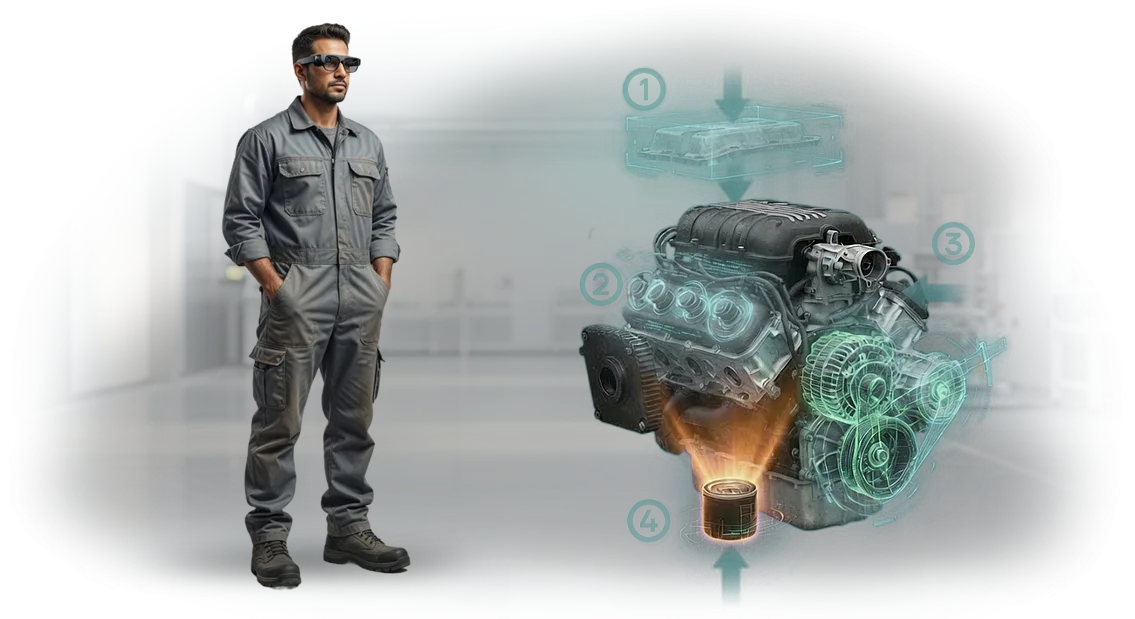
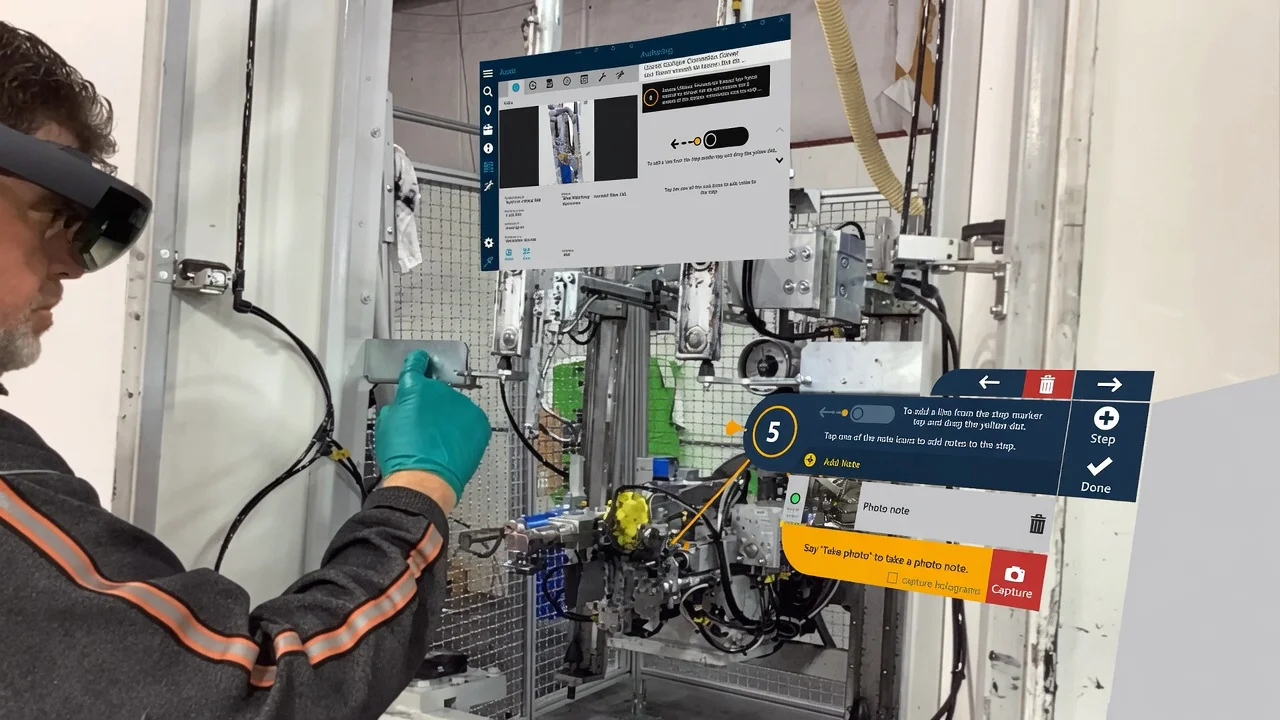
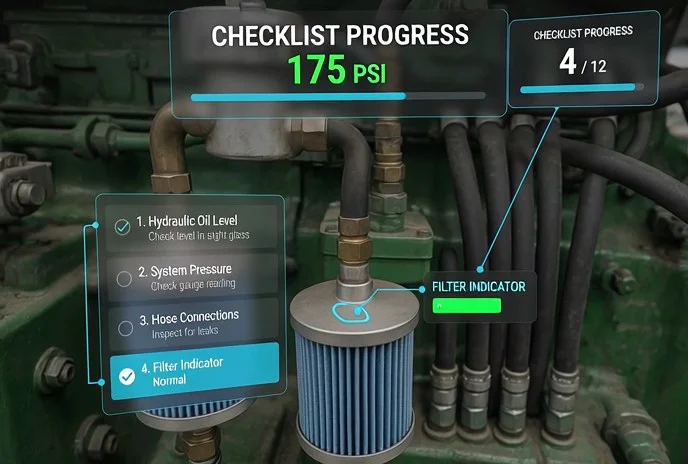
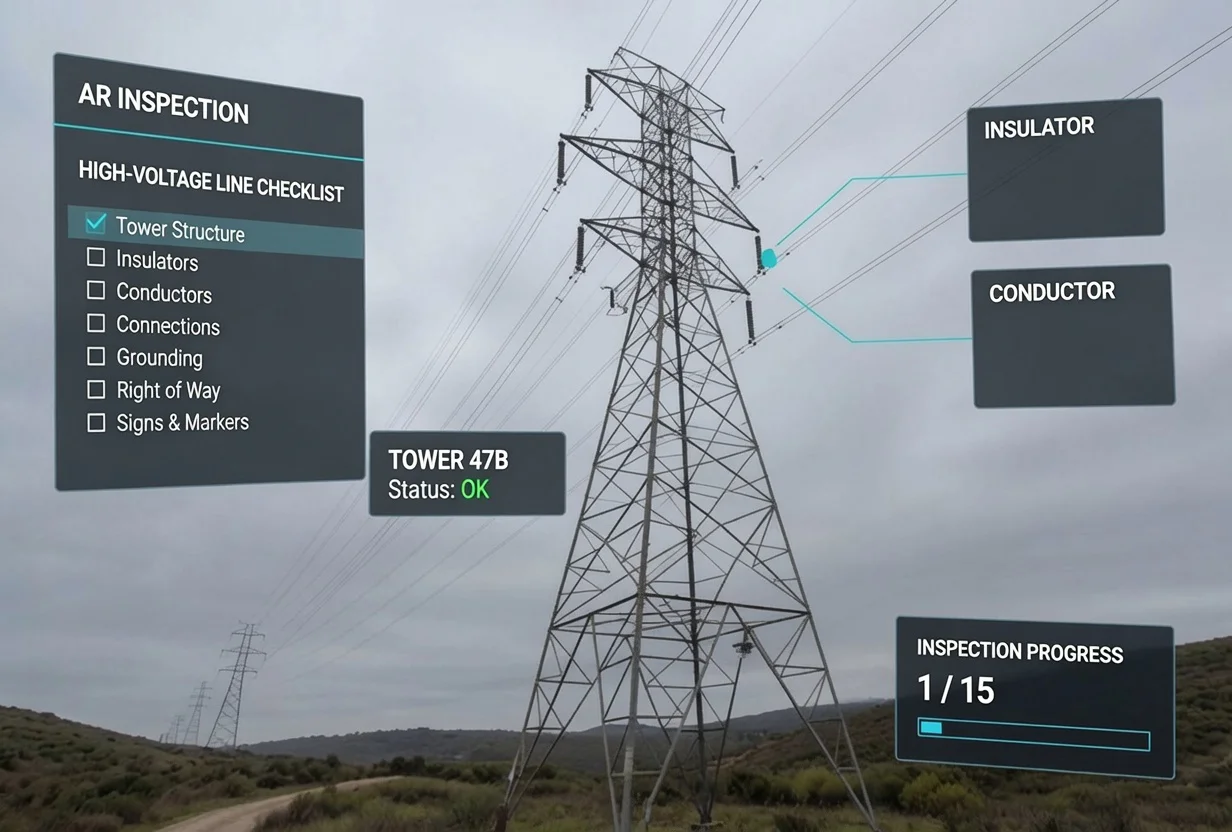
AR instructions solve this problem differently. The employee points the camera of a tablet or smartphone at the press—and sees directly on the equipment housing where the required component is located, in what order to perform the steps, and which tools to use.
There is no need to recall anything or search through documentation: the guidance is always right before your eyes, in the context of real equipment.
This delivers measurable results: component search time is reduced, the number of errors during disassembly and reassembly drops, and a new specialist reaches working level in days, not months.
Equipment downtime becomes predictable and short, and scheduled maintenance no longer depends on who exactly is on shift.
We develop such AR instructions specifically for your presses and dies: we capture work algorithms, link them to the 3D model of the equipment, and configure everything so that employees can use the guidance without special training.
All the technical work stays on our side—you get a reliable tool on the production floor that saves hours and money.
What an AR Instruction Delivers for the Repair Crew
Every minute of equipment downtime translates into lost revenue for the business, and the repair crew often works at its limit: paper instructions are outdated, experienced technicians are overloaded, and newcomers act on guesswork.
An AR instruction turns industrial equipment repair into a predictable process: the technician sees hints directly on the machine components instead of searching for the right page in a manual.
Increased repair speed is the first and most obvious benefit of AR instructions. Instead of checking drawings and recalling the sequence of operations, the employee receives step-by-step guidance directly in their field of view.
As a result, the average time to eliminate a fault is reduced several times over, and scheduled maintenance no longer stretches across multiple shifts.
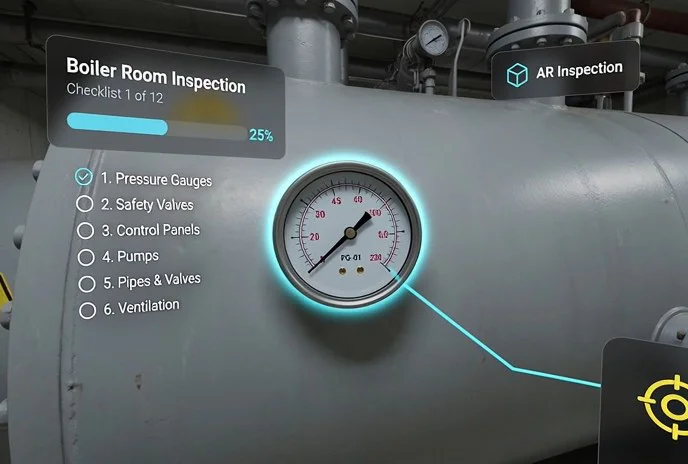
Fewer errors are achieved through visual control of every action. The system highlights the required component, shows the correct tool position, and warns if an operation has been performed incorrectly.
This is especially important when working with presses and dies, where a mistake can lead not only to equipment failure but also to personal injury.
Fast onboarding is another tangible result. A new specialist no longer depends on a mentor: AR hints replace hours of explanations and allow independent work from the very first days. Personnel training becomes simpler, and staff turnover stops being critical for the repair crew.
Finally, AR instructions provide quality control. Every repair is logged automatically: which steps were completed, how long the operation took, and whether there were any deviations.
The manager sees the full picture of service performance, can standardize best practices, and identify weak spots in equipment maintenance in a timely manner.
AR Instruction Formats for Your Production Tasks
Every production facility faces the question: which AR instruction format will truly speed up repair and maintenance?
There is no universal answer—the choice depends on where employees work, how complex the operations are, and whether there is a possibility to fix a location for the hints. We select the format for specific tasks rather than impose a one-size-fits-all solution.
Below are the three main formats that cover most scenarios in production facilities with presses and dies. This is not about a “nice picture” but about reducing downtime and lowering the risk of errors.
Three Working Formats
| Format | Who it is for | What it delivers to the client |
|---|---|---|
| Stationary AR station | For regular operations on the same component | Instructions are overlaid directly onto the press; the employee sees every step and does not skip critical actions. Dependence on the memory and experience of individual specialists is reduced. |
| Tablets for repair | For mobile crews moving around the shop | Quick access to a component diagram anywhere. Convenient to work in confined spaces; the disassembly sequence and photo verification of completed stages are visible. |
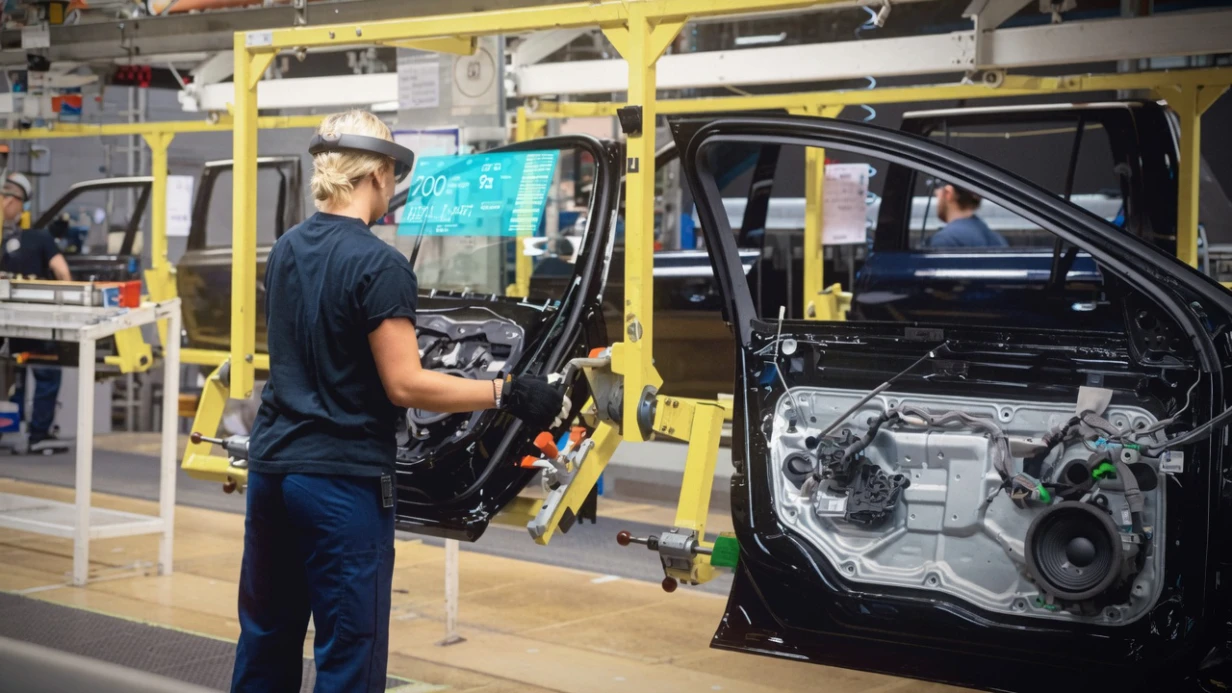
| Augmented reality headsets | For complex and hazardous work requiring free hands | Information stays in front of the eyes while hands remain free. Remote support is possible: a specialist sees the same thing as the employee and provides real-time guidance. |
Whichever format you choose—a stationary station, a tablet, or a headset—we design the instruction around the working logic of your specialists. We apply markers to the equipment and configure step-by-step execution control.
As a result, press and die maintenance stops depending on the human factor, and new employees reach working mode faster.
If you are not sure which format fits your case, send us a description of a typical task. We will advise what is more effective: one format or a combination.
How the Development of AR Instructions for Presses and Dies Proceeds
Developing AR instructions for presses and dies is a sequential project, not a one-time shoot. We handle all stages, from equipment analysis to employee training, so you do not have to dive into technical details.
As a result, you get a turnkey solution that works on your production floor immediately after delivery.
-
Brief and equipment audit. We analyze which operations on presses and dies most often cause errors and where clarity is lacking. We record current regulations, safety requirements, and the format of the future instruction.
-
Scenario approval. For each operation, we create a step-by-step scenario: actions, their sequence, and result control. We coordinate it with your technologists and occupational safety specialists.
-
Preparation of 3D models and content. We create accurate visual models of presses, dies, and tooling. We use professional development tools to make the instruction realistic and understandable for the operator.
-
AR instruction assembly. We combine 3D models, animations, and text hints into a single interactive solution: component highlighting, step selection, and execution verification. Here we also configure the logic for specific equipment models.
-
Testing at the production site. We test the instruction directly at workplaces, on real presses and dies. We remove everything that is inconvenient or unclear, and only then hand the project over for operation.
-
Deployment and employee training. We install AR instructions on tablets or smartphones and conduct short training for operators and technicians. After launch, we stay in touch and help with adaptation—the stages of AR instruction development proceed without stopping production.
What Is Included in the Delivery of an AR Instruction for a Press Shop
Upon project completion, you receive not a “prototype” and not a “demo,” but a full working package that immediately integrates into the processes of the press shop.
All materials are packaged into a single system that your employees use on regular smartphones or tablets—without stopping equipment or purchasing expensive glasses.
The AR instruction delivery includes:
- AR scenarios for typical operations — disassembly, component replacement, troubleshooting. The operator sees hints and markings directly on the press, which reduces repair time and lowers the number of errors.
- 3D models of press components — allow the design and interaction of parts to be studied without stopping the machine. Each model is labeled and provided with reference information for quick diagnostics.
- Electronic step-by-step guides — repair documentation in a new format: sequence of actions, photographs, video instructions, and checkpoints. Replaces multi-page paper instructions that get lost and become outdated.
- Text hints and voiceover — the employee works with headphones and does not get distracted by a screen or paper. All materials are translated into the language of your team.
- Content update system — your engineers make changes to the instructions and 3D models on their own, without involving developers. Documentation always matches the current state of the equipment.
- Administrative panel — access management, scenario configuration for different press models, and tracking of your employees’ training progress.
- Training for your team — we transfer rights, conduct a demonstration, show how to use the system, and answer questions.
All of this is a single package, adapted to your press shop. You get a working solution rather than separate files: scenarios, documentation, and 3D models can be used immediately, without any “fine-tuning on the customer side.”
Case Study: How AR Instructions Reduce Repair Time
A telling example is the case of an auto components manufacturer—let’s call it AvtoTech. On one of the press lines, die replacement took over an hour and sometimes stretched to two.
The mechanics had to pull paper regulations from the archive, search for drawings, and rely on the memory of experienced setup technicians. Any inaccuracy resulted in rejects or repeated changeover—which meant shipping delays and penalty fines.
We developed AR repair and maintenance instructions for presses and dies for this enterprise. Now a specialist points a tablet camera at the equipment—and directly on its housing sees the disassembly sequence, the boundaries of removable assemblies, and the required tool.
The system guides the operator step by step, automatically verifying every action against the reference. Paper regulations are a thing of the past: all the necessary information appears on the screen at the right moment.
Measurements after launch showed that die replacement time dropped by 35%, and the number of errors during changeover fell threefold. New employees reach the level of experienced setup technicians several times faster because all the expertise is built into the instruction.
For the client, this means a stable production rhythm, predictable part delivery dates, and confidence that a shift will pass without downtime.
The client believed in the technology so much that they expanded the project to all types of presses in two shops and included AR instructions in the corporate maintenance standard.
For us, this is confirmation that a properly structured AR instruction case pays off in a single section and turns into a working tool for the entire site.
Frequently Asked Questions About Implementing AR Instructions
Implementing AR instructions in production is a straightforward process, but questions still arise. Most often, clients ask about data security, launch timelines, and how difficult it will be to integrate the technology into existing processes. Below are the answers to the concerns that arise before the start.
How safe is it to use AR instructions? Where is the data stored?
The data remains under your control. Instructions and drawings can be hosted on the enterprise’s internal servers—nothing goes to the cloud. Only employees with the appropriate permissions get access to the materials, and, if necessary, all activity is recorded in the system log.
If required, we help set up integration with your document management system. This allows you not to change existing procedures but simply to supplement them with a new format.
Is it difficult to integrate AR instructions with equipment?
We work with already installed presses and dies, without replacing them. A tablet or AR headset is used to overlay instructions, and markers on the equipment can be installed within a single technical visit. No machine modernization or long-term production stoppage is required.
How long does implementation take?
A pilot project takes from two weeks. During this time, we create instructions for 2–3 components, train your employees, and launch on a single section. Full deployment across all lines usually takes several months, but production does not stop—the work runs in parallel.
What does the cost depend on, and can you start small?
The cost depends on the number of instructions and the complexity of the equipment. We always suggest starting with a pilot section: you get a ready-made solution, evaluate the effect, and then scale it to other shops. The cost is calculated after audit of your specific equipment.
Order the Development of AR Instructions for Your Equipment
For service engineers to work faster and without errors, there is no need for thick instruction manuals—step-by-step hints directly on the equipment are enough.
AR instructions for presses and dies reduce personnel training time, lower the risk of breakdowns caused by incorrect operation, and save resources spent on paper regulations.
We have already built such solutions for production facilities in various industries. For an accurate cost calculation for your product range, send us a short brief—here is a checklist that takes 10 minutes:
- List of press and die models for which instructions are needed — a simple list from technical passports is fine;
- Maintenance regulations or manufacturer instructions, if available;
- Description of typical operations: setup, tooling replacement, diagnostics, preventive maintenance;
- Current problems that drive the AR implementation: operator errors, slow onboarding of newcomers, downtime due to lengthy fault finding;
- Number of employees who will use the instruction — this affects the format and distribution;
- Desired launch timeline — we will advise whether it is realistic to meet.
Submit a request for an AR consultation—we will call you back within one business day, discuss your tasks, and provide a cost calculation for your presses and dies.
This is free and places no obligation on you: you get a transparent assessment, and we propose a format that will pay off at the very first maintenance job.
How to Choose the AR Instruction Format for a Specific Press Type?
The choice of AR instruction format truly depends on the press type and the operation you need to cover. For a mechanic who services a press with frequent changeovers, short step-by-step hints directly on the component are more convenient.
For an operator at a stamping section, where the sequence of tooling installation is critical, visual scenarios with 3D animation are a better fit.
Start with a simple question from your practice: where do errors most often occur? If it is die replacement, incorrect adjustment, or skipped steps during maintenance, then you need an AR instruction that guides the employee through a strict scenario.
If the problem is training new specialists, opt for a format with step-by-step explanations of every action and result verification.
The selection mechanics rely on three parameters: operation complexity, frequency of execution, and personnel skill level. For routine actions, a lightweight format is suitable—digital highlighting of buttons and service areas.
For rare but critical operations on the press, a full animated scenario is better, one that prevents a critical step from being skipped.
We do not impose a universal solution. First, we analyze the specifics of your press—hydraulic, mechanical, or stamping—and only then propose an AR format that fits into your existing system of procedures.
It can be both a supplement to paper documentation and a complete digital replacement for instructions.
The bottom line is simple: the right format is determined by the task, not by technical capabilities. Tell us about your press and a typical operation—we will advise which option will deliver quick results and measurable time savings.