

Production Line Maintenance: How to Eliminate Downtime and Errors
Every hour of downtime means lost revenue, missed deadlines, and frayed team nerves. When equipment stops and staff cannot quickly find the cause, the pause stretches into hours.
Yet many breakdowns are the result of maintenance errors: wrong sequence, skipped component, incorrect adjustment.
Why does this happen? Maintaining modern equipment requires experience. Standard instructions are thick folders filled with diagrams where it is easy to get lost. Experienced specialists leave, and newcomers learn by trial and error.
Finding the right information in documentation takes time, and in a stressful situation the risk of mistakes increases many times over.
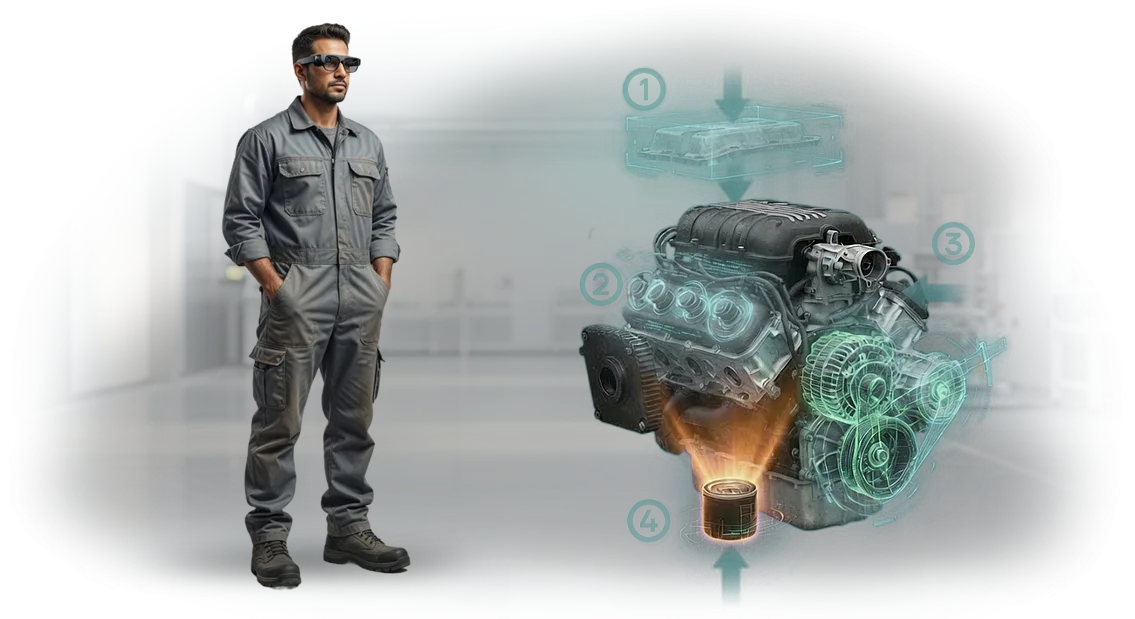
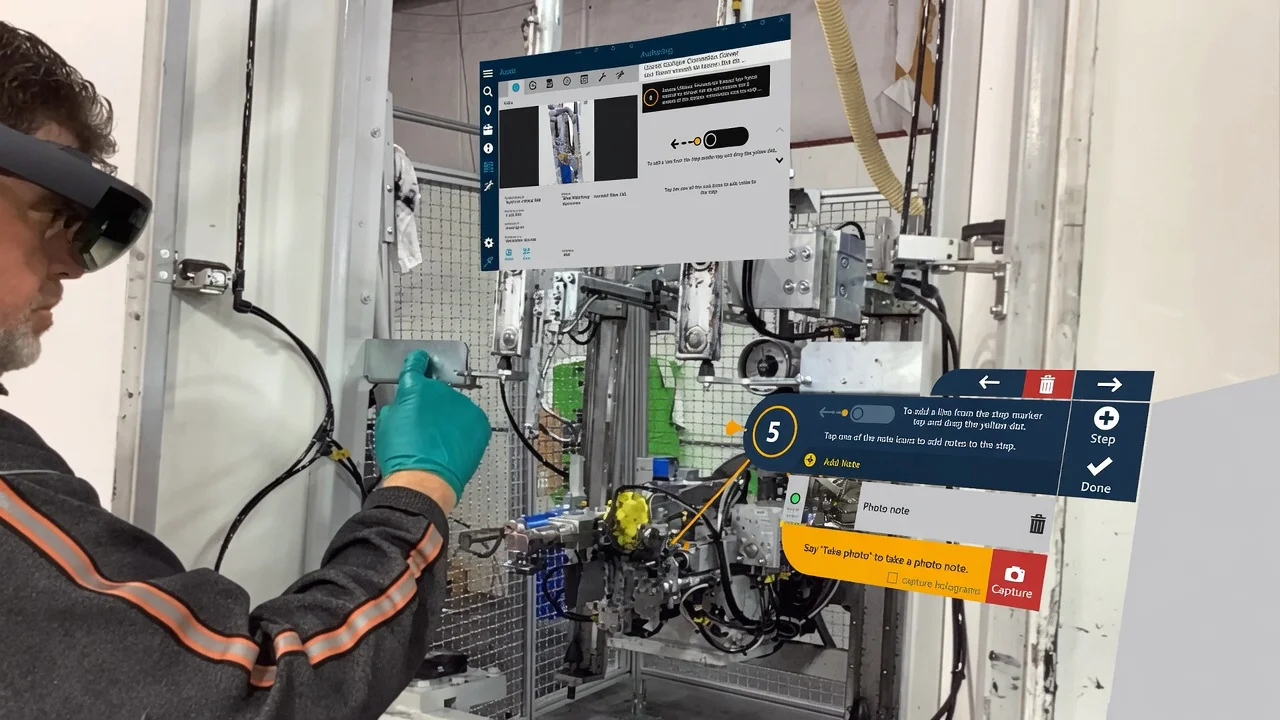
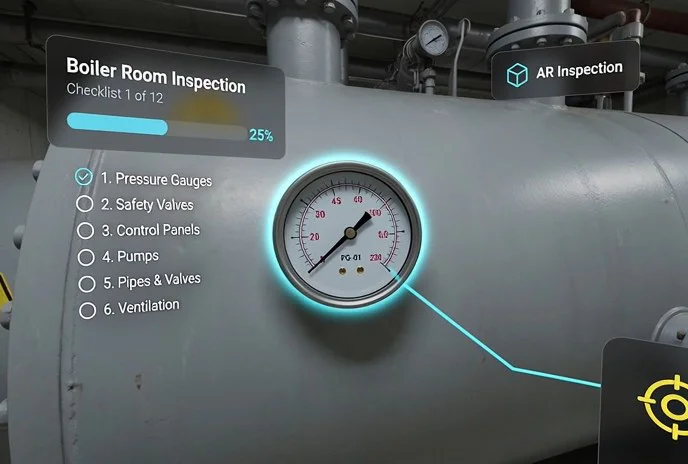
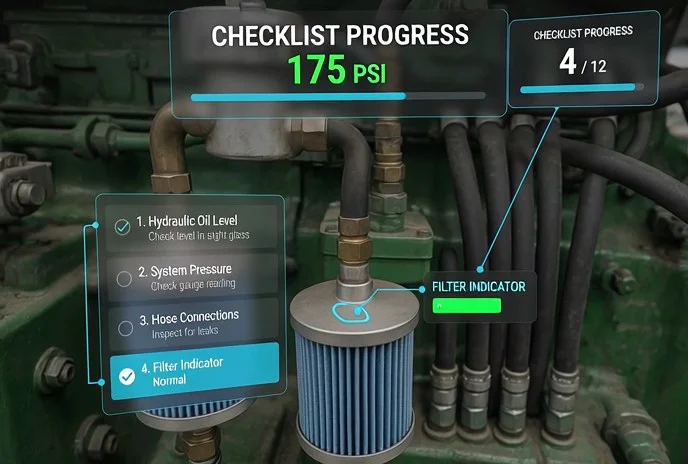
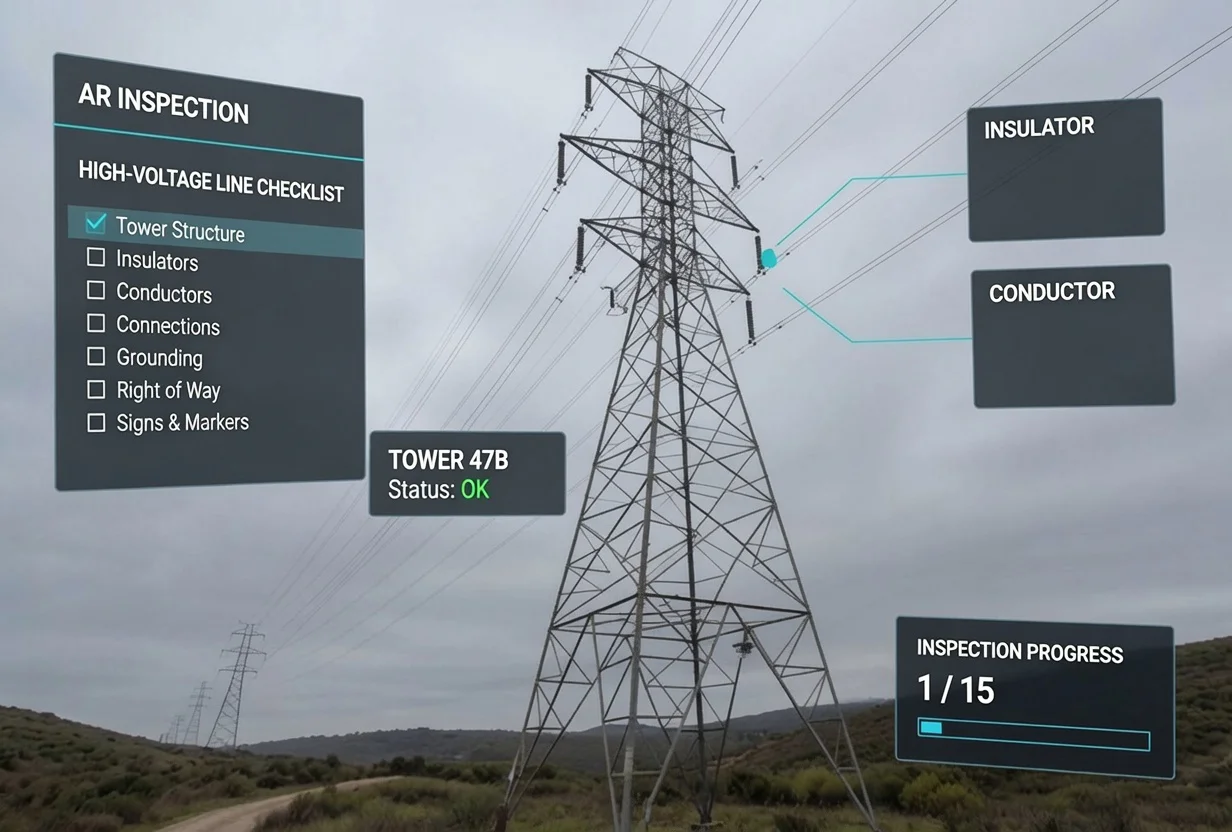
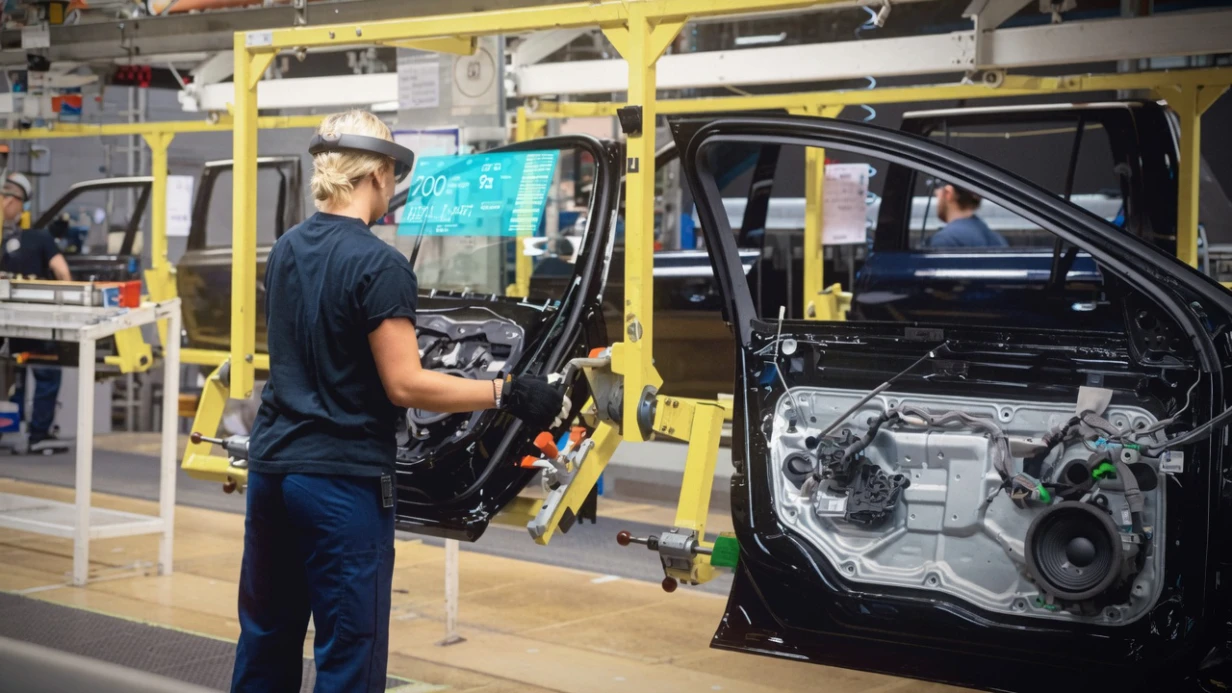
AR instructions solve this problem. Through a tablet or glasses, the employee sees step-by-step guidance right on the equipment: arrows point to the component, animation shows the sequence of actions, and the system checks correctness.
No need to flip through paper manuals — all prompts are right before your eyes. This reduces the likelihood of errors and speeds up maintenance many times over.
As a result, production downtime decreases, emergency stops happen less often, and staff work more confidently.
For the business, this means stable output, fewer urgent repairs, and peace of mind for the manager: even a newcomer can handle the job when there is a smart prompt nearby.
We create AR instructions for your equipment and eliminate the main sources of loss — downtime and human error.
What You Get from AR Instructions: 5 Key Benefits
AR instruction development from our team turns procedures into a working tool right on the line. The five benefits below deliver measurable results within the first months of implementation.
-
Reduced downtime. The worker sees step-by-step prompts directly on the equipment, does not search for a manual, and does not wait for a mentor. Repair time drops by a third, and the line returns to operation faster.
-
Faster training. A newcomer performs operations using visual prompts without constant supervision. Onboarding takes days, not weeks, and does not depend on the presence of an experienced specialist.
-
Fewer errors. AR instruction strictly follows the procedure and does not allow a step to be skipped. Defects and rework are eliminated even in stressful situations.
-
Higher safety. The system warns about dangerous zones and requires confirmation of lockouts — the risk of injury decreases, and incidents do not stop production.
-
Savings on instructors. One digital instruction works across all lines at once. You do not pay for a mentor’s time for every new employee, and you do not lose knowledge when experienced workers leave.
Any benefit can easily be converted into money: an hour of downtime, the cost of defects, training expenses. Calculate how much your line loses during one downtime — and you will understand how quickly the project pays off.
AR Instruction Formats for Production Lines
AR instruction formats differ not in the way you “put on glasses” but in the work scenario. For line staff who maintain equipment daily, speed of access to information matters most.
For rare or complex operations, expert support “here and now” is critical — and these tasks are solved by different formats. Below is a comparison based on practical criteria: who it suits, where to use it, and what benefit it brings to production.
| Format | For whom and where | What it gives the customer |
|---|---|---|
| Stationary AR instructions | Line operators and repair crews at a complex machine or installation | The image with prompts is attached directly to the equipment — no need to look for a tablet or take your hands off the job. Faster entry into the task, fewer errors caused by the human factor |
| Mobile AR instructions | Inspectors and repair staff moving around the workshop, working with different units | A smartphone or tablet is pointed at the equipment — the system recognizes it and shows a step-by-step procedure. No thick paper manuals or expensive stationary equipment |
| Remote AR support | Non-standard situations, complex breakdowns when a specialized expert is needed | The expert sees the same equipment through the employee’s camera and makes annotations directly in the frame — this speeds up diagnostics and line restart after a failure |
How to choose a format for your line? For regular operations on repetitive equipment, stationary prompts are optimal — they are cheaper to scale from a content perspective.
For a diverse fleet of machines or frequent changeovers, mobile instructions are more logical since they are updated centrally and are not tied to a specific location.
Remote support is worth adding as a supplement to any format — it is a safety net for critical components where an hour of downtime costs more than the equipment investment.
Often, a combination of “mobile format for the crew + remote channel for rare situations” covers 90% of needs without excessive investment.
We rarely recommend just one format: we calculate the economics for your scenarios and help you build a combined solution.
We take into account the frequency of operations, the number of shifts, and typical staff errors so that the AR instruction pays off rather than becoming “technology for technology’s sake.” During a consultation, we will examine your specific point on the line and suggest a format that will reduce downtime fastest.
How We Develop AR Instructions for Your Equipment
We have structured AR instruction development for production line maintenance as a transparent project process. At every stage, you see what is happening, what decisions are being made, and how this affects timelines and results. No magic — clear steps from brief to support.
-
Brief and audit — we collect tasks, equipment types, and scenarios where employees most often make mistakes or waste time. The result is a technical specification that you approve.
-
Plan and schedule — we set timelines, scope of work, and approval checkpoints. You know in advance when the first version will appear and when the AR instructions will be launched.
-
Scenario development — we create step-by-step instructions in the language of your specialists: what to do, in what order, what to pay attention to. The content undergoes an internal review by technologists.
-
Project approval — we show intermediate versions and receive feedback from your team. You control completeness and correctness without going into technical details.
-
Testing on the line — we test the instructions in real conditions with your employees. We fix inaccuracies and refine wording before launch.
-
Launch and training — we install the solution, connect the staff, and conduct a brief orientation. The team starts using the instructions immediately.
-
Support and development — we update scenarios when procedures change, add new components and operations, and answer questions. You get a living system, not a static document.
What Is Included in the Delivery of AR Instructions
The client needs a working tool, not a “raw” set of files. That is why AR instruction delivery is a complete package: from scenario to employee training and post-launch support.
Everything is adapted to your equipment and procedures so that a mechanic or operator starts using the system within the first week.
What exactly is included in the delivery:
- AR instruction scenarios. We break the procedure down into step-by-step scenarios: line maintenance, component replacement, diagnostics. Each step is clear without reading thick manuals.
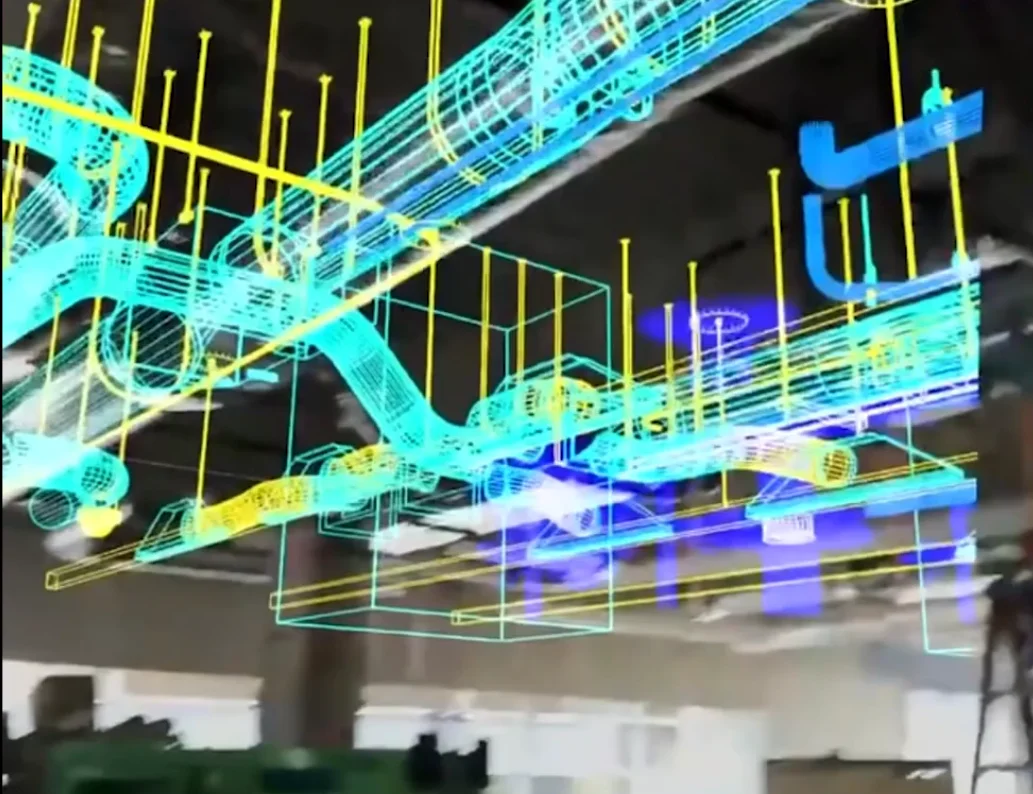
- AR content. Animations, 3D prompts, and text markers are overlaid on the real equipment. The employee sees directly on the parts what to unscrew and in what sequence.
- Employee application. Installed on workshop tablets or smartphones without complicated settings. Works without an internet connection, so it does not depend on communication quality on the production floor.
- Employee training. We conduct orientation for operators and mechanics: how to open an instruction, use prompts, and mark completed steps. Training takes hours, not days.
- AR instruction documentation. We provide guides for updating content, procedures for integration into the maintenance process, and reference sheets for employees. Everything is styled in the company’s corporate design.
- Updates and support. When equipment or procedures change, we update content and scenarios. The system remains current without rebuilding the project from scratch.
This package covers the entire cycle: from implementation to daily use. You get not just an application but a measurable result — fewer maintenance errors and faster onboarding of new employees.
Case Study: How We Reduced Maintenance Time by 40%
A manufacturing company producing packaging lines faced growing downtime due to slow equipment maintenance.
Our team proposed converting paper procedures into AR instructions: operators receive step-by-step prompts directly in their field of view through professional AR glasses. Repair changes from “I recall the manual” to “I see and do.”
The Challenge and Solution
On one of the lines, replacing forming units took the most time. Previously, the operator had to consult a 40-page manual, find the right component among dozens of similar ones, and avoid mixing up the sequence of actions.
We created an AR instruction that highlights the required part and shows the next step. Preparation time disappeared, and the actions became visual — assembly errors almost completely vanished.
Implementation Results
Measurements three months after launch showed: average maintenance time dropped by 40%, and the number of operations with errors fell by half. For the customer, this means an additional hour and a half of line operation every shift — without spending on new equipment. The AR instruction paid for itself in two months and is still used on all shifts.
The case was so successful that the company ordered the conversion of three more procedures for another line.
The implementation example confirms: AR effectiveness is visible immediately, and most importantly, it persists after the initial excitement about the new technology wears off.
How to Choose the Right AR Instruction Format for Your Task?
Choosing an AR instruction format always starts not with technology but with your production task. We look at what equipment is being maintained, in what conditions employees work, how frequent the procedures are, and how quickly staff turnover happens.
This determines whether you need step-by-step prompts with completion control, short checklists, or full training scenarios for newcomers.
Site conditions also affect the format. In a noisy workshop, instructions with large elements and minimal text are more convenient; when working in gloves — gesture control; in poor lighting — high-contrast prompts.
These are not technical details but the key to whether the employee actually uses the instruction or abandons it after the first step. That is why we always clarify the specifics of your production before offering a solution.
Another important factor is the team’s skill level. If you have high turnover among line staff, AR instructions should simplify entering the job as much as possible.
If we are talking about rare complex operations for experienced specialists, the format will be different: detailed depth, reference materials, control of critical points. A properly chosen format reduces training time and lowers the number of maintenance errors.
We do not ask you to understand AR or choose a format on your own. It is enough to describe the task: equipment type, operation frequency, and employee working conditions. We then propose an option, demonstrate it in a pilot, and adapt it to your site if needed.
This approach eliminates the risk of buying “the wrong thing” and getting instructions that no one uses.
To get a recommendation tailored to your specifics, all it takes is a short consultation — tell us about your production line, and we will suggest the optimal AR instruction format for your tasks.
Frequently Asked Questions About Implementing AR Instructions
Before ordering AR instruction development, most managers have the same questions — about timelines, cost, guarantees, and how the technology will fit into existing processes. Below we address typical concerns so you can make your decision with full clarity.
How much do AR instructions cost and what does the price depend on?
The cost is calculated individually after analyzing your equipment, the number of components, and maintenance scenarios. Therefore, the estimate is prepared before work starts — no hidden surcharges.
The investment pays off through reduced training time, fewer errors, and less line downtime. The effect is usually visible within the first months of use.
What are the development timelines and how do you meet them?
The project duration depends on complexity and scope: from a couple of weeks for a small area to two months for an entire line. We work in stages, and you see intermediate results and control the process.
If you need to launch by a specific date — for example, before a line upgrade or the arrival of a new shift — we fix the deadline in the contract and are responsible for meeting it.
Our equipment is complex and specific. Have you worked with anything like it?
Over years of practice, we have encountered various production lines — from CNC machines to conveyors and packaging systems. There is no tie to a specific manufacturer: AR instructions are built on your technical documentation and procedures.
For complex non-standard components, we use professional development tools and always test the instructions with your employees. This ensures the scenario is clear and convenient.
What if the maintenance procedure changes? Will everything need to be redone?
Updating AR instructions is a standard situation, and we build that possibility into the design stage. Edits are made quickly, and thanks to the modular structure, you do not need to rewrite the entire package.
If necessary, we sign a support agreement: you send the new version of the procedure, we update the content, and return the current instructions. This is cheaper and faster than maintaining paper manuals.
What guarantees do you provide that the instructions will work in real conditions?
The guarantee is stated in the contract. Before launch, we conduct testing on a real line, including control operations with mechanics and operators. If any inconveniences are found after the test, we refine the scenario.
You also receive a demo version for evaluation at an intermediate stage. We do not hand over the project until you confirm that the instructions are convenient to use and solve your problem.
If you are looking for an answer to a question not covered here, simply write to us. We will advise whether AR instruction is suitable for your task and suggest implementation options that take your timelines and budget into account.Submit a Request — We’ll Calculate the Project in 1 Day
Submit a request for AR instructions, and within the next day you will receive a project calculation for your production line. No abstract promises: we break down the task, calculate the scope of work, timelines, and cost, and you make a decision based on the numbers.
After your request, we analyze the task, select an AR instruction format that truly fits your maintenance process, and send an implementation plan.
Along with the calculation, you will receive a specialist consultation and a demonstration of an instruction fragment — so you can immediately see how it works on your equipment.
What you get after submitting a request:
- A project calculation within 1 day — with accurate timelines and work stages.
- An analysis of your task: which operations are most beneficial to convert to AR.
- A demonstration of an AR instruction using your component or similar equipment as an example.
- Specialist consultation on integrating AR into your existing maintenance system.
- Recommendations on the format and number of instructions to cover all critical operations.
- A clear action plan: what we do and what is needed from your team.
- An impact assessment: how AR instructions will reduce maintenance time and the number of errors.
Include the equipment type and task in your request — we will take care of the rest. This is free and non-binding: you receive the calculation, view the demonstration, ask questions, and only then decide how much this will speed up your specialists’ work.