

Why Instructions Fail in Industrial Robot Repair
When an industrial robot stops, every minute counts. Each minute of downtime means lost production output and missed client deadlines, but instead of a quick fix, an employee opens a multi-page paper manual.
Precious minutes are wasted searching for the right section, and the diagram in the manual often doesn't match the actual equipment configuration. As a result, robot repair turns into a long investigation where a mistake can cost even more — up to further equipment damage.
In emergency repairs, this is especially dangerous. Stress, limited time, and outdated drawings lead even experienced specialists to second-guess every action. The fear of doing something wrong slows work down even further, stretching production downtime into hours.
A paper manual doesn't answer the key question: what to do right now, looking at this specific component? It describes ideal conditions, but in reality, cables, fasteners, and modification specifics get in the way. The specialist has to manually match the text to the equipment, wasting time and nerves.
In the end, the business pays twice: for the downtime itself and for potential repair errors. But this can be avoided.
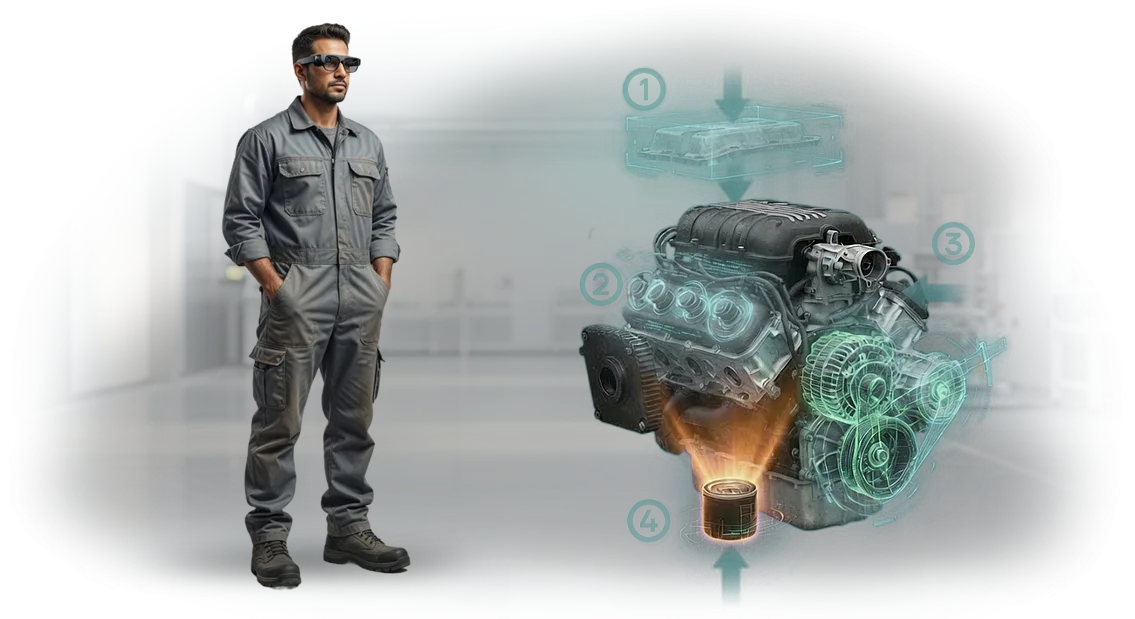
We develop AR instructions that show the sequence of actions directly on the equipment — the employee sees what to do and how, without searching through paper documents.
What AR Instructions Bring to Production
When an industrial robot stops on the line, every minute of downtime hits the production plan. An employee frantically flips through a paper manual, tries to remember where they found a similar fault last time, and risks making things worse.
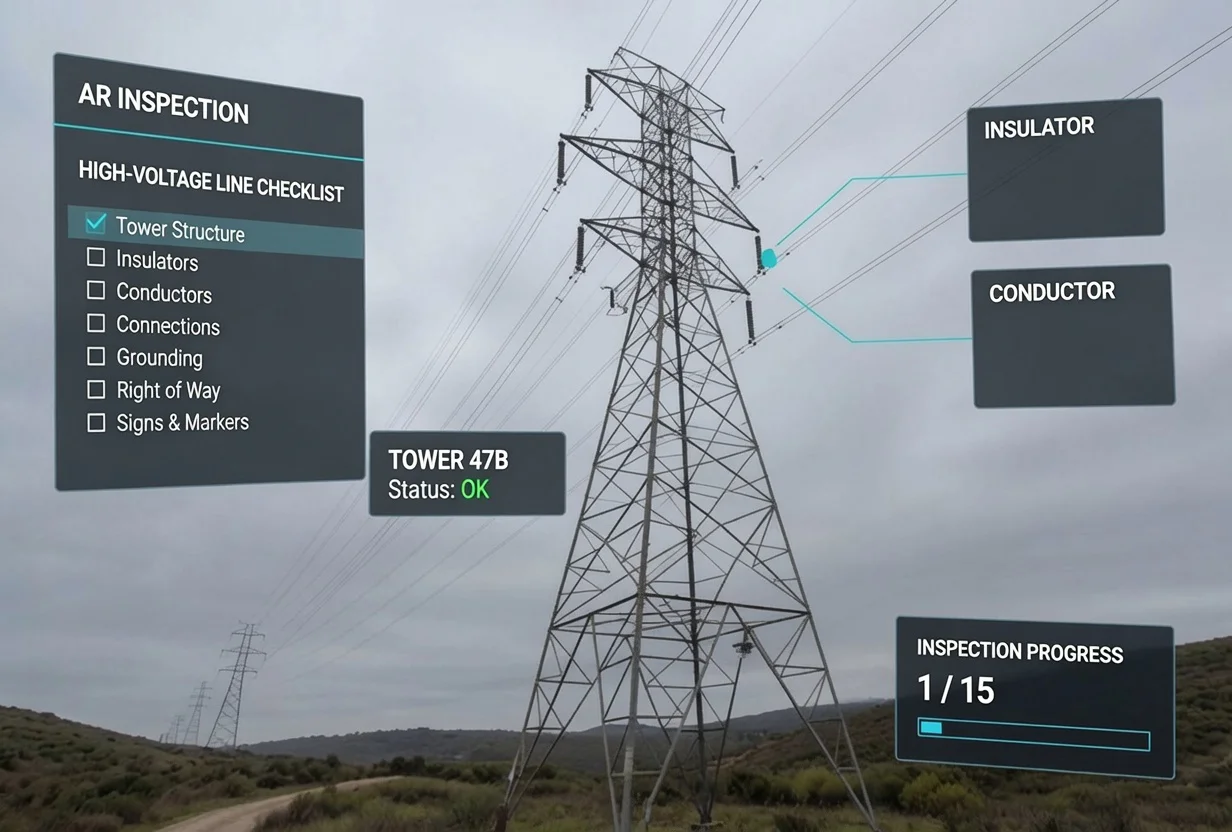
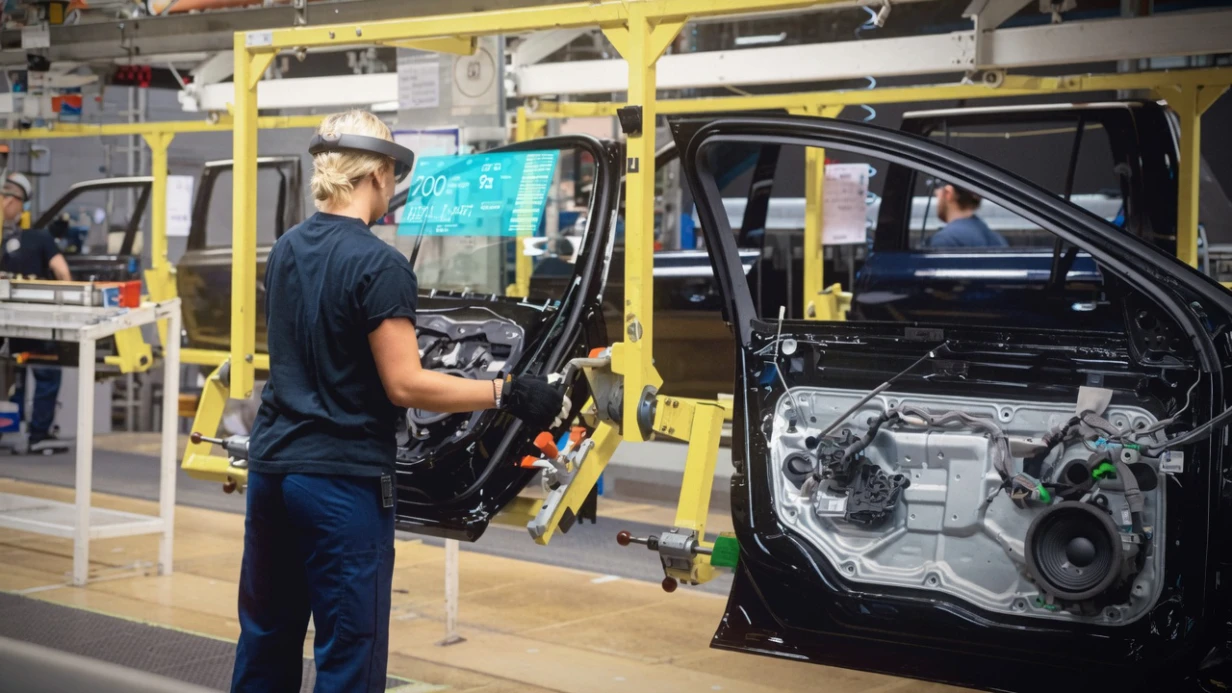
AR instructions eliminate this chaos: the right information appears right before your eyes, in the context of the specific component, exactly when it's needed.
| What AR provides | How it impacts production |
|---|---|
| Fast response | The employee immediately sees the action algorithm and doesn't waste time searching for information. Downtime is reduced many times over. |
| Fewer errors | The system guides the step sequence and warns about critical operations. The risk of damaging equipment decreases. |
| On-the-job training | New employees work with guidance from day one. No need to wait for expensive training. |
| Repair quality | Every operation follows a validated scenario, with no "eyeballing it." Results are consistent. |
| Control and experience building | The history of completed work stays in the system. Best practices can be extracted for the whole team. |
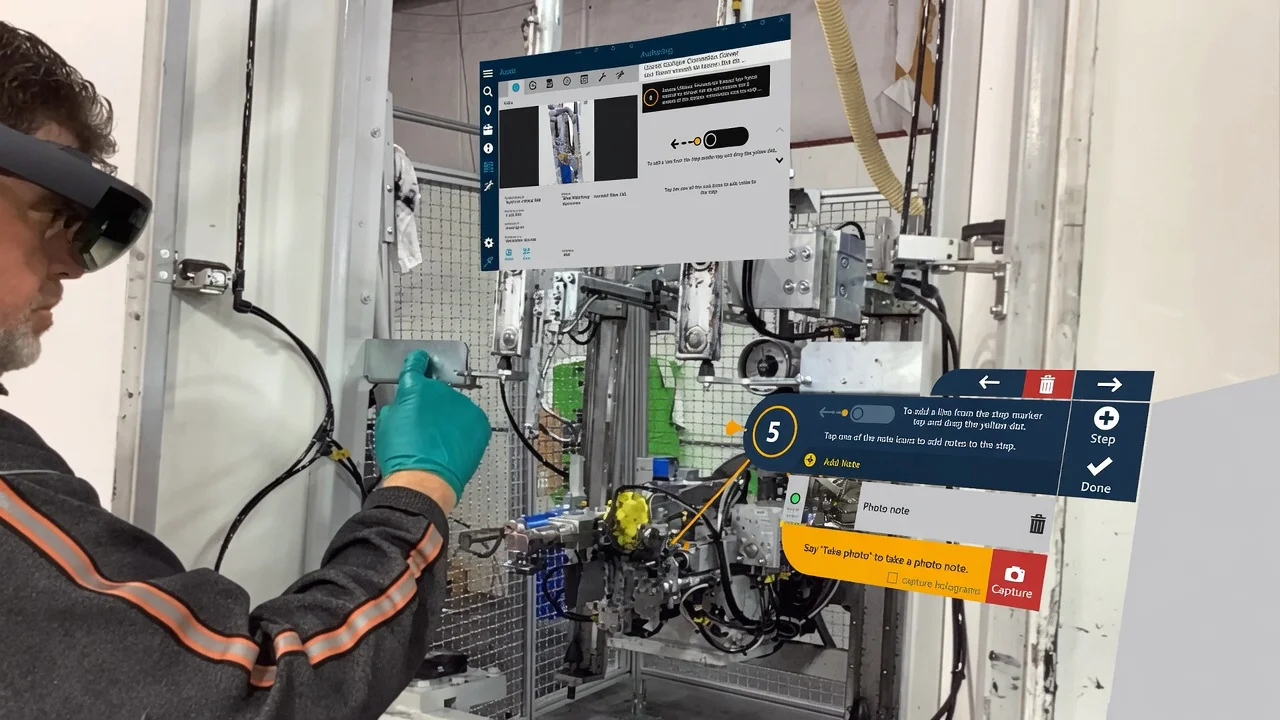
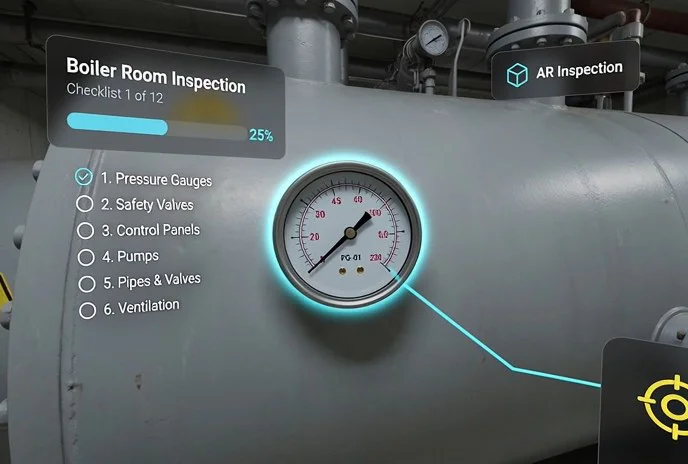
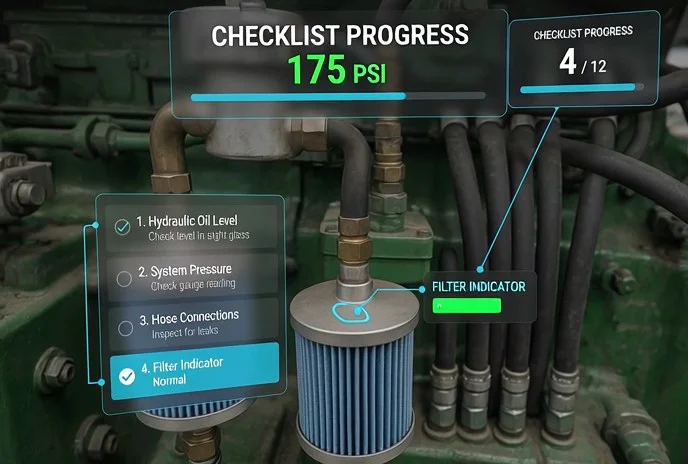
In practice, it works like a checklist: you see a component — you get a prompt, you complete a step — you confirm the result, and you move on. Skill comes through practice, not rote memorization.
This is especially important when there aren't enough mentors and the equipment fleet keeps growing.
The takeaway is simple: an AR instruction turns a procedure into a live tool that works right on the production floor.
Employees act with more confidence, equipment lasts longer, and you get a predictable maintenance process without relying on one specialist's "golden hands."
AR Instruction Formats for Robot Maintenance
Choosing the right AR instruction format depends on the task facing the service department or production site.
In some cases, quick prompts in the field of view are enough; in others, full process visualization is needed, and for rare, complex breakdowns — connecting an experienced specialist in real time. The right format saves hours of downtime and reduces dependence on "golden hands."
Below are the typical scenarios we work with most often:
| AR format | For whom | What it gives the client |
|---|---|---|
| Tablet overlays | Specialist during scheduled maintenance | Answers to "what is this component and what's the procedure" without opening paper diagrams or searching through documents |
| Interactive 3D instruction | Newcomer or employee unfamiliar with this robot model | Clear disassembly and part replacement sequence — fewer errors, no need to call a mentor |
| Remote assistance with augmented reality | Field engineer when an expert is needed | The supervisor sees the same image on screen and "draws" arrows and boundaries directly on the equipment — the repair is done right the first time, without the expert traveling out |
| AR training simulator | Training center instructor or mentor | The employee practices on a digital twin without risking an expensive component or stopping production |
| Self-check mode | Operator after repair | The system highlights whether the component is correctly secured and whether any steps were missed — reduced risk of repeat failure |
Often the best approach isn't a single format but a combination: quick prompts for daily procedures, full 3D graphics for repairs, and remote connection as a safety net for complex cases.
We select the format based on the actual process and the team's skill level, so that AR becomes part of the workflow rather than just a demo mode.
How AR Instruction Development for Industrial Robots Works
A transparent process is what sets a reliable contractor apart. We've broken down AR instruction development for industrial robots into six stages: from the initial brief to training your specialists and ongoing support. You always know what stage the project is at and what you'll get in the end.
-
Brief and audit. We meet with your technologists and engineers, review typical maintenance operations, and identify the ones where employees most often make mistakes or waste time. We define the goals: reducing downtime, speeding up training, lowering error rates.
-
Scenario design. We determine the content of each instruction: step-by-step actions, warnings, 3D component diagrams. The logic is built so that a specialist of any skill level can understand it.
-
Prototype approval. We show you the scenario on screen, discuss details with technologists, and make revisions. At this stage, it's easy to add your procedure requirements or specifics of particular robot models.
-
Development and testing. We prepare the content and the application, then test them on real equipment or a detailed digital twin. We catch all inconsistencies before the instruction reaches the shop floor.
-
Deployment and training. We install the AR instructions on your employees' tablets or smartphones, run short training sessions, and provide reference materials. People start using the tool the same day.
-
Support. After launch, we stay in touch: we update instructions if procedures or equipment configurations change, and we help with technical questions.
In the end, you get not a "raw" prototype but a working tool integrated into the maintenance process. Employees learn operations faster, depend less on experienced masters, and you depend less on staff turnover.
The transparent process and our support give you confidence that the project will be delivered to a real result.
What's Included in the AR Instruction Delivery
The delivery package includes everything needed for the AR instruction to work on your production floor from day one.
We don't hand over a "semi-finished product" with raw source files and no support — you get a complete solution that employees can use in the shop right away.
This addresses the client's biggest fear: the project won't stall at the "here are the files, figure it out yourself" stage.
- Maintenance scenario — a step-by-step algorithm for a specific robot model. It takes into account your procedures, typical faults, and maintenance operations, so the instruction addresses exactly your tasks.
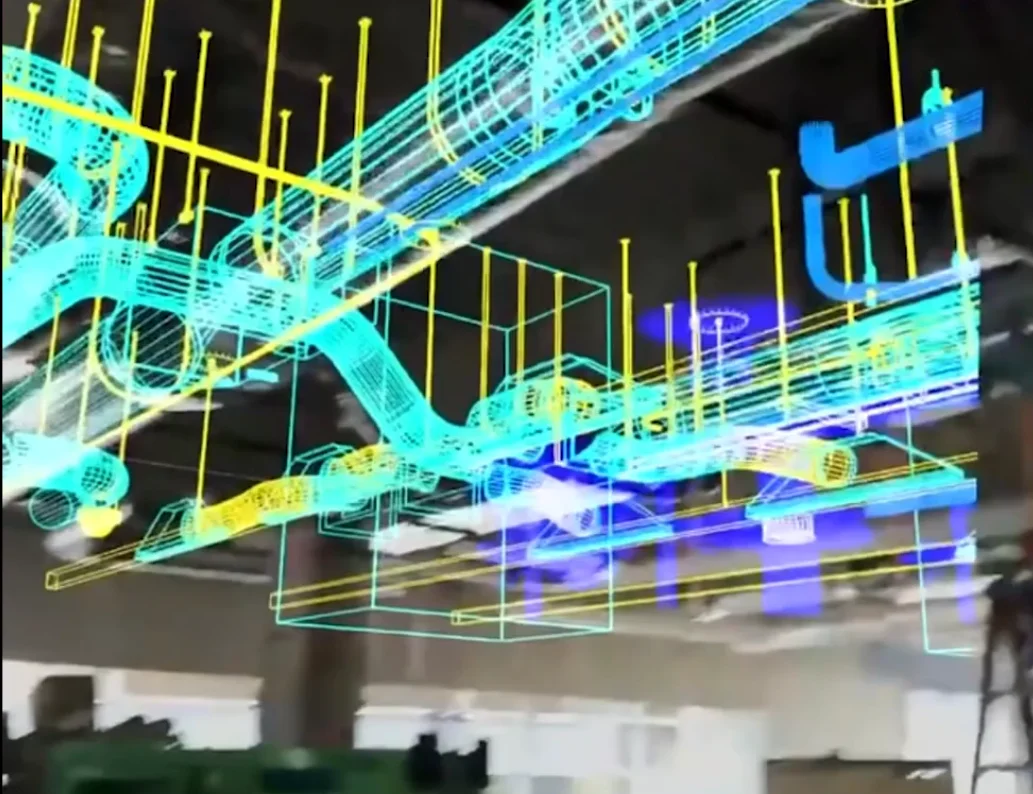
- 3D model of the equipment — an accurate digital twin of the robot and its components. The employee can see how to unscrew a fastener, remove a cover, or replace a part before even picking up a tool.
- AR content for tablets and smartphones — an application or module that runs on standard devices. The specialist doesn't need to learn new software: point the camera — and see the prompts right on the equipment.
- Integration with your systems — connection to the instruction database, spare parts warehouse, or accounting system. The worker gets up-to-date data in a single window, without switching between programs and paper logs.
- Administration panel — you can update scenarios yourself, add new operations, and manage employee access. No developers needed: the interface is clear to a technologist or engineer.
- Update rights — specified in the contract. Content is kept current when procedures change, new models come out, or components are replaced, and you don't have to pay again for basic setup.
- Team training — instruction for technologists and engineers so they can adjust scenarios and add new operations on their own, without contacting us.
This package removes the key implementation risks: employees work to a single standard, and the time spent searching for the right information is cut many times over.
All we need from you is access to the equipment and procedures — then we'll assemble the solution, handle the integration, and hand over access to your team.
Case Study: How an AR Instruction Accelerated Robot Repair
When a robot stops on the assembly line, it's not just a breakdown — it's a halt of the entire production cycle. Every hour of downtime costs the plant serious money, and waiting for an external specialist can stretch into days.
This is felt especially acutely at facilities that operate KUKA industrial robots — the equipment is complex, and rapid diagnostics require rare expertise.
We solved this problem with an AR instruction for one automotive components plant. The facility operated 14 KUKA robots, and a typical repair took 6 to 8 hours: first a mechanic searched for a diagram in paper documentation, then spent a long time cross-checking components.
We digitized the process and overlaid step-by-step prompts directly onto the robot body via a tablet — the specialist can see which component to remove and in what order.
Implementation Results
The effect was noticeable within the first month. Average repair time was cut in half — from 7 to 3.5 hours. An operator with basic experience, following the AR prompts, now handles tasks that previously required calling in an engineer from another city. Repeat service calls for the same components dropped by 40% — there were fewer assembly errors.
We work on the Vision AR platform — it lets us quickly adapt instructions to a specific robot model and update them without stopping production.
Implementation took three weeks: we didn't change existing processes, but supplemented them with digital prompts that run on employees' standard tablets.
The numbers speak for themselves: the plant reduced downtime losses by 30% across its entire equipment fleet, and the repair crew no longer depends on rare specialists.
We're ready to show you how an AR instruction would work on your specific equipment — we'll send a demo scenario for your robot model within two days.
What If I Have Specific Requirements for an AR Instruction?
That's a standard situation. Specific requirements aren't the exception — they're the rule: every production facility has its own procedures, safety standards, and maintenance specifics.
We structure our work from the start to adapt the AR instruction to your equipment and procedures, not to force your processes into a template. Technical specifics are accounted for from the outset — this is built into our approach.
Adaptation begins with studying your documents: together with your technologists, we review process sheets, occupational safety instructions, and the list of operations.
Then we design a scenario with the component names, action sequences, and control points that your employees understand. Custom solutions can include non-standard formats — from markers on specific parts to step-by-step checks with confirmation at every stage.
If needed, we create several versions of the instruction — for newcomers and experienced mechanics, for noisy or poorly lit environments, accounting for personal protective equipment requirements.
Every instruction is tested on your equipment or its digital twin. After deployment, we collect feedback from mechanics and operators and refine the scenario. The result is an instruction that actually saves time and reduces errors — not just a flashy demonstration. All revisions during the testing phase are included in the cost, so you don't risk your budget.
Tell us about your requirements at a consultation — we'll suggest adaptation options, show examples of similar solutions, and calculate timelines.
We constantly work with non-standard requests, so we take on complex tasks without unnecessary approvals and bureaucracy.
Frequently Asked Questions About AR Instruction Implementation
We understand: before entrusting us with AR instruction development for industrial robots, you want to address your main concerns. So we've gathered answers to the most common questions — about cost, compatibility, implementation complexity, and guarantees. If you don't find yours, ask us directly — we respond within one business day.
How much does AR instruction development cost?
The cost depends on the scope of operations to be described and the complexity of the equipment. After a short brief, we give you an exact figure — with no hidden extras. You receive an estimate with stages and timelines, and the final price doesn't change along the way.
Will it work with our equipment?
We work with various models of industrial robots and machine tools: we create 3D models from your documentation or digitize the equipment on site.
You don't need to buy additional hardware — the AR instruction opens on standard tablets or glasses already available on the shop floor.
How hard is it for employees to adapt?
The AR instruction shows prompts directly on the real object: the employee sees where to press, what to unscrew, and in what order. Learning takes a couple of hours, and for complex operations, training time is cut many times over compared to paper manuals.
What guarantees do you provide?
We put target metrics in the contract: reduced time per operation, fewer errors. After launch, we stay in touch and update content when procedures change. Each project gets a dedicated manager responsible for timelines and results.
Still have questions about implementing AR instructions for industrial robots? Write to us — we'll find a solution for your task and prepare a transparent commercial proposal.Submit a Request for AR Instruction Development
Submitting a request isn't a commitment — it's a way to get an accurate answer on whether an AR instruction is right for your industrial robot. We'll analyze your task ourselves, show examples, and give you timelines. You don't need to understand the technical details — just tell us how maintenance currently works.
After you reach out, you'll receive a personalized analysis of your situation and concrete solution options. This is free and non-binding: even if we determine that an AR instruction won't deliver the desired effect, we'll tell you honestly.
What's included after you submit a request:
- Consultation with our engineer: they'll review your maintenance scenario and identify where AR will deliver the most impact.
- Equipment assessment: whether it's suitable for instruction overlays, and which zones and components should be included.
- Development timeline estimate: from a short pilot version to a full instruction library.
- Commercial proposal with fixed cost and stages — with no hidden extras.
- Demo access: you'll see how a completed AR instruction works on a tablet or smartphone before making a decision.
- Format recommendations: tablet, phone, or glasses — whichever is most effective for your employees.
- A personal manager who runs the project and answers questions at every stage.
Submit a request right now — it'll take a minute. We'll get back to you within one business day, answer your questions, and prepare an estimate.
This way you'll understand how much time and budget implementation will require, and you can plan your instruction updates with confidence.