

X-ray equipment breakdowns stop the plant — what to do?
An X-ray machine is not just expensive equipment, but a critical link in the production line. When it fails, it's not just one area that stops — the entire quality control cycle comes to a halt, along with shipment of finished products.
Every hour of downtime means unproduced batches, broken contracts, and direct financial losses that grow exponentially.
The problem is compounded by the fact that servicing such machines is a rare competency. A specialist cannot always quickly find the fault, especially when it comes to a non-standard breakdown.
While someone searches for the right section in a paper manual or waits for an external repair technician, the plant loses money. Instead of planned maintenance, there is forced downtime, and emergency repairs almost always cost more.
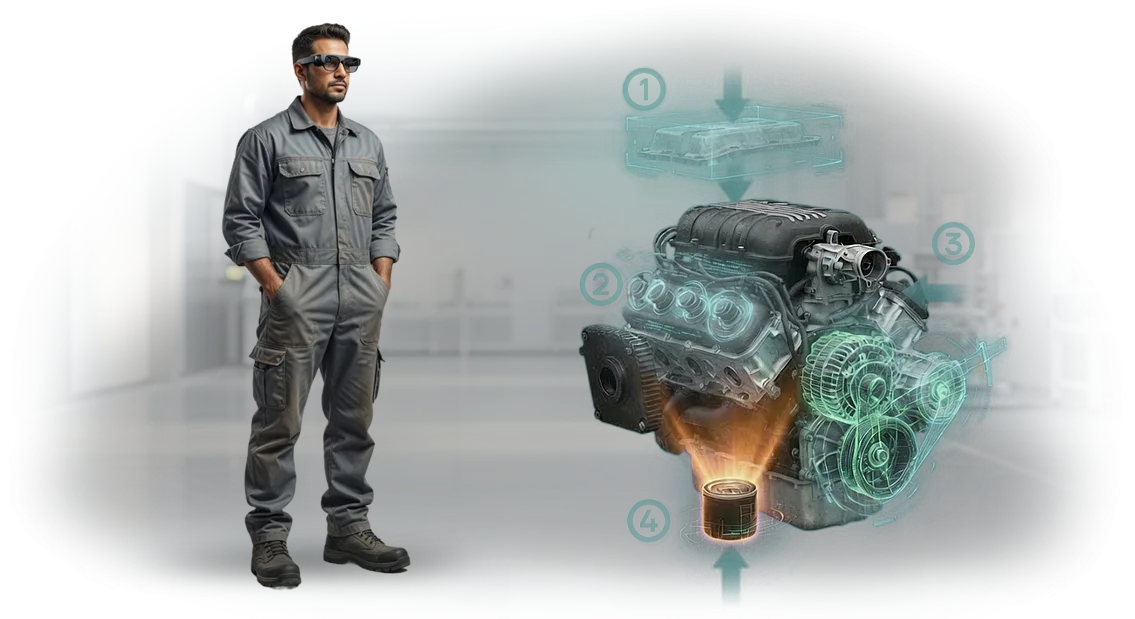
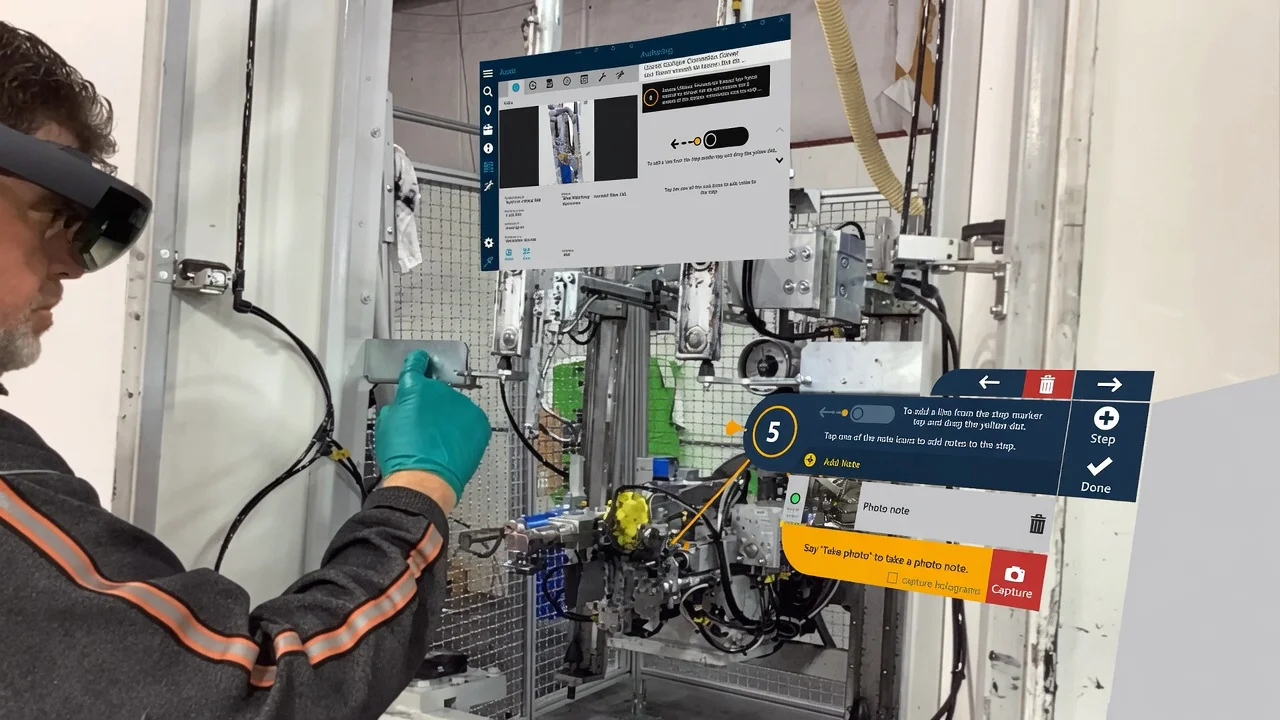
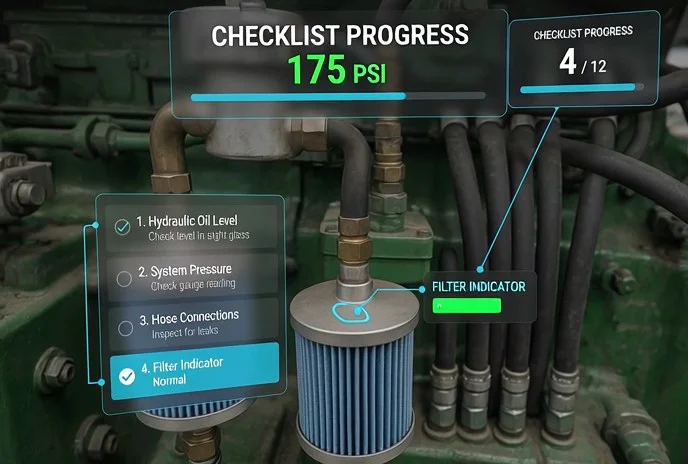
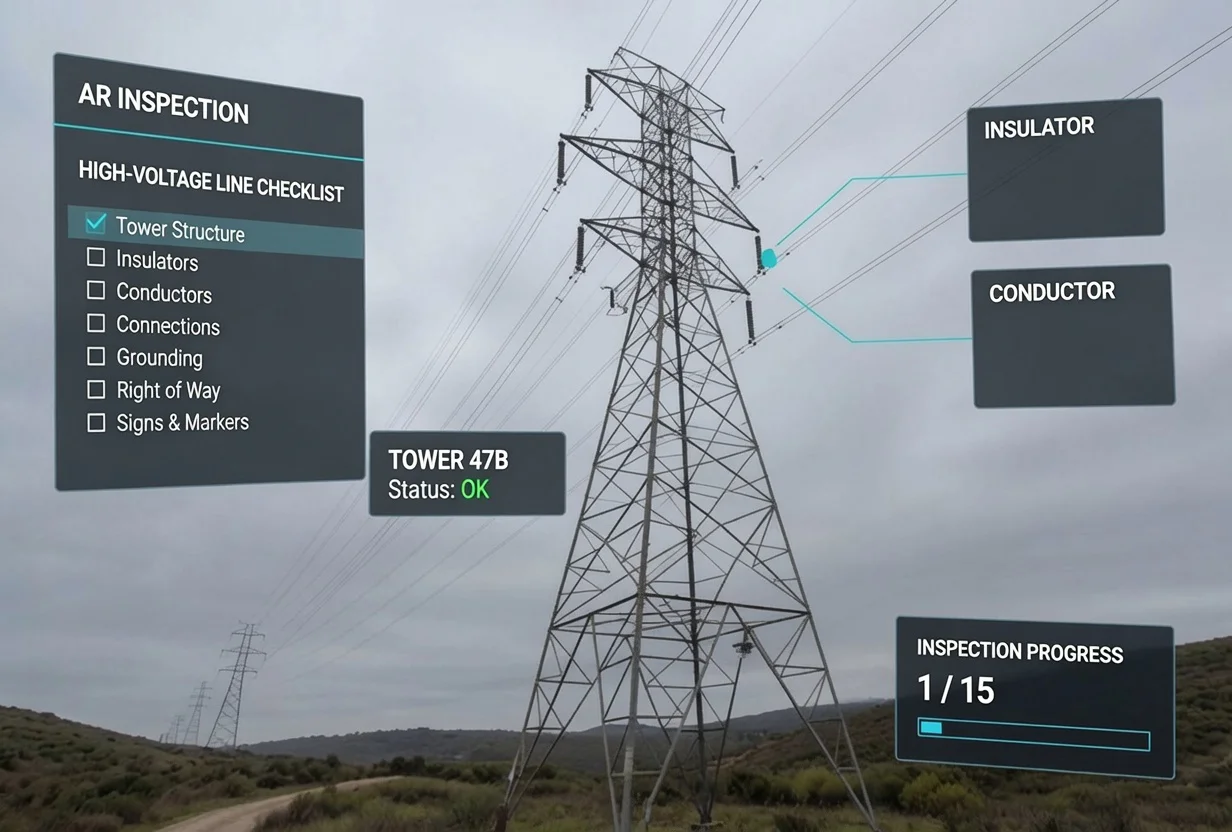
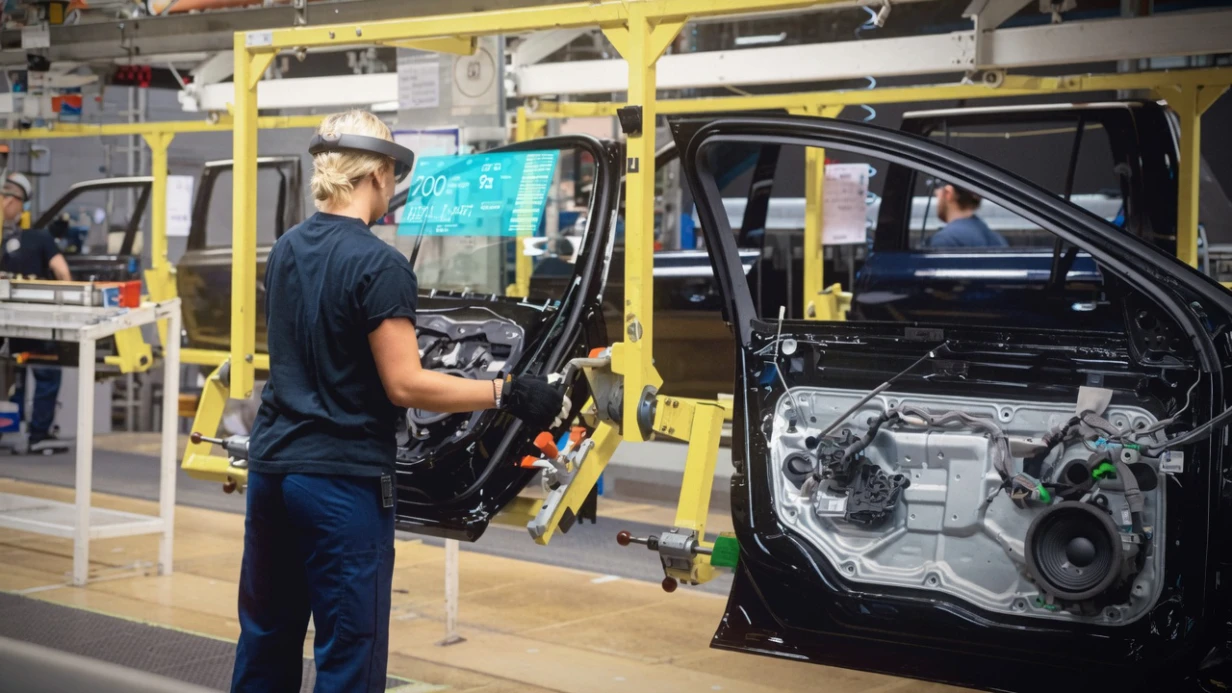
We close this gap with AR instructions. Instead of hundreds of pages of technical documentation — step-by-step prompts that overlay onto the real equipment through a smartphone or tablet screen.
The specialist sees which component to check, in what order to unscrew the fasteners, and what to pay attention to — and performs the repair accurately the first time.
This reduces maintenance time significantly: equipment returns to service within a shift, rather than after a week of waiting for a service crew. Fewer downtime incidents — more stable output, higher revenue, and calmer management.
This is how AR instructions turn repairs from a source of losses into a managed, predictable process that no longer slows down production.
Benefits: faster repairs, less downtime, higher team qualification
Any X-ray machine stoppage means a disrupted diagnostic schedule and losses while a service engineer searches for a diagram or waits for a senior specialist's consultation.
AR instructions solve this problem: the technician sees prompts right on the equipment components and performs the repair following a clear scenario, without guesswork or unnecessary actions.
Here is what changes for service and production teams after implementation:
- Repair speed increases significantly — no need to flip through manuals or call more experienced colleagues, all steps are right before your eyes.
- Equipment downtime is reduced — the machine returns to service faster, the diagnostic plan is not disrupted.
- Training of new employees accelerates — a trainee masters complex components with visual AR prompts, without distracting a mentor from work.
- Service quality becomes consistent — all engineers act according to the same algorithms, regardless of experience.
- Fewer errors during disassembly and assembly — animated indicators warn about critical moments and fragile parts.
- Higher work safety — the instruction reminds about risks and the correct sequence, especially when working with high voltage.
The team at our team has already converted dozens of industrial equipment procedures into AR, so you get not an "experimental prototype," but a tool engineers actually use.
Implementation takes from two weeks, and the effect is visible in downtime hours and service response speed from the first month.
AR instruction formats for enterprise tasks
Each enterprise solves different tasks when servicing X-ray equipment: some need a strict step-by-step procedure for the duration of a repair, others need quick on-site fault localization, and others need safe preparation of new employees.
We develop AR instructions in three basic formats that cover these scenarios and adapt to the real workflow.
Here is how augmented reality formats are applied in industry and what exactly the customer receives:
| Format | For whom | What it gives the client |
|---|---|---|
| Interactive instruction | Service engineers and repair crews | Step-by-step overlay of prompts onto real equipment: faster disassembly and component replacement, fewer missed operations |
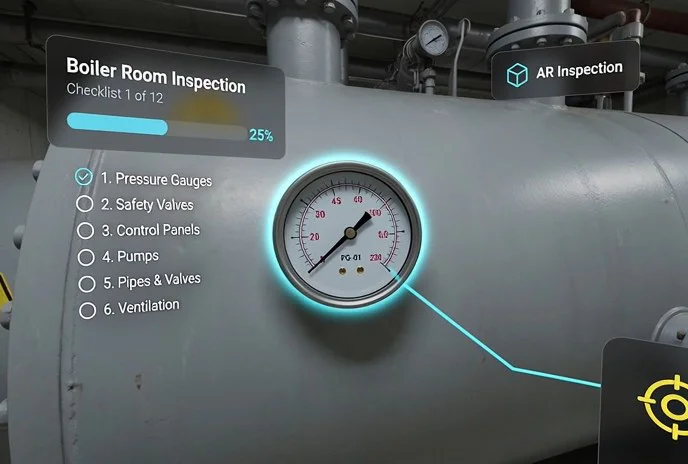
| Mobile guide | Personnel performing daily checks | Points the camera at the machine and shows checkpoints: diagnostics speed up, the risk of "human factor" decreases |
| AR simulator | Training centers and training departments | Practice of complex operations without real equipment: new employees learn safely, without risk of damaging equipment |
This division allows implementing not some "far-fetched technology," but a working tool for a specific pain point of the enterprise. The formats are easily combined: for example, a mobile guide for daily inspection and an interactive instruction for planned repair.
We design the interface so that the specialist spends more time on the actual work, not on deciphering text instructions. As a result, the enterprise gets predictable maintenance of X-ray equipment and fewer unplanned downtime incidents.
Project stages: from brief to training your team
Each project starts with understanding your task and ends with a working system that your team uses without guidance.
We have come a long way from brochures to AR instructions for X-ray equipment across dozens of production sites, so we have structured project stages so that every step is transparent and understandable.
- Brief and immersion. We discuss goals, pain points, and frequent specialist errors. We study procedures and existing instructions — this is the foundation of all scenarios.
- Equipment and scenario audit. We visit the site or work from your materials. We record real operations and priorities: which AR instructions will deliver quick results.
- Design. We assemble the step logic, checkpoints, and prompts. We agree on the interface mockup — you see how a technician will work with a tablet or smart glasses.
- Development. We create graphics, animations, and interaction logic. We use professional tools so that instructions work reliably on your equipment without constant revisions.
- Pilot operation. A pilot at one or two areas. We collect feedback from technicians and adjust scenarios before the full-scale launch.
- Implementation into regular work. We load instructions into your system and configure access by role: technician, engineer, mentor. We organize material updates.
- Training your team. We conduct training for internal instructors and users. We hand over materials for self-study and provide support during the trial period.
What's included in the delivery: a kit for service and operation
After project completion, you receive not just "files," but a ready-made working kit that immediately integrates into service and operation processes.
Everything is packaged so that a technician on site and an engineer in the office use the same data — without unnecessary approvals or "makeshift rework."
Here is what's included in the delivery:
- AR instructions for key operations — step-by-step maintenance and repair scenarios for X-ray equipment that are displayed directly over the real object. The technician sees where to press and what to unscrew without opening paper documentation.
- Source files and editable materials — if the procedure changes, you can update the instruction with your own team or order an update from us. No "black box" that only works at the contractor.
- Regulations for using AR in service — defined roles, action sequences, and areas of responsibility. It's clear who updates content, who monitors execution, and how technician feedback is recorded.
- Service team training — a practical session where your specialists review scenarios on real equipment. Not theory "for show," but practice until a confident result: an average technician masters the interface within one working day.
- Brief instructions for operators — if the X-ray machine requires regular actions from personnel (daily checks, consumable replacement), these scenarios are also covered with AR prompts.
- Technical documentation package — installation instructions, device requirements, and a list of supported models. Your IT department won't have questions about "how to deploy this."
- Technical support channel during the implementation period — we answer service department questions and help adapt content to new equipment modifications.
We work with professional equipment and use refined development tools, so the delivered kit works reliably on the tablets and smartphones your engineers already have. You won't need to purchase additional hardware.
This approach addresses the main pain point of service departments — the gap between the paper procedure and real actions on site.
The technician doesn't guess "what's the best way," but follows a proven scenario, which reduces repair time and lowers the risk of errors when servicing expensive X-ray equipment.
Case study: reduced X-ray equipment downtime by 40%
We implemented AR instructions at a production site of a major medical equipment manufacturer.
Previously, repairing X-ray equipment took from 6 to 12 hours: the technician waited for a narrow specialist to arrive, searched for documentation, and figured out non-standard breakdowns.
Downtime of the diagnostic line was costly — every extra day of downtime delayed product output and created contract risks.
The team at our team developed step-by-step AR instructions directly on the machine housing. The technician points a tablet at a component — and sees highlighted parts, the sequence of actions, acceptable force levels, and checkpoints.
This made it possible to perform component replacement and adjustments with in-house specialists, without waiting for an external engineer.
The results were measured after two months. Repair time for typical faults decreased by 40% — from 5 to 3 hours. The number of assembly errors dropped almost threefold, and the success rate of first-attempt repairs rose to 95%.
The client's service department head confirmed: "Previously, we lost up to two working shifts on a single breakdown. With AR instructions, repairs became predictable, and we've already applied this approach to other equipment."
For the customer, this means stable production utilization without downtime and independence from rare specialists. The implementation effect paid off within the first quarter: reduced repair time directly increased product output.
After the pilot project, the client ordered the AR instructions scaled to three more equipment lines.
How to choose an AR instruction format? Comparison table
Choosing an AR instruction format comes down to one question: what matters more to you — speed of implementation or maximum depth of employee training.
There is no universal answer, but there is proven logic: the more complex the operation and the higher the cost of error, the more "immersive" the AR instruction needs to be.
For routine maintenance of X-ray equipment, where an error means machine downtime or a safety threat, we usually recommend starting with detailed step-by-step scenarios.
It's useful to compare options by three criteria: who you are training, how often procedures change, and what result you put into KPIs — operation speed or error rate reduction. Below is a table of the three typical scenarios we work with most often.
| Format | For whom | What it gives the customer |
|---|---|---|
| Full AR instruction with step-by-step diagram overlay on equipment | New employees, operators without experience with a specific model | Reduced onboarding time and fewer errors during first independent operations |
| AR prompts over a paper procedure | Experienced specialists who need backup in rare operations | 20–30% faster work without retraining staff, lower risk of skipping a step |
| Hybrid format: AR for complex components + regular step numbering | Mixed crew, staff turnover | A single standard for performing operations: a beginner sees details, an experienced specialist sees only key checkpoints |
If you are unsure about the choice, start with an analysis of breakdowns and claims: most often problems occur in the 3–5 most complex operations. For those, AR prompts are enough, not a full instruction.
At the start, we conduct such an audit free of charge and bring a ready format outline tailored to your specifics — so you can see the cost, timeline, and result before development starts, not after.
FAQ: reliability, timelines, and implementation complexity
Customers often ask how safe it is to implement AR instructions and whether production will need to be stopped during launch. Our team have been developing AR instructions for industry for over 10 years and know what concerns customers have. Below are brief answers to the main worries: reliability, timelines, and implementation complexity.
Does the technology affect the operation of the X-ray machine itself?
No. AR instructions work as a separate layer: the employee sees prompts on a tablet or headset screen, and the system does not connect to the equipment controls. Therefore, any diagnostic failures are ruled out.
Behind us are dozens of successful projects for enterprises with high safety requirements. We use professional industrial devices proven on shop floors.
How long does implementation take?
Usually from two to four weeks from the moment the brief is approved. Within a week, you'll receive a working version of one instruction for testing on a real site. The full set for all operations is delivered together with employee training. The exact timeline is calculated after analyzing your procedures.
How difficult is it for staff to adapt?
Minimally. Training takes 15–20 minutes: the employee gets used to following visual prompts instead of flipping through a paper procedure. The interface is specifically designed for shop floor conditions, including work in protective gloves. Familiar paper instructions remain — the transition is smooth.
What happens after launch? Who updates the instructions?
We take on the support ourselves. If maintenance procedures change, just send the new data — we will promptly update the digital instructions so they always meet current requirements. Warranty and support terms are specified in the contract.
Want to see how it works in practice? Request a demonstration on your equipment — it will help address concerns and accurately calculate timelines for your project.Leave a request — get an AR instruction implementation plan
To understand how AR instructions will affect X-ray equipment maintenance, you don't need to understand the technology. Just request an implementation plan: we will analyze your processes and show where you'll save time, reduce errors, and speed up specialist training.
This is not a general presentation — we'll review your specific situation and propose solutions for your tasks.
The implementation plan includes a step-by-step route for your task:
- a list of operations we'll convert to AR format — from routine maintenance to troubleshooting;
- an assessment of how instructions affect repair speed, downtime, and training costs;
- format options: tablets, smartphones, or industrial glasses — without being tied to a single solution;
- implementation stages with clear timelines and responsible parties for each step;
- equipment and staff preparation requirements — everything that needs to be done in advance;
- result criteria by which you can evaluate the effect after launch.
Leave a request — within one business day we'll contact you, clarify the details, and prepare this plan free of charge. You'll get clear next steps and understand whether the format suits your production.
We've been working with industrial equipment for over ten years, so the plan will account for your industry's specifics. The decision will remain yours — no obligations and no pushy sales.