

Why silo complex maintenance drags on and gets more expensive
Maintenance of a silo complex is always a strict procedure: any mistake in diagnostics or repair can stretch downtime from hours to days. And every hour of stoppage means underproduced goods, disrupted shipments, and extra repair costs.
Meanwhile, classic paper instructions become obsolete already at the installation stage, and experienced specialists who knew the equipment "by touch" are retiring with no one to replace them.
The shortage of qualified personnel forces companies to bring in external contractors or allow less experienced employees to perform work. They spend time searching for the right diagram, argue about the sequence of operations, and risk damaging expensive components.
As a result, repairs cost more than planned, and downtime of silo equipment becomes a regular item of losses.
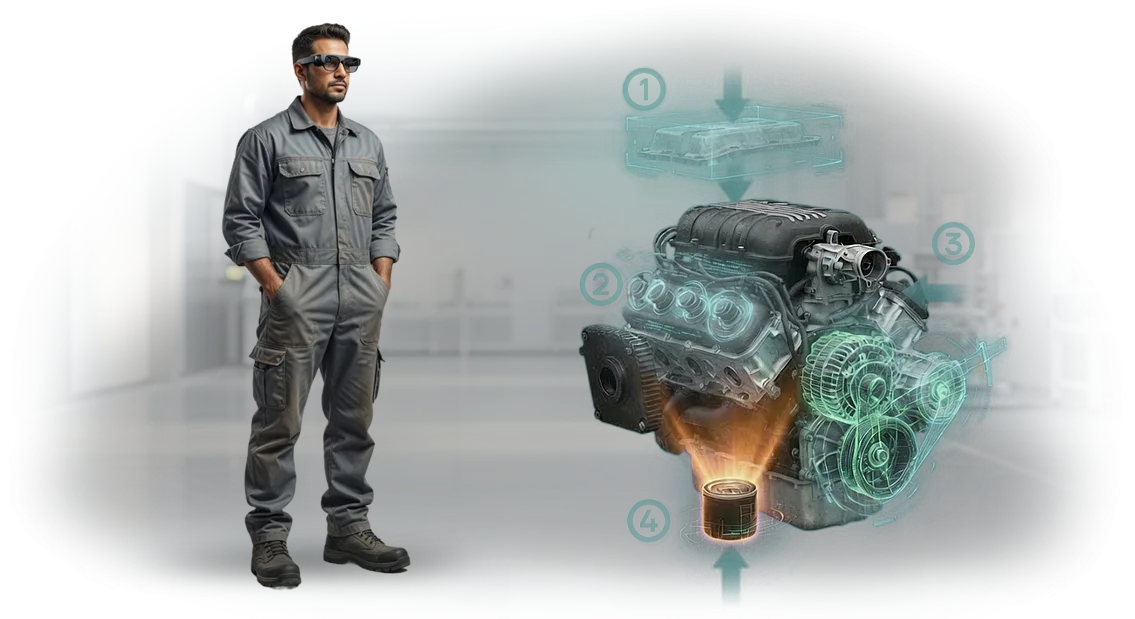
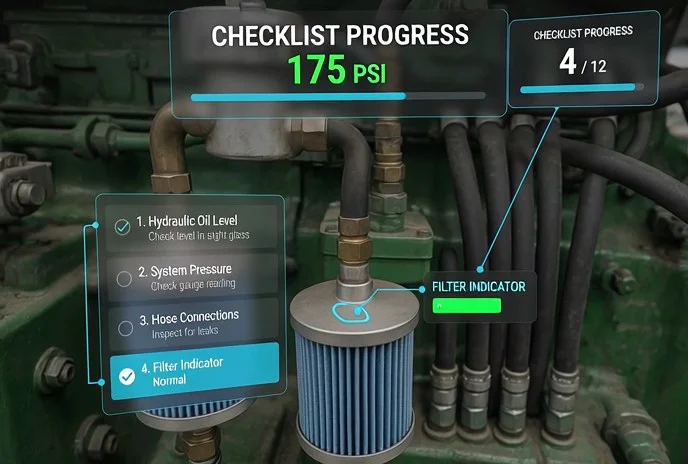
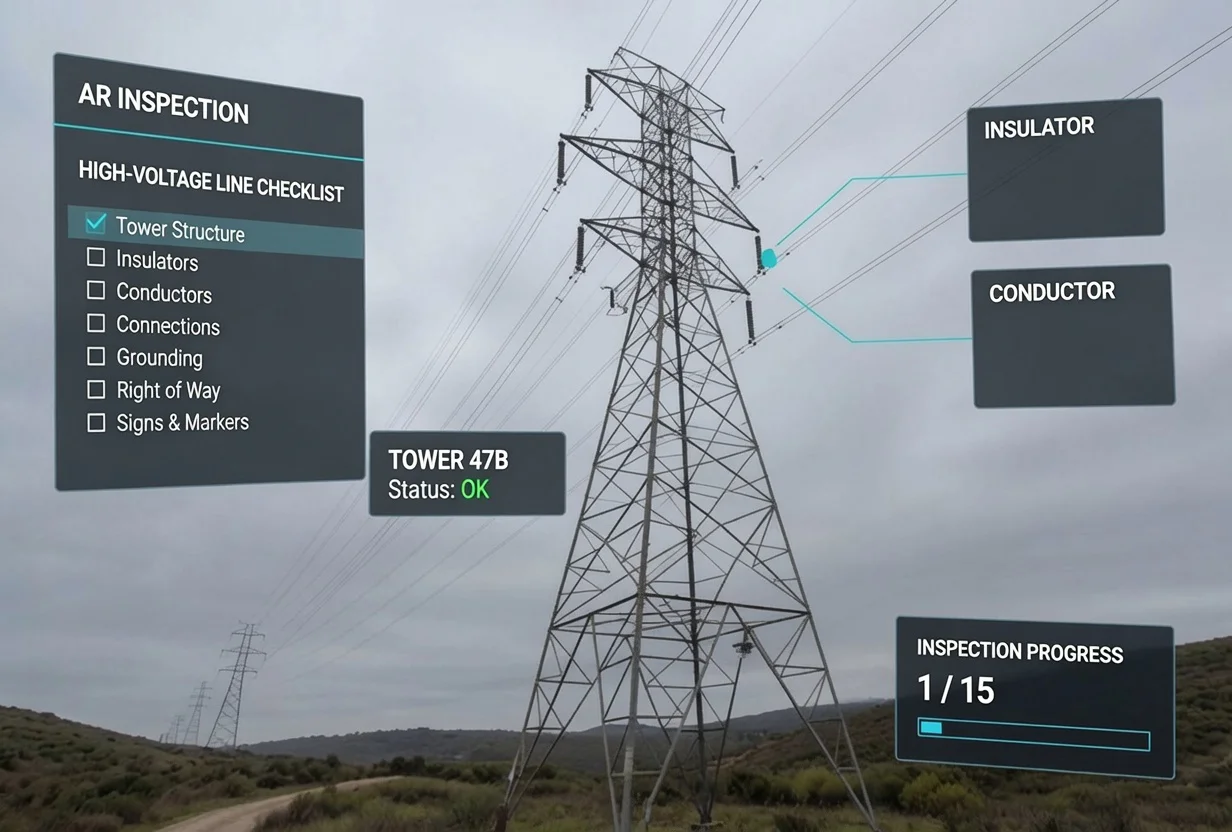
We address this pain point: we move maintenance into augmented reality, where a step-by-step instruction is overlaid directly on the mechanism.
The employee sees where to place the tool and which part to unscrew — without reading volumes of documentation and with no room for error. This cuts downtime and reduces repair costs, even when a novice is working.
How AR instructions save time and reduce staff errors
Training personnel to maintain silo complexes is a long and costly process: just understanding the equipment layout takes weeks, and the first independent repairs are still accompanied by mistakes.
Every wrong step means equipment downtime, risk of component damage, and extra expenses for fixing the consequences.
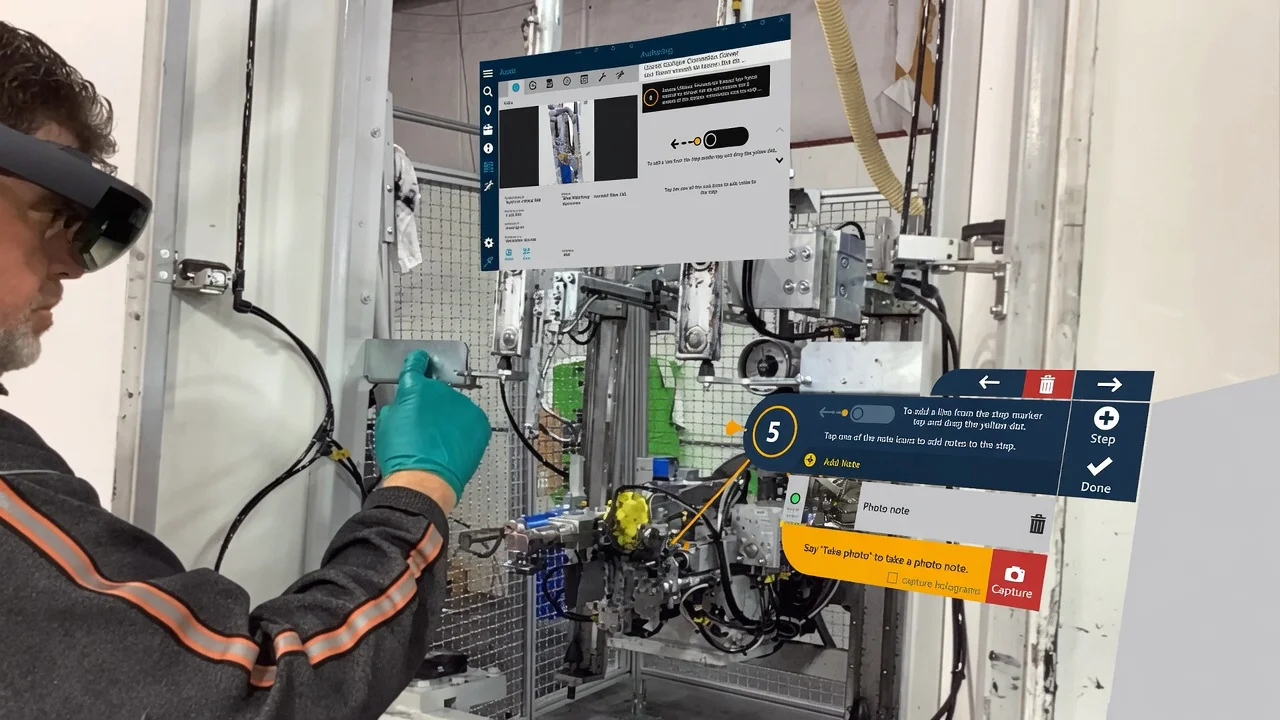
AR instructions solve this problem: staff see step-by-step prompts directly on the equipment, not in paper regulations.
The time to get new employees up and running is reduced by 2–3 times, and the number of errors during repairs drops by a third — this is confirmed by our practice at facilities with dozens of pieces of equipment.
What changes with AR instructions
| Format | For whom | What it gives the client |
|---|---|---|
| Training new employees | Mechanics, operators | Independent work in days instead of weeks |
| Planned maintenance | Service teams | Fewer missed components, stable work quality |
| Complex repair after breakdown | Repair services | Fast diagnostics and precise sequence of actions |
| Audit and quality control | Managers | See exactly what the employee checked and where they deviated |
We work with professional equipment and proven development tools — the client gets a stable, reproducible result rather than an experimental solution. We use our team for quality assurance: every project is tested on real equipment before delivery.
Business results
The speed of bringing employees into operation increases, because a novice does not search for answers in instructions and does not call a mentor — the prompt is already before their eyes.
Service quality becomes predictable: repairs follow a single standard, regardless of the individual employee's experience. And reduced downtime directly affects production volumes.
AR instruction formats for your production tasks
For silo complex maintenance, both reaction speed and freedom from errors are equally important. But there is no universal instruction: a procedure for an operator is one thing, an emergency repair or commissioning is another.
That is why we offer three AR instruction formats that cover tasks of any scale — from a single line to an entire equipment fleet.
| Format | For whom | What it gives production |
|---|---|---|
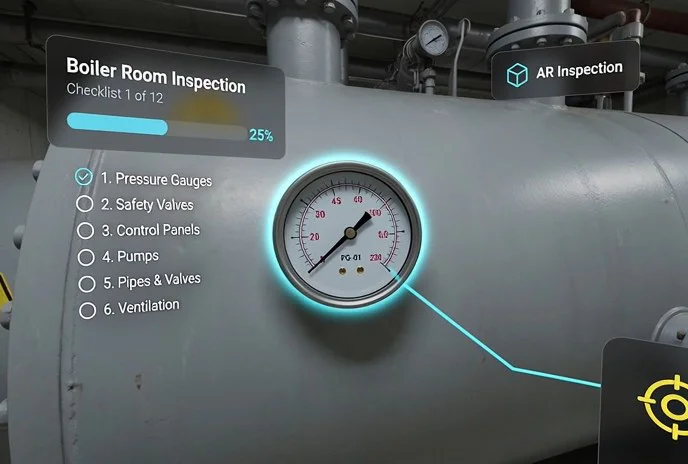
| AR cards (2–5 steps) | Line staff, silo operators | Quick on-screen prompt: how to remove a plug, check a valve, switch mode. Reduces the risk of errors in routine operations. |
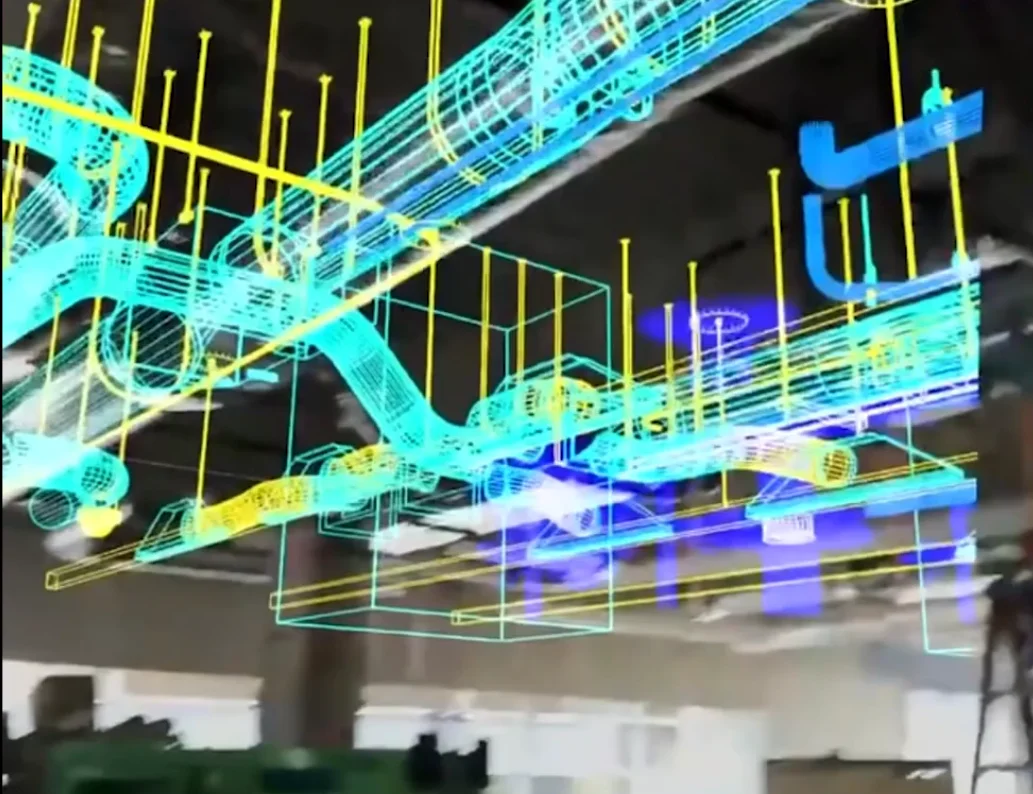
| Interactive 3D schematics (assemblies and parts) | Repair crews, mechanics | Show the internal structure of the silo complex: access to a filter or bearing without disassembling half the installation. Less downtime, precise repairs. |
| Full AR guide with animation and control | Engineers, commissioning, training | Step-by-step support for complex operations: replacing an air slide, adjusting the discharge system. The system checks every action and does not let you miss a key moment. |
The choice of format depends on production scale and staff skill level. For a small line, cards are enough — they can be deployed in a matter of days on regular tablets.
If you have several silo complexes or high staff turnover, 3D schematics and a full guide pay off faster: new specialists get into the workflow without a mentor, and experienced staff spend less time on logs and drawings.
In any case, we start with an audit of your technological processes and select the format for a specific operation. You get not "just AR" but instructions built into your maintenance system: with your regulations, sequences, and safety standards.
How instructions for silo complexes are developed
Developing AR instructions for silo complexes is a process that must be transparent for the client. We have built clear implementation stages so that at every step you know what is happening and can control the result. Below are the key stages: from brief to support.
- Brief and audit — we record the tasks: which units, assemblies, and regulations need to be covered. You receive a work plan and preliminary timeline estimate before the start.
- Project approval — we show the structure of future instructions, usage scenarios, and presentation format. You approve the technical specification and understand exactly what you will get at each access level.
- Development and content creation — we create step-by-step instructions based on your documentation and real operating conditions. Specialists verify the logic of the steps on silo complexes to eliminate ambiguity.
- Pilot project — we implement the instructions on one site or line. Mechanics and operators test them in real work, we collect feedback and make adjustments before full launch.
- Training and launch — we conduct short training sessions for employees, prepare quick reference guides, and hand over administrative access. Implementation takes place without stopping production processes.
- Support and updates — when regulations change or equipment is modernized, we update the instructions and ensure they remain relevant.
What is included in the delivery of AR instructions
After implementation, you receive not just an AR application but a complete working kit that employees can use on the launch day. All materials are packaged and delivered with an operating manual — you don't need to refine or figure out anything.
- Full delivery list: scope of work, file list, and instruction placement logic — so you know exactly what is where.
- Documentation set: technical description, usage regulations, and update procedures — for the operations department and internal control.
- Methodological materials: employee training scenario, quick reference guides, and checklists for a fast start without long onboarding.
- AR instructions for each equipment unit: step-by-step maintenance and repair scenarios in augmented reality format.
- Administrative access to the content management system: you can make changes to texts and prompts without contacting developers.
- Ongoing instruction updates: when regulations or equipment composition change, updated versions are delivered within agreed timeframes.
- Post-launch support: communication channels, priority support, and data backup.
The entire delivery is adapted to your maintenance regulations and departmental structure. This answers the question "what did we get and how do we use it" — you have a single kit that can be transferred to any workshop or branch. If necessary, the list of materials expands to cover new equipment units.
Case study: how we accelerated equipment repair in production
For a compound feed manufacturer, repairing silo complexes always means stopping the line. Every hour of downtime means an unmet plan and disrupted customer shipments, so the most experienced engineers are dispatched to help the crews while other facilities wait.
We proposed converting the regulations into AR instructions so the operator could see the sequence of operations and control points right at the facility.
Project results
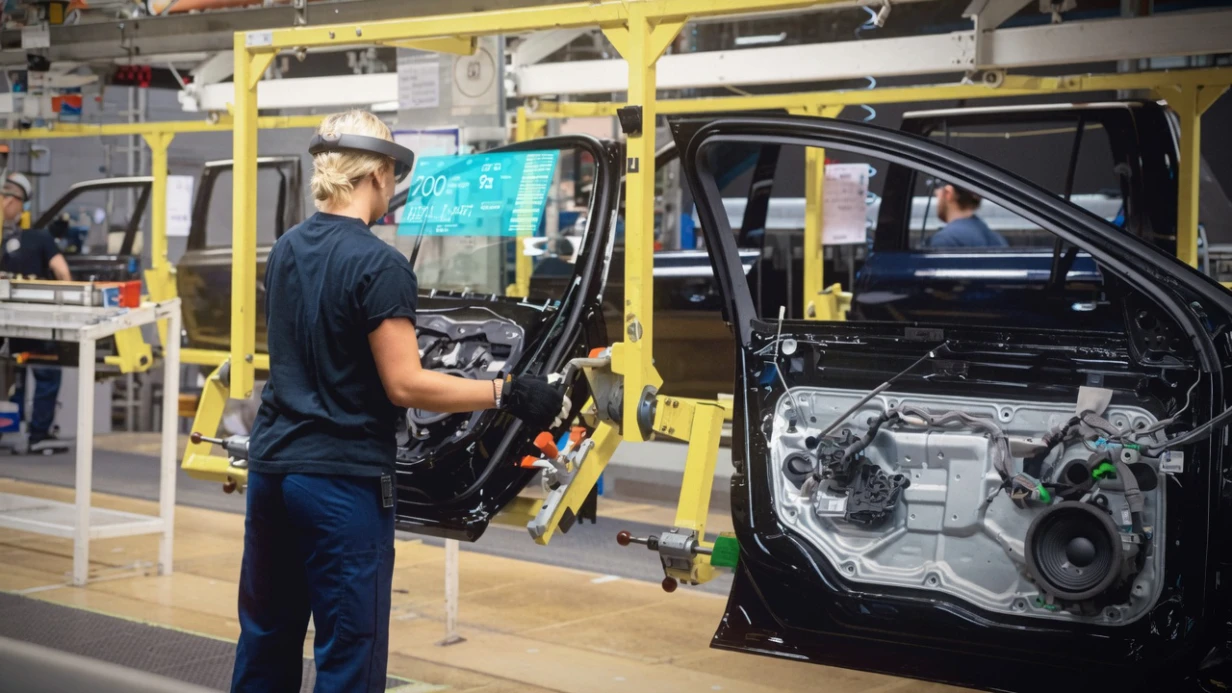
We implemented the first pilot area in the maintenance of silo complexes at the AgroProm holding. A mechanic put on the glasses, opened the instruction, and disassembled a unit with prompts tied to real parts.
The need to flip through paper regulations and constantly clarify details with a mentor disappeared immediately.
- repair time was reduced by 30% — the crew returned the silo to operation faster;
- the number of assembly errors dropped by a quarter — fewer repeated disassemblies and rework;
- onboarding of a new mechanic was twice as fast — the instruction replaces a partner on site.
The time savings produced a measurable effect: downtime decreased, processing volumes grew, and the shipment schedule stopped slipping due to prolonged repairs.
Payback and project expansion
The client assessed the result from a business perspective: the project paid for itself through reduced downtime losses already in the first season.
After the pilot, the company extended the format to all silo complexes and ordered instructions for scheduled inspections — to prevent problems before they stop production.
This is a classic implementation case: we don't "sell technology" but solve the client's problem — we reduce repair time and make maintenance predictable.
We are now replicating this same approach across other sites: replacing assemblies, adjusting automation, emergency shutdowns.
The more instructions are converted to AR, the less production depends on the experience of a specific specialist and the faster the service department responds.
Answers to frequent questions about implementing AR instructions
Before ordering AR instructions for silo complex maintenance, managers typically have doubts: will the solution fit already installed equipment, how much does it cost, when will it be ready.
We have been implementing such projects for ten years and have collected answers to the most frequent questions — so you can make a decision quickly and without unnecessary negotiations.
Below are typical client concerns and how we resolve them in practice.
What equipment are AR instructions compatible with?
We work with most types of industrial equipment: silos, conveyors, transporters, valve systems, level sensors. To prepare an instruction, it is enough to have technical documentation or a short walkthrough of the facility.
There is no need to specially modify the "hardware" — employees use tablets or smartphones that are already available at the enterprise. If necessary, we adapt the scenario to a specific model.
How much does it cost to develop AR instructions?
The cost depends on the number of components, the complexity of the operations, and the volume of source documentation. We provide the exact cost after a brief and a short audit of the facility.
This is a one-time investment that pays off through reduced downtime, fewer staff errors, and faster onboarding of new employees. Almost all of our clients order a second and third instruction after the first because they see the real effect.
What are the project timelines?
A typical project takes two to four weeks depending on the number of operations. First we collect the brief, then prepare a plan, approve it, and only then implement. At every stage you see intermediate versions, so the process is completely transparent. If you need an urgent launch, we deliver the pilot module faster.
What to do if documentation is outdated or missing?
Documentation is often scattered across paper folders or does not reflect the actual actions of personnel. We do not create instructions "out of thin air": we go to the site, record the actual techniques employees use, and take them as a baseline.
As a result, the AR instruction matches how your specialists actually work, but with a safe and efficient sequence of operations.
Order AR instruction development today
Maintenance of silo complexes requires precision and speed. Every mistake in repair or adjustment means downtime, risk to personnel, and additional costs. AR instructions allow an employee to see prompts directly on the equipment and act without errors.
We develop AR instructions for your equipment. To understand what effect this will bring specifically to you, we conduct a free audit: we study the components, typical operations, and real "bottlenecks" of your service.
After the audit, you receive a concrete development proposal — without "fluff" or abstract promises.
When you order development from us, you get not just an instruction file but a working tool for your crew. Here's what the project includes:
- assessment of equipment and selection of scenarios where AR provides maximum effect;
- a prototype instruction on one of your components — you see the result before full launch;
- implementation on your silo complexes and employee tablets;
- instructions for every maintenance stage: from daily inspection to complex repair;
- staff training and support during the first work shifts;
- support and updating of instructions when regulations change.
This allows you to quickly implement AR instructions and start saving already in the first weeks. You can order development right now: leave a request, and our engineer will contact you for a consultation.
We will answer your questions, show examples, and propose a format that fits your budget and timeline.
How to choose the right AR instruction format?
There is no universal AR instruction format — it depends on the task the employee is solving and the equipment they work with. This is especially important for silo complexes: you have your own components, regulations, and operating conditions.
That's why choosing a format starts not with technical specifications but with answering questions: where does the maximum number of errors occur, how often and how quickly must equipment be serviced, what skill level does the staff have.
We look at the specifics of the equipment and the real work process. For example, a complex component that is disassembled once a month is well served by a step-by-step format with detailed anchoring to each part.
For a daily check, a short instruction that shows the sequence in a minute and does not distract from work. For training novices, a different format with explanations and verification of correct actions.
This approach covers the main thing: the employee receives information exactly when and in the form they need it.
We also take into account site conditions: dust, lighting, limited space, and the need to work in gloves. If an instruction is inconvenient in the real environment, it won't be used.
That is why the format is developed for a specific area and specific operations, rather than copied from a general template.
An individual approach here is not an option but a necessity, because the cost of an error when working with a silo complex is higher than in ordinary production.
Choosing a format is a joint task. We analyze your regulations, conduct a short audit of operations, and propose a solution that fits into your existing process without overloading the staff.
As a result, you get a tool that is actually used, not a beautiful prototype sitting in a warehouse. We help you decide on the format for your specific needs — so the result is measurable: less downtime, faster onboarding, fewer maintenance errors.