

Why power supply system maintenance requires AR instructions
Maintaining power supply systems is work where the cost of a mistake is measured not in minutes, but in hours of production downtime.
An incorrect sequence of operations, a missed verification step, or swapped connectors leads to emergency shutdowns that cost far more than the service itself.
Traditional ways of transferring knowledge — paper regulations, videos, mentoring — do not solve the main problem. An employee sees the instruction on a screen or a sheet of paper, but has to constantly shift attention between the diagram and the actual equipment.
This slows down work and provokes personnel errors. Training new specialists drags on for months because a large part of the skills is passed on only through personal experience.
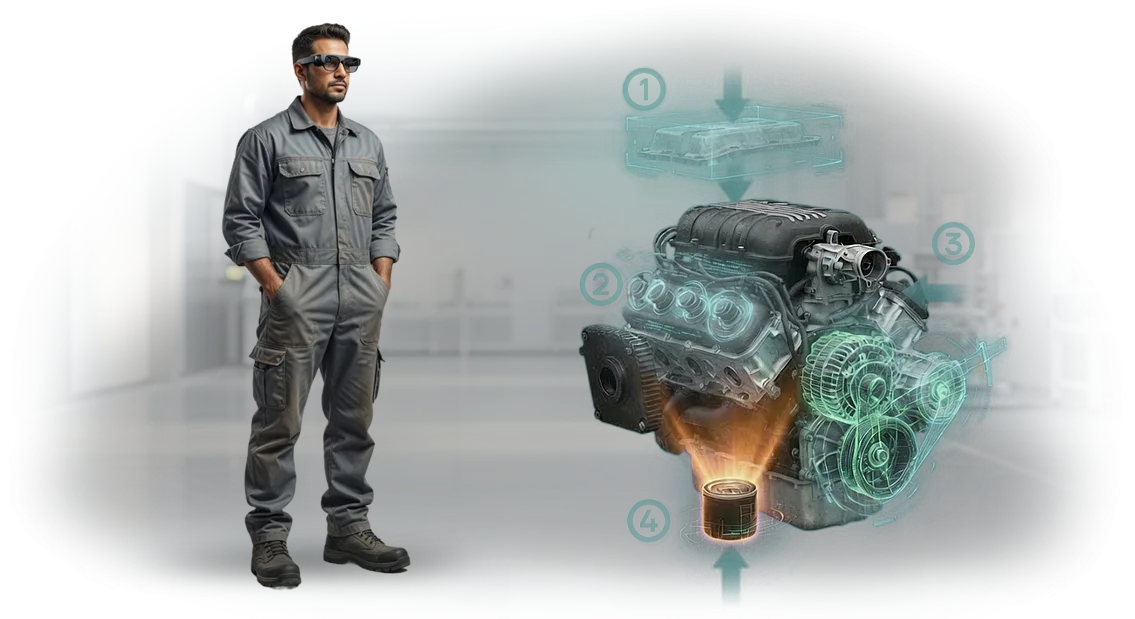
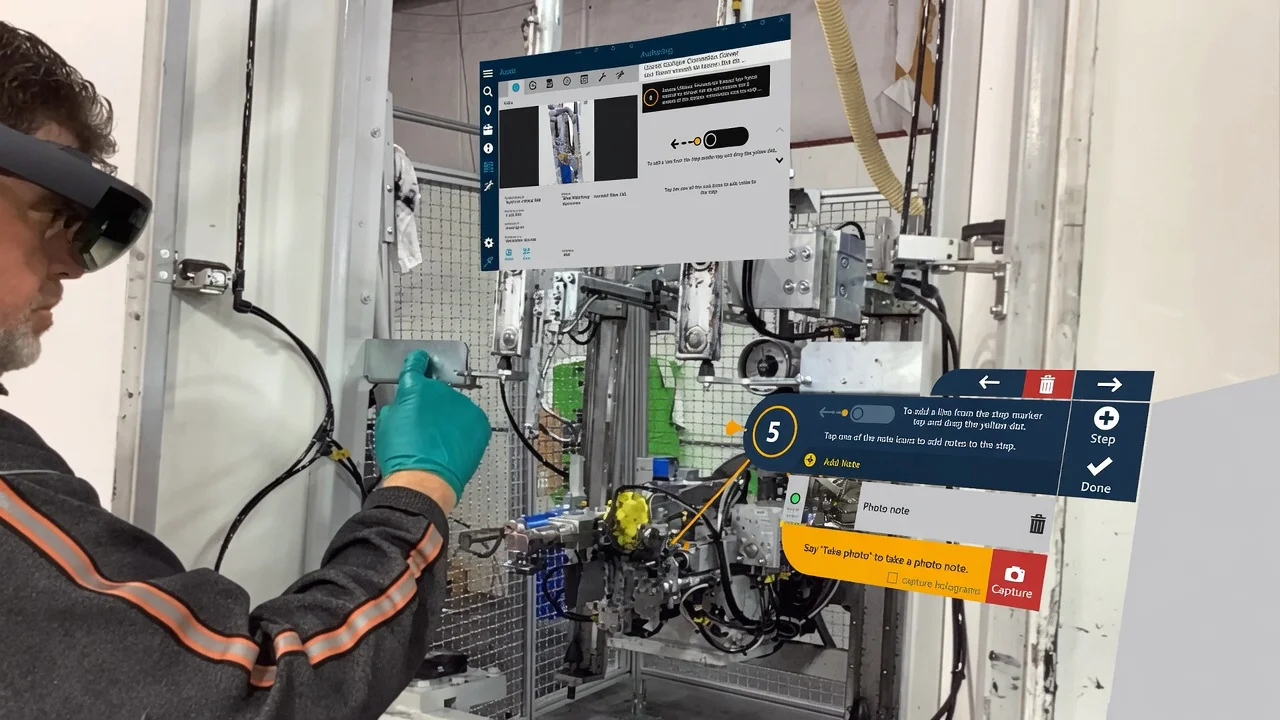
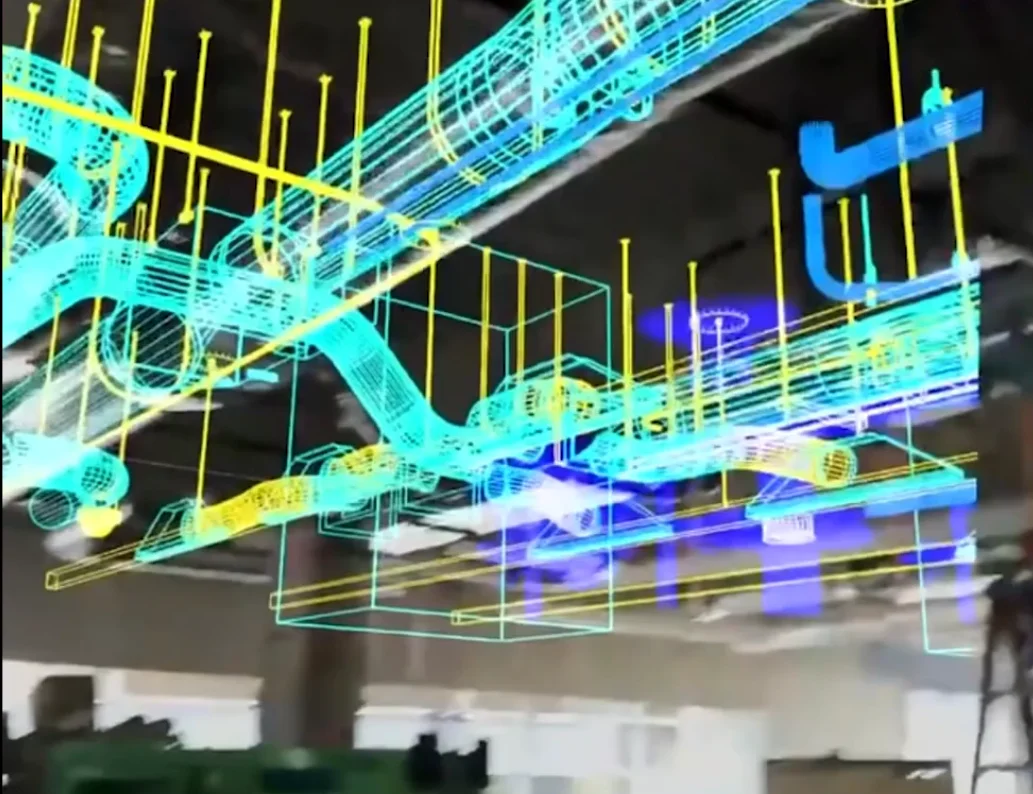
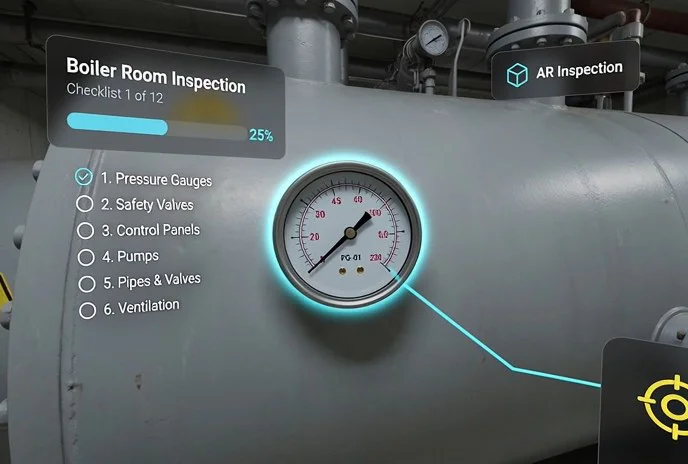
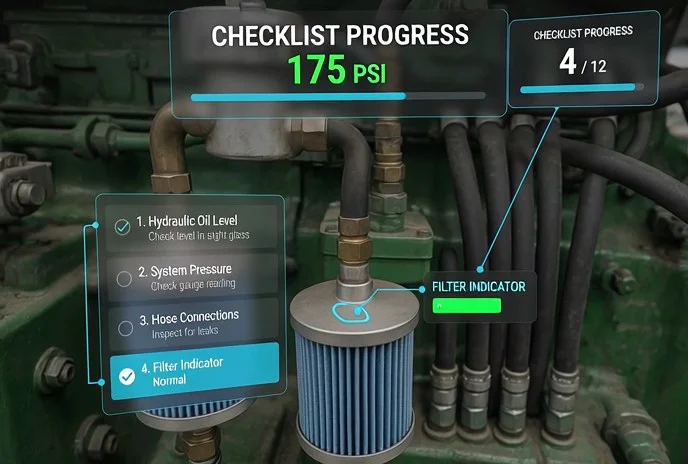
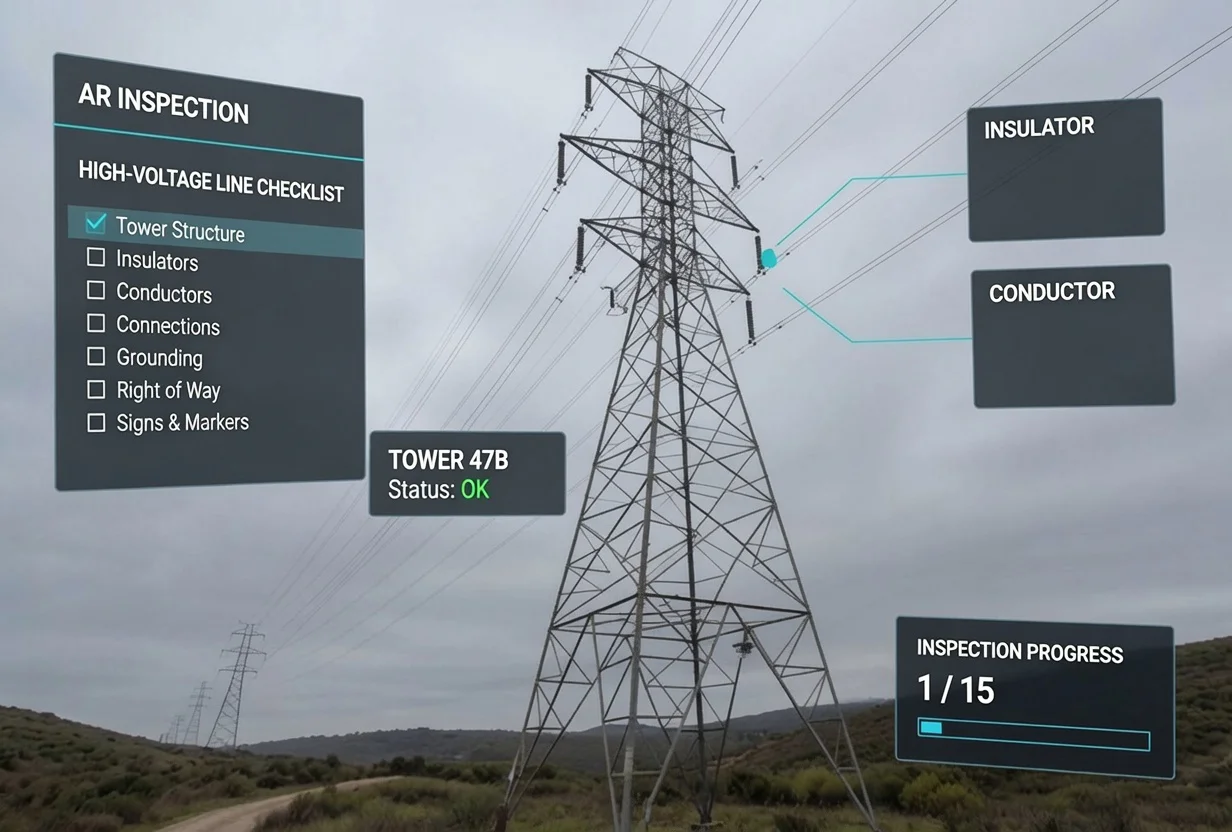
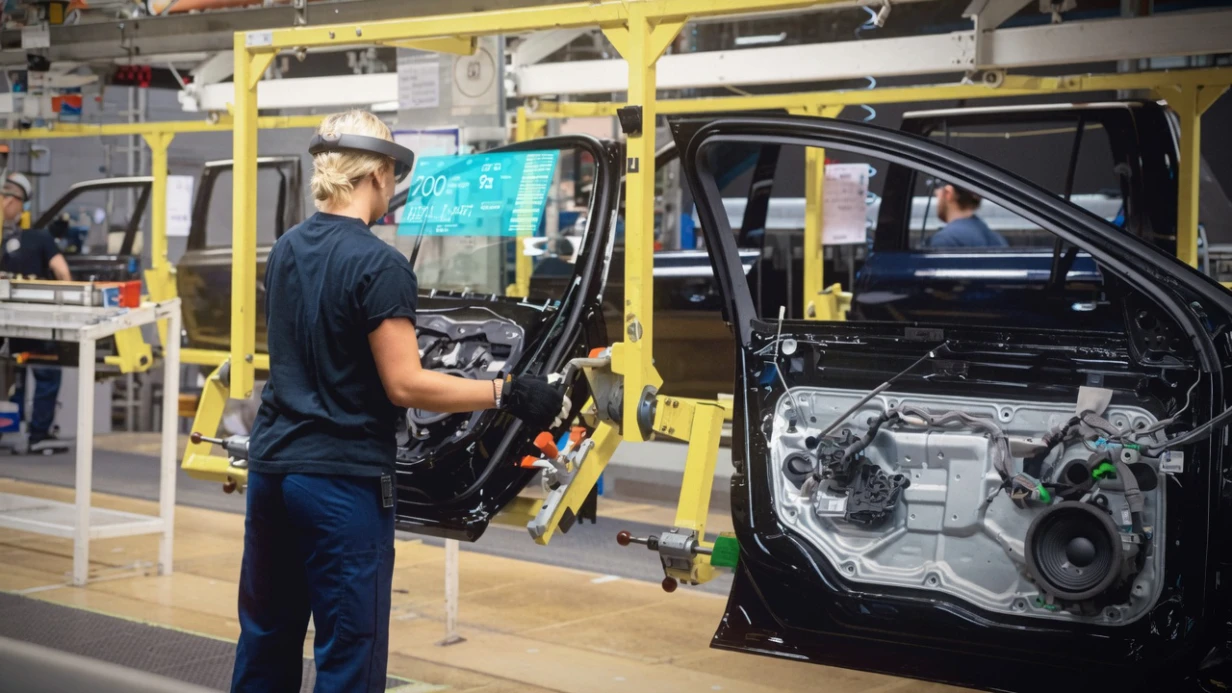
AR instructions overlay step-by-step guidance directly onto the equipment. The system shows which panel to open, which cable to check, and in what order to perform operations.
The employee sees the only correct scenario and does not waste time deciphering drawings and searching for the relevant section in the manual.
For business, this means fewer emergency shutdowns due to a reduced human factor and several times faster employee training. Even a newcomer can safely perform electrical equipment maintenance after a short introduction, while experienced personnel no longer rely on memory alone.
That is why power supply system maintenance requires AR instructions: they turn a complex process into a manageable sequence of actions and make the result predictable.
What AR instructions give to production
AR instructions on the production floor turn power supply system maintenance from a complex engineering task into a clear step-by-step process.
Instead of thick paper manuals and long searches for the right diagram, the worker sees prompts directly on the equipment — this reduces operation time and lowers the risk of errors.
For repair technicians
Employees no longer have to keep every detail of the regulation in their heads: the instruction highlights the required component, shows the sequence of actions, and warns about hazardous areas.
A new specialist gets up to speed faster, while an experienced one makes fewer mistakes in non-standard situations. As a result, the number of emergency stops and repeat visits decreases.
For engineers
The engineer receives a single knowledge base for power supply system maintenance.
Quality control becomes transparent: it is clear which operations have been completed and which have been missed, and if necessary, the engineer can connect to the employee via remote support with video prompts.
This simplifies the handover of complex tasks between shifts and allows problems to be localized faster.
For managers
For a manager, the main result is process predictability. Training of new employees accelerates significantly, errors become rare, and equipment downtime decreases.
In addition, AR instructions are easy to update when regulations change — no need to reprint documentation and gather personnel for a briefing.
This approach pays off on the very first major maintenance job: less time on repairs, fewer losses from defects, and higher equipment readiness.
AR instruction formats for different tasks
When maintaining power supply systems, it is important that the instruction is available exactly where the work is performed. AR formats overlay prompts onto real equipment, but each format has its own task — and its own value for the business. The right choice of device directly affects repair speed, error rate, and employee training time.
| Format | For whom | What it gives the client |
|---|---|---|
| Mobile application | repair teams | fast access to instructions at any site, one-click updates |
| Tablet | engineers and operators | clear step-by-step guides during commissioning and maintenance — fewer shutdowns |
| Smart glasses | mobile teams | free up hands, reduce error risk, and speed up repairs in field conditions |
These are not just technical options — each format addresses a specific business task. Below we look at two typical scenarios: stationary facilities and field work.
For stationary facilities
For distribution panels, transformer substations, and other permanent points, the tablet is the most convenient option. The employee sees the diagram overlaid directly on the equipment and checks their actions against the prompts.
As a result, dependence on the experience of a particular specialist decreases — a newcomer handles the task no worse than a master.
The tablet is also suitable for quality control: after each step, the system records the result, and the manager sees the work status without visiting the site. This reduces acceptance time and lowers the risk of hidden defects.
For mobile teams
Mobile repair teams work in the field, where there is no fixed workstation. Smart glasses allow keeping the instruction in front of the eyes while leaving hands free for tools. This is critical when you need to work with the equipment and consult the regulation at the same time.
This format speeds up repairs by 1.5–2 times by eliminating unnecessary actions related to searching for documentation. Additionally, the glasses can transmit the image to a remote expert — then a complex fault is resolved without calling a narrow specialist to the site. We will select a suitable format for your task and show how it works on your equipment.
Stages of AR instruction development for power supply systems
For an AR instruction to genuinely simplify power supply system maintenance, it must go from an idea to a working tool. We divide this path into six stages — from the first briefing to post-launch support.
This allows us to control every step and mitigate risks related to data accuracy and usability in advance.
How we built the process
- Brief and immersion in the task. You describe which electrical equipment operations need to be covered, who will use the instruction, and what result is important. We record goals, deadlines, and acceptance criteria.
- Audit of equipment and documentation. We study diagrams, regulations, passports, and actual installation conditions. We determine which components and actions are critical for safe and correct operation.
- Scenario and prototype of the instruction. We prepare the logic: break the process into steps, formulate prompts and warnings. You see what the instruction will look like and how it will work even before development begins.
- Project approval. We discuss the scenario with engineers and your specialists and make edits. At this stage, the final version is approved — all details are verified and accepted by the customer.
- Development and testing of the solution. We assemble the AR instruction and test it on real equipment or its 3D model. We fix errors and achieve stable operation — the instruction must not "freeze" at the most important moment.
- Launch and support. We hand over the instruction, train employees, and remain in touch. If necessary, we update the steps — for example, when the equipment diagram or maintenance regulation changes.
After launch, you get a clear tool that speeds up work and reduces dependence on "paper" reminders. And thanks to phased development, you always understand what happens at each step and what you are paying for.
What is included in AR instruction delivery
The AR instruction delivery for power supply system maintenance includes everything needed for launch and daily operation without involving a contractor.
You receive not separate files but a ready-made solution: application, content, integration with your processes, and support at all stages.
- Application for employees — runs on tablets and smartphones, requires no special training, and works in the workshop, warehouse, or field.
- AR content for your equipment — step-by-step instructions with visual prompts, adapted to your personnel's real operations.
- Integration with documentation and regulations — we embed instructions into existing processes so that they work as part of your maintenance system.
- Personnel training — we conduct training sessions for mechanics, electricians, and engineers so that they immediately start using the instruction without errors.
- Documentation package — operating manuals, content update procedures, interaction regulations — everything your maintenance department needs.
- Warranty support — for the entire period: content updates when equipment changes, technical assistance, implementation consultations.
The delivery scope can be adjusted to your tasks: add integration with a permit-to-work system, extended usage analytics, or additional interface languages.
We discuss details at the briefing, record them in the contract, and do not impose anything extra — you pay only for the options your production actually needs.
Case: transformer substation repair with AR
Transformer substation repair is one of the most critical tasks in the energy sector: any mistake is expensive, and equipment downtime affects the entire power supply system. Here is how AR instructions helped one client reduce repair time by 30% and ease the load on personnel.
Task
An energy company faced a typical problem: substation repair required the involvement of narrow specialists, while paper diagrams and instructions ran dozens of pages.
Even experienced teams spent hours finding the required component and checking it against documentation, not to mention the risk of errors under heavy load.
The client needed to speed up repairs without losing safety and reduce dependence on the "golden hands" of specific employees. That is exactly why we developed AR instructions for a specific model of transformer substation — based on Siemens equipment.
Solution
Instead of paper regulations — step-by-step holographic prompts overlaid directly on the equipment. The operator sees in what order to de-energize components, where the fasteners are located, and which areas require special caution. All necessary information is in front of the eyes, and the hands remain free.
Such instructions are easy to integrate into the workflow: the team receives a headset, selects the required type of repair, and follows the steps without being distracted by information search.
This is especially important in power supply system maintenance, where every minute of downtime is lost kilowatt-hours.
Result
Measurements after launch showed: average repair time decreased by 30%. The number of errors related to the human factor decreased, and new employees reach their working mode several times faster — the instruction itself guides them through the process.
After the successful pilot, the client expanded the use of AR instructions to other energy facilities. For us, this is confirmation: the AR case in substation repair works not as an "experiment" but as a tool for measurable savings of time and resources.
How to choose the AR instruction format for your task?
The choice of AR instruction format directly depends on two factors: what equipment you service and who exactly will use the prompt. This is especially important for power supply systems — with different personnel levels, strict regulations, and a high cost of error.
An experienced engineer needs only targeted prompts: a marker on the required component, a quick parameter check, and a sequence of actions in an abnormal situation.
For a new employee or a specialist from a related field, it is better to provide full step-by-step guidance — from preparation for work to recording the result. In one case, AR accelerates; in the other, it trains and protects.
We help determine the content type even before development begins. During the consultation, we analyze the specifics of your equipment, maintenance regulations, and personnel skill levels.
Based on this, we propose a format: voice prompts, visual markers, animated diagrams, or a complete overlay of the instruction onto the real object.
The main thing is that you get not "technology for technology's sake" but a solution that addresses a specific task. Employees find the required components faster, make fewer mistakes during switching operations, and spend less time on paper instructions. This means downtime and risks associated with the human factor are reduced.
If you are unsure which format is right for you, that is normal. We provide free consultation on solution selection, taking into account the specifics of your power supply systems and team composition. Tell us about your task — we will propose the optimal option.
Frequently asked questions about implementing AR instructions
Before implementing AR instructions, customers have the same doubts: is the solution difficult to integrate, will it fit existing equipment, and is it safe from a data perspective. We answer briefly — without technical details, but based on real experience.
Integration does not require restructuring production. AR instructions supplement paper regulations and electronic systems, not replace them. Access is via tablets and smartphones that employees already have — no need to buy special equipment.
Compatibility is ensured by adapting scenarios to specific models of power supply systems: we use your regulations and diagrams, not ask you to change your equipment fleet.
Data security is one of the main questions for industrial enterprises. Instructions can operate in a closed loop without internet access, and content can be hosted on corporate servers or employee devices. Access is role-based — this prevents leaks and complies with internal information security policy.
Return on investment comes from reduced training time, fewer maintenance errors, and less downtime. The effect becomes visible after a pilot area, and then the solution is scaled to other workshops.
Will personnel resist the new technology?
In practice, workers learn AR instructions faster than paper manuals: there is no need to match diagrams with equipment.
An experienced employee controls the process during the pilot and then becomes a mentor themselves — the technology does not replace expertise, it amplifies it.
Order AR instruction development for your equipment
Submitting a request for a cost estimate is the first step toward your specialists working faster and your equipment not standing idle. We will prepare a specific proposal for your task — without abstract promises and technical jargon.
After a short discussion of your task, you will receive:
- Cost and timeline estimate for your task — fixed figures that will not change during the process.
- Project plan: which components and operations the AR instruction will cover, and how it will integrate into your regulations.
- Demonstration fragment of the future instruction — so you can evaluate the convenience for a mechanic or electrician.
- Format recommendations: tablet, phone, or AR glasses — based on conditions at the site.
- Documentation package for approval with your safety department and training department.
- Support at all stages: from mock-up approval to implementation and content updates.
Submit your request through the form below or write to us in a messenger — we will respond within a business day and prepare a proposal. You get a complete turnkey project, not "try it and see."