

Why heating system maintenance services lose clients
Long and uncertain heating repairs are a real reputation killer for a service company. When a boiler room is down and the client is waiting for a solution, every extra hour turns into growing dissatisfaction.
Emergency calls knock planned work off schedule: the service engineer races between sites, working to exhaustion, but even experience doesn't guarantee results — everyone makes mistakes.
The direct consequence of such failures is lost clients and wasted reputation.
The client doesn't dig into the reasons; they see the main thing — equipment downtime is dragging on, the bill for repeat visits doesn't address the root of the problem, and therefore their clients and plans suffer.
The conclusion is simple: the heating system maintenance contract for the next season goes to a quicker competitor. To hold your position, you need to act proactively.
The root of the problem, meanwhile, lies in the endless dependence on the "golden hands" of senior technicians. A newcomer lacks experience, and an experienced worker lacks a unified standard of action.
Heating repair turns into a creative process with an unpredictable outcome: one engineer handles it in an hour, another in a day, and all of this means constant overtime, rush, and squeezed project margins.
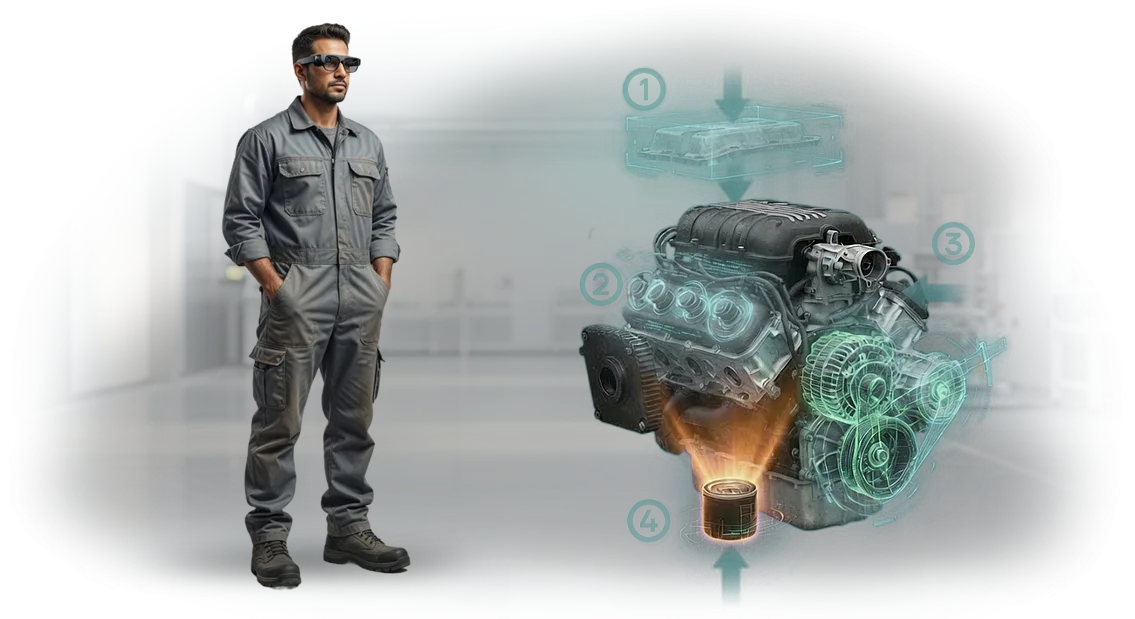
We close this gap with technology. Professional AR instructions help a service engineer see the exact action algorithm right on the equipment. The equipment belongs to the client, but the process remains standardized, like on an assembly line.
That's why we bet on such solutions: they deliver a measurable result — reduced emergency call time, fewer errors, and, as a result, a steady flow of orders in heating maintenance.
What AR instructions give your service
Every engineer dispatch for a heating system is a balancing act between speed and quality. The client expects the heating to start working quickly, and the service wants to avoid warranty callbacks.
At the same time, paper or PDF instructions take time to search for the right component, and differences in employee experience lead to different results.
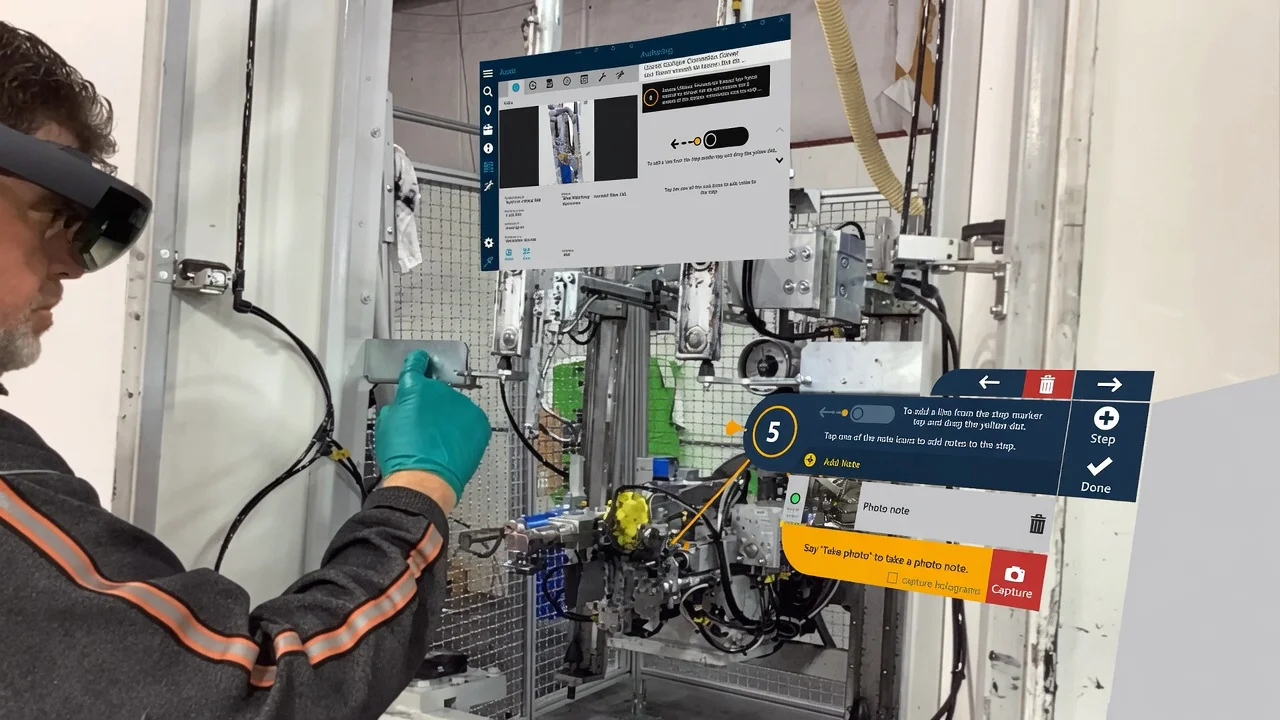
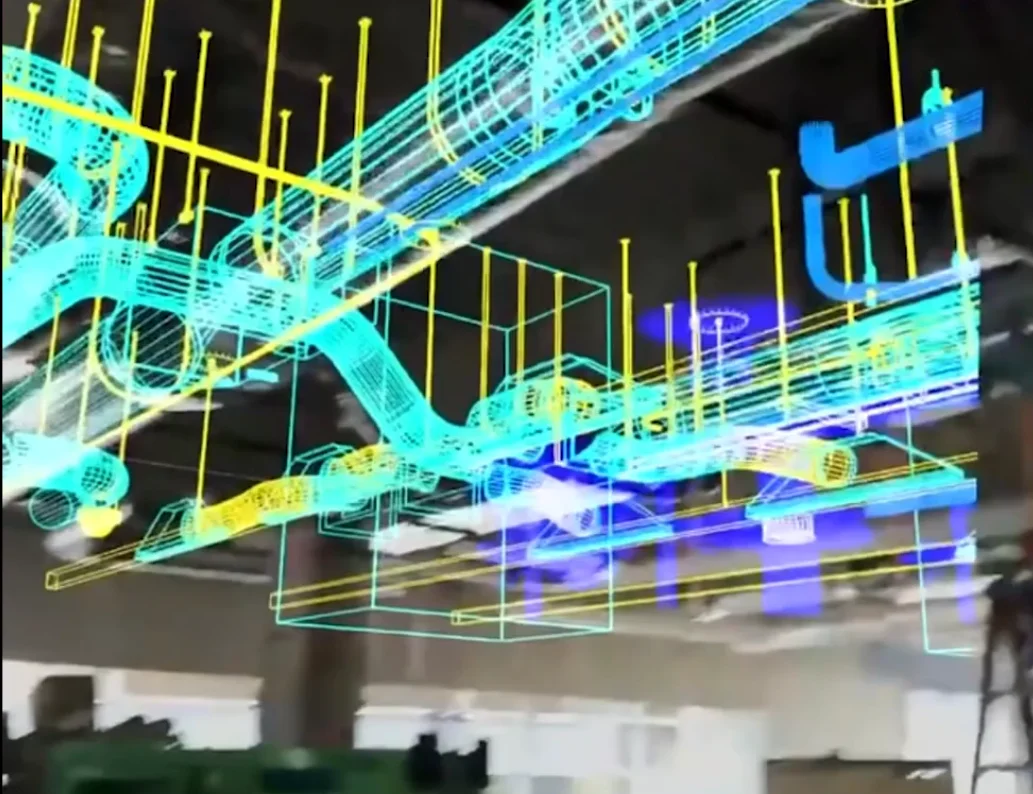
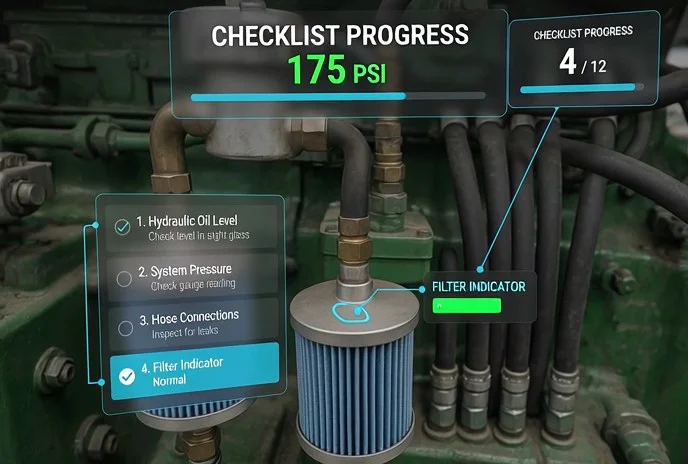
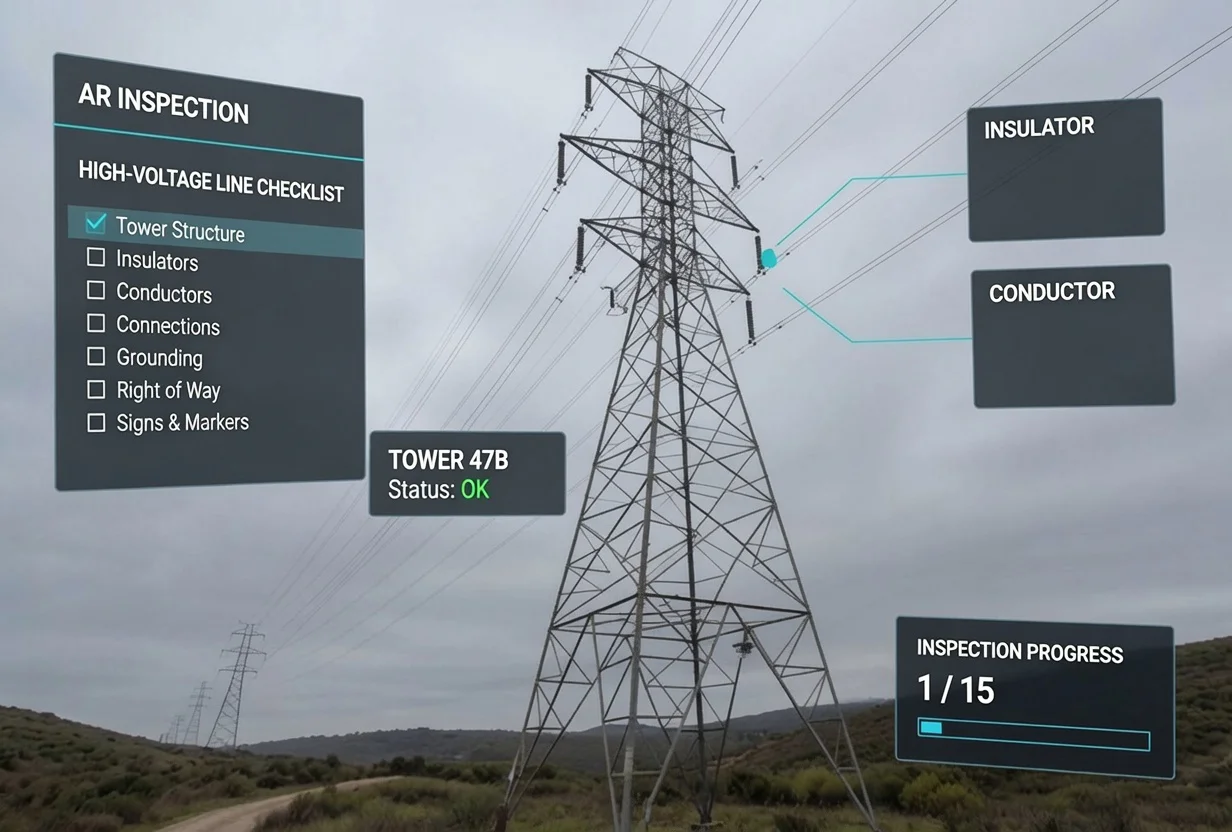
AR instructions overlay prompts directly onto the equipment: the engineer sees the sequence of actions, required parts, and parameters without getting distracted by reference materials.
This reduces repair time by an average of a third — especially for complex units where you previously had to figure things out by trial and error. Fewer assembly and setup errors mean fewer repeat visits and complaints.
An additional plus is training new employees. Instead of months of working alongside a mentor, a newcomer gets digital prompts at the moment they perform the task. They reach independent service calls faster, and experienced engineers stop getting distracted by consultations. The service becomes less dependent on the "golden hands" of individual specialists.
In the end, you get stable work quality no matter who is dispatched to the site, predictable timelines, and fewer conflicts with clients. And a satisfied heating system client means repeat requests and recommendations.
An AR instruction pays for itself on the first complex repairs: time savings and fewer errors directly affect the service's profit.
AR instruction formats for heating systems
There is no single universal instruction for heating systems. Planned maintenance, emergency repairs, and training new engineers require different information delivery formats.
That's why we prepare an AR instruction for the specific task: the employee acts without errors, and you reduce downtime and training costs.
An interactive instruction overlays prompts directly onto the equipment, and the employee sees the sequence of steps and the required components in real time without being distracted by paper regulations. Compare the three main formats:
Format comparison
| AR instruction format | Who it's for | What it gives the client |
|---|---|---|
| Planned — for scheduled maintenance | Operations engineers | Full control of the schedule, fewer missed components |
| Emergency — for heating repair | Emergency teams | Fast diagnostics, reduced downtime |
| Training — for new engineers | Trainees and new staff | Hands-on staff training, quick onboarding to work |
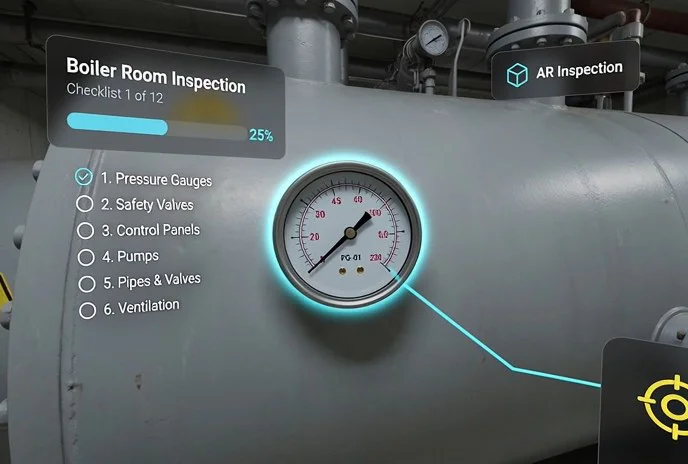
The planned format walks the employee through a checklist and prevents omissions. The emergency format reduces response time in abnormal situations. The training format lets newcomers practice without risk to equipment.
Each format adapts to your documentation and regulations, so the interactive instruction immediately reflects real processes. This ensures employees work according to current requirements.
Stages of turnkey AR instruction development
First, we immerse ourselves in your task: we study the equipment, maintenance regulations, and typical staff errors. This allows us to design an AR instruction that solves your specific problem rather than just demonstrating technology.
Then every stage is coordinated with you — you see the result before the final launch and make edits without losing deadlines.
- Brief and audit — we discuss goals, target audience, and usage scenarios. We clarify which heating system operations need to be covered: diagnostics, scheduled maintenance, troubleshooting. The output is a technical specification with clear acceptance criteria.
- Scenario design — we break the maintenance process into a step-by-step algorithm. We determine exactly where the employee should see a prompt, animation, or warning. You get the logic of the future instruction before development begins.
- Layout approval — we show how AR prompts will look over real equipment. At this stage, you approve the texts, illustrations, and action sequence. Edits are made in a couple of days, not after launch.
- Development and assembly — we build the AR scenario: overlaying digital prompts onto the image from a tablet or smartphone camera. We use proven tools and professional equipment — this guarantees stable operation of the instruction in the workshop or on site.
- Testing on real equipment — we test the scenario together with your specialists: recognition stability, prompt accuracy, and operation execution speed. We fix anything that gets in the way of work before the official launch.
- Launch and support — we hand over the finished instruction, train employees, and help with integration into your document management system. After launch, we stay in touch: we update scenarios when regulations or equipment composition change.
This sequence eliminates surprises: you understand what you get at each step and control the budget. Implementing an AR instruction for heating systems takes two to four weeks, depending on the complexity of the operations. The result is faster onboarding for new employees and fewer errors during maintenance.
What's included in the AR instruction delivery
When you order an AR instruction for heating systems, it's important to understand exactly what's in the package. We put it together so you don't have to buy "spare parts" separately or figure out details — everything is ready to use.
- An accurate 3D model of your equipment. We create a digital copy tied to real components: the engineer sees on screen exactly the boiler or pump they're working with. The model can be used for training and other purposes.
- A ready-to-use AR instruction. Step-by-step maintenance, diagnostics, and repair scenarios: which operations to perform, in what order, and which tools to use. The instruction is adapted to the specific equipment model.
- A content update tool. You can make changes yourself: update a regulation, add a new operation, or change a note. No programming skills required.
- Engineer training. We conduct a practical session with your service team: how to use the AR instruction, how to integrate it into the daily process, and how to quickly find the needed operation. The format is online or at your site.
- Technical support and maintenance. After launch, we stay in touch: we help with setup, answer engineers' questions, and update the instruction when equipment or regulations change — for an agreed period.
- Usage rights. You receive a license for the instruction itself and for the 3D model. No hidden payments, no restrictions — the product is fully yours.
As a result, you get a complete tool that can be deployed into field service within a few days of delivery. All items are recorded in the contract — you see the scope of work, timelines, and guarantees in advance.
Case study: how we cut repair time by 40%
For the service company TeploService, which maintains heating systems in residential and commercial buildings, the main problem was downtime. Mechanics spent up to an hour searching for the right diagram in paper instructions, and assembly errors led to repeat visits. During peak season, this resulted in missed deadlines and dissatisfied clients.
We developed AR instructions that overlay step-by-step prompts directly onto the equipment. The mechanic points their smartphone or tablet camera — and sees where each component is, in what order to disassemble, and what parameters to check.
No need to keep hundreds of pages of documentation in your head — all information appears before your eyes at the right moment.
Implementation results
We deployed the system for 12 field crews serving more than 300 facilities. Just a month after launch, average repair time dropped by 40%. Diagnostics took half the time, and the number of repeat visits fell by a third.
Clients noticed the difference: they became more willing to renew maintenance contracts and recommend the company to partners.
The service department head noted that new mechanics reach working proficiency in days, not weeks. Experienced employees also work faster — they no longer need to refresh their memory about the design details of each model. The number of human errors decreased, and so did emergency calls.
Why it worked
The secret isn't complex technology, but the fact that it's easier for a person to see something once than to read about it a hundred times. AR prompts relieve the memory load and eliminate typical errors.
For business, this means predictable repair timelines, less downtime, and a stable reputation in the market.
We can adapt this approach to your equipment and maintenance scenarios. Tell us about your task — we'll calculate how much time and money you'll save.
Frequently asked questions about implementing AR instructions
Implementing AR instructions for heating system maintenance raises legitimate questions from owners and engineering departments: how will this affect current processes, how long will the transition take, and who will support the system.
These are the right doubts — they help account for details in advance. We've collected answers to the four most common questions so you understand what to expect from the project.
Is it difficult to integrate AR instructions into existing infrastructure?
No. We work with your existing equipment and documentation: technical diagrams, regulations, and instructions. Nothing needs to be radically changed — tablets or smartphones that specialists already have are enough. Setup happens in stages, with minimal impact on the maintenance schedule.
How much will development cost?
The cost depends on the number of units and the depth of detail — we fix it after the briefing, not during the process. But the key point: an AR instruction pays for itself through reduced downtime, fewer errors, and less staff training time. As a rule, within the first year of use you get savings that exceed the implementation costs.
What happens if equipment changes or new regulations appear?
Instructions are not static. We design them with a modular structure so updates take hours, not weeks: changes are made according to regulations or your request, without reworking the entire course.
You always work with the current version — this is critical for the safety and quality of heating system maintenance.
Who provides technical support?
We support the project after launch: we answer employee questions, help adapt content to new tasks, and monitor the application's stable operation. Support is included in the contract, so you have a responsible partner, not just a one-off contractor.
Order AR instruction development for your service
Do you maintain heating in residential buildings, industrial facilities, or commercial properties? Then you know what a typical day looks like: a technician's dispatch, a long diagram review, searching for the right component, the risk of error.
Each such case is hours of client downtime and your extra costs. An AR instruction moves the entire work sequence onto a smartphone or tablet screen: the technician sees prompts right on the equipment and performs maintenance twice as fast.
Submitting a request means getting a free calculation and an implementation plan tailored to your tasks. We analyze one real regulation, show how AR will speed it up, and state the timelines. After approval, we handle the design, programming, and testing on your equipment.
What you get immediately after contacting us:
- A free calculation and time-saving estimate for your service team.
- A breakdown of one typical maintenance regulation — visually, with an example AR scenario.
- A clear work plan: from preparing the instruction to launching it on employee tablets.
- A guarantee that the instruction will run on your technicians' equipment, including remote setup.
- Post-launch support: updating steps when regulations change, consultations.
- The option to start with a pilot site and scale to all crews.
We've already done similar projects for service departments and know how heating system regulations are structured. So we don't offer abstract "digital solutions" — we give you a working tool that a technician will start using in the first week.
Order an AR instruction for your service — leave a request on this page, and we'll send a free calculation and answer your questions within one business day. Take the first step toward a service that works fast and without errors.
How to choose the right AR instruction format?
There's no universal AR instruction format — and that's normal. What works perfectly for onboarding newbies will be unnecessary for an experienced technician who has serviced a boiler a hundred times.
That's why the main selection principle isn't "take a ready-made solution" but starting from your specific task: reduce repair time, decrease the number of errors, train staff faster, or standardize the work of different crews.
For example, if the problem is human error in complex diagnostics, step-by-step instructions with visual prompts right on the equipment work better.
If you need to speed up scheduled maintenance, short checklist scenarios work well, where the employee moves from one component to another.
And when it comes to transferring the expertise of rare specialists, a format with video walkthroughs and expert comments, where the expert is literally "present" in the worker's field of view, is ideal.
We always start with an analysis of your processes, not with a technology demo. We look at where failures happen most often, how long a typical repair takes, and how training is currently structured.
After that, we propose 2–3 formats that address exactly your pain point. Often it's a combination: one scenario for newcomers, another for experienced employees, and a third for quality control.
An individual approach isn't just about tailoring "to the client" — it's a guarantee that the instruction will actually be used, not collect dust on a tablet.
We test the chosen format with your employees, see how naturally they work with it, and only then scale the solution to other sites.
In the end, the answer to "which format is best" is always the same: the one that solves your task with minimal staff resistance and a measurable result.
We help you make that choice consciously — without overkill or extra costs, but with a focus on the speed, accuracy, and peace of mind of your technicians.