

Downtime in ventilation and air conditioning systems costs too much
A silent air conditioner on the sales floor is not just uncomfortable heat. It means failed negotiations, lost customers, and falling revenue during peak hours.
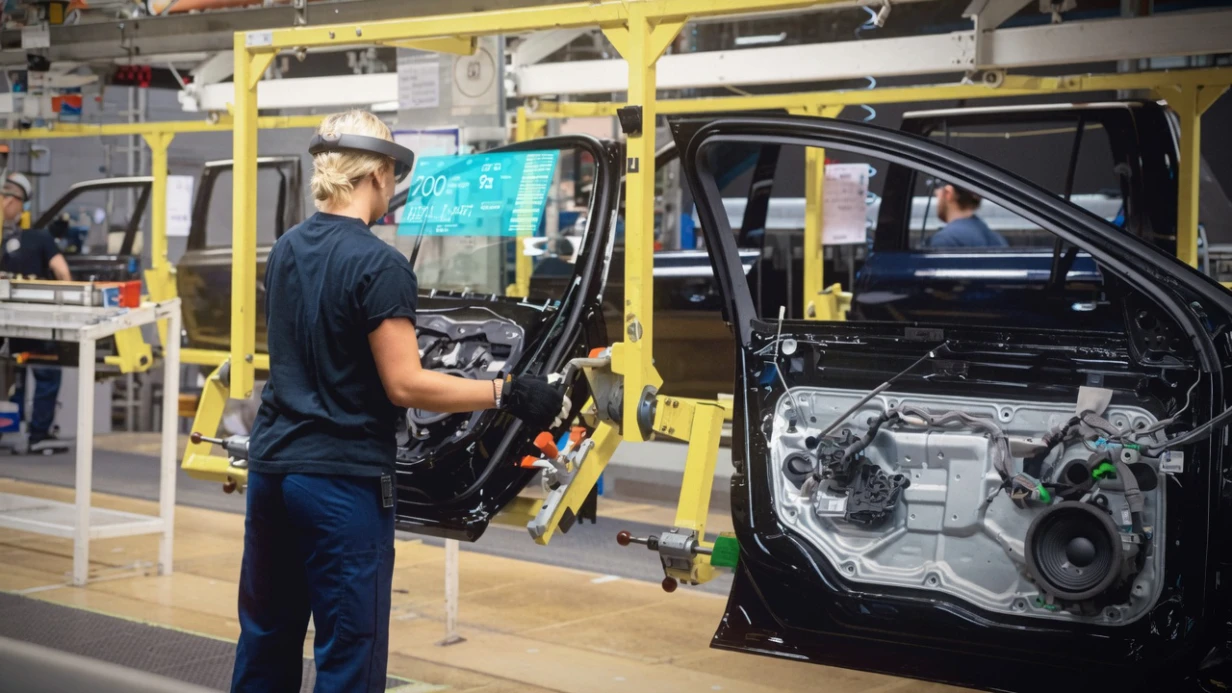
The same goes for ventilation in production: a line stopping because of faulty climate equipment means downtime, an unfulfilled order, and contract penalties.
The problem is compounded by the fact that diagnosing and servicing ventilation takes too much time. A specialist travels to the site, studies the schematic, searches for the component, and checks paper documentation — this takes hours, and meanwhile the business loses money.
During emergency repairs, every minute of ventilation and air conditioning system downtime directly hits the budget.
And if the equipment is new or rarely serviced, even an experienced engineer spends time studying the manual. As a result, repairs drag on, and the client or customer is left without a functioning climate system — and without the revenue it could have generated.
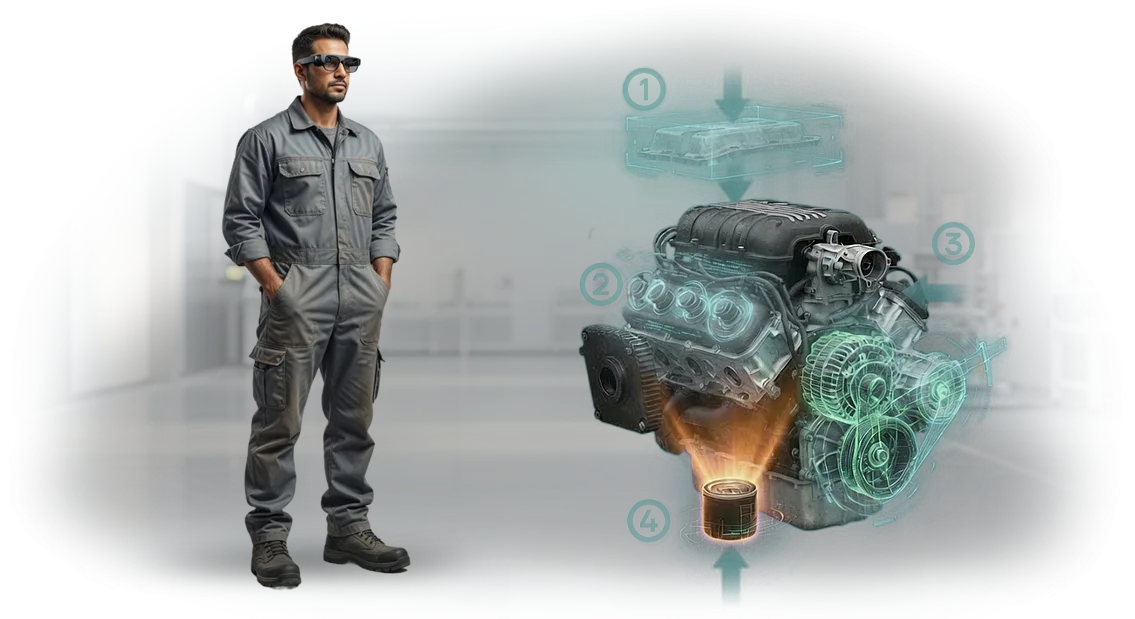
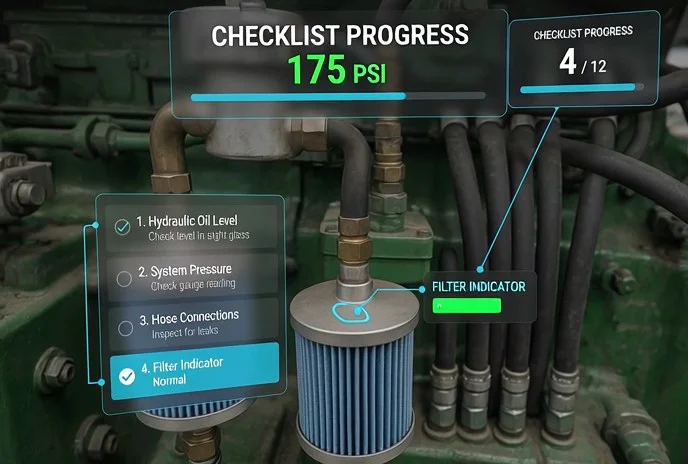
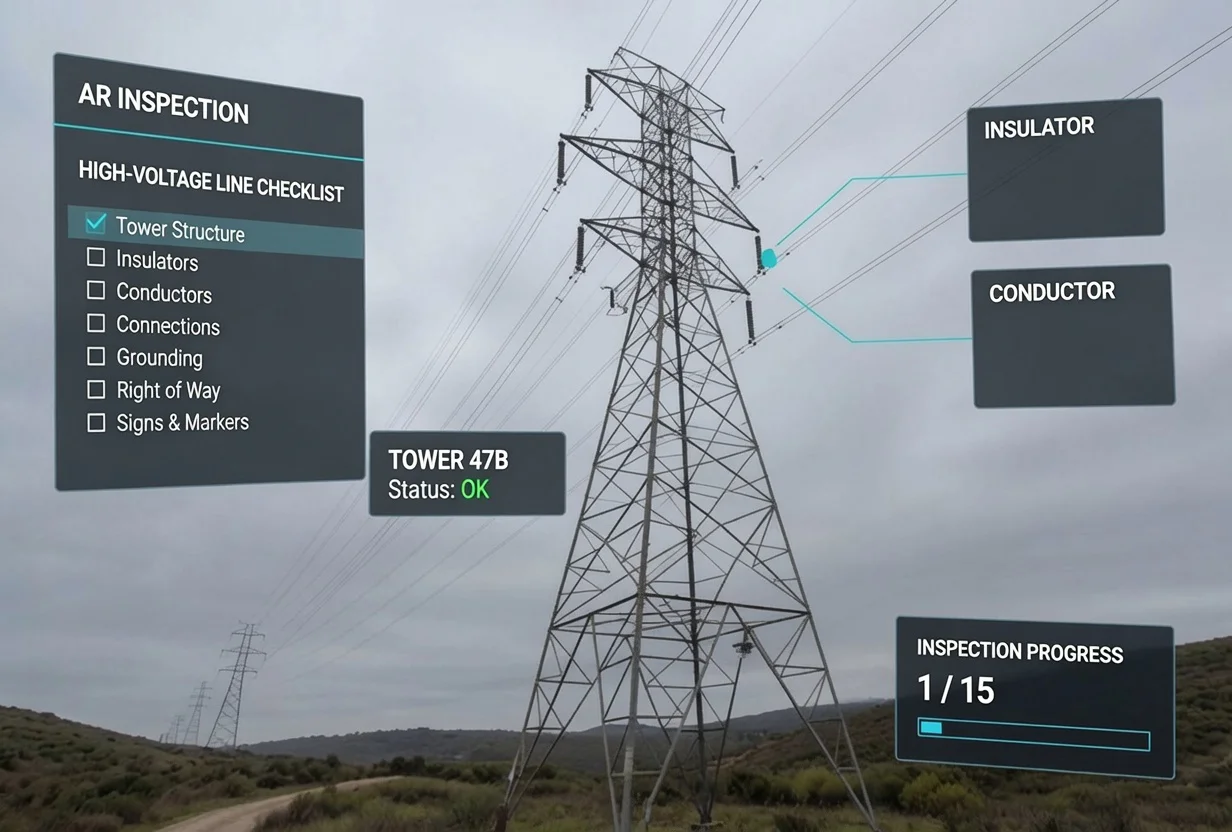
What companies need is results: fast fault resolution and minimal equipment downtime. Our AR instructions cut search and repair time severalfold because the specialist sees prompts right on the actual equipment.
No need to flip through manuals or cross-check schematics — all the necessary information appears right before the technician's eyes at the right moment.
We solve this: you get predictable ventilation maintenance, fewer emergency shutdowns, and stable business operations without climate-related losses.
What AR instructions bring to industrial equipment maintenance
Servicing ventilation and air conditioning systems is a process where the cost of a mistake is measured in hours of downtime and the safety of people. Paper manuals become outdated, experienced staff leave, and new specialists take weeks to learn.
We solve this with AR instructions: step-by-step prompts and checkpoints appear right in front of the employee's eyes. Here is what that delivers to the business.
Less equipment downtime
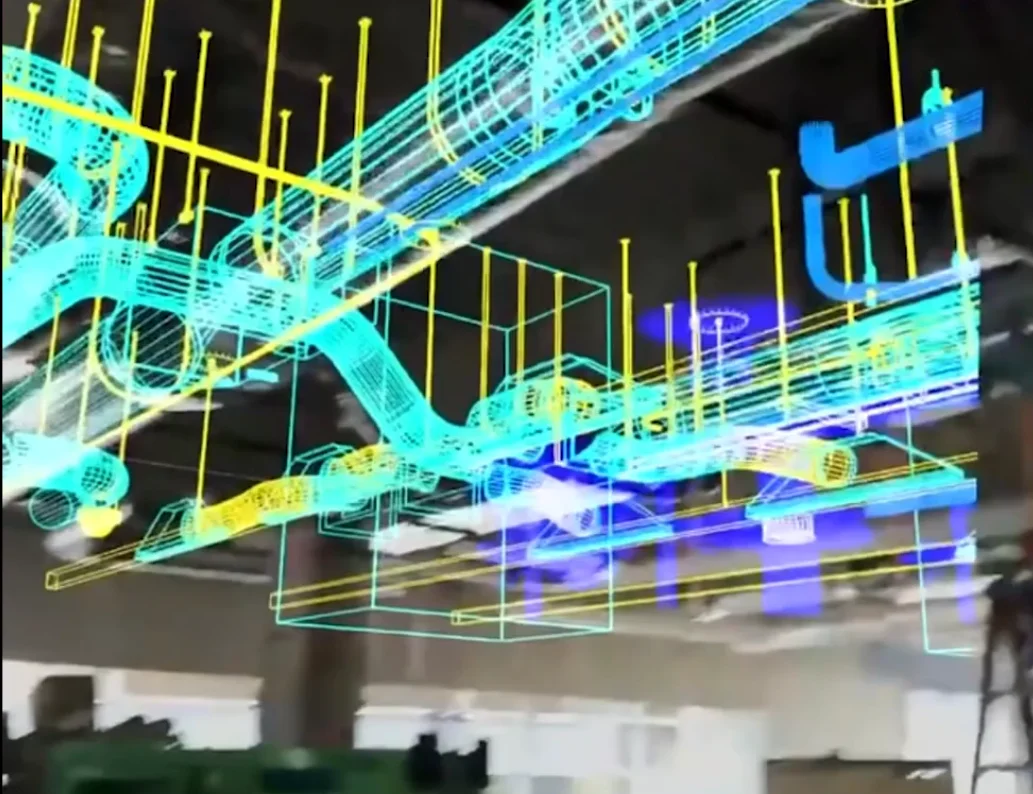
Every minute counts during a breakdown or scheduled maintenance. With an AR instruction, the specialist does not search for the right component in a paper diagram — the system highlights it on the equipment and shows the sequence of actions. Equipment returns to operation faster, and production does not stop.
Fewer errors — lower repair costs
A maintenance error means a repeat service call, missed deadlines, and extra expenses. AR instructions warn about common failures on a specific model and prevent important steps from being skipped. The result: fewer defects, fewer repeat calls, and lower total cost of equipment ownership.
Higher work safety
Working with electrical systems, moving parts, and at height is always a risk. AR instructions remind about protective measures: verify de-energization, put on personal protective equipment, lock out mechanisms. Fewer incidents — healthy employees and peace of mind for the manager.
Faster staff training
New employees go out to sites with a digital instructor and work independently within the first few days. The service standard is the same for the entire team — the veterans' experience is not lost when they leave.
AR instruction formats for ventilation and air conditioning systems
The same ventilation system component can be explained in different ways.
A service engineer needs a quick prompt right on site, a commissioning technician needs a step-by-step equipment startup scenario, and a beginner needs a visual simulator with no risk of shutting down the system. That is why we do not impose a single format; we match the AR solution to the specific task.
Main formats
| Format | For whom | Client benefits |
|---|---|---|
| Mobile AR instructions | Service engineers and technicians | Quick access to on-equipment prompts, fewer errors and emergency shutdowns |
| Commissioning instructions | Installation and commissioning teams | Step-by-step stage completion, transparent recording of completed work |
| Stationary AR stand | Training centers, training departments | Skill practice without stopping production or risking personnel |
| Remote tablet mode | Experts and service managers | Live assistance to an engineer on site, fewer site visits and less downtime |
The formats are easy to combine: the mobile version covers daily maintenance, the stand trains new employees, and remote mode saves the time of the most experienced specialists.
We help you choose a configuration for your tasks and budget — from a single mobile instruction to a comprehensive solution with a stand and remote support. You get predictable work quality and faster processes across the board: from commissioning to scheduled service.
How AR instructions are developed: from specification to launch
The stages of AR instruction development for ventilation and air conditioning systems are structured so that you see the result at every step and do not wait until "the end." We handle the technical side, and you control the timelines and quality. For capture and rendering, we use professional equipment and proven tools.
- Briefing and technical specification. We record which equipment needs to be described, who will use the instruction, and what tasks it solves. You receive a clear specification.
- Equipment and scenario analysis. We study schematics, documentation, and maintenance procedures. We identify the key operations to show in augmented reality.
- Layout approval. We build a prototype on a single component — you see how the prompts and animations look. We make changes before full development.
- Content development. We create 3D models, animations, text, and voiceover in line with your procedures.
- On-site testing. We test the instruction in real conditions: lighting, viewing angles, devices. We fix any issues before launch.
- Launch and support. We install the app, train employees, and hand over the rights. We update the instruction when procedures change.
The outcome is a ready-to-use AR instruction that shortens training time and reduces the risk of maintenance errors.
What is included in the AR instruction delivery package
You get not just a "picture with an augmented reality effect," but a complete working package that remains yours after launch. All documentation and files are your property — no hidden licenses and no ties to a third-party server.
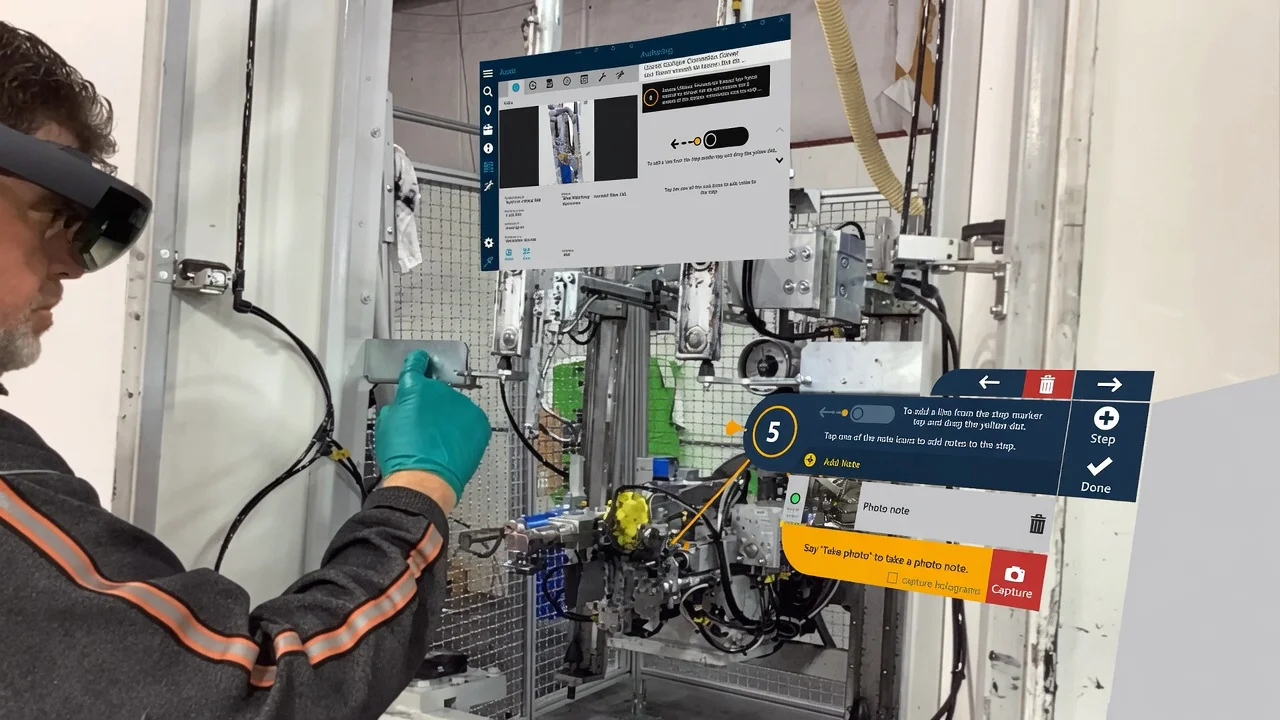
- A ready-made AR app for tablets and smartphones — employees point the camera at a ventilation or air conditioning part and see a step-by-step prompt right on top of the equipment. It works offline, on the shop floor and in the field.
- Training materials for staff — short videos and reference cards in an easy-to-understand format. A new employee learns the maintenance procedure in an average of one to two days, without pulling experienced colleagues away from their work.
- Technical documentation — a description of all components and procedures tied to your equipment. This is the foundation for training, certification, and internal quality control.
- Project source files — all models, drawings, and scripts in editable form. If the ventilation layout changes or a new unit is added, you can update the instruction together with us or with your own team.
- Administration guide — how to add objects, change prompts, and update content. You do not need a programmer for routine edits.
- Test report — a record of all scenarios verified on real equipment. You can see that every step works correctly before handover to operation.
- Implementation plan and support — launch checklists, our support contacts, and the revision procedure. The shop adapts to the new system without stopping production.
We will also set out the update terms: for one year, we make changes free of charge if you alter the equipment configuration or labeling. The entire package is delivered in stages, with acceptance of each block, so that you control quality at every step.
Case study: how AR instructions reduced repair time by 30%
Every hour of ventilation and air conditioning downtime is a direct loss for the business. Engineers spend up to 40% of their time searching for the right schematics, and paper manuals often do not match the actual equipment.
A climate system manufacturer came to us. The company services more than 1,000 sites, and a typical repair took almost three hours. One in five service visits required a repeat call due to an assembly error.
The solution
We developed AR instructions for three frequent operations: fan replacement, compressor maintenance, and sensor adjustment.
The engineer points a smartphone camera at the unit and sees the required components and the sequence of actions on screen — no paper and no calls to a supervisor.
The results
The pilot was run at ten sites. After a month, repair time was reduced by 30%, and the number of assembly errors dropped sevenfold.
| Metric | Before | After | Effect |
|---|---|---|---|
| Average repair time | 2.8 hours | 1.9 hours | −30% |
| Repeat service visits | 20% | 5% | 4x fewer |
| Newcomer training | 3 weeks | 1 week | −66% |
After the pilot, the client expanded the AR instructions to the entire equipment line and switched all service teams to them. Tech support requests were cut in half.
How to choose the right AR instruction format for your task?
The choice of AR format depends directly on the equipment type and the specific task. This is especially important for ventilation and air conditioning systems: scheduled filter replacement and diagnosis of a complex compressor unit require different approaches.
If employees rarely deal with a specific component, choose a full step-by-step scenario overlaid on the actual equipment. This format shows the sequence of actions, checks each step, and eliminates skipped operations. It is the best option for complex or non-standard equipment where a mistake is costly.
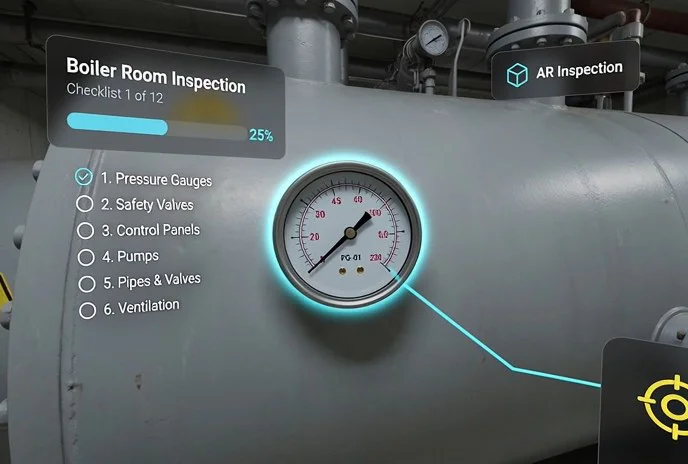
For regular scheduled work, a short augmented reality checklist is more convenient. It records the completion of each item, highlights hazardous areas, and does not distract from the process. Here, speed and minimal errors matter more than detail.
Also consider the team's skill level: beginners need detailed prompts, while experienced staff need a concise format that simply keeps attention on the task. We tailor the instruction to your employees' level rather than making them adapt to the technology.
To avoid mistakes, start with an audit: describe the equipment types, ventilation maintenance frequency, and the technicians' skill level. We will analyze your situation, suggest the optimal AR instruction format, and prepare a small pilot area for testing. This way, you get a clear result without risk or unnecessary expense.
Frequently asked questions about implementing AR instructions
We answer frequently asked questions about implementing AR instructions: integration, reliability, timelines, cost, and staff training.
How do AR instructions integrate with our equipment?
There is no need to change equipment. Existing documentation is enough — we adapt the instructions to your models and support updates after launch.
Does AR work reliably on a shop floor with dust, vibration, and poor signal?
We work on rugged tablets. The instructions are offline, so dust, vibration, and lack of network do not interfere with repairs.
How long does it take to develop a single instruction?
On average, 2–4 weeks per component. You see intermediate versions during the process, so deadlines are not missed.
How much does it cost and when will it pay off?
The cost is calculated after an audit of the documentation. It is lower than the losses from downtime or a technician's mistake, and it pays off on the very first repair.
Will employees need to be trained to use AR?
The interface is simple: point the tablet and you see the prompt. The briefing takes 15–20 minutes, and a newcomer can start working right away.
Order AR instruction development for your equipment
In ventilation and air conditioning maintenance, every minute of downtime is expensive. Employees spend time searching for the right component and reading paper manuals, and repair errors lead to repeat calls.
AR instructions solve this problem: the mechanic sees prompts right on the equipment and performs operations in sequence, without unnecessary steps.
Order AR instruction development for your equipment — we will turn your service documentation into interactive scenarios tailored to your equipment model. It is clear even to a beginner: fewer errors, faster diagnostics, higher safety.
We have been creating digital tools for industrial enterprises for more than 10 years. We understand the specifics of ventilation and air conditioning, so we develop instructions that are actually used in the field rather than gathering dust in an archive.
What you get immediately after contacting us:
- an engineer's consultation on your task — we will advise which components and operations are worth converting to AR;
- a cost and timeline estimate tailored to your budget;
- examples of similar industrial projects;
- a clear implementation plan with stages and responsible persons;
- a dedicated manager throughout the project.
Submit a request to "order AR" — we will discuss the details and answer questions about integration with your procedures. Instruction development will begin as soon as the scenario is approved.
Contact us in any way that is convenient — already at the first consultation, you will see how quickly AR instructions pay off through reduced downtime and faster staff training.